Design10 mins. read
The inaugural We Design Beirut revives the creative landscape of Lebanese design
by Maghie GhaliMay 30, 2024




by Aarthi MohanPublished on : Nov 20, 2025
Across Guatemala, ancestral techniques of craft and production—from glassblowing in Quetzaltenango to wool weaving in Momostenango—continue to shape the way objects come to life. These traditions persist in homes and small workshops, passed quietly from one generation to the next. It is from within this living chain that Guatemala-based sustainable design studio Nada Duele’s collection, Manos y Materia; From Hands to Heritage, emerges—a body of work that listens to these age-old gestures and translates them into pieces of contemporary design.
Conceived by multidisciplinary artists Giselle MacDonald (who founded Nada Duele in 2019 and is now its creative director) and Mariano Orellana (co-founder of Nada Duele), the collection is less a showcase of form than a reflection on the interdependence between maker, material and survival. Stone, glass, wool, clay, iron and wood each hold a place in Guatemala’s physical and cultural landscape. Through the studio’s practice, these materials relay stories of migration, resilience and belonging. After its debut at 3daysofdesign 2025 in Copenhagen, the collection was shown recently at the Red Materia Gallery in Antigua, Guatemala, with select pieces also finding representation through Atelier August in Geneva, where they will be exhibited in the near future.
MacDonald describes the collection as the accumulation of years of learning rather than a single revelation. “Manos y Materia didn’t appear suddenly,” she tells STIR. “While the pieces shown are largely new and were created specifically for the exhibition, the ideas, relationships and design language they express have been developing gradually over time.” Each work feels distilled, shaped through dialogue with artisans, with materials and with place.
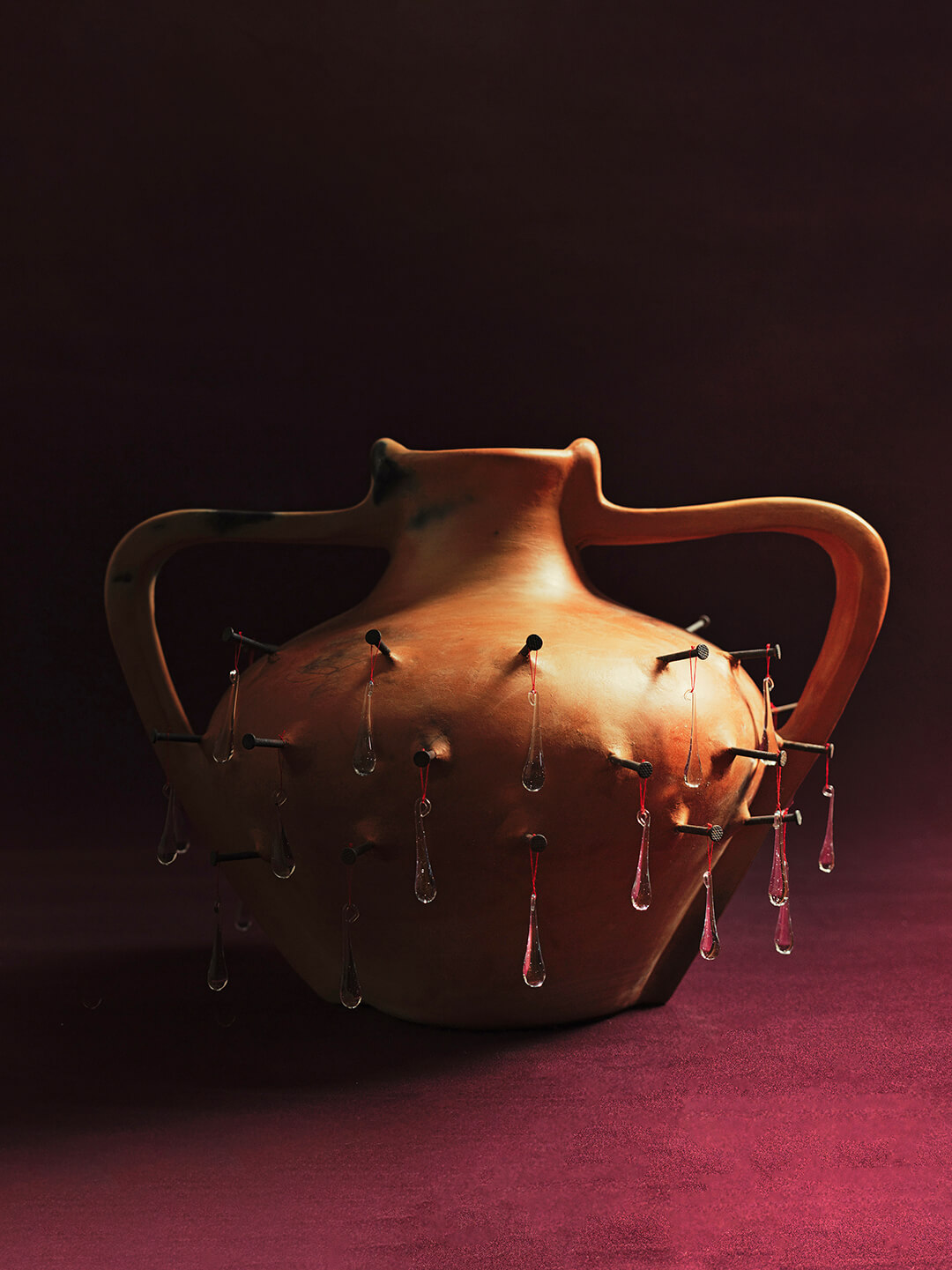
At the collection’s emotional centre lies Tierras Prometidas, a series of works that translates the realities of migration into tangible form. It begins with Sudor Silente, a trio of clay vessels fired in open flame and pierced with iron nails from which hang droplets of blown glass. Each drop, described by Nada Duele as a ‘suspended breath of sweat’, honours the quiet labour that sustains craftsmanship. The red clay retains the marks of fire and touch, reminding us that every handmade object is also a record of endurance. For the designers, these materials hold shape as much as emotion.
Each one, MacDonald explains to STIR, carries its own role in storytelling. The way they met or resisted each other helped articulate the emotional landscape of the stories being told. In the candleholders, for instance, iron became the voice of tension. Its ability to twist, tighten and constrict lent itself to themes of longing, suffocation and voicelessness, while stone grounded the product designs raw and unmovable. Together, they convey the psychological experience of being undocumented and uprooted, of carrying silence as both burden and strength.
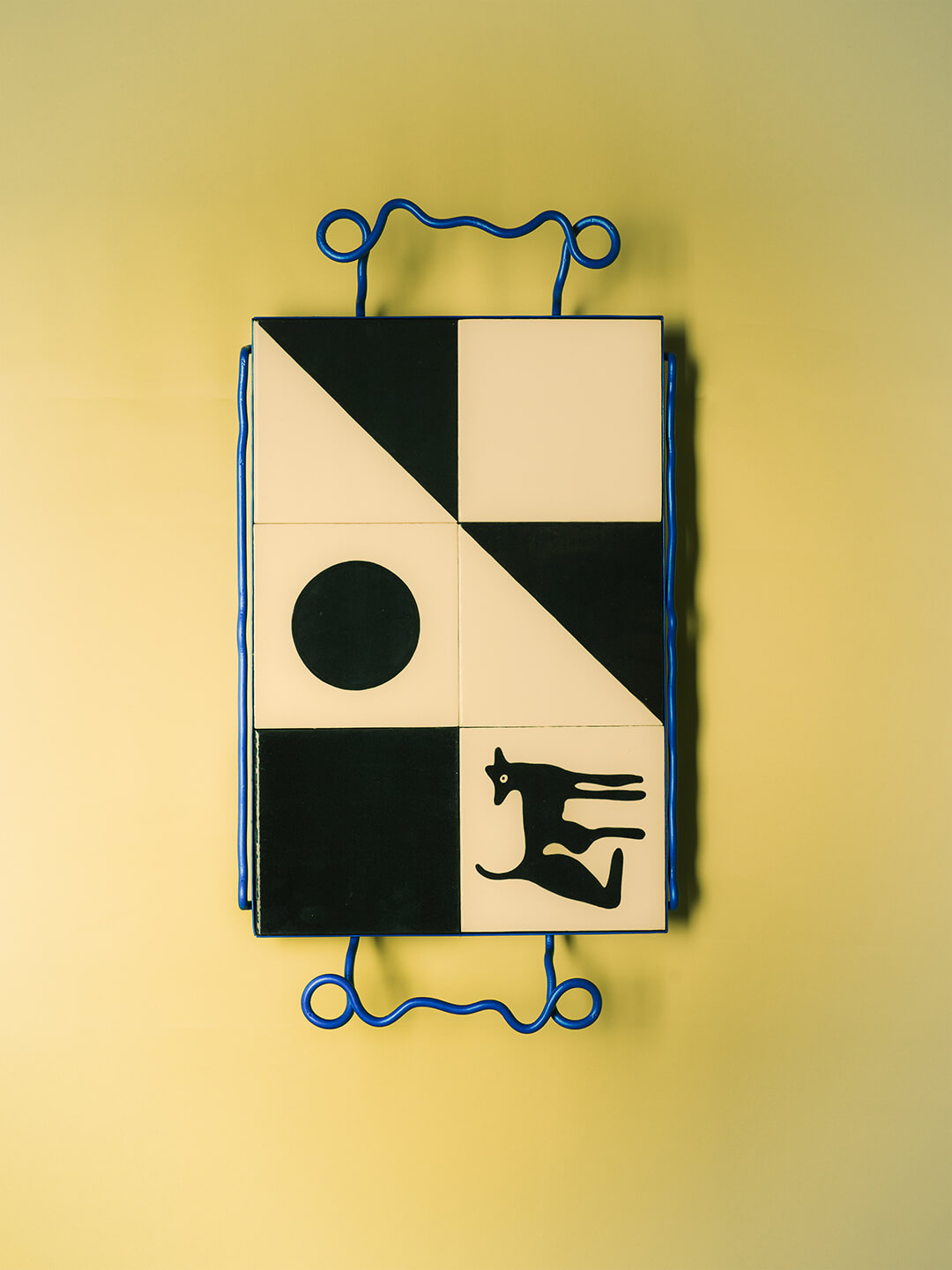
The journey continues in Cruzar no es flotar and Desierto de Sonora. Forged in iron and ceramic tiles, these pieces depict the perilous crossings between Guatemala, Mexico and the United States. A painted coyote, which is both animal and guide, floats within a blue iron shaped like the Río Grande, the river that marks the border between Mexico and the US. Nearby, a table design framed in terracotta-coloured iron shows fragments of the Sonoran Desert, a landscape of risk and resolve. Together, they trace the human cost of movement, the thin line between hope and danger that often seeks to articulate migration.
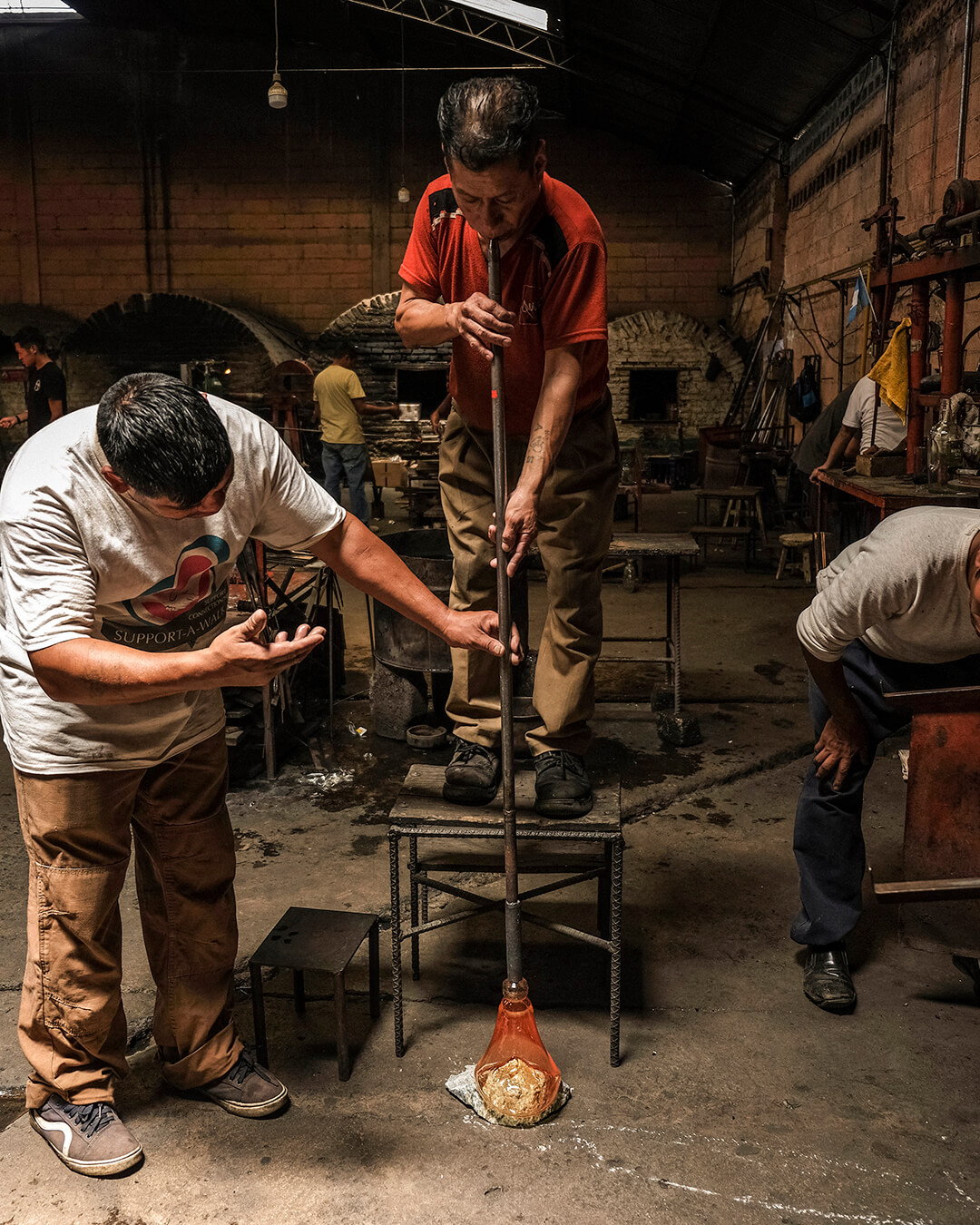
The collection itself was born from lived experience. MacDonald, in a conversation with STIR, opened up about her friends, family members and artisans who had left Guatemala in search of dignity and opportunity. Among them was Edgar, a master glassblower who had collaborated closely with the studio. His departure and the reasons behind it shaped the emotional core of the work. From there, the pieces began to take shape one by one, almost like a graphic novel through scenes, characters and symbols. The materials, she recalls, revealed how they wanted to participate in this process. The team avoided abstraction, choosing instead to tell the story through form, gesture and the physical behaviour of the materials.
Esto no me hace daño a mi. – This will not hurt me.
Esto no le hace daño al medio ambiente. – This will not hurt the environment.
Esto no le hace daño a nadie. – This will not hurt anyone. – Nada Duele
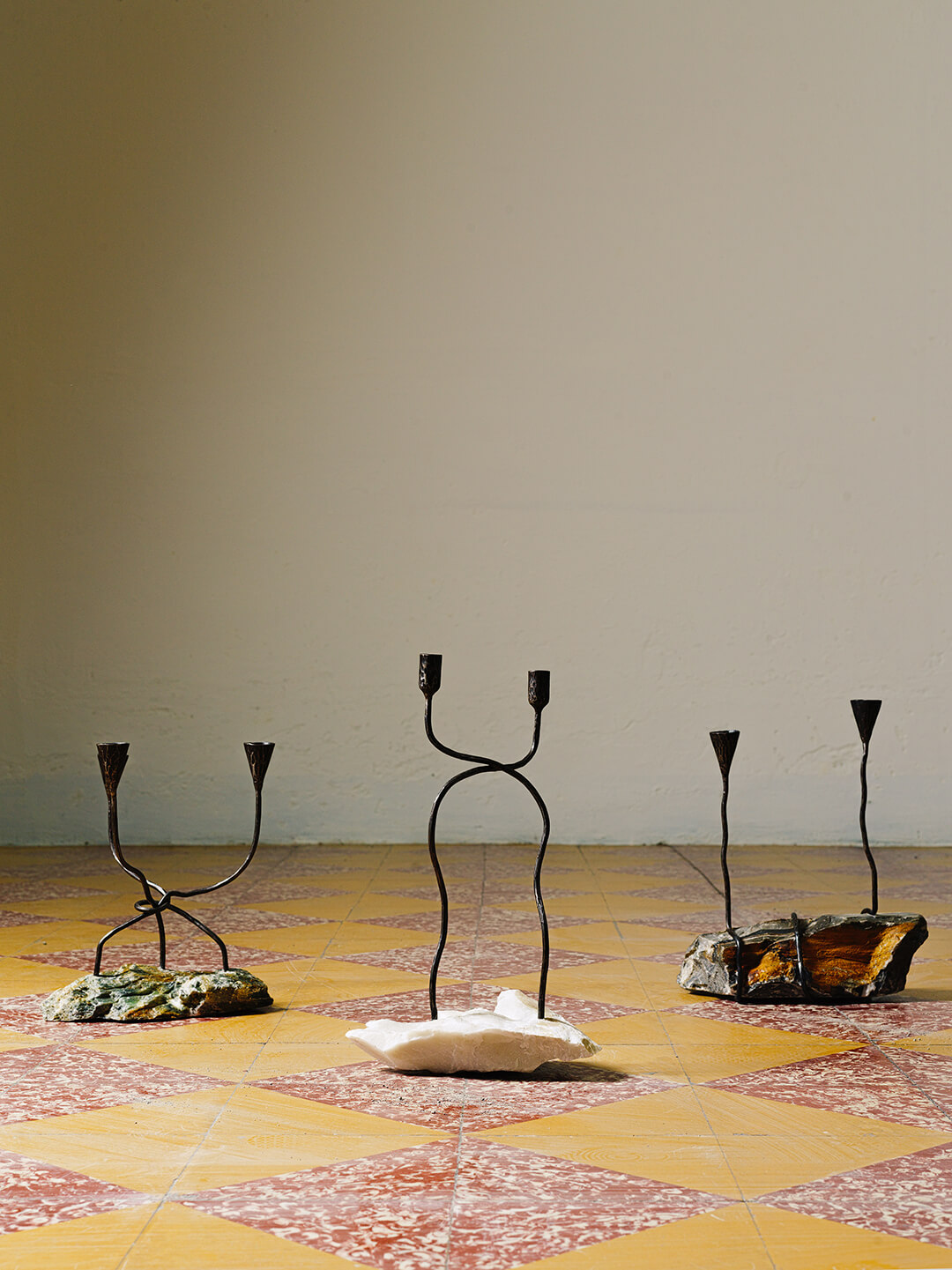
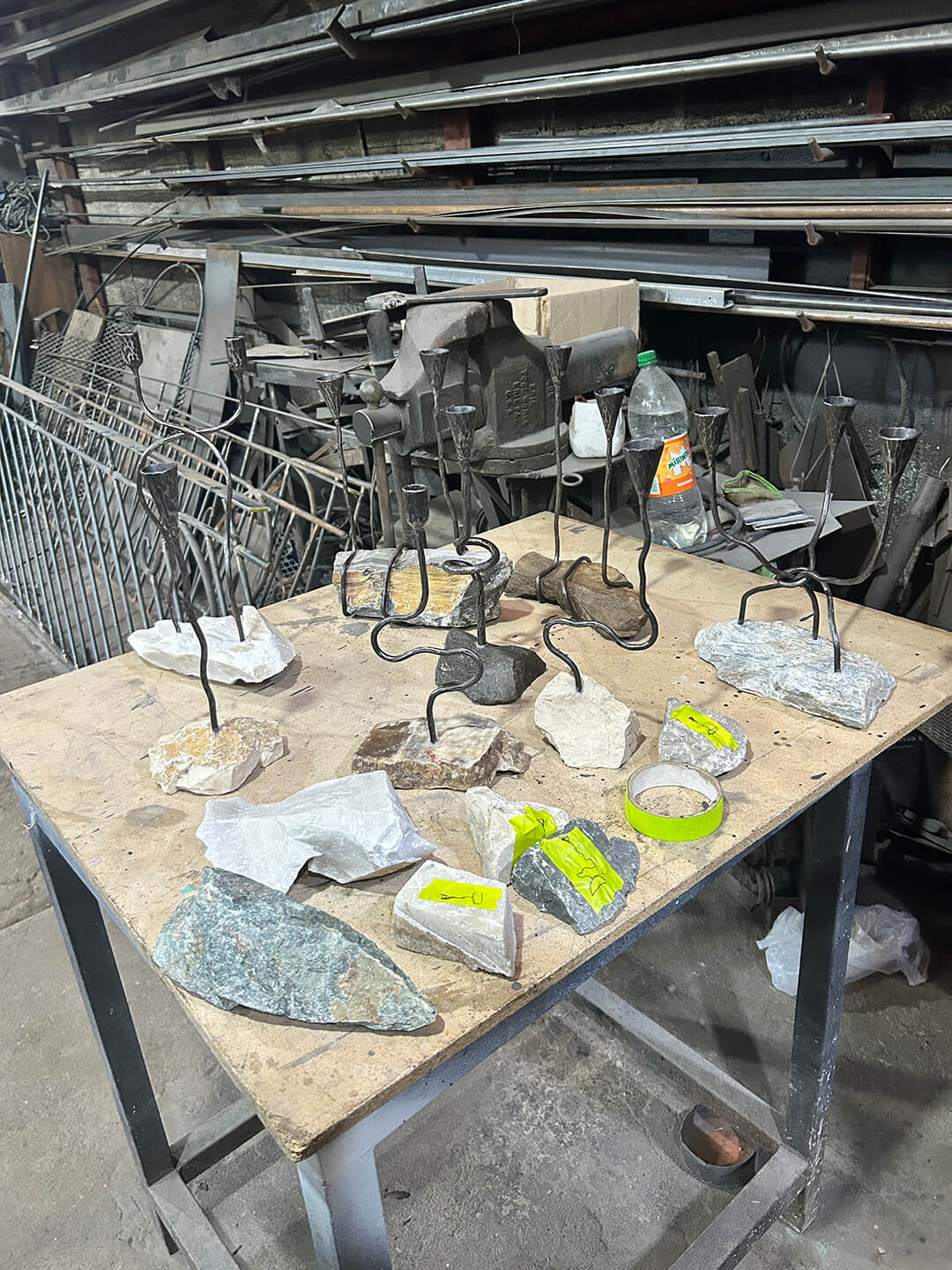
The No hay luz sin sombra candleholders shift the narrative inward, toward the solitude of life abroad. Forged by Alonzo Toscano, an ironworker based in Antigua, each piece unites iron with stone or marble to embody the contradictions of distance. One of these forms a knot in metal, the gesture of a throat closing on unspoken words. Another balances white marble against black iron, contrasting purity and weight. The series speaks of those who endure invisibly—the undocumented and the unheard, whose silence still glows like a hidden flame.
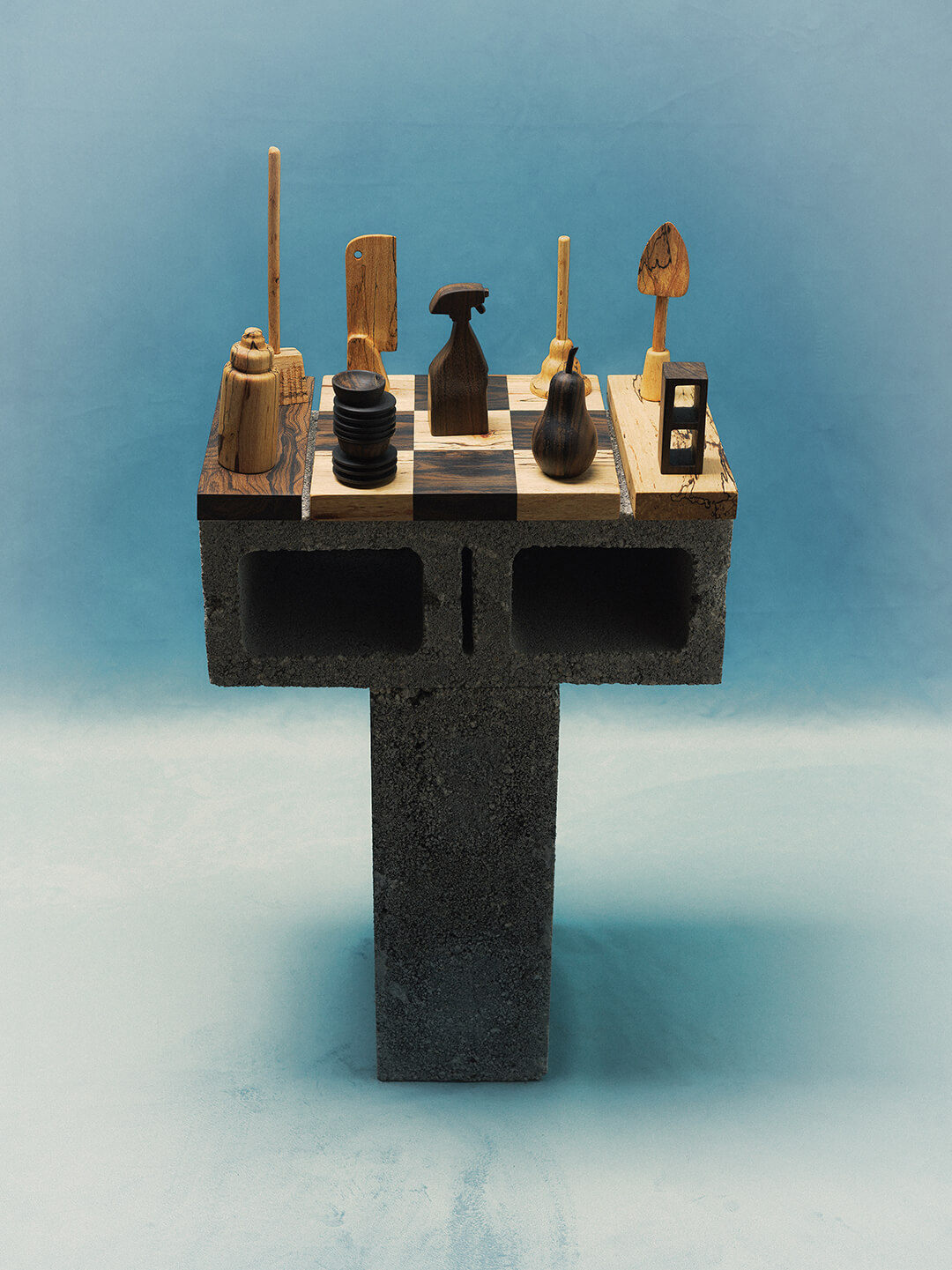
In Lo que nos toca jugar, carved from native woods by Oscar Cho and Belford Cristobal of ITZA Wood in Petén, everyday objects become tokens in a board game. Cleaning tools, bottles and fruit are transformed into pieces of play, exposing how survival often feels like chance. It is satire and sorrow intertwined, a reminder that work and migration are rarely matters of choice.
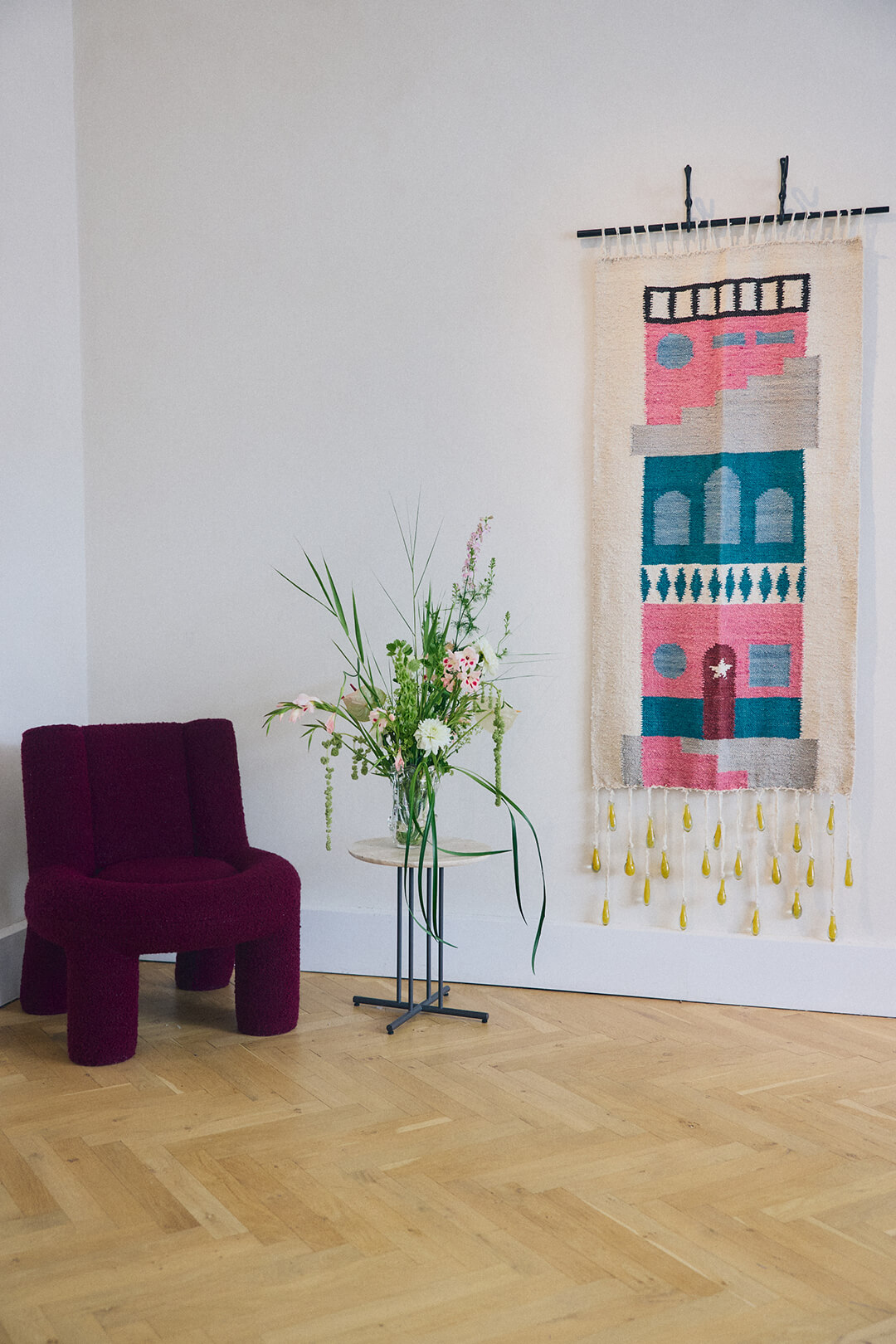
The story revolves around La Remesa, a handwoven wool tapestry from Momostenango adorned with yellow glass droplets. The textile art portrays the casas deremesa, multi-story homes built with money sent back from abroad. These remittances, which are the money sent home by migrant workers, are among the country’s largest sources of income and have reshaped its rural landscape, financing homes, schools and livelihoods in the absence of local opportunity. Its bright façades carry both pride and absence, through a progress founded on separation. In the smaller series Pequeñas Remesas, the façades fragment into abstract geometries, showing how remittance rebuilds home piece by piece.
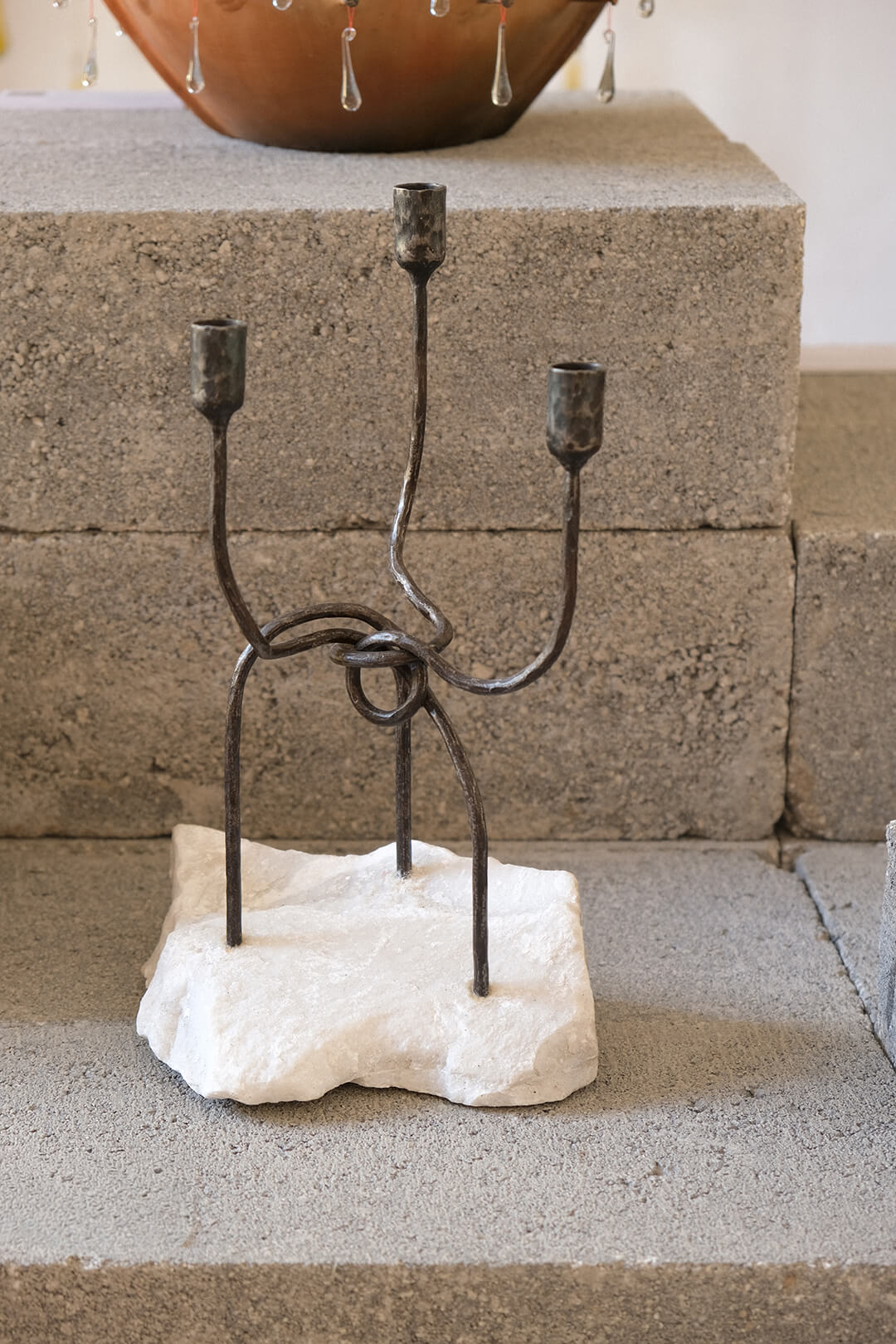
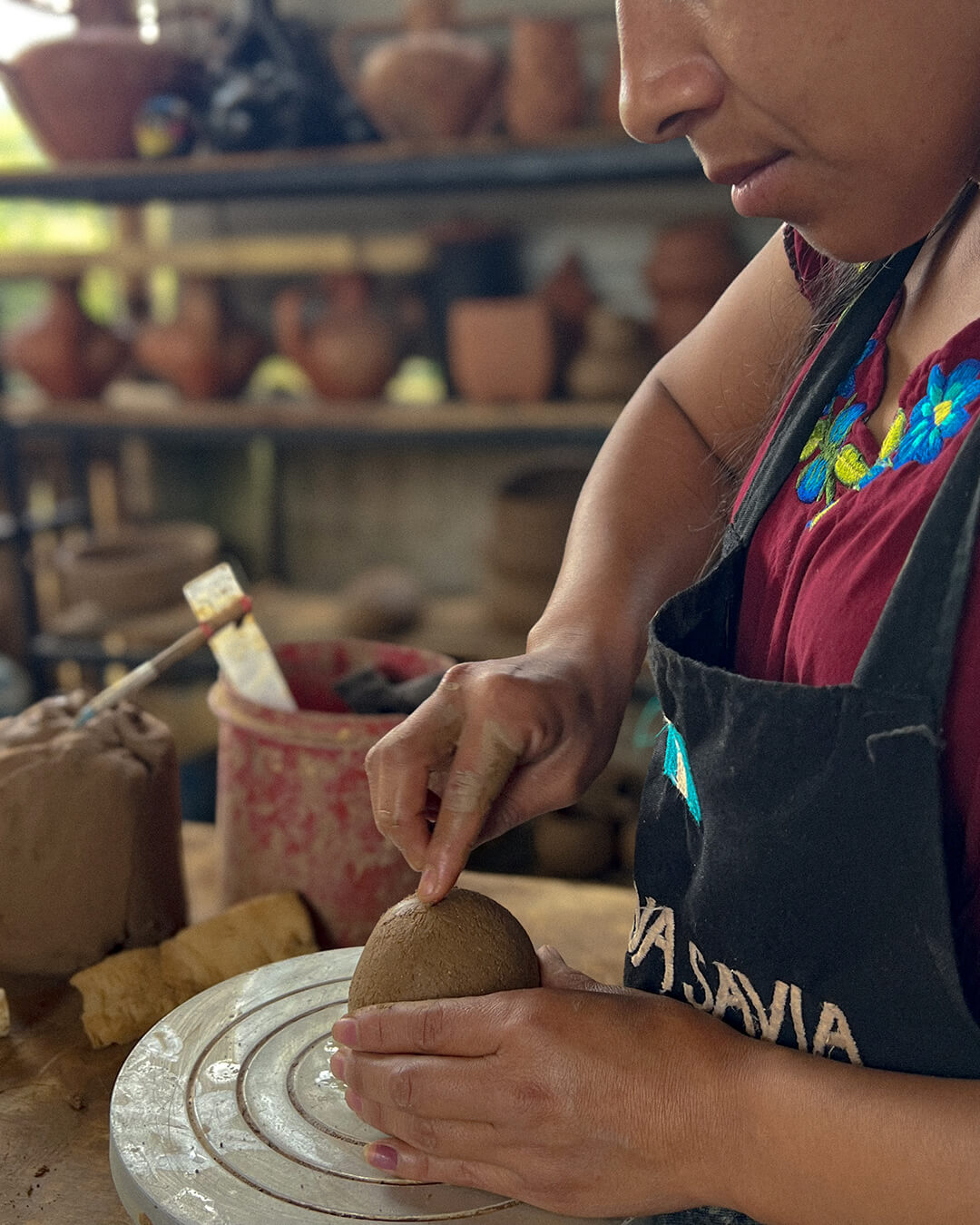
Throughout Manos y Materia, materials do the talking. “Our process always begins with the artisan. We first understand what they do, how they work and what knowledge they carry. We adapt our designs to their methods, not the other way around. The technique is the teacher; we are in dialogue with it,” MacDonald shares with STIR. This supposed inversion, where the designer listens to the craftsperson, anchors the collection. Tradition becomes an evolving intelligence rather than a relic to preserve.
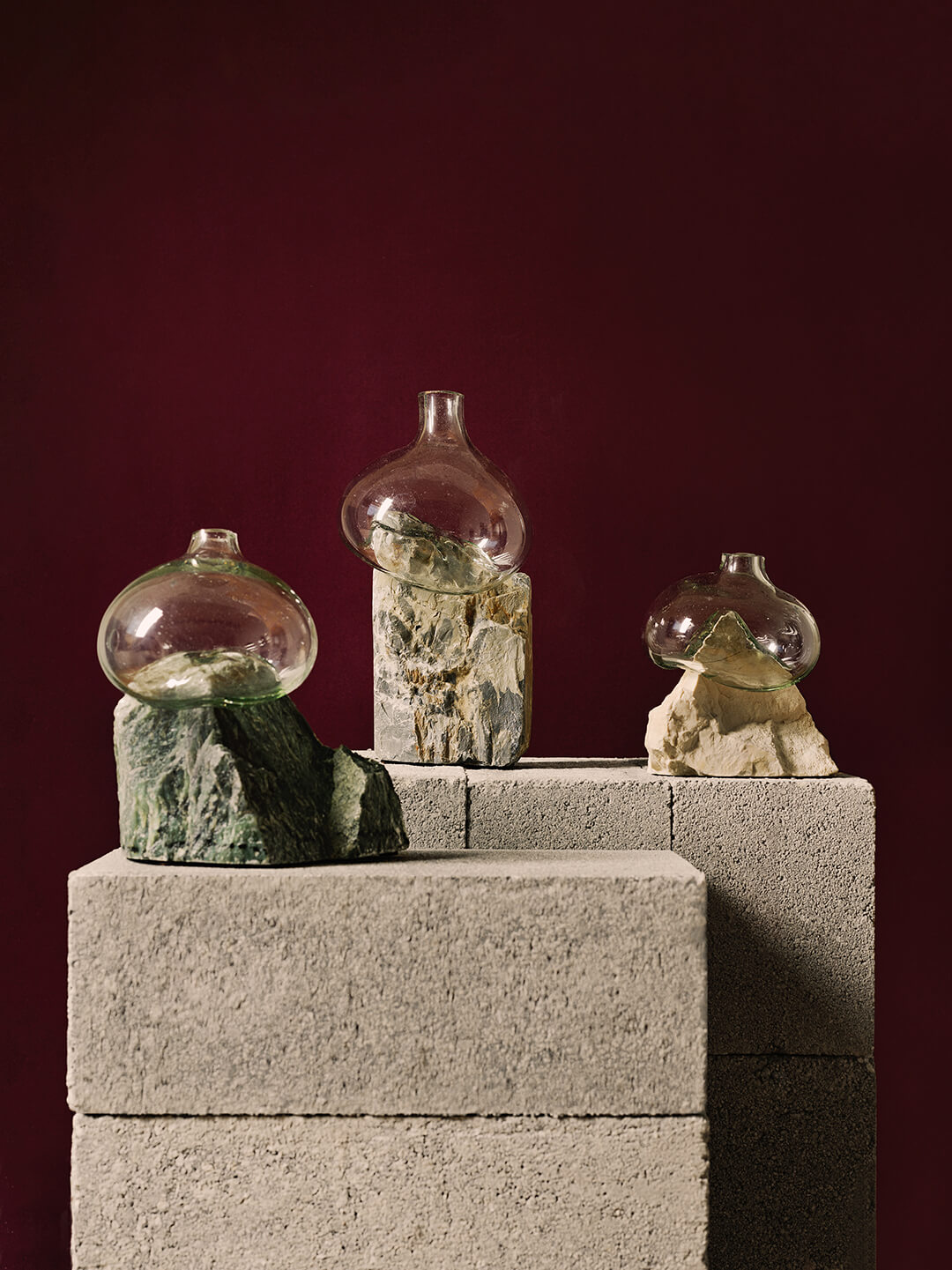
Works such as Roccos and Pōhakus embody that dialogue in its purest form. In Roccos, another candleholder, the hardness of stone meets the pliability of iron and this tension becomes a quiet contest of strength and balance. Pōhakus, made with recycled glass fused onto raw stone, captures the instant when molten glass moulds itself into rock; a zero-waste glassware vases that celebrate nature’s ability to adapt and merge. These quieter studies remind us that even in opposition, materials find harmony.
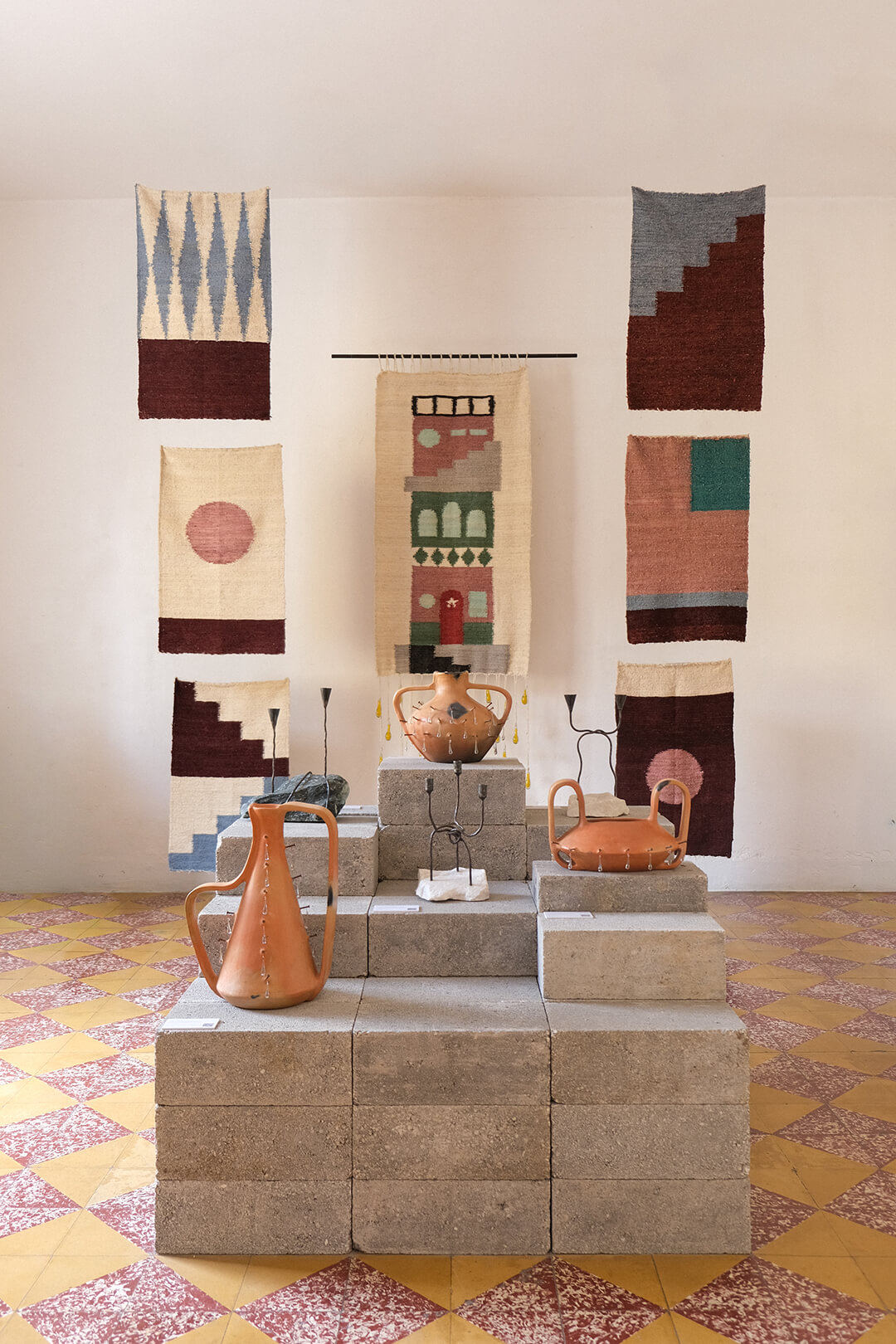
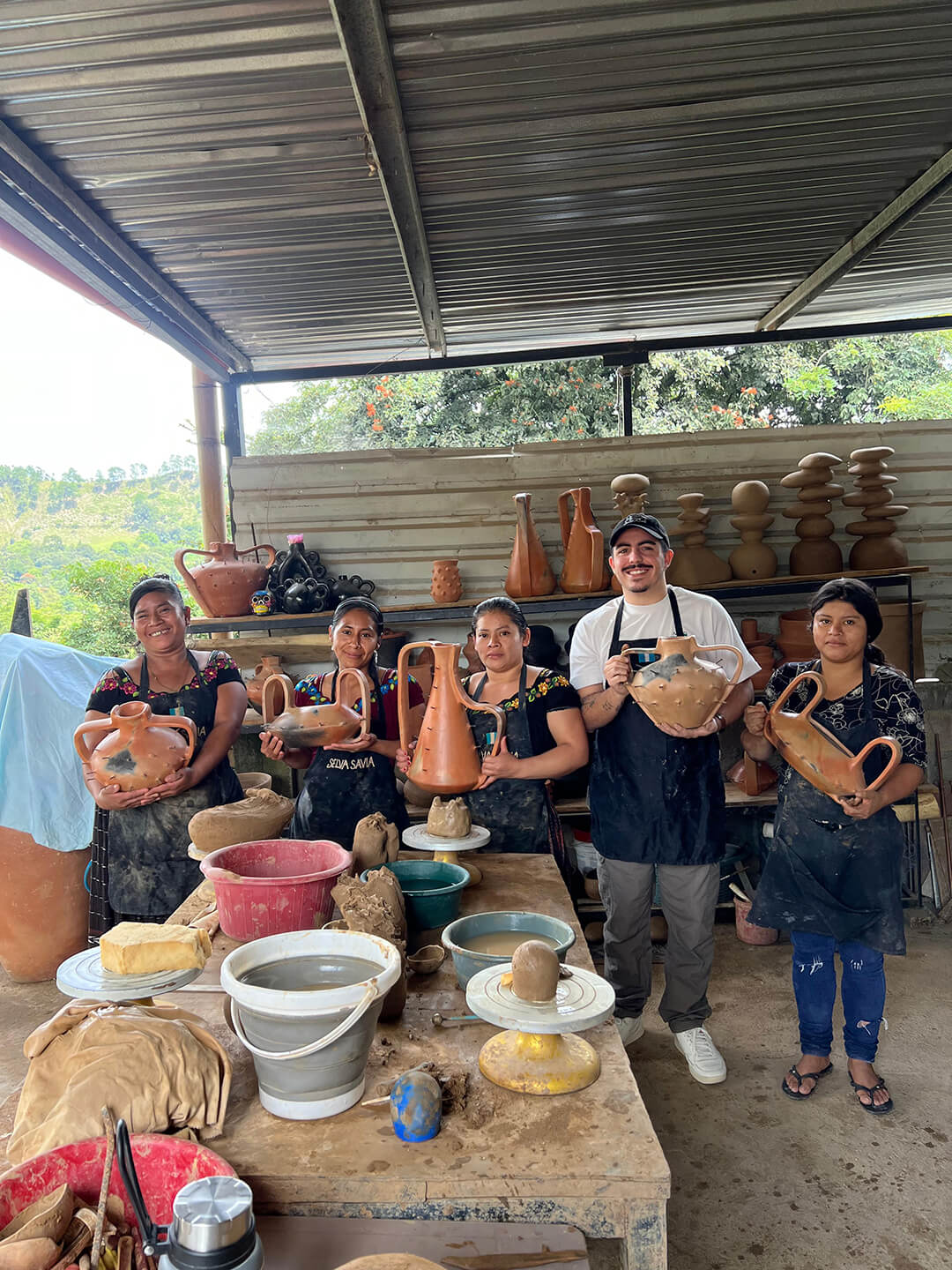
If the collection shares a single thread, it would be one of empathy toward the maker, the material and the story each inherently carries. Not much here is decorative; every mark and imperfection is evidence of a human hand. The works turn Guatemalan craft into a living language. MacDonald calls this vision ‘cultural continuity’, a belief that tradition remains alive only when allowed to evolve. Across Guatemala, a new generation of designers echoes this idea, treating craft as a foundation for contemporary creation rather than a fixed identity. The result is an evolving movement of design that is materially intelligent, socially aware and deeply human.
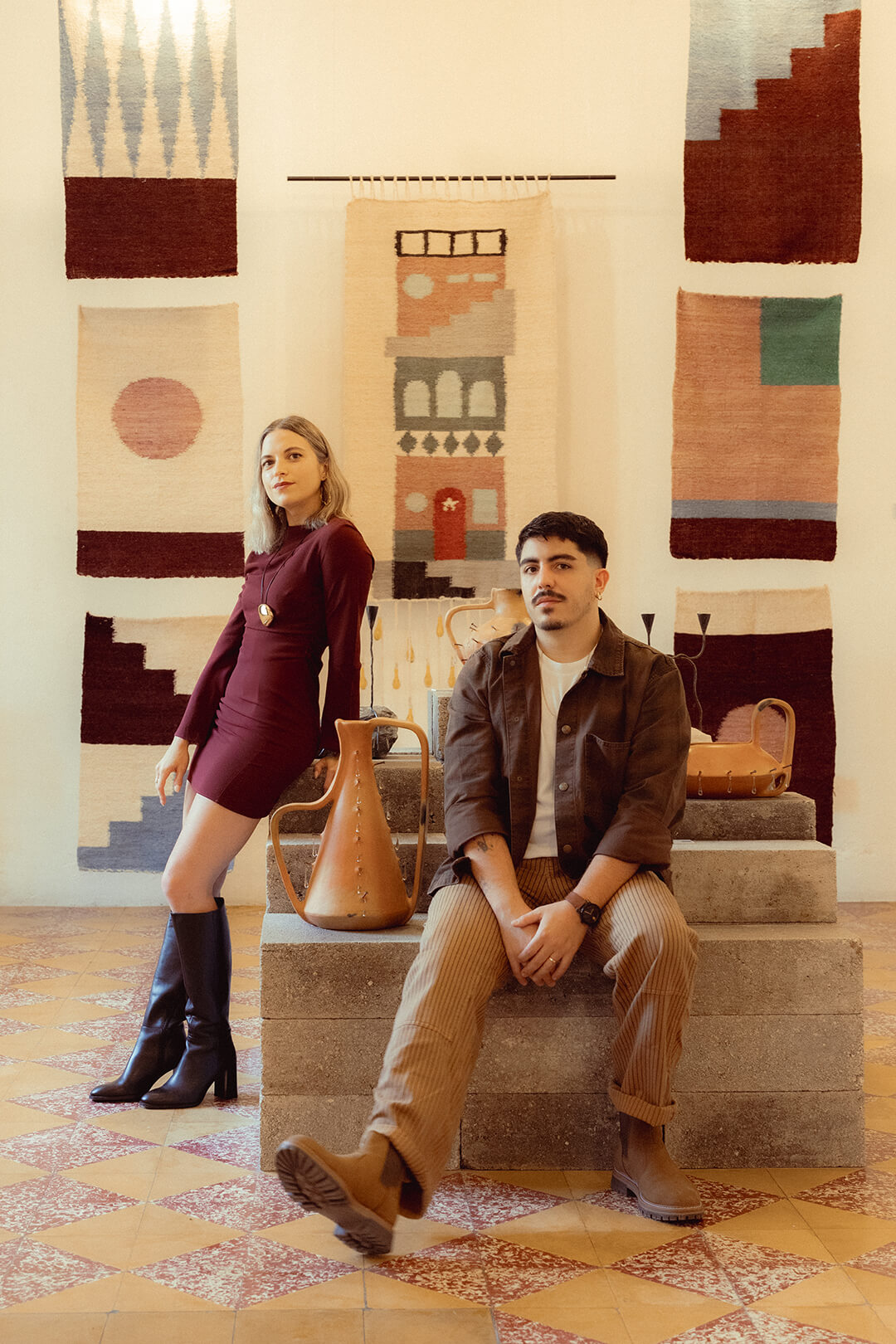
What ultimately gives the collection its strength is not its passage across borders, but its rootedness; the quiet certainty that design, at its most human, begins where hands meet material and memory becomes form.

by Pranjal Maheshwari Oct 23, 2026
Co-authored by Jareh Das, Chairman traces the British designer’s fixation on chairs as symbols of power and identity and as mediums of expression and community building.
by Chahna Tank Oct 22, 2026
STIR speaks with the Mumbai-based type designer about her practice, type walks and why she wants more people to have stronger opinions about Indian-script fonts.
by Mirra Lynn Oct 22, 2026
The curators behind Palestine Design Week 2026 reflect on its intent, considering how design holds memory, makes space for loss and imagines a future in Palestine.
by Jincy Iype Oct 15, 2026
STIR explores craft, material intelligence and people shaping Indian design through dialogues with Design Democracy’s co-founders and the curators of its special exhibitions.

make your fridays matter with a well-read weekend
Enter your details to sign in
Don’t have an account?
Sign upOr you can sign in with
a single account for all
STIR platforms
All your bookmarks will be available across all your devices.
Stay STIRred
Already have an account?
Sign inOr you can sign up with
Verification link sent to check your inbox or spam folder to complete sign up process
Tap on things that interests you.
Select the Conversation Category you would like to watch
Please enter your details and click submit.
Enter the 6-digit code sent at


The material stories of Manos y Materia by Nada Duele convey fragility and endurance
by Aarthi Mohan | Published on : Nov 20, 2025


 Sign in with Google
 Sign in with email
What do you think?