Architecture06 mins. read
QPAC’s new Glasshouse Theatre reflects the ripples of Queensland’s cultural aspirations
by Pranjal MaheshwariSep 30, 2026



by Pranjal MaheshwariPublished on : Sep 29, 2026
Only weeks after revealing its first foldable smartphone, Apple has unveiled another definitive foray in its expansive portfolio—clad in brick and bronze this time around. While the iPhone Duo was called the most transformational iPhone experience since the first, the tech giant’s new live music facility, Apple Music Hall, promises to redefine the relationship between the art form and the audience, built on the foundations laid by the first iPod in 2001. The now-obsolete technical marvel that once created a sensation by putting ‘1,000 songs in your pocket’, along with the in-house streaming service, iTunes, emerged in response to the growing popularity of digital music services and the rising risk of piracy that accompanied that convenience. Since then, the brand has ventured into synthesising an entire ecosystem around the music industry, connecting artists and enthusiasts through events such as the iTunes Festival in 2007 and platforms such as iTunes Radio in 2013. Following that trajectory, Apple’s new Music Hall appears to be a skipping stone geared to create many ripples in the industry.
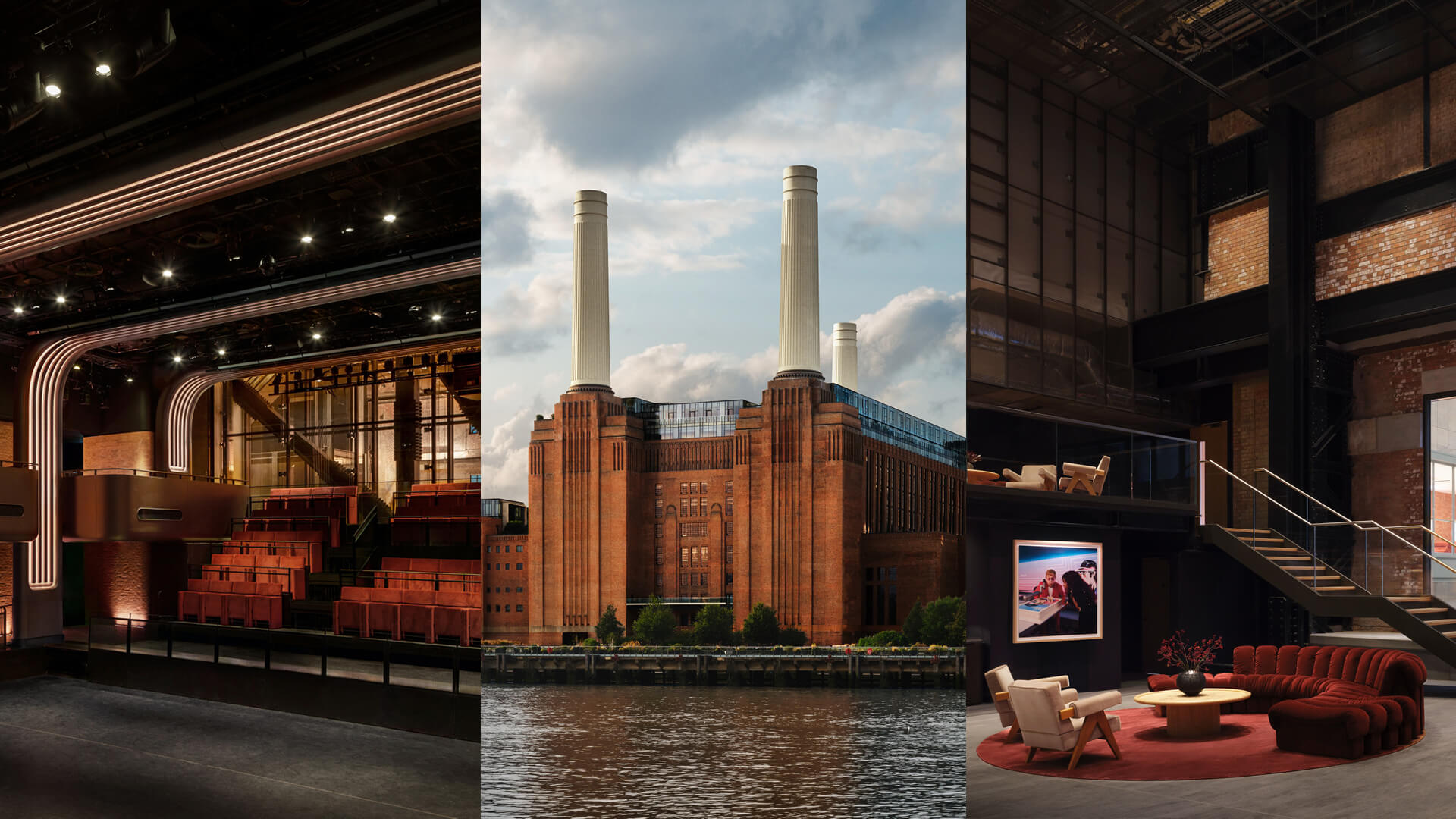
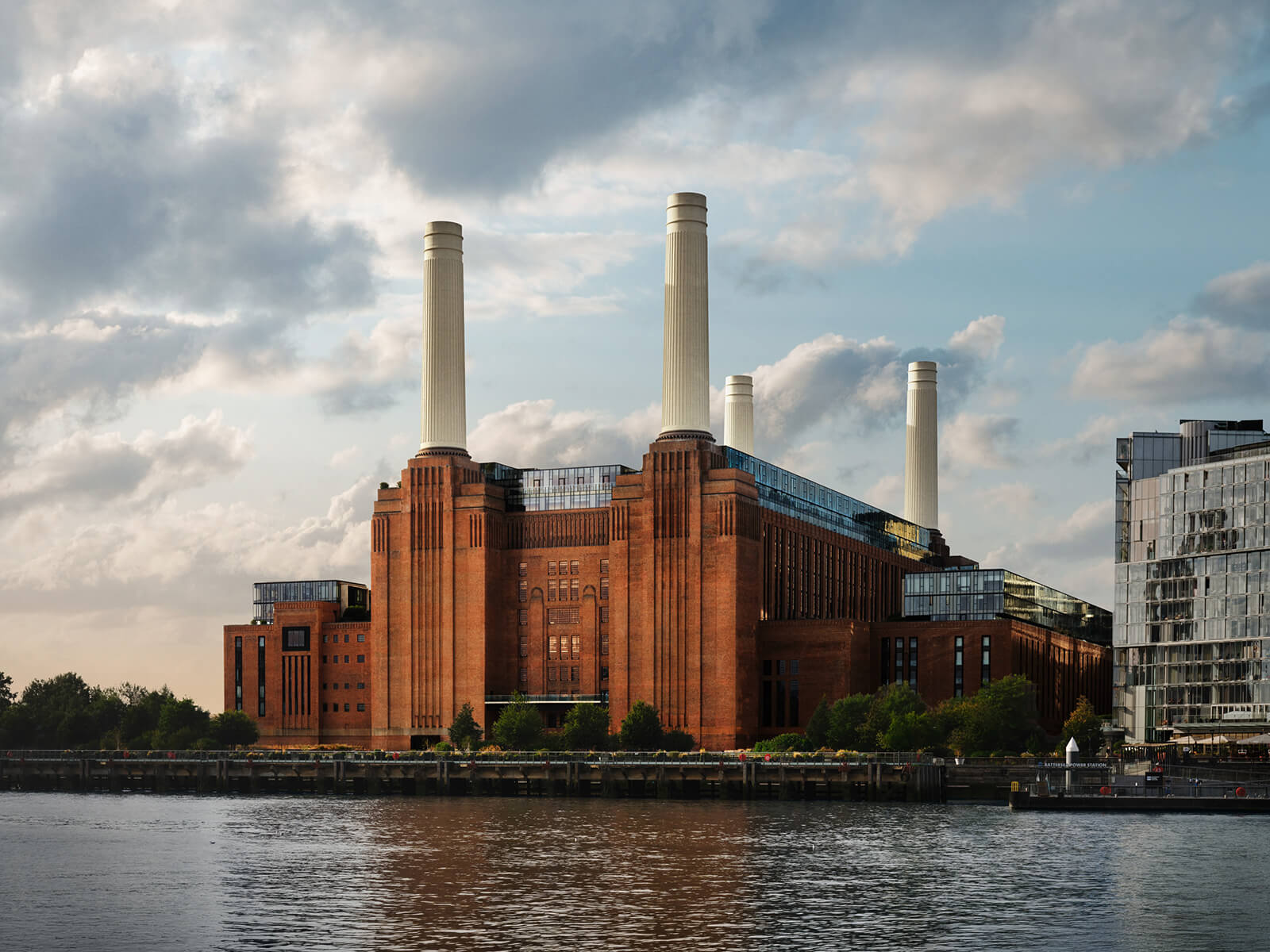
Housed in London’s recently reopened Battersea Power Station, alongside the brand’s Europe headquarters, Apple Music Hall might be among the biggest associations of Giles Gilbert Scott’s architectural landmark with music among the broader pop-cultural spectrum since the 1977 album cover of Pink Floyd’s Animals. Designed by Apple’s in-house team led by Kirstina Raspe, vice president of Apple Places (the tech brand’s internal real estate and workplace design department), the cultural centre also strives to respond sensitively to the original Art Deco expression of the century-old power station, restored in 2022 by WilkinsonEyre.
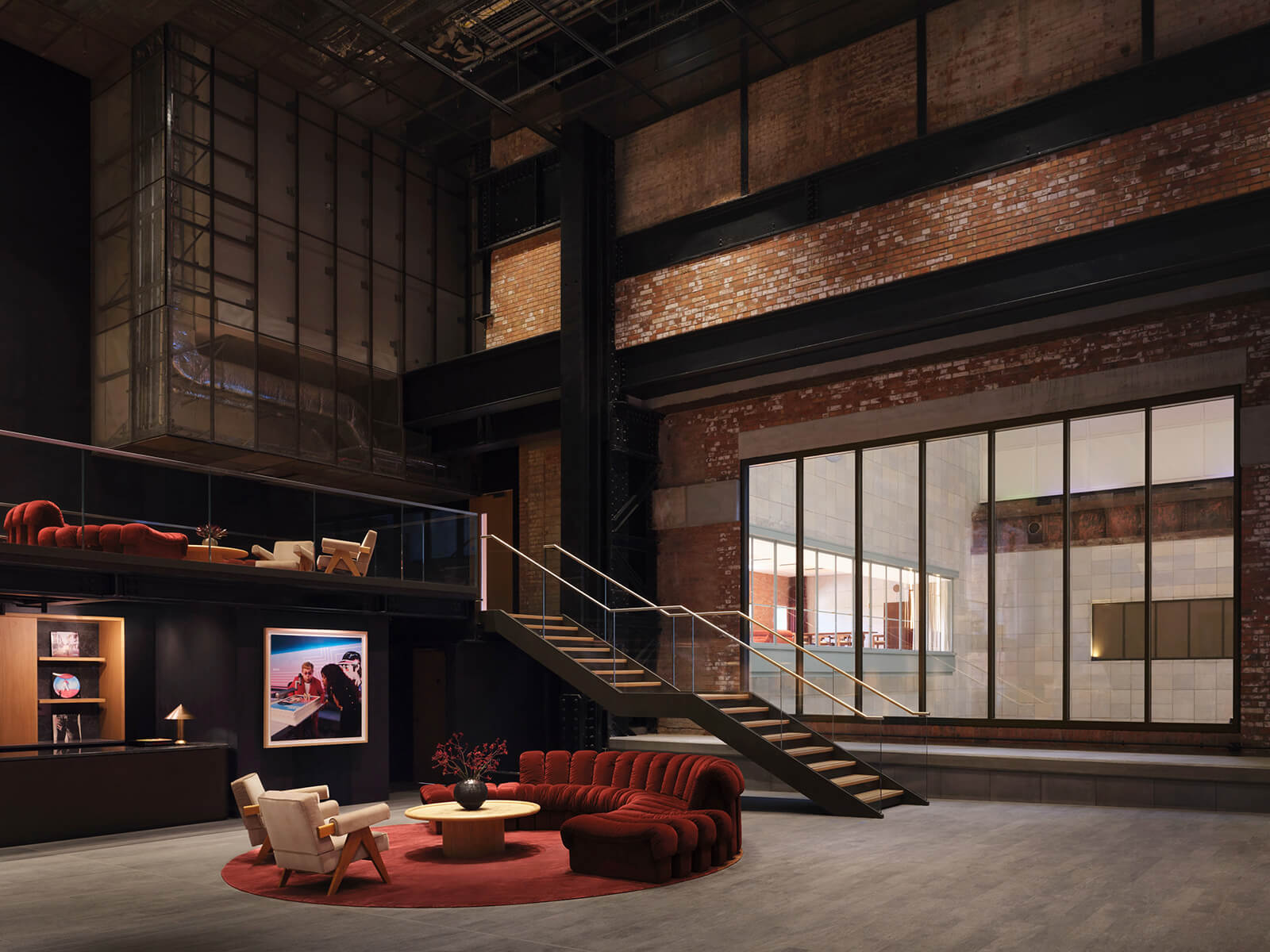
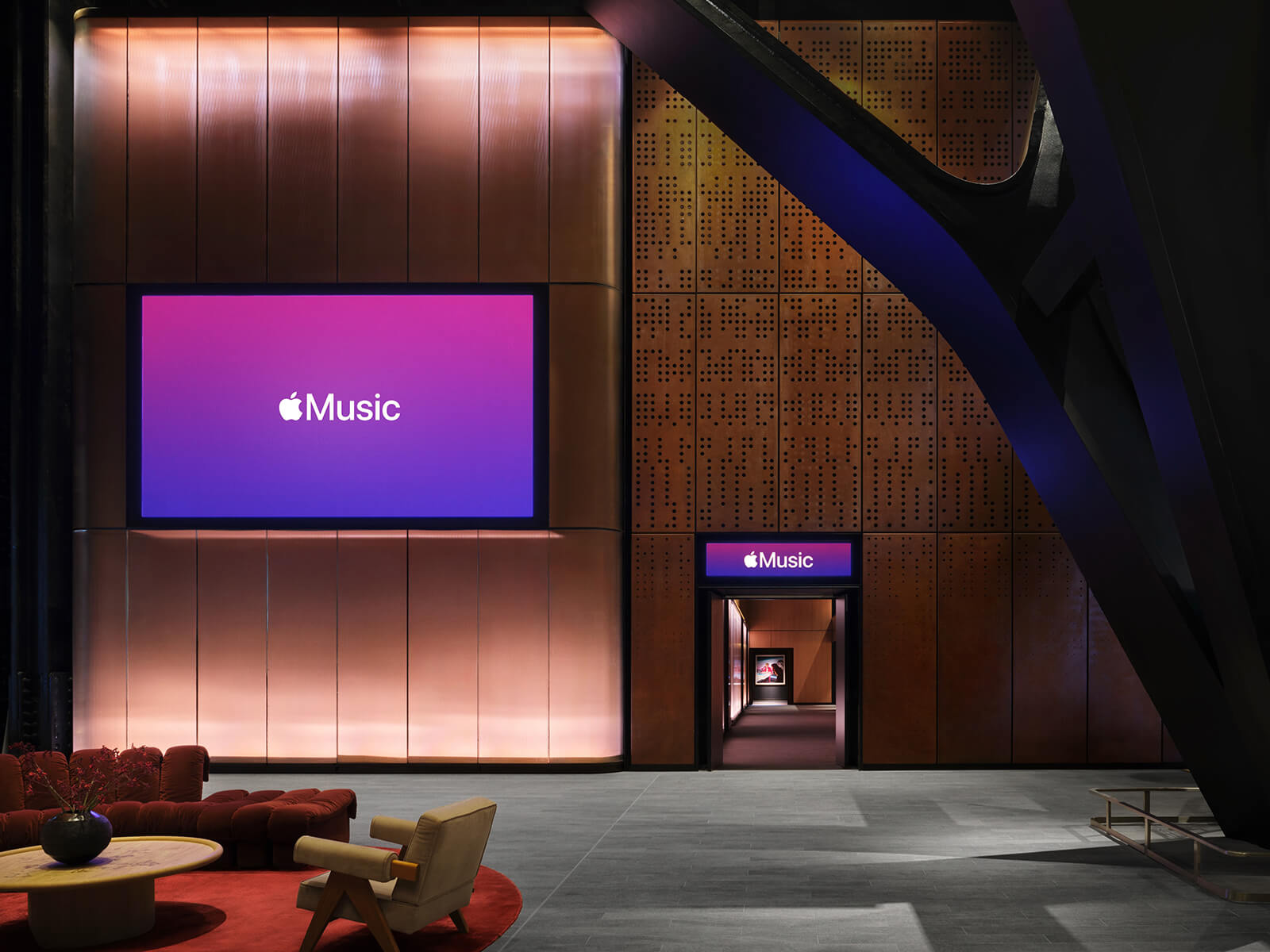
Located in Turbine A at the building’s northern end, the venue is enveloped in exposed brick walls, with a series of structural steel joists visible at one end of the performance area—remnants of an unmistakable industrial heritage. The interior design of the performance space reinterprets the Art Deco elements of the heritage building through four illuminated archways interspersed with bronze balconies. The bevels in the archways are marked with a touch of the fluid design expression now synonymous with several Apple products. Sections of the venue also feature glass walls to directly connect with the historic architecture as well as the view of the concourse of the River Thames.
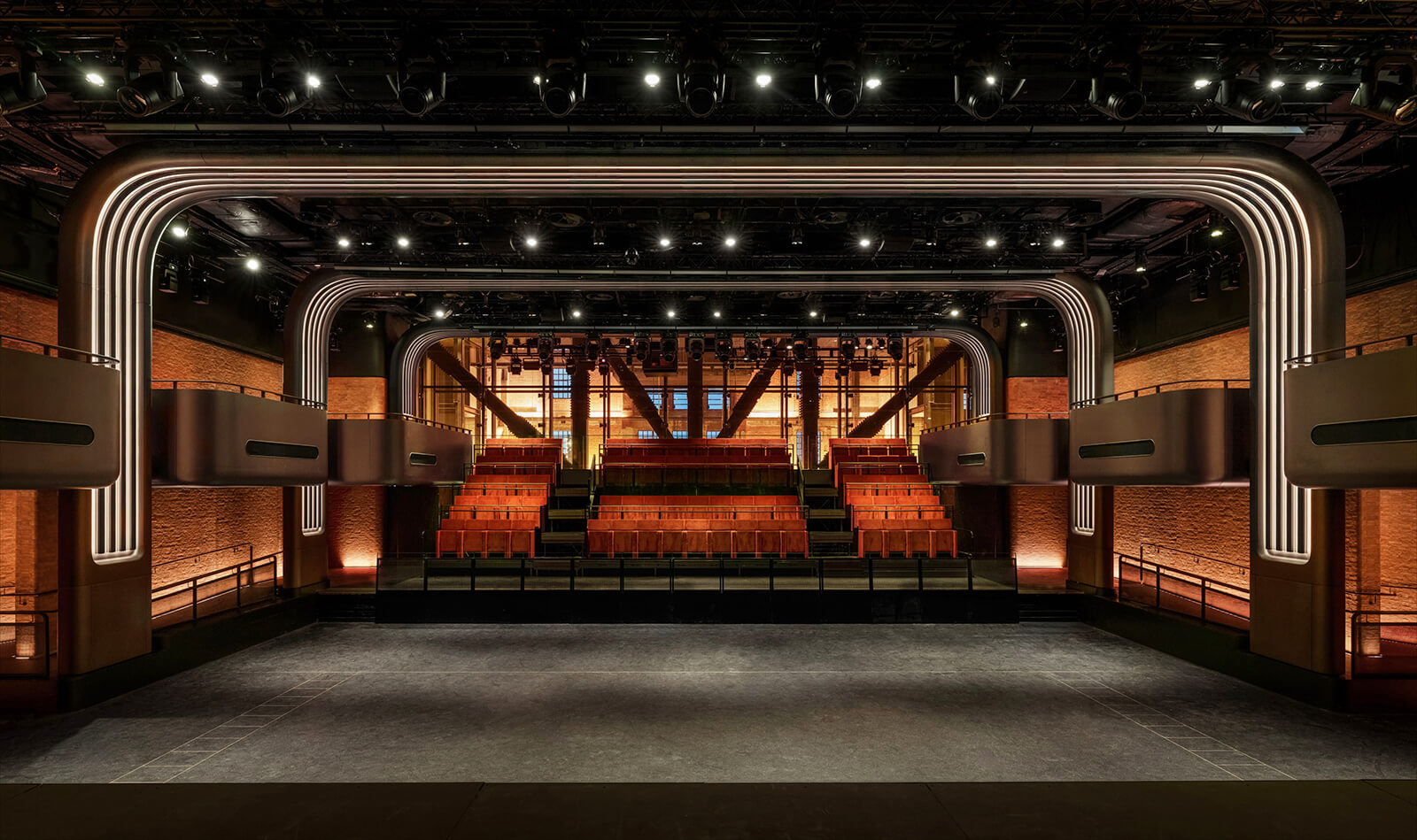
The performance space remains consciously intimate in its scale to channel a more personalised experience for the audience and connection with the artist. Yet, with a capacity of 600 people, it boasts an experience as immersive and enticing as a live concert. The facility offers a flexible, 38ft-wide stage that is reconfigurable for both front-facing and centre-facing, arena-like setups. The live audience can enjoy a seated, standing or hybrid performance experience, equipped with a 48-speaker system to offer virtual proximity to the artist. For those not physically at the venue, a system of 16 hardwired broadcast cameras and spatial audio recording, with additional provisions for shooting with an iPhone, allows broadcast and live streaming through the Apple Music ecosystem.
Backstage, the production facilities of Apple Music Studios offer world-class record-and-mix studios and broadcast control rooms, allowing performances to be captured as multitrack recordings and mixed in immersive spatial audio.
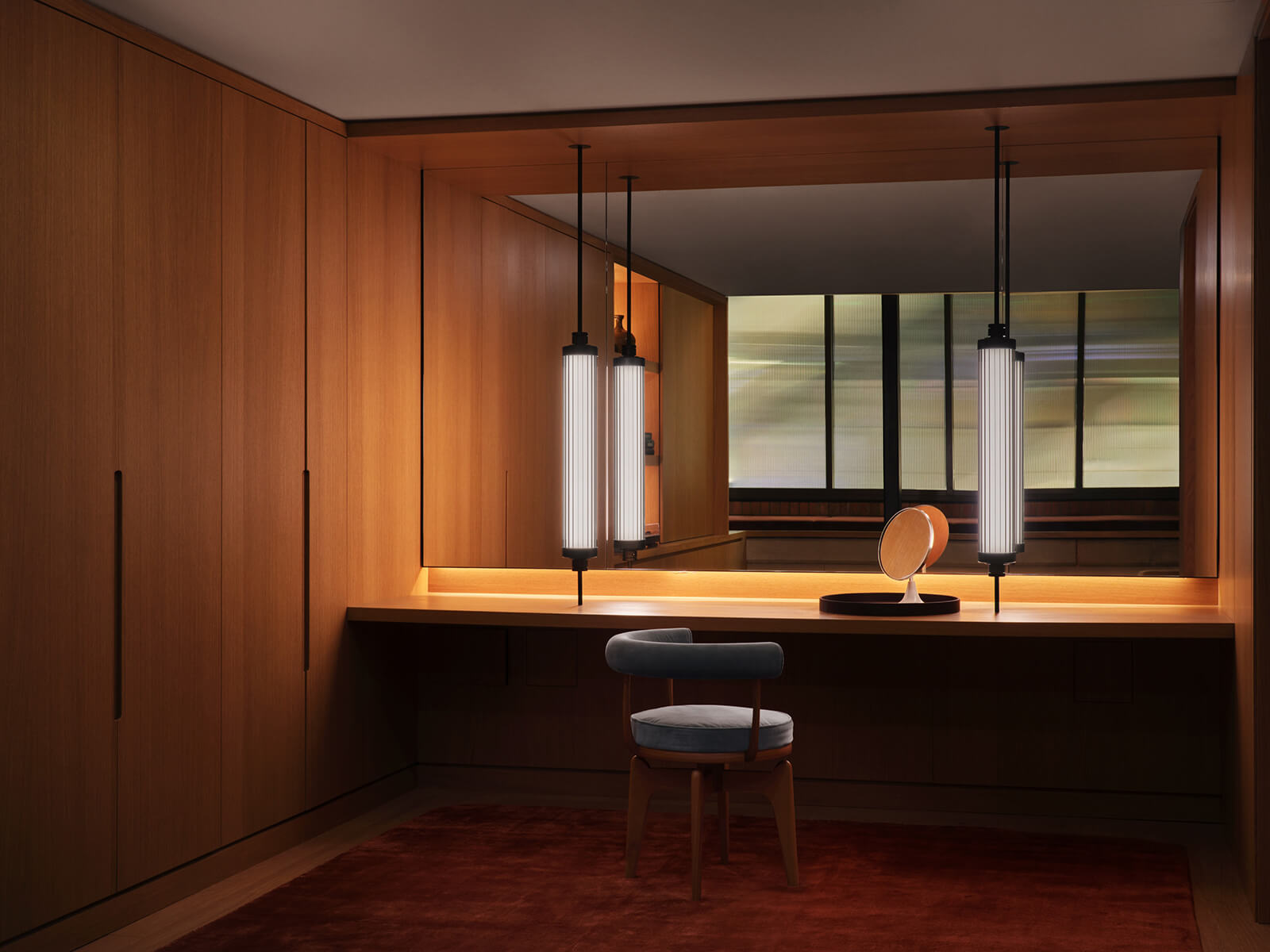
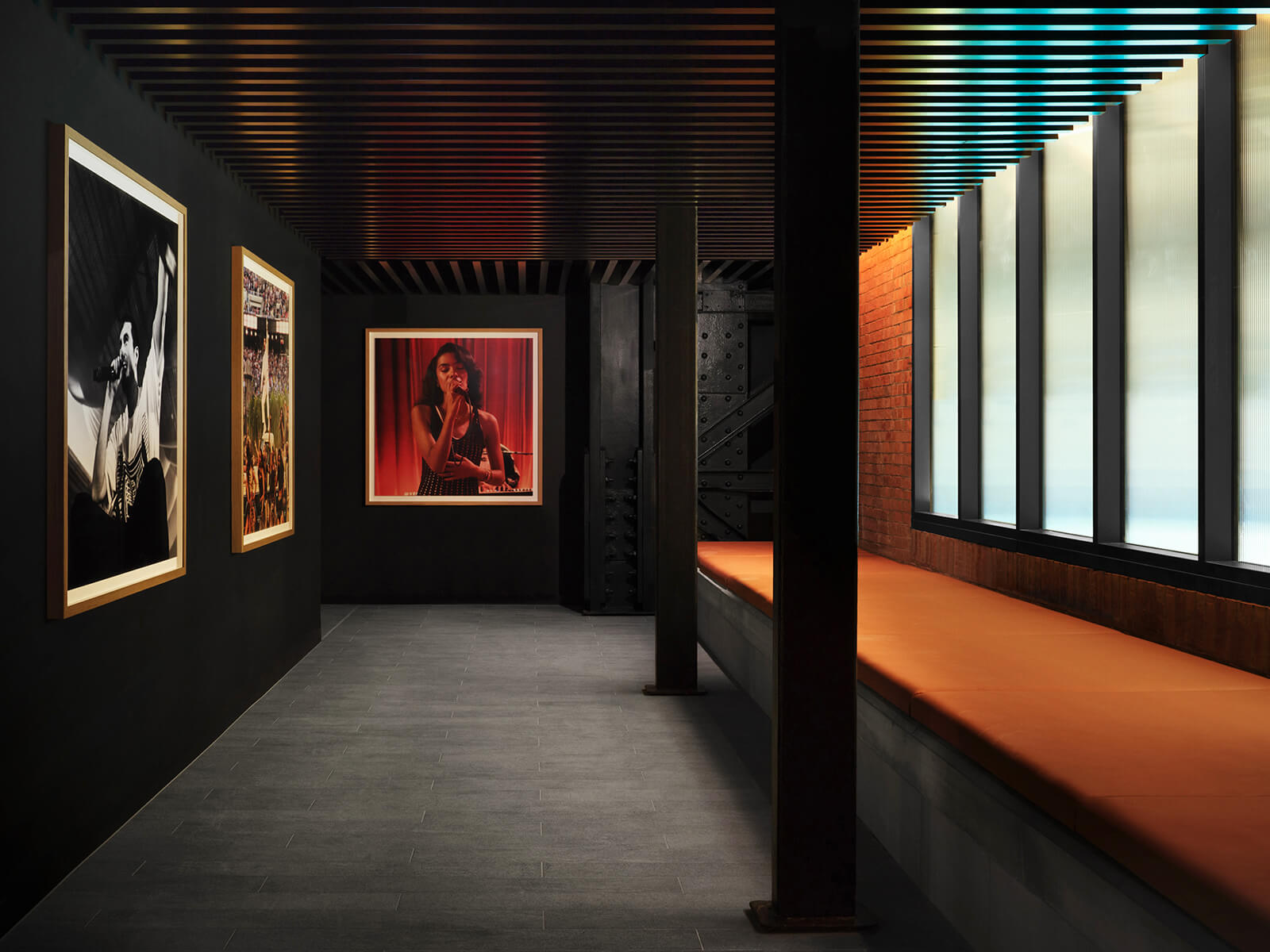
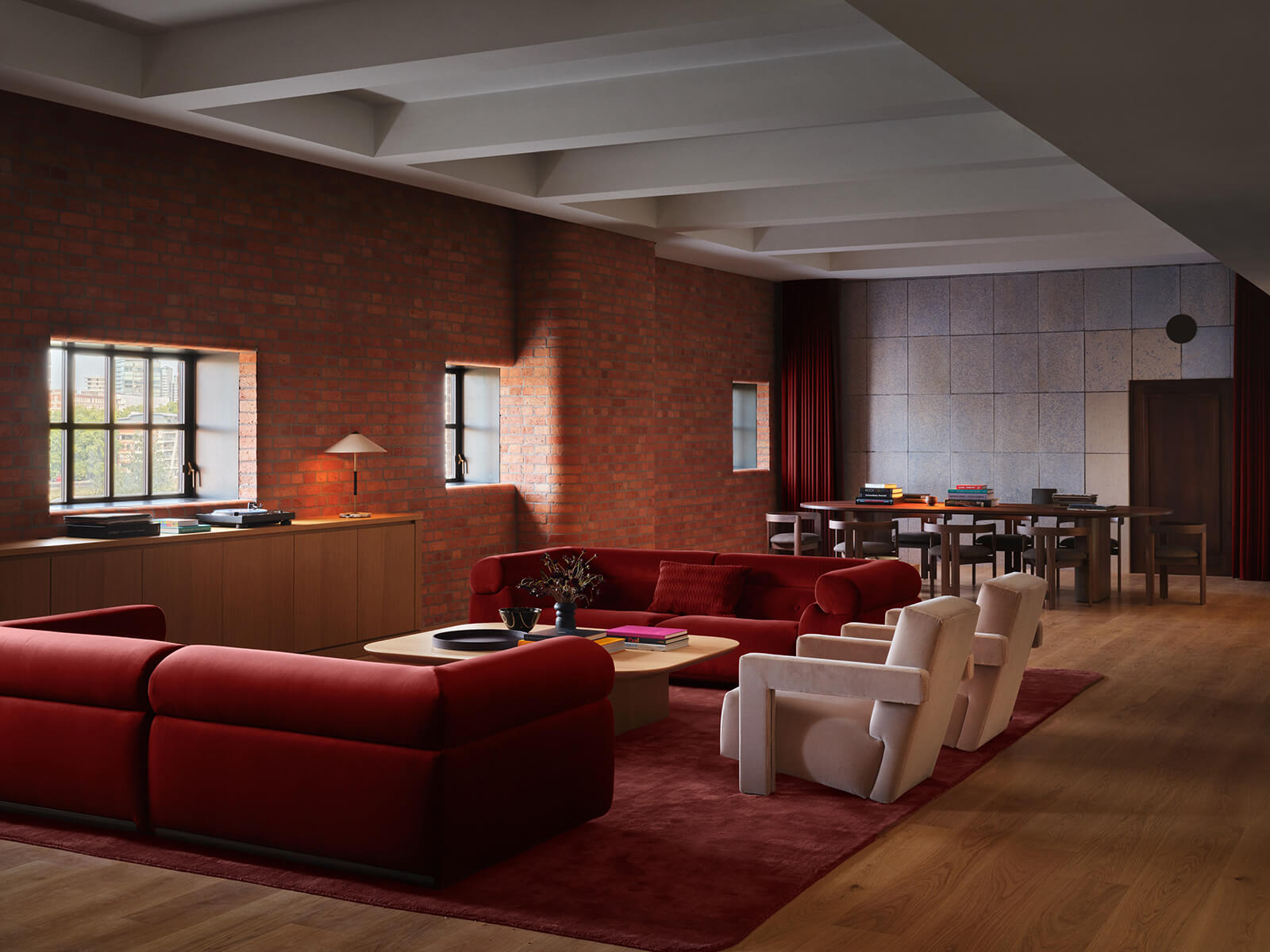
Beyond the spatial design of the performance area, the influence of the host structure’s architectural legacy is also visible throughout the circulation and ancillary spaces, including lobbies, recording studios and offices. While the new additions use metal, glass and wood, the colour palette and tactility of furnishings resonate with the earthy tonal variations of the masonry walls. The occasional contrast as a highlight isn’t ruled out either. The complementary wall decor relishes Apple’s role as a patron to some memorable instances from the world of music, such as the 10th anniversary celebration of Rocket Hour featuring Elton John and Zane Lowe, the launch poster of Billie Eilish’s Happier Than Ever on Apple Music’s spatial audio and one from Olivia Dean’s live performance of So Easy (To Fall in Love) on Apple Music Sessions.
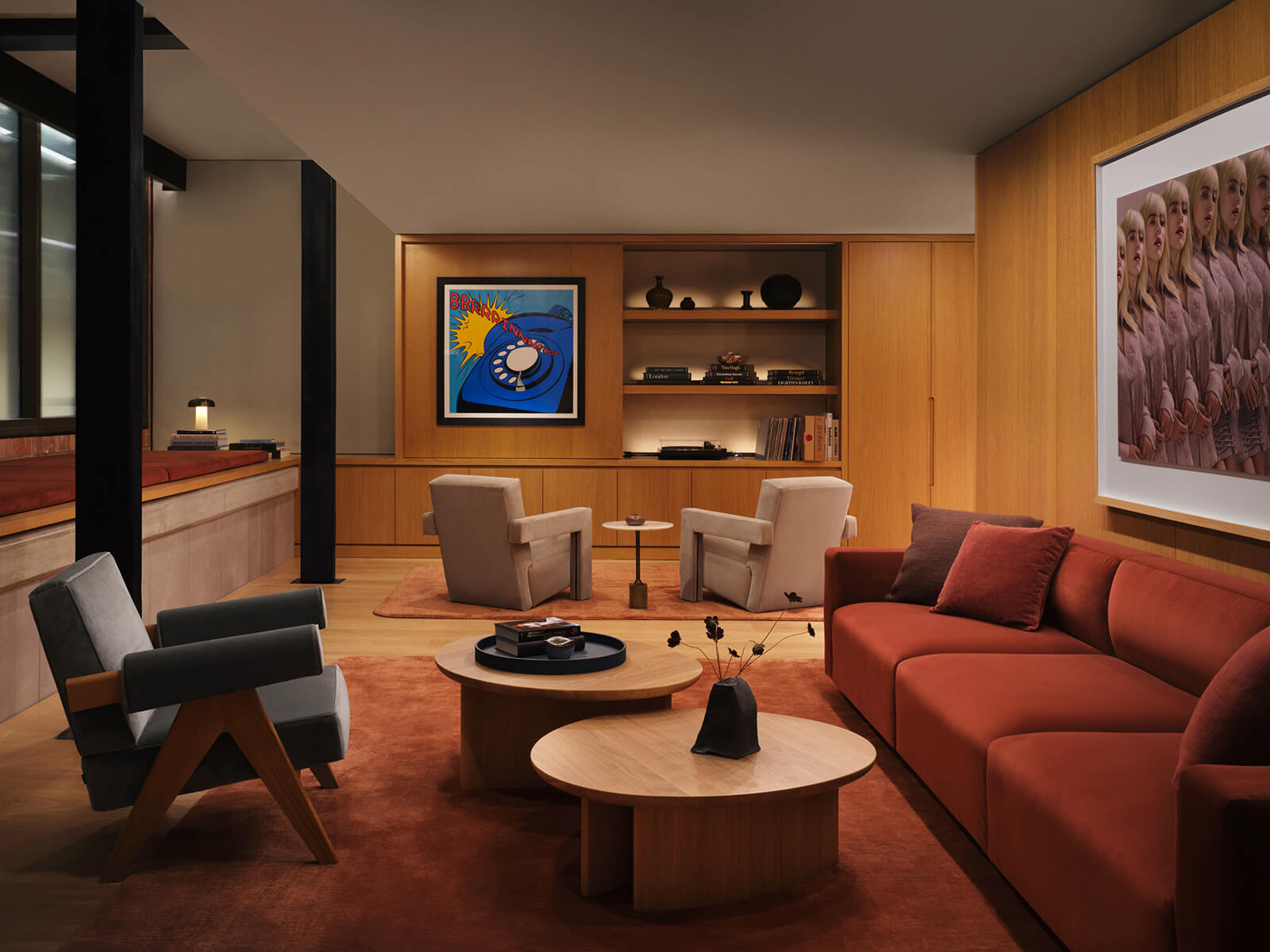
“An artist can perform an intimate live show for fans at Apple Music Hall and walk out with a finished spatial audio recording, a broadcast-ready mix, and multicamera video—all from a single show,” Apple relays in an official release.
More than two decades ago, the iPod-iTunes duo had disrupted the industry with exponentially enhanced accessibility and convenience for digital media. Since then, the brand has gone beyond its hallmark software-hardware symphonies to facilitate global platforms for cultural exchange. A number of these platforms have now borne witness to some defining moments in global pop culture, including the electrifying performance by Elton John at the iTunes festival in 2013, announcing his return from a critical health emergency. Now, Apple marks a full-circle moment and a return to the headlines in the realm of music and culture—nearly a decade since its last live music festival—with John delivering the venue’s inaugural performance this week. Other eminent artists performing at the venue over the next few months include Baby Keem, Skye Newman, Arlo Parks, Burna Boy, Troye Sivan, Chase & Status and Charli xcx.
In 2022, the Battersea Power Station reopened with the promise of moving beyond its industrial roots and harbouring the city’s exhilarating creative spirit. Housed within this emergent cultural centre, Apple Music Hall is held to a similar promise—to prove to be a haven for the next generation of the city’s creatives, beyond catering to them as patrons.

by Pranjal Maheshwari Oct 19, 2026
The Mumbai-based architects integrate courtyards, mesh screens and north light trusses to create a dining space that doubles up as a community hub at SR University, Warangal.
by Mrinmayee Bhoot Oct 17, 2026
The Rotterdam-based institute centres the Indian Ocean as a network for exploring material histories and transnational links shaping coastal cultures, positing them as future models.
by Pranjal Maheshwari Oct 16, 2026
At the 2026 Stirling Prize ceremony, Mary Duggan with RUFF Architects, MAKER Architecten and Nakshabid Architects were felicitated for proffering quality housing and social equity.
by Mrinmayee Bhoot Oct 12, 2026
The new Centre for Contemporary Arts, fostering public engagement with art in Uzbekistan, is housed in a tram depot refurbished by the French studio, emulating local craftsmanship.

make your fridays matter with a well-read weekend
Enter your details to sign in
Don’t have an account?
Sign upOr you can sign in with
a single account for all
STIR platforms
All your bookmarks will be available across all your devices.
Stay STIRred
Already have an account?
Sign inOr you can sign up with
Verification link sent to check your inbox or spam folder to complete sign up process
Tap on things that interests you.
Select the Conversation Category you would like to watch
Please enter your details and click submit.
Enter the 6-digit code sent at


The new Apple Music Hall cues a revival for live music in Battersea’s Art Deco brick shell
by Pranjal Maheshwari | Published on : Sep 29, 2026


 Sign in with Google
 Sign in with email
What do you think?