Architecture07 mins. read
Paulíny Hovorka Architects designs a brutalist Y-shaped haven in rural Slovakia
by Aarthi MohanJul 08, 2025




by Aarthi MohanPublished on : Jan 10, 2026
In the past decade, purpose-built student accommodation has seen a visible and often contested presence in London. Its growth coincides with a housing market under pressure, where rising private rents, limited university provision and a transient student population have converged. Against this backdrop, projects such as Canvas Arthur House in Wembley sit less as architectural statements and more as practical responses to a specific urban reality rethinking how students live, study and form routines in a city where space is scarce and stability can be hard to find.
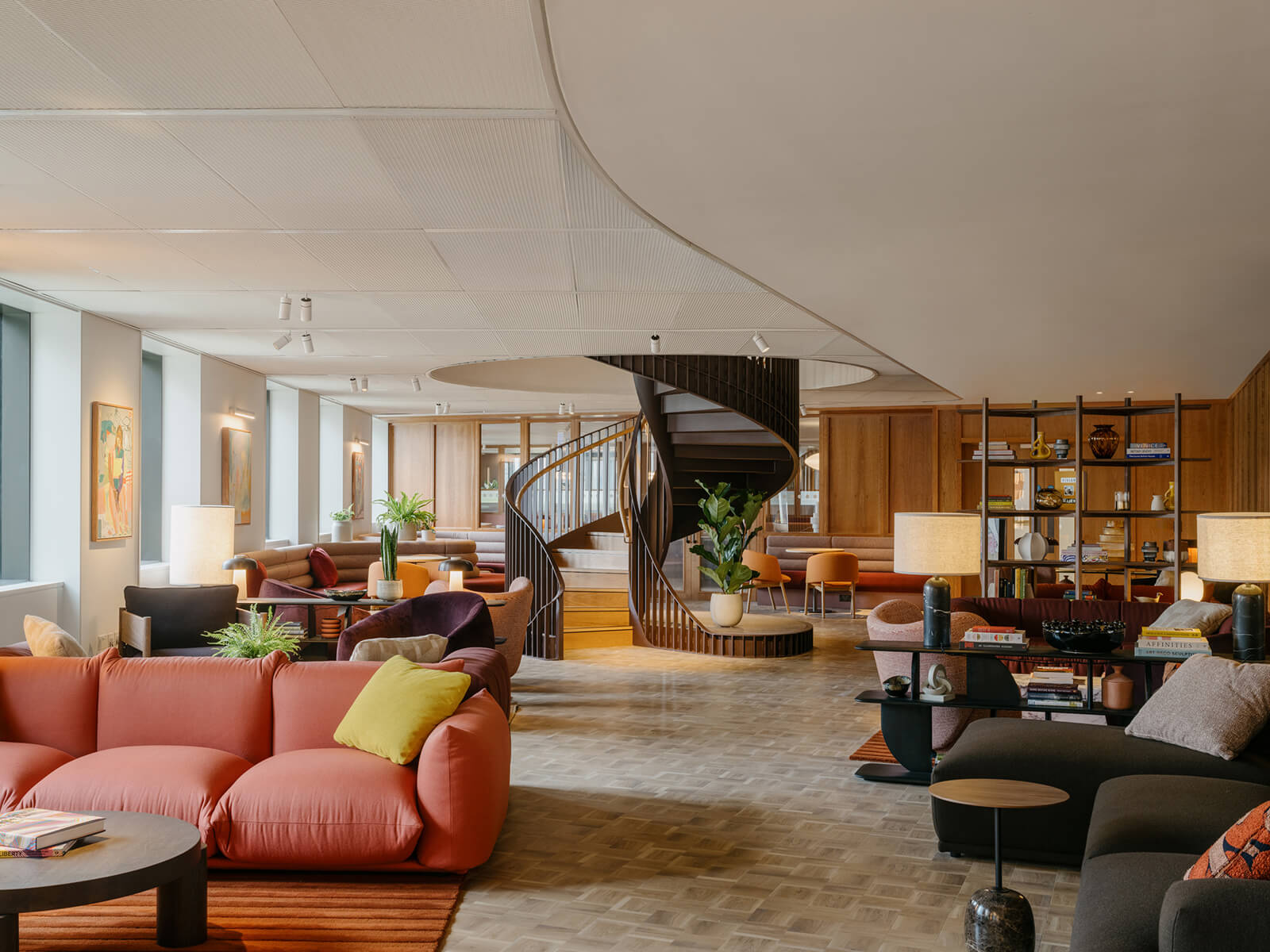
Completed by TiggColl for Greystar’s Canvas Student portfolio, Canvas Arthur House is a 770-bed student residence arranged around a shared podium of amenities. TiggColl, a London-based practice with an established body of work across residential and student housing interiors, approaches the project as a spatial framework for daily use, prioritising organisation and legibility. Greystar, a global residential developer and operator, positions Canvas Arthur House within its wider European student housing portfolio, where long-term occupation and shared facilities form a consistent brief. Within this context, interior architecture is conceived as a sequence of everyday environments, essentially as spaces that support social interaction, privacy and rest.
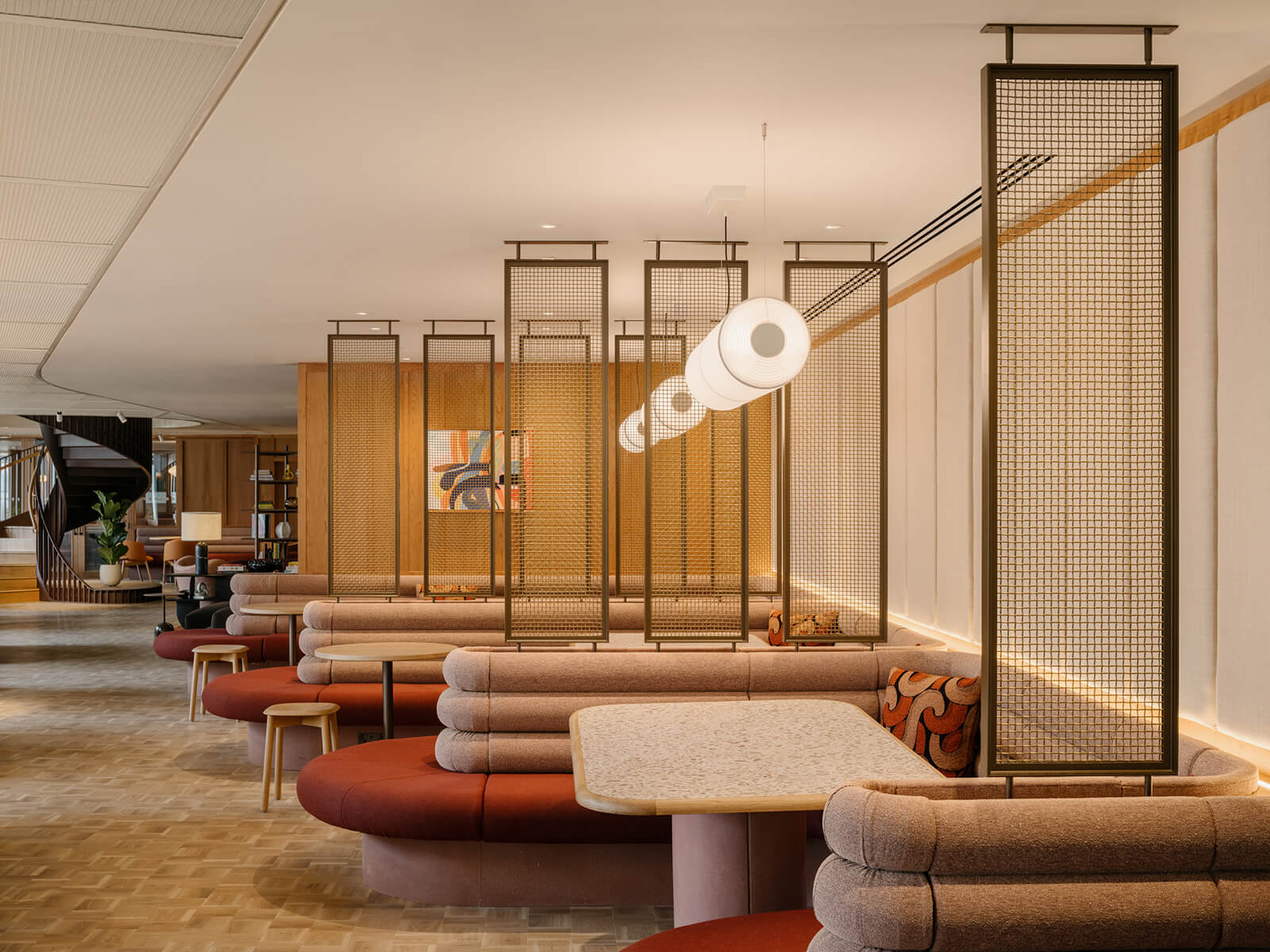
The ground floor establishes the organisation of the building’s shared spaces. Reception, lounges, co-working areas, study rooms, meeting spaces and fitness facilities are organised within a long, open-plan space shaped by the building’s splayed external walls and a series of subtle level and volume shifts. Rather than being divided by fixed boundaries, the different uses transition gradually into one another. Lounges recede into quieter corners, large shared tables sit alongside smaller nooks and movement through the space is loosely structured rather than formally directed. The result is a layout that accommodates the varied rhythms of student life, from focused study to unplanned conversations.
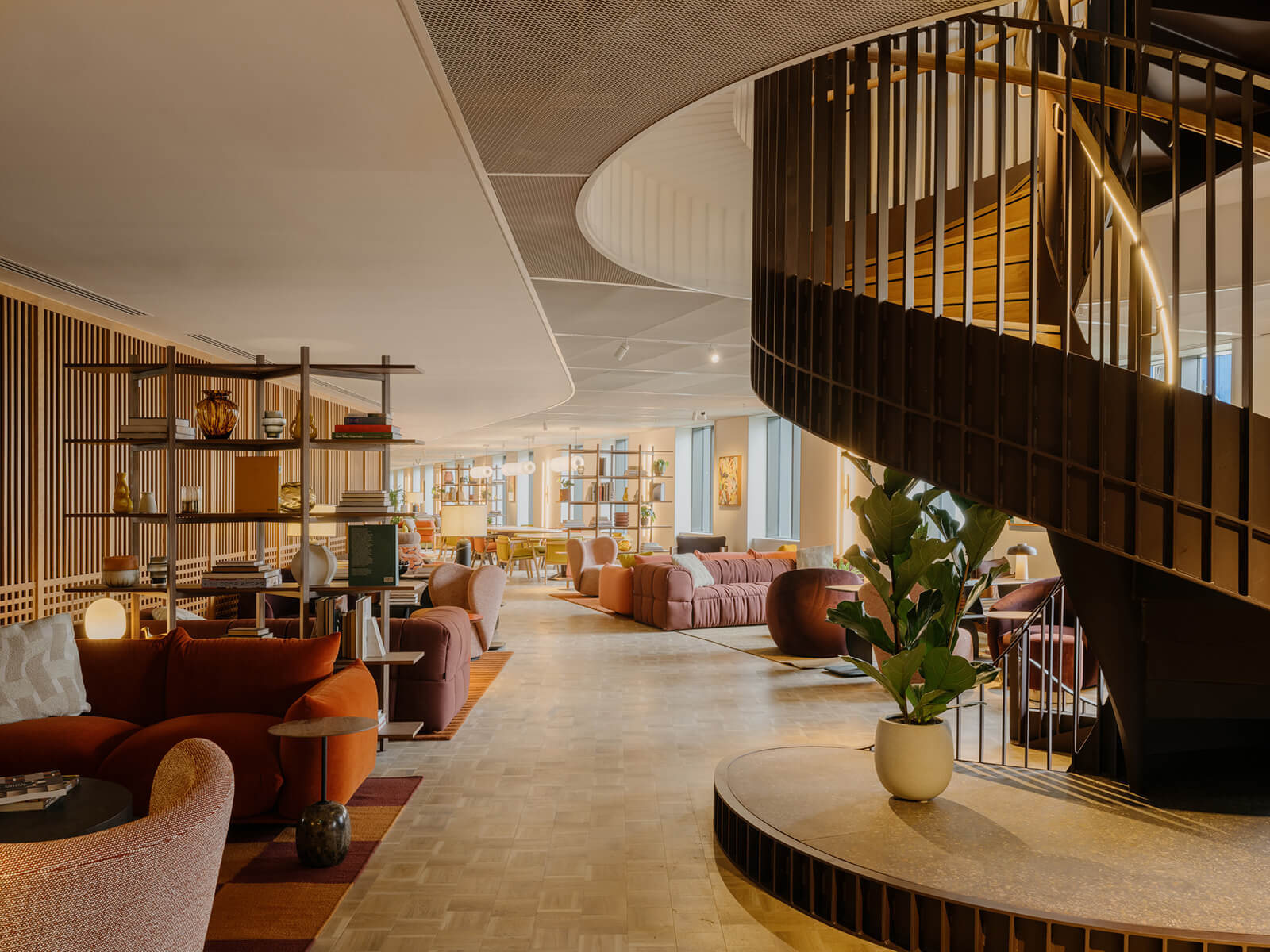
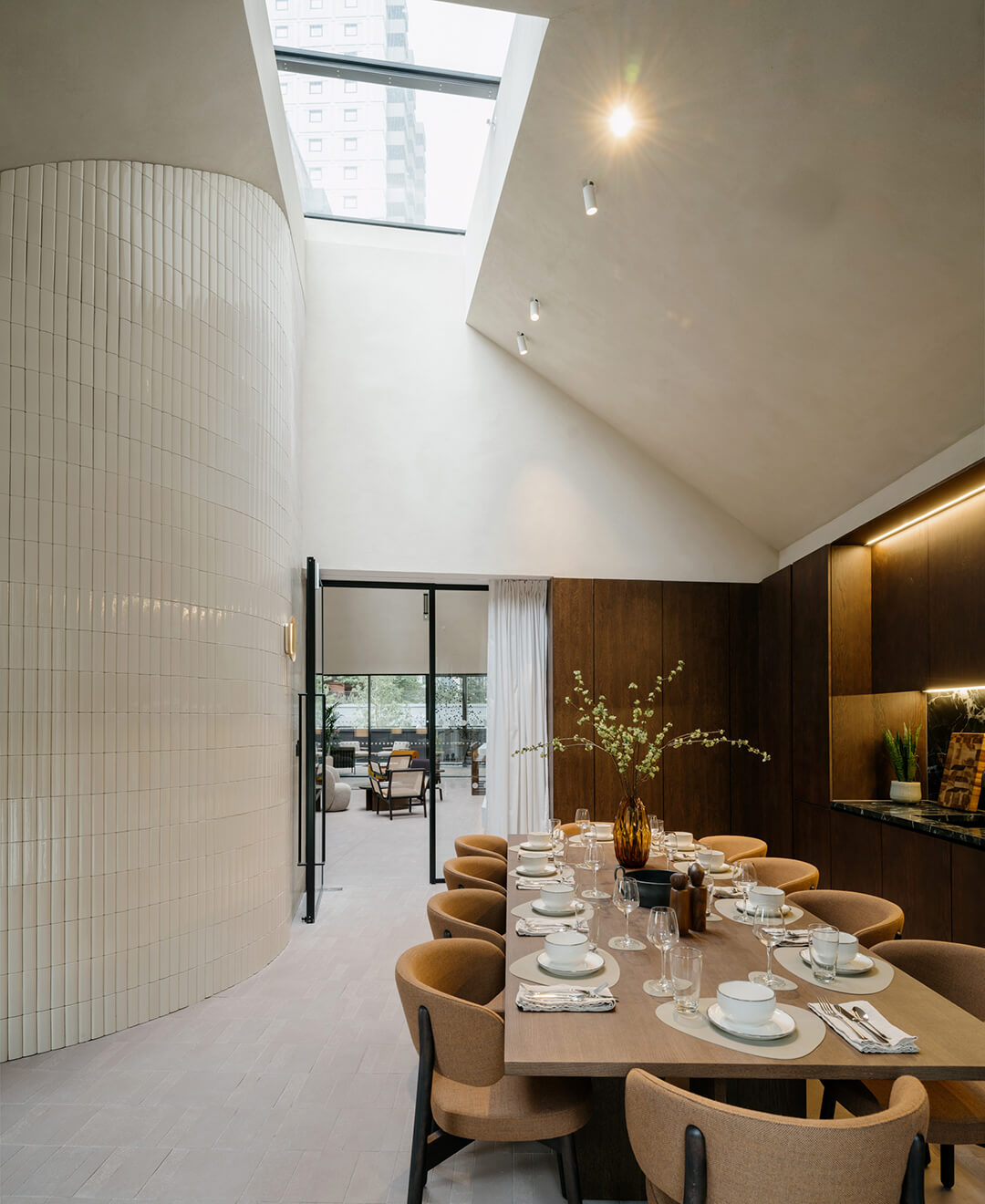
At the centre of this level, a sculptural spiral staircase draws daylight into the interior and leads to the pavilion above, where the emphasis moves from everyday circulation to programmed communal use. The first floor houses an events lounge, a private dining room and access to podium terraces. Here, the connection to outdoor space and natural light is more pronounced, offering areas for reflection and gathering that feel removed from the pace of the ground floor without becoming detached from it.
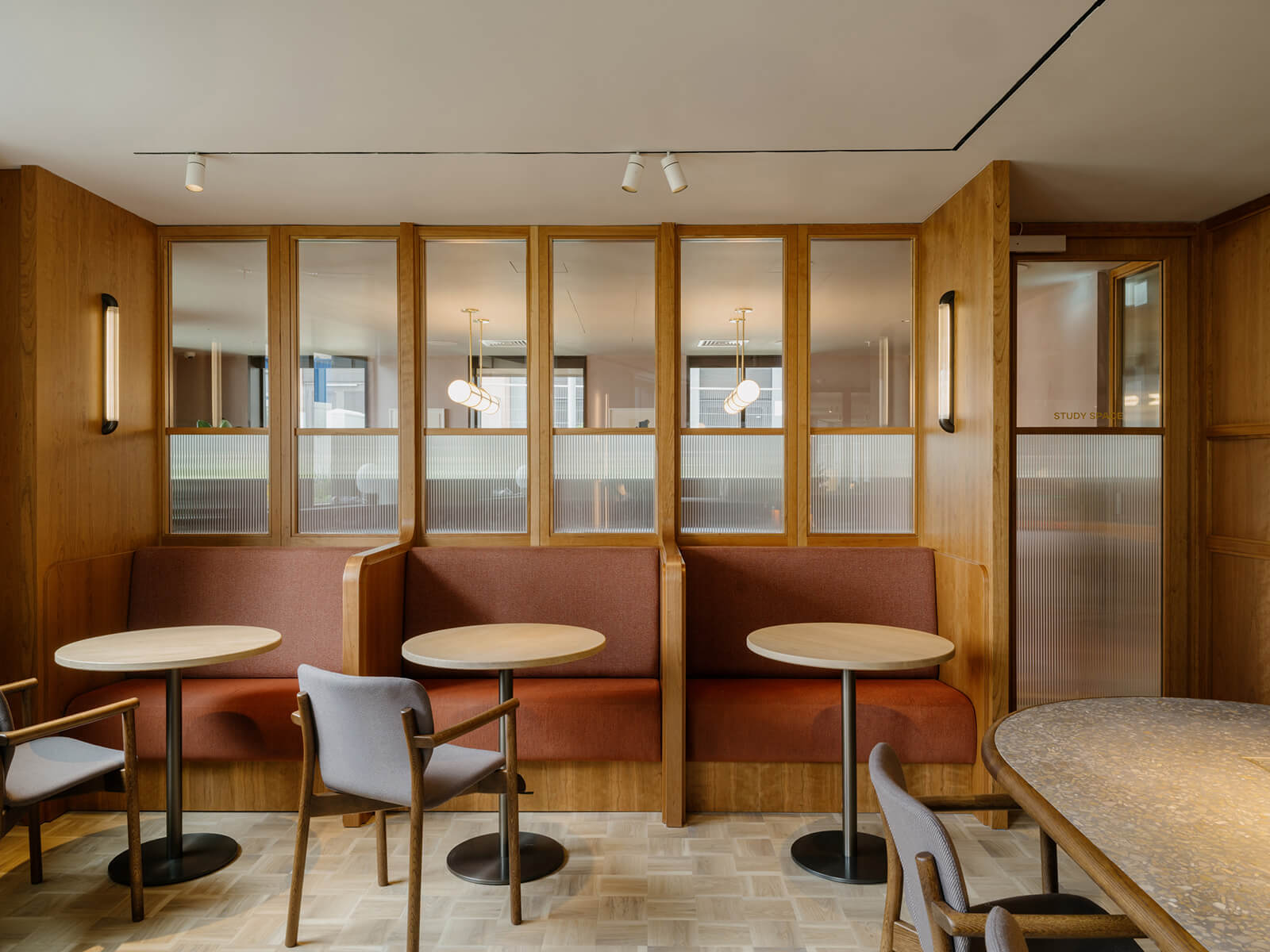
Material choices play an important role in shaping these experiences. Across the ground floor, cherry panelling, honey-toned oak flooring and warm white finishes establish a calm, grown-up base. Colour appears selectively, through built-in furniture, design artefacts, artworks and accessories that reference the surrounding urban context without relying on overt themes. Active areas such as the reception and welcome lounge use brighter tones, while spaces further inside soften in palette and detailing. This gradual transition also works as an intuitive guide, helping residents navigate the building without signages doing all the work.
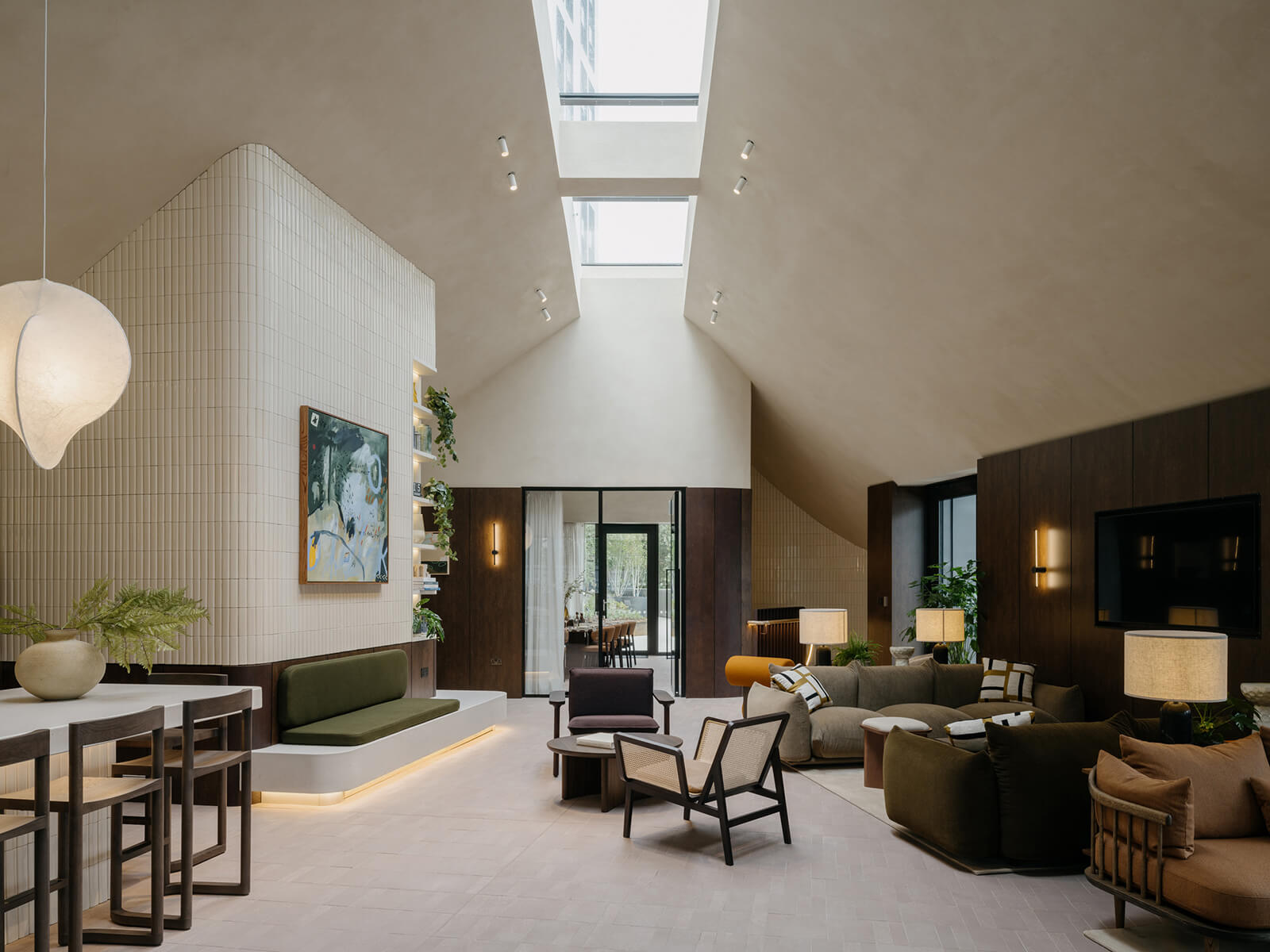
Its generous shared spaces and material refinement align the project with a more premium model of student accommodation where material consistency and amenity provision distinguish it from university-owned or ad hoc private rentals.
The organisation of these spaces is informed by a set of six guiding considerations outlined by the design team: connection to nature, social connectedness, physical activity, mindfulness, nutrition and sleep. Rather than appearing as discrete themes, these ideas are embedded across the plan. Access to daylight and terraces supports moments of pause, shared kitchens and dining spaces encourage informal social life and the proximity of study, movement and rest spaces reflects the overlapping routines of student living.
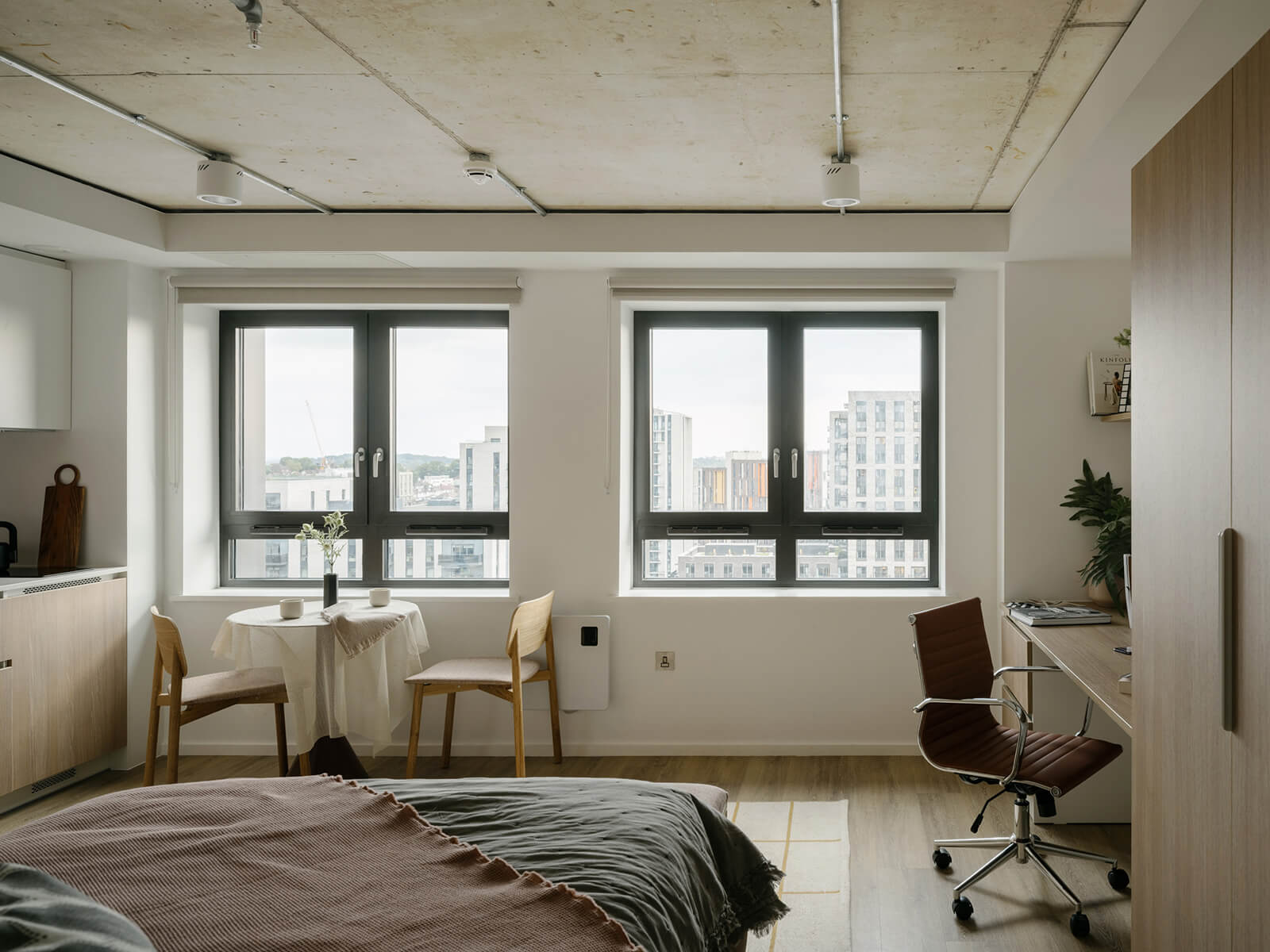
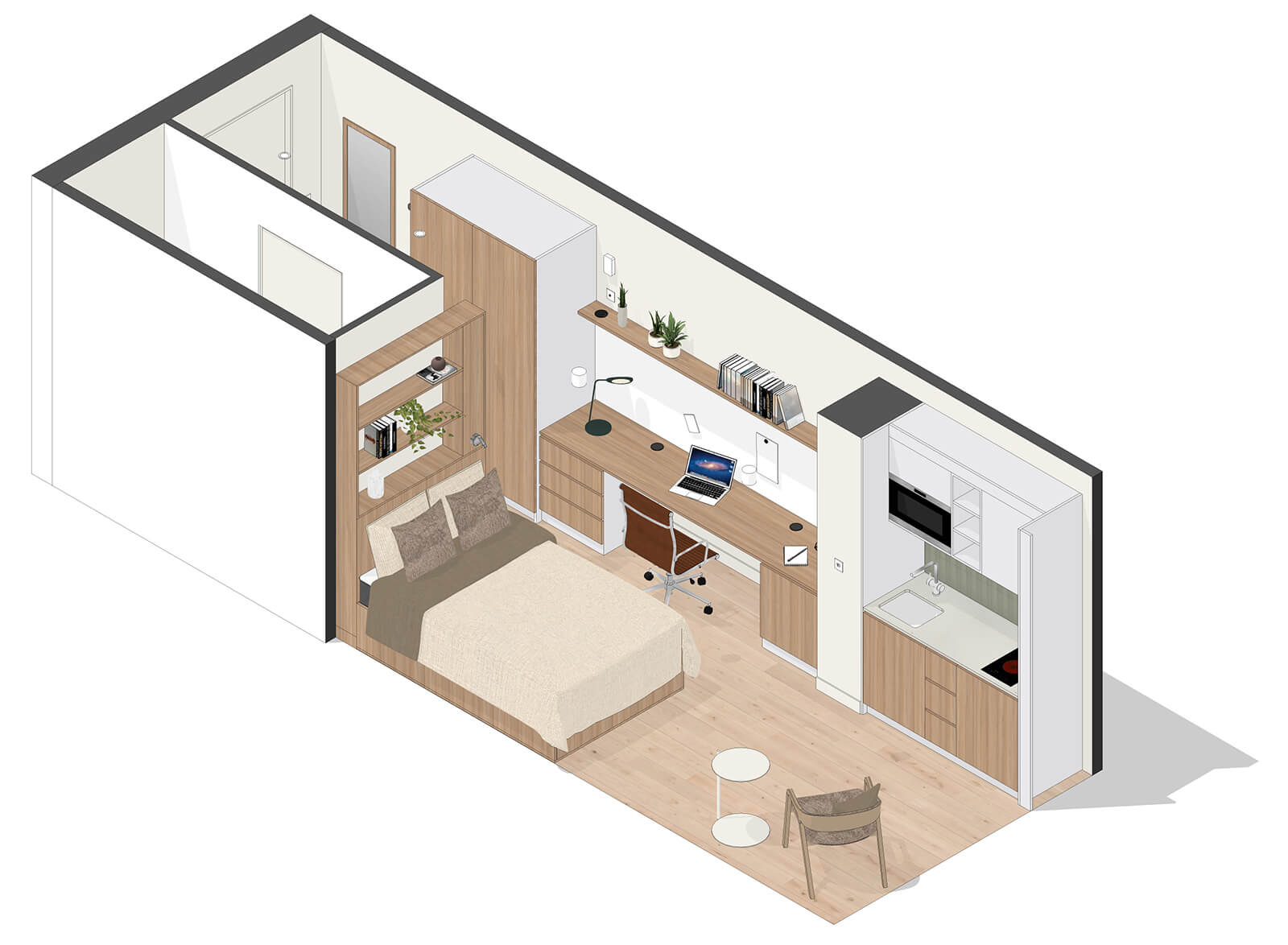
The ceiling design reinforces how different areas within the open plan are defined. Open mesh elements sit alongside solid soffits, revealing glimpses of the concrete slab above. The contrast accentuates verticality and subtly marks circulation routes, giving structure to the open plan while maintaining visual continuity.
Within the 20-storey accommodation tower, the student rooms range from standard to premium, unified by a shared material palette but differentiated through layout detailing and spatial emphasis. Timber details, soft furnishings and restrained colour palettes echo the shared spaces, but each corridor and room type carries its own character. Built-in shelves and headboards encourage residents to personalise their rooms, acknowledging that for many students, this will be their primary home during their time in London.
David Tigg, founding director at TiggColl, shared with STIR that the residential architecture project was approached less as a lifestyle proposition and more as a framework for everyday use. “Designing purpose-built student accommodation allowed us to think carefully about how students actually move through their day. Rather than relying on inherited models of student housing, the interiors of this project were shaped around routine, adaptability and the balance between shared activity and retreat. The aim was to create spaces that feel grounded and usable over time without overstating what architecture alone can provide”, he said.
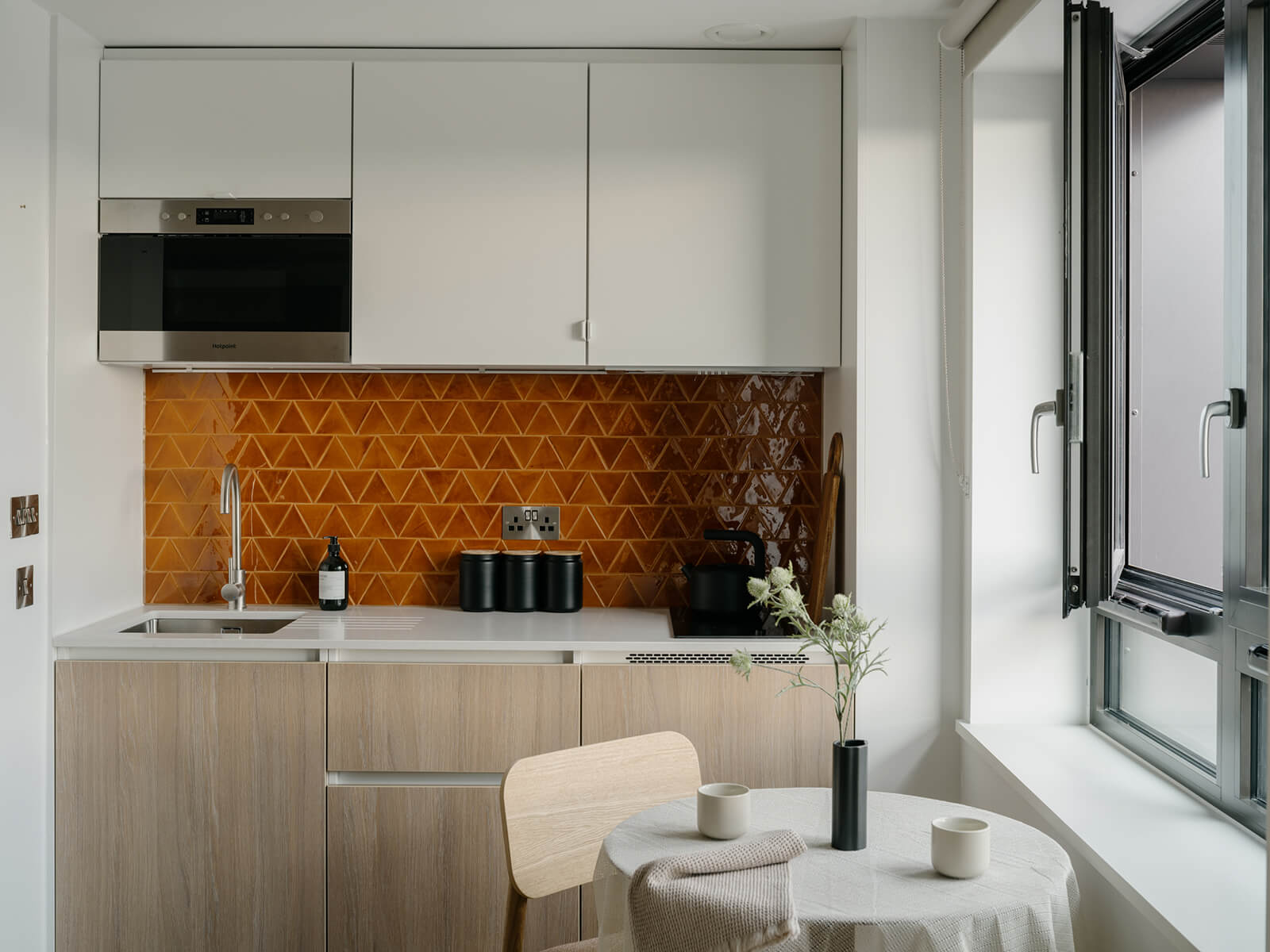
This emphasis on everyday use becomes clearer when the project is viewed within the wider context of London’s student housing market. Purpose-built schemes have expanded rapidly in areas such as Wembley, Stratford and Croydon in the UK, often close to transport links rather than historic university quarters. For many institutions, these developments are often positioned to relieve pressure on older housing stock and reduce competition with local renters. For students, they offer a level of certainty in a city where short-term leases and rising costs are common.
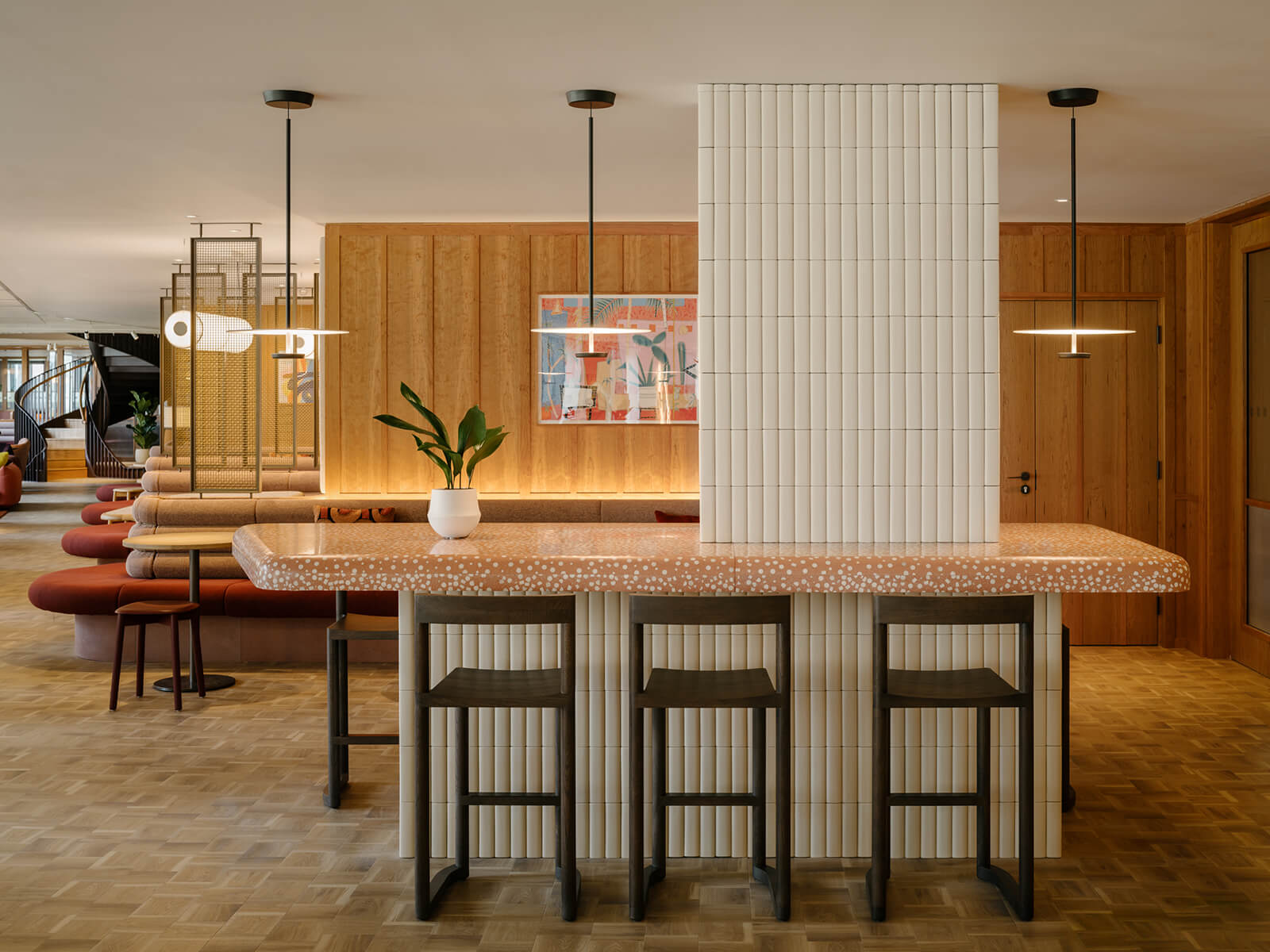
The project reflects a broader shift in London’s student housing away from proximity to historic campuses and towards large-scale, transport-connected developments designed to operate as long-term residential infrastructure. Its location and scale respond to the current demand for student accommodation, but its interiors suggest a more measured understanding of what students need day to day. The emphasis on shared amenities, wellbeing and adaptable spaces recognises that academic life is only one part of the student experience. Alongside formal study rooms, quieter, non-programmed spaces and private accommodation acknowledge the need for retreat and routine.
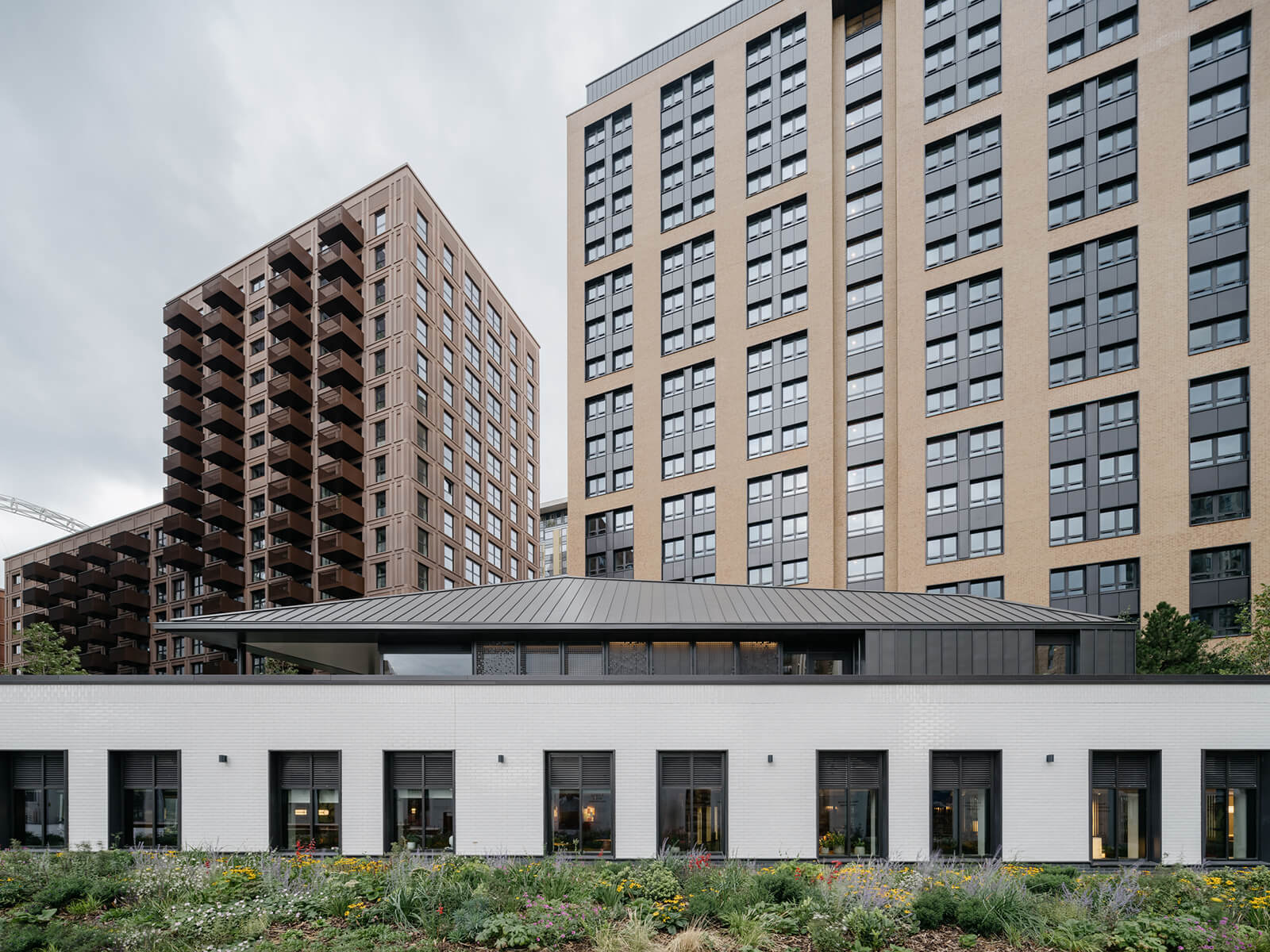
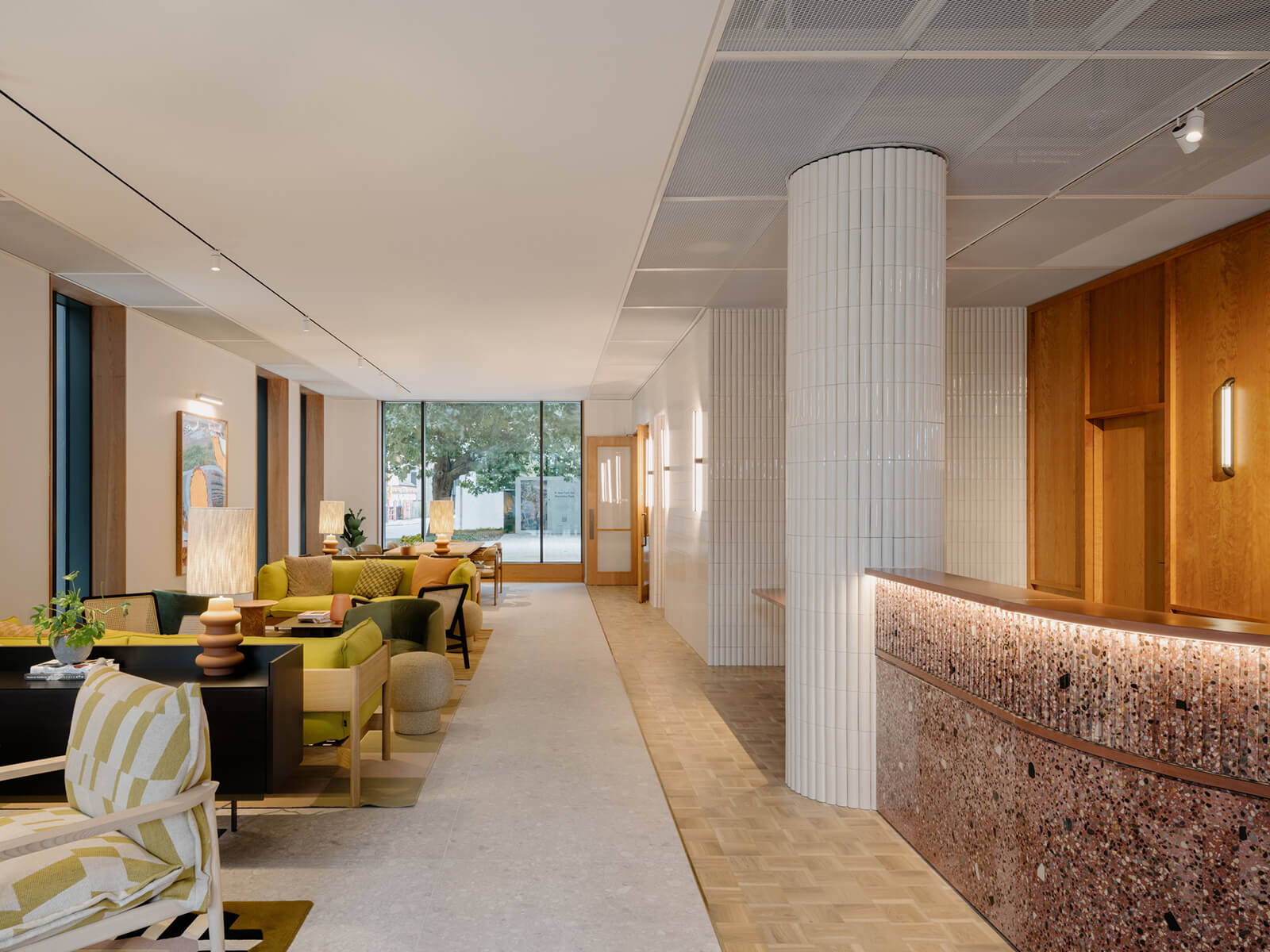
As London continues to negotiate the balance between growth, affordability and livability, schemes like Canvas Arthur House raise questions about how large-scale student accommodation is conceived and delivered. The project does not resolve the structural pressures shaping student housing in London, but it demonstrates how interior architecture can respond carefully to them, acknowledging both the limits and responsibilities of building at this scale.

by Pranjal Maheshwari Oct 19, 2026
The Mumbai-based architects integrate courtyards, mesh screens and north light trusses to create a dining space that doubles up as a community hub at SR University, Warangal.
by Mrinmayee Bhoot Oct 17, 2026
The Rotterdam-based institute centres the Indian Ocean as a network for exploring material histories and transnational links shaping coastal cultures, positing them as future models.
by Pranjal Maheshwari Oct 16, 2026
At the 2026 Stirling Prize ceremony, Mary Duggan with RUFF Architects, MAKER Architecten and Nakshabid Architects were felicitated for proffering quality housing and social equity.
by Mrinmayee Bhoot Oct 12, 2026
The new Centre for Contemporary Arts, fostering public engagement with art in Uzbekistan, is housed in a tram depot refurbished by the French studio, emulating local craftsmanship.

make your fridays matter with a well-read weekend
Enter your details to sign in
Don’t have an account?
Sign upOr you can sign in with
a single account for all
STIR platforms
All your bookmarks will be available across all your devices.
Stay STIRred
Already have an account?
Sign inOr you can sign up with
Verification link sent to check your inbox or spam folder to complete sign up process
Tap on things that interests you.
Select the Conversation Category you would like to watch
Please enter your details and click submit.
Enter the 6-digit code sent at


TiggColl’s Canvas Arthur House and the everyday organisation of student life
by Aarthi Mohan | Published on : Jan 10, 2026


 Sign in with Google
 Sign in with email
What do you think?