Art15 mins. read
Ceding freedoms: The danger and complicity of trying to make art apolitical
by Srishti OjhaMay 01, 2026


by Debika RayPublished on : Jun 04, 2026
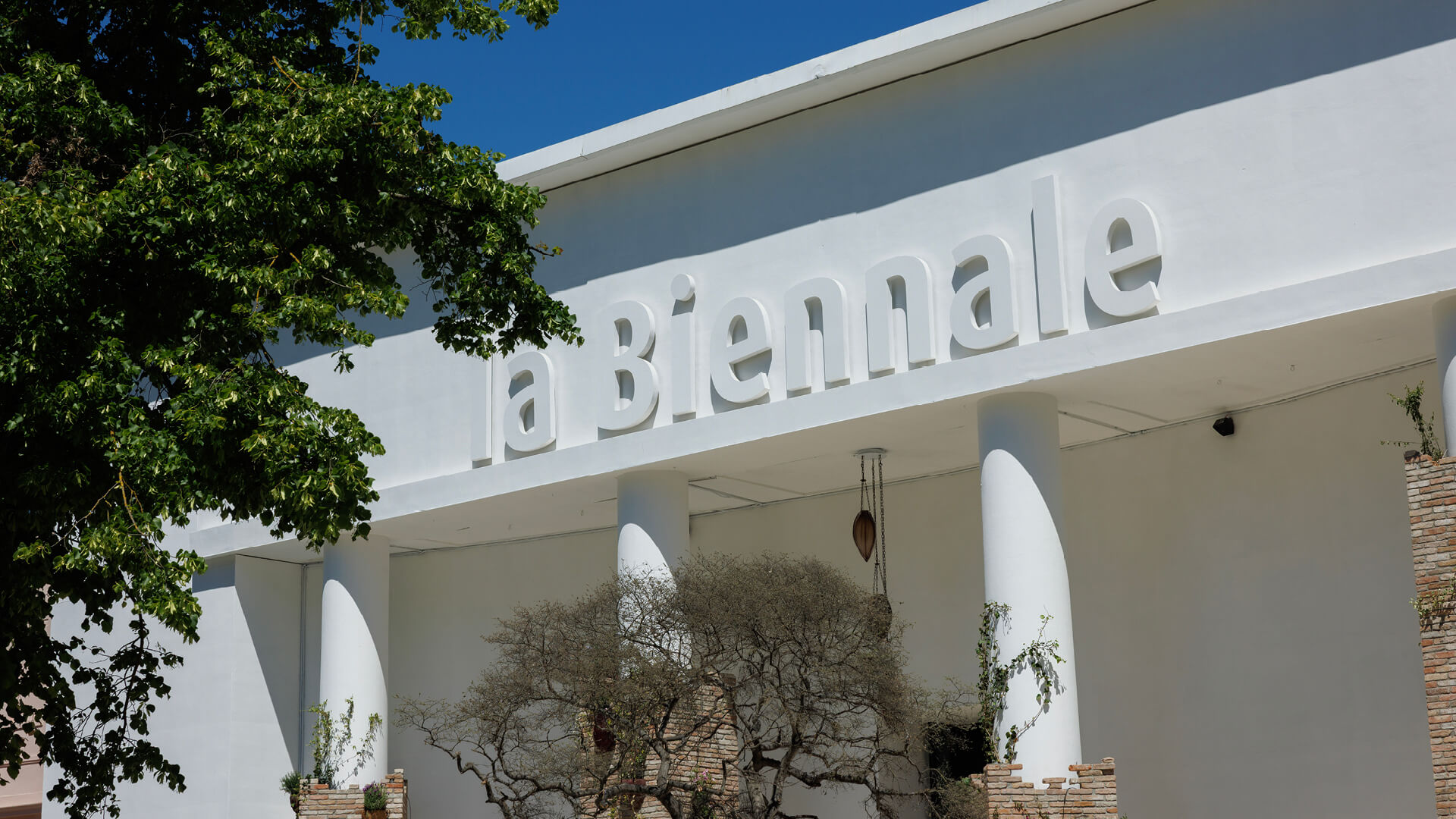
In 1931, under Italy’s fascist dictator Benito Mussolini, the Venice Biennale was styled as ‘the Geneva of the arts’ – a premier stage for neutral international cultural exchange. Nearly a century later, that idea remains. “The Biennale has kept the rhetoric of neutrality because it’s really handy – you can have anybody take part and say it’s not a problem,” says Clarissa Ricci, a specialist in the history of art biennales at the University of Bologna.
In truth, she asserts, neutrality does not exist here. The exclusivity of the Giardini – where the historically powerful nations occupy permanent pavilions – makes clear that countries do not approach the Biennale on equal terms. But that language of neutrality is now under greater strain, colliding with the world outside to expose the fragility of the international order on which the Biennale depends.
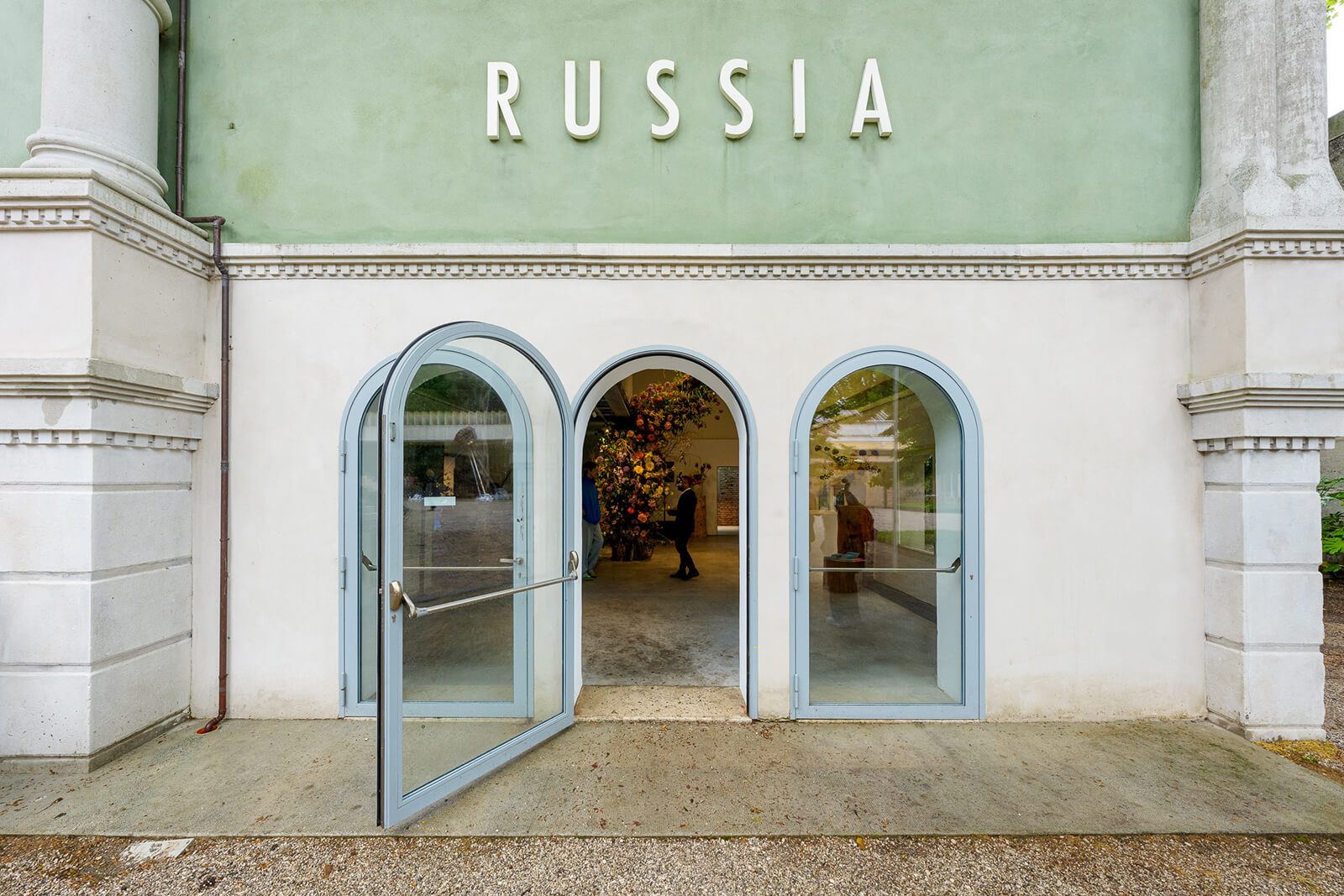
Before the 61st edition opened, politics had already overwhelmed it – largely over the return of Russia and Israel. Russia’s participation prompted the European Commission to threaten the withdrawal of €2m in funding1 and Italy’s culture minister to boycott the event2. The prize jury declared it would not consider nations whose leaders were facing charges at the International Criminal Court, then resigned days before opening. It has since been reported that Israel’s representative artist threatened legal action3 over the jury’s stance and that the Biennale smoothed Russia’s path to return4. The Biennale mooted replacing the jury’s awards with a public vote, prompting at least 81 artists and 16 national pavilions to withdraw their work from award consideration5, with many threatening legal action6 if the Biennale does not honour those withdrawals.
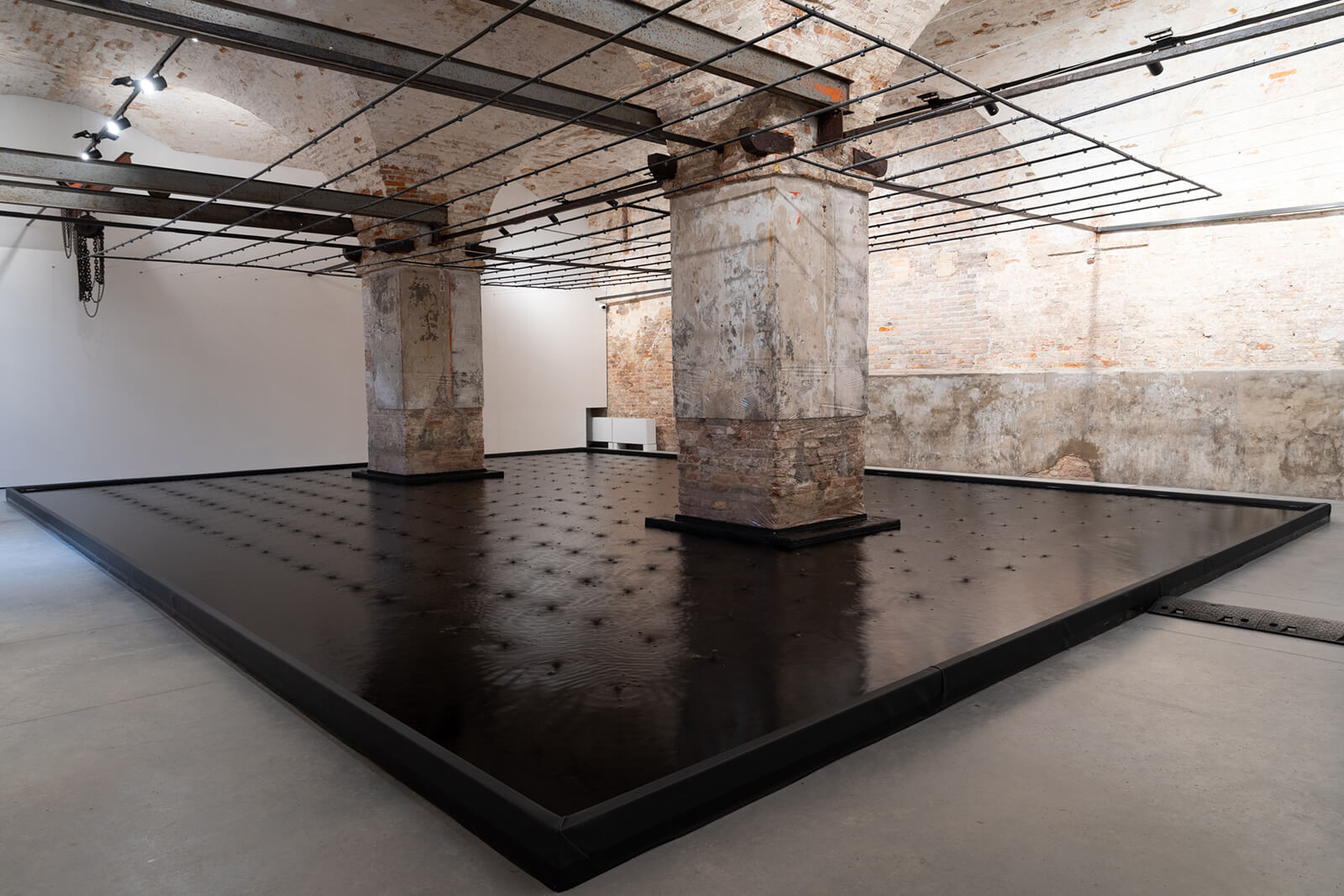
One might see the Biennale’s stance as neutrality consistently applied, but it has discretion in such matters. “I come from a country that was barred from the Biennale,” South African artist Gabrielle Goliath reminds me – referring to the ban that lasted more than two decades during Apartheid. “So-called neutrality itself is a political gesture.”
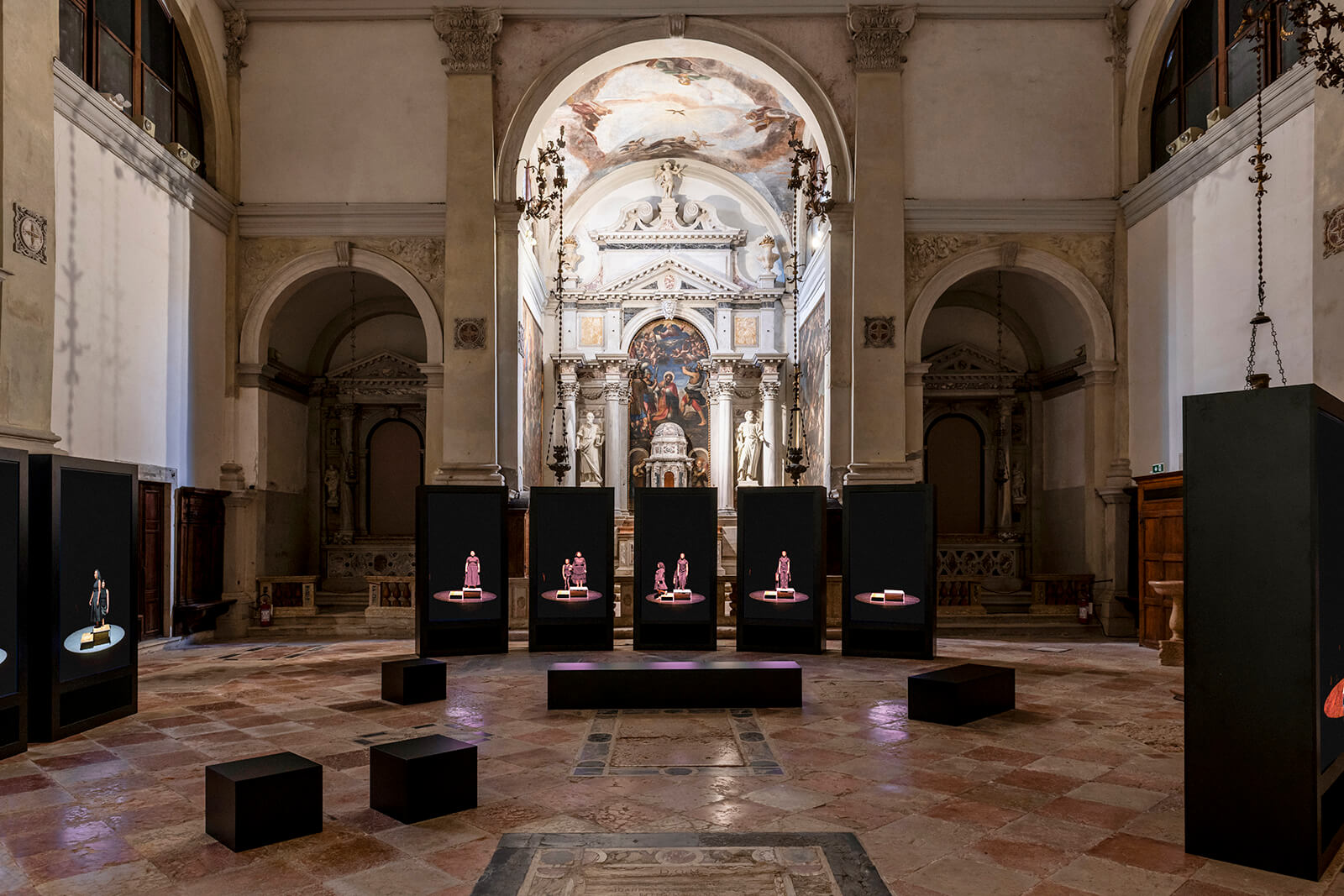
In a church outside the Biennale’s two main sites, she is staging Elegy, the work selected as South Africa’s official entry before being blocked by culture minister Gayton McKenzie over its tribute to Palestinian poet Hiba Abu Nada, who was killed in an Israeli airstrike. In the multi-channel video installation, female singers hold a single note for as long as they can before the next voice takes over. Each performance laments a black, brown or indigenous woman or LGBTQIA+ person killed by gendered, racialised or sexualised violence – lives, Goliath says, often treated as “ungrievable, unlovable, disposable, killable, violable, rapable”.
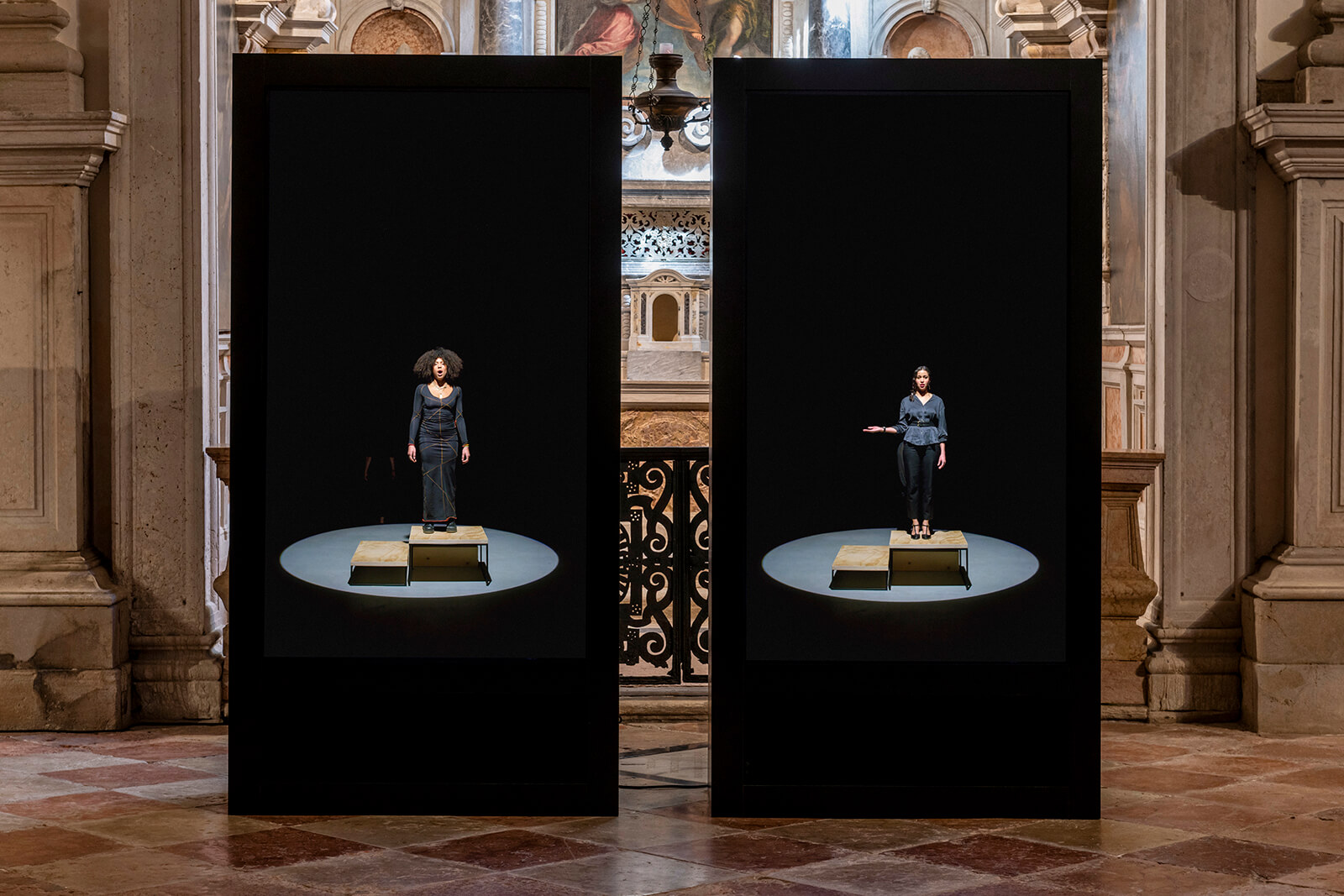
The episode points to the arbitrary ways subjects are labelled as divisive, commendable or neutral. “We are in a moment of constantly unfurling terrifying genocidal violence”, Goliath says, “and, in this moment, to consider mourning Hiba Abu Nada, a Palestinian mother and poet, was rendered heretical.” For her, ‘no frame is watertight’ – the context, the viewers, the subject and so much else that lies beyond what we see in the work are present alongside it.
The Biennale was not involved in the decision to exclude Goliath, but the work has not been included as an official collateral event either. Therein lies its bind. The event presents itself as an open international platform, yet is shaped by state politics, diplomatic pressure, money and precedent. Its approach is also inconsistent: while ostensibly tied to Italian government policy, it continued to host Russia (or, rather, the USSR) during the Cold War, while Palestine, whose statehood Italy does not recognise, doesn’t have an official national pavilion. Meanwhile, the little-explained approval of Qatar’s Giardini pavilion raises questions about who gains access to the Biennale’s most privileged club.
The bigger question is: what political framework is being applied? During the vernissage, Venice became an illustration of the cognitive dissonance it takes to perform normality under the spectre of war. Amid protests and strikes, the art world’s elite – diplomats, journalists, collectors and corporate and cultural leaders – spritzed between queues, dinners and parties, consuming art about current affairs while remaining insulated from their consequences. “In this gated community, you can say you’re an innocent bystander and that the barbarians are on the other side of the gates,” says Dries Verhoeven, the artist representing the Netherlands this year.
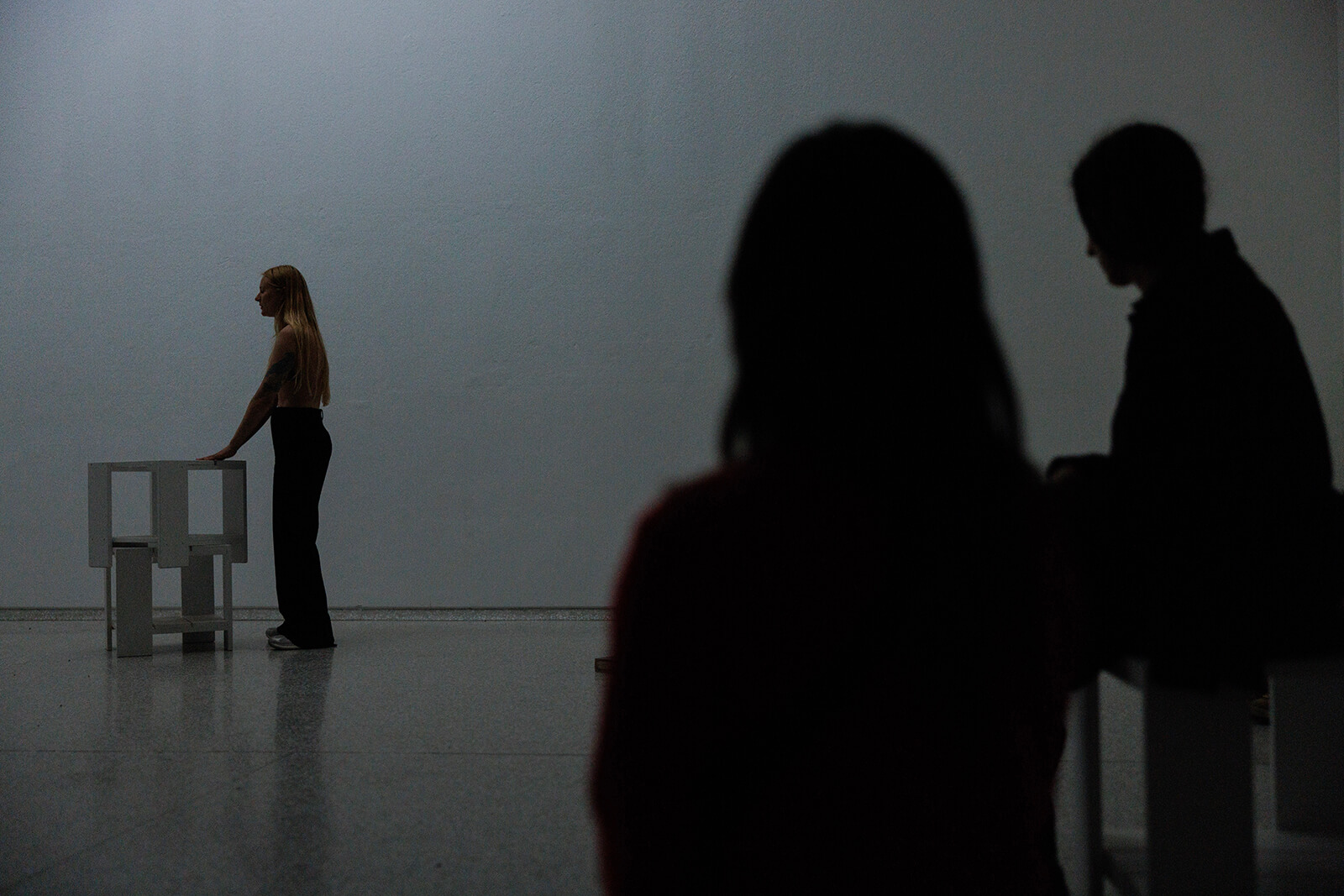
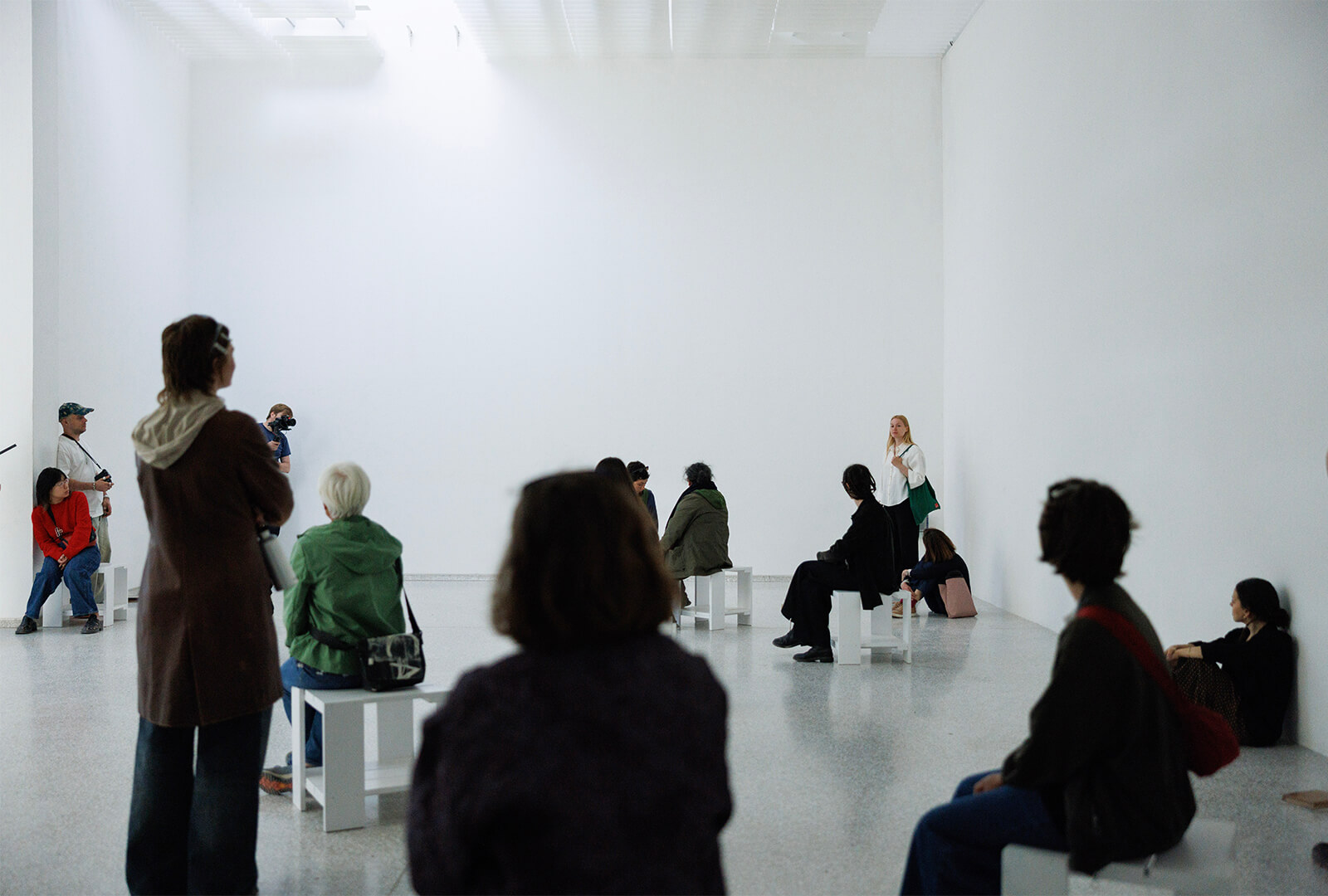
His performance work, The Fortress, challenges that complacency, drawing on the helplessness he felt wandering through the Giardini while watching the news on his phone. The location is Gerrit Rietveld’s Dutch pavilion, a structure emblematic of post-war European ideals of openness, rationality and peace. Once inside, the shutters descend and a performer (in my case, Melyn Chow) resembling an archetypal Biennale visitor rises among the audience. Over 25 minutes, as the room darkens, they move through the space bellowing affirmations – “Help yourself. Enjoy yourself. You are great. You do what you can. Love yourself” – in the growling register of a heavy metal vocalist, while undressing. Eventually, we’re plunged into total darkness – locked in with our own nervous laughter and discomfort, and the ‘other’ amid us. “I want you to think about the extent to which you’re implicated in the darkness,” Verhoeven says. “For so long we’ve been telling ourselves we’re the good guys, but with everything happening – in Gaza, for example, and with the closing of borders and rise of the far right – we cannot hold onto this idea.”
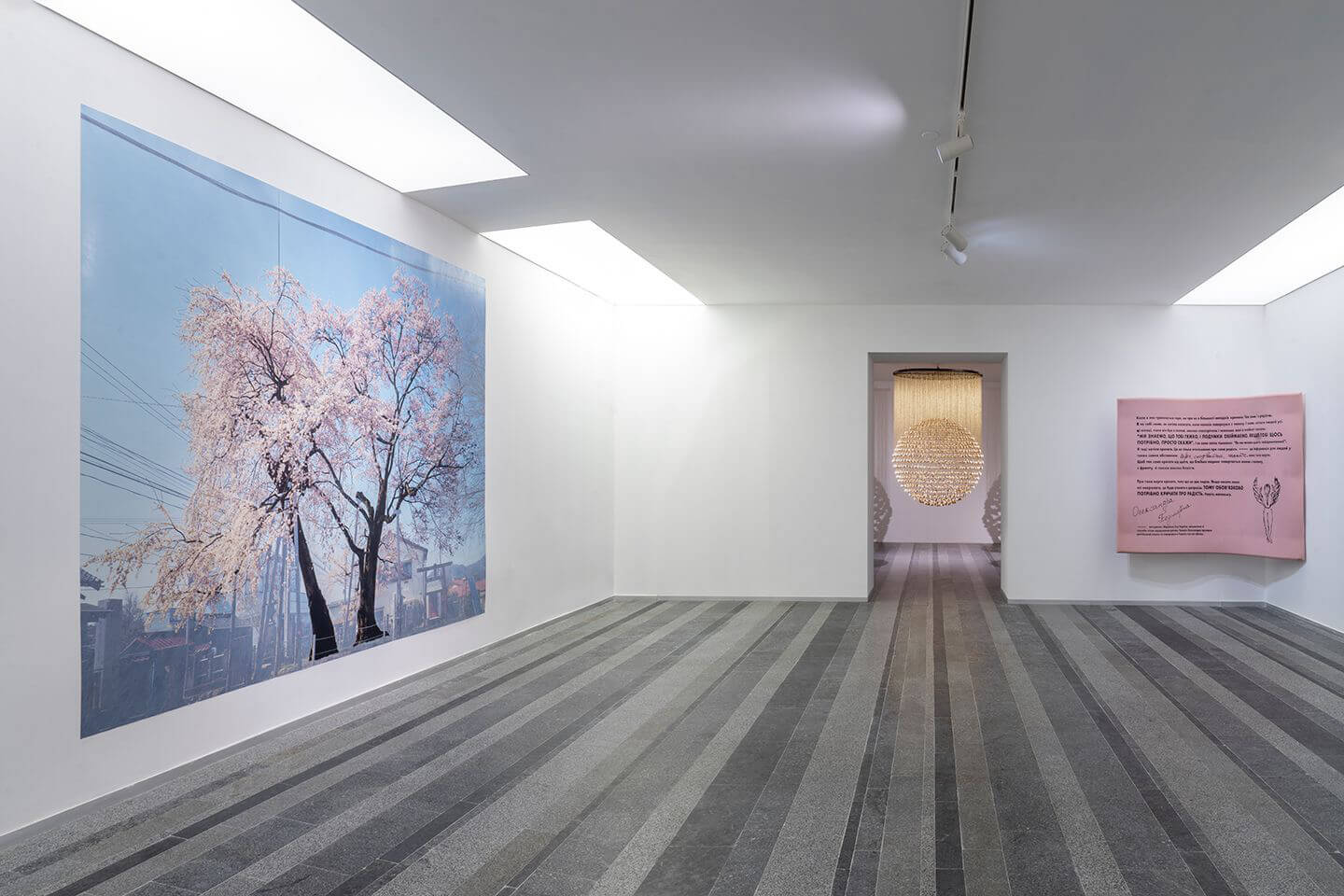
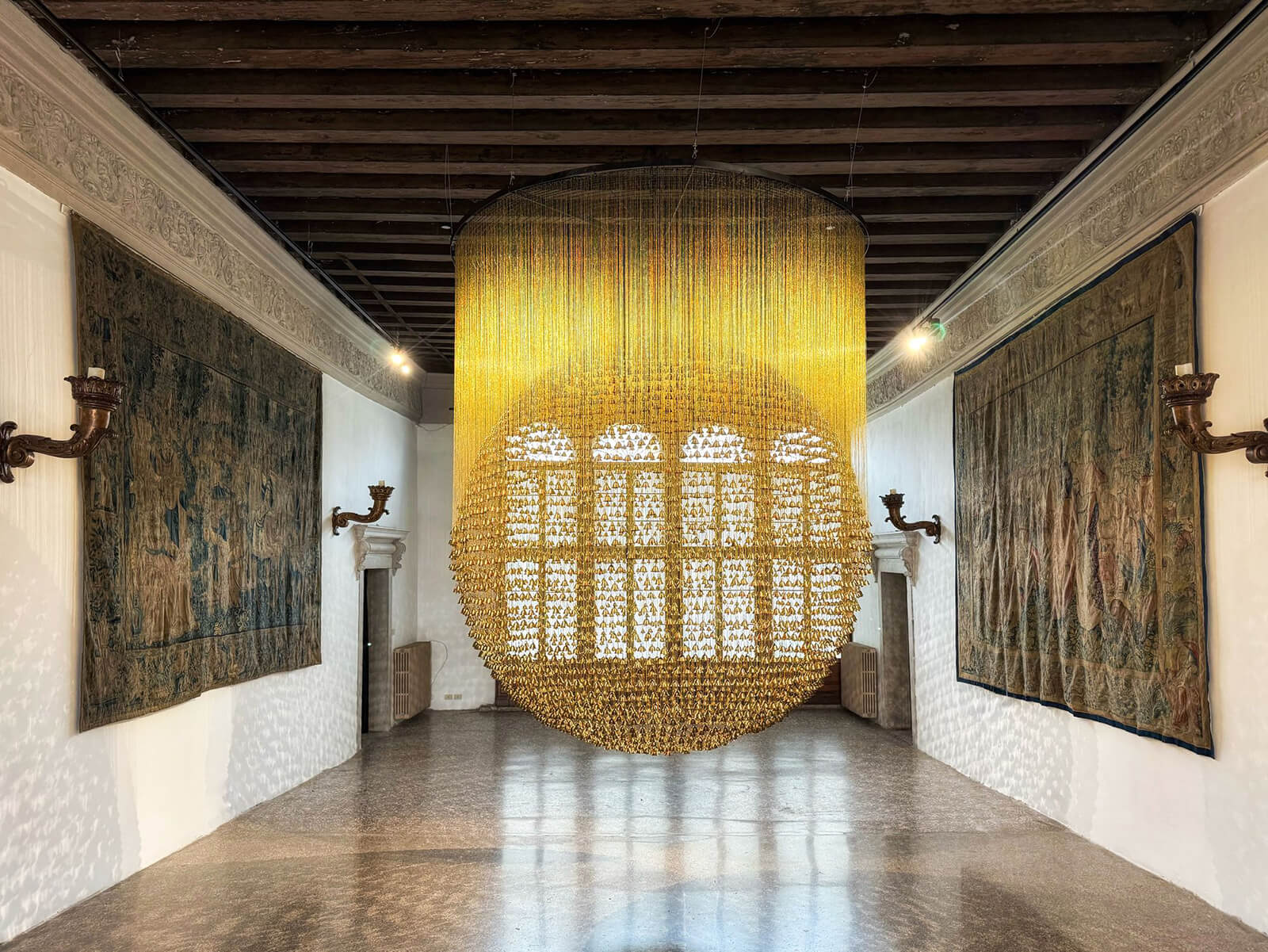
For Oleksandra Pogrebnyak, curator of an exhibition by PinchukArtCentre in Ukraine, the reality of violence just beyond the frame is unavoidable. “We’re in Venice now, but we are always receiving news about [Russian attacks] – museums and collections being ruined and artists dying in the war,” she says. Still Joy doesn’t avert its eyes, but foregrounds the ways people carve out joy amid war – with works ranging from Yarema Malashchuk and Roman Khimei’s video depictions of raves in Kyiv, to Ashfika Rahman’s hanging installation of 4,849 brass bells that bear the fingerprints of indigenous people displaced by the state in southeastern Bangladesh. “Rather than only showing people suffering and being victims, we wanted to show them being resilient and finding moments to make their time meaningful,” Pogrebnyak says.
Yet even here, the question of neutrality returns. The exhibition uses, as a contextual device, quotes by British historian Niall Ferguson, whose positive view of British colonialism and his public position on Palestine sit uneasily with an exhibition asking viewers to attend to the human impact of violence. His analysis is treated as objective in a way many others are not. This is not simply a matter of political disagreement, or even an indictment of this particular exhibition: the same perspective is reflected in the official narrative elsewhere – from a speech by a British embassy official that condemned Russian but not Israeli participation, to several headlines naming only the former as the reason for the jury’s resignation.
Of course, Venice is not a battleground – it’s merely a stage on which the forces reshaping the wider world become visible. The national pavilion system reflects a world arranged around late 20th-century ideas of nationhood, borders and cultural coherence – and a hierarchy established and maintained through inequality and violence. In that context, arguing over whether Russia and Israel should be banned is to debate who should be excluded from a system built on exclusion.
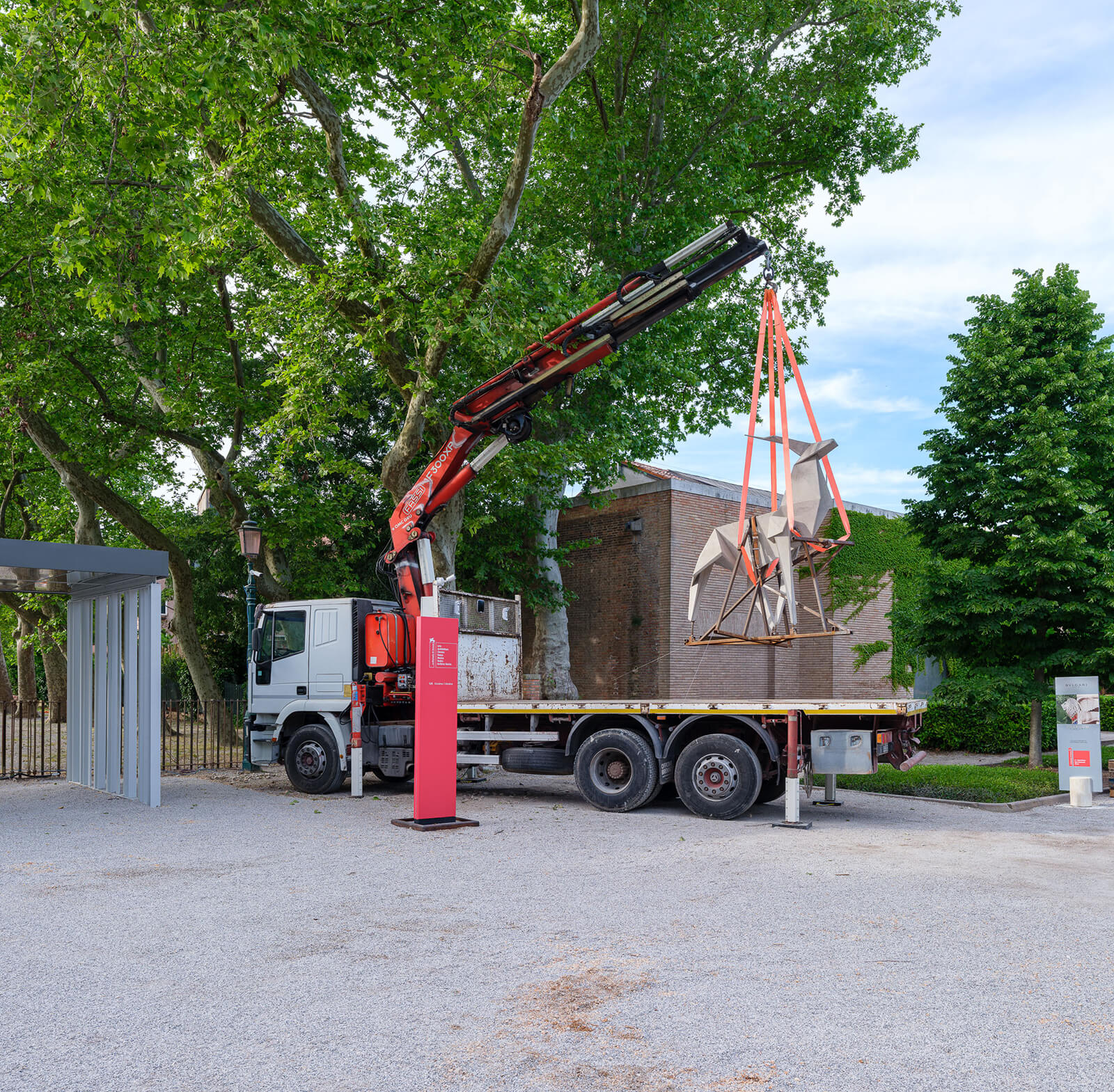
The bricks and mortar of the Giardini appear immovable, but the world beyond is more fluid, and is already being remade by war, authoritarianism, migration, ecological collapse and shifting economic power faster than institutions can adapt. Yearning for a return to ‘normality’ – to the openness, peace and moral certainties that supposedly existed until recently – ignores what it has taken to maintain the comforts enjoyed by those of us within the Venice bubble.
With protests, strikes and law enforcement spilling through Venice, that instability no longer feels external. Some of the same forces that established the late 20th-century liberal order – globalisation and digitisation – are now fracturing it, having pulled dissenting voices who might previously have been marginalised into the heart of the system. Cultural institutions that embraced progressive ideas and diverse audiences – the Biennale and many of those who exhibit there – are now discovering that this carries ethical demands. It remains to be seen whether they will pull the shutters down and let darkness fall or concede that no barriers can keep the real world outside the frame.
References
1.https://www.theguardian.com/artanddesign/2026/mar/12/venice-biennale-risks-losing-eu-funding-over-planned-russia-involvement
2.https://www.artnews.com/art-news/news/italian-culture-minister-protest-venice-biennale-russia-1234782691/
3. https://www.artforum.com/news/israels-artist-threatened-legal-action-venice-biennale-1234750022/
4. https://news.artnet.com/art-world/venice-biennale-leaked-emails-russia-2768384
5. https://artreview.com/81-artists-withdraw-from-venice-biennale-competition/
6. https://www.artforum.com/news/venice-biennale-faces-legal-action-from-artists-1234751629/
The 61st International Art Exhibition of La Biennale di Venezia, 'In Minor Keys’, curated by Koyo Kouoh, runs from May 09 – November 22, 2026, at the Giardini and the Arsenale venues, as well as various other locations around Venice. To read STIR’s exclusive coverage, conversations and highlights from the biennale, click here.
The views and opinions expressed here are those of the author(s) and do not necessarily reflect the official position of STIR or its editors.
by Srishti Ojha Oct 21, 2026
Increasingly, artists, filmmakers and activists are turning to VR to create more personal, tangible accounts of the climate emergency and its impact on vulnerable communities.
by Mirra Lynn Oct 20, 2026
The Indian artist paints the old wadas of central Pune, capturing the traces of everyday life that cling to these structures, battered by time but unbowed.
by Anmol Ahuja Oct 15, 2026
How do heaps of souvenirs and relics with racist Aboriginal motifs and features become art? MCA Sydney’s winter showcase—the artist’s largest to date—beckons a possibility.
by Srishti Ojha Oct 14, 2026
The first Dutch publication on the Turkish artist, the eponymous book centres on Refik Anadol: Latent City, his living data sculpture of Bruges, exhibited at BRUSK gallery.

make your fridays matter with a well-read weekend
Enter your details to sign in
Don’t have an account?
Sign upOr you can sign in with
a single account for all
STIR platforms
All your bookmarks will be available across all your devices.
Stay STIRred
Already have an account?
Sign inOr you can sign up with
Verification link sent to check your inbox or spam folder to complete sign up process
Tap on things that interests you.
Select the Conversation Category you would like to watch
Please enter your details and click submit.
Enter the 6-digit code sent at


How long can we continue performing neutrality under the spectre of war?
by Debika Ray | Published on : Jun 04, 2026


 Sign in with Google
 Sign in with email
What do you think?