Architecture12 mins. read
Pluralistic notions of Becoming shape the UIA World Congress of Architects 2026
by Mrinmayee BhootJun 23, 2026



by Mrinmayee BhootPublished on : May 15, 2026
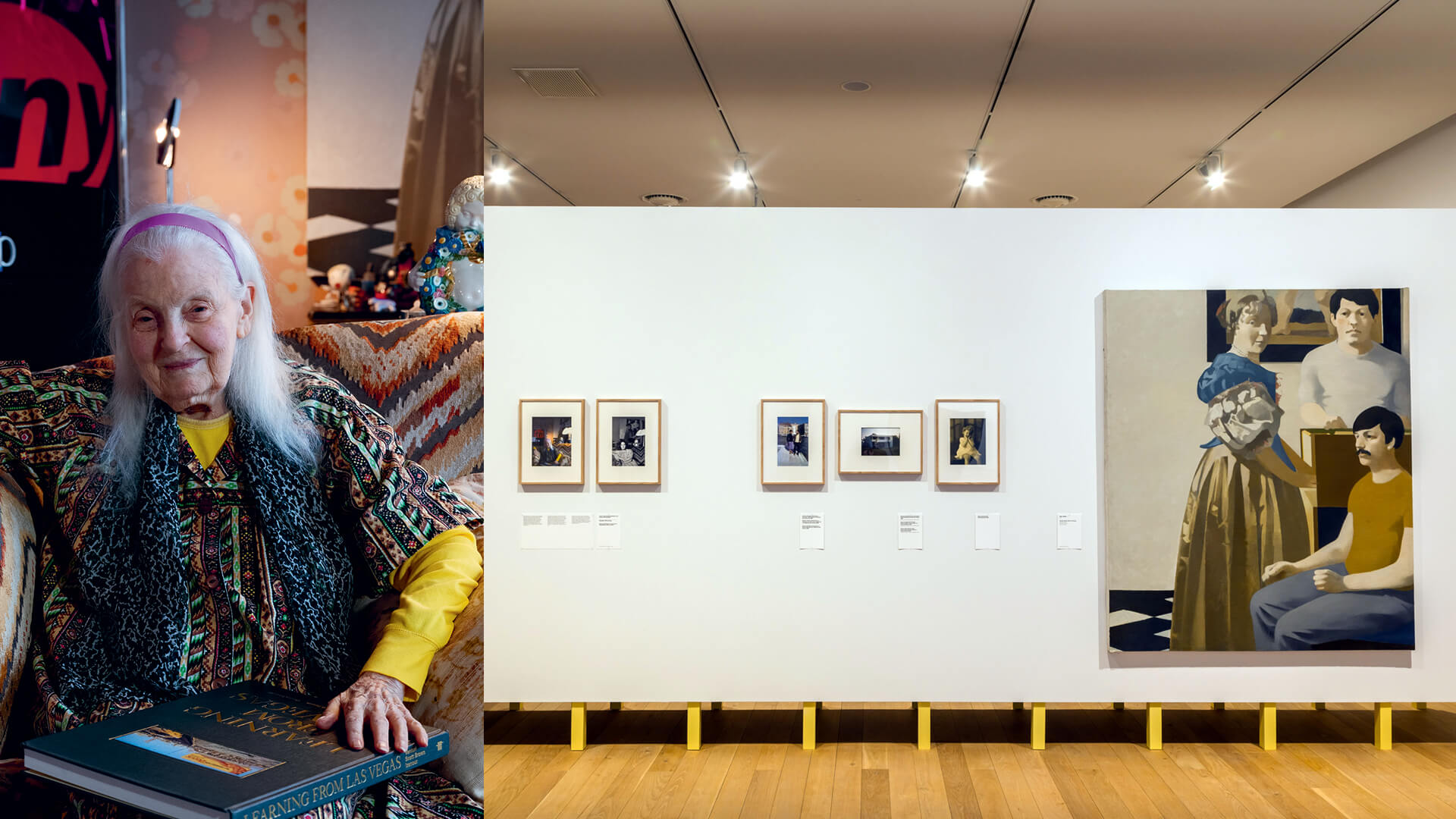
Touted to be one of the few major retrospectives held on the American architect Denise Scott Brown, one “focusing exclusively on her”, City, Street, House opened earlier this year at the Museo de Bellas Artes de Bilbao. Perhaps it’s a mere coincidence that another solo exhibition focused on her photography is also currently on view at the Yale Architecture gallery. Scott Brown, ‘the grandmother of architecture’, may need no introduction. If not her alone, anyone with a passing interest in postmodern architecture can associate her name with her partner’s, Robert Venturi—the star to her satellite, it so often goes. Together, they championed the spectacularly ordinary and traditional, buoyed by a puckish attitude that railed against the stagnant post-war modernism prevalent in the US. Their shared legacy, Learning From Las Vegas (1972), written along with their student Steven Izenour, is a foundational text in architectural schools today, not only for its championing of banal architecture and pop culture, but more so for its method of analysis. Her other legacy remains a retaliation against the systemic ignorance of her name and work in almost every aspect of their shared career. It’s a story that is instantly familiar to the architectural fraternity: despite dividing the studio’s work with Venturi equally (him focusing on architecture, and her on urban design), it was Venturi who was awarded the Pritzker Prize in 1991.
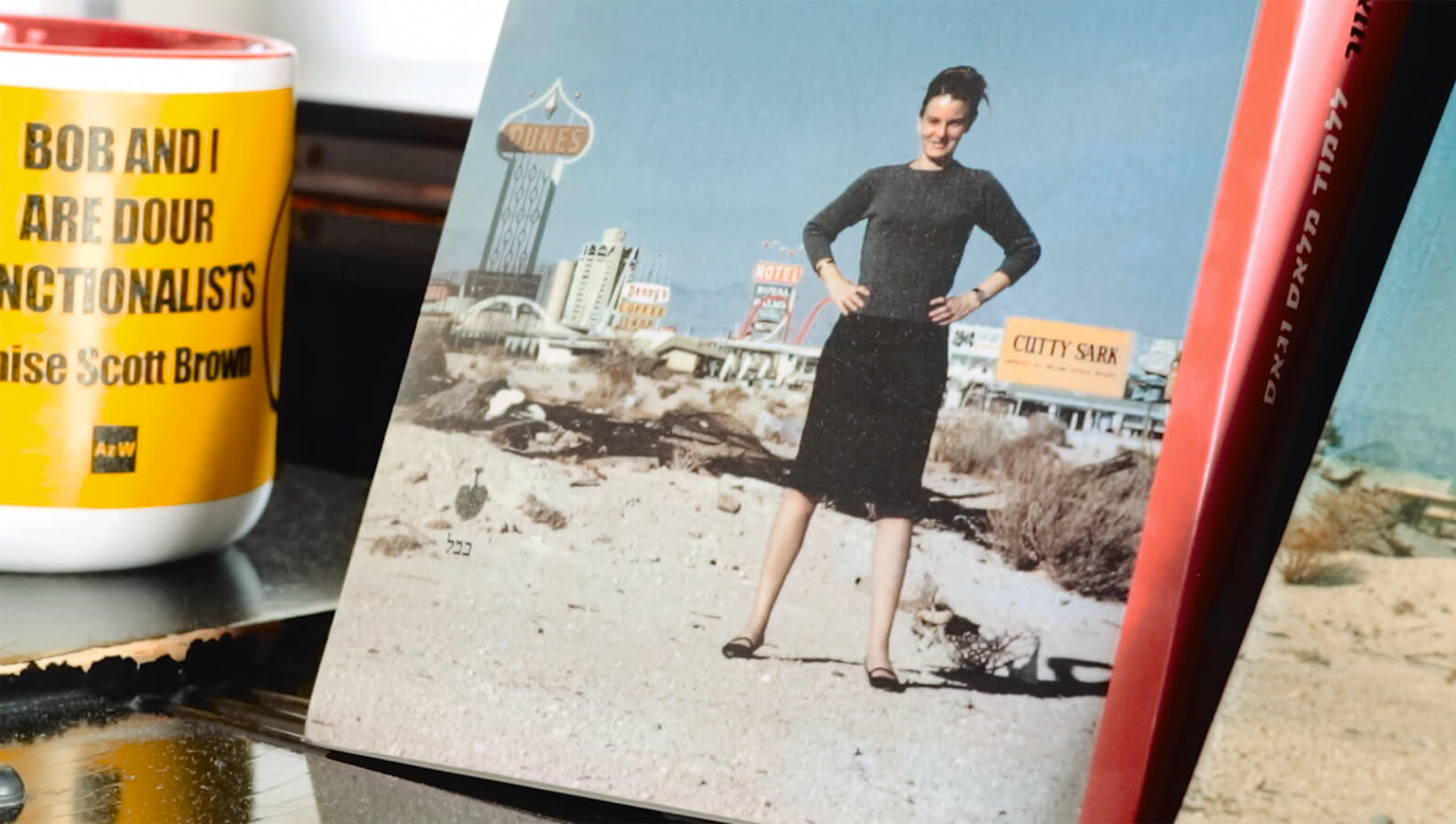
It’s a story that those practising women architects who are equally vested in issues of gender parity and a feminist revaluation of architectural practice love to champion. And Scott Brown is a worthy patron saint. In an exchange depicted by Jim Venturi in Stardust (a film about his parents), Venturi is being ‘celebrated’ in a 2006 lecture at Columbia University for his book Complexity and Contradiction in Architecture (1966), which heralded postmodernism (though he would deny this). On being asked how Scott Brown influenced the text, Venturi notes that it was written mostly before meeting her. From the audience, Denise chides, “No, it wasn’t.” To distinguish between the ideas of both might be futile, as she notes in her essay, Room at the Top? Sexism and the Star System in Architecture, but that ambiguity—and in most cases a wilfully orthodox perspective—has only ensured that Venturi is attributed as a genius, as she goes on to remark. “For a few years, writers on architecture were interested in sexism and the feminist movement and wanted to discuss them with me. In a joint interview, they would ask Bob about work and question me about my ‘woman’s problem’. ‘Write about my work’, I would plead, but they seldom did,” Scott Brown states in Room at the Top, almost short of a protest.
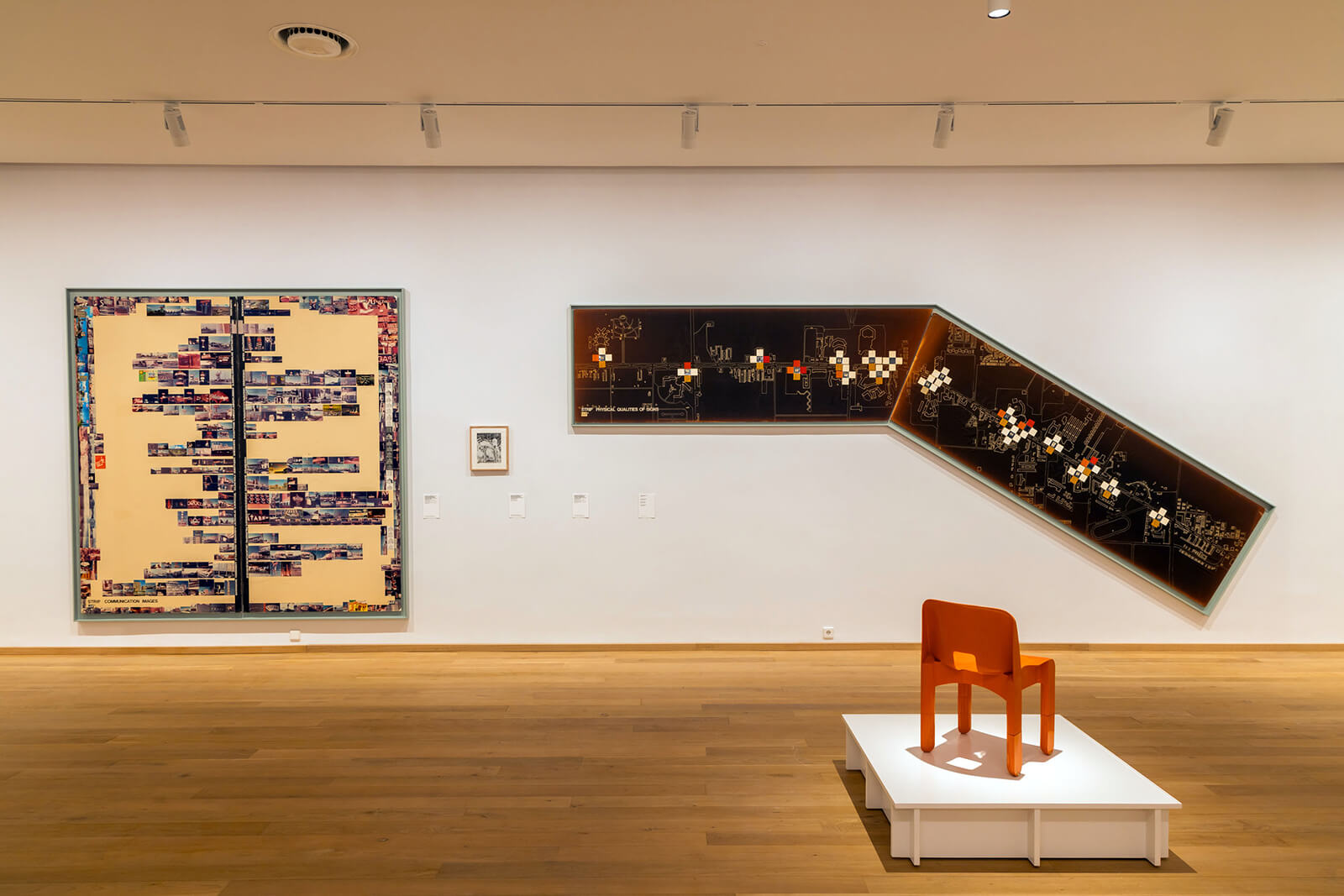
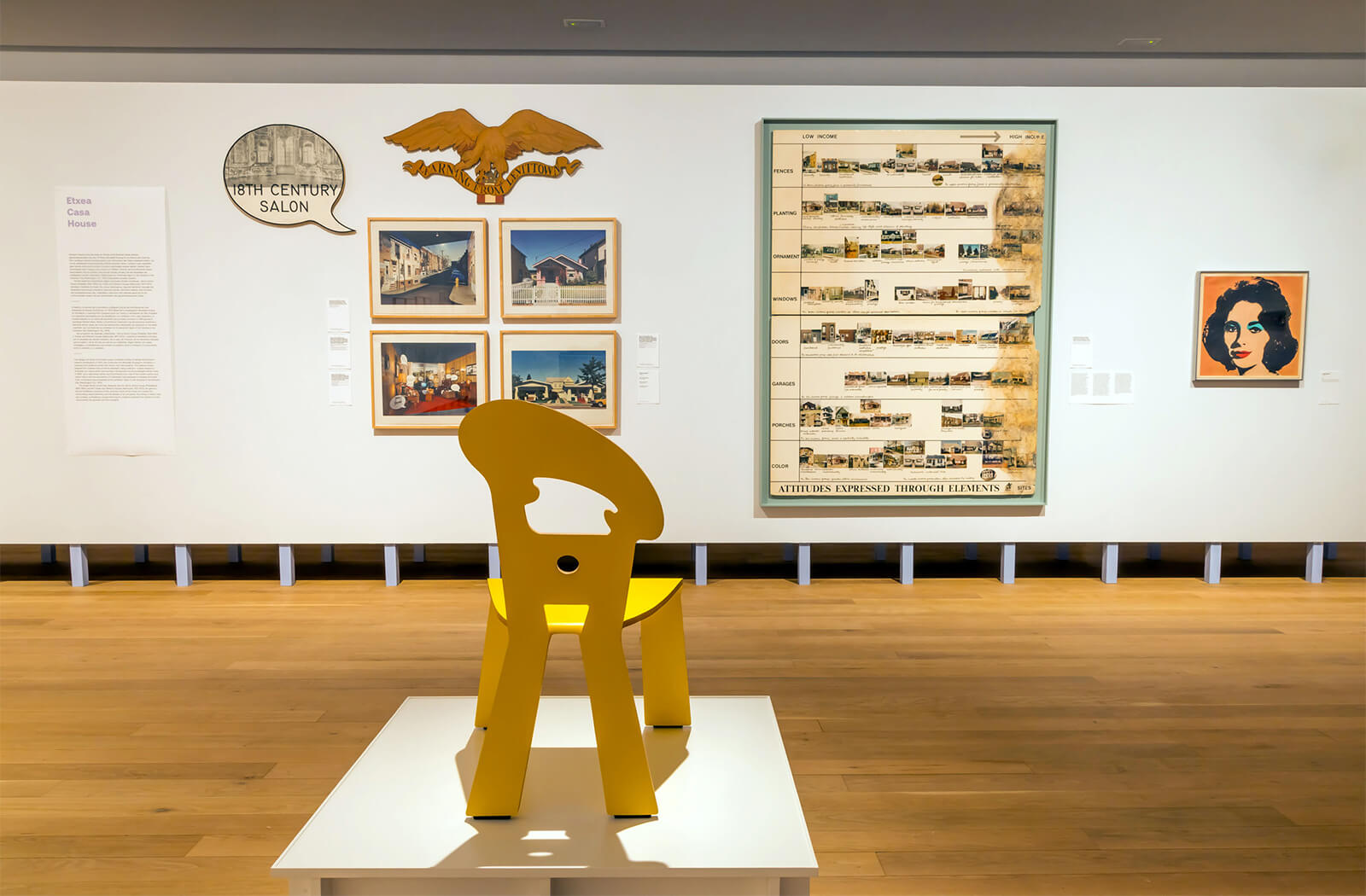
The fact that the exhibition in Bilbao—on view till August 16, 2026—is billed as focused solely on Scott Brown, then, is a vital distinction. The goal, as the curators Maria Pia Fontana and Miguel Mayorga note in an official release, is to showcase ‘[Scott Brown’s] enormous contribution to contemporary visual culture’—a notable acknowledgement given how much Learning from Las Vegas relies on visual analysis, as does her later studio on single-family residences in suburban America. To this end, the showcase is organised in three sections mirroring the scales at which Scott Brown and Venturi worked—city, street, house—and includes drawings, photographs, posters and scale models produced by their studio (Venturi, Scott Brown and Associates). These architectural artefacts are complemented in the exhibition by 20 artworks and furnishings from the architect’s private collection, including works by the likes of Ed Ruscha, Roy Lichtenstein, Andy Warhol and others.
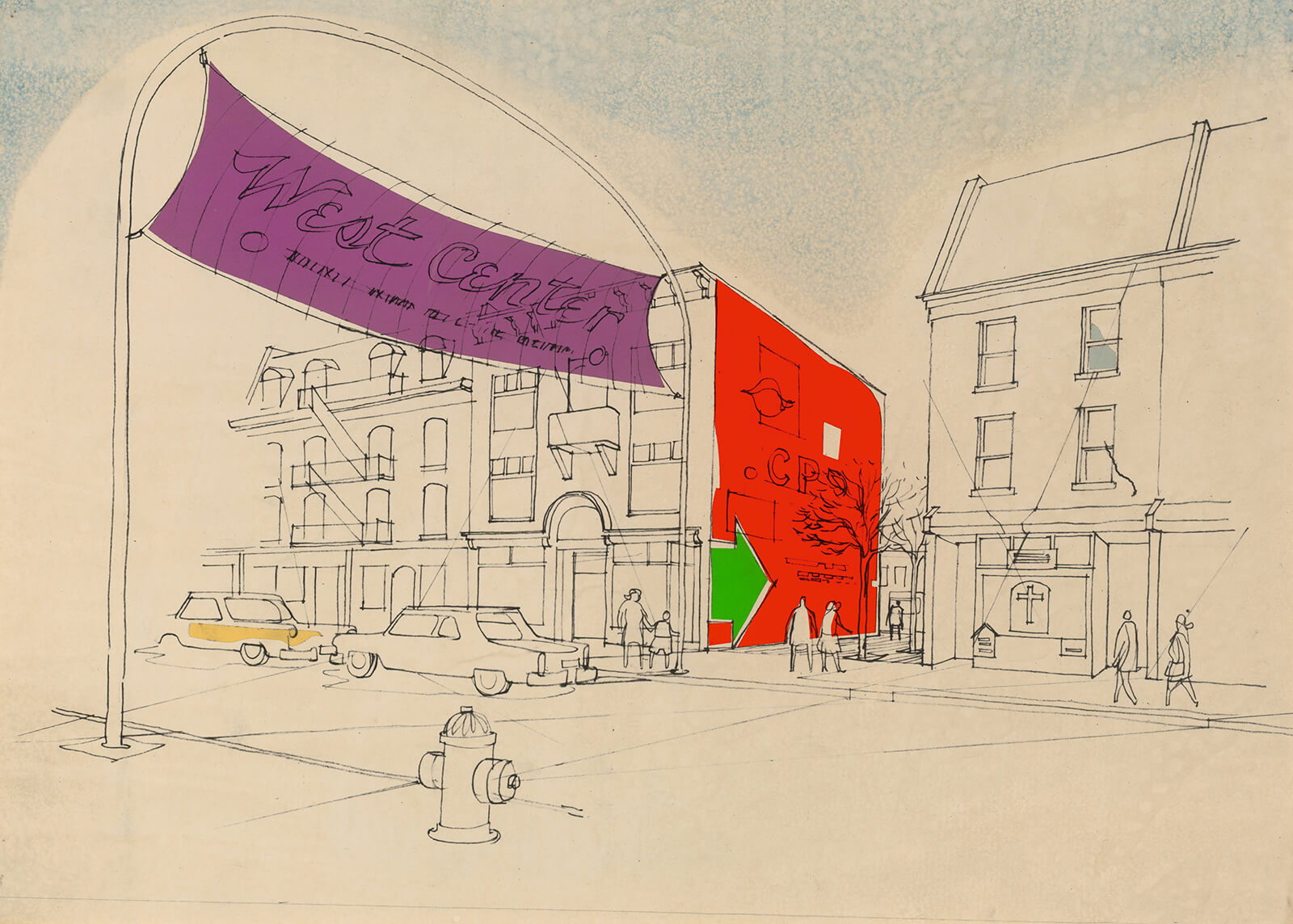
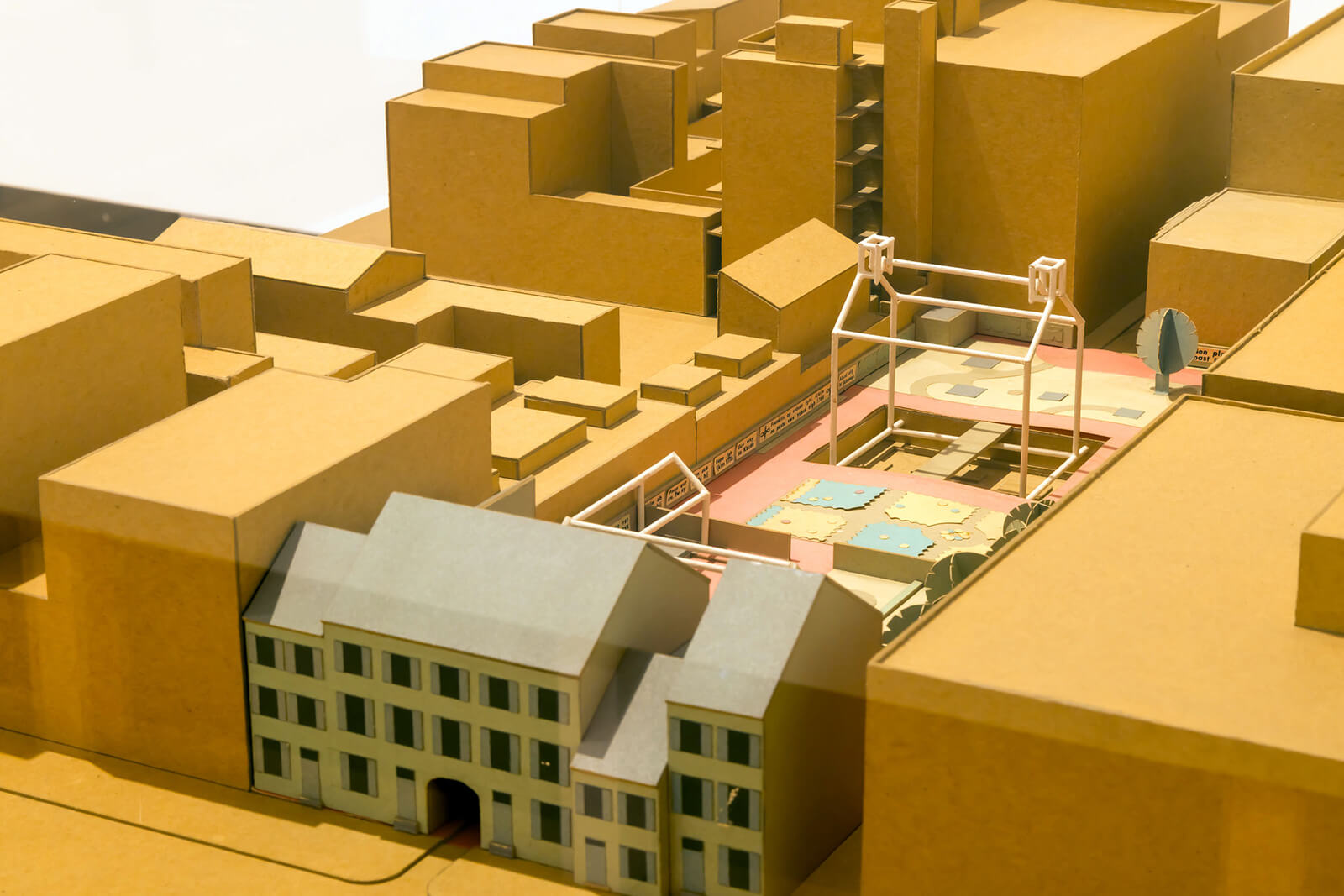
In categorising Scott Brown’s work along three distinctly architectural scales, even visitors unfamiliar with the studio’s practice get a clear sense of VSB&A’s particular critique of modernist architecture—their veneration of the banal and reconceptualisation of tradition and ornament. The drawings and figures alone are enough to enthral even amateurs. The first section, City, focuses on the studio’s work in Philadelphia, as noted in the project literature. Some of the projects in this section, including the Franklin Court complex (1972 – 1976) and the Independence Mall visitors’ centre (1996), demonstrate their unique approach to reinterpreting the historical city centre. Projects like the Fairmount in the City study (1983) and Penn’s Landing Planning Study (2003) were chosen due to the feasibility analyses of these urban settings conducted by Scott Brown. As the curators observe, these projects showcase Scott Brown’s contributions to understanding how urban planning and public space design are inherently intertwined.
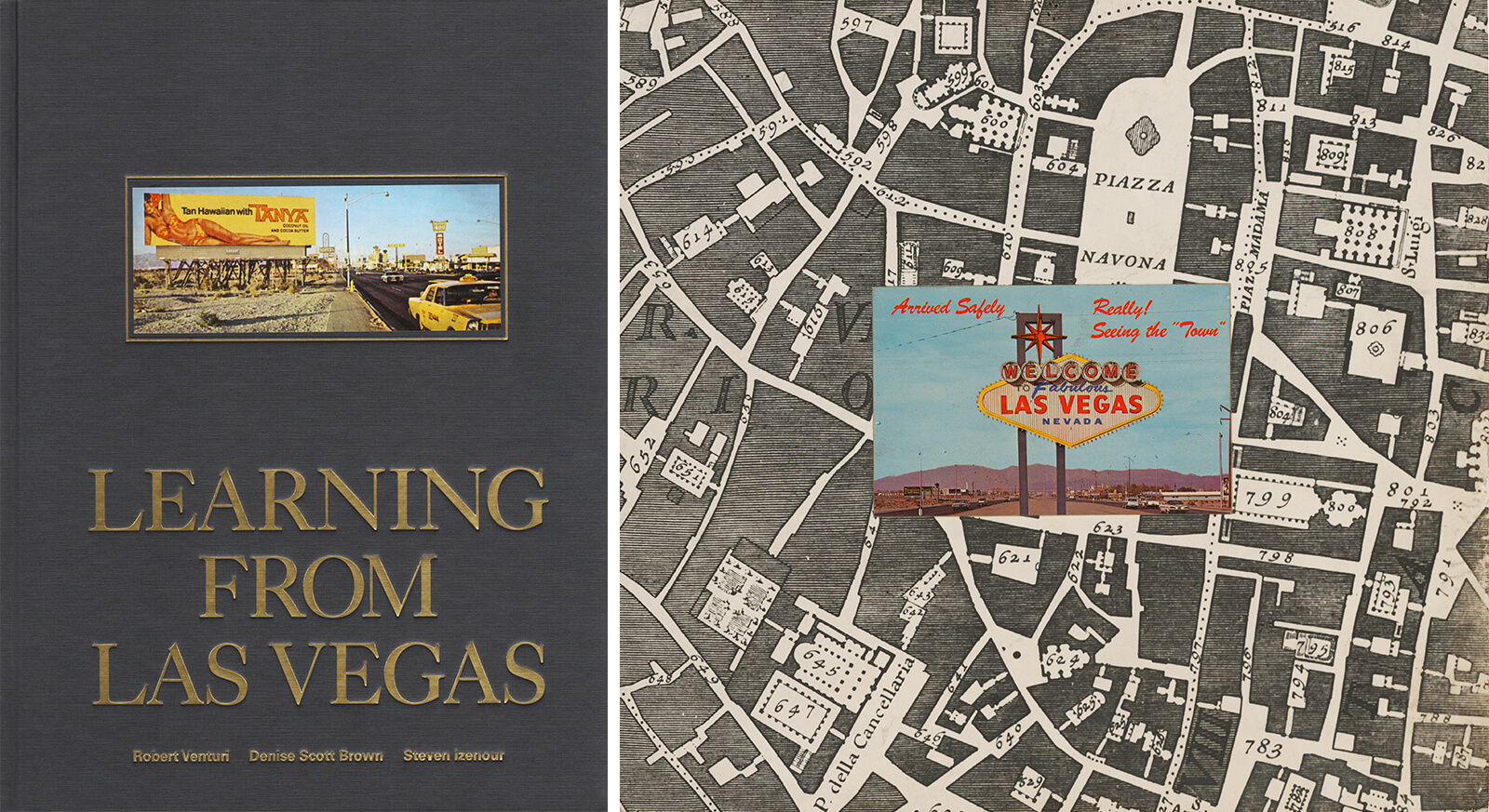
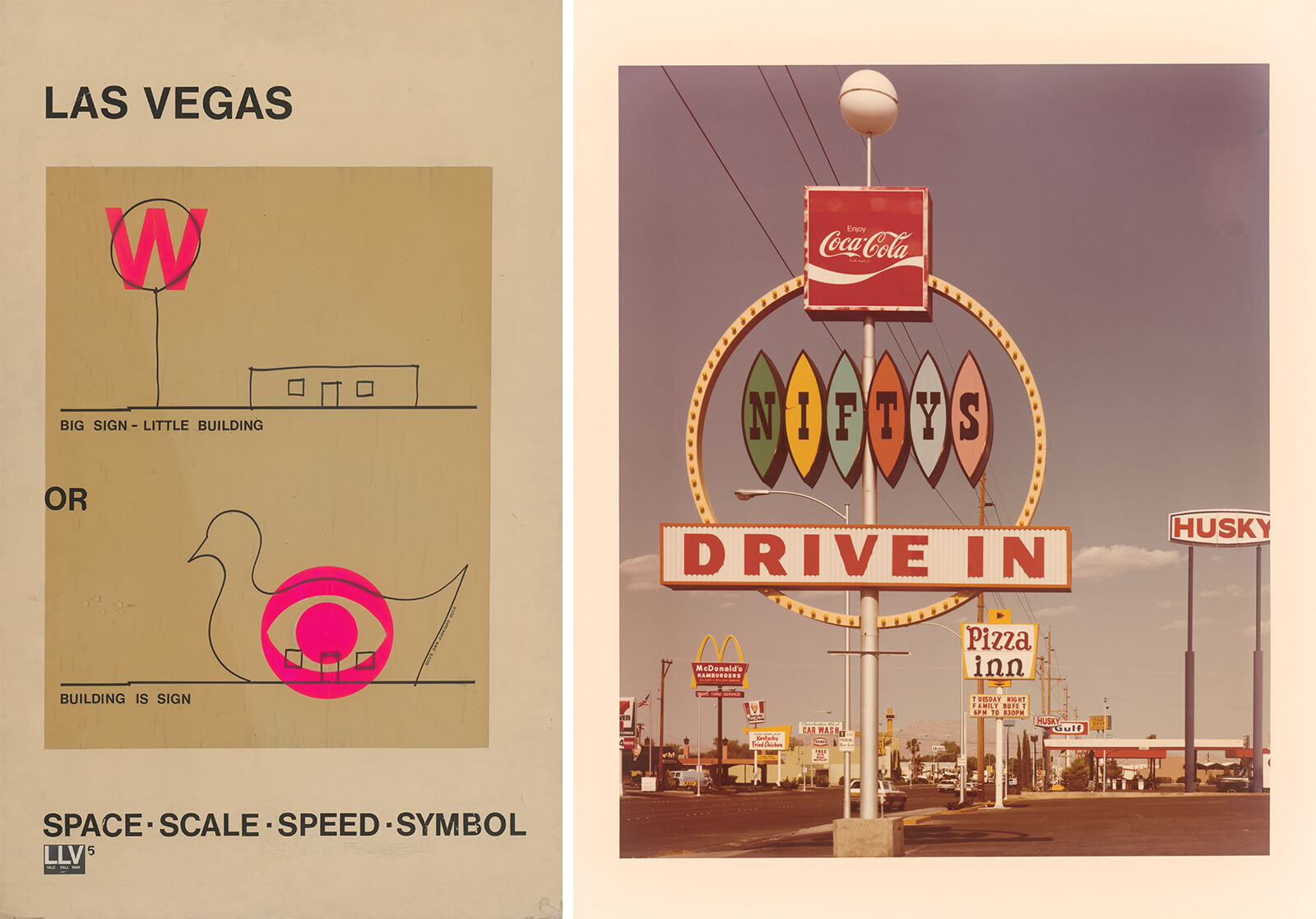
In this pursuit, there is no better example than the rigorously conducted study and analysis of Las Vegas and its strip through which the couple earned their notoriety—the focus of the section on the Street. Positioning the street as a symbolic space, the text studies the city and the signs that haunt it, underscoring the notion that symbolism and ornament have always been central to the expression of buildings; that ducks are perhaps not as interesting as decorated sheds. The initial interest—examining the ordinary built environment—was hers. It was also Scott Brown who was interested in photography, which translated into their method of analysis, tying together visual communication with the social aspects of architecture. Text over image, image over Nollis plans and Nollis plans—ancient and contemporary—juxtaposed with each other are instantly recognisable from their book. These methods have become crucial to how we think of urban analysis today and how the city is interpreted.
Lastly, the section on the House deals with Scott Brown and Venturi’s studio, which studied Levittown. Along with students from Yale, the duo conducted a study titled Remedial Housing for Architects or Learning from Levittown, observing indoor and outdoor decorations of the houses, as well as the individual expressions that appeared on their façades and in gardens. The section also includes the duo’s designs for single-family dwellings—the Vanna Venturi House (Philadelphia, 1960) and the Trubek and Wislocki Houses (Nantucket, 1970).
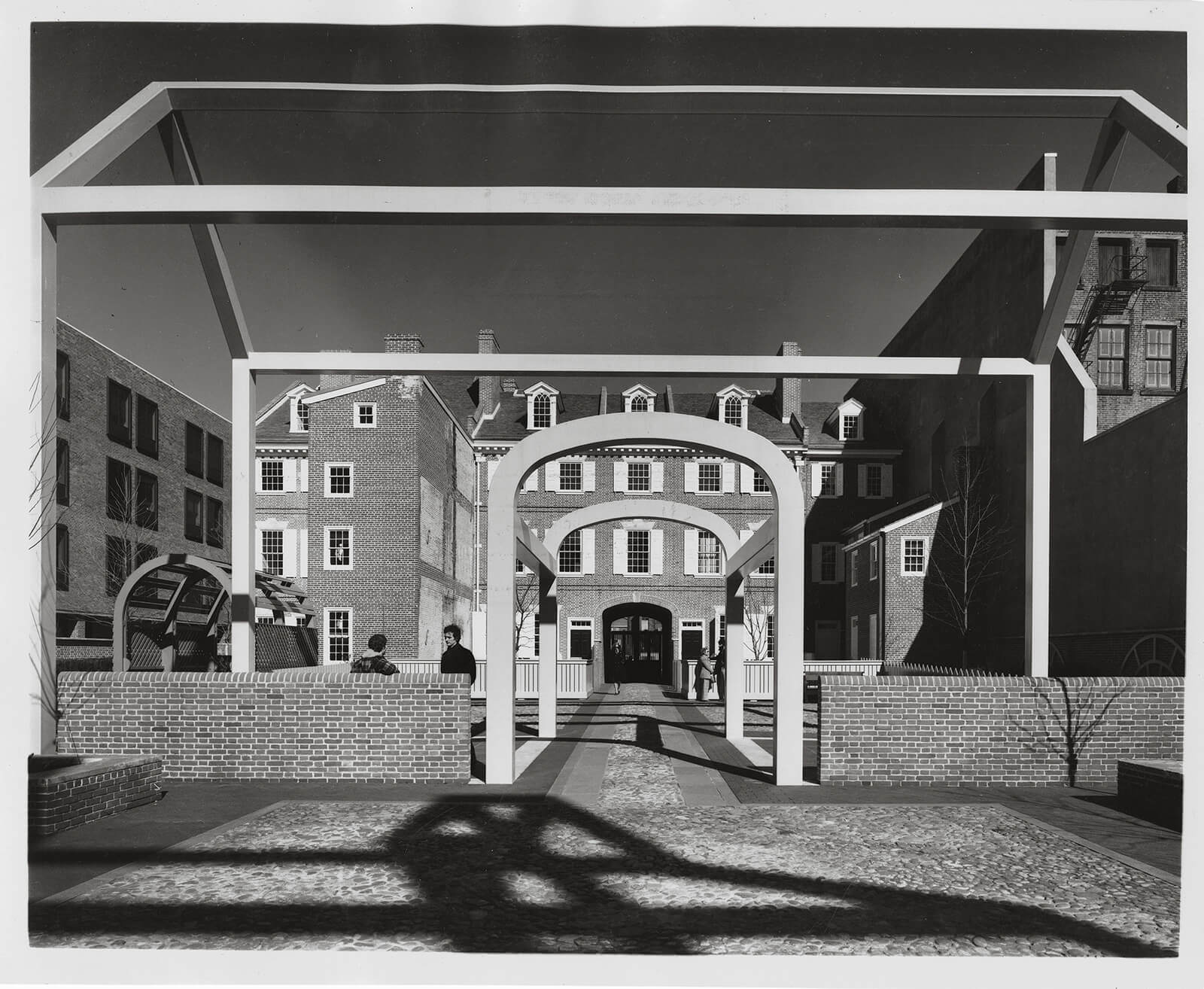
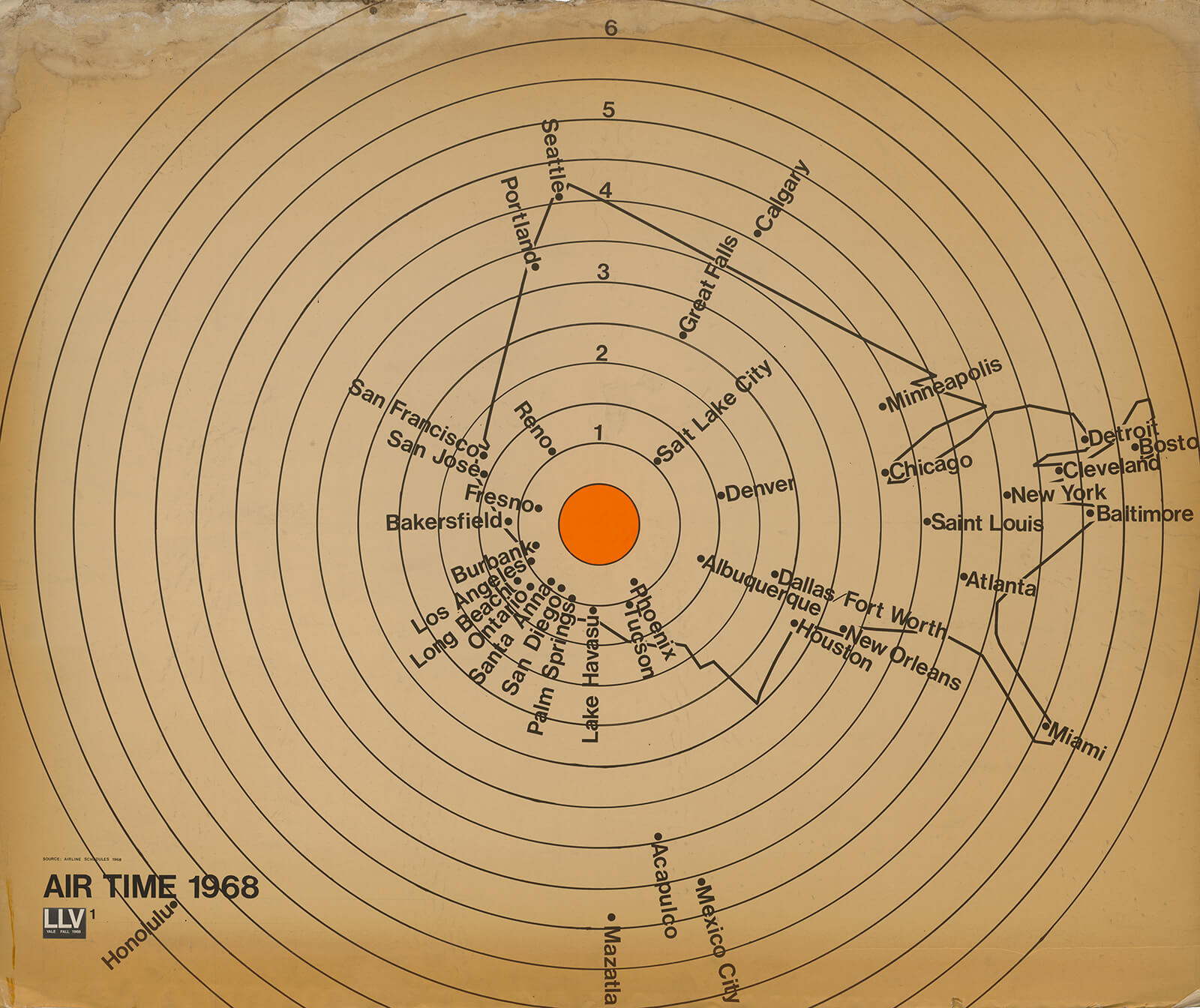
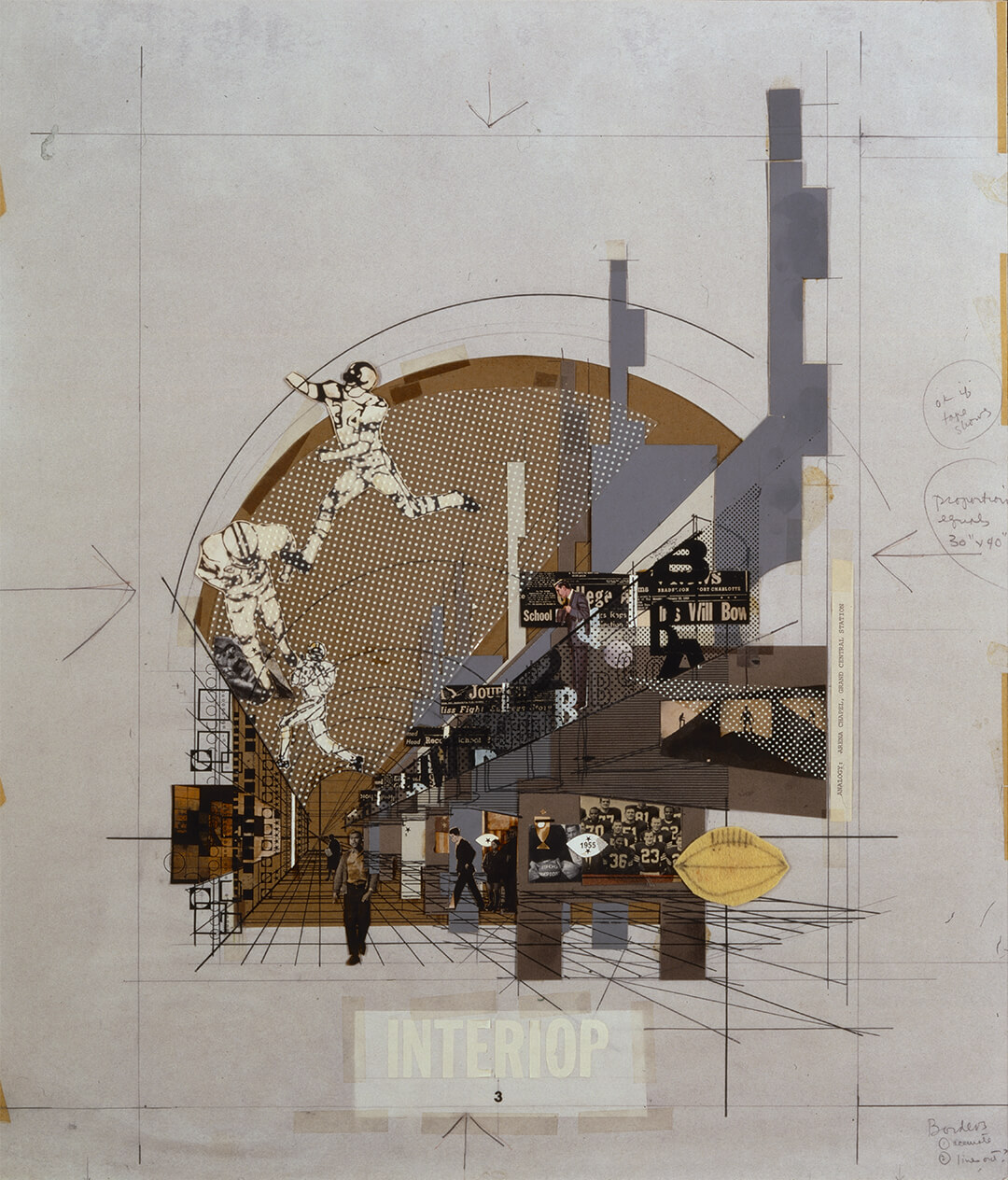
It’s easy to spend hours studying each of the several collages, drawings and schematic plans on display in the gallery. The mapping exercises, in particular, that denote every sign on the Vegas strip through words and then depict the same through images remain relevant, especially in an age where the image is indispensable. However, the sumptuously detailed drawings, schematic figures, plans and models, being complemented by the personal furnishings of the architect, are a special delight. It ought to feel strange—chairs like Antoni Gaudi’s Calvet chair and their own Queen Anne’s chair design sitting on pedestals, or a Roy Lichtenstein painting next to a figure-ground analysis of the suburbs in otherwise bare galleries with schematic drawings of urban landscapes on the wall. Yet, this collusion is perhaps a nod to Scott Brown and Venturi’s personal philosophy: the ordinary and everyday included with the iconic. On the other hand (for whoever said just because an architect signed his name on a piece of paper, it turned into gold), the inclusion of both in a sense creates a portrait of the architect and the person alike, with the work defining the person and the person the work. There is perhaps no better example of this than the couple’s home.
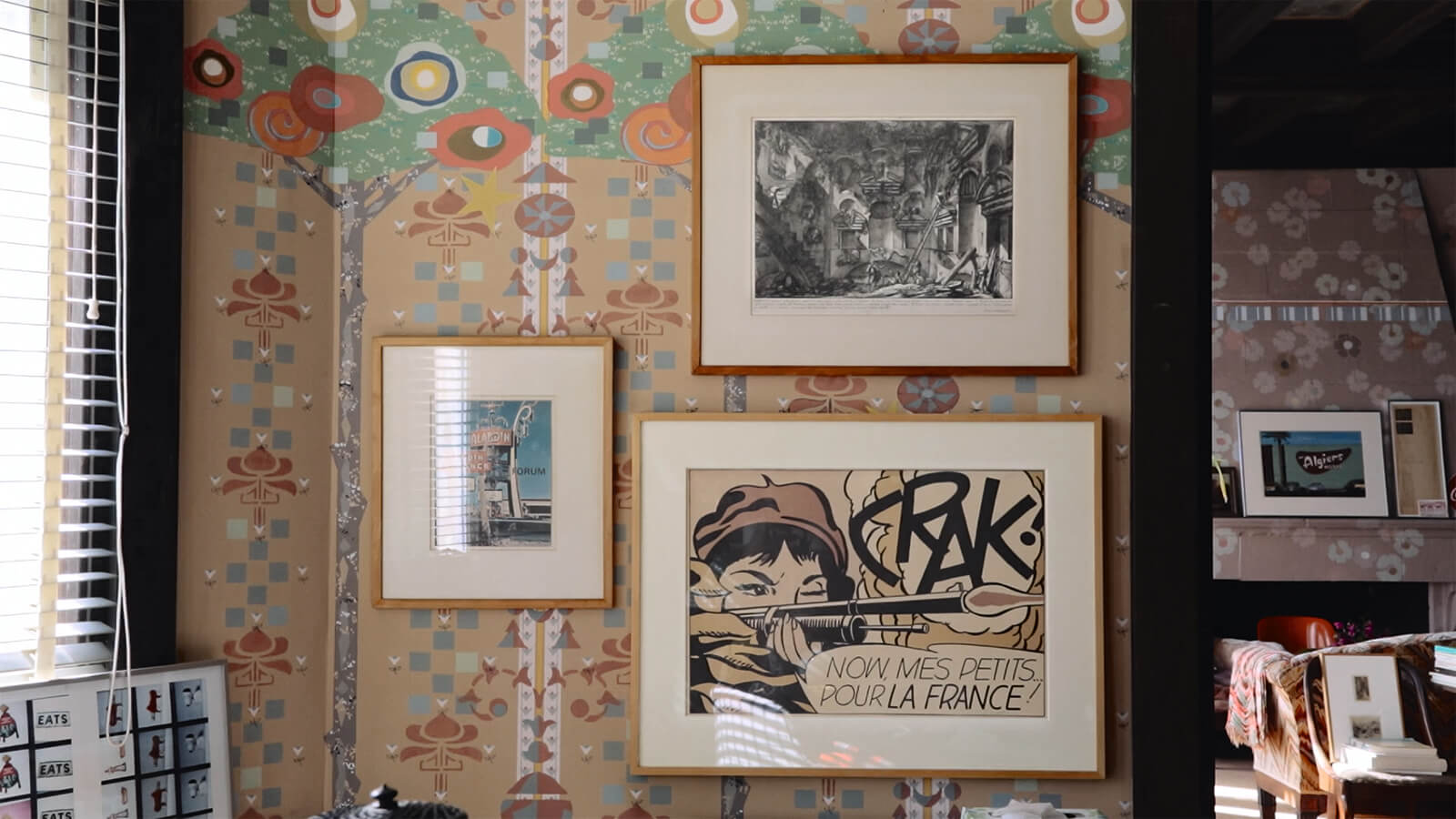
Positively encrusted with their personality, the house figures as part of the exhibition through a documentary produced specially for the museum. Directed by Manuel Asín and Pablo García Canga, the film titled ‘21 Structures on Wickahisson Lane’ is framed through that very conceit. 21 different reflections by Scott Brown are superimposed on shots of the couple’s dwelling spaces, all their paraphernalia on display. There’s a particular intimacy to the documentary that never really gives us the full scope of any setting, instead choosing to focus on details. Viewers cycle through different corners of the residence—the ceiling of the duo’s study studded with the names of artists and architects, a table with tchotchkes and a poster of Las Vegas, glimpses of their library and by extension their preoccupation with mannerism and Lutyens. We see it all while Denise tells us about her life.
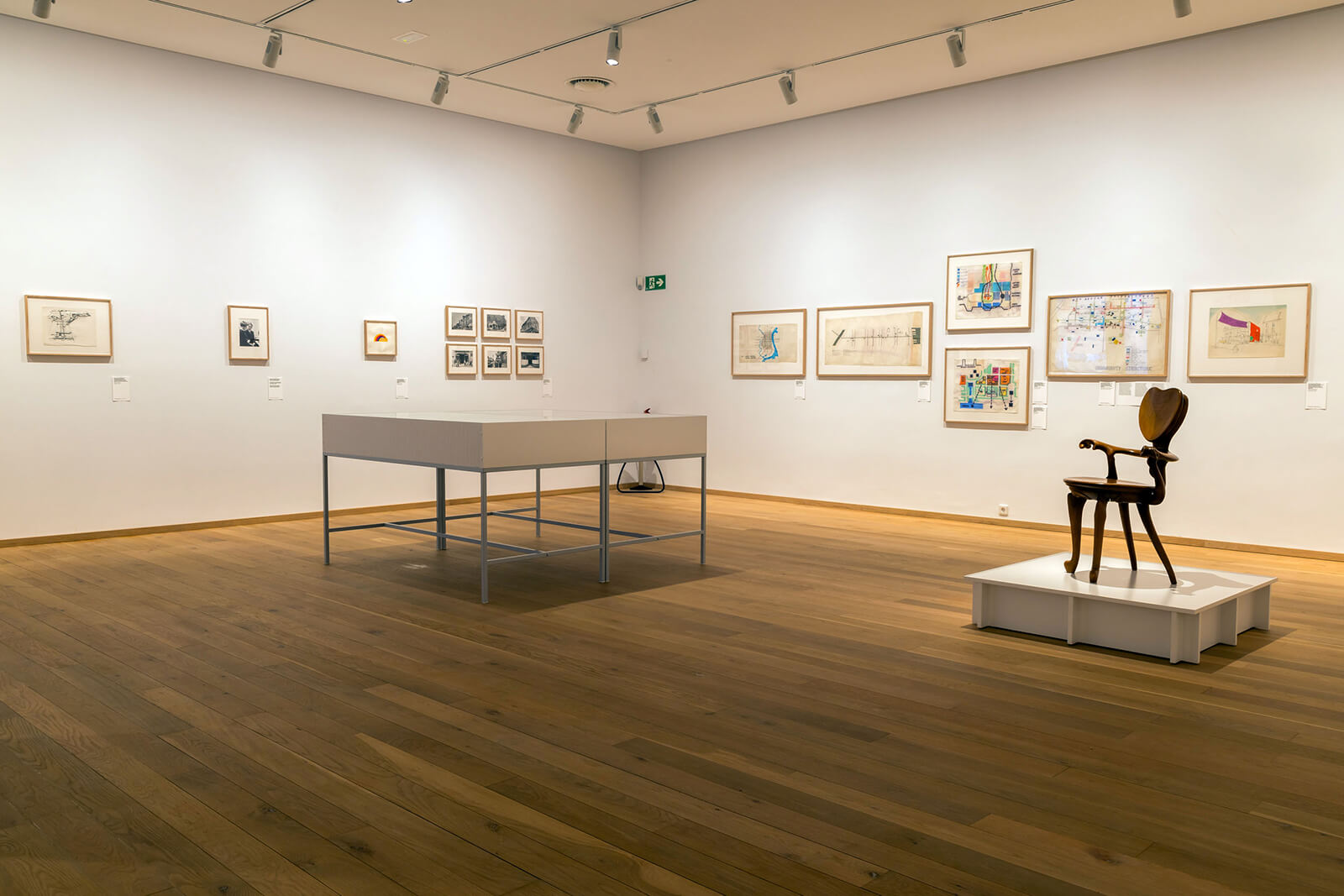
Often, retrospectives on architects focus purely on the work; on models, on theories, on how they wish to reimagine the world—a very particular imposition that seems to stem from the bane of the lone genius. Neither do they acknowledge labour—the countless hands that made the drawings, the countless hours something took to make—nor can they make room for collaborators. Genius must be arrived at through divine inspiration alone, they suggest. By giving us a glimpse of Scott Brown’s rich world of references instead, the show at the museum in Spain argues otherwise. It suggests, as she stated all her life, that genius is never solitary; that practising architecture is always an act of collaboration. To paraphrase something she observed in another interview1, had Venturi and herself been men, it would have been different. The Pritzker that would eventually go to a pair of architects in 2001 (the single-architect rule that applied in 1991, now abandoned) might have gone to Venturi and Scott Brown. There is no way that a retrospective on Scott Brown’s architectural oeuvre can focus on her alone; that is just a simple fact. She says so herself. What it does focus on—her not only as the ‘architect’s wife’, not only as Venturi’s partner—is a redressal of a history that belonged to her all along.
References
1.Barriere, Phillipe, Sylvia Lavin, Denise Scott Brown, and Robert Venturi. “Interview with Denise Scott Brown and Robert Venturi.” Perspecta 28 (1997): 127–45. https://doi.org/10.2307/1567197.
The views and opinions expressed here are those of the author(s) and do not necessarily reflect the official position of STIR or its editors.

by Pranjal Maheshwari Oct 27, 2026
The Brazilian architects shape the residence with cues from its context, nimbly segregating its private and social realms with greens, lattice screens and a form-giving ascent.
by Pranjal Maheshwari Oct 24, 2026
A consortium of Copenhagen’s 3XN, Toronto’s B+H Architects and Shenzhen’s Zhubo Design has designed the museum to mimic the surrounding riverscape, topped with a public park.
by Pranjal Maheshwari Oct 19, 2026
The Mumbai-based architects integrate courtyards, mesh screens and north light trusses to create a dining space that doubles up as a community hub at SR University, Warangal.
by Mrinmayee Bhoot Oct 17, 2026
The Rotterdam-based institute centres the Indian Ocean as a network for exploring material histories and transnational links shaping coastal cultures, positing them as future models.

make your fridays matter with a well-read weekend
Enter your details to sign in
Don’t have an account?
Sign upOr you can sign in with
a single account for all
STIR platforms
All your bookmarks will be available across all your devices.
Stay STIRred
Already have an account?
Sign inOr you can sign up with
Verification link sent to check your inbox or spam folder to complete sign up process
Tap on things that interests you.
Select the Conversation Category you would like to watch
Please enter your details and click submit.
Enter the 6-digit code sent at


On retrospectives and canons: When does Denise Scott Brown get room at the top?
by Mrinmayee Bhoot | Published on : May 15, 2026


 Sign in with Google
 Sign in with email
What do you think?