Art11 mins. read
Nikhil Chopra on curating the 6th Kochi-Muziris Biennale with HH Art Spaces
by Ranjana DaveNov 20, 2024




by Srishti Ojha, Harshali PagarePublished on : Jan 22, 2026
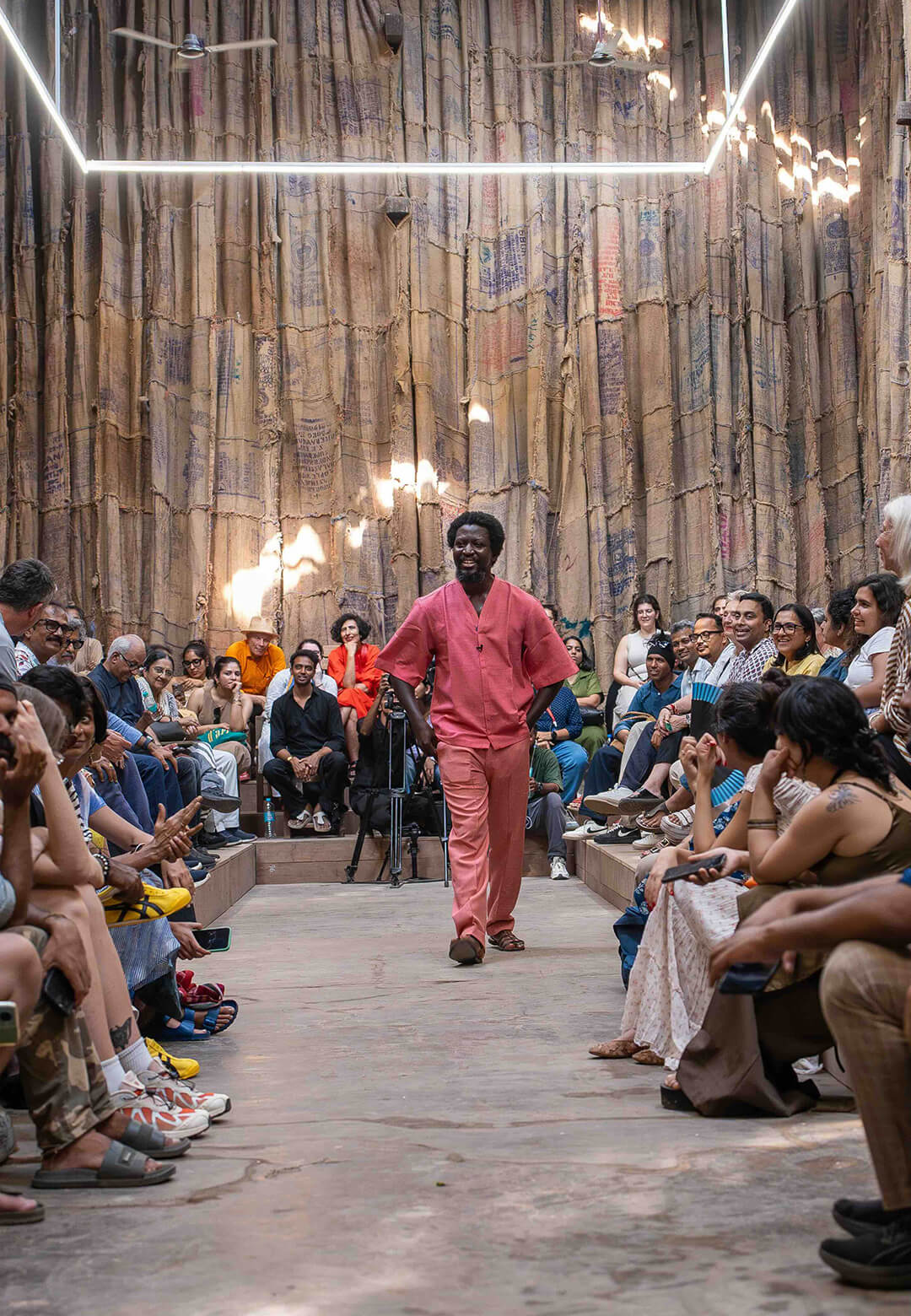
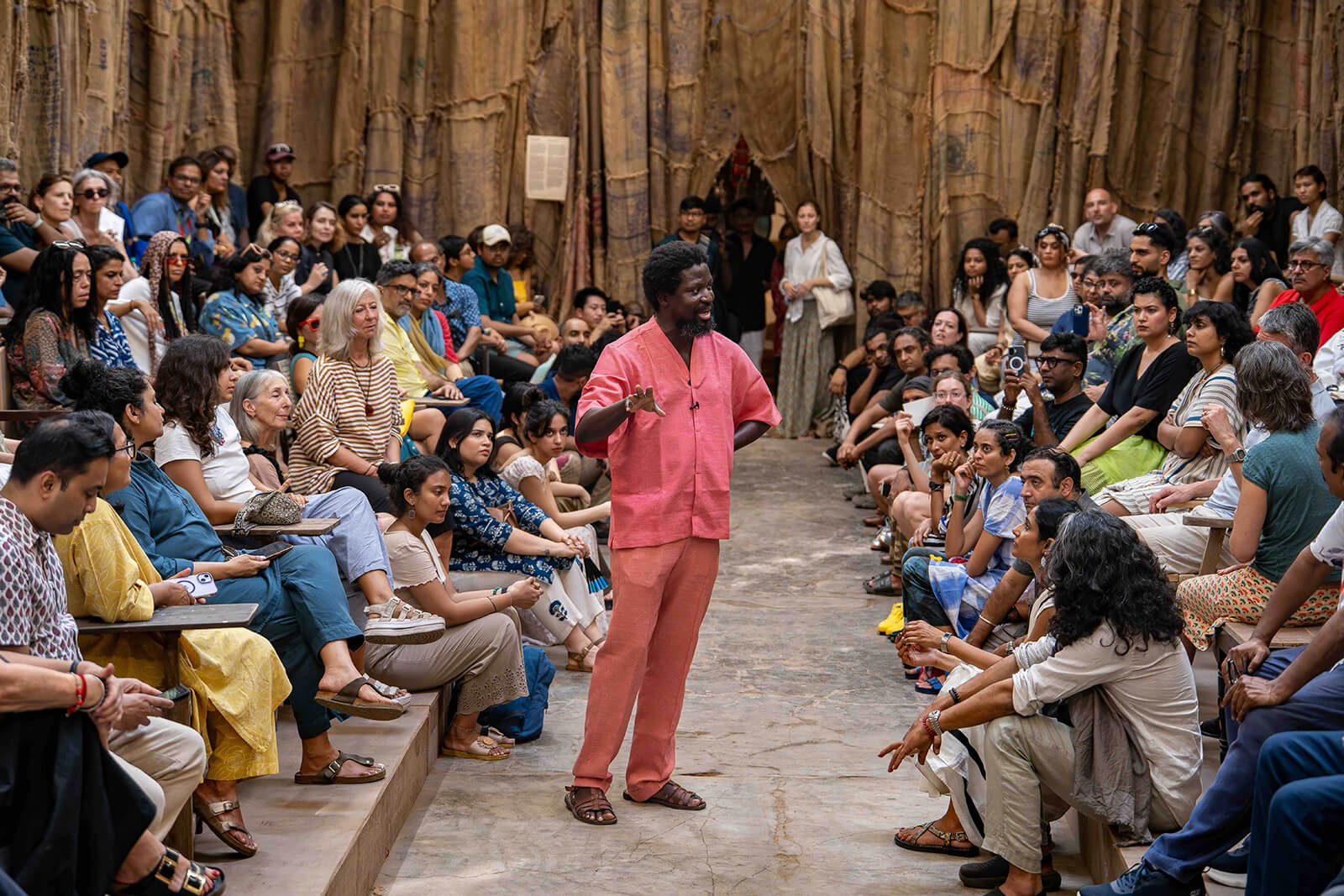
“We always imagine that when objects are old, and they've been used, charred, scarred, there are all these wounds within them, some repaired; we always think that they are at the end of their life cycle. But sometimes I like to think that that's when they actually begin to live,” says Ghanaian artist Ibrahim Mahama in a conversation with STIR about Parliament of Ghosts—his commission for the sixth edition of Kochi-Muziris Biennale, taking place in Kochi from December 12, 2025 – March 31, 2026. Used jute bags, marked with stamps, stains and rips, are sewn together to form the walls of the structure, which occupies a hall at the disused Anand Warehouse in Kochi’s historic mercantile Mattancherry ward. Chairs in varying states of use and disarray line the stepped hall, creating an installation that is simultaneously a venue, inviting people to interact with and use the structure as they wish.
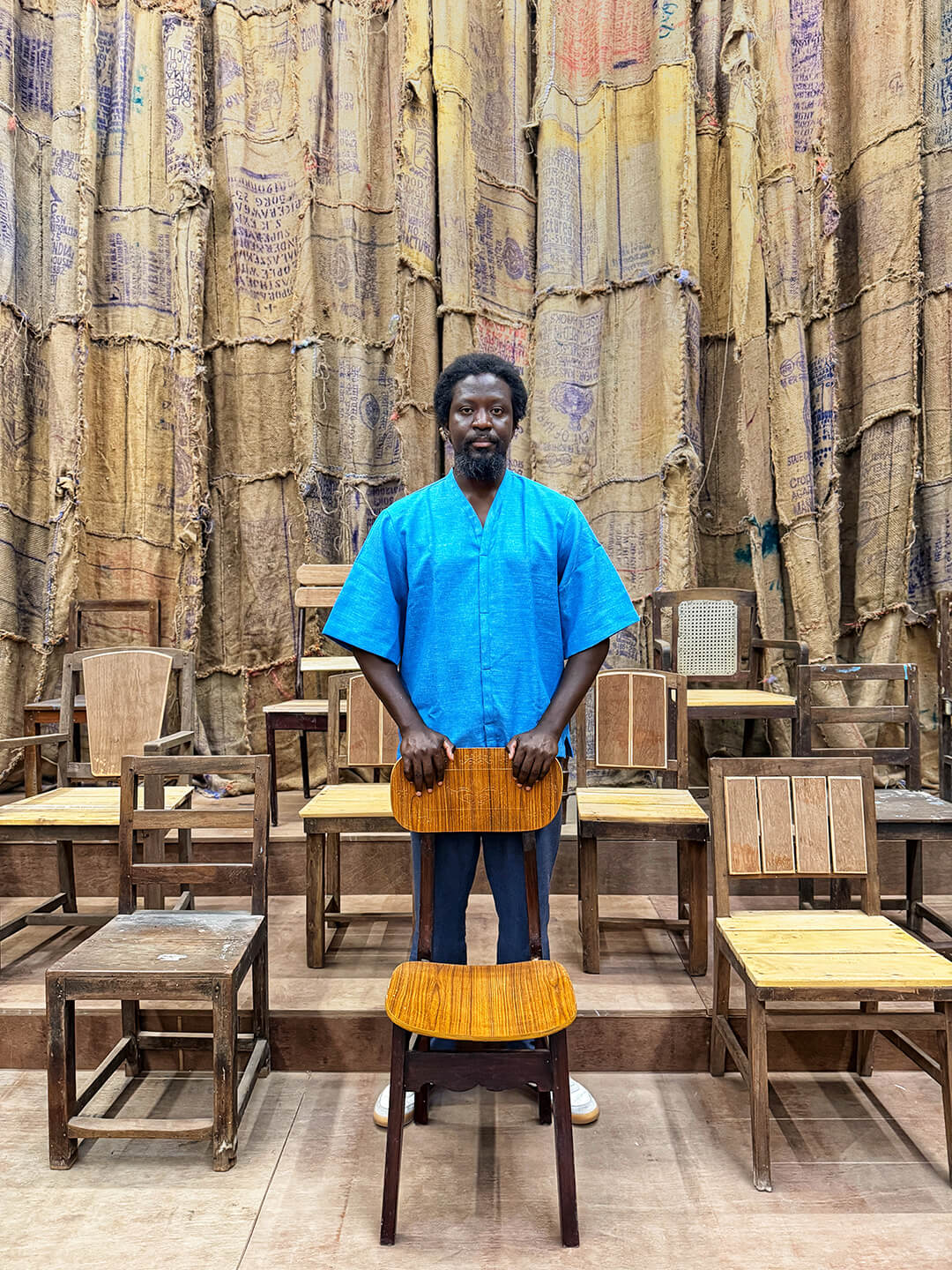
Mahama’s signature large-scale open-air burlap sack installations have risen to prominence in the global art world over the past 10 years. Through his use of everyday objects associated with trade, he explores the impact of Western colonialism on Africa, the living legacy of this violence in modern trade networks and imagines new approaches to labour justice. Mahama has directed the profits from this popularity toward opening art institutions in his hometown of Tamale, Ghana: the Red Clay Studio, the Savannah Centre for Contemporary Art (SCCA) and Nkrumah Volini, a space for exhibitions, workshops and residencies that imagine new ecological futures.
Like the artist’s earlier works, Parliament of Ghosts is a meditation on its materials and the socioeconomic milieu they emerge from. The jute bags are symbolically marked by the memory of the commodities they once contained as well as the lives and communities of the hands that have touched, filled and transported them. Generally used as vessels for trade and marked by the bureaucratic stamps governing import and export, the jute bags and modern trading infrastructure in general are inextricable from a wider global history of colonisation. The furniture, meanwhile, holds memories of the bodies it once contained—bodies that belonged to families, communities and bureaucracies. Each piece in the exhibition is sourced locally from markets, trucks and businesses within Kerala, with most pieces gathered in Kochi itself.
The work was originally intended for the Manchester International Festival in 2019, and would’ve consisted of a similar structure made up of the material remnants of British colonialism left behind in Ghana. To adapt it to Kochi and the Indian context, Mahama dove into the history and materials of India and Kochi’s trade history, bringing it to life through his use of used and reused local materials, keeping both the cultural context and sustainability in mind. This is not just the metonymic replacement of one ex-colony for another, but an opportunity for the artist and visitors to discover continuities between Ghana and India, their colonial pasts and their efforts towards resistance and community.
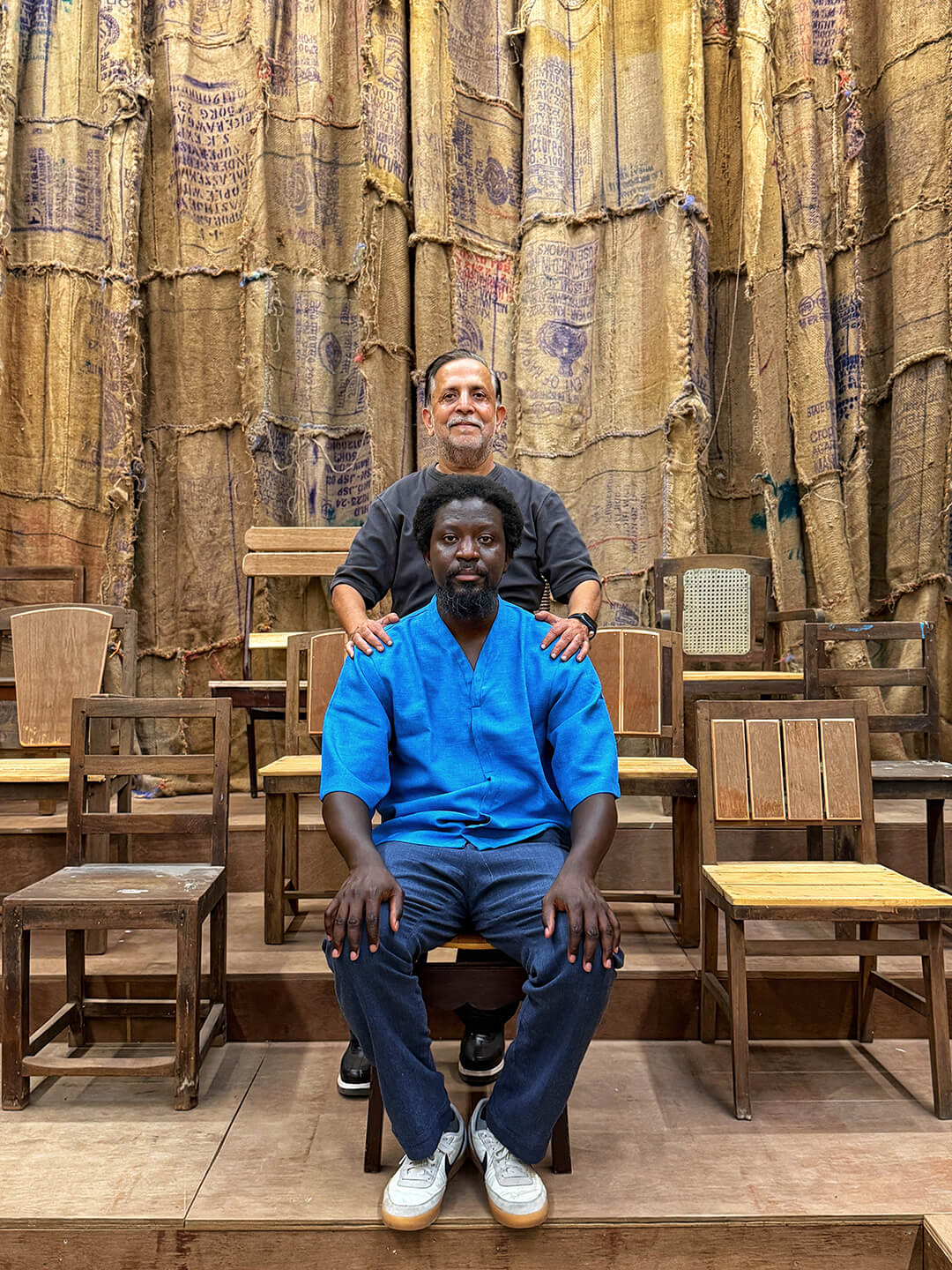
Indian photographer Rohit Chawla spoke about Mahama and his approach to his work, saying, “I feel there is a sense of tokenism and political correctionness in all aspects of the arts…as the Western world is trying to assuage its guilt and make amends for its previous misdemeanours and for how it has treated marginalised communities and countries it once colonised and plundered. The most wonderful thing about Ibrahim Mahama‘s work which spotlights old colonial mindsets, is that unlike some other contemporary artists, he walks on level ground and is almost oblivious to the recent ceremony around his work—most recently at Art Basel [Miami] in December 2025, and his exalted status as the definitive No. 1 artist on the Art Review pecking order this year. It reinforces my dictum that an inherent humility is the most endearing quality among truly gifted artists. Long might we celebrate art and artists that walk on terra firma and speak like mere mortals and not media demagogues.”
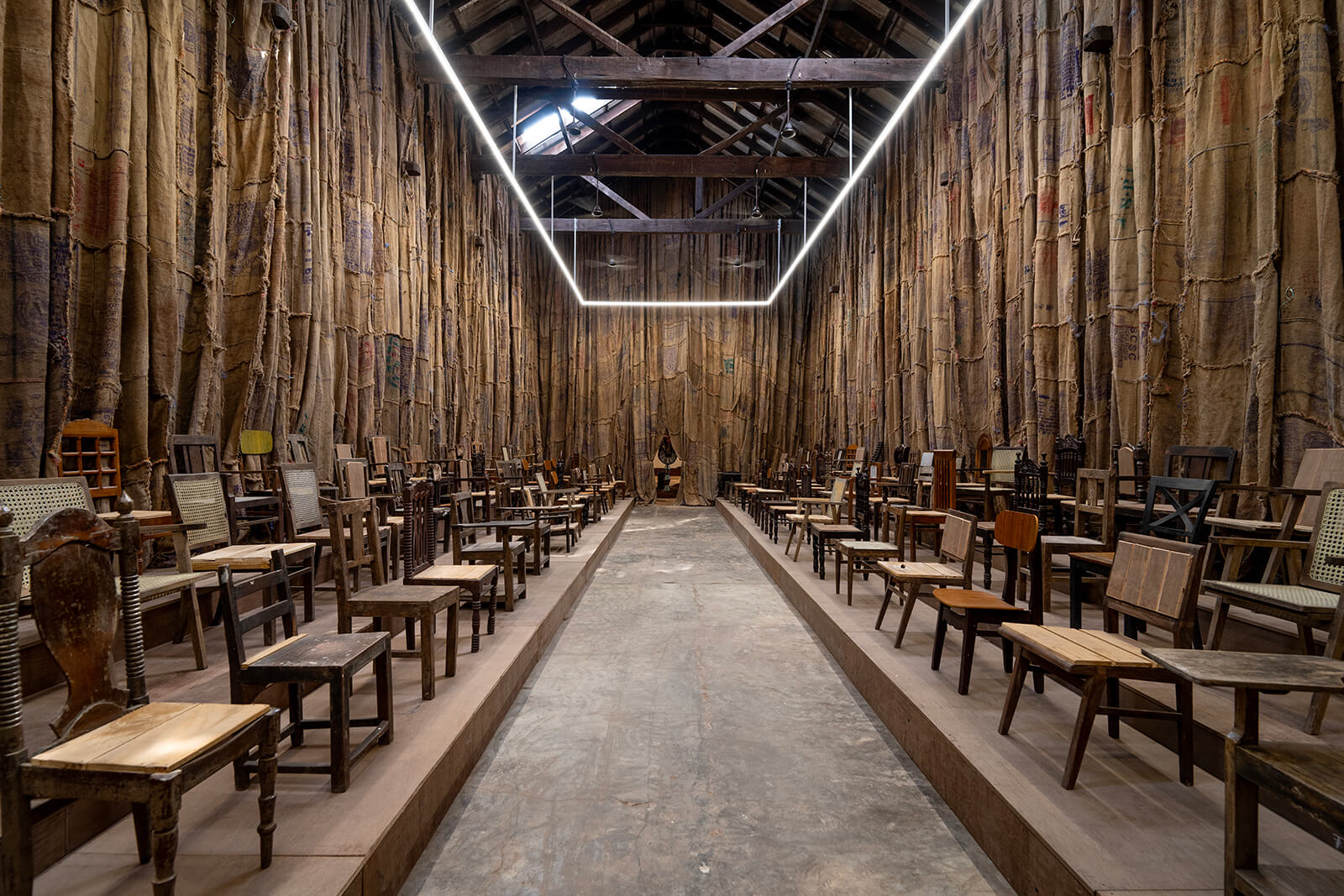
Community is central to Mahama’s practice, both in the content and creation of his art. Parliament of Ghosts was sourced, created and assembled with help from the biennale team, local seamstresses and open workshops that invited students and artists to help construct the piece alongside Mahama. This complements the ‘gift of memory’ each bag and chair carries in their unique patterns of wear and tear, stamps and paints that reveal their histories. The installation exists in the interactions it fosters—guests are invited to take up space and seats and interact with the work, with the parliament setting creating a powerful sense of community and solidarity.
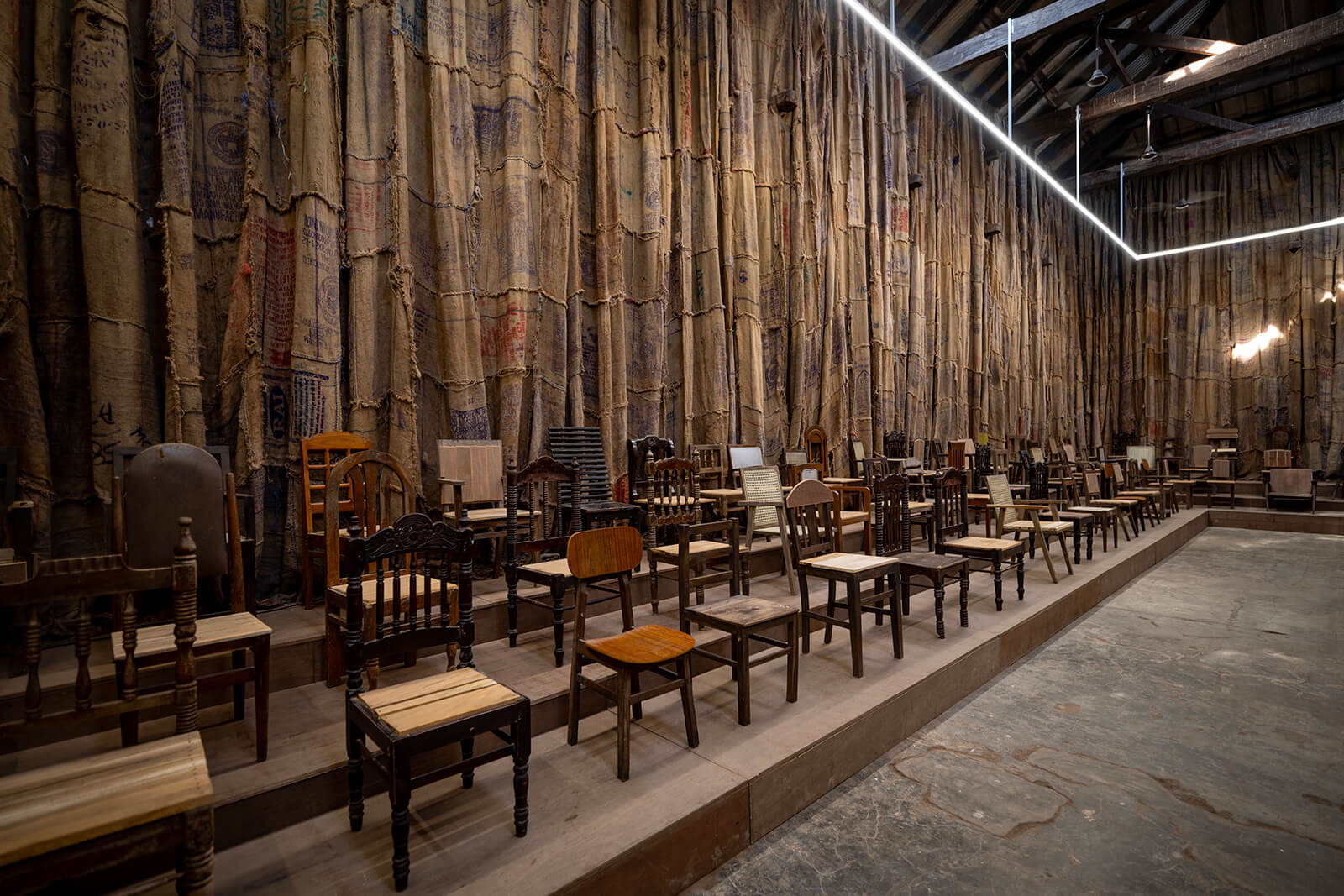
Community, for Mahama, is inextricable from the idea of shared and collective labour. The installation, in creating a site for the bodies of viewers and the bodies of labourers and bureaucrats implied by the commodities that survive them, highlights a troubling continuity between body and commodity that was the basis for the transatlantic slave trade and extractive colonialism. Mahama describes how this attitude survives in modern culture: “We only want what we can get from you, and not your body itself.”
The Parliament of Ghosts makes what is conveniently seen as ephemeral by capitalist-colonialist structures—labour and the local communities and ecosystems that are the source of extracted capital—and makes it visible and immediately tangible, allowing important questions about labour justice and community solidarity to arise.
‘For the Time Being’, the 6th edition of Kochi-Muziris Biennale 2025 runs from December 12, 2025 – March 31, 2026, in Kochi, India.
Video interview by Harshali Pagare.

by Srishti Ojha Oct 21, 2026
Increasingly, artists, filmmakers and activists are turning to VR to create more personal, tangible accounts of the climate emergency and its impact on vulnerable communities.
by Mirra Lynn Oct 20, 2026
The Indian artist paints the old wadas of central Pune, capturing the traces of everyday life that cling to these structures, battered by time but unbowed.
by Anmol Ahuja Oct 15, 2026
How do heaps of souvenirs and relics with racist Aboriginal motifs and features become art? MCA Sydney’s winter showcase—the artist’s largest to date—beckons a possibility.
by Vandana Kalra Oct 14, 2026
With his latest exhibition as a point of departure, the modernist discusses his decades-long practice, the spontaneity of drawing and the social responsibility of artists.

make your fridays matter with a well-read weekend
Enter your details to sign in
Don’t have an account?
Sign upOr you can sign in with
a single account for all
STIR platforms
All your bookmarks will be available across all your devices.
Stay STIRred
Already have an account?
Sign inOr you can sign up with
Verification link sent to check your inbox or spam folder to complete sign up process
Tap on things that interests you.
Select the Conversation Category you would like to watch
Please enter your details and click submit.
Enter the 6-digit code sent at


From Ghana to Kochi: Ibrahim Mahama on creating spaces for community
by Srishti Ojha, Harshali Pagare | Published on : Jan 22, 2026


 Sign in with Google
 Sign in with email
What do you think?