Design07 mins. read
We Must Imagine It by Unfold Projects advocates for regenerative art and design
by Pranjal MaheshwariJul 14, 2026



by Pranjal MaheshwariPublished on : May 01, 2026
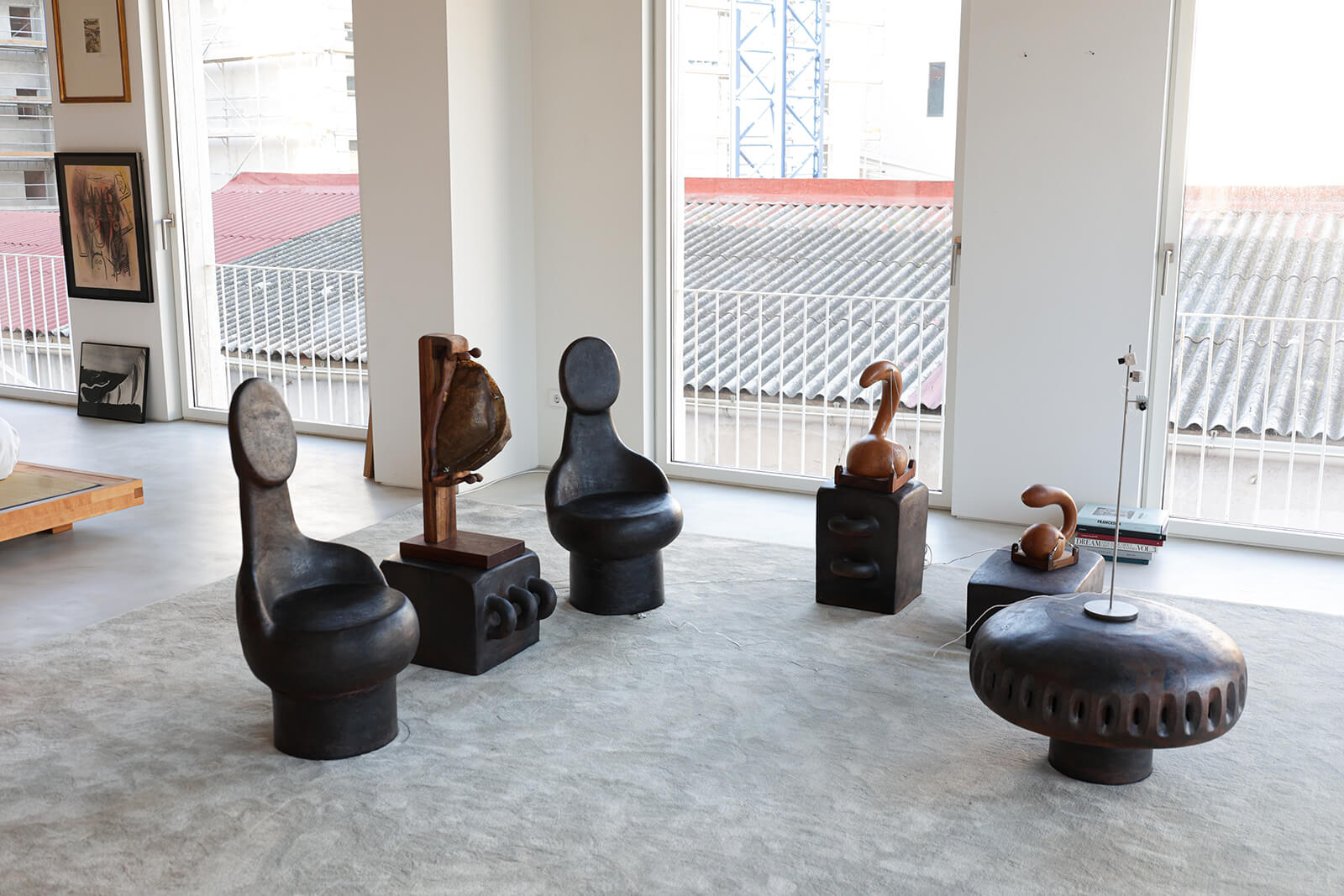
A set of unearthly, melancholic objects resembles familiar forms, yet something about them feels eerie—distinct but not definitive. Gourd is abstracted as a container of the spirit; sound and light are immersions into the metaphysical; and the form is a memory of life, ritual and presence, moulded as an object. There is a suggestion of function—provisions of rest, occupation, involvement—but what anchors these objects seems to transcend from utility into something otherworldly. The effect is difficult to describe in words, and rightly so—for to describe is to strive for a definition, an attribute that the Mexico-based artist and designer Pol Agustí refrains from assigning to his work.
When Agustí first encountered design, he perceived it as a medium that would allow him to explore and freely express even his undefined emotions. A deeper involvement with the field of industrial design at the Escola de la Llotja in Spain, however, exposed him to the limits and biases that often form under rigid frameworks and pre-defined systems, leaving him to reconsider his expectations from the field. After graduation, Agustí went on to work as a production designer and photographer for the next 15 years, before moving to Mexico in search of something more personal: a journey that inspired him to establish a practice at the intersection of solitude, architecture and spiritual symbolism.
Striving to create physical setups for the metaphysical, Agustí conceives objects as emotional statements that subtly suggest utility. Their material existence is often guided by an imaginary muse, seeking value through what is absent, perhaps even more than what is present, rendered as much by the ritual of process and tradition as by the invocation of a user. “Each piece adds another layer to this imagined existence,” Agustí describes to STIR. “The work is less about narrating a full biography and more about revealing fragments of a world, moments that suggest a life without ever fully enclosing it.”
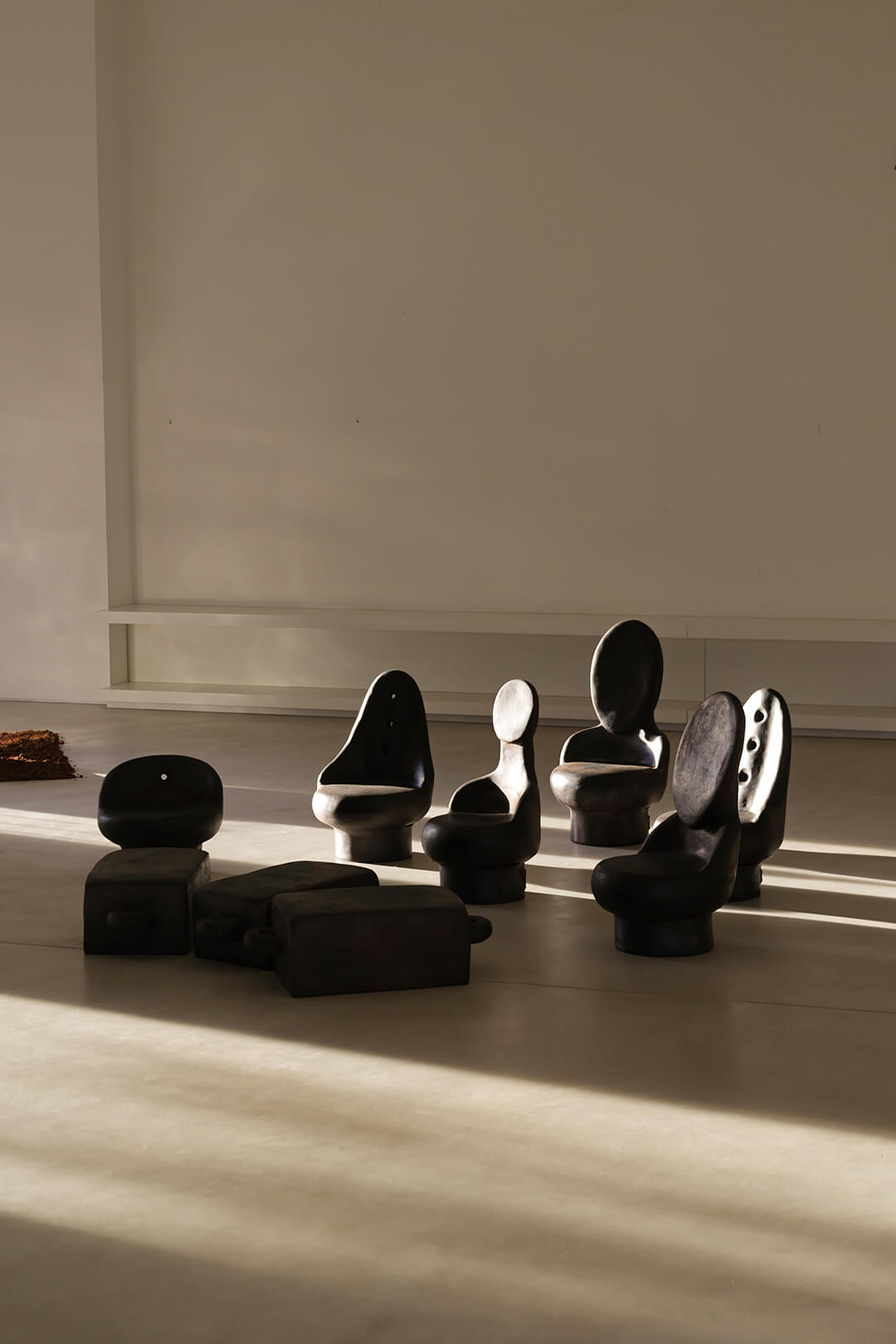
While every piece is an individual expression, what he recognises throughout his oeuvre—comprising everyday objects ranging from chairs, tables, speakers and lamps moulded as altars, funerary structures and devotional tools—is not comprehension but a consciously undefined, spiritually felt connection. In a conversation with STIR, Agustí ponders on his journey, the comfort in ambiguity, creating designs that seek to transcend from material expression towards abstraction and lack of definitive meaning.
Pranjal Maheshwari: What was your first interaction with design? What impact does it have on your perspective and work today?
Pol Agustí: My first encounter with design was through industrial design studies at university. However, the type of design I was taught was far more technical than artistic. While my projects often sparked interest among my professors, there was always an underlying tension, an implicit understanding that what I was proposing did not quite fit within what the school considered valid design or something feasible within the frameworks of the real world.
Over time, I began to feel that I had misunderstood what design was supposed to be, that it was not as free or as creative as I had initially imagined. And yet, years later, after building a career in production design and constructing worlds through objects, spaces and atmospheres, I found myself returning to that original intuition I had at 18.
In a way, I have come full circle, but it took that entire journey to understand that what I had once imagined was, in fact, possible. – Pol Agustí
Pranjal: For approximately 15 years, you worked in production design, conjuring various worlds through careful curation of objects, props and environments. Do these experiences serve as a foundation or a springboard for reflections within your current practice?
Pol: For a long time, when I decided to shift direction, I felt as though I had invested many years in something that was perhaps not the most aligned with what I should have been doing. But over time, I have come to understand that working in production design placed me in an incredible range of situations, constantly requiring solutions, adaptability and the ability to materialise ideas under pressure.
That experience fundamentally changed my perception of what is possible. Even projects that may seem unrealistic at first feel achievable, because I learned through cinema that almost anything can be realised if you remain focused, find the right collaborators and persist. In that sense, production design became a very important school for me, one that gave me the confidence to understand the breadth of what I am capable of. At the same time, it continues to shape how I present my work. The spatial arrangement of objects, the environments I create for exhibitions and the care I put into photography—all stem from that background.
Pranjal: Is your work influenced by the perception and response of a user, or is your creative process fueled primarily by self-expression?
Pol: I would say the work begins as a deeply introspective process. It often emerges from an internal necessity, from an intuitive search rather than from the anticipation of how it will be used. In that sense, the work is driven by a desire to give form to something that feels unresolved or unspoken.
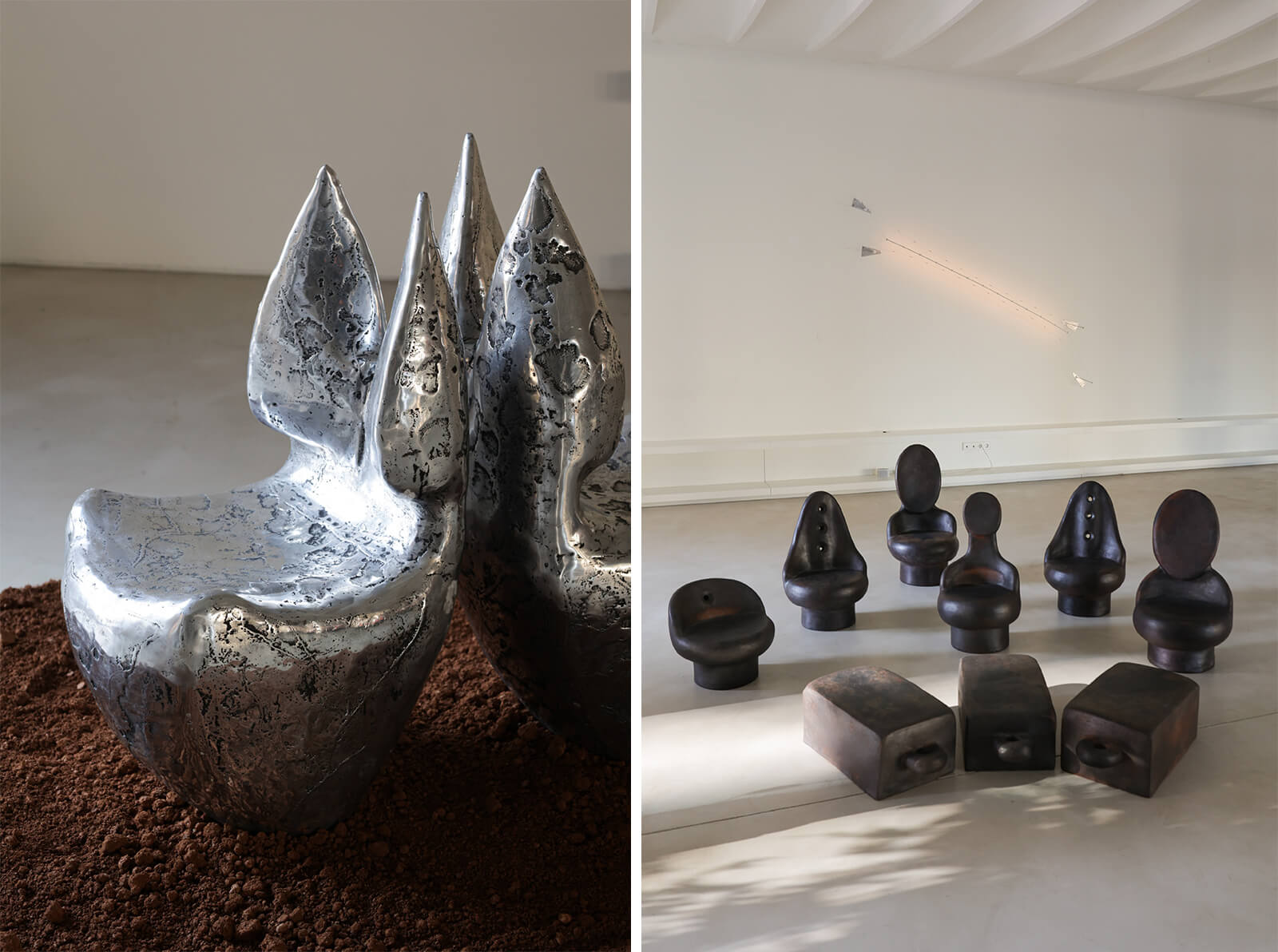
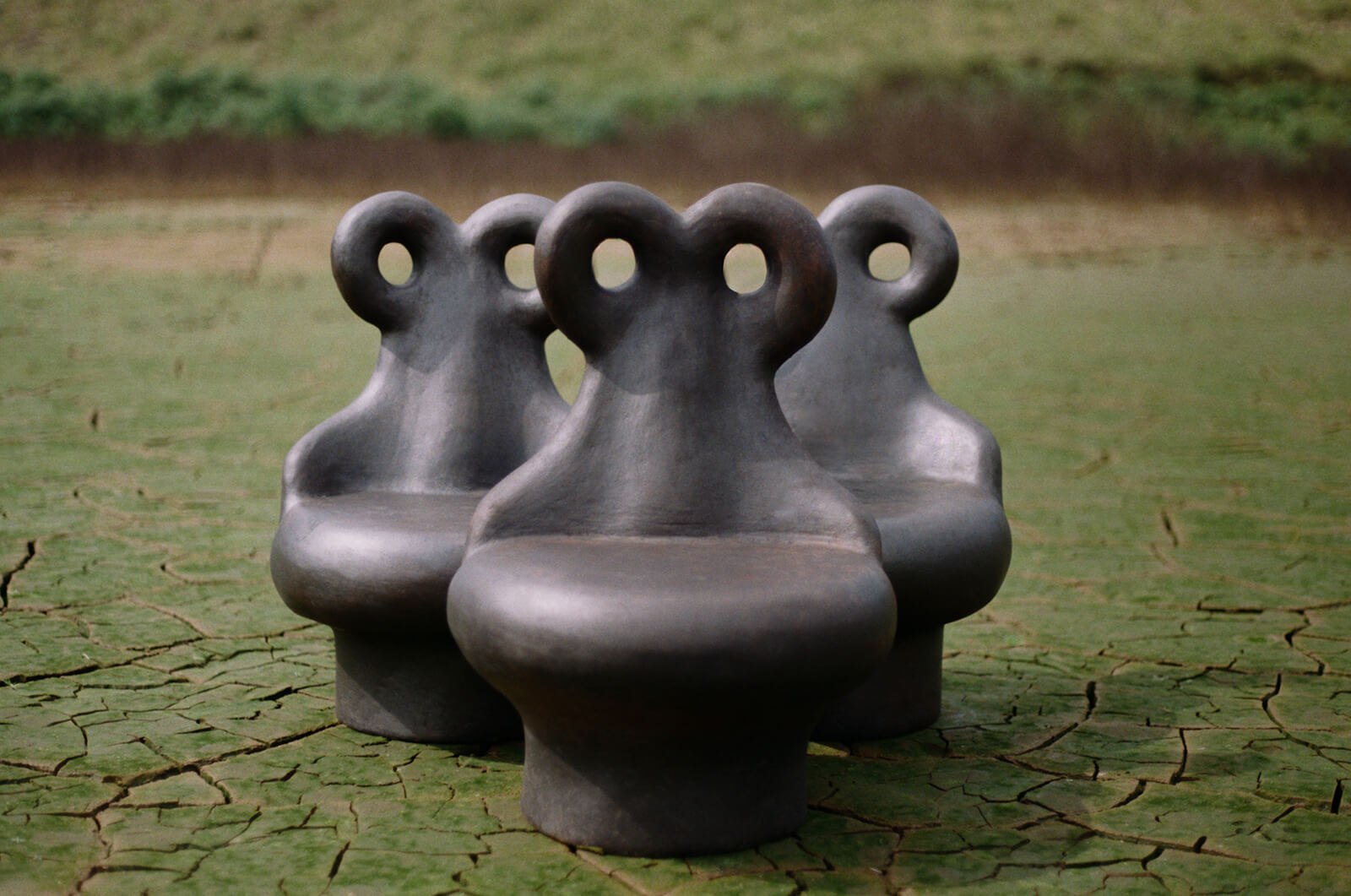
At the same time, I am not indifferent to the presence of the other. Many of the works, especially the chairs, exist in a space between function and contemplation. They can be used, but they also propose a certain posture, a way of inhabiting the body, a moment of awareness. In that sense, the user becomes part of the work, not as a starting point, but as a continuation of it.
I am interested in creating objects that do not fully resolve themselves through use, but instead invite a kind of negotiation. The response of the person encountering them completes the piece in a subtle way, without ever fully defining it. – Pol Agustí
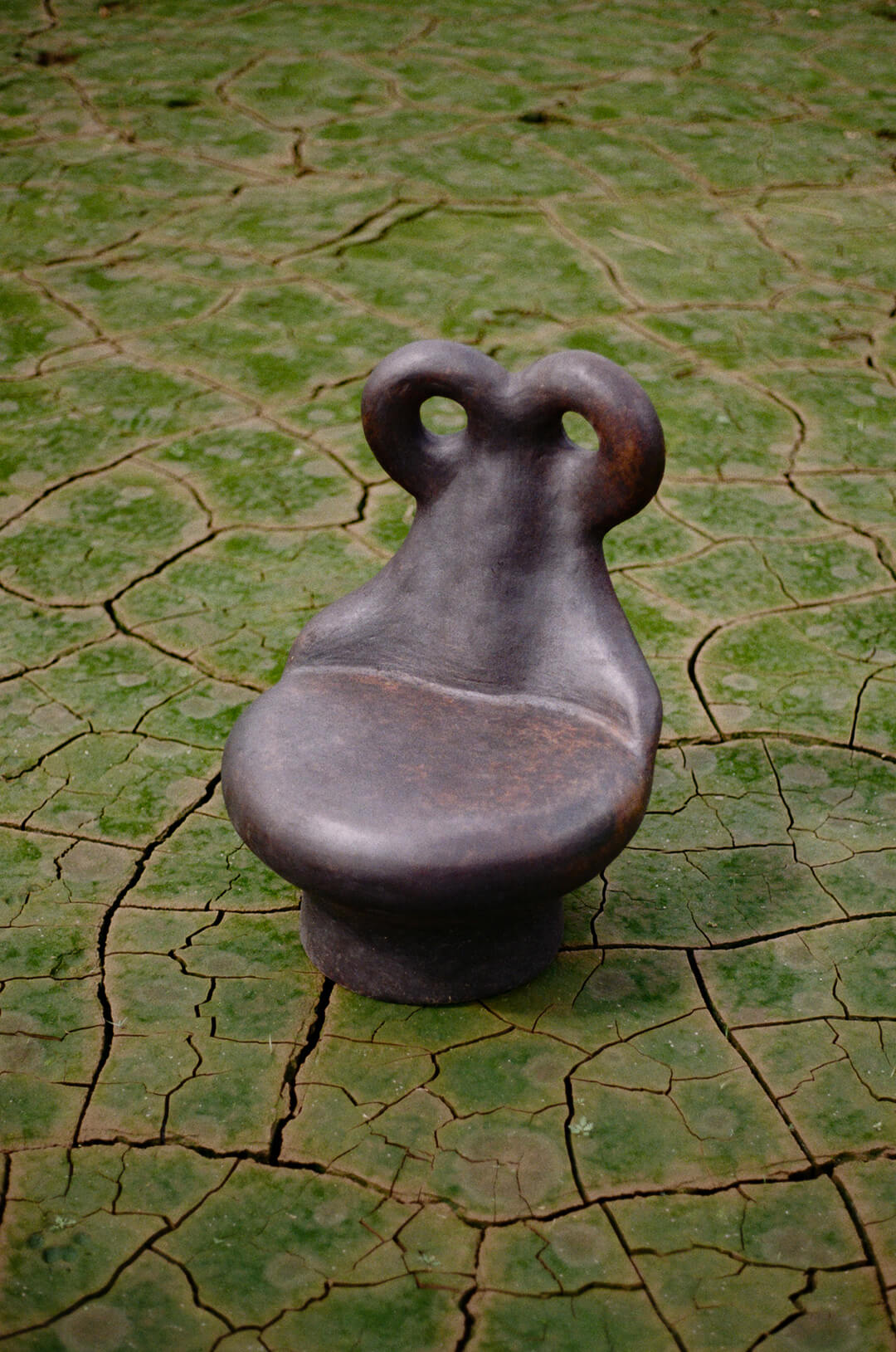
Pranjal: Your work carries expressions across a wide palette: wood, clay, metal and even vegetables. What is it about a material that provokes your use of it?
Pol: From the beginning, it felt important not to define my practice through a single material. My first pieces in clay had a very strong physical presence, and I became aware that I could easily be confined within that language. Introducing a range of materials was a way to keep the work open, to allow it to expand rather than settle into a fixed identity.
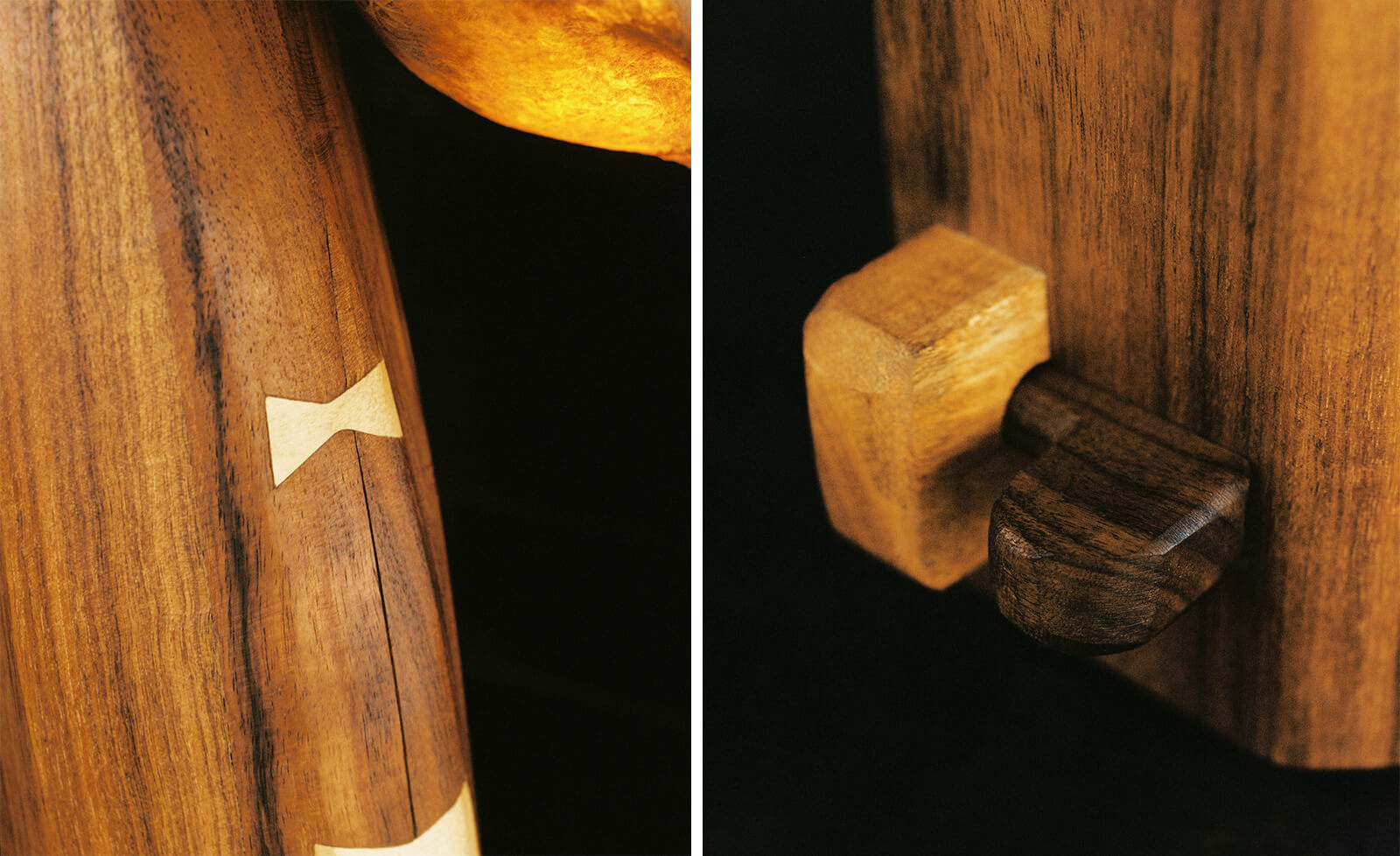
Each material carries a different energy and memory. Clay attracts me because of its ancestral quality, something deeply elemental and close to the origin of making. Wood, on the other hand, offers a different kind of intelligence, a structural and tactile generosity that allows for endless variation.
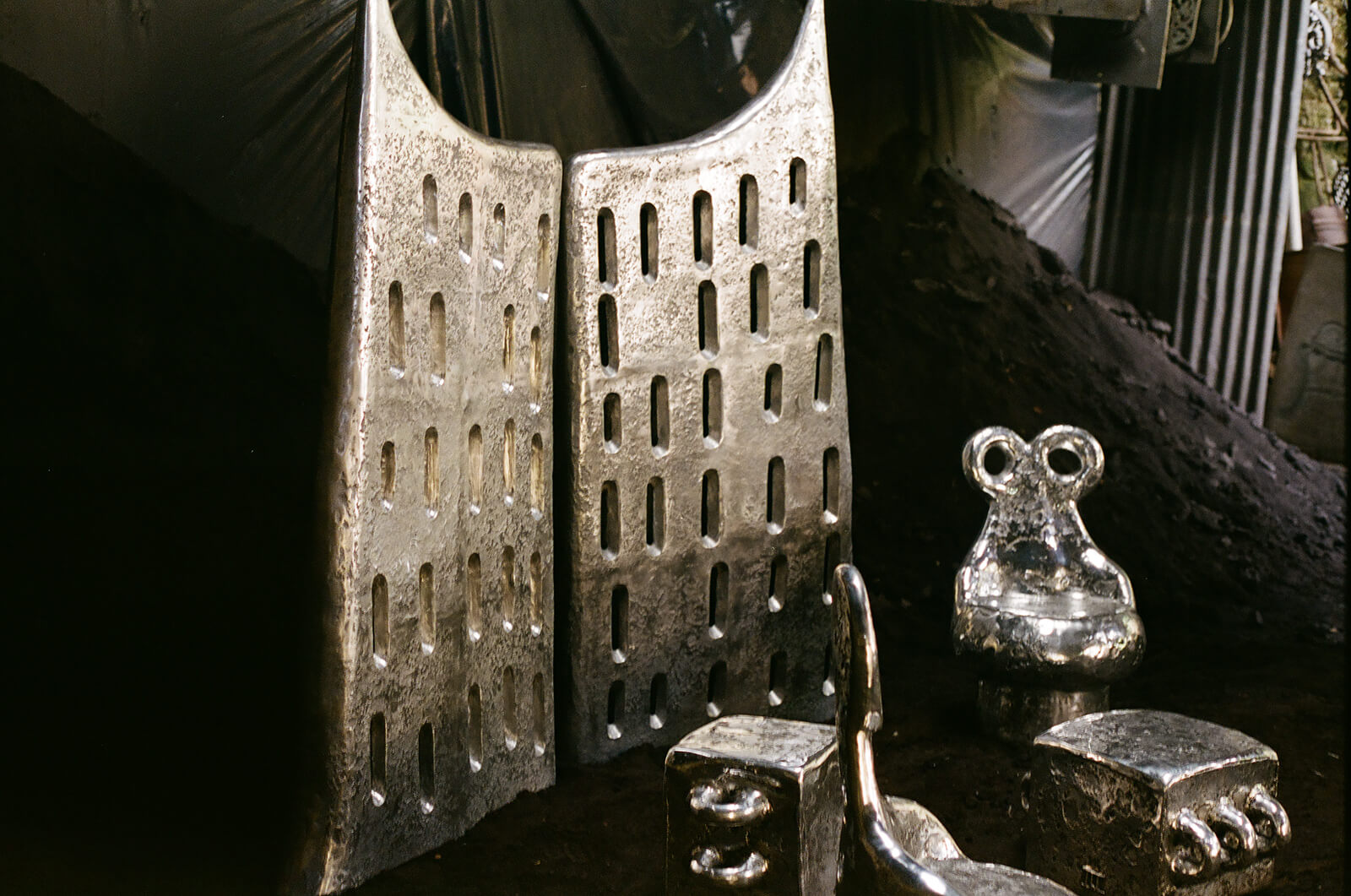
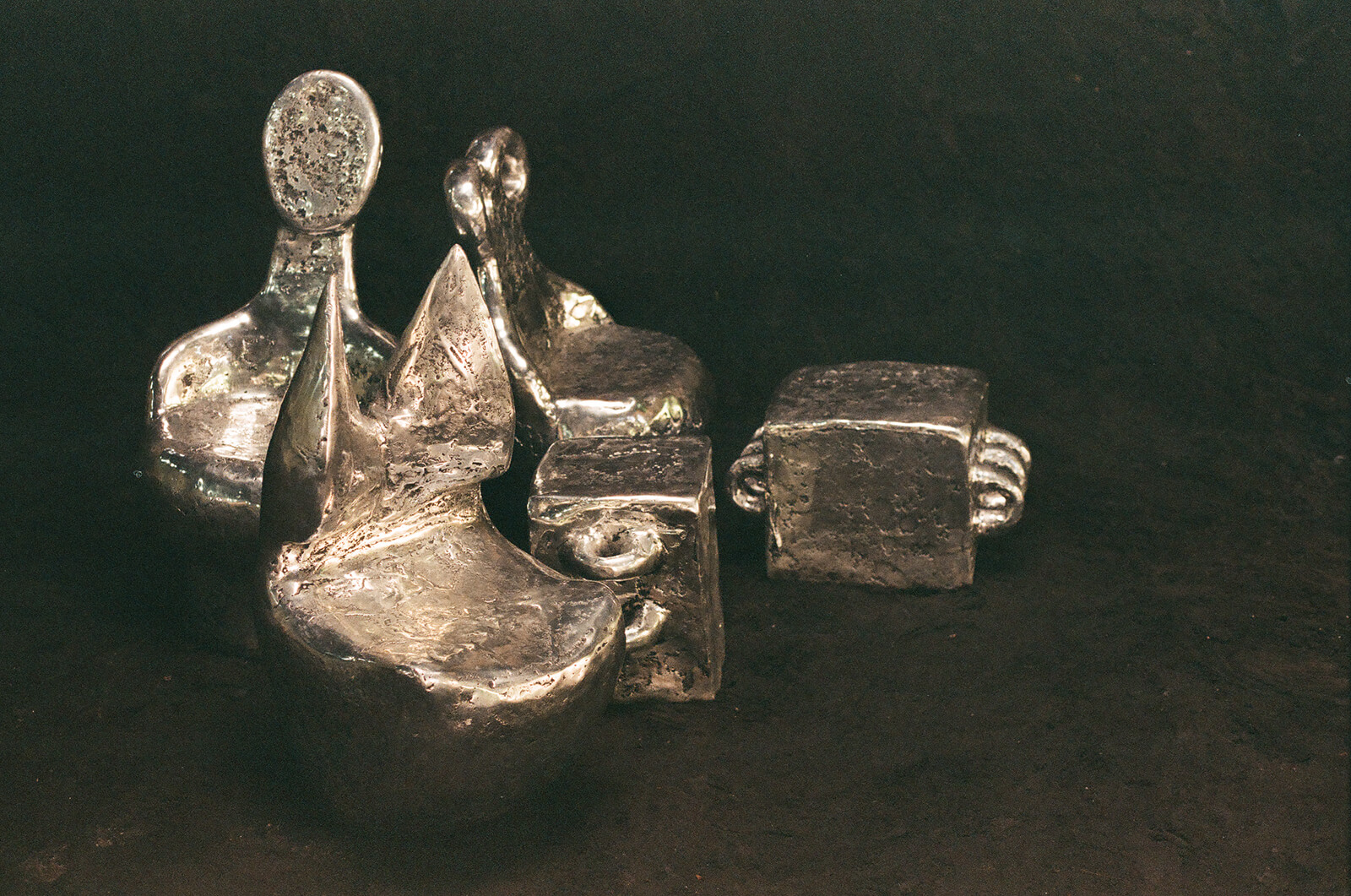
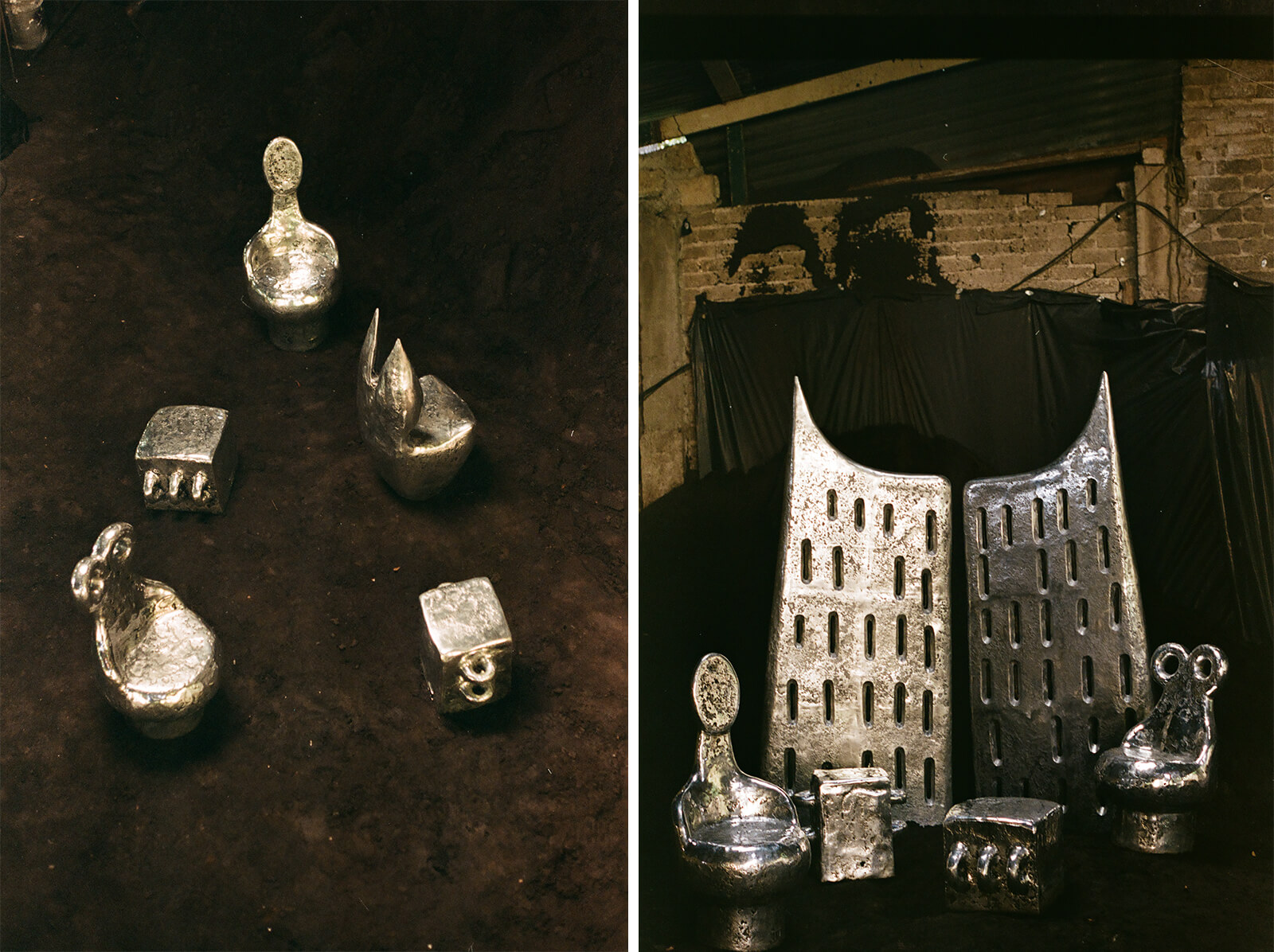
I am also drawn to materials that carry a previous life. Working with recycled aluminium, for instance, melting discarded cans to form a chair, is a transformation I find particularly meaningful. Fibreglass is perhaps the most contradictory material I use. It is industrial, synthetic, even toxic in its origin, yet by reclaiming and reusing existing moulds, I try to shift its meaning. It becomes less about producing something new and more about redirecting what already exists.
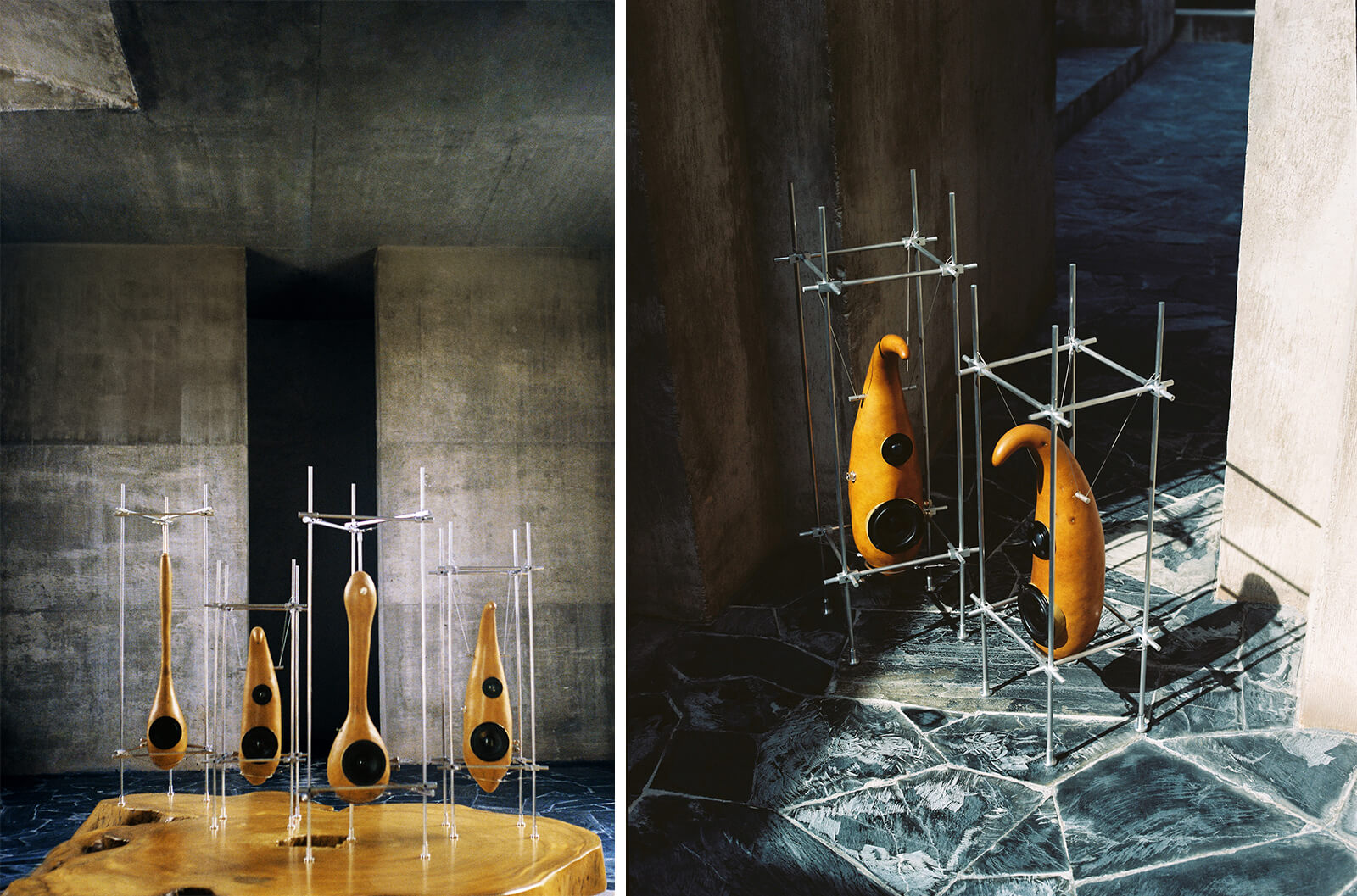
Pranjal: Within the series WUA-G, in which sound systems are housed in gourds, do you explore the duality of ‘presence through absence’?
Pol: In many Mesoamerican traditions, the guaje has been used in rituals as a container, as a musical instrument and as a sacred object. I was interested in approaching it not as a neutral form, but as something already charged with meaning.
The idea of incorporating sound came later, almost naturally. In our daily lives, sound systems hold a very particular role. They gather people, they create atmosphere, they accompany moments of intimacy, of solitude, of celebration. In that sense, they already operate in a space that is not entirely functional, but also emotional and even spiritual.
What interested me was the meeting point between these two worlds. By placing a sound system inside a guaje, something shifts. Sound becomes a kind of invisible presence, something that fills the space without being seen. The object itself appears still and contained, yet it carries within it the possibility of expansion, of vibration, of connection. It is both a vessel and a source, something that holds and something that releases at the same time.
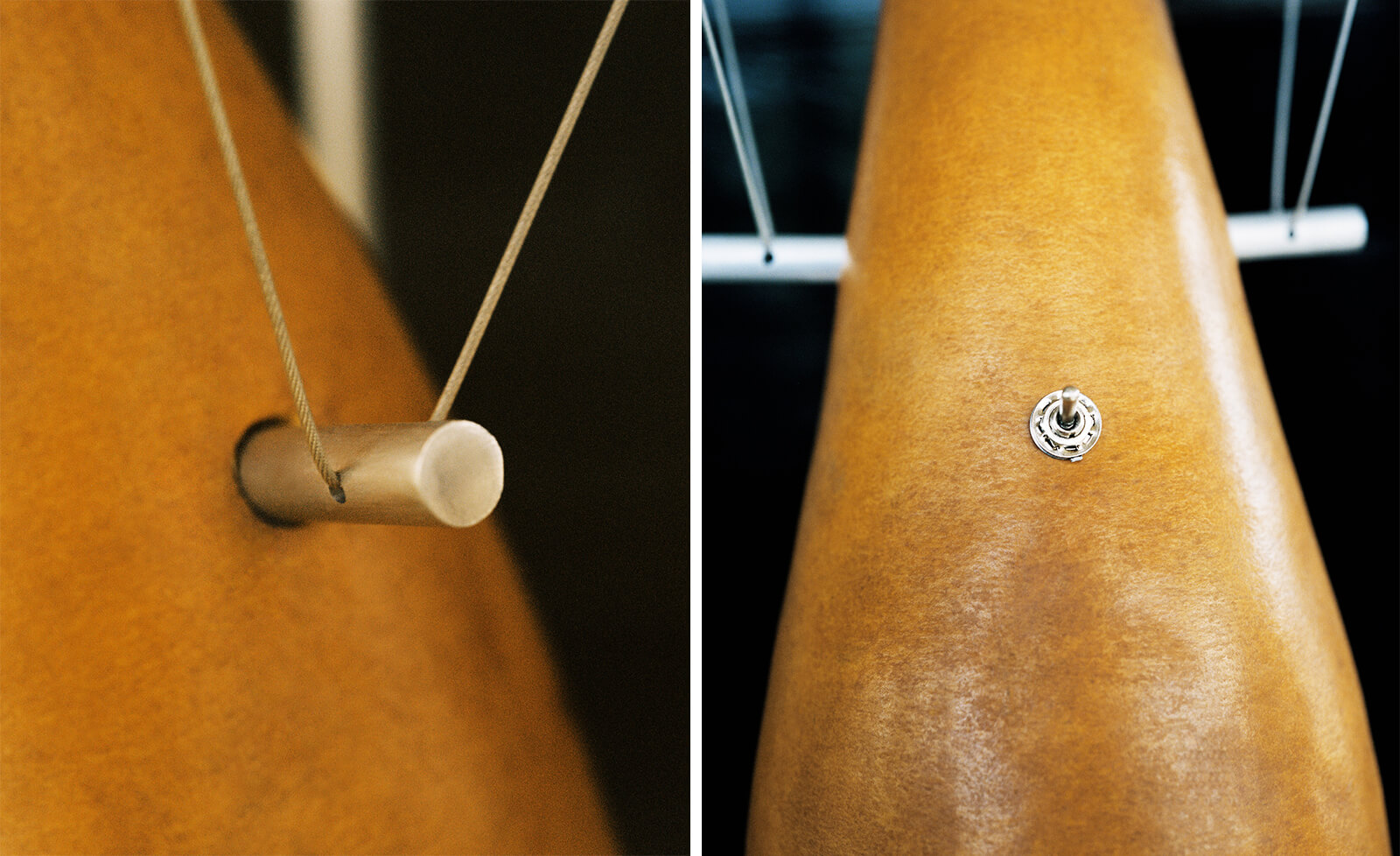
Pranjal: In many of your works, such as the Cast Aluminium Collection and Sistema Micho, you employ traditional techniques of production, either yourself or through collaboration with artisans and craftspeople. What is the significance of these processes and techniques?
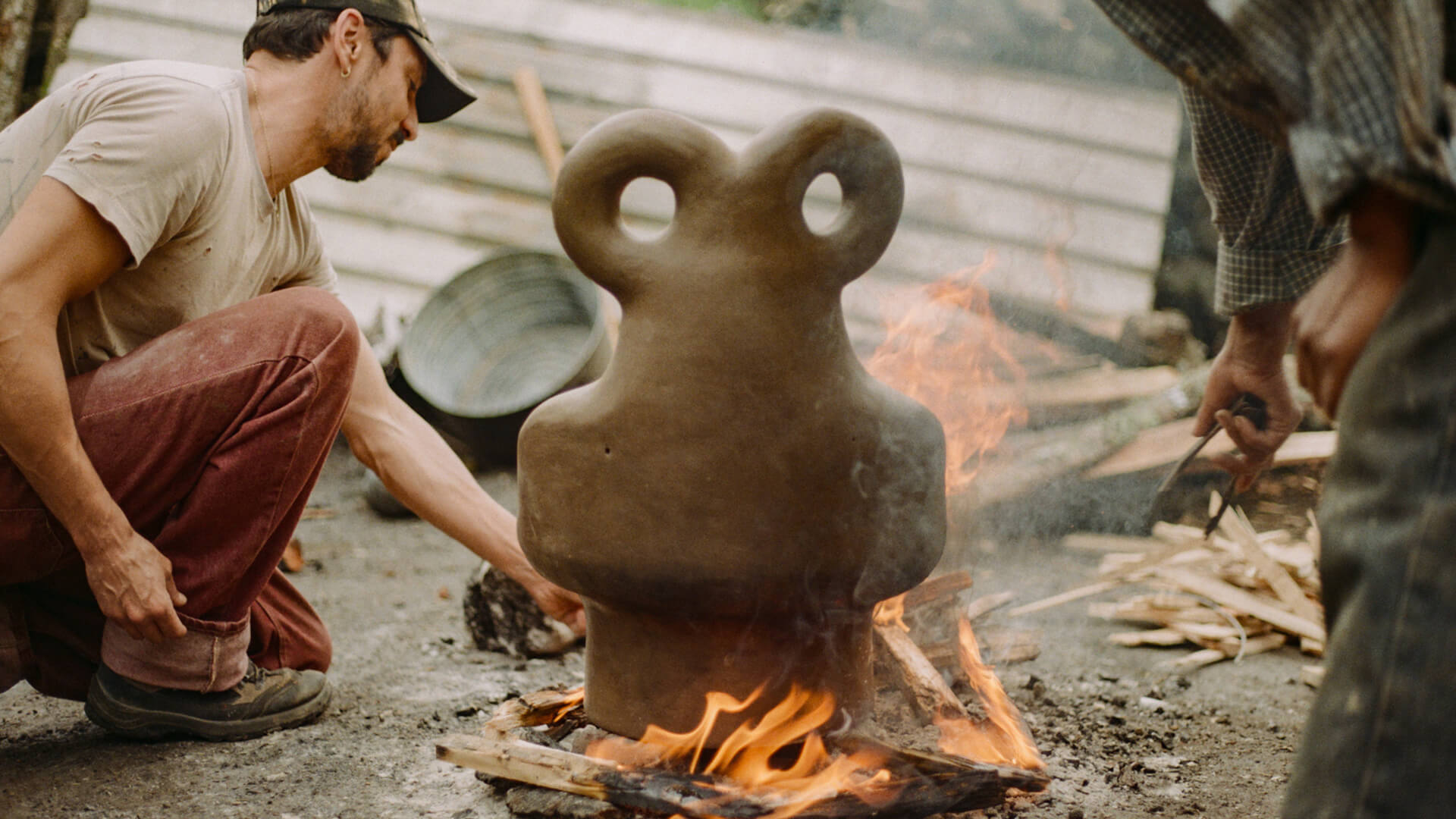
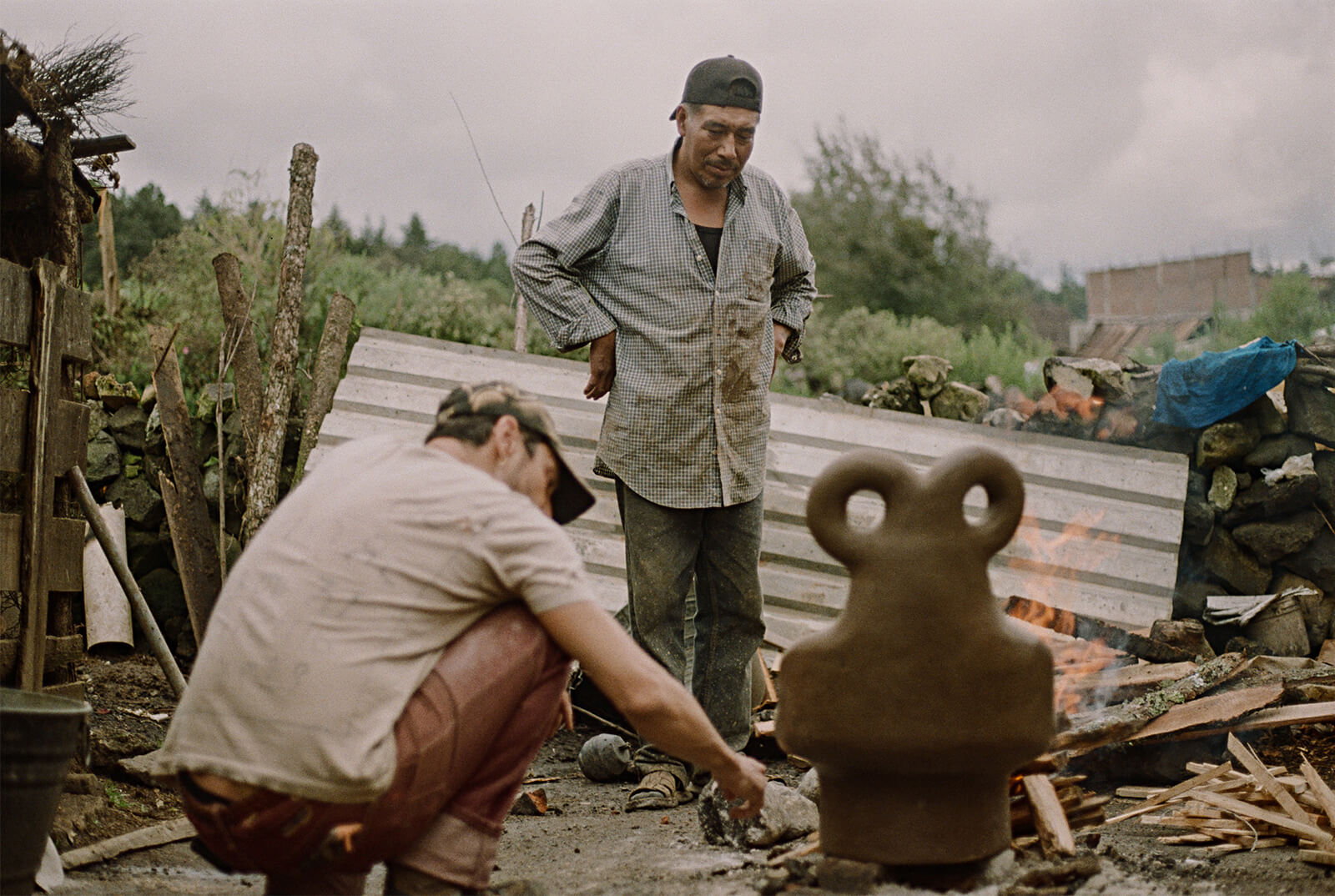
Pol: There is something profoundly meaningful in working with techniques that have existed for generations, sometimes centuries, and approaching them not as something to be preserved unchanged, but as living systems that can absorb new forms and ideas. What fascinates me is that these methods already operate at a very high level of knowledge. There is an intelligence in the hand, in repetition, in material understanding, that cannot be easily replaced.
My collaborators, for instance, in aluminium, come from a tradition of repairing engine parts. When a component broke, they would reconstruct it by pressing it into sand and recasting it. It is a very direct and intuitive process. Similarly, the ceramic pieces emerge from practices rooted in making vessels for everyday use, objects that were never intended to exist within a design or art context.
At the same time, the relationships that develop are essential to the work. I do not approach these collaborations from a distance. I travel to where they live, I stay with them, I share their routines. It becomes something closer to a lived experience than a production process. There is an intimacy and a form of knowledge that grows from that proximity.
I often feel that if these objects were produced in a factory, disconnected from these contexts, something fundamental would be lost. Not only in terms of process, but in the presence these objects carry. There is a kind of memory embedded in them, something that comes from the people, the place and the way they are made, and that, for me, is inseparable from their value.
Pranjal: Do you conceptualise projects as encompassing the entire lifestyles of imagined figures, or are you focused exclusively on the pivotal moments of their existence?
Pol: Each body of work tends to orbit around a specific ritual moment rather than attempting to describe a complete life. I am interested in concentrating meaning, in creating constellations of objects that emerge from a particular emotional or symbolic state.
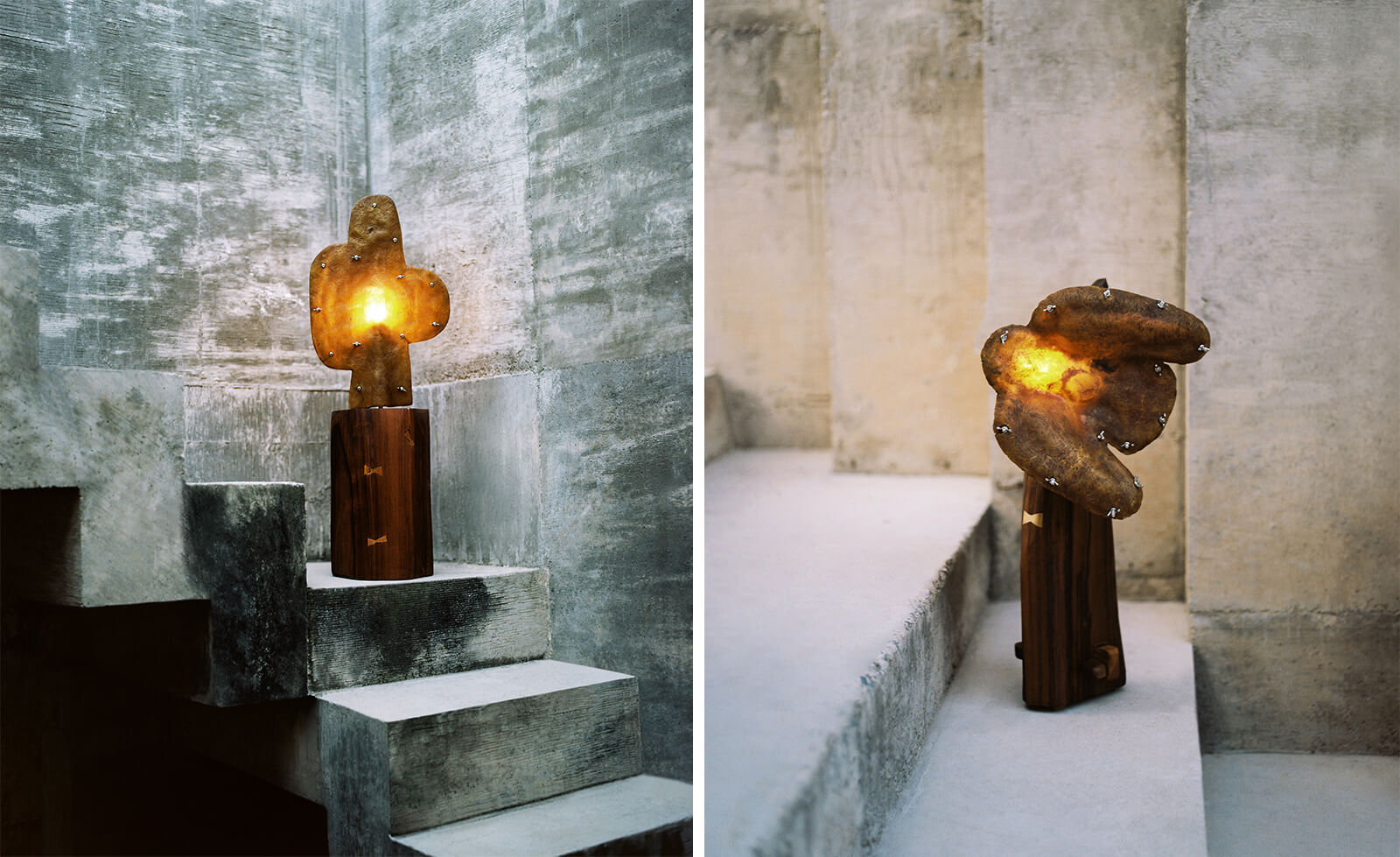
The first collection, La Corucha en el Tetecua, was centred around a farewell ritual. It revolved around the idea of departure, of a final gathering, of the altar as a place of memory. Later, in the lighting series, I worked with reclaimed fibreglass elements that originally belonged to Catholic church restorations. These fragments carried a strong religious language, yet once removed from their context, they became ambiguous. The work became a way of gently undoing the rigidity of dogma, transforming these forms into sources of light, almost like candles. Even when their original meaning was no longer visible, a certain presence remained embedded within them.
More recently, I have been developing a figure that I would describe as a kind of guardian, existing between worlds, between sky and earth, between light and darkness. The objects I create begin to shape this character. It is not that I first define who he is and then design his world, but rather the opposite. Through the objects, his presence gradually emerges.
Pranjal: You mentioned that your work evolves as a ‘constellation of objects’ that are all part of the same world. Do you envision presenting this unified world collectively, offering others a comprehensive insight into your artistic universe, at some point in the future?
Pol: I already live surrounded by these objects, so in a way, I experience them together every day. They coexist with me, and I coexist with them.
I feel that I am only at the beginning of this process, and there is still so much to explore. If at some point in the future someone feels that the work should be brought together, perhaps as a retrospective, I think that could be meaningful. The idea of seeing everything in relation, of understanding the full constellation, is something that may belong more to a later stage, perhaps even beyond my own time.
For now, I am more interested in continuing to build this family of objects, letting it grow freely, without the need to contain it.
The idea of the impossible ladder, or the impossible object more broadly, feels like a natural direction for me at this moment. – Pol Agustí
Pranjal: In the far or near future, what do you look forward to creating?
Pol: I feel that I am currently moving towards a more conceptual phase in my work. It may have started with the dovecote, but I find myself increasingly drawn to objects that are driven more by narrative than by function.
I often think of a small clay ladder I once saw at the Acropolis Museum. It is a very simple object, almost fragile, yet the idea of a ladder made of clay has stayed with me. The notion of translating that into a larger scale, a ladder that rises towards the sky but cannot truly be climbed, because each step would collapse under your weight, feels deeply compelling. It exists in a space of desire and impossibility. You want to ascend it, but at the same time, you understand that you cannot.
This tension is what interests me more and more. I have always seen my chairs not simply as functional objects, but as presences, almost like beings or souls that coexist with you. They carry a personality that goes beyond their use. But now I feel the need to move further away from function, to allow the work to exist more freely within a conceptual and symbolic space.
It opens a territory where function dissolves, and meaning becomes something you approach rather than fully grasp, something that remains just out of reach, like a ladder that invites you to climb, even when you know you cannot.
by Pranjal Maheshwari Oct 23, 2026
Co-authored by Jareh Das, Chairman traces the British designer’s fixation on chairs as symbols of power and identity and as mediums of expression and community building.
by Mirra Lynn Oct 22, 2026
The curators behind Palestine Design Week 2026 reflect on its intent, considering how design holds memory, makes space for loss and imagines a future in Palestine.
by Chahna Tank Oct 22, 2026
STIR speaks with the Mumbai-based type designer about her practice, type walks and why she wants more people to have stronger opinions about Indian-script fonts.
by Jincy Iype Oct 15, 2026
STIR explores craft, material intelligence and people shaping Indian design through dialogues with Design Democracy’s co-founders and the curators of its special exhibitions.

make your fridays matter with a well-read weekend
Enter your details to sign in
Don’t have an account?
Sign upOr you can sign in with
a single account for all
STIR platforms
All your bookmarks will be available across all your devices.
Stay STIRred
Already have an account?
Sign inOr you can sign up with
Verification link sent to check your inbox or spam folder to complete sign up process
Tap on things that interests you.
Select the Conversation Category you would like to watch
Please enter your details and click submit.
Enter the 6-digit code sent at


Pol Agustí on stirring the unseen through material, form, memory and ritual
by Pranjal Maheshwari | Published on : May 01, 2026


 Sign in with Google
 Sign in with email
What do you think?