Architecture06 mins. read
Exposed brick arches frame a lively public space in PILARES Quetzalcóatl’s design
by Mrinmayee BhootAug 05, 2024




by Aarthi MohanPublished on : Dec 13, 2025
On the western edge of Mexico City, in a ravine once dismissed as unusable because of its steep slopes, poor drainage and unstable fill, a new community park and centre now bring together residents of the UH INFONAVIT Santa Fe housing complex. Designed by AMASA Estudio, the project reclaims an abandoned pocket of land as a circular landscape of connection and use. The intervention is part of a wider programme by INFONAVIT, Mexico’s federal housing institute, to reactivate neglected public spaces within its housing estates. Built in 2024, this particular site is among the most challenging of the recent series. The Santa Fe complex, like many large-scale developments of its kind, was built decades ago on steep terrain, with blocks descending over uneven topography. Over time, these conditions limited accessibility between housing blocks, restricting daily movement and isolating parts of the community.
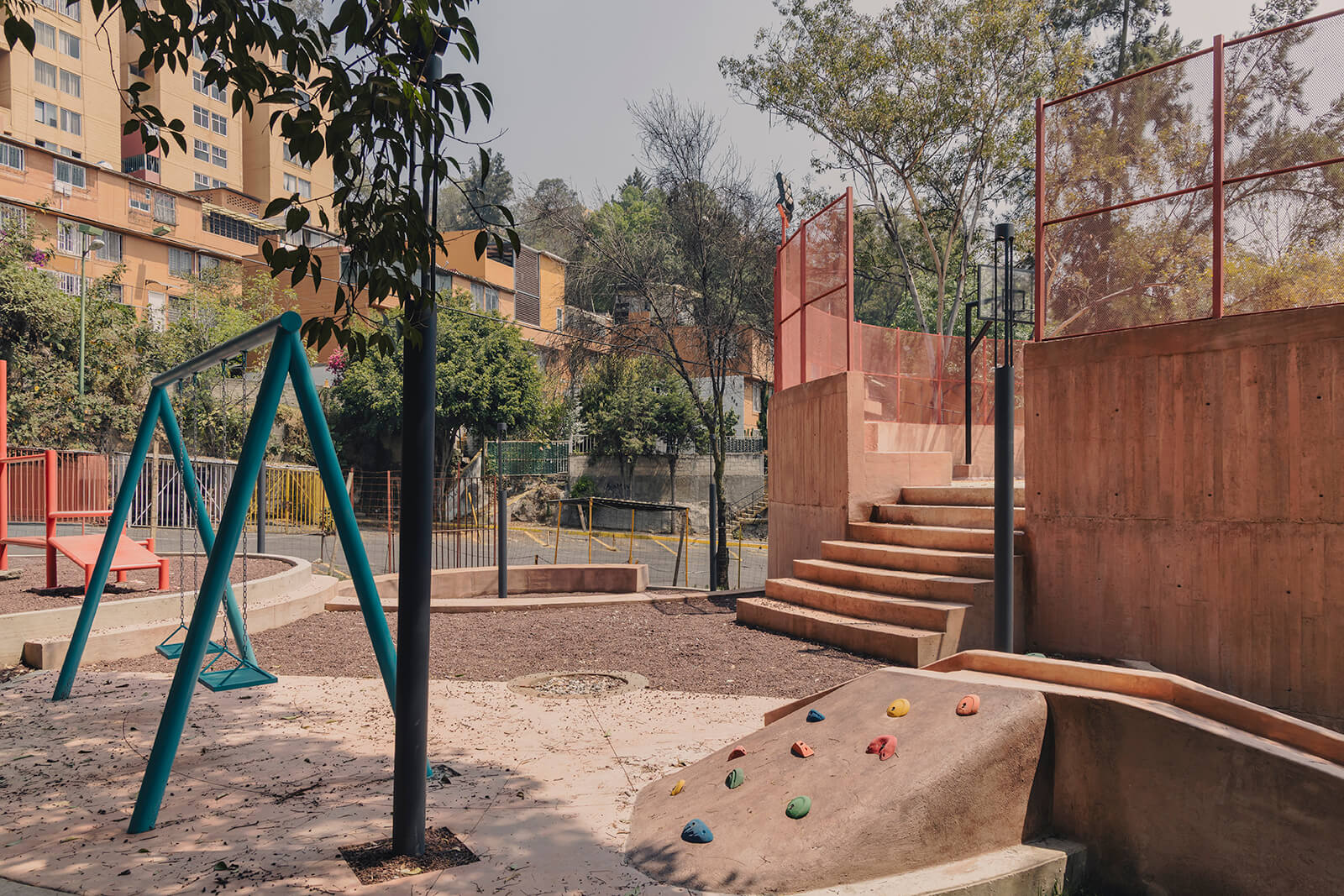
At the southern edge of the complex lies the site that would become the new park. It sits where two streets of differing heights meet, forming a triangular lot that had long been overlooked. The land slopes by six metres from one end to the other and for years, the only trace of activity here was a deteriorated basketball court built over an unstable fill. The court had cracked, rainwater collected in its hollows and mudslides repeatedly cut through the site. Surrounded by overgrown trees and poorly lit at night, it had become a symbol of abandonment. The constant flow of people passing through from one side of the neighbourhood to another reinforced a perception of risk. Residents avoided it and with time, it became an empty, residual space rather than a shared amenity.
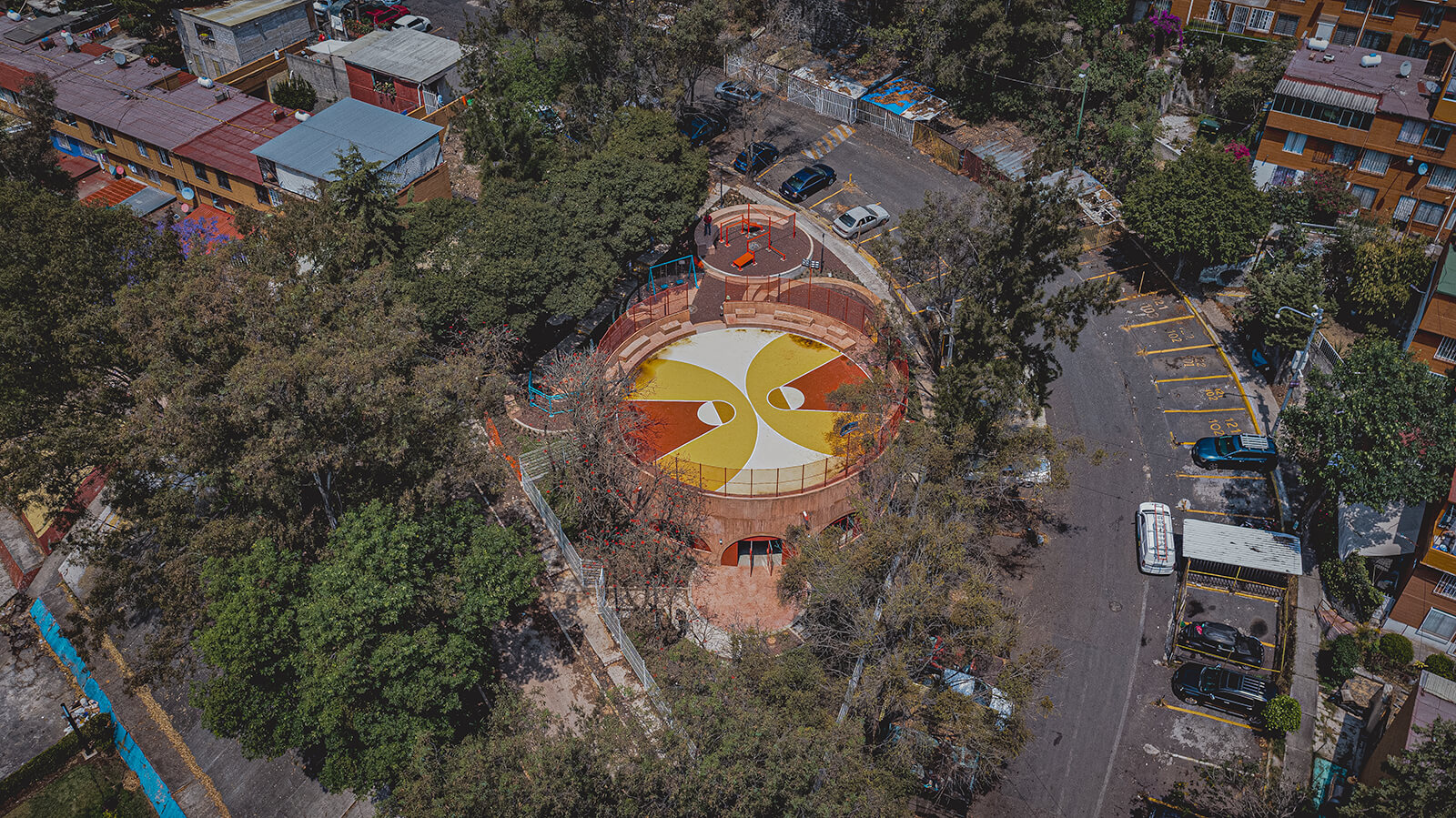
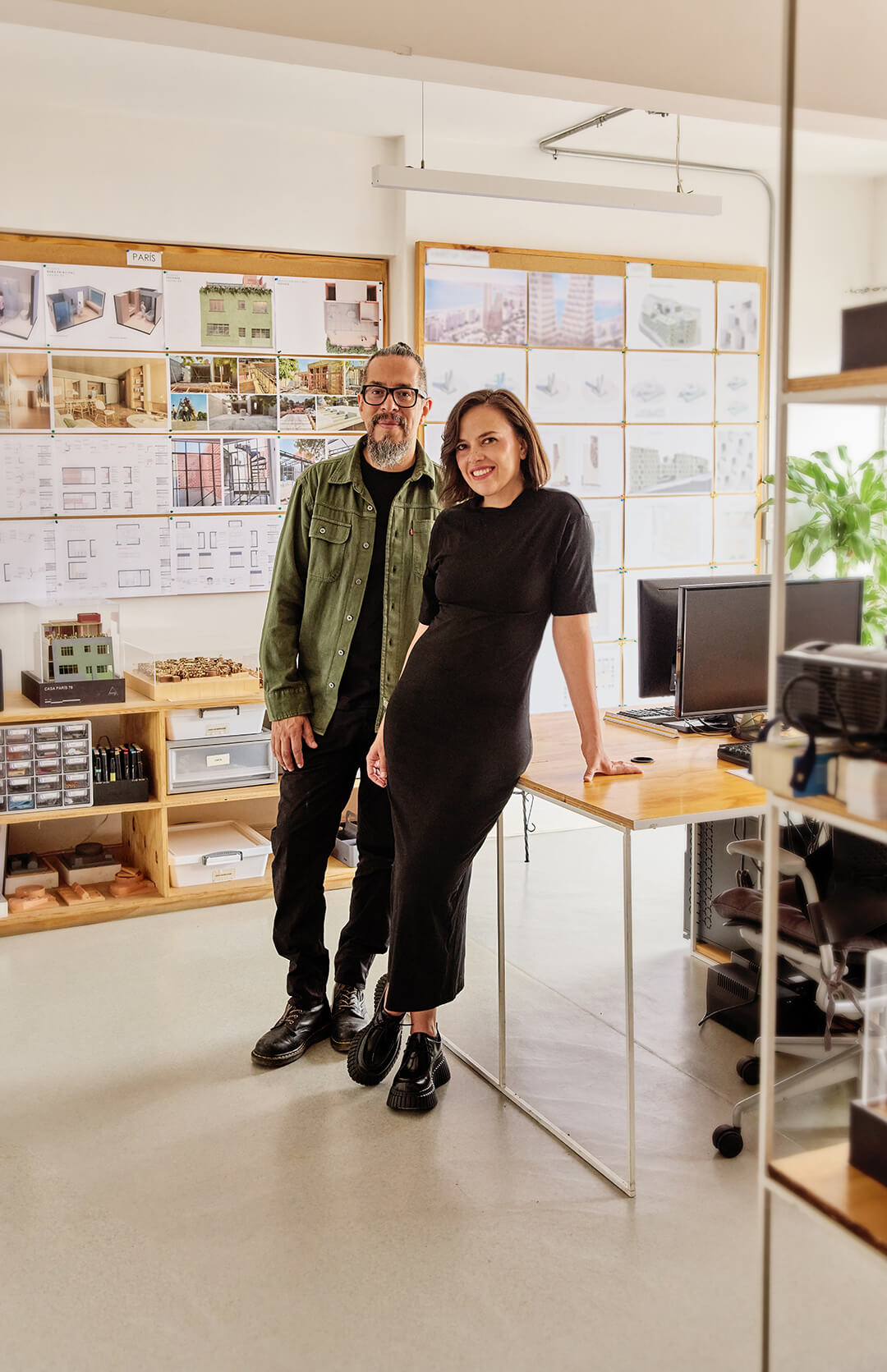
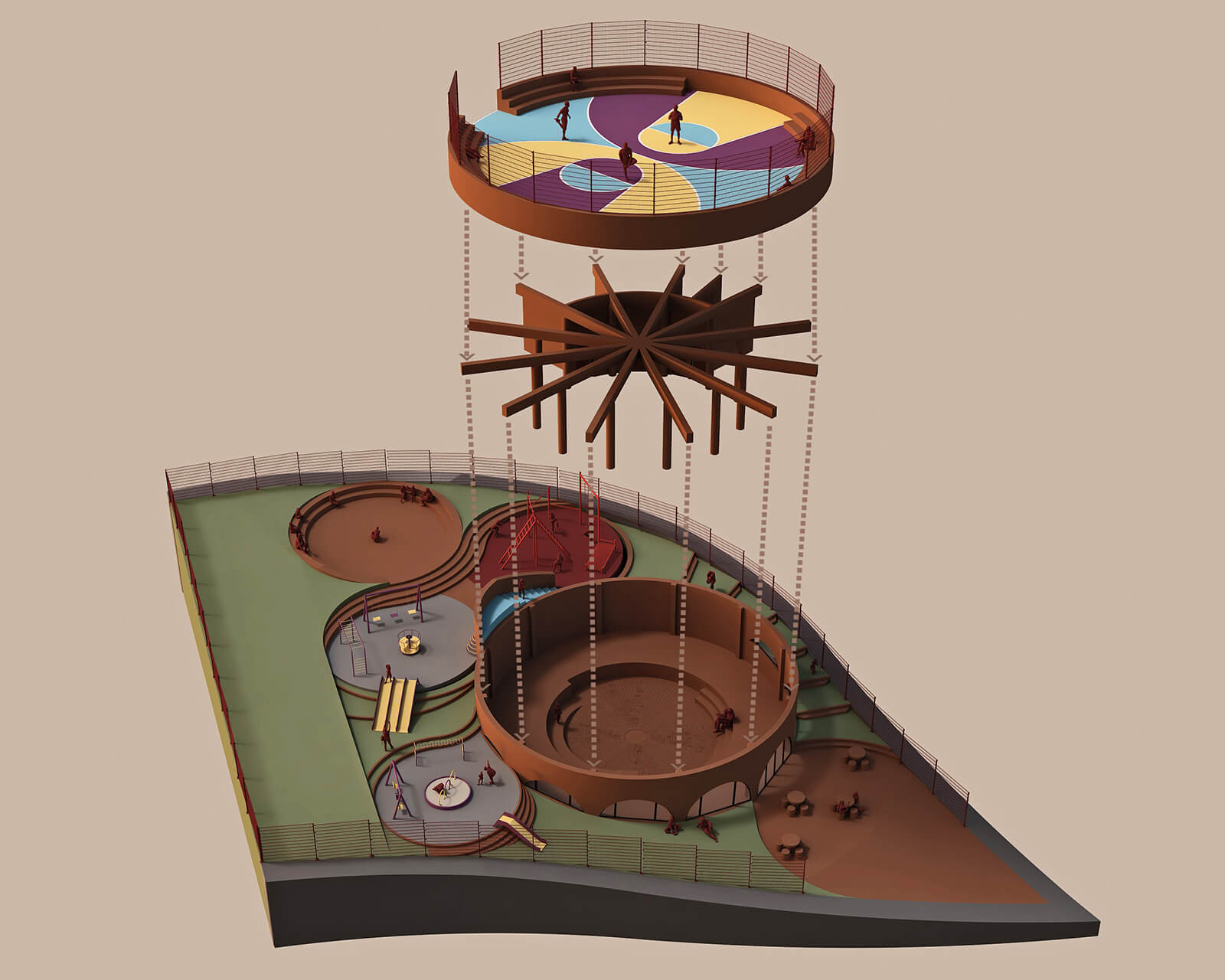
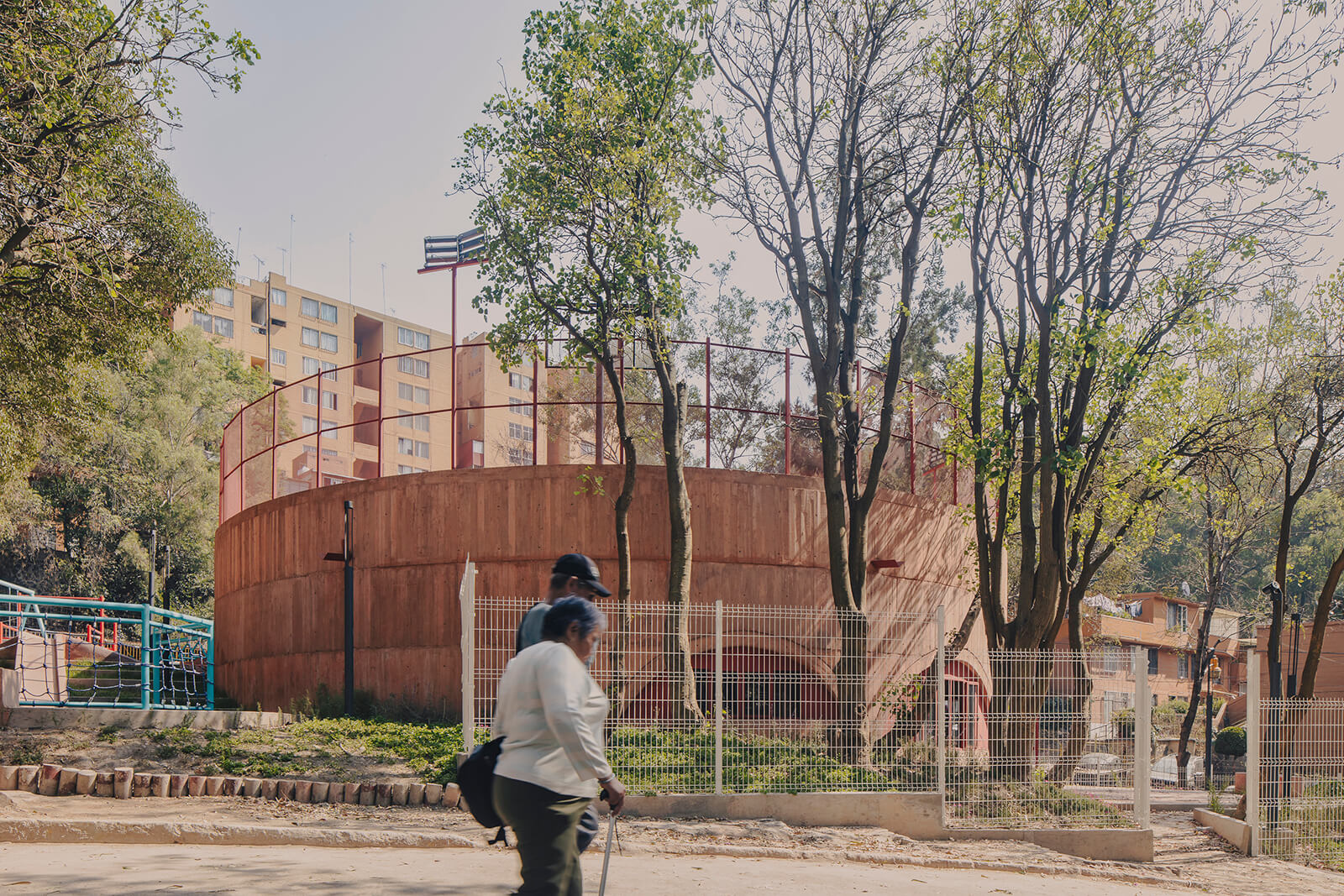
When INFONAVIT commissioned a new intervention, the brief extended beyond the scope of repair. It called for a public architecture facility that could give new meaning to this leftover terrain and make it accessible without destroying the vegetation that had naturally taken root. The plan included a multipurpose hall, the refurbishment of play areas, a callisthenics zone and a restored basketball court. Architects Andrea López and Agustín Pereyra of AMASA Estudio approached the problem as one of geometry and ground. Rather than imposing a rectilinear structure on an irregular slope, they proposed a circular volume that sits lightly within it. The circle allowed the building to adapt to the topography, leaving trees in place while creating continuous movement around and across it.
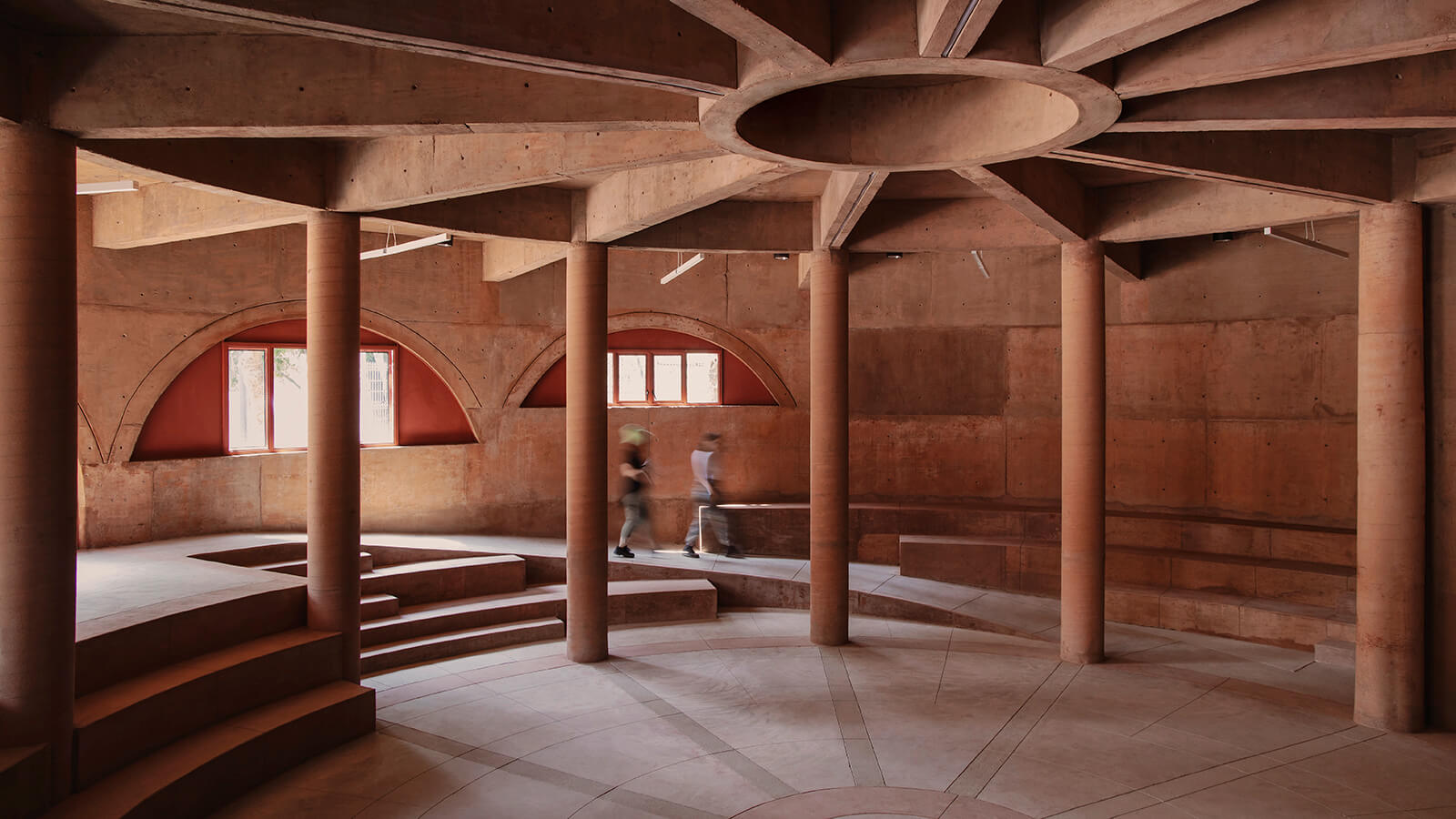
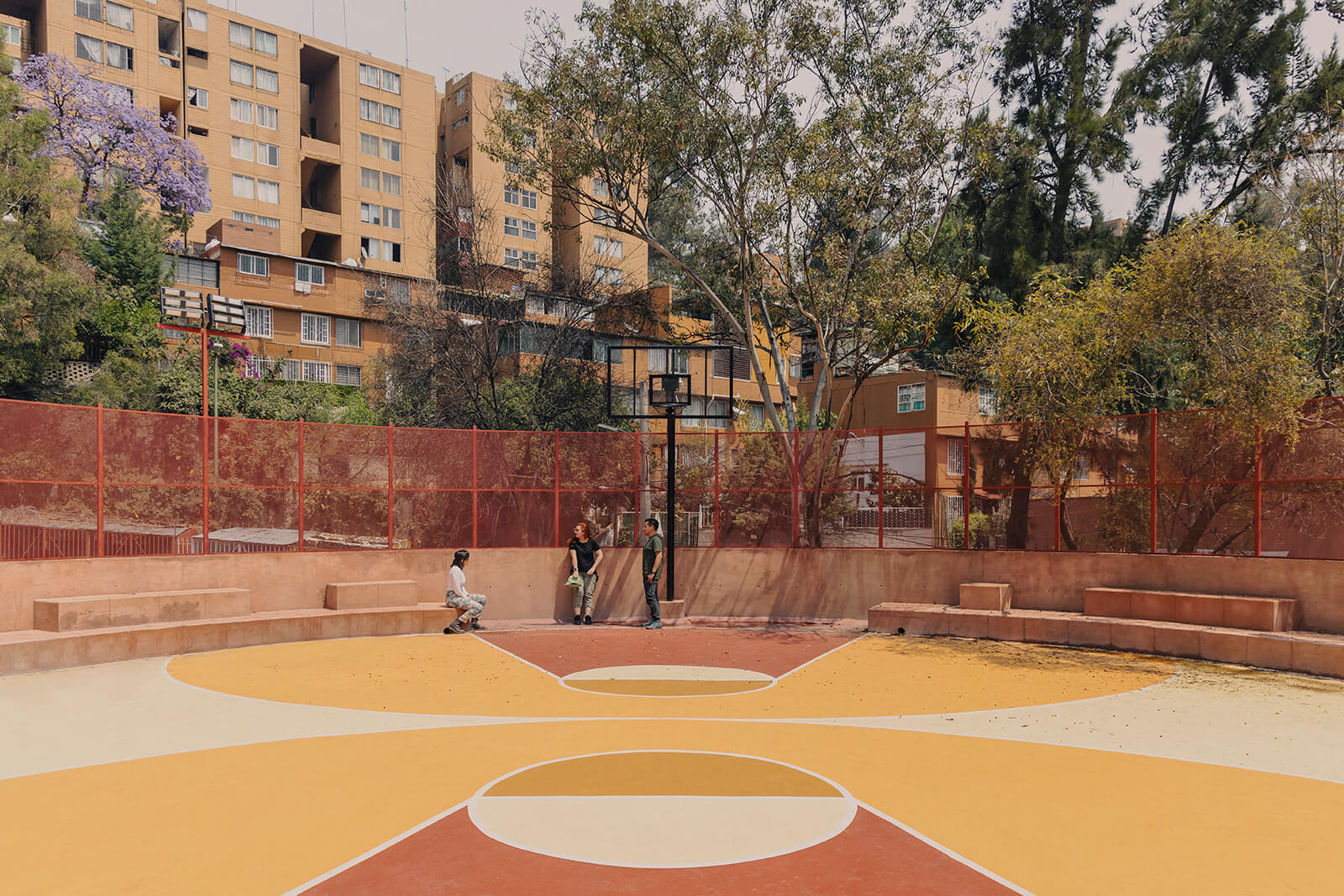
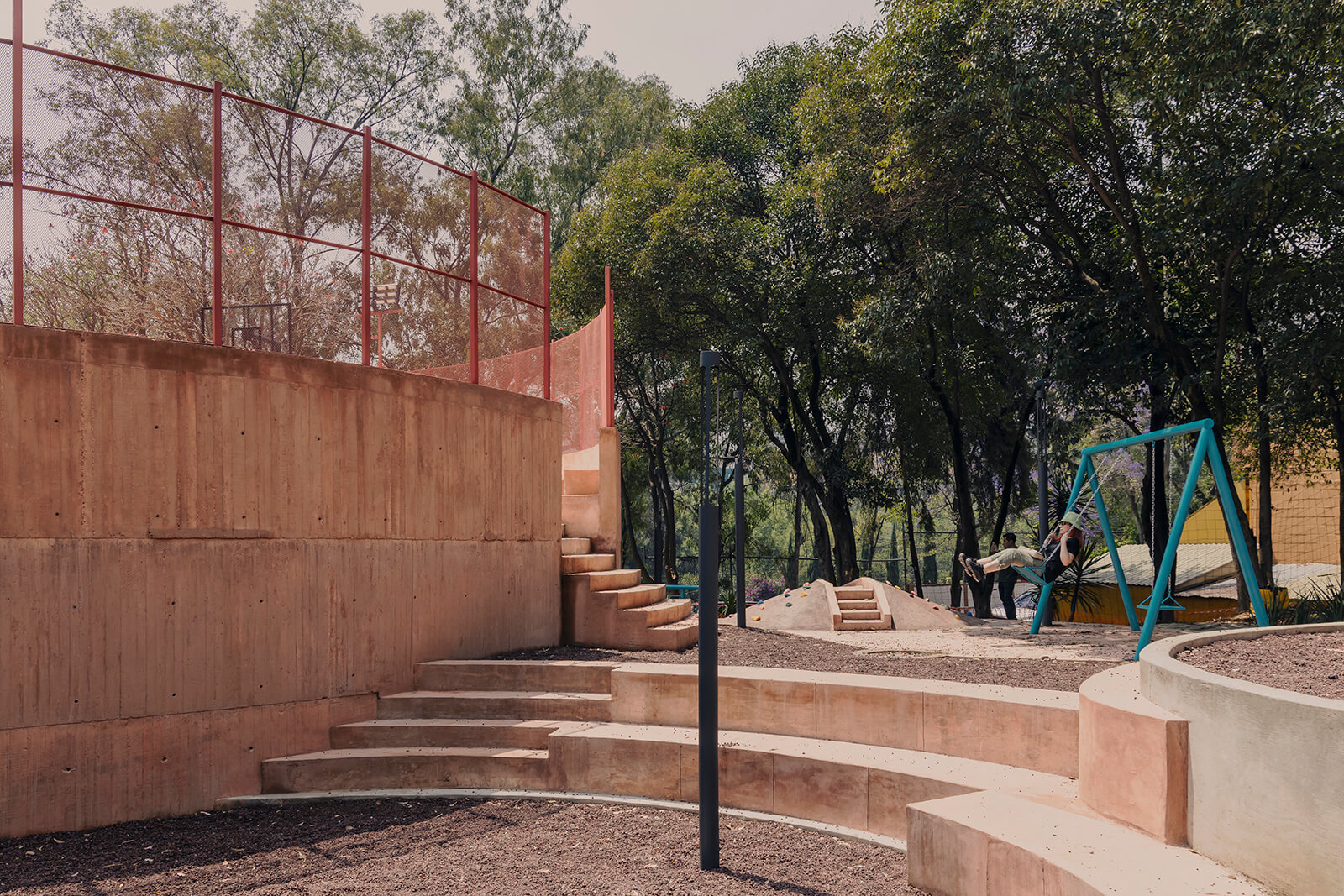
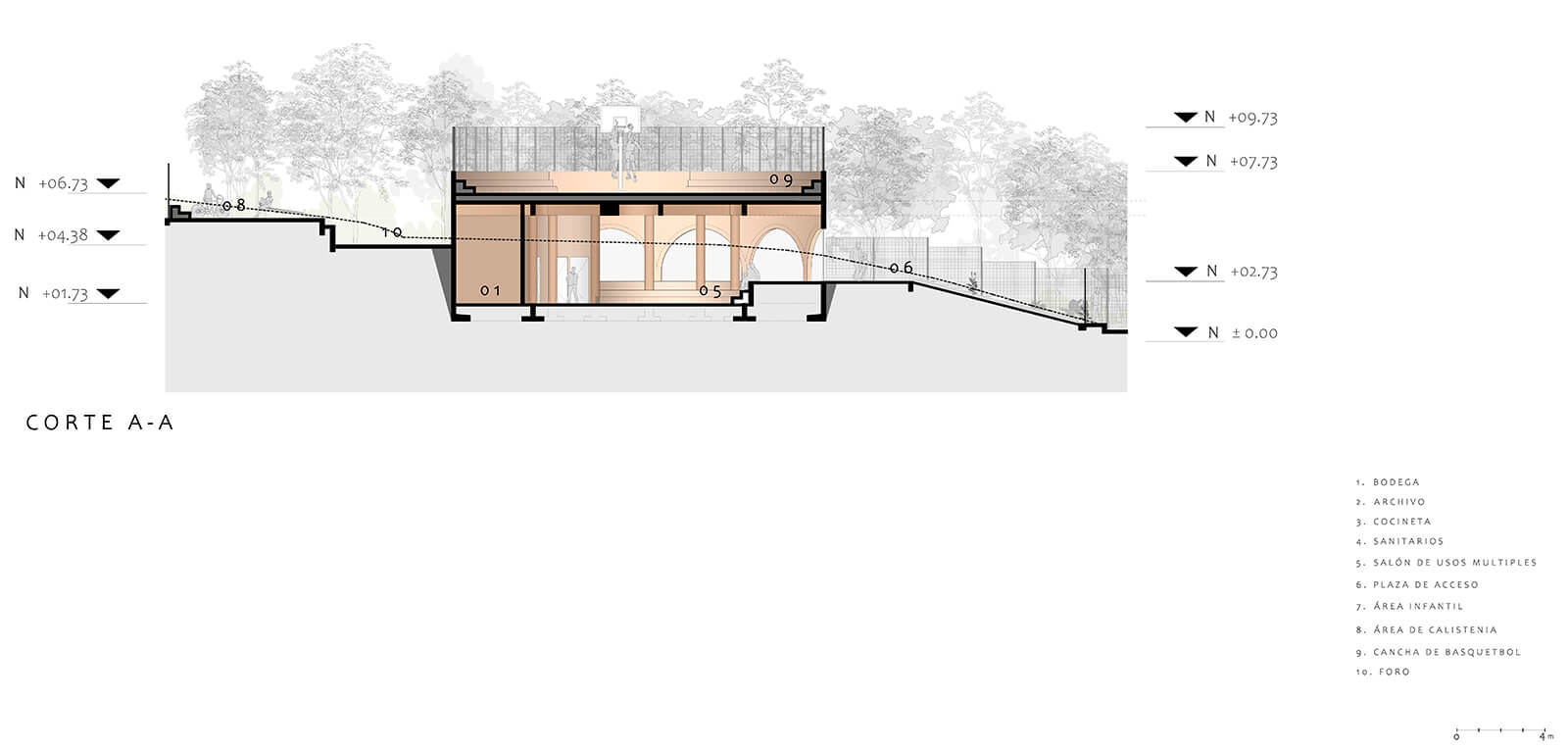
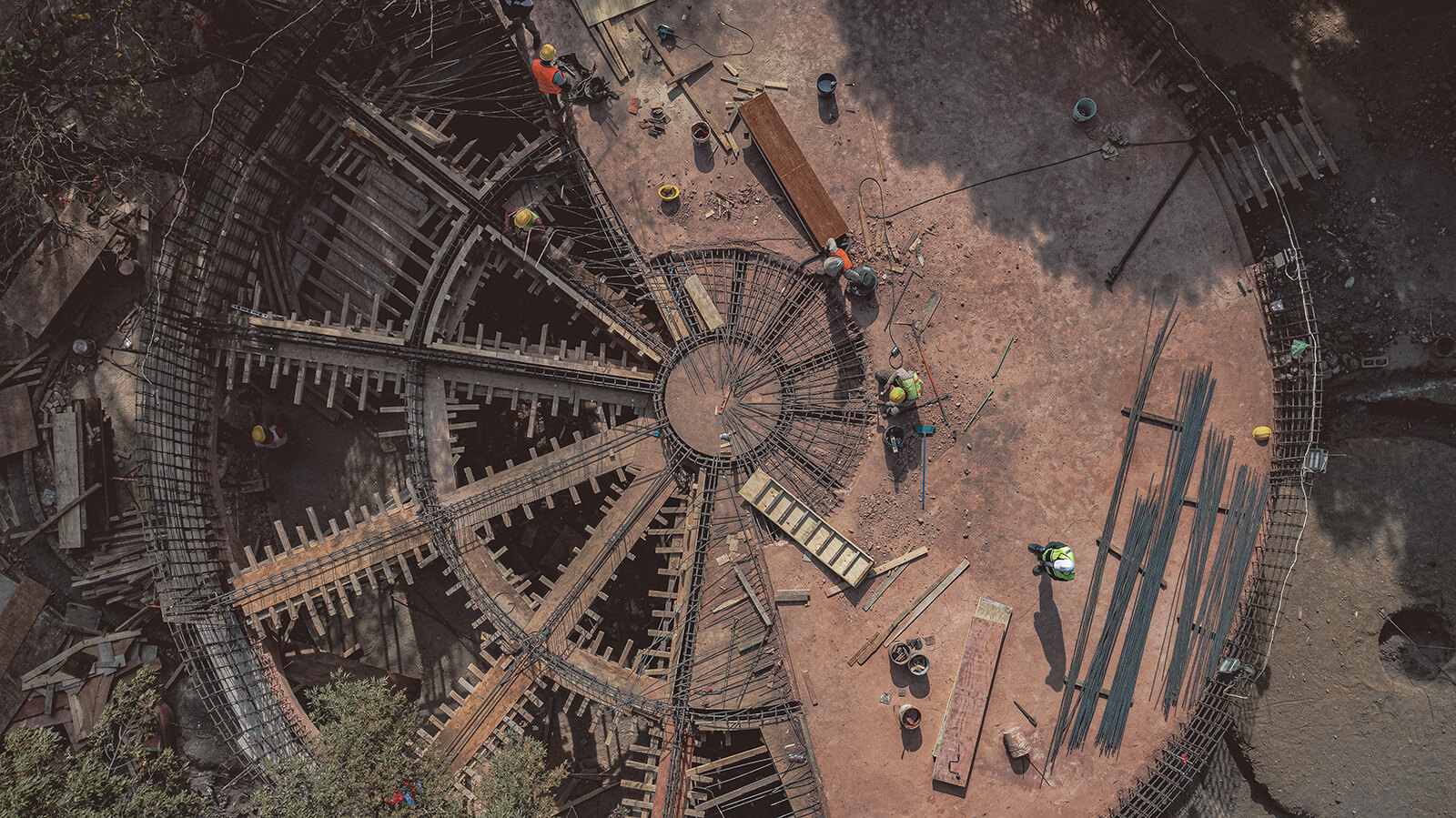
The resulting form is a low, cylindrical construction that functions simultaneously as architecture and landscape. Its programme unfolds in layers where, at the lowest level, a path enters toward the multipurpose hall; above it, terraces accommodate play zones; and at the top, the roof becomes a basketball court that also connects directly to the higher street. What had been a site of disconnection now works as a hinge between two elevations of the complex. The circular design avoids blind corners, improves visibility and makes the entire park feel open and legible.
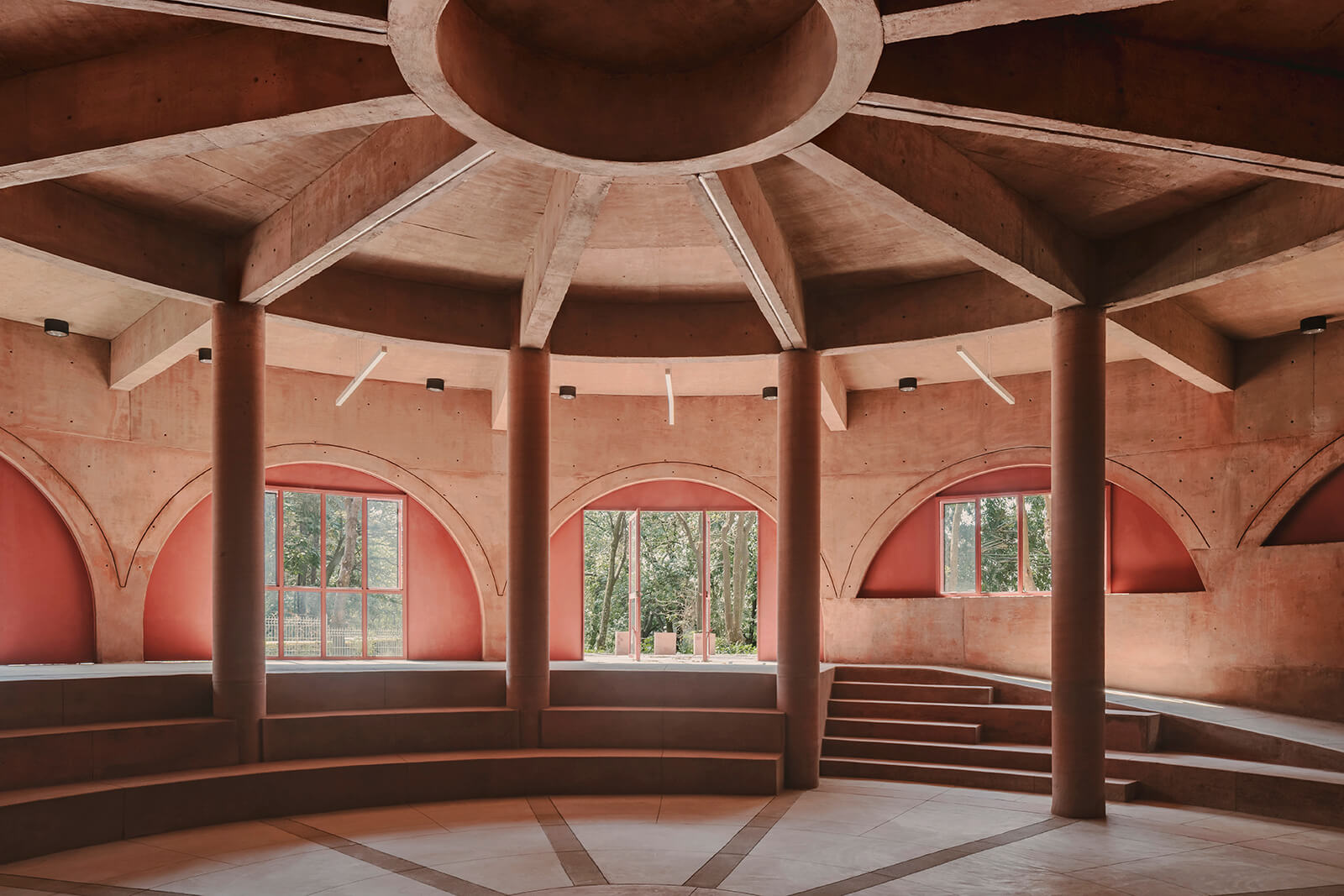
Inside the 230-square-metre hall, a system of radial concrete columns and beams converges in a central compression ring that distributes the structural loads outward. This allows the hall to open up as one continuous space or be divided into two smaller rooms for community use. Above, a double concrete slab, pigmented on site, forms both the roof and the court’s base. The structure’s precision is visible in its calm geometry, where what seems effortless is the result of intricate engineering, coordinated between AMASA Estudio, structural engineer Juan Felipe Heredia and builder Alberto Cejudo of Desarrolladora de Ideas y Espacios. The team worked through the rainy season on the steep, erosion-prone site. Their approach combined technical discipline with environmental care.
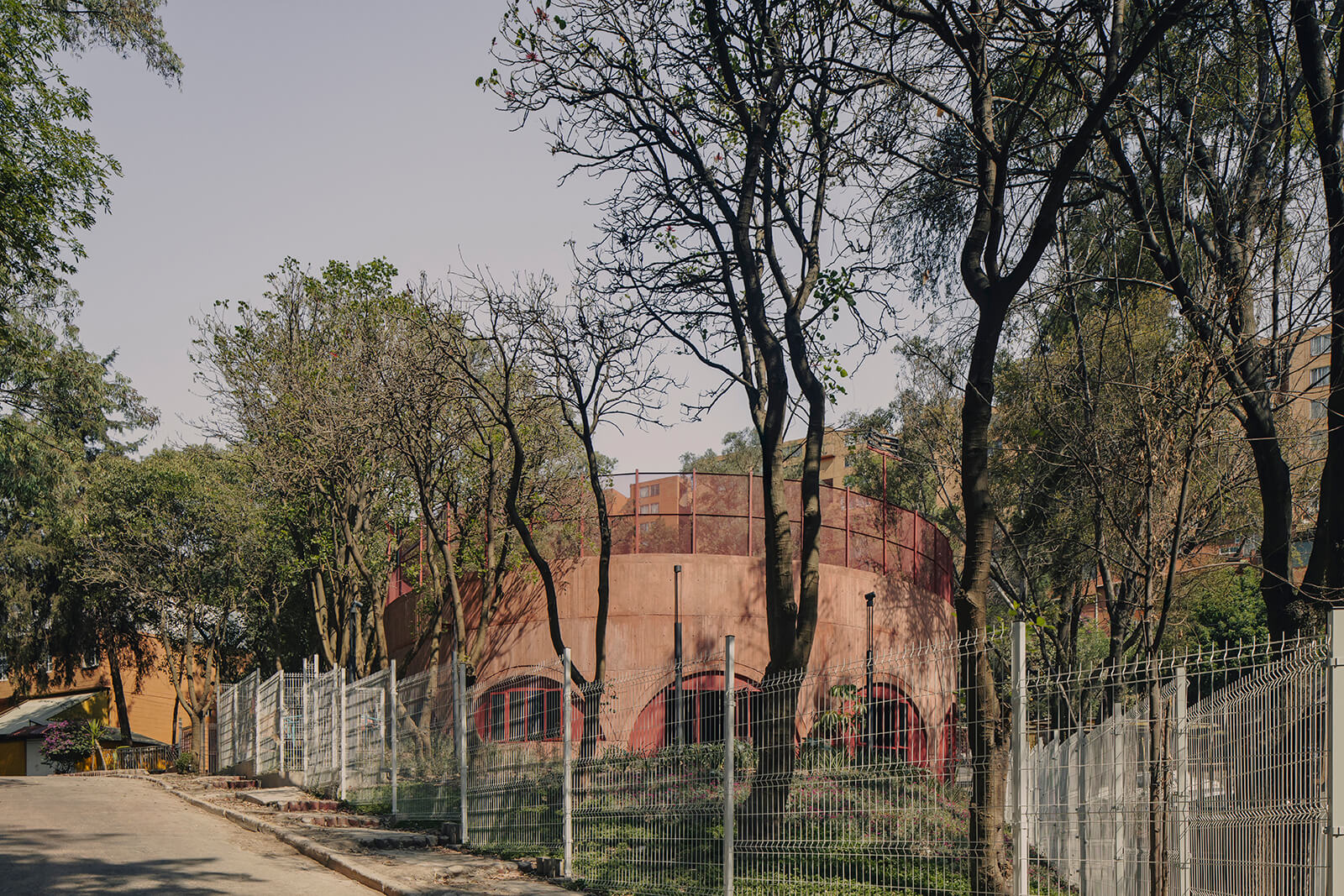
From the outset, the Mexican architects were determined to preserve every existing tree. The site was home to eucalyptus, pine and colorín trees, some of which are highly sensitive to root disturbance. When it became clear that the original placement of the building would affect several colorín trees, the design was adjusted instead of forcing removal. Not a single tree was cut down. The canopy now defines the public park’s atmosphere, its colour now shifting with the seasons as the colorín trees flower and leaf again.
Managing water was another crucial aspect. The steep slope and clay soil made the area prone to flooding and erosion and previous runoff had damaged nearby roads. Two absorption wells were incorporated into the design at points where rainwater naturally channels through the terrain. These wells direct and filter surface runoff, protecting both the new construction and the existing ecosystem. The effectiveness of this solution was proven soon after its completion: the park withstood the intense rains of 2025, one of the heaviest seasons recorded in Mexico in two decades, without sustaining any structural or landscape damage.
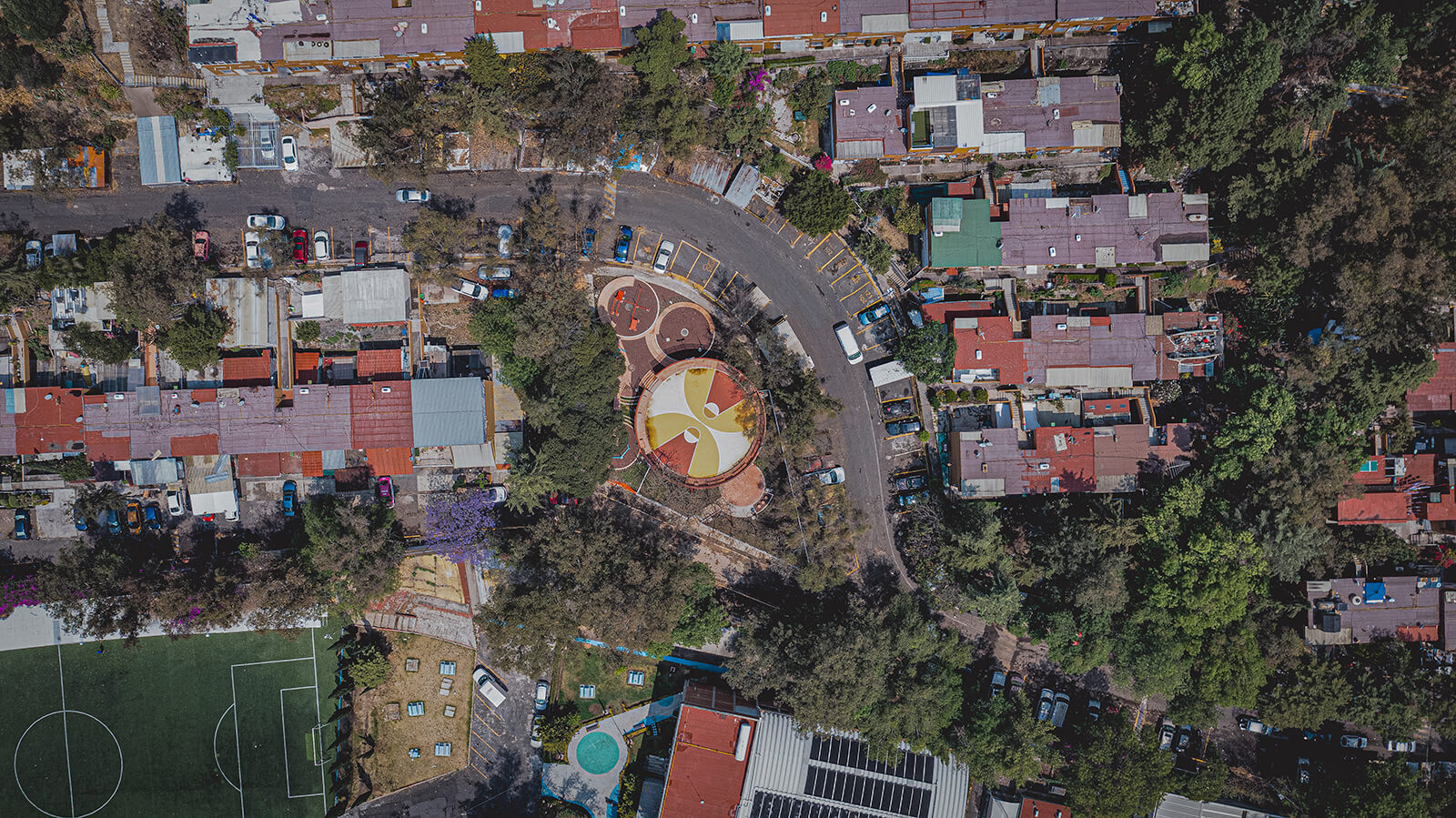
Seen from above, the community architecture project reads as a circular clearing in a field of trees, open to its surroundings and continuous with them. As per the press release, the architects describe it as a space where the building and the park are one, where movement is encouraged rather than directed. This quality, more than its form, defines the transformation of the place. The once-abandoned corner is now a daily route for residents, children and passers-by. The sense of safety comes not from barriers or supervision but from visibility, use and care.
The park at INFONAVIT Santa Fe belongs to a larger effort by the studio to work within the limits of existing urban housing infrastructures. Since its founding in 2016, the studio has explored how design can activate the in-between spaces of the city, such as the courtyards, slopes and empty lots that often go unnoticed. Their projects, including several across the city, turn small interventions into catalysts for community life. What connects them is an understanding of Mexican architecture as a bridge between physical repair and social repair, using modest means to achieve long-term transformation.
In Santa Fe, this circular park and community centre represents that idea in its purest form. It is not a grand object inserted into the landscape, but a careful drawing of paths, edges and levels that restore continuity to a fragmented terrain. It demonstrates how thoughtful design, when grounded in topography and ecology, can reclaim even the most unlikely piece of city for collective use. The park’s success has also encouraged the refurbishment of adjacent housing blocks and public areas, extending the rehabilitation project’s influence beyond its footprint. Together, these linked interventions signal a shift from isolated infrastructure to a network of shared civic spaces.

by Pranjal Maheshwari Oct 19, 2026
The Mumbai-based architects integrate courtyards, mesh screens and north light trusses to create a dining space that doubles up as a community hub at SR University, Warangal.
by Mrinmayee Bhoot Oct 17, 2026
The Rotterdam-based institute centres the Indian Ocean as a network for exploring material histories and transnational links shaping coastal cultures, positing them as future models.
by Pranjal Maheshwari Oct 16, 2026
At the 2026 Stirling Prize ceremony, Mary Duggan with RUFF Architects, MAKER Architecten and Nakshabid Architects were felicitated for proffering quality housing and social equity.
by Mrinmayee Bhoot Oct 12, 2026
The new Centre for Contemporary Arts, fostering public engagement with art in Uzbekistan, is housed in a tram depot refurbished by the French studio, emulating local craftsmanship.

make your fridays matter with a well-read weekend
Enter your details to sign in
Don’t have an account?
Sign upOr you can sign in with
a single account for all
STIR platforms
All your bookmarks will be available across all your devices.
Stay STIRred
Already have an account?
Sign inOr you can sign up with
Verification link sent to check your inbox or spam folder to complete sign up process
Tap on things that interests you.
Select the Conversation Category you would like to watch
Please enter your details and click submit.
Enter the 6-digit code sent at


AMASA Estudio transforms a forgotten ravine into a community park in Mexico City
by Aarthi Mohan | Published on : Dec 13, 2025


 Sign in with Google
 Sign in with email
What do you think?