Art08 mins. read
India Art Fair 2026 and more in Delhi: The STIR list of must-see exhibitions
by Srishti OjhaFeb 04, 2026



by Mrinmayee BhootPublished on : Feb 06, 2026
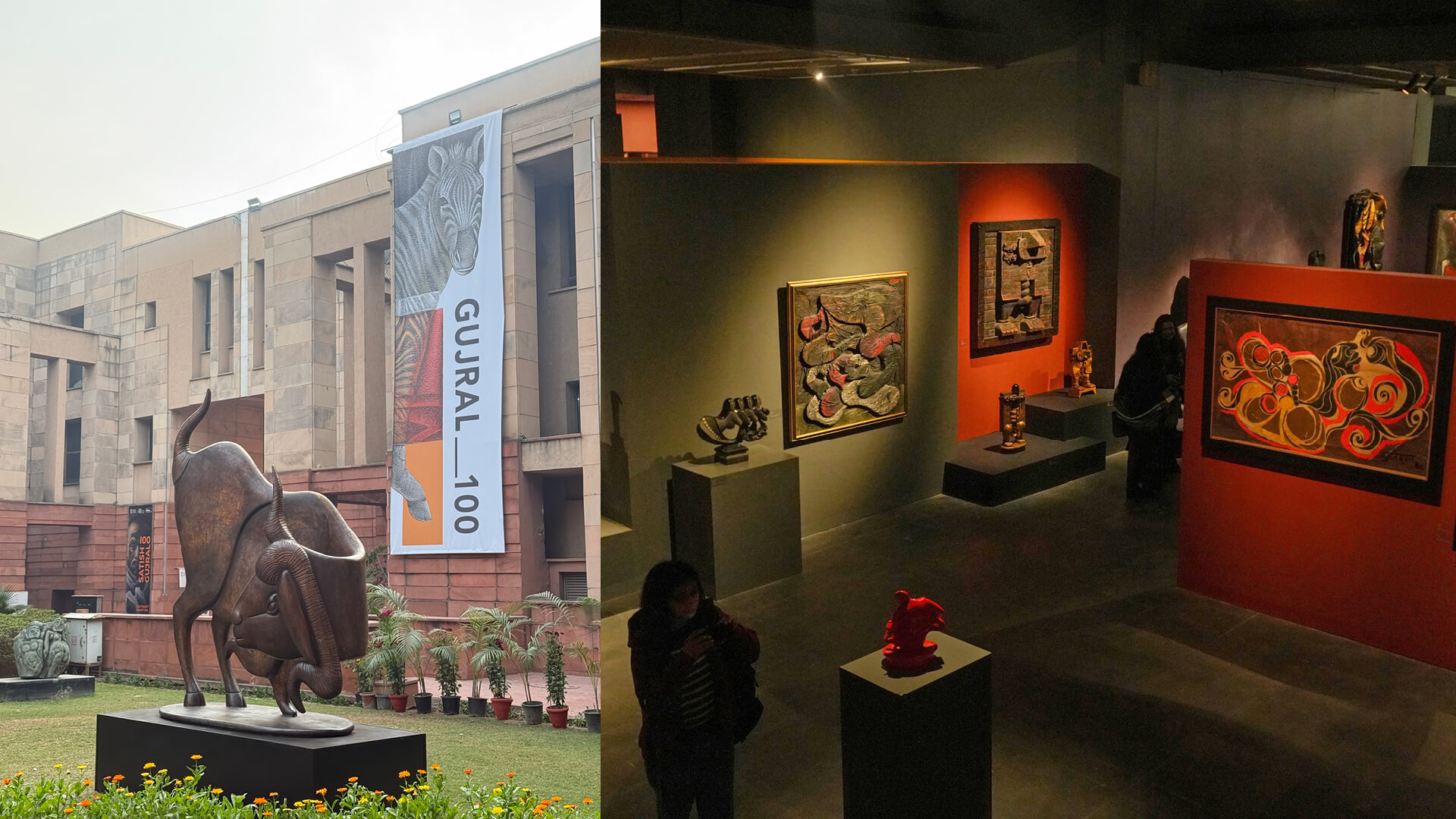
The task of a retrospective is double-fold: making sense of an artist’s work within the context of their personal lives and the broader landscapes they made their work in, while hopefully ensuring that the dissemination of this is not overwhelming. A monumental ask by all accounts, particularly when the artist in question is the late Indian modernist Satish Gujral. It’s with the duty of depicting Gujral’s wide-ranging works–spanning sculpture, mural, painting and even space–that Satish Gujral: A Century in Form, Fire, and Vision, on view at National Gallery of Modern Art, New Delhi, is charged. The exhibition, part of the Indian artist’s centenary celebrations organised by the Gujral Foundation, holds its ground in making Gujral’s expansive artistic journey feel reaffirmingly inspiring.
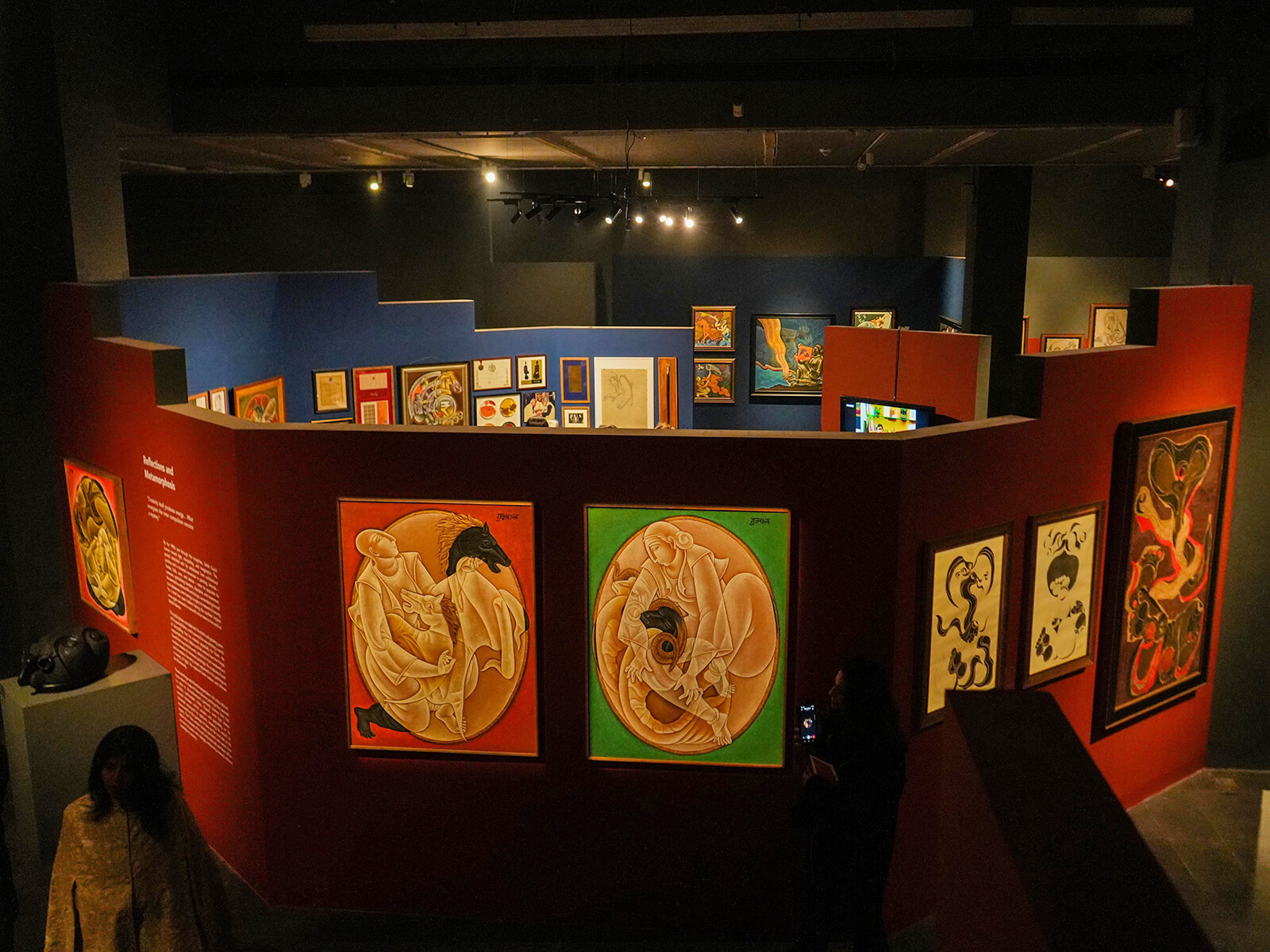
One gets the sense of a reverential air on entering the gallery where the showcase is presented. A dim, quiet space with diffused lighting holds over 160 works spanning everything from painting to tapestry and mixed media that Gujral produced in seven decades of practice. Archival material, photographs, personal correspondence, honours and an extensive timeline punctuate the exhibition, offering visitors rare insight into the intersections of life, history and practice. Gujral – who the curator of the show Kishore Singh refers to as the only renaissance man within the purview of modern Indian art – lived a singular life, growing up in the long shadow cast by the partition of British India, living with a hearing disability for most of his life and being one of the first artists to travel to Mexico where he took on an apprenticeship with the renowned muralist Diego Rivera and met the likes of Frida Kahlo and Frank Llyod Wright. It was this meeting that would also initiate Gujral’s fascination with architecture, anticipating his turn to design in the 80s.
“Gujral’s pictorial work appears to us to be of utmost importance…We believe that it contains all the essential elements of his nation, the great civilisation of his own country,” Rivera once said of the artist. The show underscores this dialogue in the way the different works are grouped together. Opening with an audiovisual installation of flowing water juxtaposed by mountains that references Gujral’s hearing loss and subsequent turn to drawing and art as a means of communication, the second section, Loneliness and Strife: The Mexico Year, features works from 1952 created during his time in Mexico.
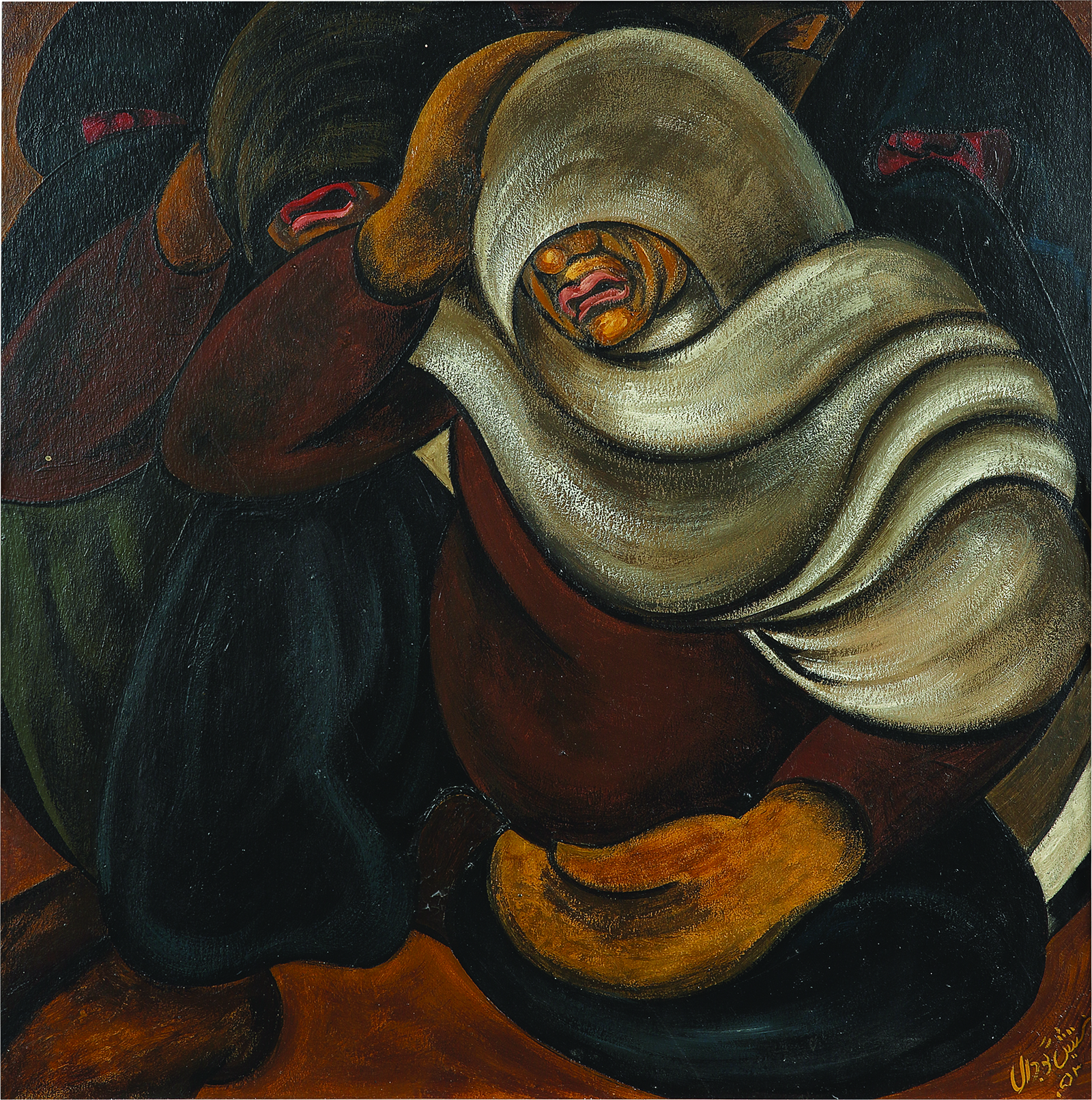
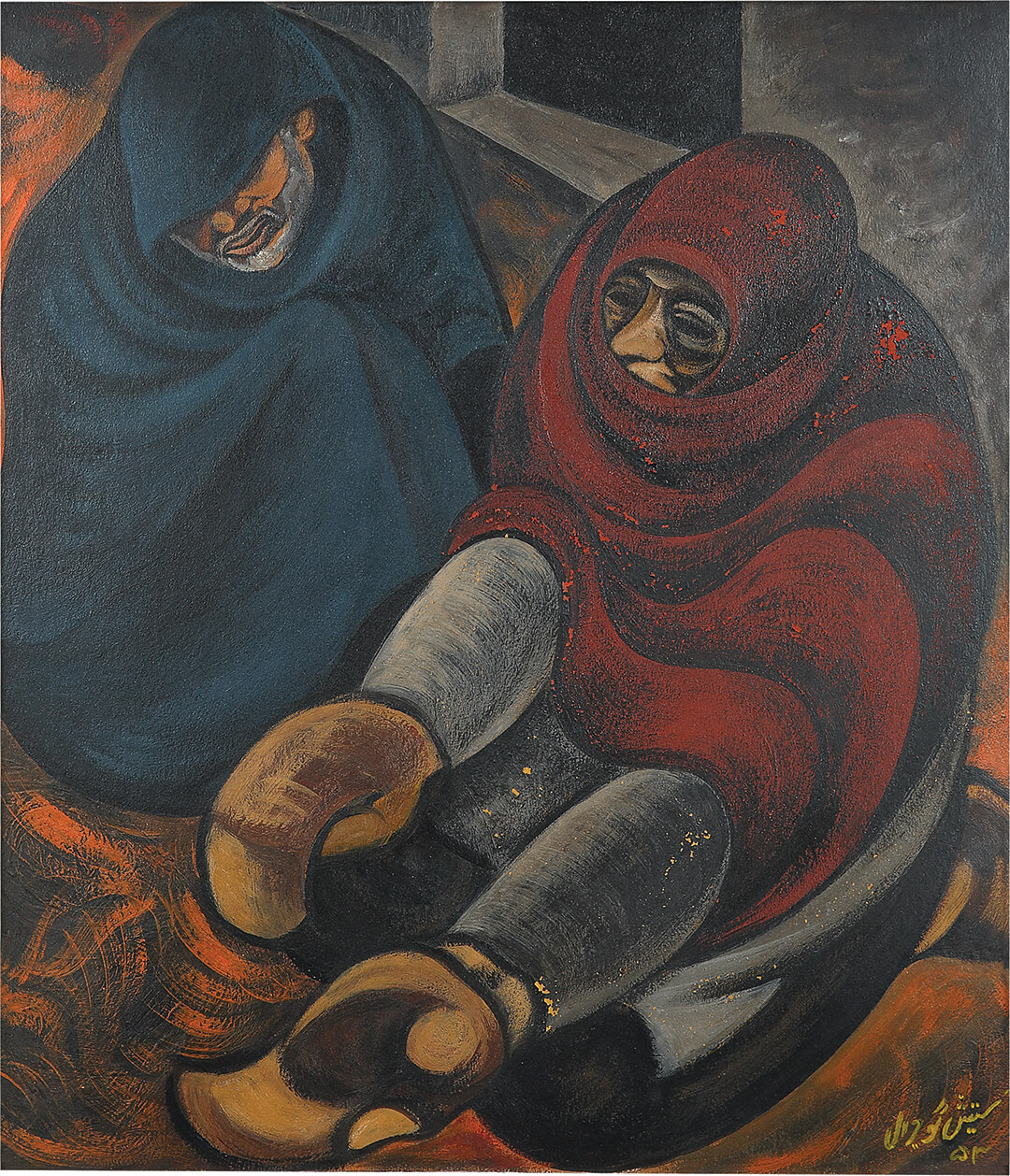
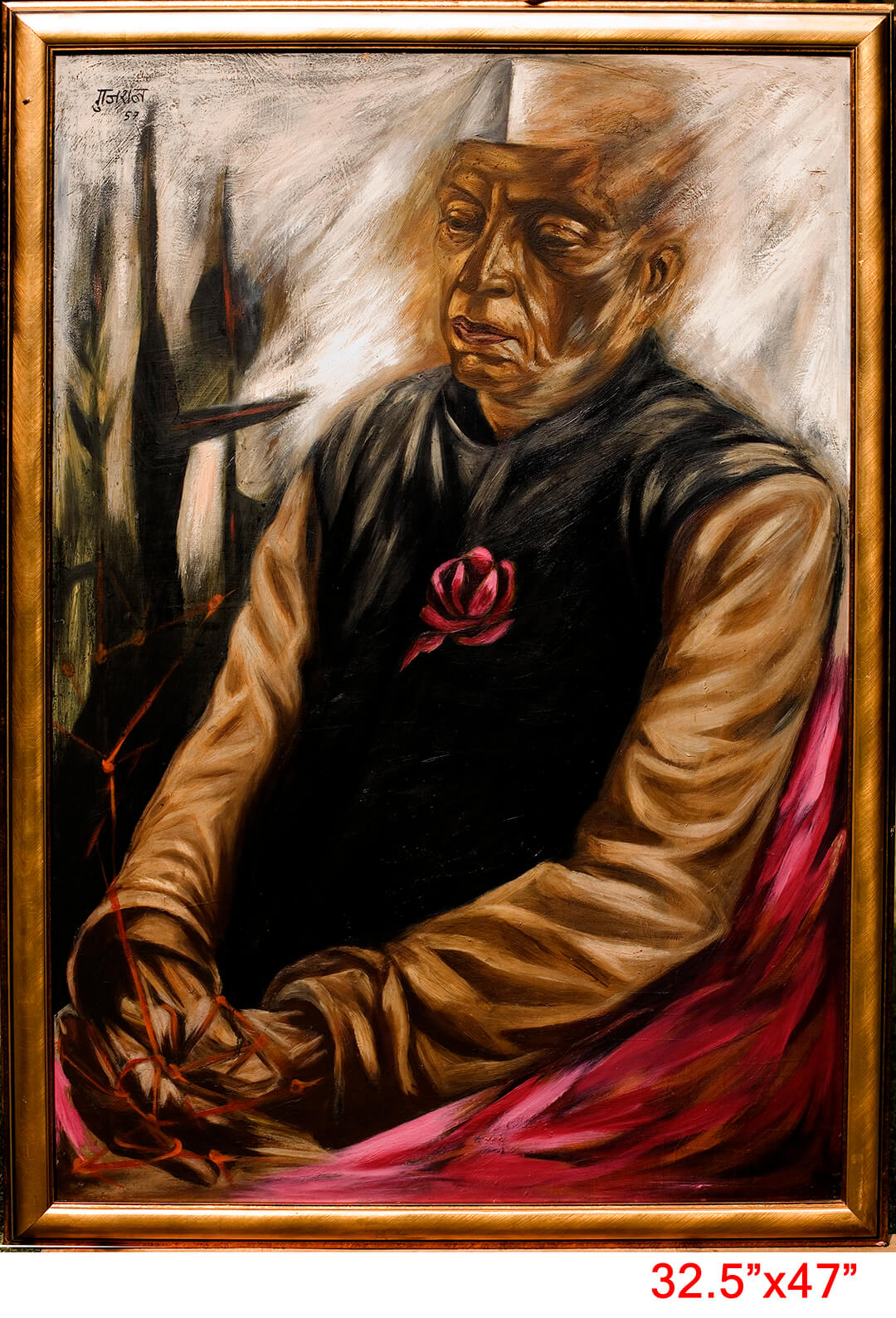
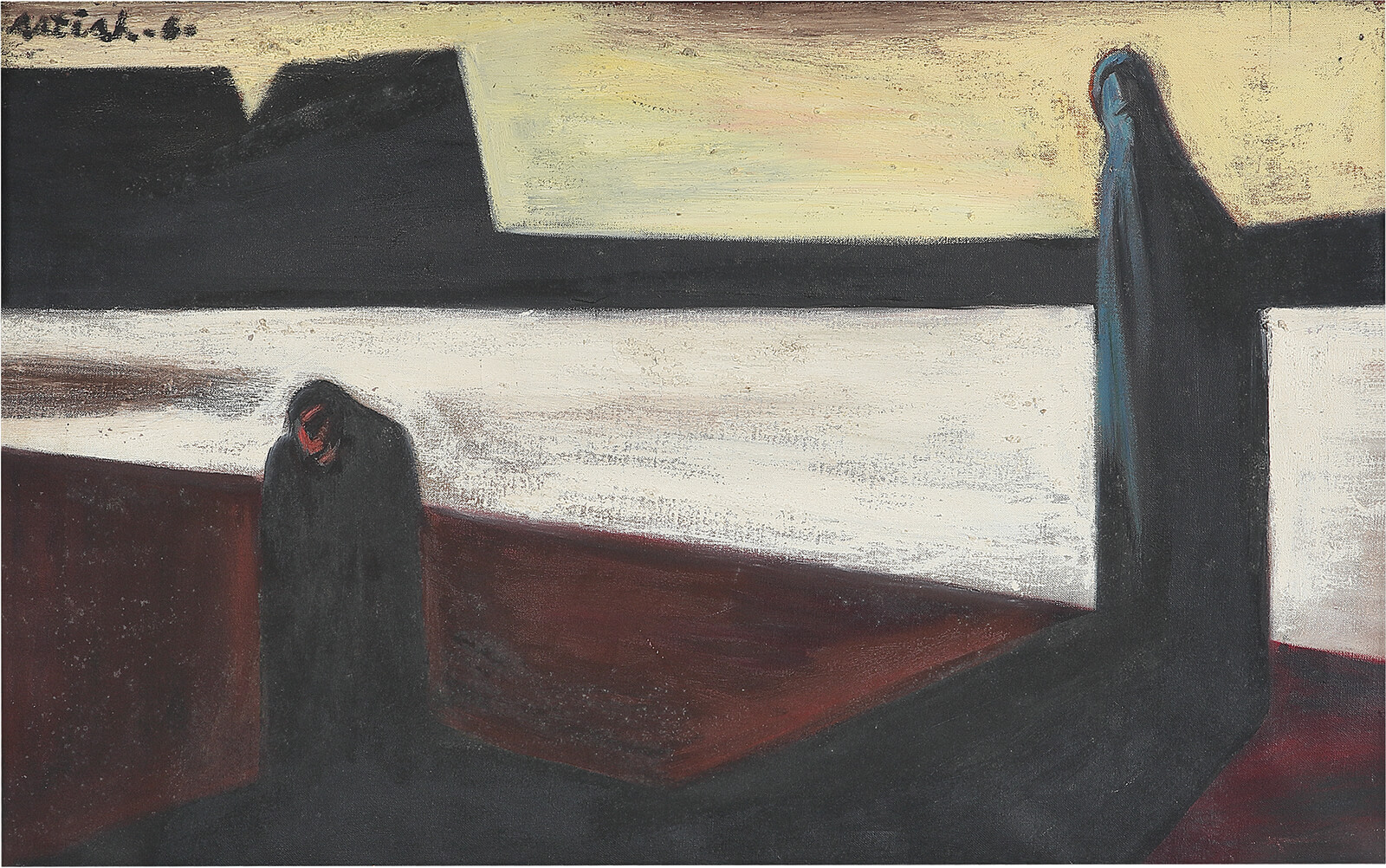
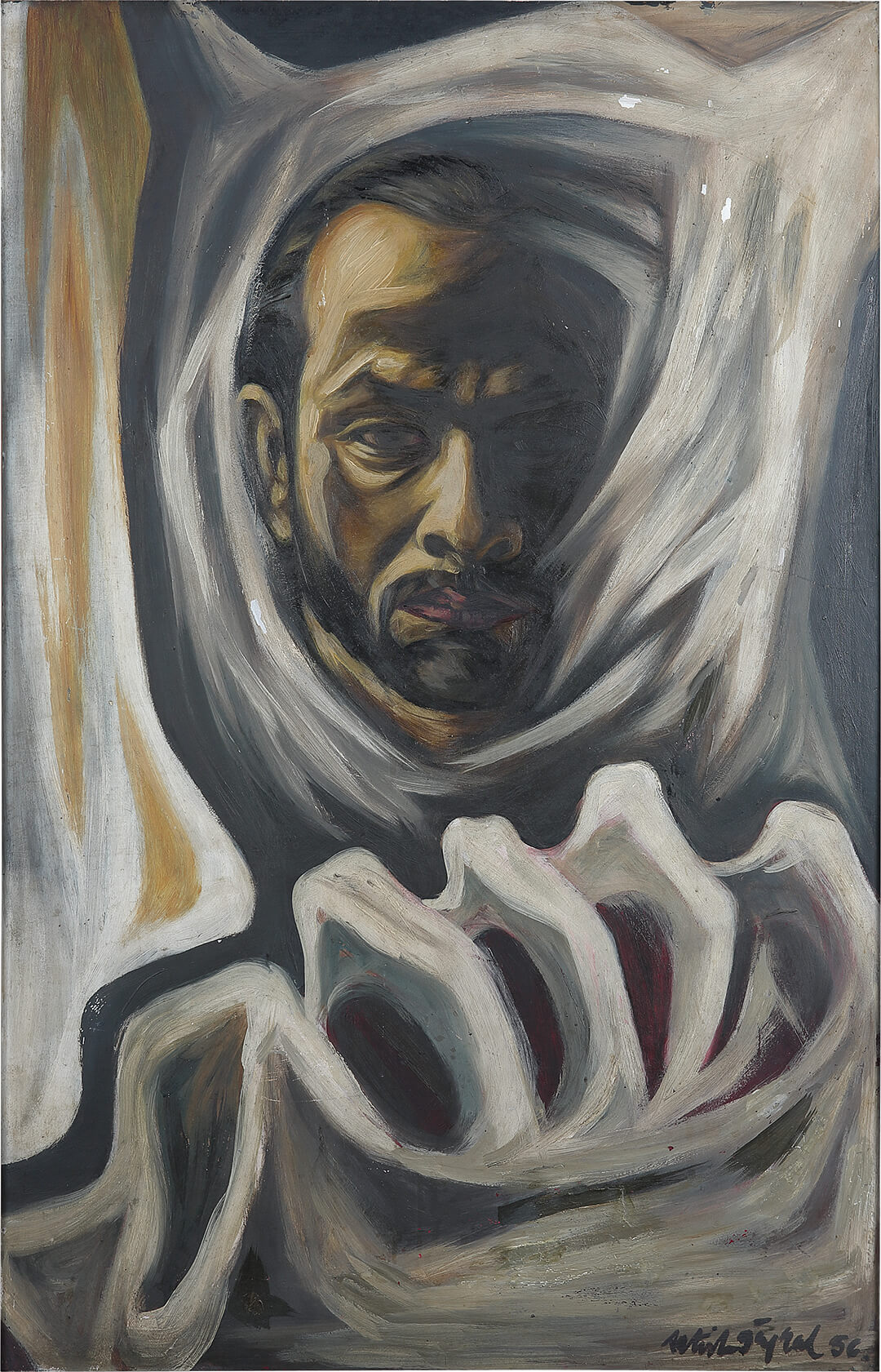
Deferring from the personal, A Dark Midnight: The Partition Series, works from the 1950s, depict the pain of Partition, rendering the devastating cleaving of India that left millions of people displaced in vivid canvases. Mourning En-Masse shows a woman with a distorted face and her head covered, a poignant portrayal of the insurmountable grief that still shrouds those first years of a nascent country. The show is interspersed by self-portraits of Gujral from three different time periods, underscoring the inherently introspective practice that he honed, one that did not shy away from depicting pain.
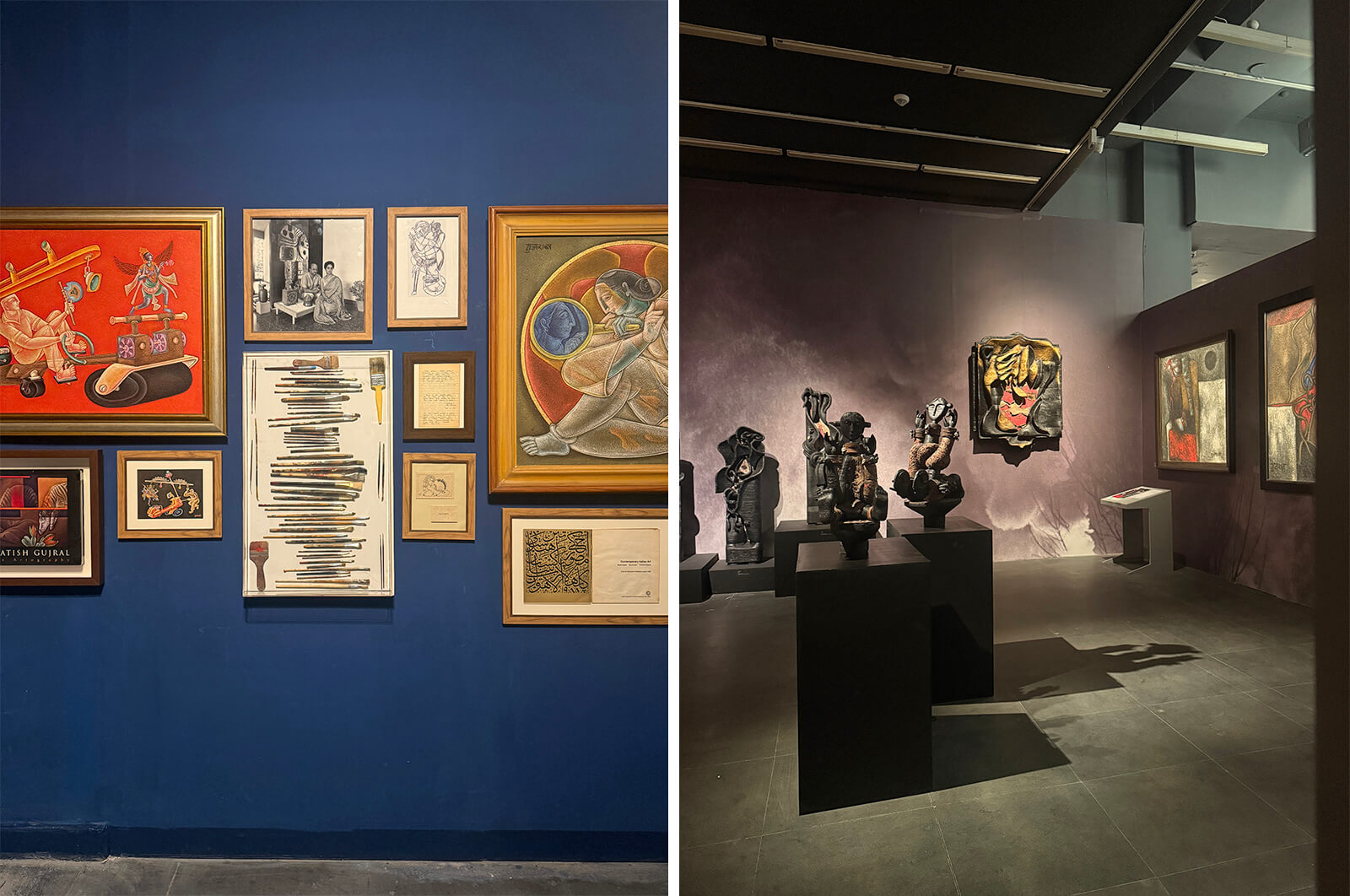
Apart from the dialogue between the personal and the political, the sheer breadth of the medium is what makes the show feel so uniquely expansive. In one of the sections, works created with burnt wood and ceramics channel Gujral’s visceral reaction to the Delhi riots of 1984, the loss of Sikh lives and the chaos of mob violence. The different sections in the gallery make the transition from his works on canvas to murals and from there to sculptural works in the mid-70s seem cohesive. It details a perceptive shift in the manner in which Gujral thought of his artistic production, beginning from an interior perspective that drew on the sociopolitical, to wanting to release art from the confines of the gallery.
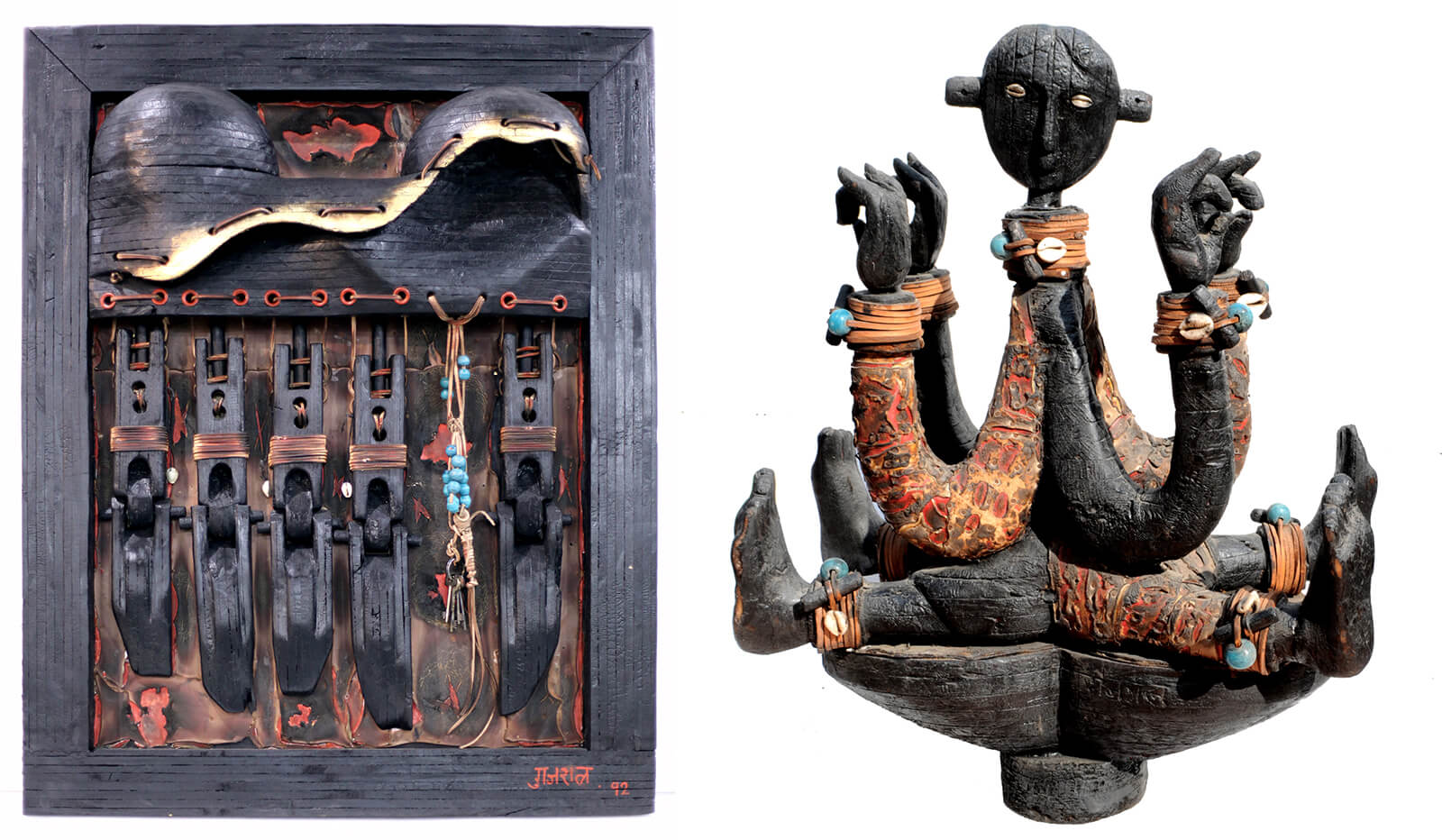
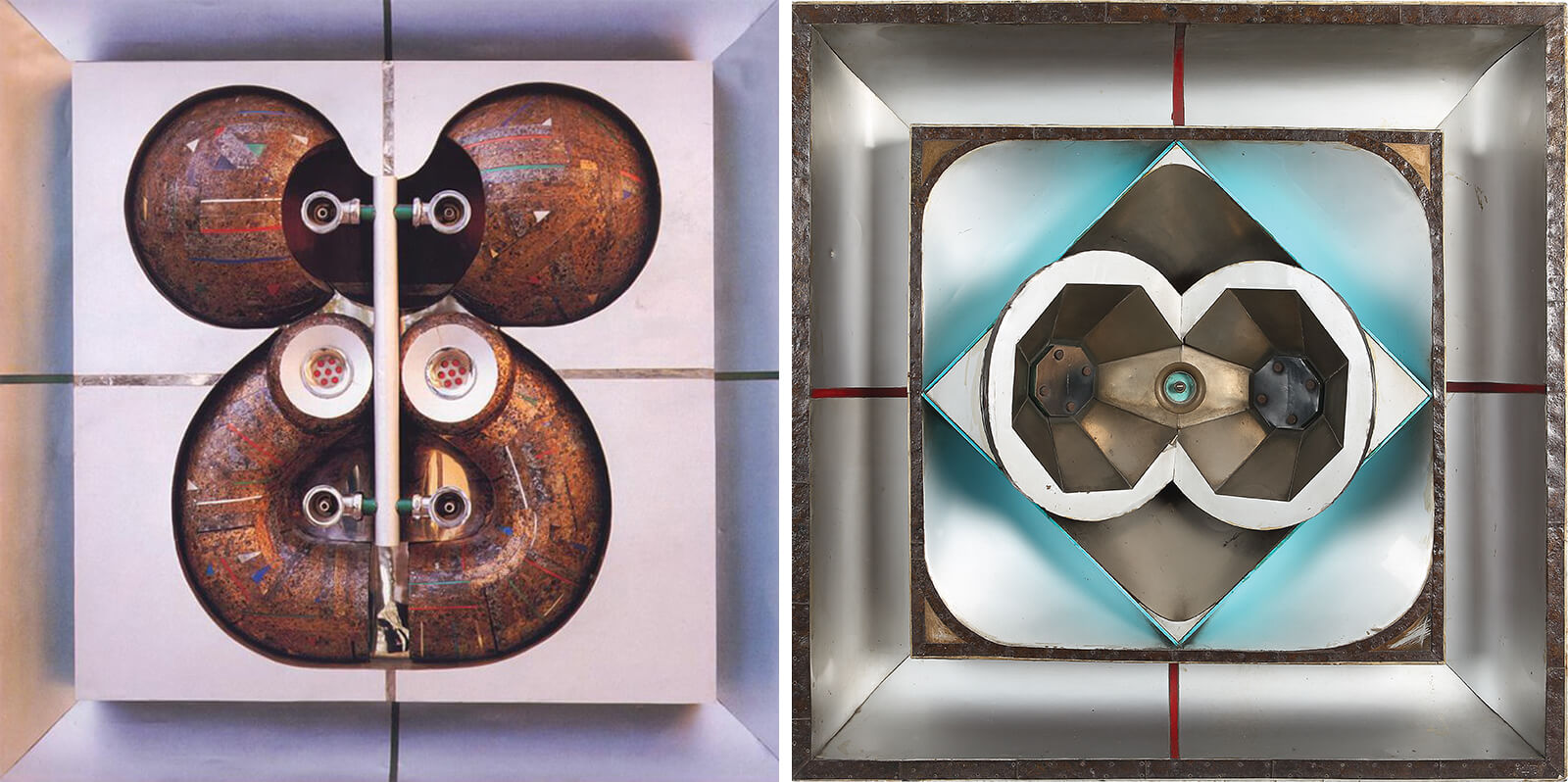
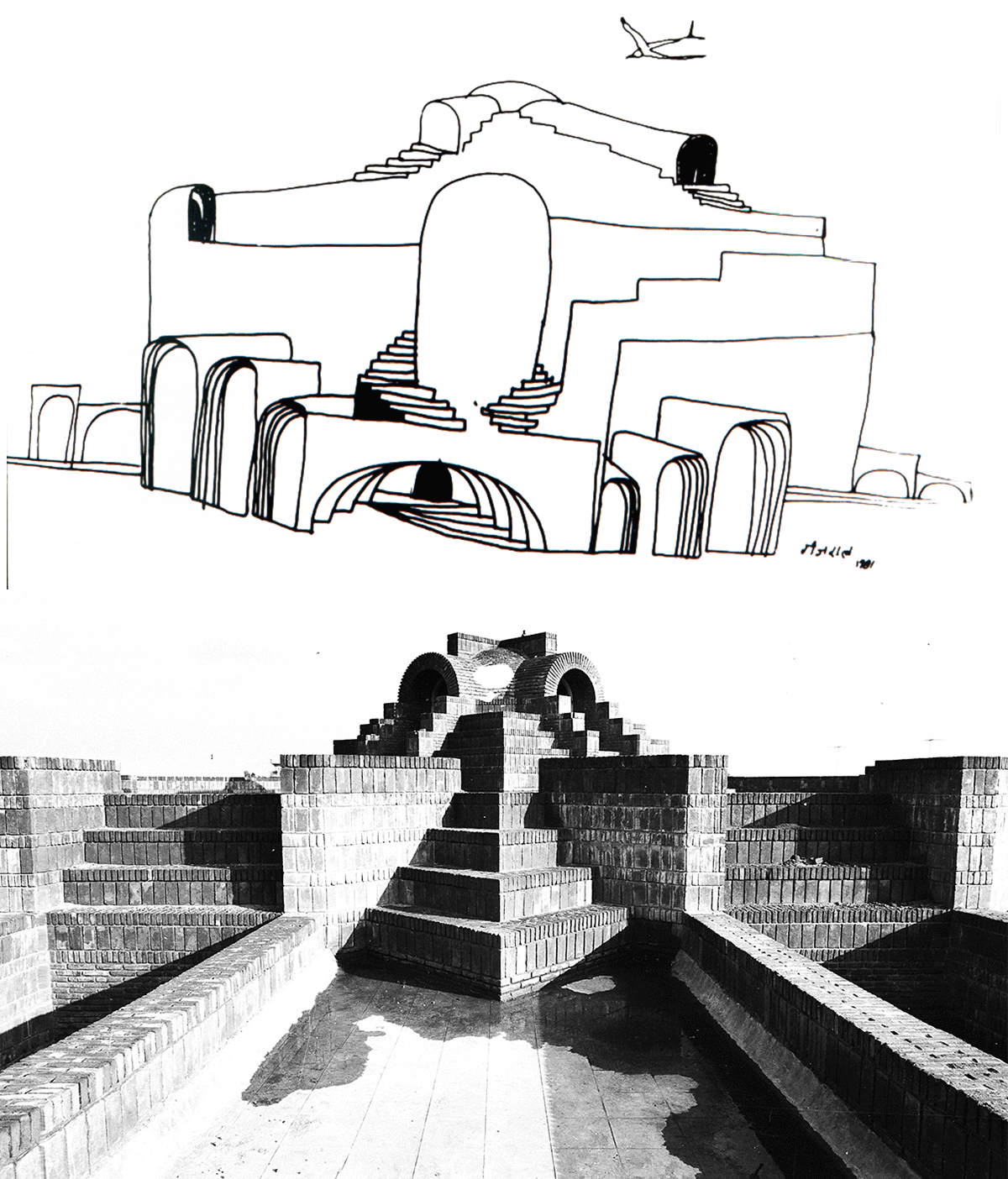
“I hope there comes a time, in the near future, when all forms of art are available for public viewing and become a way of life and communication,” he is quoted as saying in a 2017 interview with Business Standard. Granite works such as Dancers, Harmony, and Musicians, assemblage-like sculptures of found objects, and Gujral’s foray into architecture (depicted here through models) are especially indicative of Gujral’s playful sensibilities.
Critics have spoken about Gujral’s effervescent creative energy and capacity to render form anew, one evidently mirroring the strifes, trials and ambitions of a young nation refracted through an intensely personal lens. Gujral was able to shape space in a way that was tailor-made to the particularities of India but modernist in ethos. This legacy, one that has gone under the radar for decades, is explored in the other half of the centenary showcase, on view at Gujral House, and also in architectural models, drawings and sketches at NGMA. The last section of the exhibition that houses these works recreates Gujral’s studio, “a place of reflection that allowed him to respond to the silence that engulfed him”, Singh relays in his note.
In the 1990s, having acquired an advanced hearing device earlier, Gujral abandoned it, noting that it hindered concentration. If it’s the ‘bliss of solitude’ that shaped Gujral’s practice, the recreation of the studio for a show that begins with a portrait of the artist’s father seems to insist that his life is best understood as artistic output in flux, one that remains relevant to the contemporary age. And that is the hope, as Singh underscores in his note, for the show and Gujral’s immense legacy to engage a new generation of viewers. If depicting Gujral’s work is to arrive at the memories of a burgeoning nation, the show hopes that his Indian yet resolutely international outlook serves as a blueprint for the future.
‘Satish Gujral: A Century in Form, Fire, and Vision’ is on view from January 16 - March 31, 2026 at the National Gallery of Modern Art, New Delhi.

by Srishti Ojha Oct 21, 2026
Increasingly, artists, filmmakers and activists are turning to VR to create more personal, tangible accounts of the climate emergency and its impact on vulnerable communities.
by Mirra Lynn Oct 20, 2026
The Indian artist paints the old wadas of central Pune, capturing the traces of everyday life that cling to these structures, battered by time but unbowed.
by Anmol Ahuja Oct 15, 2026
How do heaps of souvenirs and relics with racist Aboriginal motifs and features become art? MCA Sydney’s winter showcase—the artist’s largest to date—beckons a possibility.
by Vandana Kalra Oct 14, 2026
With his latest exhibition as a point of departure, the modernist discusses his decades-long practice, the spontaneity of drawing and the social responsibility of artists.

make your fridays matter with a well-read weekend
Enter your details to sign in
Don’t have an account?
Sign upOr you can sign in with
a single account for all
STIR platforms
All your bookmarks will be available across all your devices.
Stay STIRred
Already have an account?
Sign inOr you can sign up with
Verification link sent to check your inbox or spam folder to complete sign up process
Tap on things that interests you.
Select the Conversation Category you would like to watch
Please enter your details and click submit.
Enter the 6-digit code sent at


Form, fire and vision: Satish Gujral at NGMA
by Mrinmayee Bhoot | Published on : Feb 06, 2026


 Sign in with Google
 Sign in with email
What do you think?