Design05 mins. read
Meng Du Hui Restaurant melds Huizhou principles with contemporary aesthetics
by Simran GandhiNov 19, 2024




by Aarthi MohanPublished on : Jan 26, 2026
Approaching the Hankou riverside, the character of Wuhan reveals itself less through singular landmarks than through accumulation: historic concession-era buildings sit alongside newer developments, while the presence of the Yangtze River is sensed through scale, movement and atmosphere rather than constant visibility. Wuhan Banquet Jubilee Garden in China occupies one such inherited structure, forming the basis for a contemporary project shaped by the city’s layered identity.
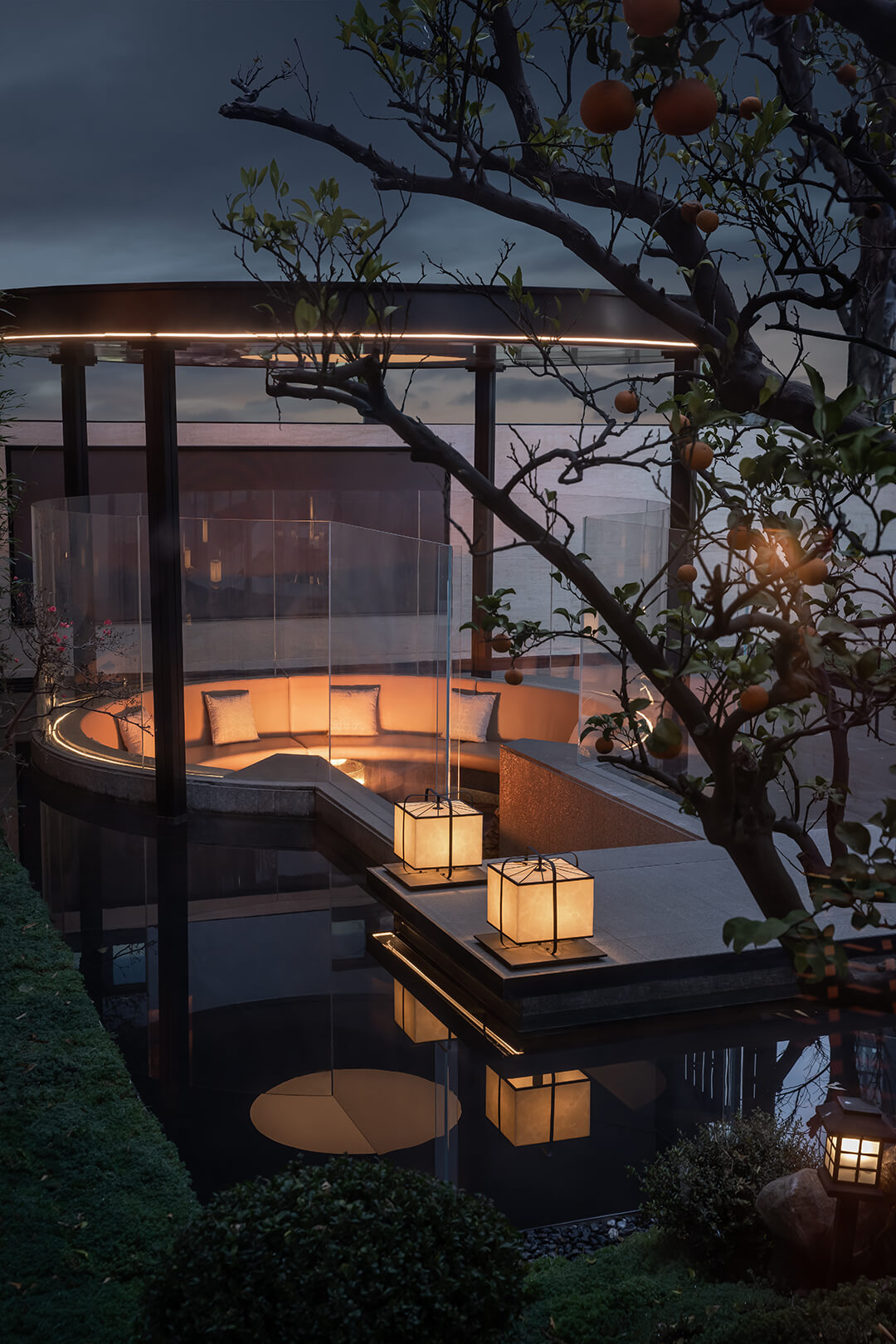
Designed by Shanghai-based LDH Design, the 1450 sq m dining venue translates Wuhan’s river city culture into a spatial sequence shaped by circulation, material choice and light. Led by chief designer Liu Daohua, the studio has consistently positioned interior design as a medium for lived cultural experience rather than visual symbolism. This approach is evident throughout the project, where historical context is not illustrated but embedded within how the space is organised and used.
Wuhan’s identity as a River City is defined by the meeting of the Yangtze and Han rivers and by a long history of exchange between northern and southern cultural traditions. This condition has produced an urban fabric shaped as much by movement and trade as by settlement. In this project, the studio approaches this context through spatial organisation rather than narrative reference. The project extends beyond its role as a dining venue by positioning interior space as a framework for renewing cultural memory through everyday use.
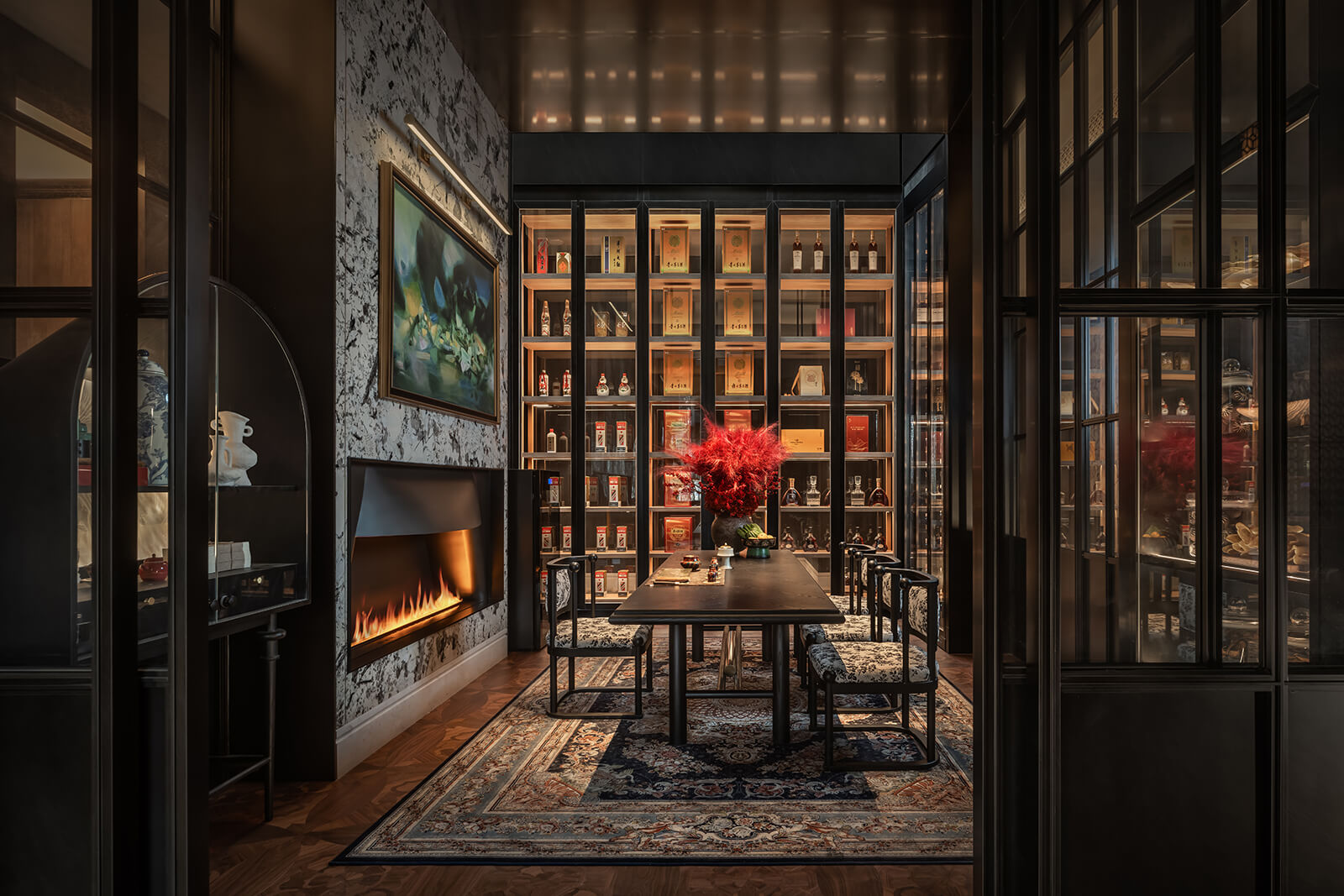
LDH Design’s practice is rooted in the belief that tradition gains relevance only when reinterpreted through contemporary life. In the Chinese architecture project, this position informs every decision, from spatial order to detailing. The project adopts Eastern aesthetics not as a stylistic label but as a method of structuring experience, allowing culture to be perceived through movement, proportion and sensory cues.
The existing building’s robust architectural fabric was retained, with the intervention focused entirely on the interior. A symmetrical axial layout establishes spatial hierarchy and orientation, drawing on traditional planning logic while remaining suited to modern dining requirements. Progression through the space is deliberate, with circulation, light and functional zones aligned to form a continuous interior journey.
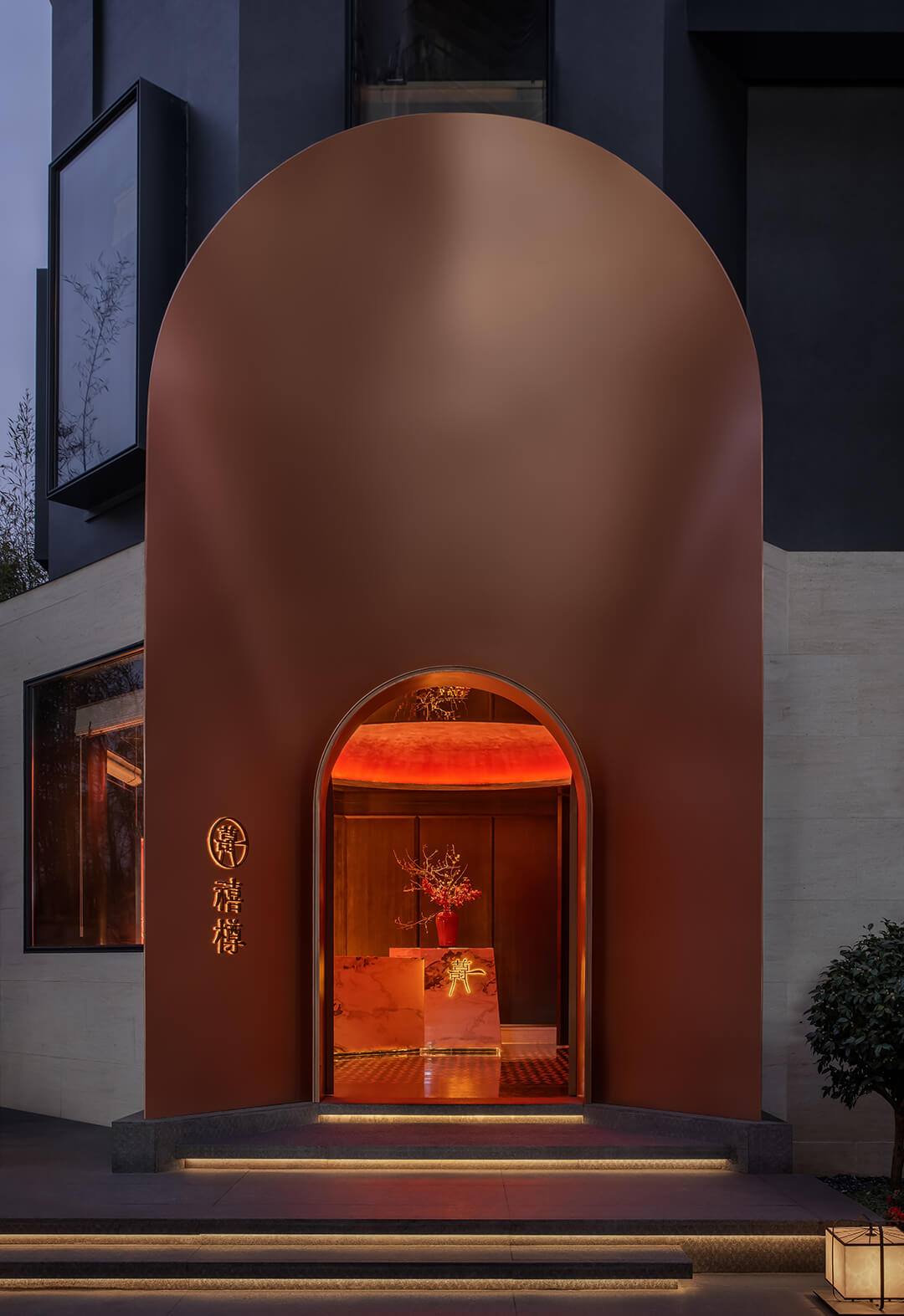
Entry is marked by restraint. The facade uses square and circular compositions in doors and windows, drawing on the philosophical concept of round heaven and square earth. Within traditional Chinese thought, the square is associated with order, stability and the human realm, while the circle suggests continuity, movement and the natural world. Here, these geometries are not treated as symbols but as organising devices, establishing balance between structure and flow at the point of entry and setting up the spatial logic that governs the interior sequence. A metallic surface and controlled typography signal the venue’s presence while maintaining visual control. Inside, a stone-framed water curtain introduces sound and motion. The presence of water immediately alters the atmosphere, softening the solidity of the historic structure and referencing the rhythms of Wuhan’s rivers.
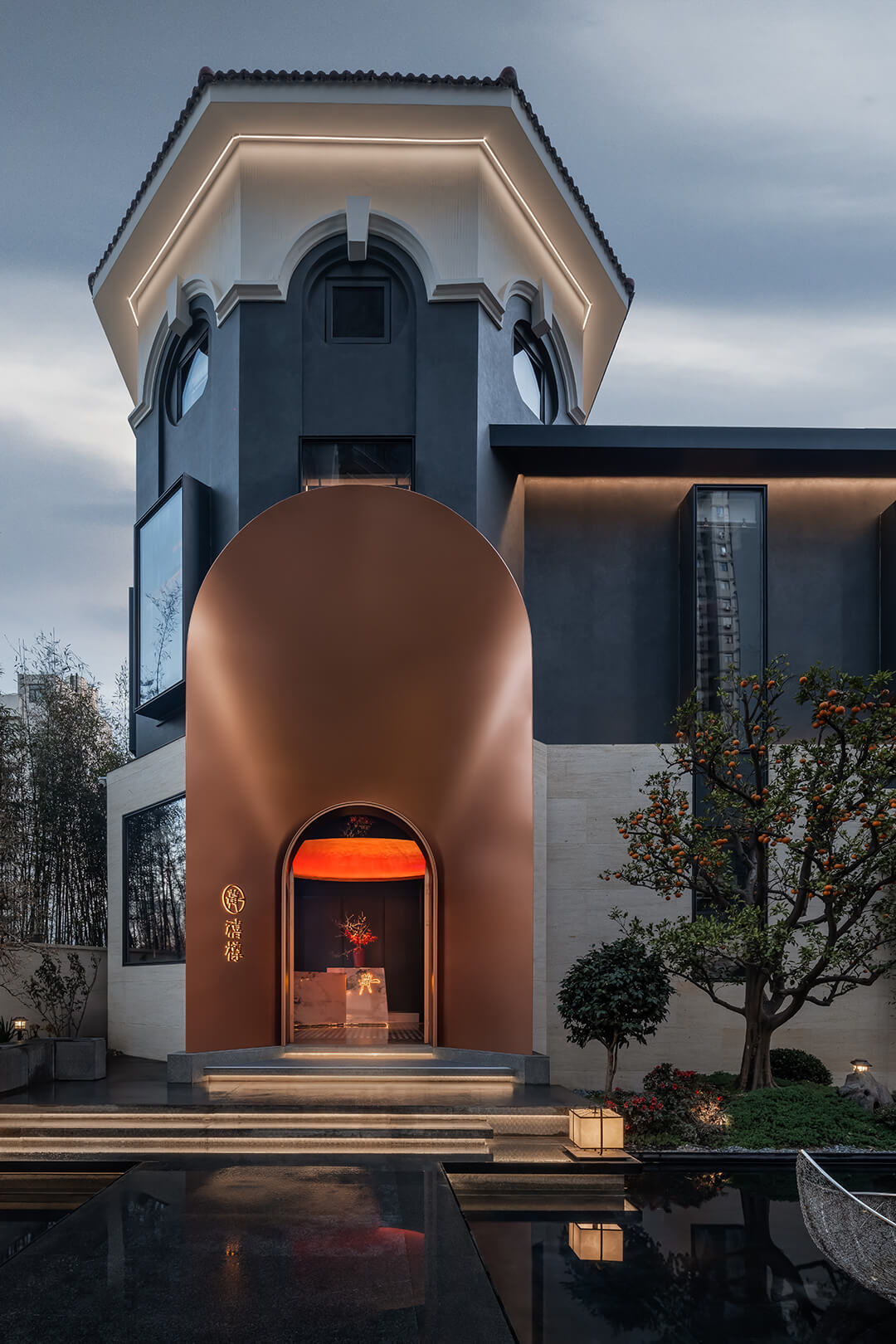
This entrance sequence sets the tone for the interior. Blue brick surfaces, flowing water and metallic finishes establish a balance between stillness and movement. Natural light interacts with texture rather than overwhelming it, ensuring the building’s weight supports the experience rather than dominating it. The transition from exterior to interior is gradual, allowing guests to acclimatise to changes in sound, light and scale.
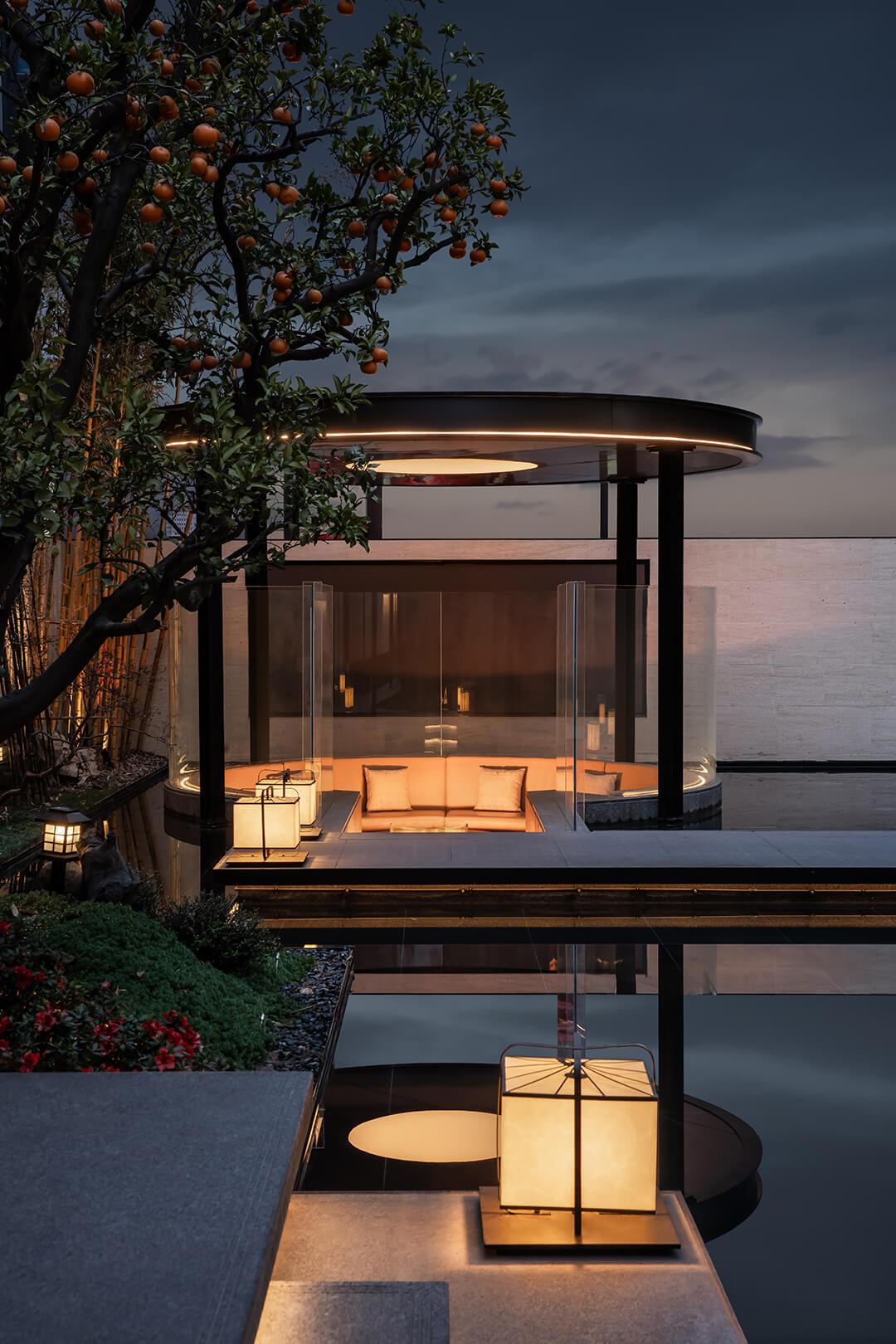
Central to the project is the reinterpretation of the courtyard design as an interior organising device. Rather than functioning as an enclosed outdoor space, the courtyard operates as a layered spatial interface. A shallow pool and orange trees form a traversable landscape that guides movement while offering a visual pause. Reflections across water surfaces and adjacent walls introduce depth and variation, creating an environment that changes with time and use.
This courtyard also structures circulation. Movement unfolds from outer zones to the inner hall through a sequence of water, planting, stone steps and light. The experience is intentionally paced, echoing the coexistence of calm river expanses and the vitality of Wuhan’s pier culture. Natural elements and material transitions shape spatial rhythm, reinforcing the idea of river flow entering the interior without explicit reference.
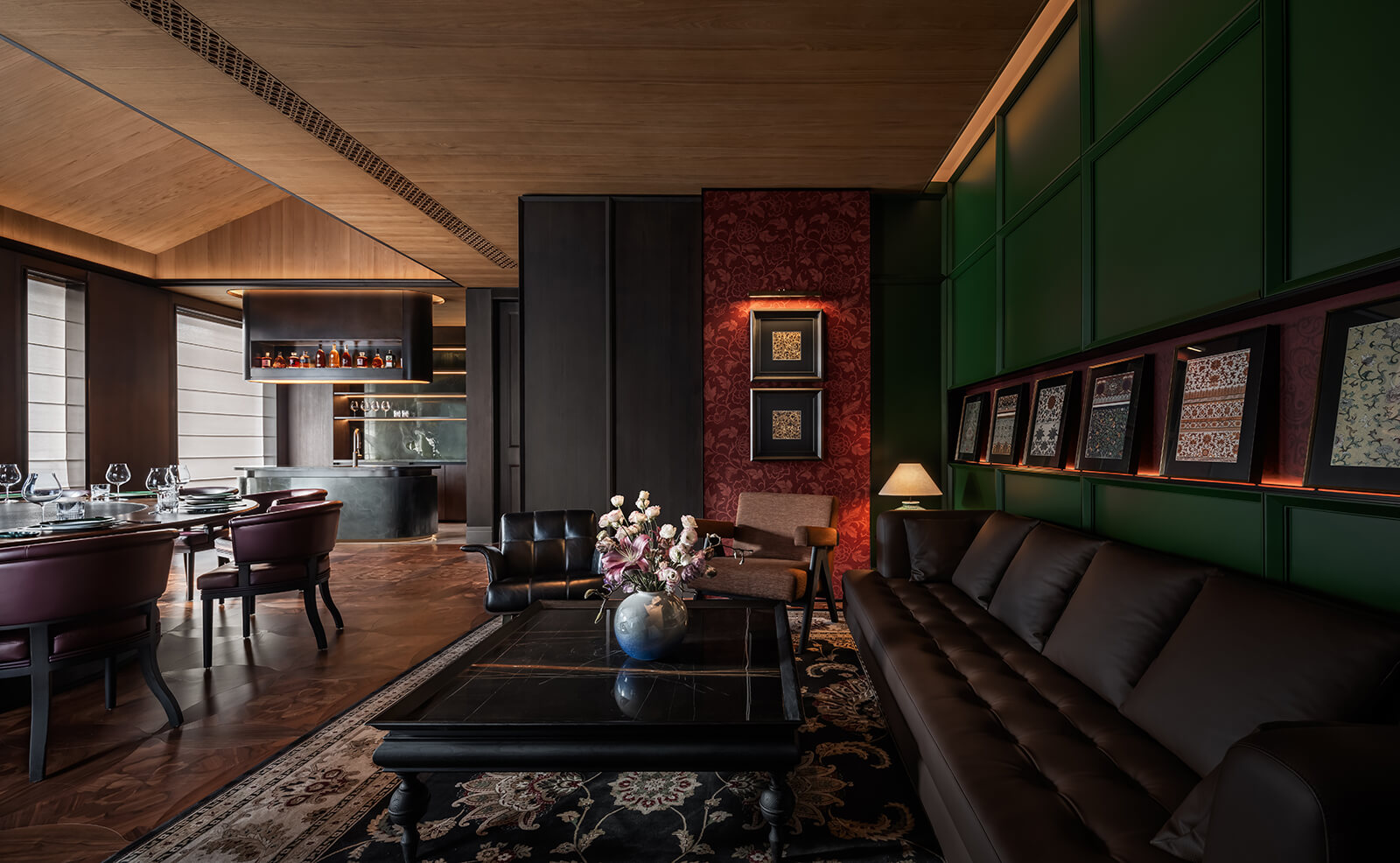
The three-storey layout supports different degrees of social interaction. The ground floor functions as a public reception area and main dining hall, defined by openness and natural light. The second floor introduces semi-private dining spaces, where screens and grilles provide separation while maintaining visual continuity. On the top floor, private rooms and banquet areas are arranged to support quieter, more contained experiences, with material and lighting choices calibrated for comfort and focus.
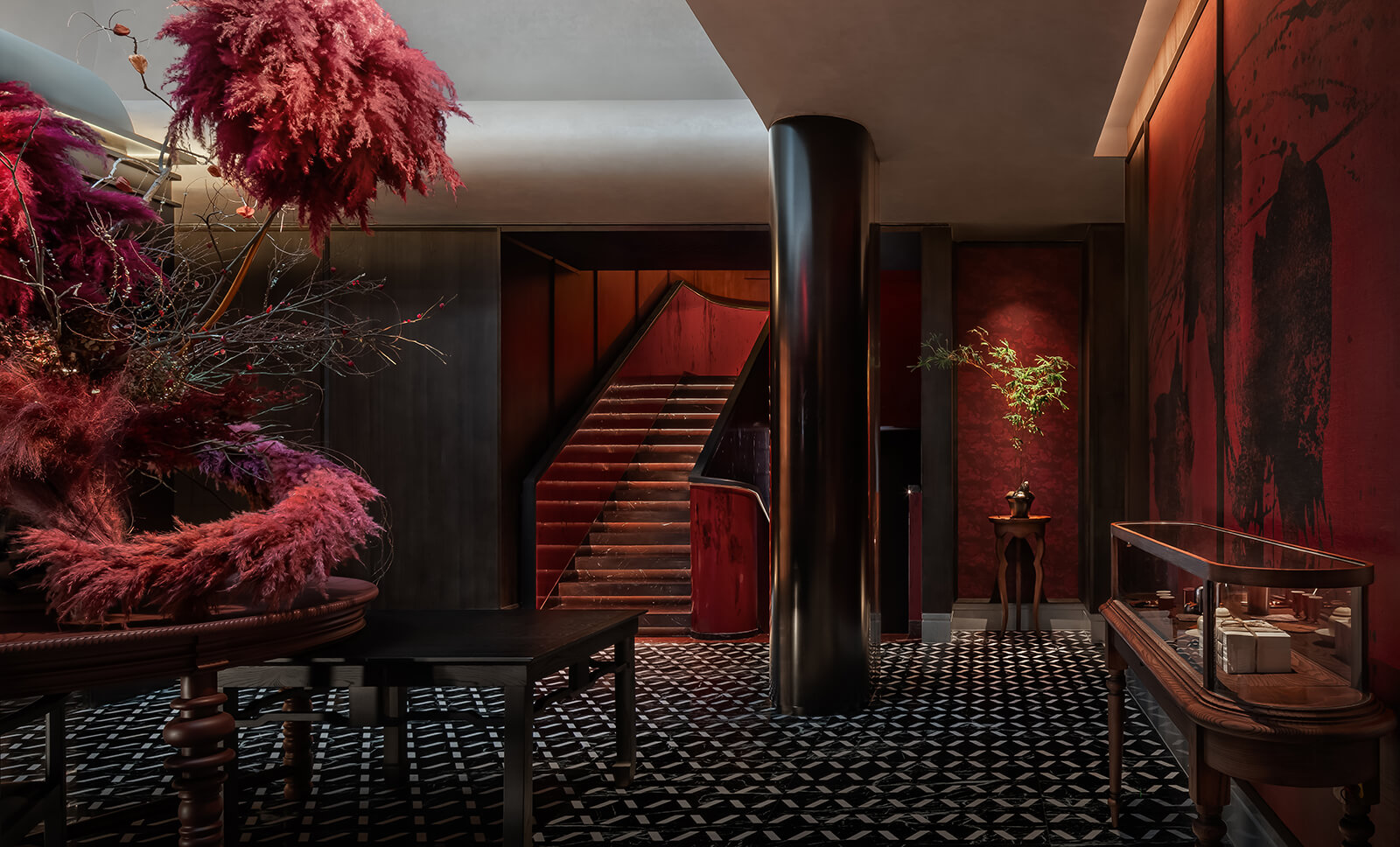
Vertical circulation is anchored by a circular staircase design that reinforces continuity across levels. Red jade steps draw attention without excess, guiding visual and physical movement upward. Throughout the restaurant design project, spatial proportions are carefully considered. Ceiling heights, corridor widths and furniture placement are adjusted to maintain balance, clear sightlines and ease of movement at every point of pause.
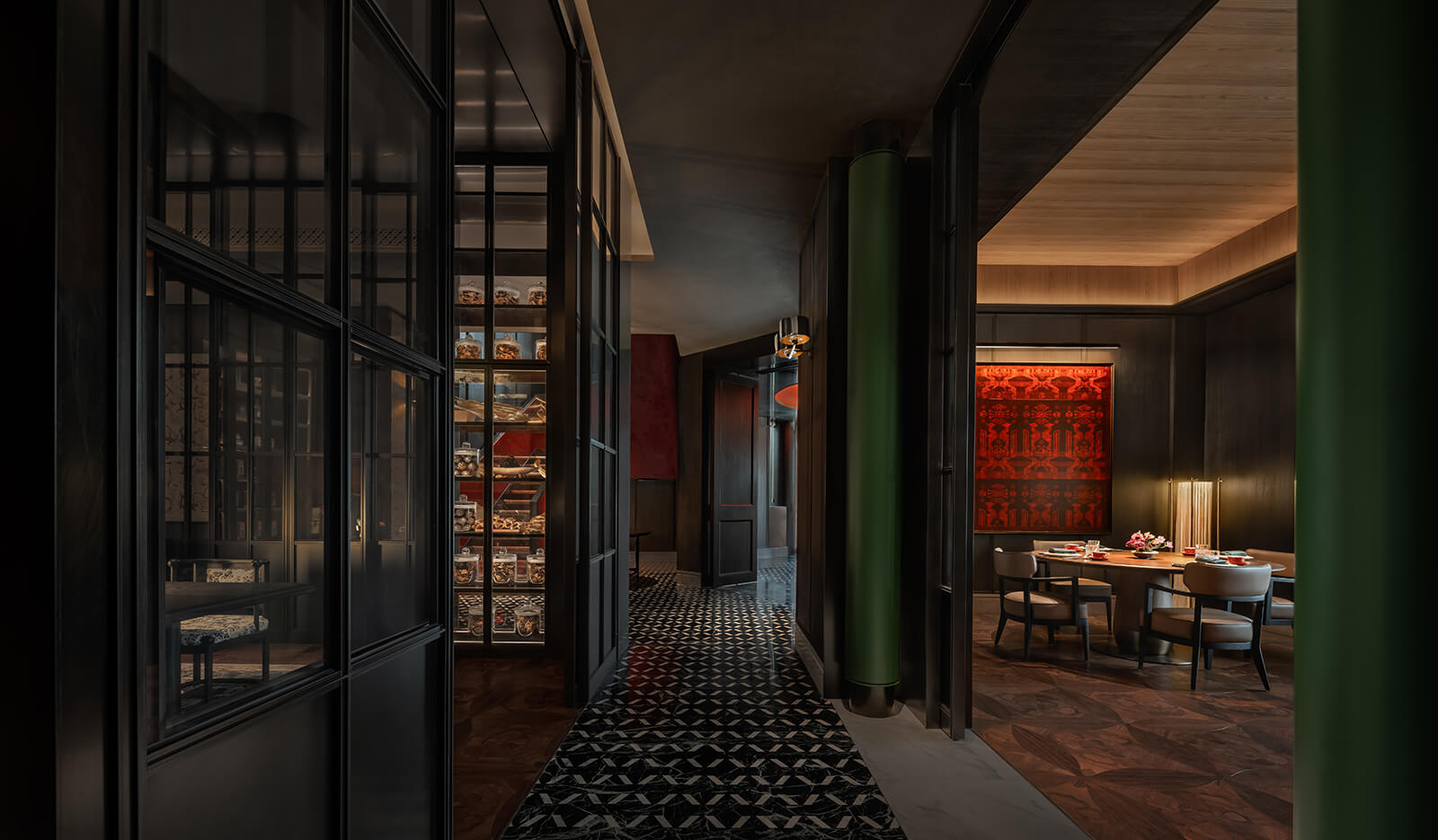
Material selection plays a critical role in translating cultural references into tactile experience. The palette combines red jade, bluestone, bronze-toned metal and wood, structured around three dominant tones. Smoked grey evokes the subdued atmosphere of the riverbank at dusk. Chinese red introduces warmth, recalling the glow of lights along the piers. Bronze gold references the textured surfaces of concession era walls, establishing continuity between past and present.
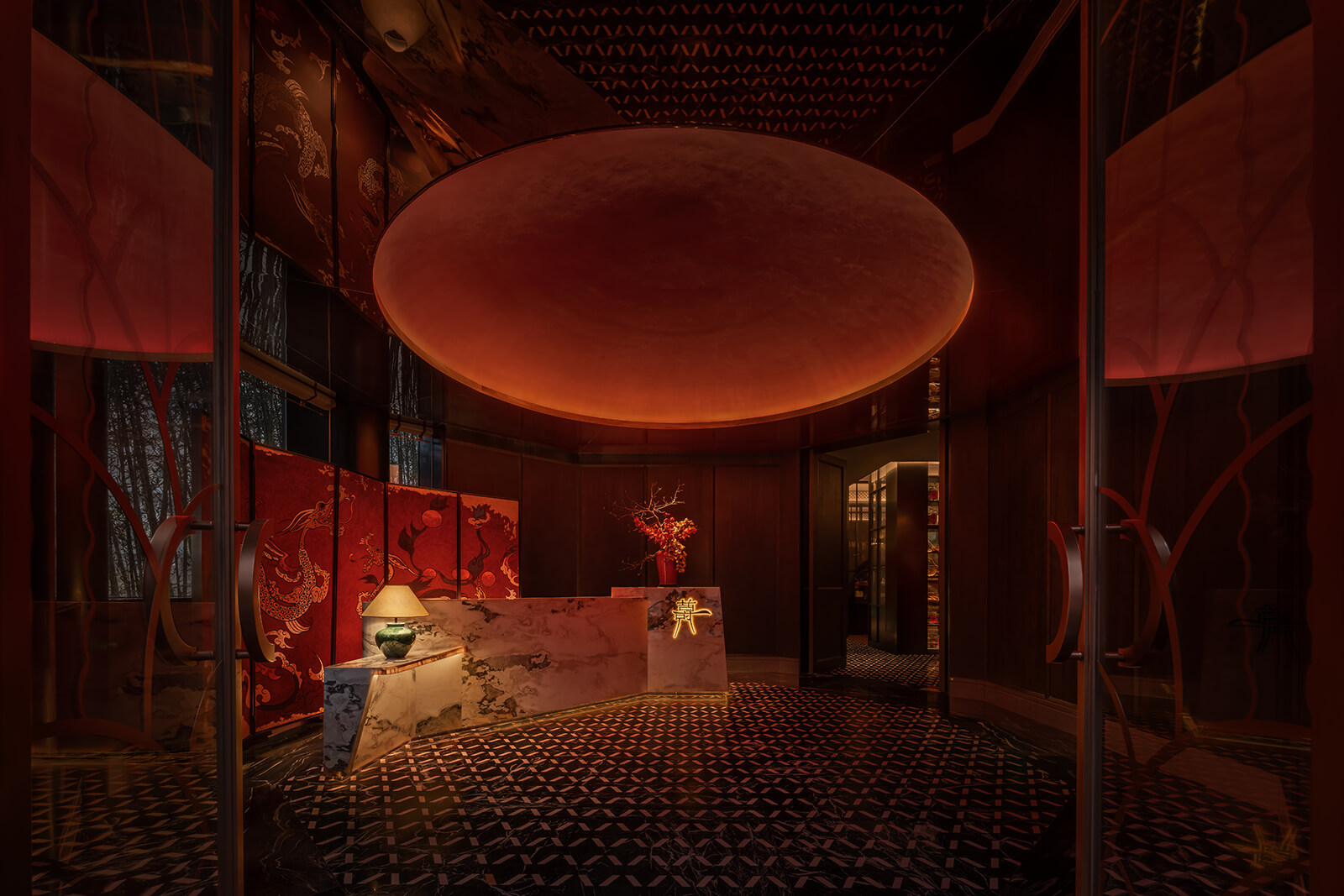
These materials are used structurally rather than decoratively. Texture, reflectivity and colour interaction are carefully controlled, allowing light to animate surfaces over time. Traditional Chinese design elements such as Han embroidery and Han opera colours are abstracted into spatial components. In private rooms, embroidery-inspired screens soften boundaries, while embossed floral patterns on red jade walls respond subtly to shifting light conditions.
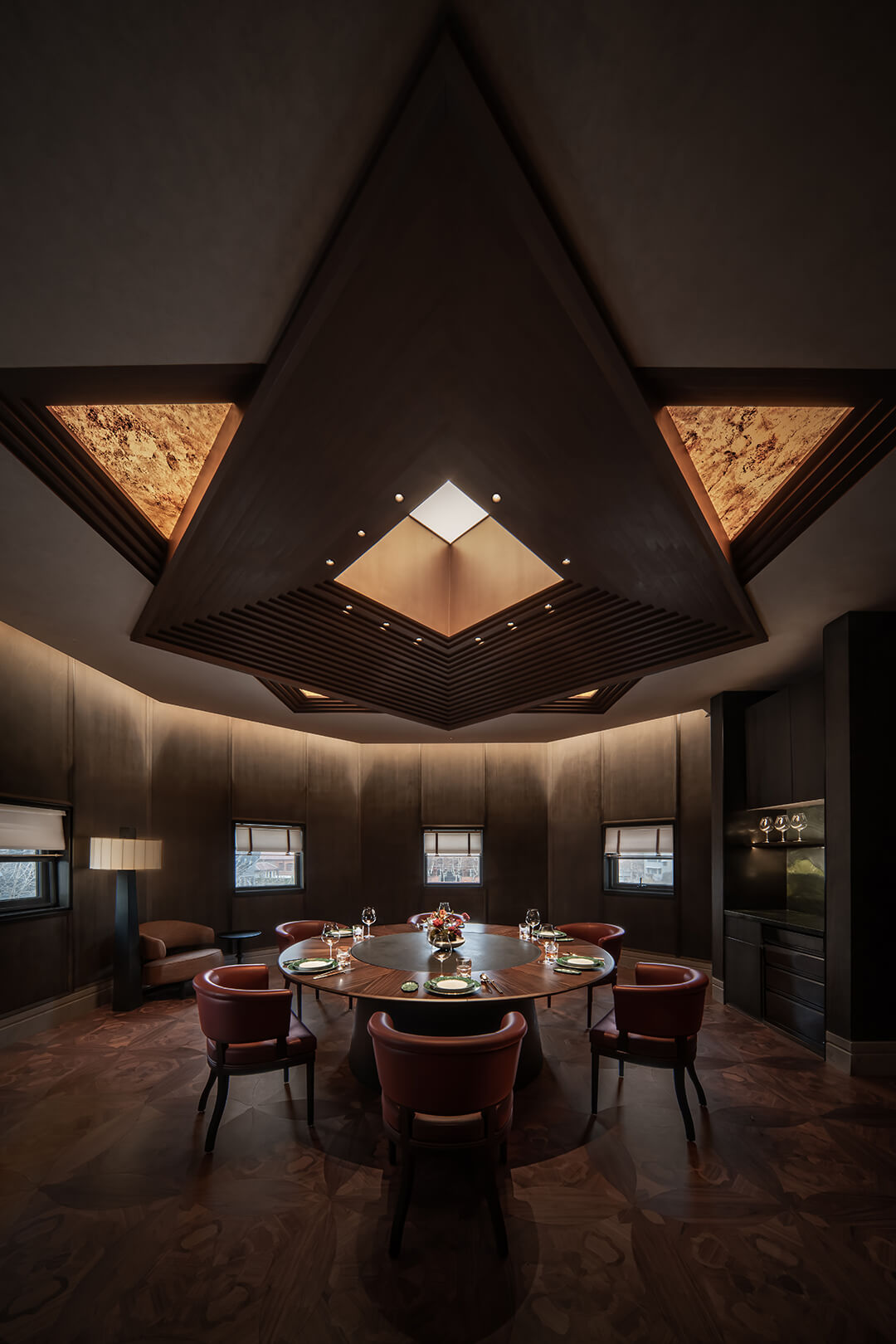
Lighting design by Langlige Lighting becomes increasingly important after dusk. A layered system of pendants, linear fixtures and concealed sources creates depth without theatricality. Light moves across red jade, ebony finishes and blue brick, maintaining continuity while supporting different moods across zones.
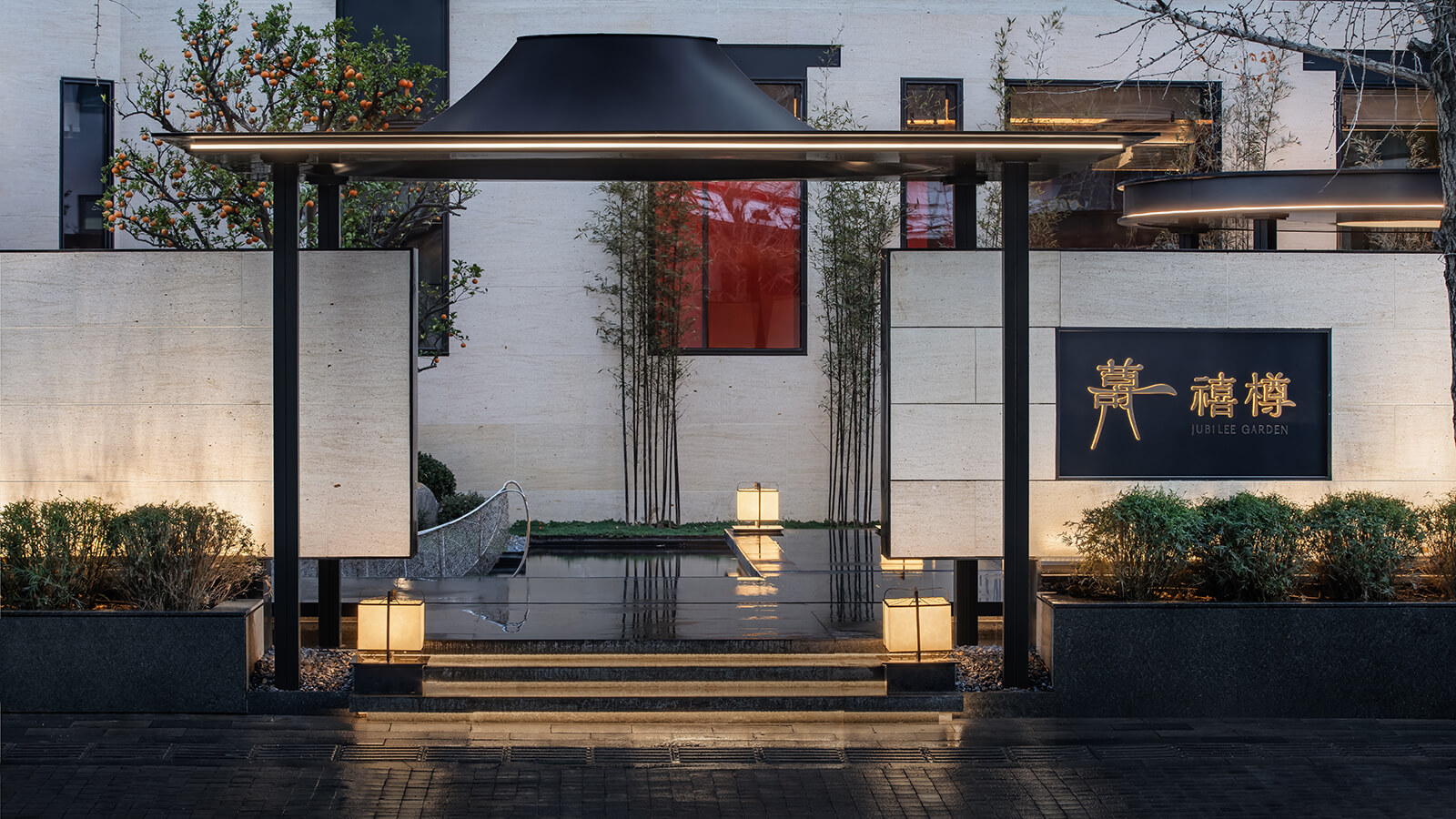
Window openings extend the borrowed scenery strategy, drawing the riverside night into the interior. Reflections from water, metal and glass introduce movement, while bamboo shadows and controlled illumination add texture and variation. The emphasis remains on atmosphere shaped through detail rather than visual excess.
Wuhan Banquet Jubilee Garden demonstrates the studio’s understanding of cultural regeneration as a process grounded in daily use. Historical references are not presented as fixed images but experienced through material, light, circulation and sound. The spatial progression from open to intimate mirrors local patterns of life, where intensity and restraint coexist.
Rather than positioning itself as a themed interior, the project operates as a contemporary dining environment shaped by its urban context. Through precise spatial control and material discipline, LDH Design transforms inherited architectural weight into an interior that supports memory, experience and present-day use with clarity and relevance.

by Pranjal Maheshwari Oct 24, 2026
A consortium of Copenhagen’s 3XN, Toronto’s B+H Architects and Shenzhen’s Zhubo Design has designed the museum to mimic the surrounding riverscape, topped with a public park.
by Pranjal Maheshwari Oct 19, 2026
The Mumbai-based architects integrate courtyards, mesh screens and north light trusses to create a dining space that doubles up as a community hub at SR University, Warangal.
by Mrinmayee Bhoot Oct 17, 2026
The Rotterdam-based institute centres the Indian Ocean as a network for exploring material histories and transnational links shaping coastal cultures, positing them as future models.
by Pranjal Maheshwari Oct 16, 2026
At the 2026 Stirling Prize ceremony, Mary Duggan with RUFF Architects, MAKER Architecten and Nakshabid Architects were felicitated for proffering quality housing and social equity.

make your fridays matter with a well-read weekend
Enter your details to sign in
Don’t have an account?
Sign upOr you can sign in with
a single account for all
STIR platforms
All your bookmarks will be available across all your devices.
Stay STIRred
Already have an account?
Sign inOr you can sign up with
Verification link sent to check your inbox or spam folder to complete sign up process
Tap on things that interests you.
Select the Conversation Category you would like to watch
Please enter your details and click submit.
Enter the 6-digit code sent at


Interior reworking of a concession-era structure at Wuhan Banquet Jubilee Garden
by Aarthi Mohan | Published on : Jan 26, 2026


 Sign in with Google
 Sign in with email
What do you think?