Art07 mins. read
In Minor Keys: Venice Biennale 2026 reveals its curatorial theme
by Mrinmayee BhootMay 27, 2025




by Srishti OjhaPublished on : Nov 21, 2025
Felted cupids, complete with wooden bows and arrows, float under the arched, cathedral-like ceilings of Vleeshal Center for Contemporary Art in Middelburg, in the Netherlands. Fabric art, both narrative and abstract, is suspended alongside bulbous felt shapes that mimic fruit trees. This is Tatar* Kiss, a group exhibition exploring the colonial history of Europe and Russia on the continent, particularly the experiences and histories of the Tatars. ‘Tatar’, in the 5th century CE, became an identifier that homogenised several nomadic, non-Christian, indigenously Asian and Turkic-speaking peoples, who settled primarily in west-central Russia. They were characterised as barbaric and colonised by the Russian Empire. The exhibition features works by seven artists, including works commissioned for Vleeshal’s International Nomadic Program, Repetition is a Form of Changing (2024 – 25).
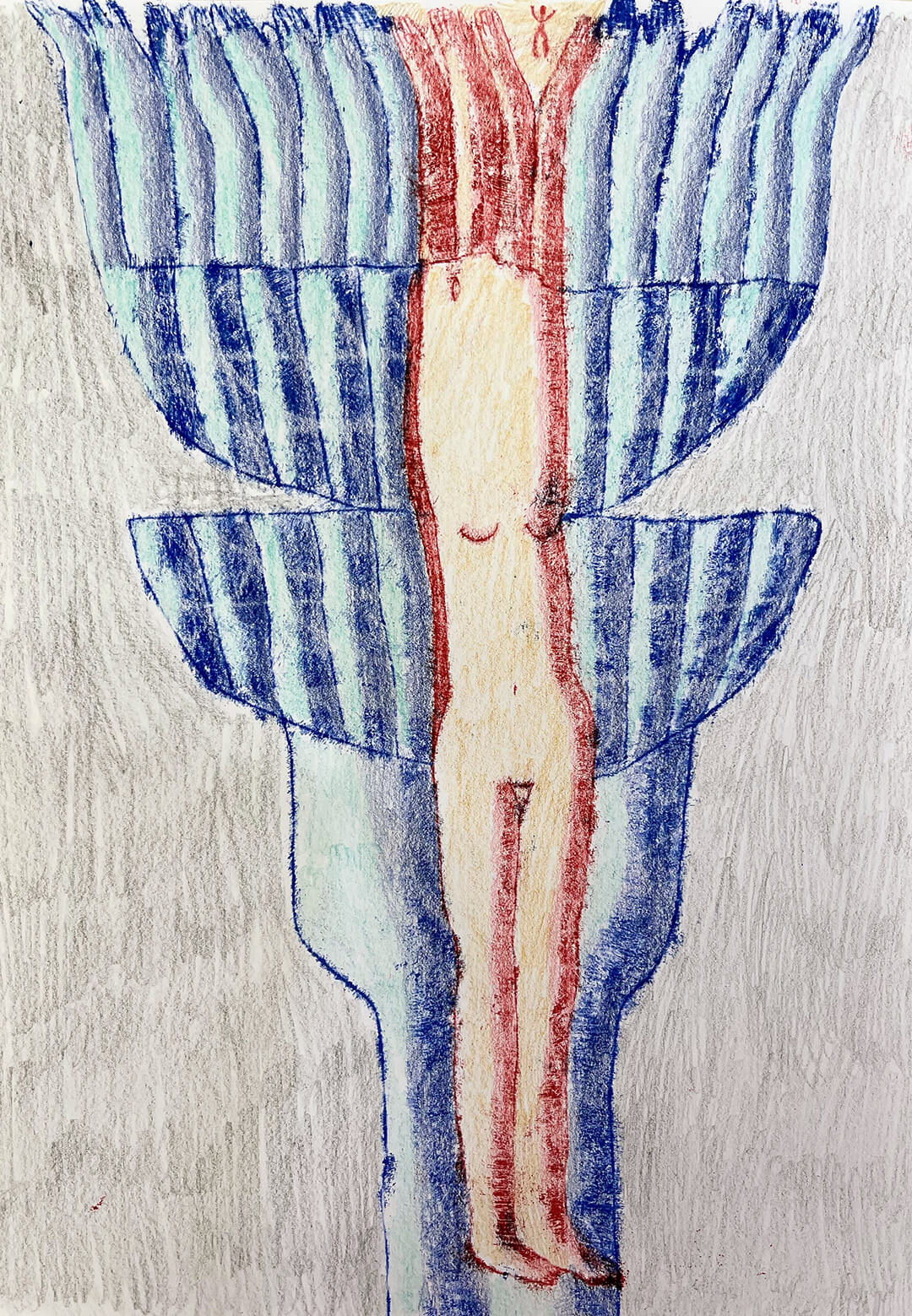
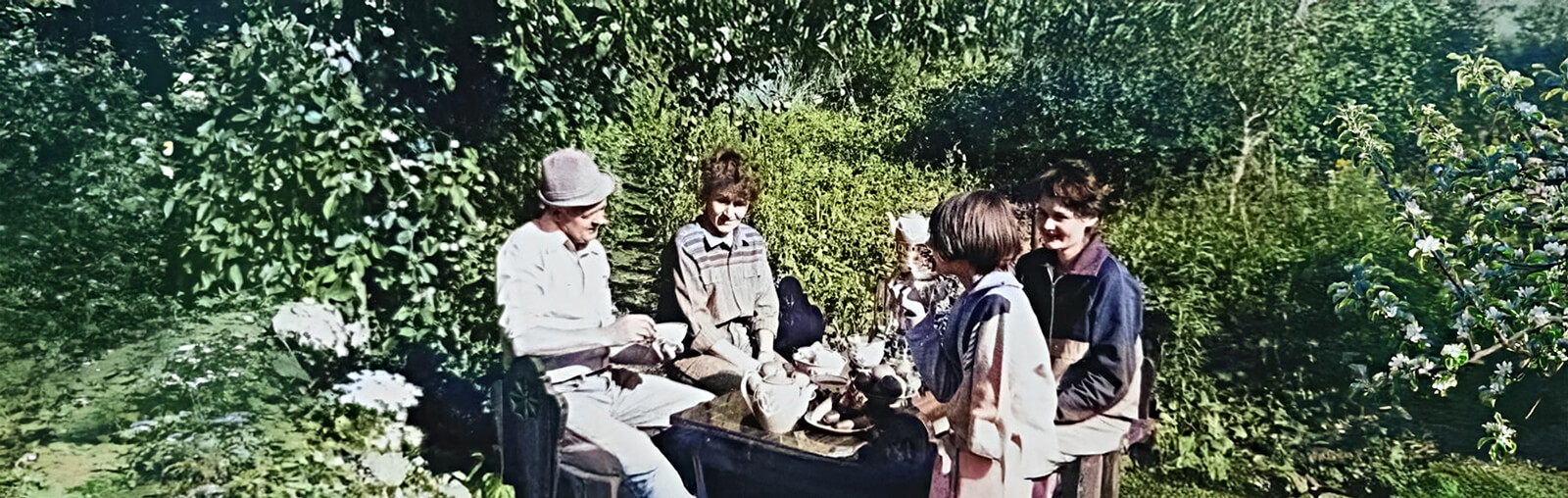
The multimedia works are organised by the self-described imaginary curatorial duo, the League of Tenders. Curator and educator Maria Sarycheva and fellow curator and researcher Elena Ishchenko, who started working together in 2018, said to STIR, “We perceive League of Tenders both as a curatorial duo and as an imaginary organisation that could take any form and has been transforming according to our changing interests…What’s left unchangeable for us is our reliance on the power of the imagination, critical thinking and desire to bring people, their practices and ideas into unexpected dialogues, building friendships and solidarities across contexts and beyond imperial borders and nation-states.”
Research and history are integral to the exhibition, which features a library filled with texts chosen by the curators and artists for viewers to peruse. This history manifests in Hague-based performance artist Lakisha Apostel’s work, Echoes of the Abyss, in which water from the canal in Middleburg flows through organic ceramic forms. The water, to Apostel, is haunted by memories of enslaved people who were transported and even killed in the Atlantic Ocean and Middleburg itself. Her installation will be accompanied by a performance that explores the relationship between bodies, spaces and memory through embodied rituals. The curators elaborate, “We realised that we’d like to tell the stories of how our backgrounds are interconnected to this particular place, how Russian imperialism is intertwined with the Dutch. These connections found their reflection in contributions by some artists, for example, in the project by Ziliä Qansurá and Stas Shärifullá, artists of Bashqort origin, whose project sprang from a strange encounter with the Bashqort horseman monument in Veessen, a village in the Netherlands.”
Qansurá, a multidisciplinary artist born in Bashqortostan (Russia), presents Les Amours Du Nord (2025),the felted cupids, drawing on the nickname given by the French to the Bashqort (a people indigenous to the Ural Mountains) soldiers fighting in the Russian Imperial Army, even as they suffered under Russian colonisation. These soldiers were othered and often faced restrictions, including being allowed to fight only with a bow and arrow for weapons, as the artwork highlights. Qansurá critiques the exoticised image of these warriors and its modern significance; similar imagery is used to mobilise non-Russian troops in the war in Ukraine, who top death tolls. The work is accompanied by two sound installations by musician and artist Shärifullá: a folk song about a Bashqort commander in the Napoleonic wars who was reportedly poisoned by Russian troops and an audio essay centred on field recordings taken in Veessen.
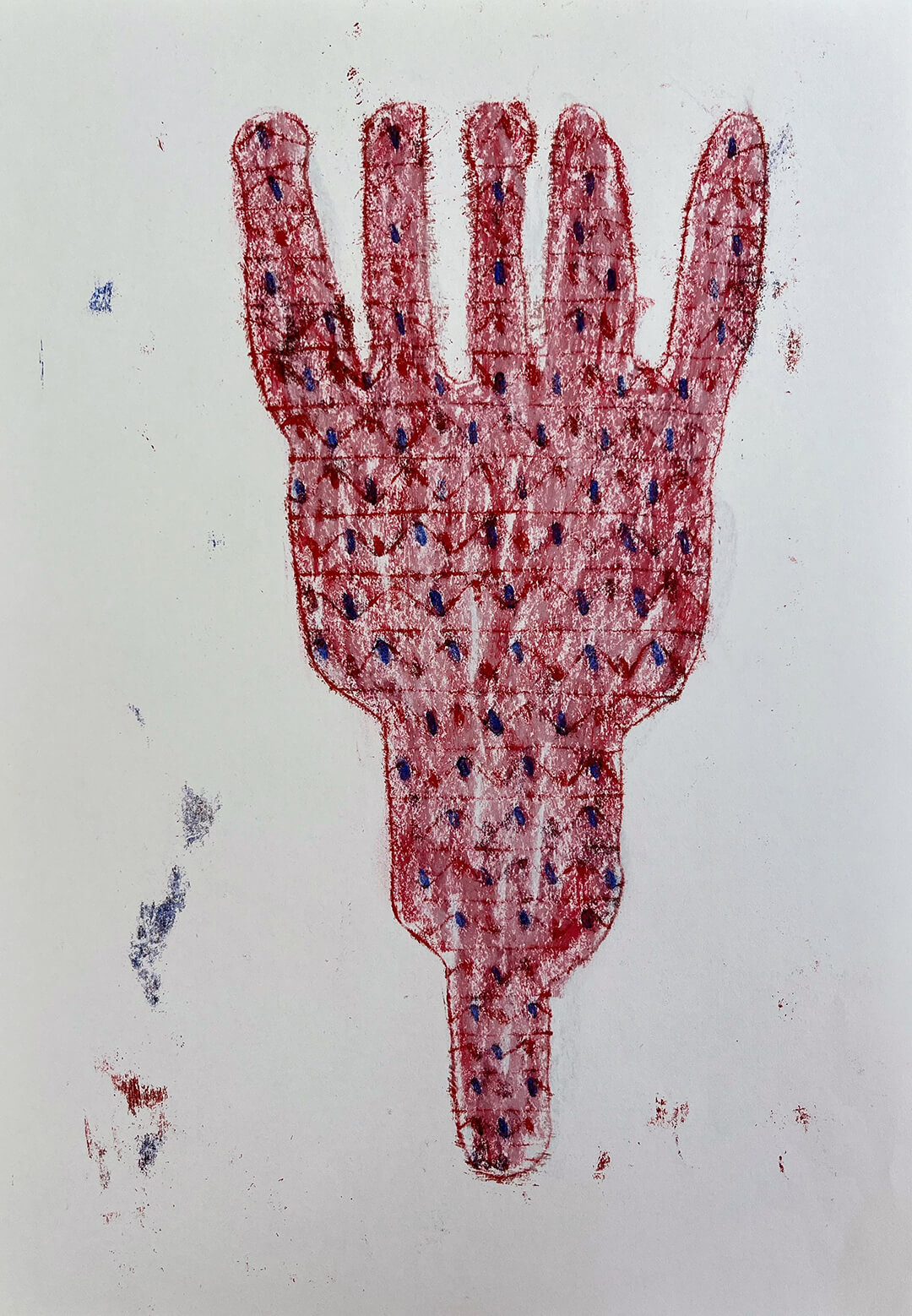
Artist and designer Milana Khalilova pushes back against similar militaristic imagery, which primarily characterises the Circassians (a people indigenous to the mountain regions of the Western North Caucasus) as warriors. Khalilova, who was born in Zalukokoazhe, a village in the North Caucasus, reframes her people’s history by centring craft and cultivation in Xade (2025), an installation featuring felt objects and drawings. The cocoon-like shapes recall the forest gardens that formed the Circassians’ unique agricultural traditions, eventually driven out of existence by colonial extraction. Her use of ornamentation, such as traditional gold embroidery, pays tribute to the women who shaped the Circassian culture and cosmology. This healing approach is part of the artist’s and the exhibition’s strategy to imagine alternate futures. “We didn’t want to use a damage-centred approach, as Eve Tuck calls it...As we state in our curatorial text, we are kissing empires back, kissing with tongues that they made us forget,” said the curators.
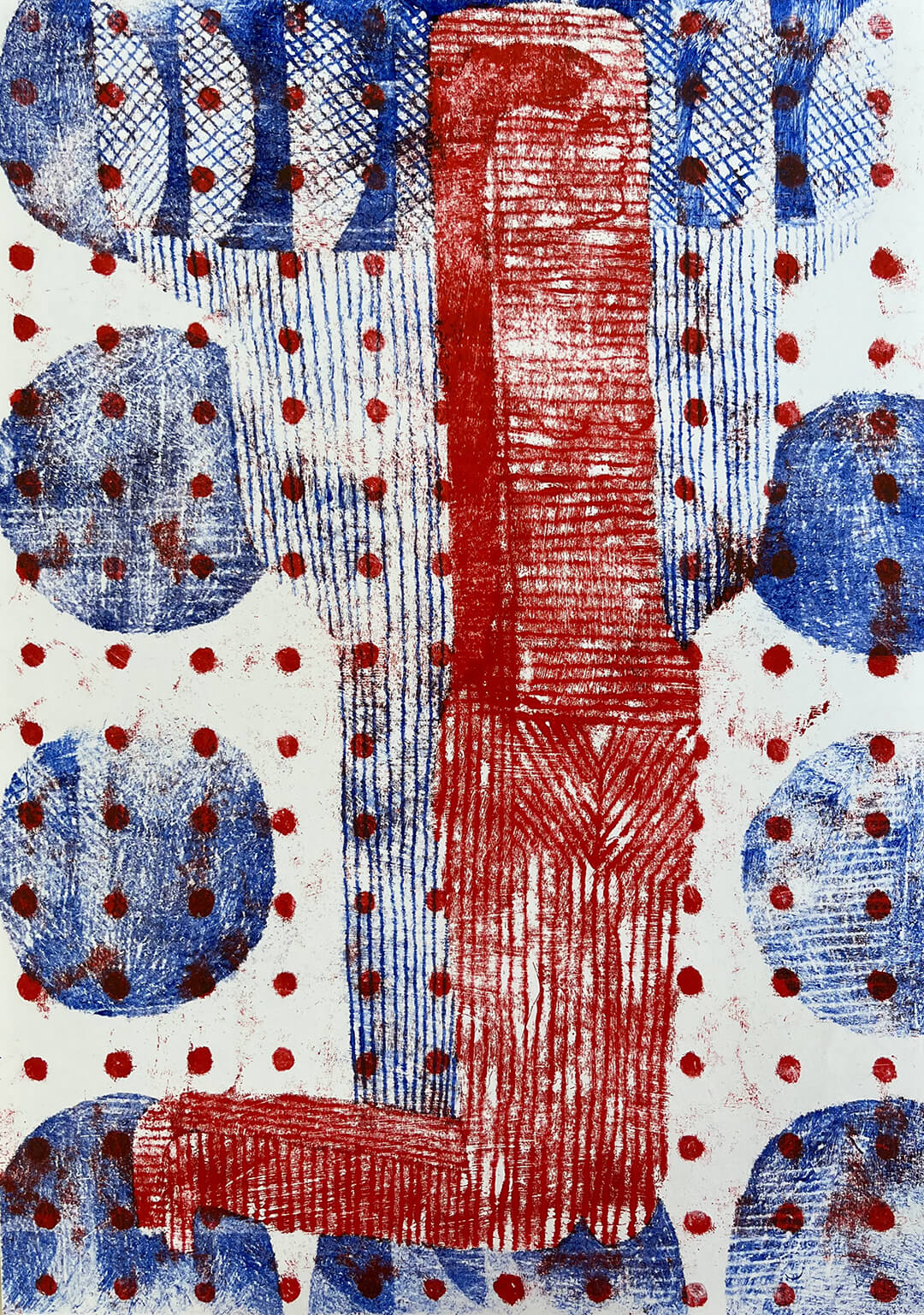
Yaniya Mikhalina works with these forgotten tongues and the violent apparatus employed against indigenous languages by the Soviet Union in her mixed media installation, An Appeal to All Western Countries (2024 – 25). The Volga Tatar artist creates a vinyl soundscape based on an open letter sent in 1977 by Tatar-Bashqort workers, teachers and engineers to Radio Freedom. The letter’s aim to draw attention to the colonisation never reached international eyes and was relegated to archives in Budapest. Mikhalina invites modern Tatar and Bashqort activists to read the original text in Tatar, Bashqort and English, backed by indigenous instruments, new recordings and archival sounds to create a transtemporal piece of activist art. The vinyl record is flanked by mannequins in traditional dress from different epochs, sitting on a ‘syake’—a traditional Tatar platform for eating, praying and sleeping.
Victoria Sarangova, born in Kalmykia in European Russia, discovered a ‘human zoo’ collection in the Ethnological Museum in Berlin featuring photos and artefacts from the Kalmyks, a nomadic people colonised by Russia in the 18th century. She presents a ‘kalmuck’, a heavy cotton fabric that would have been used as a saddle cover, embroidered with glimpses of everyday life, reconstructed from the photos in the archive. This is accompanied by a sound installation, accessible via headphones, that features the names of people in human zoos, spoken in Kalmyk.
With an emphasis on community, nurturing, care and connection, Tatar* Kiss speaks out for living traditions that are endangered today. Colonial attitudes and relations are embedded in the thoughts, actions, gestures of care, love and healing in communities around the world. Tatar* Kiss is an attempt to disentangle these ways of living from imperial violence to remember and reimagine a radically different future.
‘Tatar* Kiss’ is on view from September 28 – December 14, 2025 at the Vleeshal Center for Contemporary Art, Netherlands.
by Srishti Ojha Oct 21, 2026
Increasingly, artists, filmmakers and activists are turning to VR to create more personal, tangible accounts of the climate emergency and its impact on vulnerable communities.
by Mirra Lynn Oct 20, 2026
The Indian artist paints the old wadas of central Pune, capturing the traces of everyday life that cling to these structures, battered by time but unbowed.
by Anmol Ahuja Oct 15, 2026
How do heaps of souvenirs and relics with racist Aboriginal motifs and features become art? MCA Sydney’s winter showcase—the artist’s largest to date—beckons a possibility.
by Vandana Kalra Oct 14, 2026
With his latest exhibition as a point of departure, the modernist discusses his decades-long practice, the spontaneity of drawing and the social responsibility of artists.

make your fridays matter with a well-read weekend
Enter your details to sign in
Don’t have an account?
Sign upOr you can sign in with
a single account for all
STIR platforms
All your bookmarks will be available across all your devices.
Stay STIRred
Already have an account?
Sign inOr you can sign up with
Verification link sent to check your inbox or spam folder to complete sign up process
Tap on things that interests you.
Select the Conversation Category you would like to watch
Please enter your details and click submit.
Enter the 6-digit code sent at


Kissing back empires with forgotten tongues: Tatar* Kiss
by Srishti Ojha | Published on : Nov 21, 2025


 Sign in with Google
 Sign in with email
What do you think?