Architecture07 mins. read
Transcribing the maximum city with Jaquar Pavilion Park at ADFF:STIR Mumbai 2026
by Jincy IypeDec 24, 2025



by Bansari PaghdarPublished on : Dec 27, 2025
The return of ADFF:STIR Mumbai for its second edition, set to take place from January 9 – 11, 2026, at the National Centre for the Performing Arts (NCPA) in Mumbai, India, brings the Architecture & Design Film Festival (ADFF) back into the diverse, vibrant context of Southeast Asia. The design festival’s four pillars—the Films, the Jaquar Pavilion Park curated by Aric Chen, the ~log(ue) Programme supported by JSW and a slate of Special Projects—collectively foreground cinematic discourse, spatial narratives and cultural exchange.
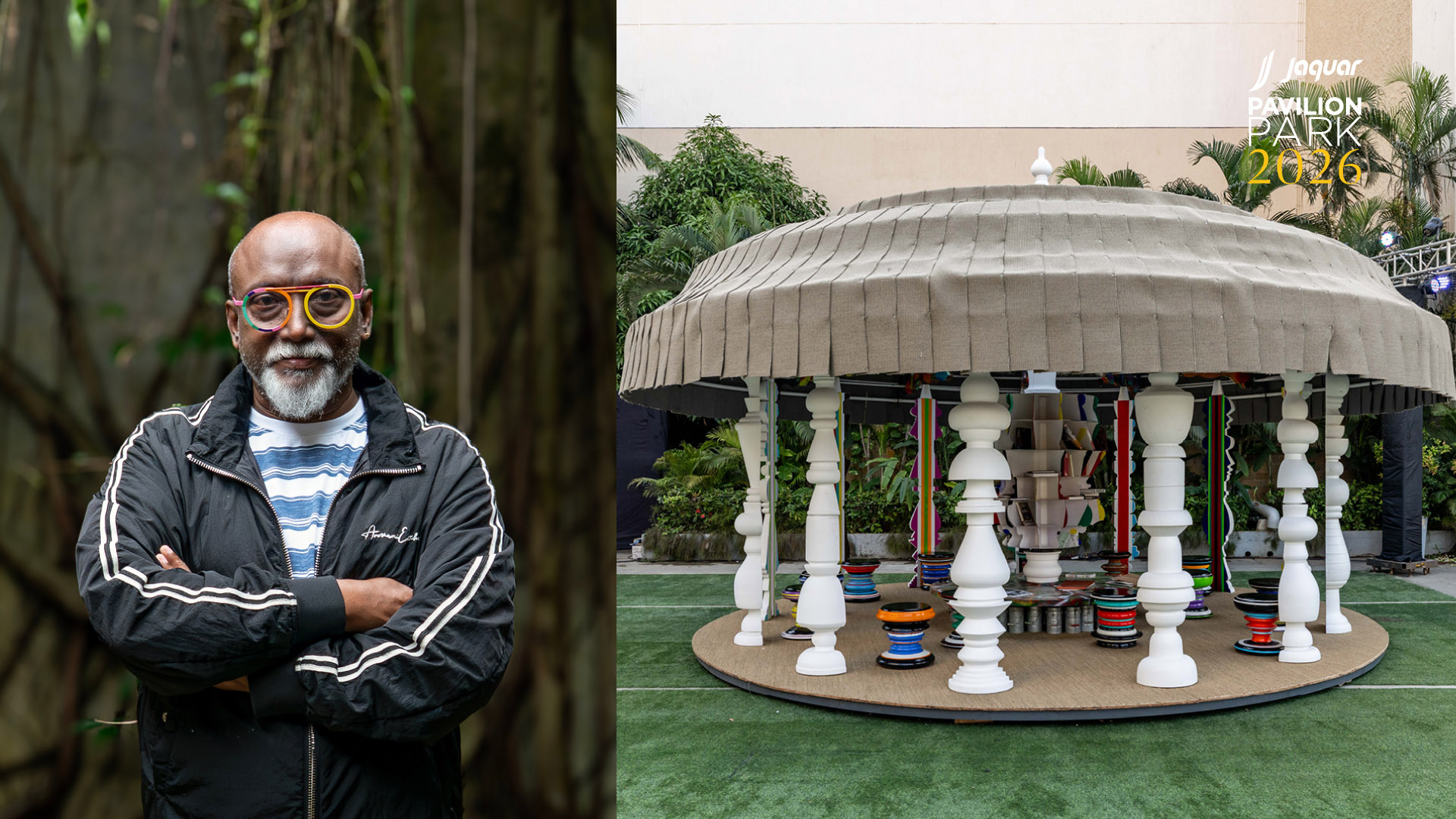
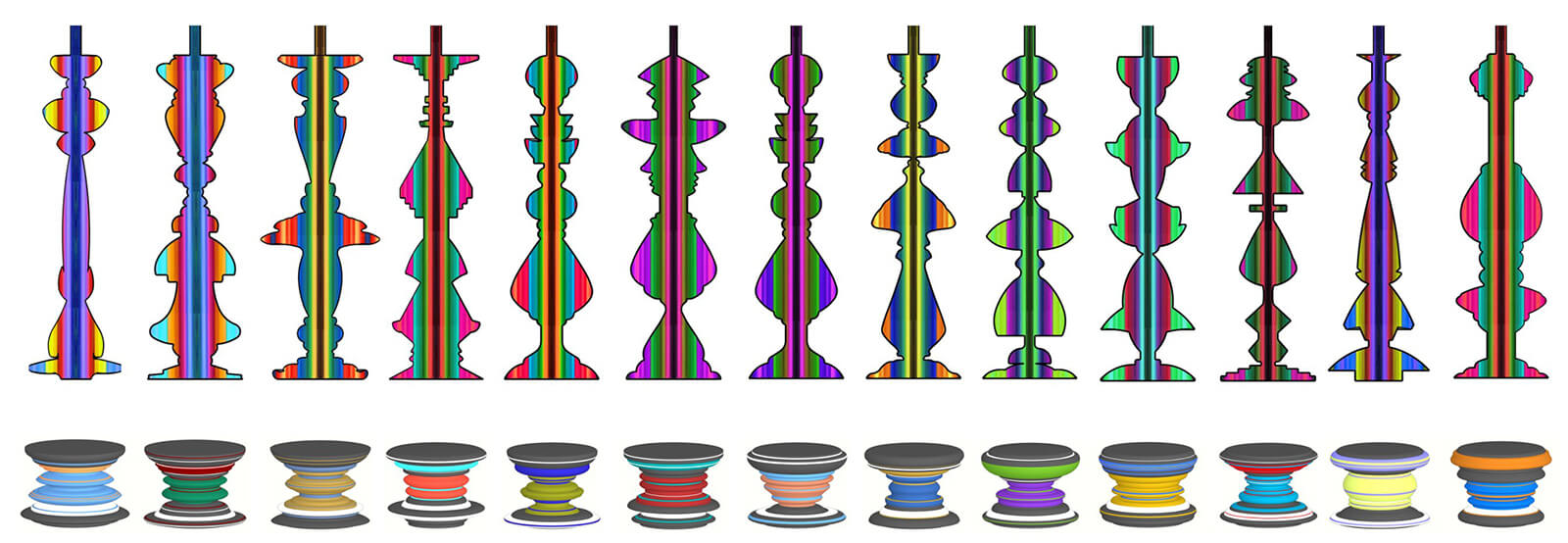
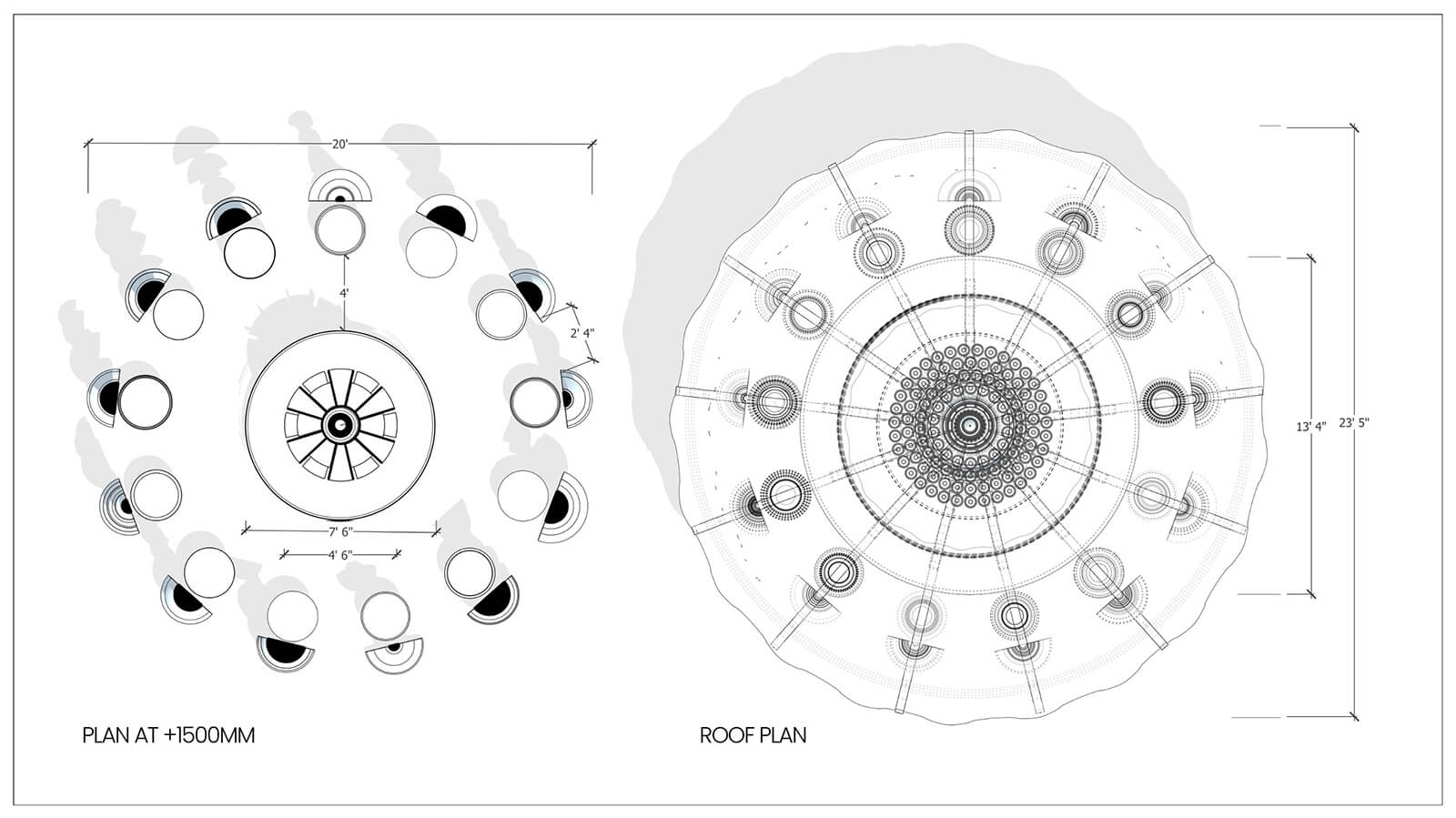
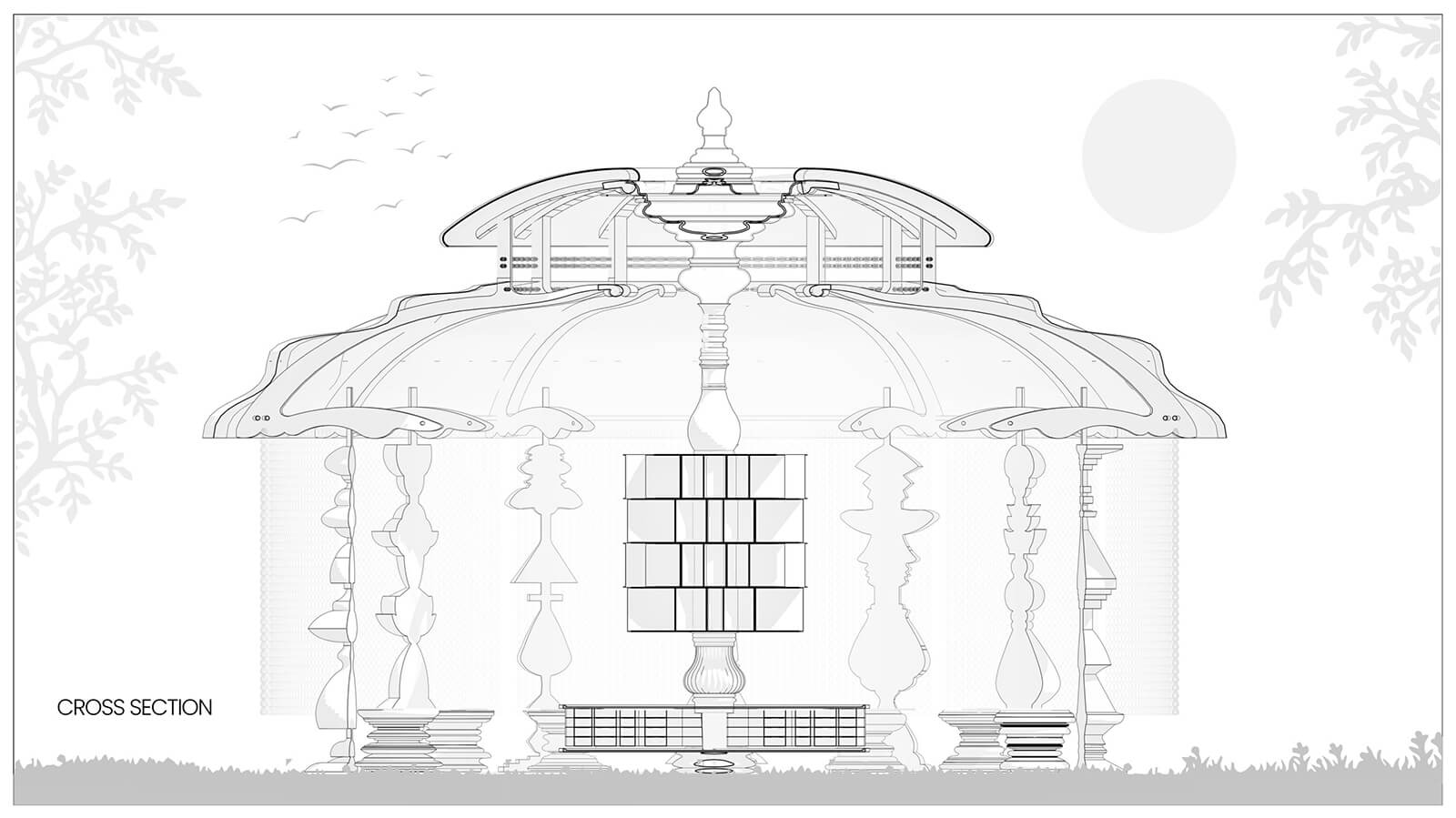
From the ten winning designs for the pavilions, selected by an illustrious jury comprising Chen along with Prof. Lesley Lokko, Hans Ulrich Obrist, Martha Thorne, Raj Rewal and Ma Yansong, The Pavilion of Conversations by Bose Krishnamachari, co-founder of the famed Kochi-Muziris Biennale, taking place this year, is dedicated to this idea of dialogue, sharing and the act of gathering itself. Featuring 13 uniquely designed columns arranged in a circular layout, the pavilion is conceived as an inclusive architectural intervention that embodies ‘community, difference and multiplicity’.
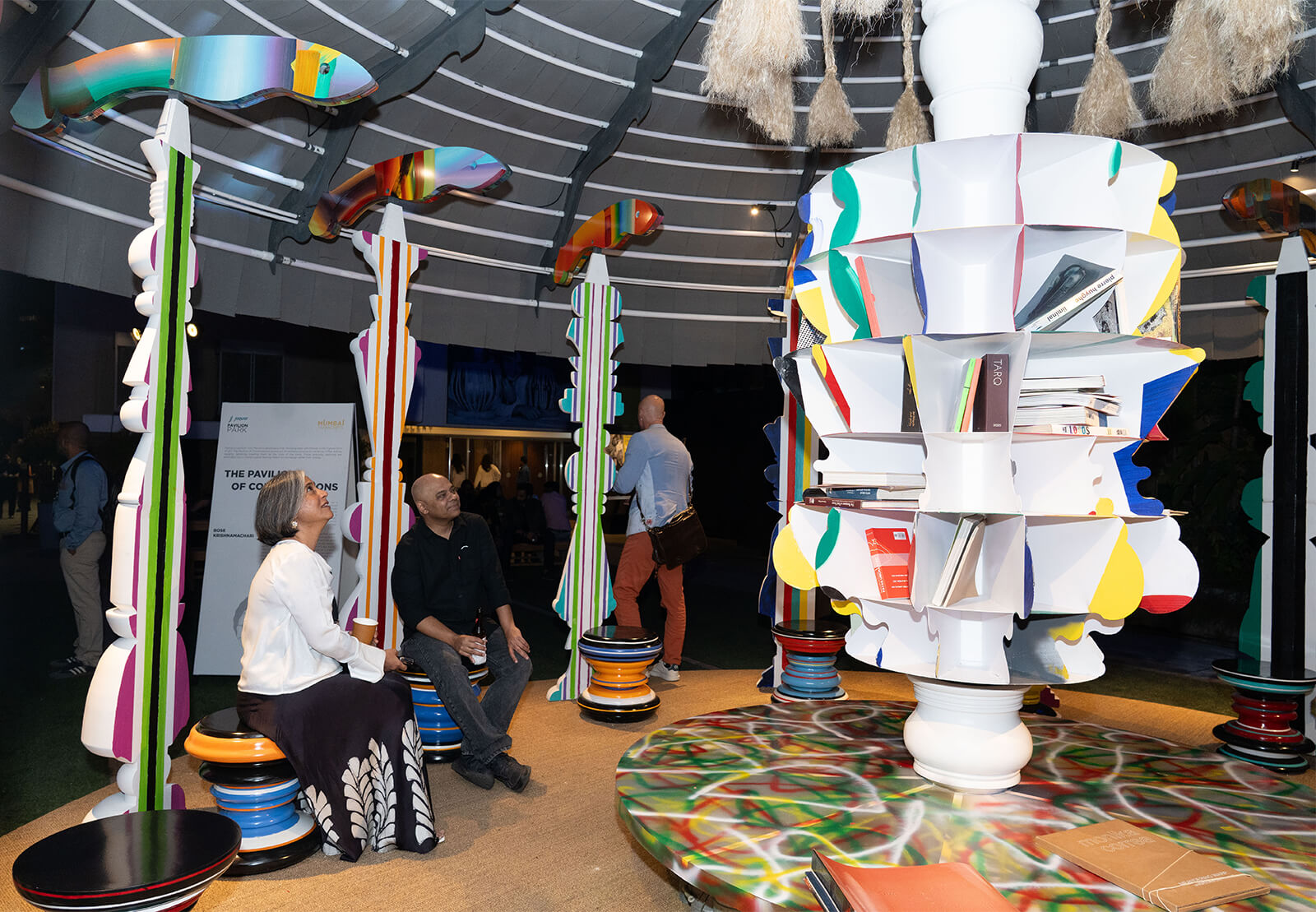
The design draws from the words of American artist and educator Tom Marioni—who stated in 1970, “The act of drinking beer with friends is the highest form of art”—whereby the act is expanded into the context of contemporary architecture and sharing ideas and stories surrounded by books, food and coffee becomes art. Krishnamachari, in that light, aptly states his intervention to be an ‘architectural artwork’.
The pavilion design is also inspired from Leonardo da Vinci’s The Last Supper, where the number 13 symbolises presence, absence, trust and betrayal, all qualities intrinsic to human exchange, according to Krishnamachari. Featuring 13 bespoke chair designs, the pavilion seeks to embody individuality within community and diversity within unity.
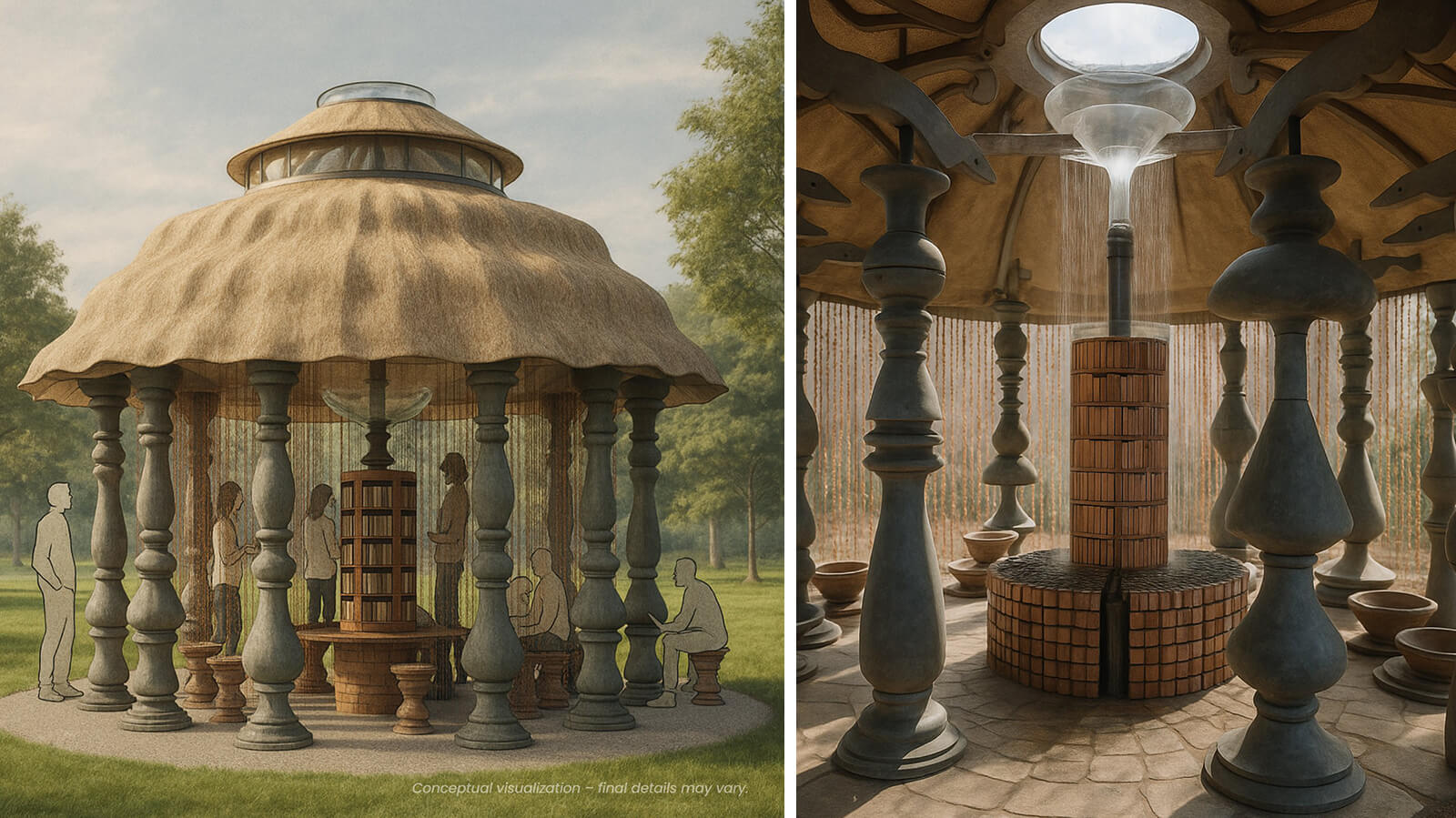
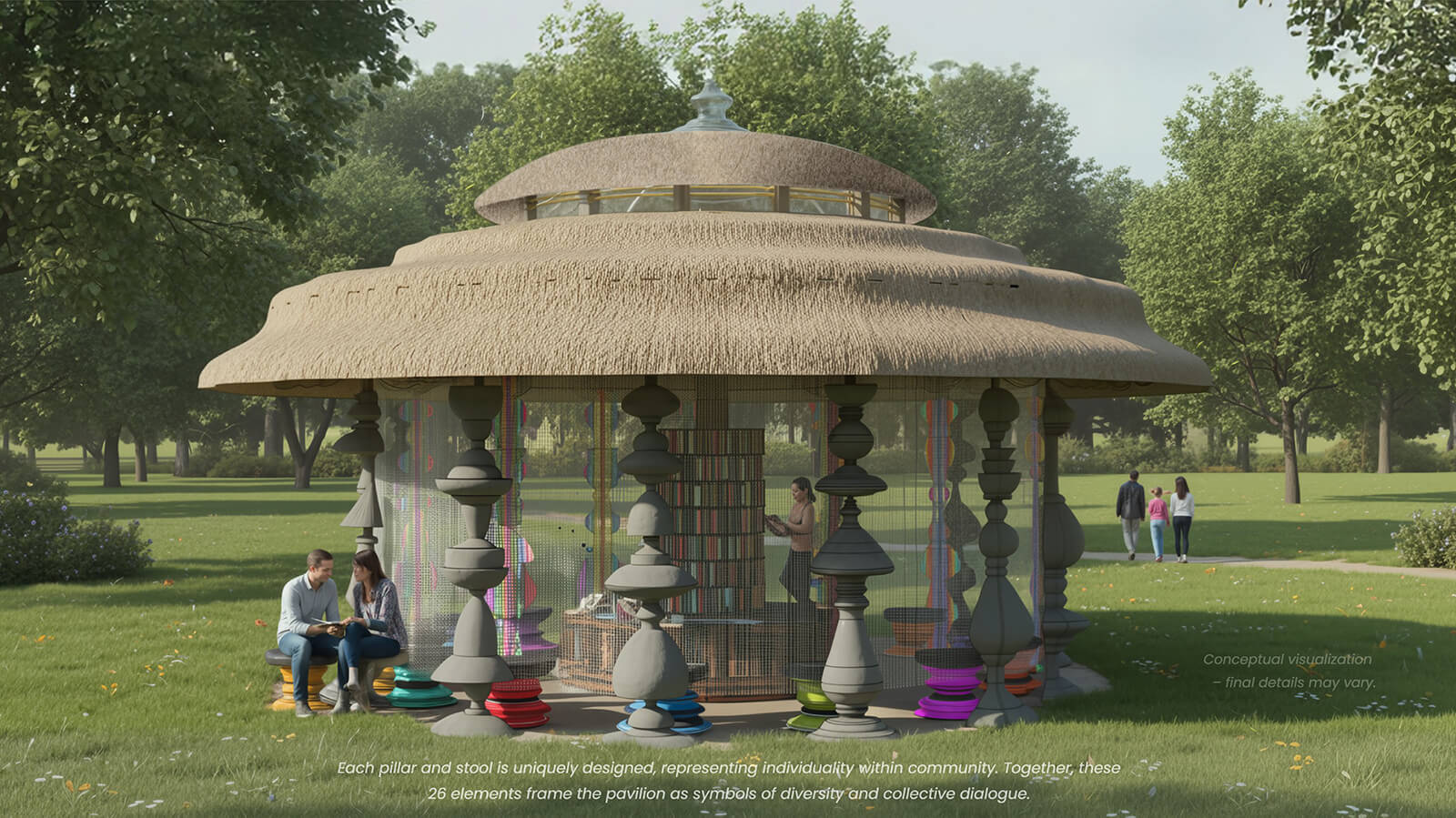
Approximately 440 sq m in area, the pavilion is conceived as an open, modular structure that can be accessed from all directions. The structure is designed as a temporary installation, which can be easily dismantled for future use in gardens, courts or cultural venues. The pillars and chairs, each designed differently, feature unique forms, details and surface treatments inspired by lacquered toy-making traditions in India, combined with cast iron and modular composites.
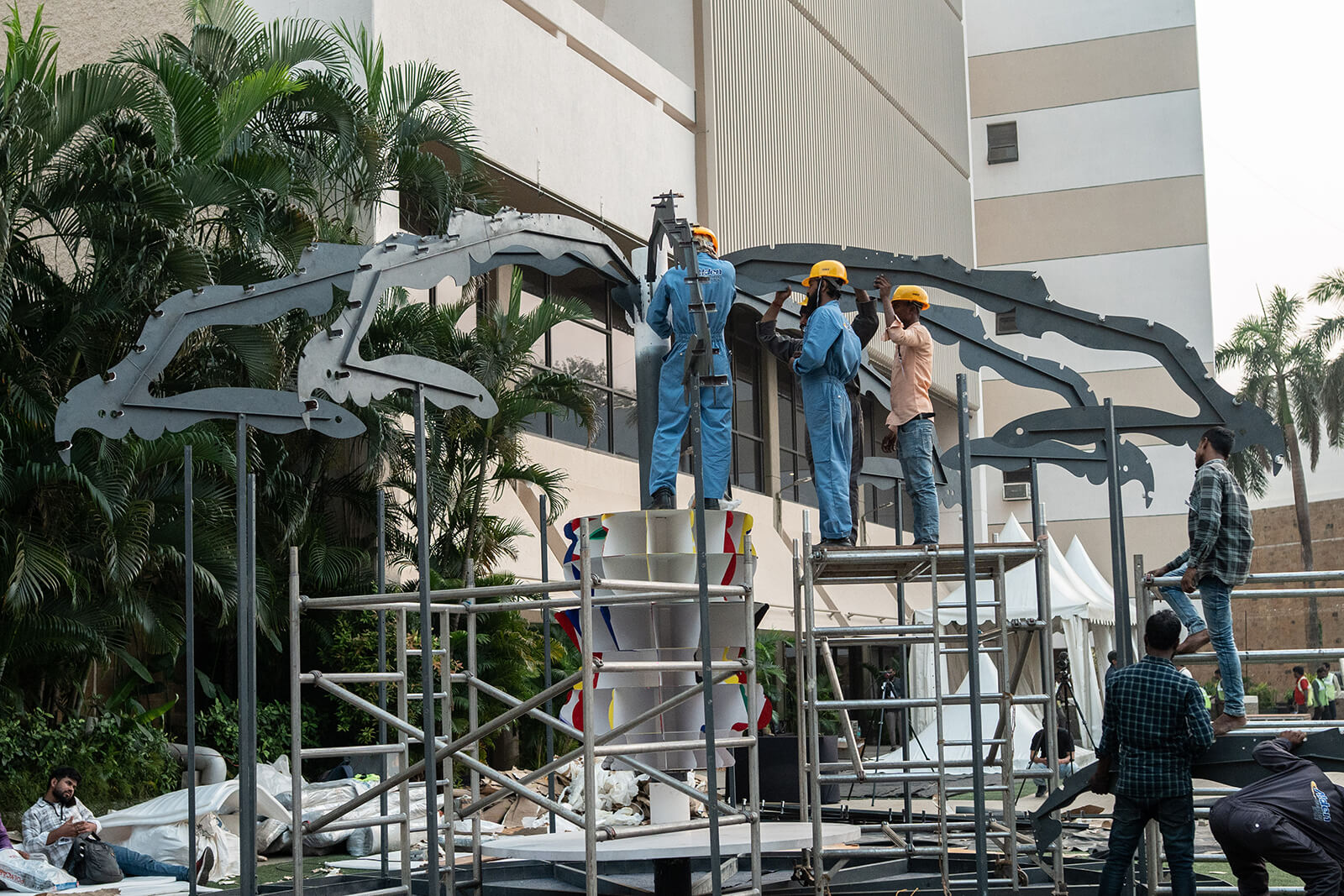
A cylindrical coffee table in the centre is constructed from 108 tiffin boxes—symbols of sharing, labour and connectivity. The number 108 is incorporated in the table design as a symbol of ‘completeness’, in a convergence of cosmology, rituals, mathematics and community. The animated central space also features a vertical rotating bookshelf illuminated by a central skylight dome. The roof canopy, ribbed, lightweight and semi-porous, is crafted from repurposed textiles, offering permeability and protection. Ensuring ecological sensitivity, the roof and flooring are crafted in collaboration with Neytt, along with artisans from Cherthala, Kerala, making the pavilion architecture sit well within the sustainability and circularity principles outlined with the endeavour.
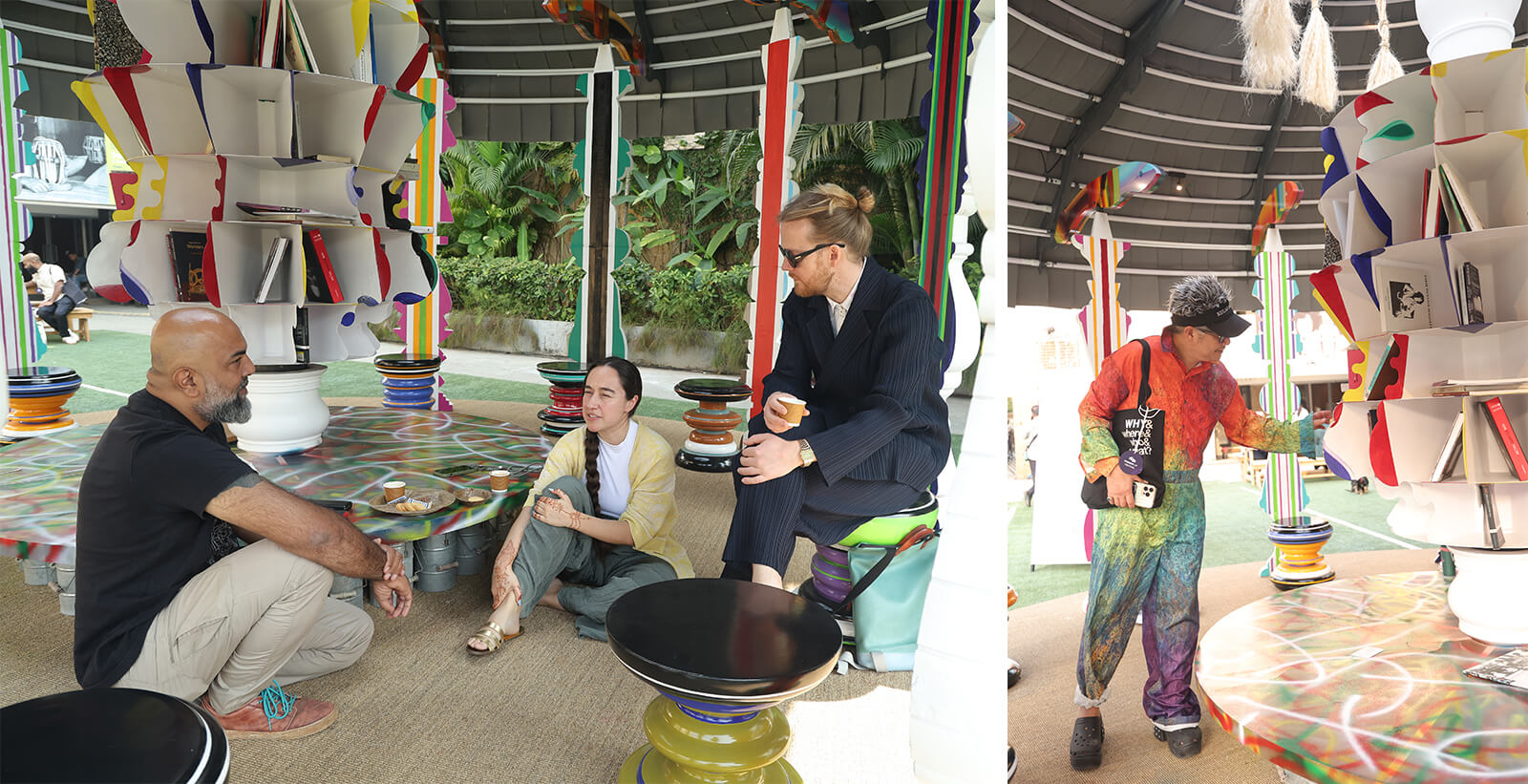
“I believe that extremities always coexist; Chaos and order are inseparable forces. Mumbai, the ‘Maximum City’, embodies this truth: from its chaos emerges order, from its plurality comes a beautiful result. Conversations, too, are maximalist, in their energy and diversity, yet the outcomes are distilled into something minimal. This paradox is the essence of Mumbai’s energy: a city of care, love and action, continuously resurrecting itself from chaos, where maximalism transforms into meaningful and lasting results,” states Krishnamachari in his winning proposal for the Jaquar Pavilion Park.
"Historically, the most meaningful conversations have happened not in formal rooms but over coffee, over a drink, in places where ideas circulate freely and moods are light. The Pavilion of Conversations creates that atmosphere; a shaded, generous, maximalist space that invites people to linger. It is not about spectacle alone, but about creating conditions where thinking can unfold organically. Under a pavilion, within a sense of comfort and informality, deeper and more intelligent conversations often emerge", Krishnamachari elucidates, adding to how he foresees the Pavilion unpacked within the Jaquar Pavilion Park. "It functions as a social and cultural anchor; a meeting point where books, design, everyday life, and intellectual curiosity intersect. The coffee table becomes both a literal and symbolic device: a reminder of shared rituals, of Mumbai’s iconic dabbawala culture, and of the coexistence of high ideas with everyday life", he continues.
With ADFF: STIR Mumbai 2026 upon us, The Pavilion of Conversations offers a timely spatial metaphor for the festival’s larger ethos. Transforming dialogue into architecture into a shared experience, the pavilion draws from everyday rituals and craft traditions to conceive an immersive experience that reframes gathering itself as a form of design intelligence. In a city defined by density and contradiction, Krishnamachari’s structure embraces the chaos through staged gatherings, but also unplanned, ephemeral encounters.
The 2026 edition of the Pavilion Park at ADFF:STIR Mumbai 2026 is presented by Jaquar.
You can now book your passes for the festival here. Full schedule for the festival is available here.

by Pranjal Maheshwari Oct 24, 2026
A consortium of Copenhagen’s 3XN, Toronto’s B+H Architects and Shenzhen’s Zhubo Design has designed the museum to mimic the surrounding riverscape, topped with a public park.
by Pranjal Maheshwari Oct 19, 2026
The Mumbai-based architects integrate courtyards, mesh screens and north light trusses to create a dining space that doubles up as a community hub at SR University, Warangal.
by Mrinmayee Bhoot Oct 17, 2026
The Rotterdam-based institute centres the Indian Ocean as a network for exploring material histories and transnational links shaping coastal cultures, positing them as future models.
by Pranjal Maheshwari Oct 16, 2026
At the 2026 Stirling Prize ceremony, Mary Duggan with RUFF Architects, MAKER Architecten and Nakshabid Architects were felicitated for proffering quality housing and social equity.

make your fridays matter with a well-read weekend
Enter your details to sign in
Don’t have an account?
Sign upOr you can sign in with
a single account for all
STIR platforms
All your bookmarks will be available across all your devices.
Stay STIRred
Already have an account?
Sign inOr you can sign up with
Verification link sent to check your inbox or spam folder to complete sign up process
Tap on things that interests you.
Select the Conversation Category you would like to watch
Please enter your details and click submit.
Enter the 6-digit code sent at


The Pavilion of Conversations at ADFF:STIR Mumbai 2026 makes gathering convivial
by Bansari Paghdar | Published on : Dec 27, 2025


 Sign in with Google
 Sign in with email
What do you think?