Art07 mins. read
EAEFF 2026: Experimental cinema moves beyond the screen in Kolkata
by Vandana KalraSep 18, 2026



by Srishti OjhaPublished on : Oct 07, 2026
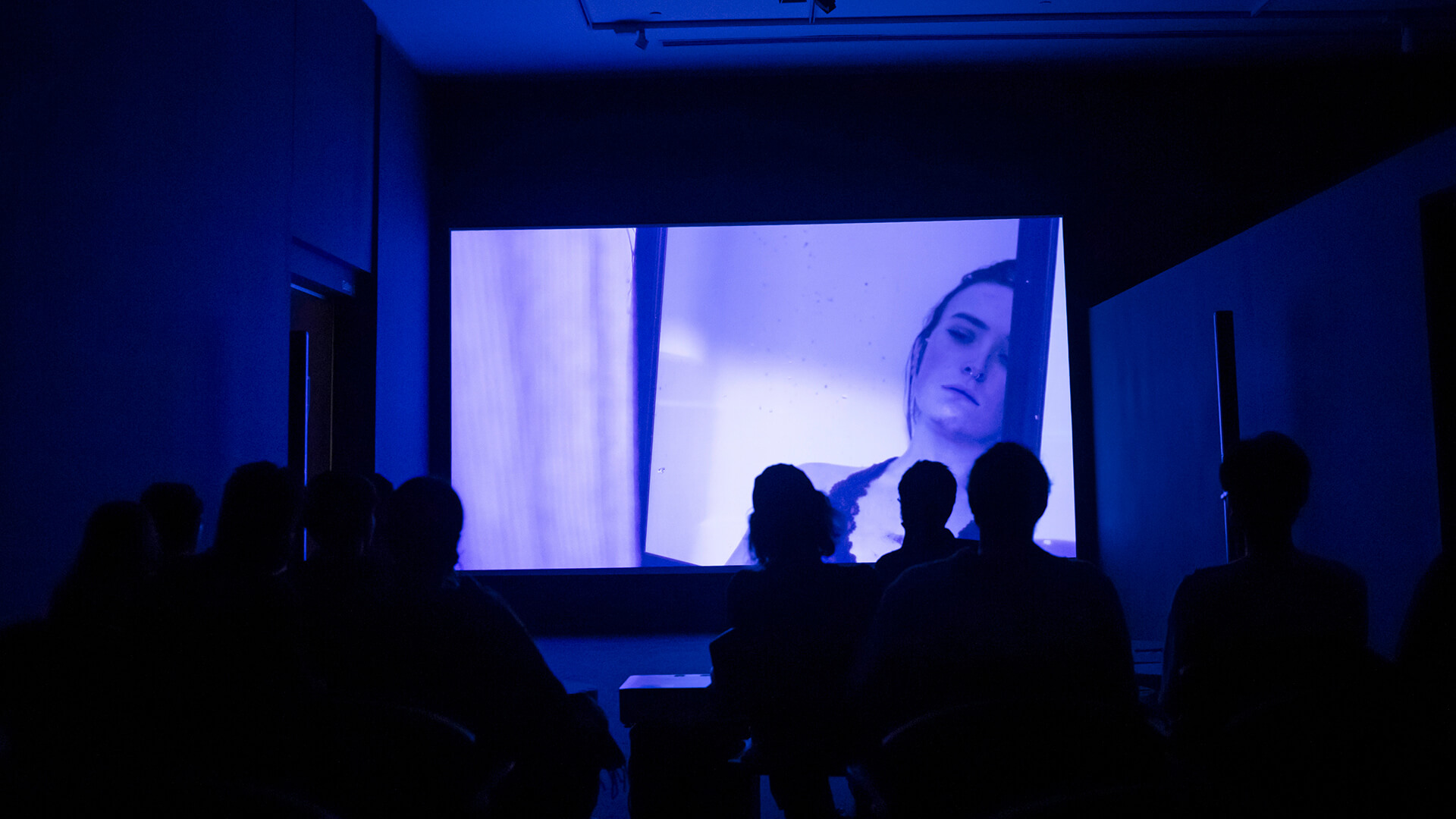
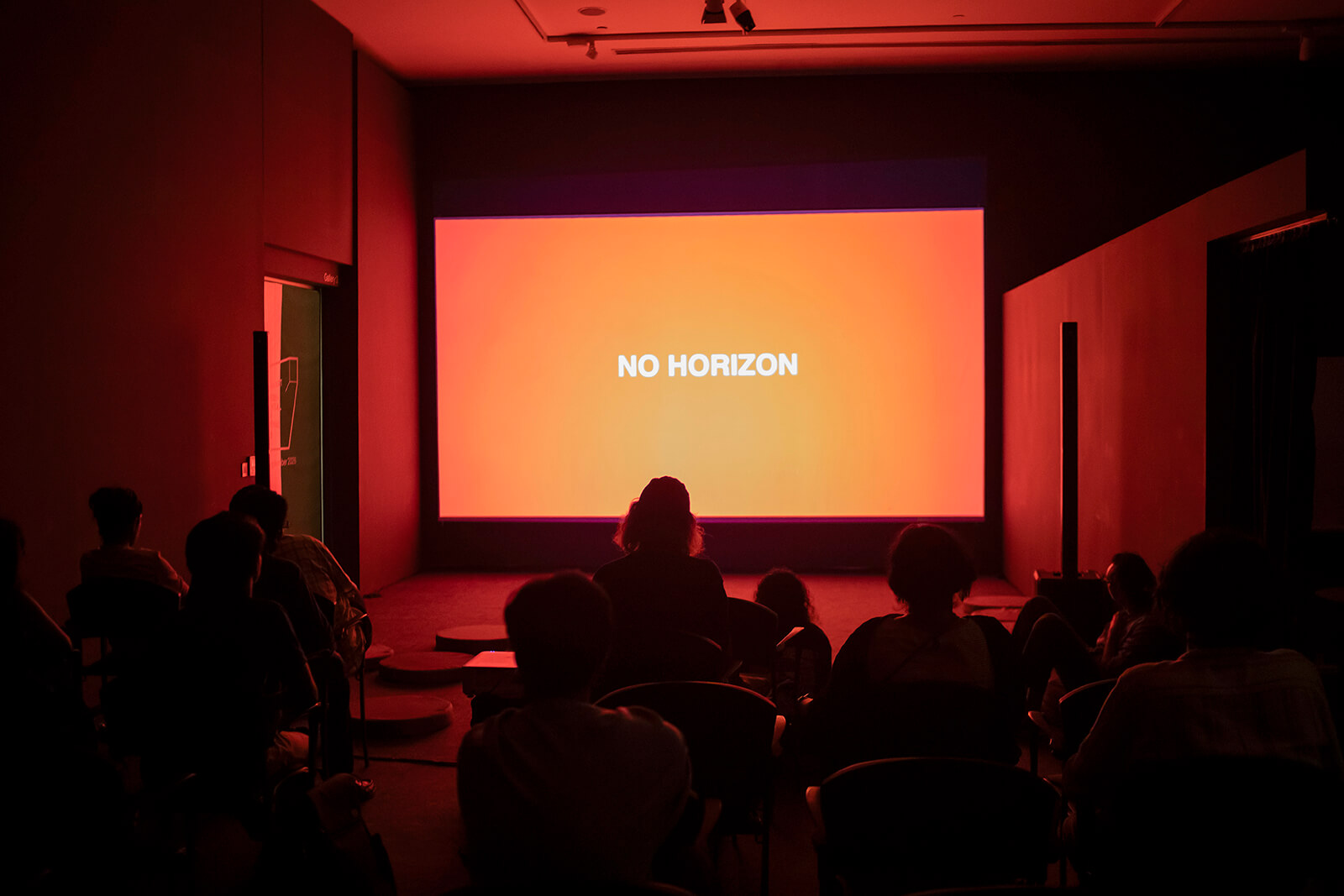
The fifth edition of the Emami Art Experimental Film Festival (EAEFF) was not just an opportunity to screen experimental films (which find little space and understanding in India’s cultural landscape) but an occasion to interrogate, together, what makes a film. Films, performances and artworks are often seen as distinct mediums and presented as such. However, experimental films and the critical conversation around them at EAEFF asked us to look closer. If a series of images is considered an artwork and not a film, how many images in a sequence alter this categorisation? How fast must images move to be categorised as film rather than a photo series? If the only way we have to access performance beyond the date of its live showcase is through film, can we really separate these art forms? Film is an art form, an important one, with cultural cachet that cuts across lines of class and art world know-how, but its mode of presentation differs completely from other forms. Why are films limited only to screenings, and how can they be incorporated into art exhibitions? These were just a few of the questions raised by speakers, filmmakers, curators, and participants during the week-long festival in Kolkata, held from September 22 – 27, 2026.
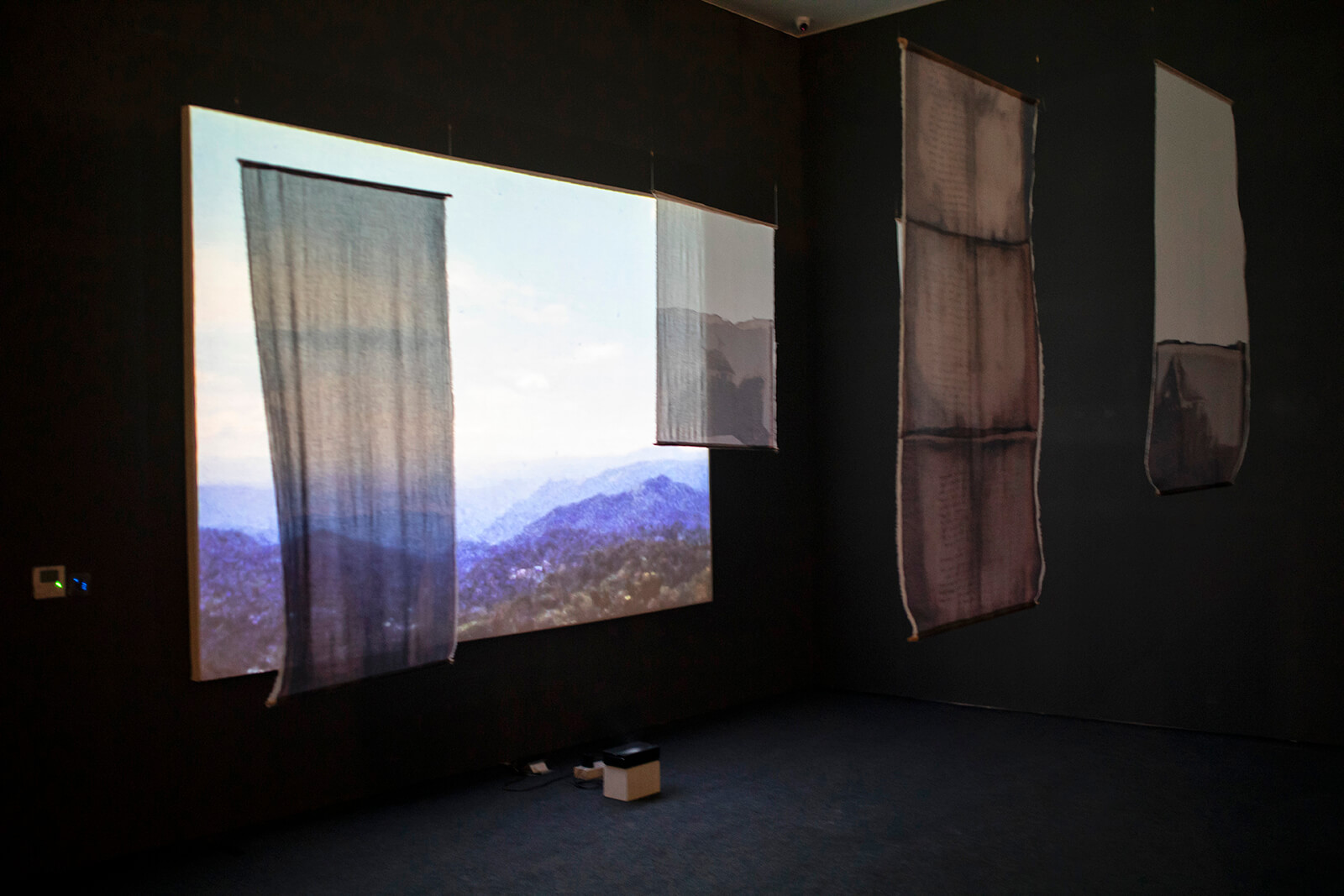
The event featured a vast array of experimental films from Indian and International filmmakers, curated programmes created in collaboration with international institutions, a Students' Experimental Cinema programme and, crucially, an exhibition of moving image works titled A Séance of Planetary Hauntings and Local Ghosts. The exhibition arose from an encounter between the Emami team and exhibitors Solomon Nagler and Alexandre Larose. The Canadian filmmakers attended EAEFF 2024 before travelling to Kochi, Kerala, to film Wedding Songs (2026)—a 13-minute hand-processed celluloid film that draws on the story of a 16th-century Kabbalist rumoured to have the power of levitation. The tale survives as a series of wedding songs passed down through oral tradition and local worship that the filmmakers captured with shots that were simultaneously mysterious and intimate.
Curator Sayanth RS explained the significance of Wedding Songs (which was part of a special screening of Nagler and Larose’s body of work) to EAEFF, saying, “Solomon said he would like to ‘exhibit’ the film. He didn’t say ‘screen’. We have been thinking about the format of the festival for a long time—whether we would screen films back-to-back or intervene and present them in a different way. Since we are a contemporary art gallery, we wanted to include an exhibition aspect to the festival; their idea fit perfectly with what we were trying to do. I was really intrigued by the themes in the film—summoning, ontology, ritual, the cosmos. There is a ritualistic aspect to the wedding songs—a repeated performance, a memory, a mystical figure that is summoned. It aligns with the format of the exhibition where films are played on repeat, with no distinct start or finish. This performative, ritualistic aspect inspired the theme, A Séance of Planetary Hauntings and Local Ghosts.”
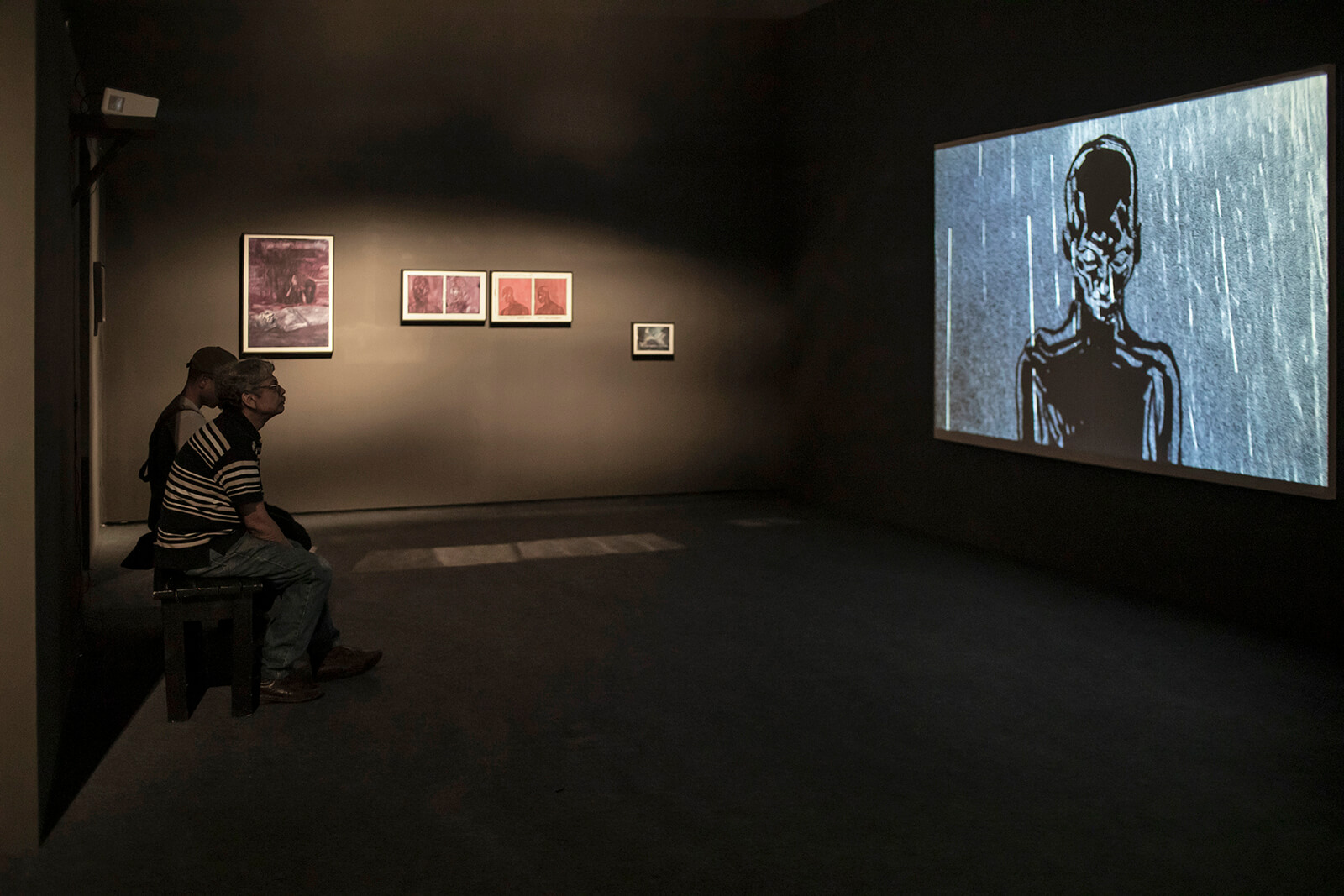
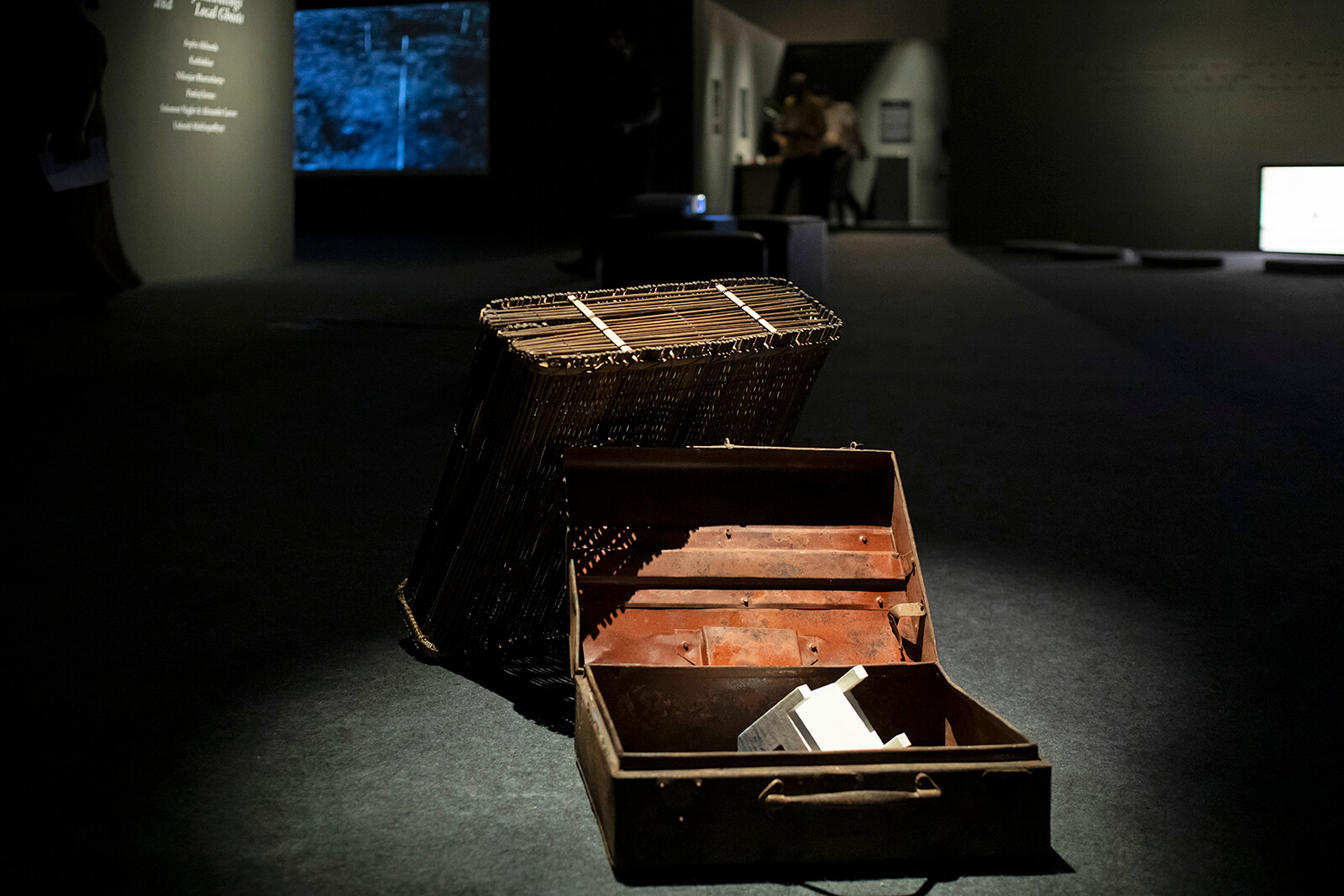
Every installation in the exhibition challenged an aspect of the film form by experimenting with repetition, duration, multimedia, ritual, haunting and memory. Documentary filmmaker Nilanjan Bhattacharya presented a two-channel video installation, Quiet Flows the Stream As the Words Speak (2026), which followed two practitioners of traditional medicine in the disparate ecosystems of Karnataka and Sikkim. Vinyl text on the wall behind the screen featured discrete words that foregrounded and underscored ideas related to those in the film, altering the viewing experience. In The Darkness That Remains (2026), Ushnish Mukhopadhyay set a durational work—a 20-minute non-linear film exploring abandoned spaces and architectures of grief and haunting—against paintings that explored the effect of these processes on the body.
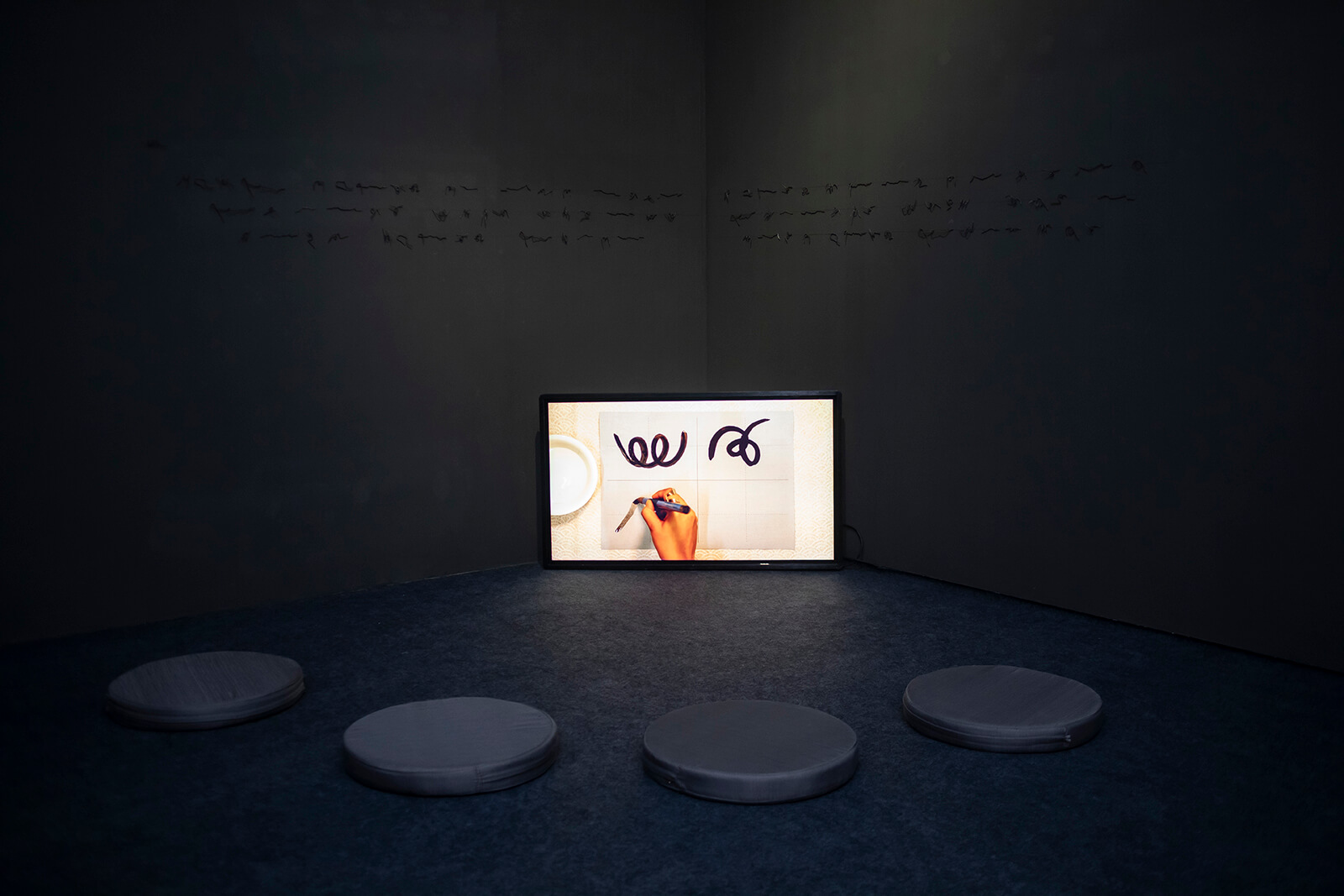
Meanwhile, Arpita Akhanda’s When River Becomes Snow (2025) translated her powerful performance work 360 minutes of requiem (2022) into film. In the performance, the Indian artist detangled barbed wire by hand, using the remnants to create letters that formed a script of resistance that, here, was suspended over the film screen. She traced these letters onto paper, painting with snowmelt as it evaporated in real time. Explaining the significance of the repetition, she said, “The performance left these forms as a residue of the act of violence. The repetition in the film echoes this violence, creating layers that leave a mark, or a trace. When words fall short, these residues come to the rescue.”
Indoors, screenings layered ever more films onto the venue. The typically short lengths of experimental film allowed for a dense schedule that, free from the constraints of an imposed theme, introduced viewers to a staggering range of approaches, subjects and styles that comprise the medium. In the Indian selection, ODD (2025) by Joseph Lawrence C blended archival footage, AI-generated visuals and photographs with an electronic soundscape while following a human body awakening in a new, strange world where technology and war had overwritten biology. In a similar vein, Saccharine Wonderland & Forces That Make Me Shiver (2025) by Tushar Gidwani employed a stylised, oversaturated dreamscape to explore desire, queerness, dislocation and longing. The film received a special mention in the festival’s award category for films in the short-mid duration category from India.
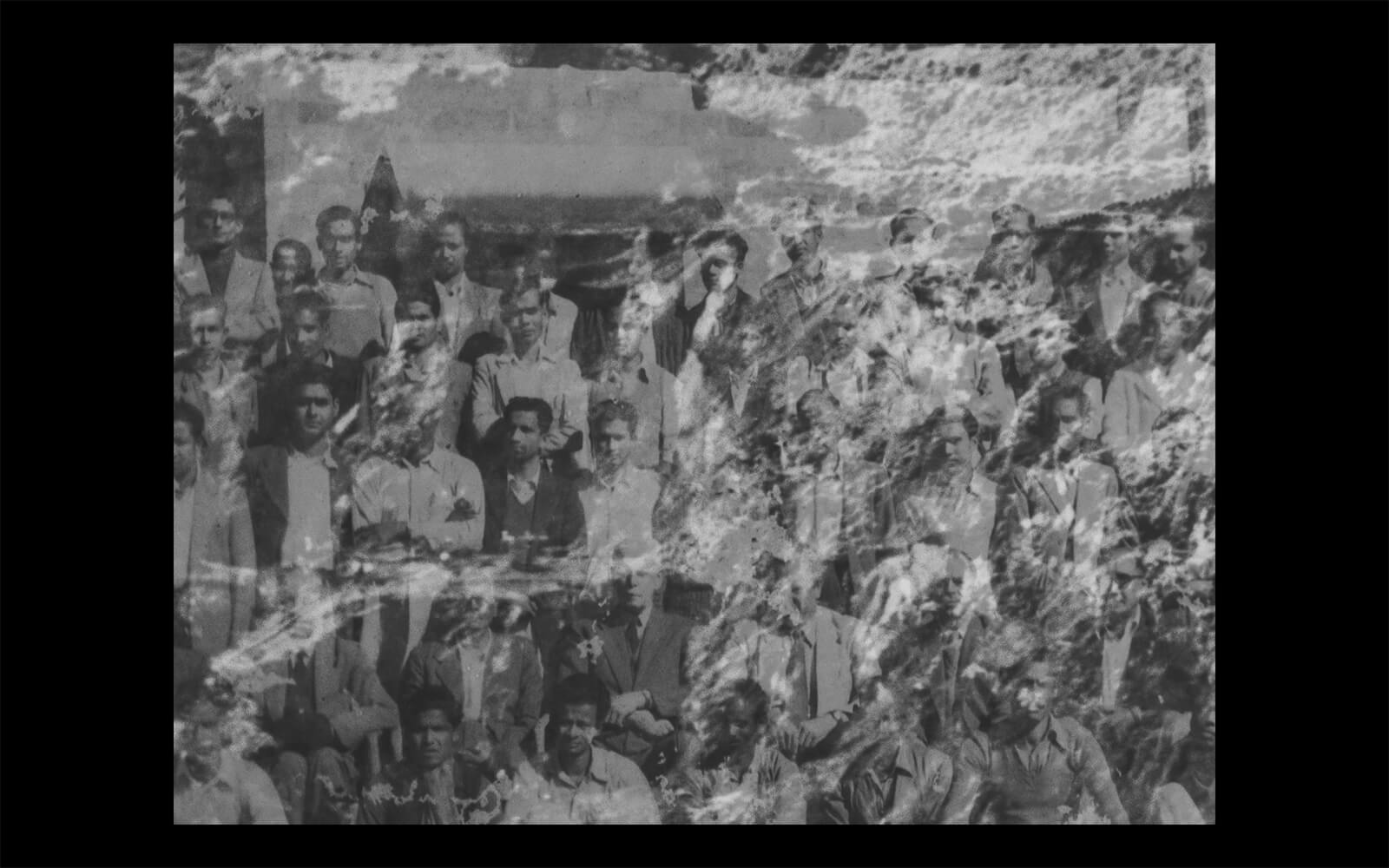
There were also longer, structured films with visuals in service of more stable themes and political referents such as A Circle as the Center of the Whole (2026) by Utkarsh, which won the festival’s award for films in the short-mid duration category from India. The film excavated personal and public archives to create a fractured image of Delhi as an archaeological site that is continually being demolished, discovered, ruptured and reconstructed. Another special mention in the same category was Margherita (2025) by Devadeep Gupta, which used archival footage to document an older transformation—the colonial extraction and industrialisation of the natural landscape in Margherita, Assam, by adopting the voices of an engineer, a steam train, a truck and the earth itself.
The international selection was more diverse, with films that abandoned linearity, narrative and subjects. The light of silence (2026)by Korean filmmaker Lee Jangwook, for example, took viewers on a jarring, epileptic journey through a dark forest illuminated by flashing lights, awakening their senses to nuances of light, sound and motion. Irish digital artists Cáit and Éiméar McClay used archival documents, 3D animation and an evocative voiceover to explore psychiatric institutions in an Ireland of the past and how they constructed sanity, morality and health in just above the tear duct on each side (2025). French collective Collectif Hasard focused on the human hand as a motif and symbol in Here or here (Ici ou ici) (2025) to trace being across time. Films from all corners of the world diverged in all things except their willingness to experiment with form, duration, sound, image and movement.
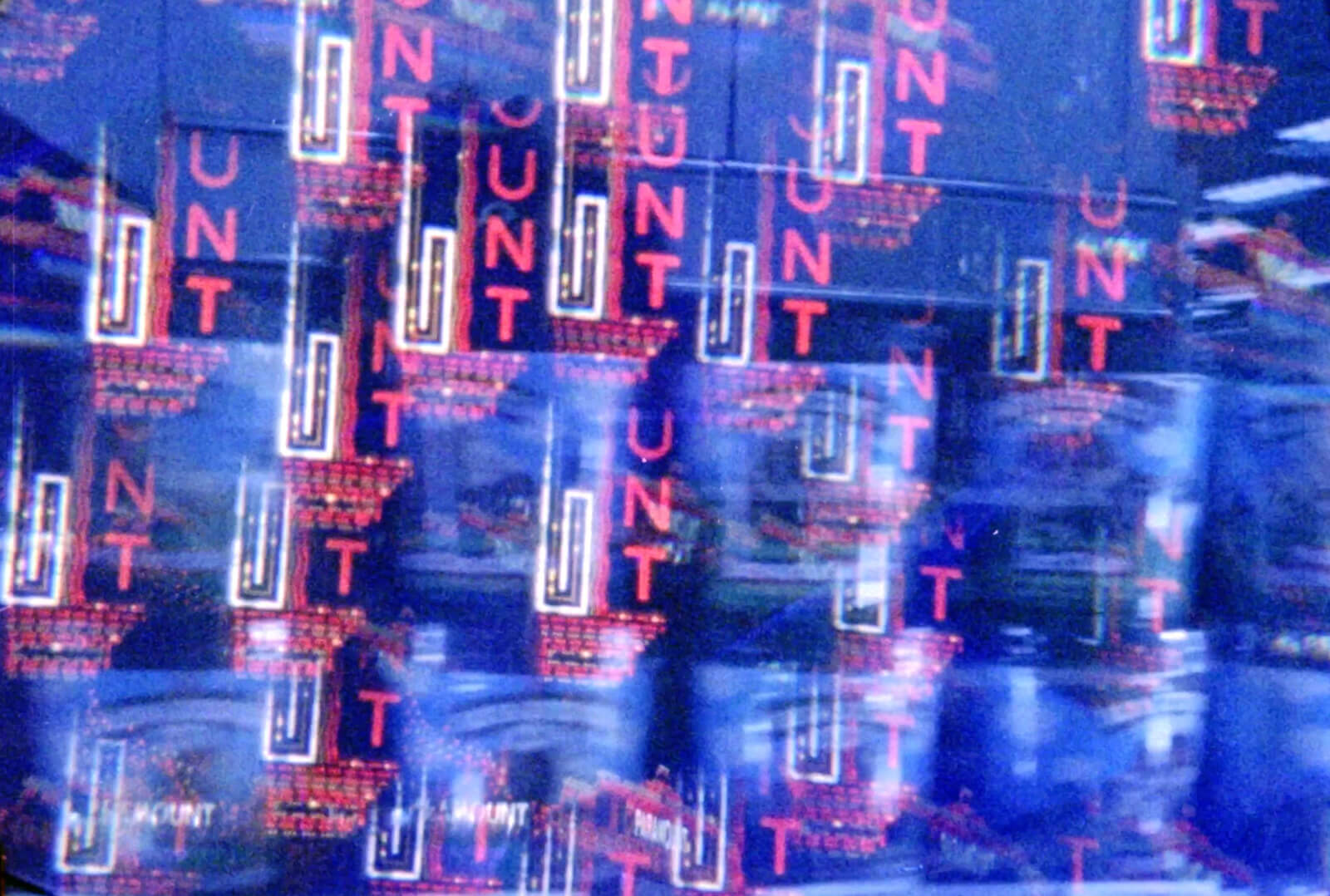
For more focused, thematic explorations of experimental film, EAEFF invited filmmakers and curators from institutions to curate mini programmes that centred on specific themes and forms and highlighted the filmmakers and visual artists they work with. Paris-based non-profit filmmakers’ cooperative Light Cone presented films that interrogated and unfolded the many layers of time in A carte blanche, curated by celluloid filmmaker Emannuel Lefrant. In films like 1972’s Clocktime Trailer, British filmmaker Stuart Pound formalised this investigation into time using stroboscopic film techniques to affect perception by creating the illusion of motion as he navigated different time streams in parallel.
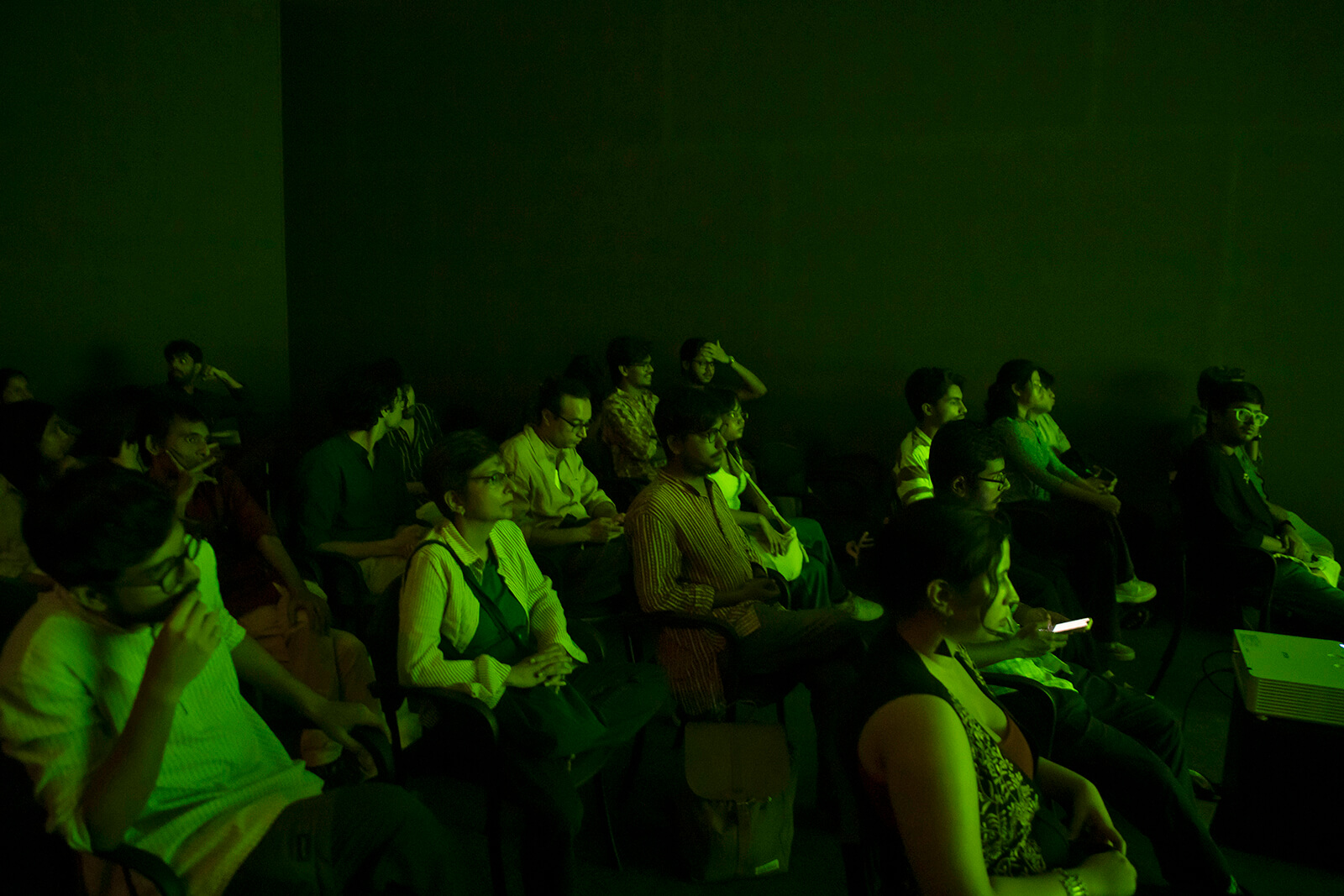
A highlight of the festival was the provocative programme School’s Out Forever, curated by American artist Tony Balko, which presented work by students of the now-defunct independent media school and co-op Pittsburgh Filmmakers (PFMI). The Super-8 film Feather (2008) by Gordon Nelson highlighted this communal approach to filmmaking by using found footage abandoned by a college student to create a foreboding psychodrama with scratched-out, flickering film. Curious Fantasies (2019)by Jesse McLean interpolated celebrity perfume commercials to examine desire in a capitalist, consumerist society, while Balko eliminated the traditional relation between camera and subject in his psychedelic machinima work, Tubular Ball (2026).
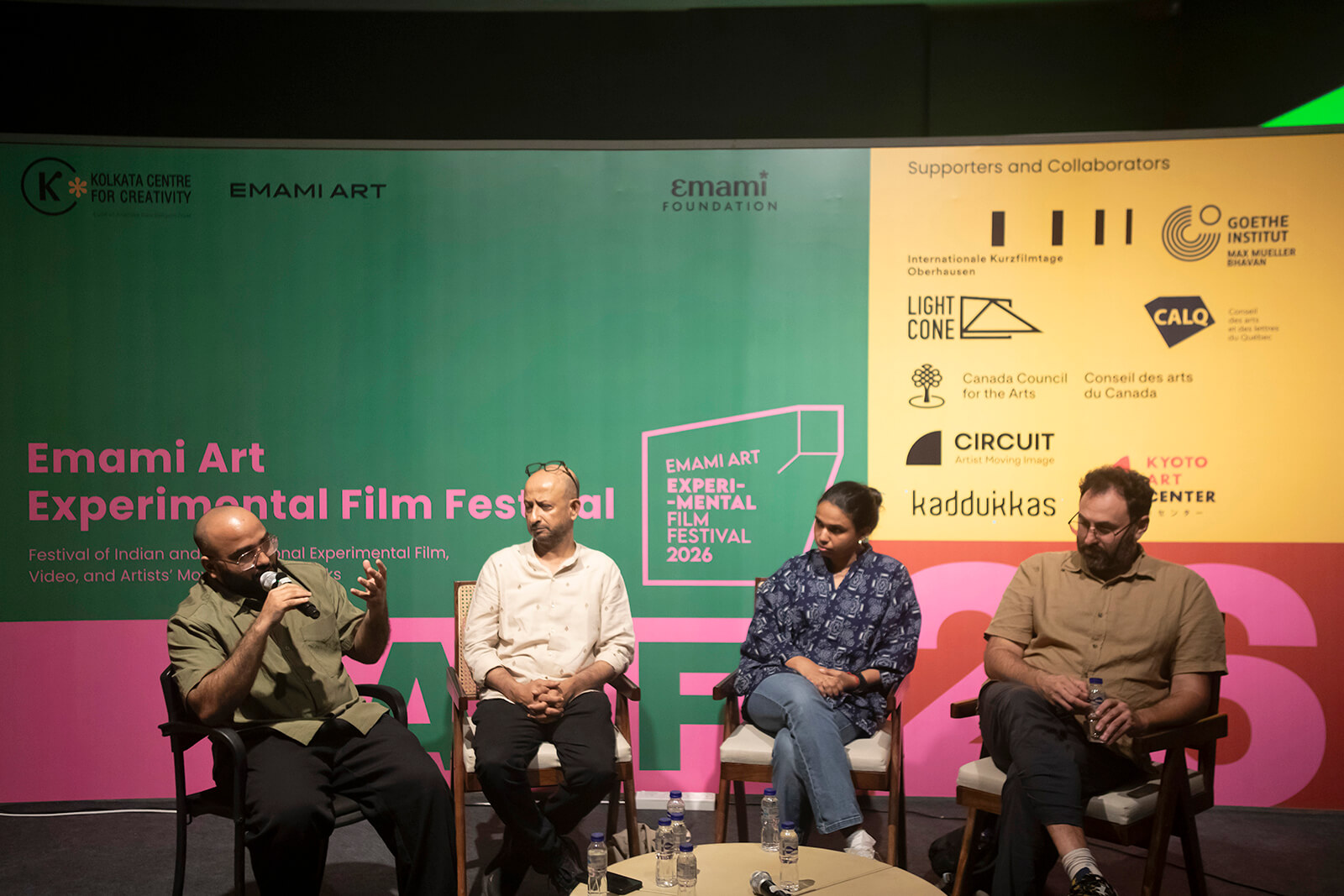
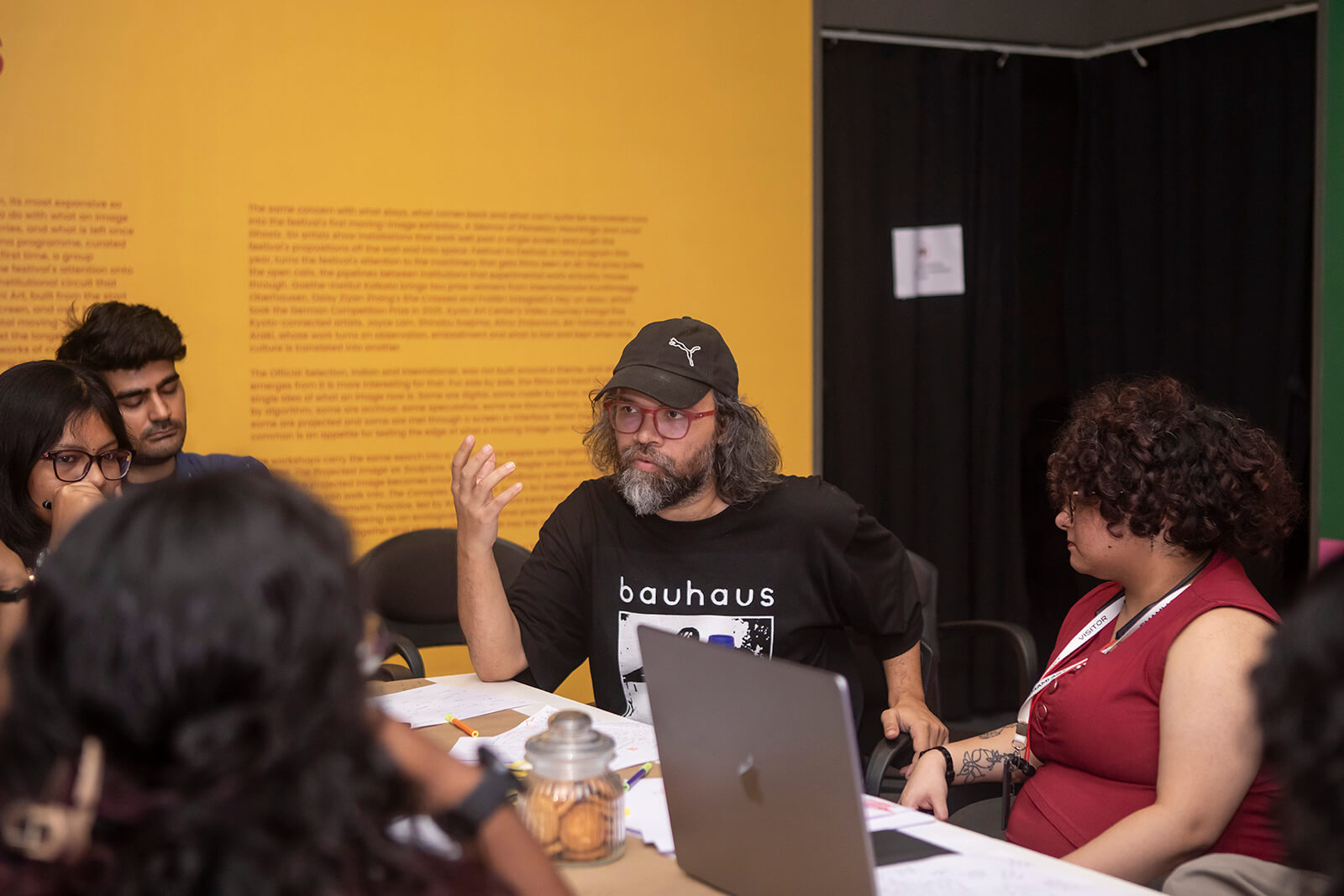
The five full days of programming, screenings, panels, workshops and talks at EAEFF 2026 were a testament to the organisers’ comprehensive and passionate curation of an often misunderstood and pigeonholed art form. The films and exhibitions at this festival were bold explorations of form and a challenge to the definitions of image, video, film and art and the boundaries that thinly separate them. Although the depth and breadth of programming may have thrown novices into the deep end, the festival provided a rare platform for creators, theorists and critics of experimental film to engage deeply with their peers’ works. The Emami Art Experimental Film Festival might seem like a smaller date on the international film festival calendar, but its collaborations and willingness to experiment with the format of a festival demonstrate its ability to create an outsize impact.

by Srishti Ojha Oct 26, 2026
The Taiwan-based artist shares his opinion on exhibition rituals, protests and his search for ‘fragmented beauty’.
by Srishti Ojha Oct 21, 2026
Increasingly, artists, filmmakers and activists are turning to VR to create more personal, tangible accounts of the climate emergency and its impact on vulnerable communities.
by Mirra Lynn Oct 20, 2026
The Indian artist paints the old wadas of central Pune, capturing the traces of everyday life that cling to these structures, battered by time but unbowed.
by Anmol Ahuja Oct 15, 2026
How do heaps of souvenirs and relics with racist Aboriginal motifs and features become art? MCA Sydney’s winter showcase—the artist’s largest to date—beckons a possibility.

make your fridays matter with a well-read weekend
Enter your details to sign in
Don’t have an account?
Sign upOr you can sign in with
a single account for all
STIR platforms
All your bookmarks will be available across all your devices.
Stay STIRred
Already have an account?
Sign inOr you can sign up with
Verification link sent to check your inbox or spam folder to complete sign up process
Tap on things that interests you.
Select the Conversation Category you would like to watch
Please enter your details and click submit.
Enter the 6-digit code sent at


Emami Art Experimental Film Festival 2026: Rethinking what film can be
by Srishti Ojha | Published on : Oct 07, 2026


 Sign in with Google
 Sign in with email
What do you think?