Art10 mins. read
Experimenter Curators’ Hub and the new, rhizomatic structures of the art world
by Srishti OjhaJul 10, 2026




by Chintan Girish ModiPublished on : Dec 26, 2025
Being at the Kochi-Muziris Biennale, which opened on December 12, 2025, was like showing up at an Indian wedding feast and finding that the produce was still arriving from the market, the masalas were still being ground and the tables were still being set up. Some venues were not ready. In some places, there were technical glitches or missing captions. It was remarkable, however, to watch how gracefully curator Nikhil Chopra was able to reframe the sense of delay and incompletion as a process of becoming that audiences were invited to witness and reflect upon. Grounded in pragmatism, this approach also made an important statement: you do not give up on things merely because they are imperfect, especially when they are born out of love.
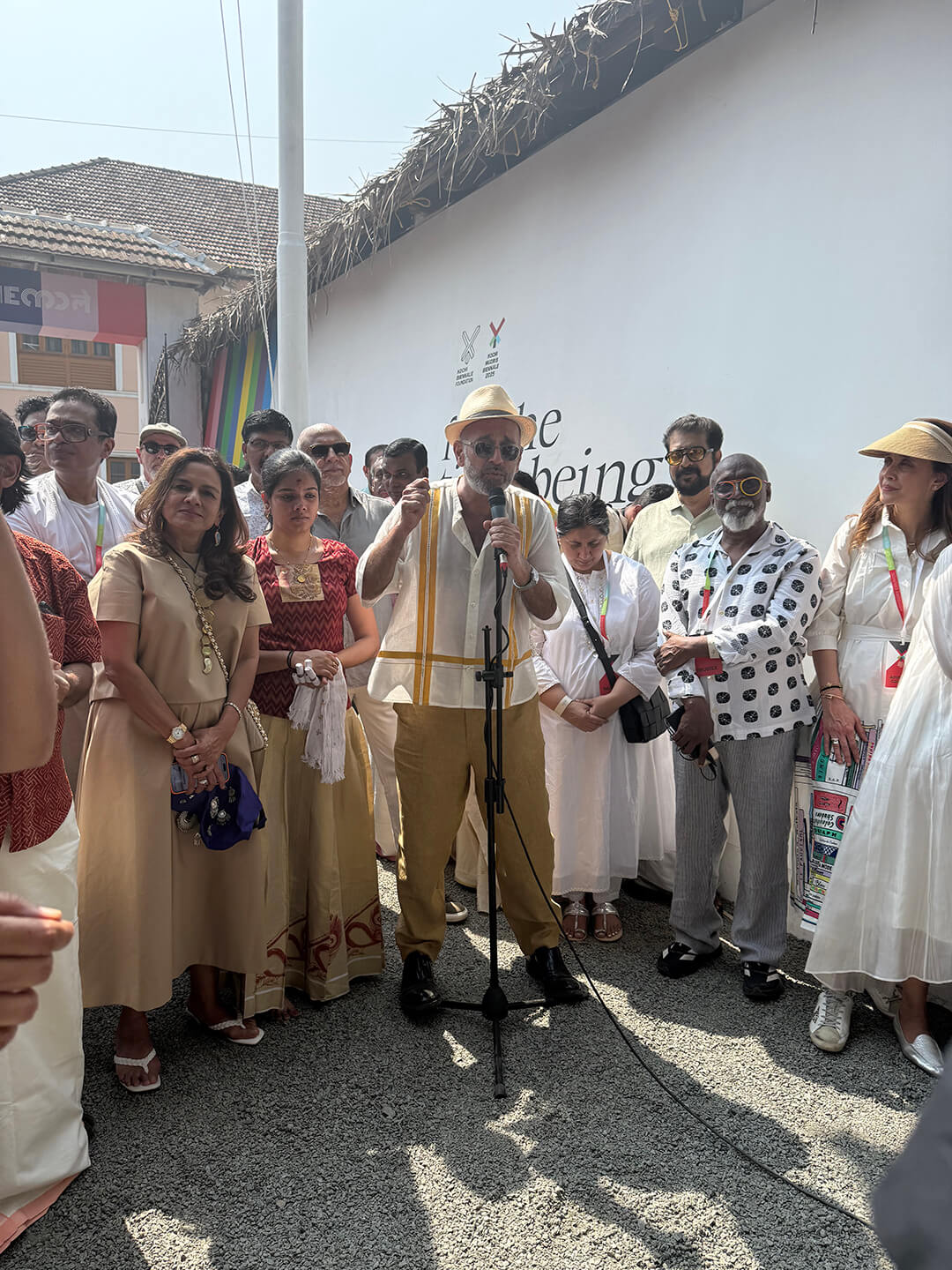
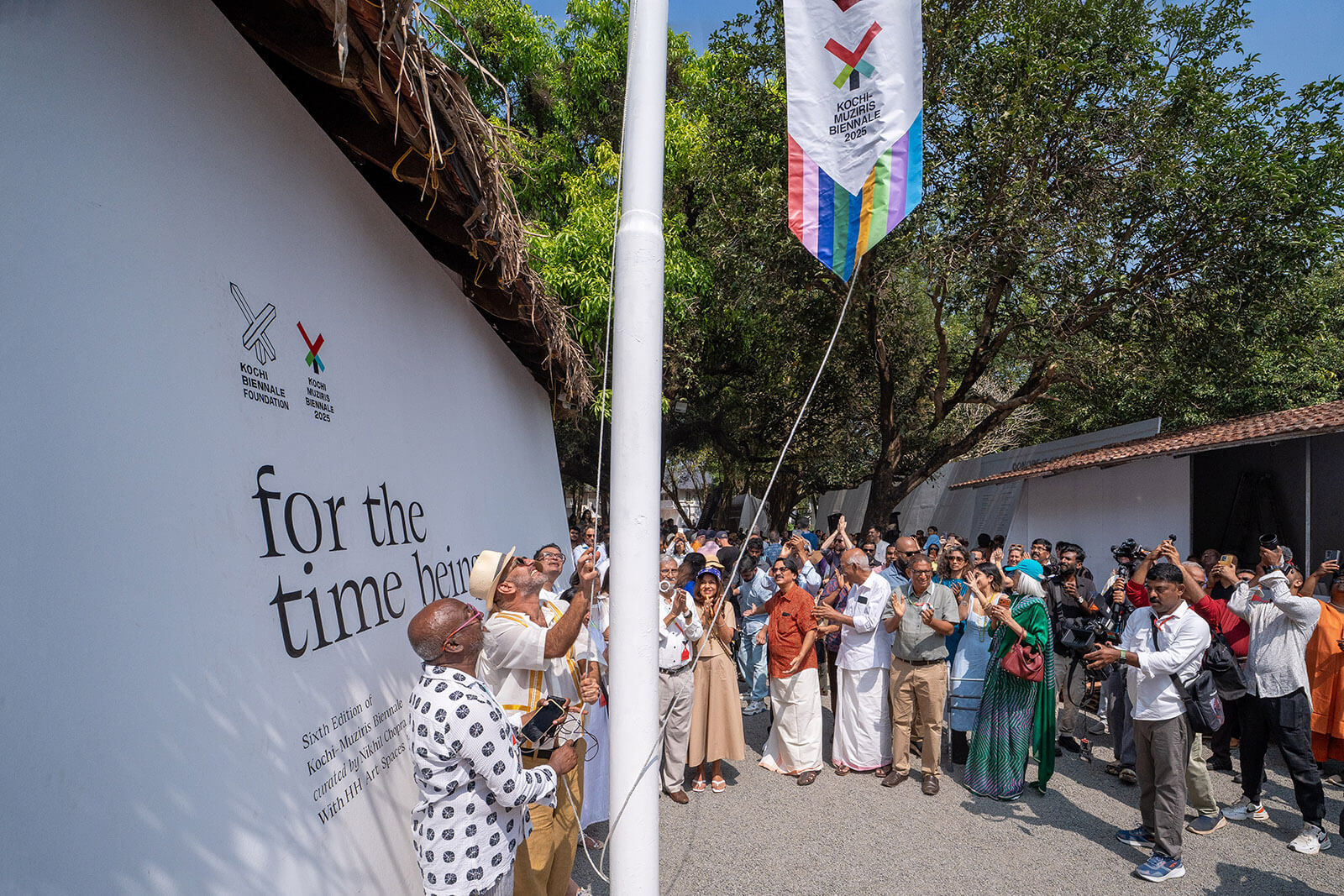
This edition’s theme, For the Time Being, acknowledges impermanence and ephemerality, be it of bodies, art materials or built spaces. During the media walkthrough on December 11, Chopra emphasised his obsession with corporeality when he said, “Our bodies are our containers. They are our museums and libraries. They are where our sensations lie. I don’t want you to have an academic conversation with the artworks here. I invite you to feel the presence of every artist.”
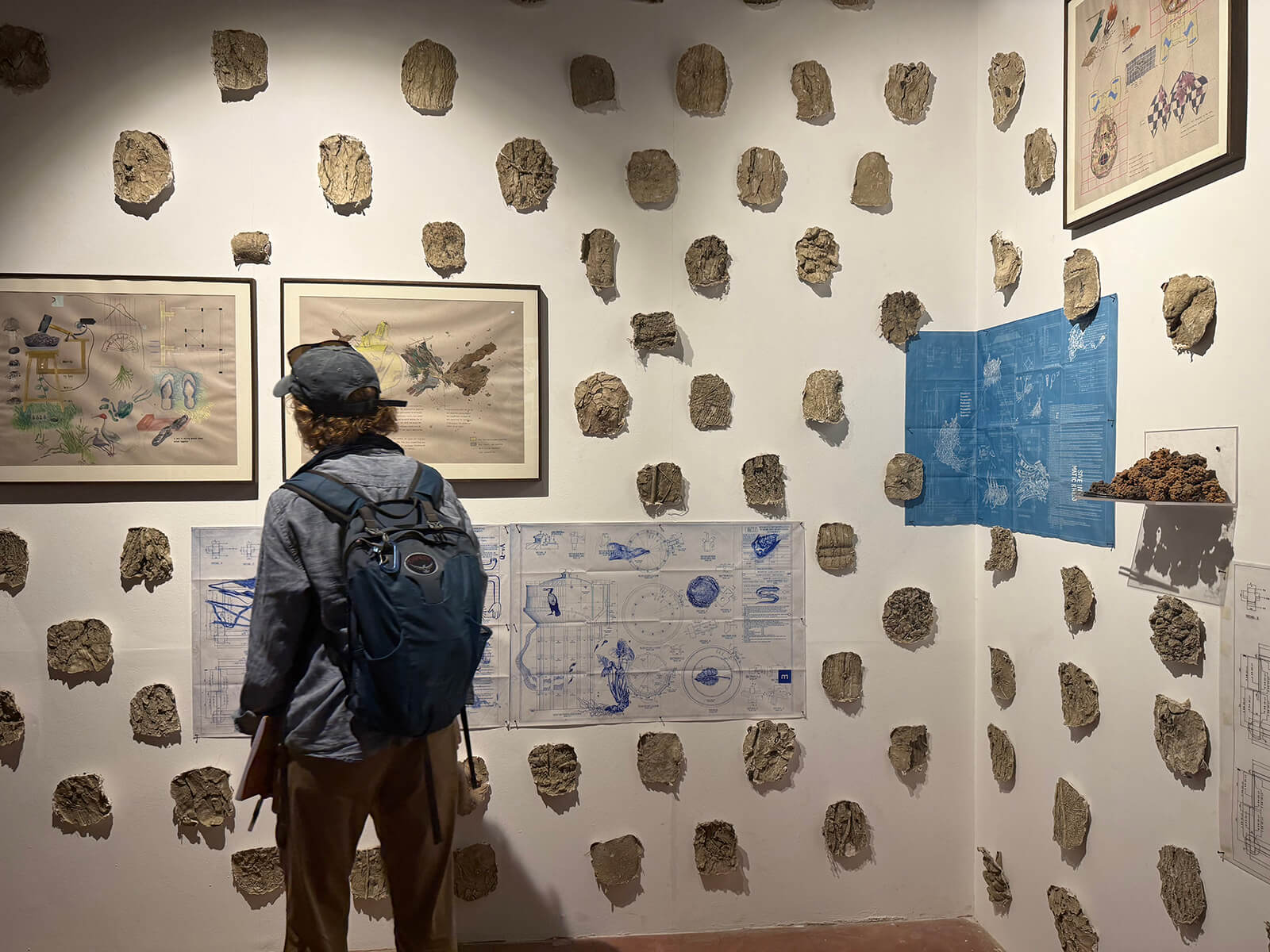
Spread over 22 venues in Fort Kochi and Mattancherry, the biennale features projects by 66 artists/art collectives from over 25 countries, and performances, screenings, conversations and discursive programmes led by Mario D’souza, director of programmes at the Kochi Biennale Foundation. It will conclude on March 31, 2026.
It includes the Students’ Biennale, which gives young artists from over 175 government art colleges across India a platform to showcase their creativity. To claim that this amounts to a dismantling of hierarchies in the art world would be a stretch because gatekeeping is a reality, and most students do not have galleries representing them.
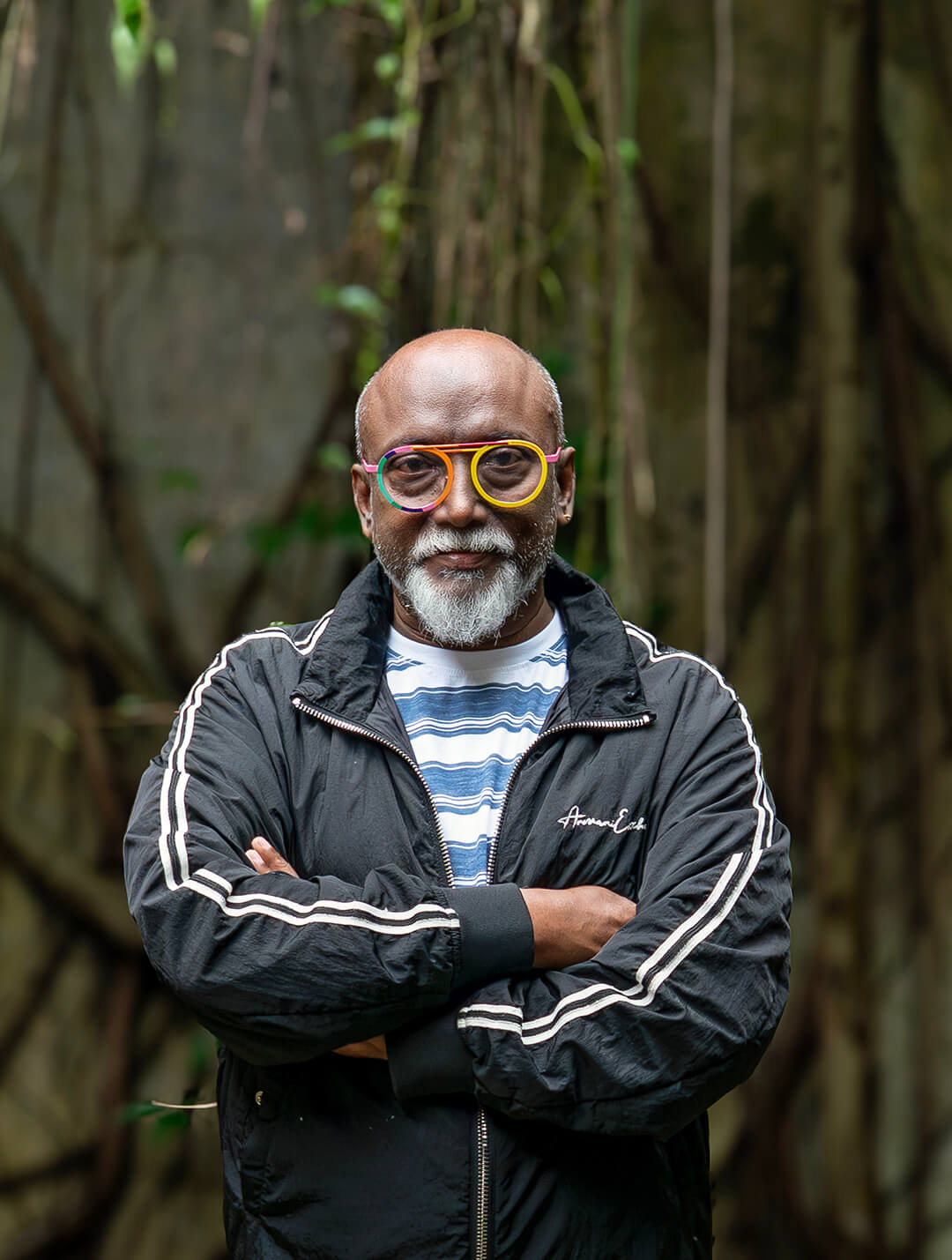
For audiences, however, from Kochi and beyond, the opportunity to take in and dialogue with all these artistic interventions, at no cost, is an immense gift, turning Kochi into what Bose Krishnamachari, president of the biennale, calls “a temporary university of contemporary art”. It is meant to be a space to reflect, learn and contribute to.
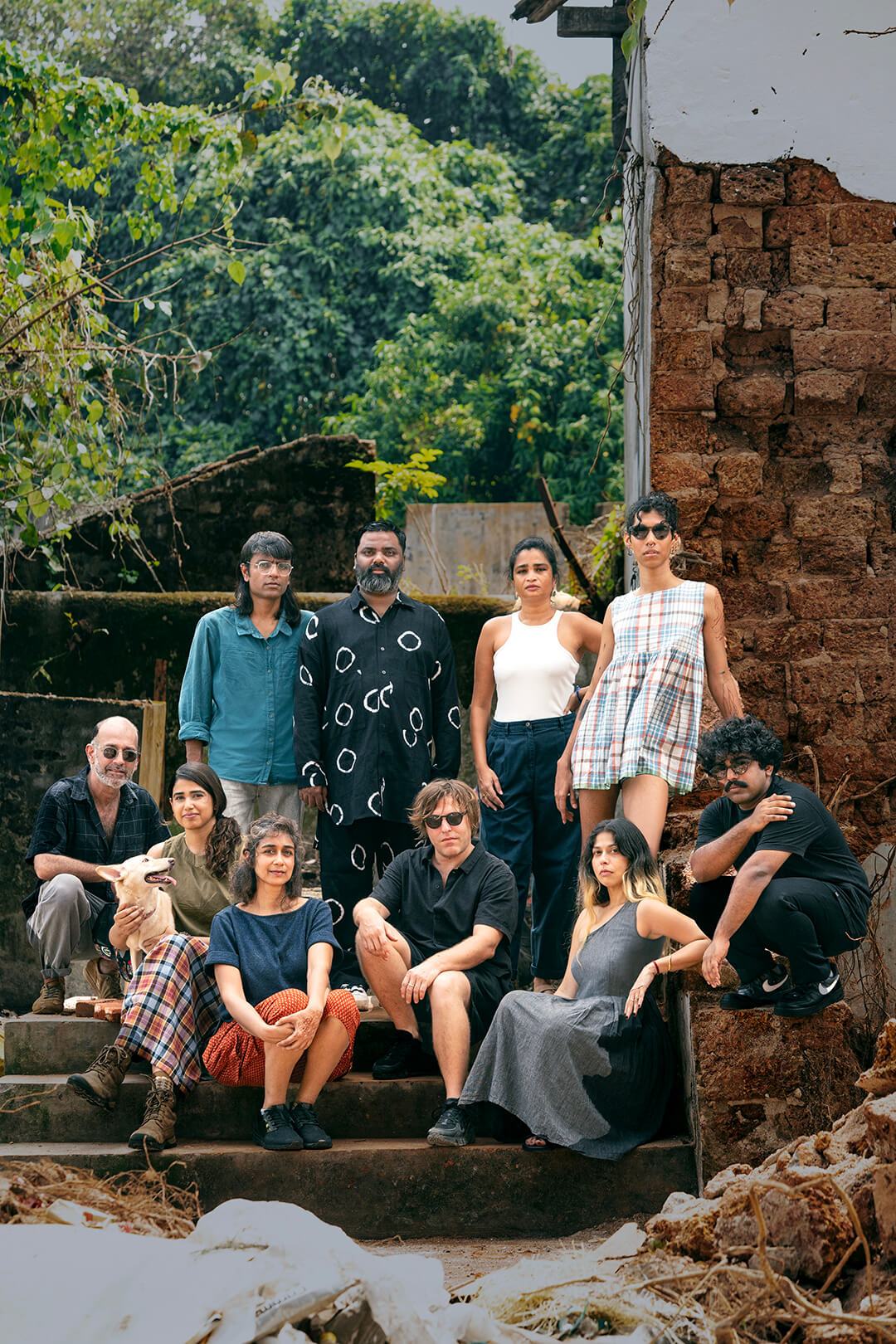
Aware of increasing concerns about sustainability, D’souza said, “While the biennial format is something that germinated in the West, we have worked on producing a biennial that is true to its context, its possibilities and limitations, the climate and materials here. A lot of the work was made on site. We have shipped minimally.”
Ghana-based artist Ibrahim Mahama adopted a room at Anand Warehouse, a colonial-era godown in Kochi, and turned it into a site-specific work called Parliament of Ghosts. Since post-colonial buildings that host debates on legislative matters are usually stodgy and ceremonial, the jute sacks sewn together by homemakers from Kochi and the rickety chairs stabilised with the labour of local carpenters evoked a sense of irony.
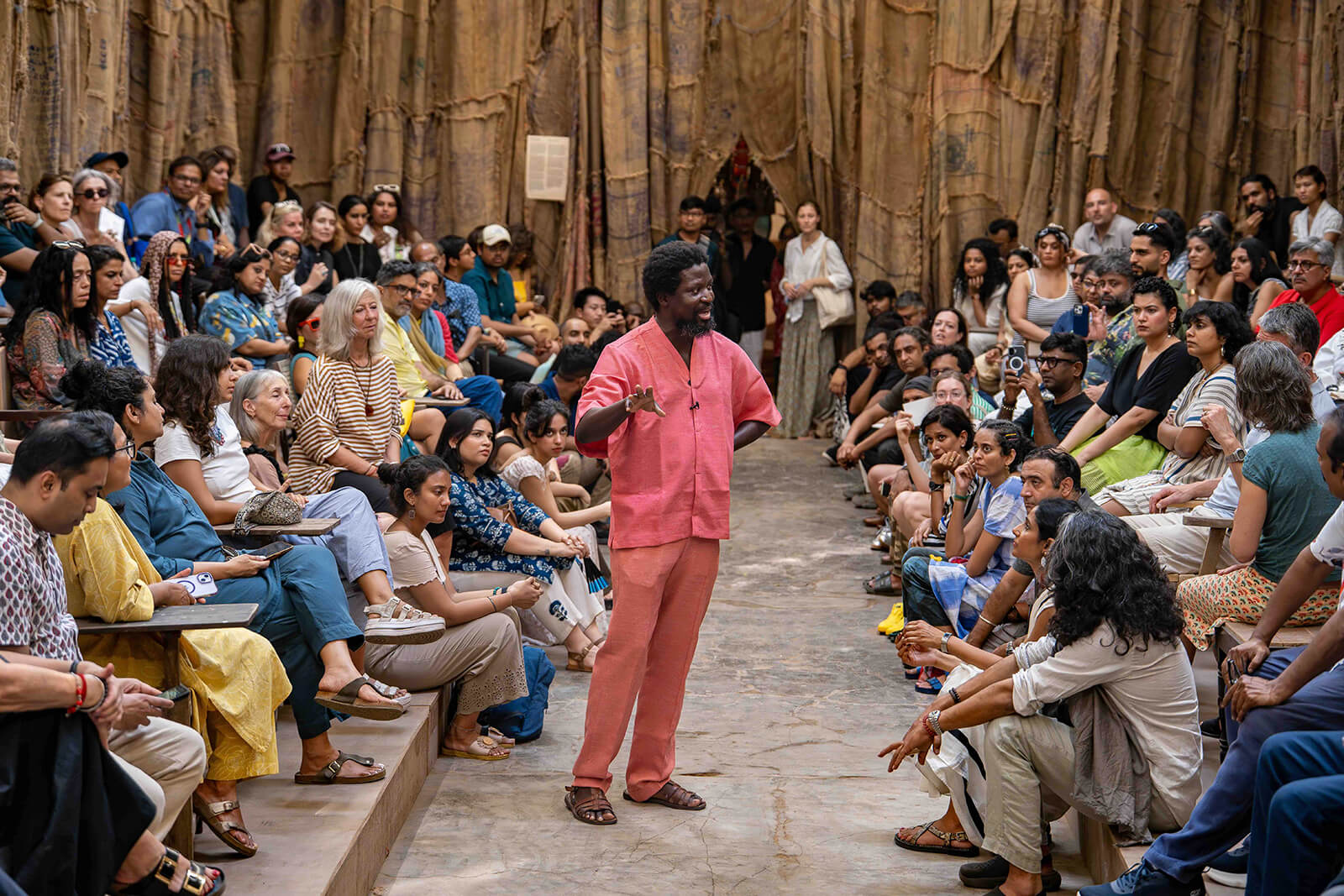
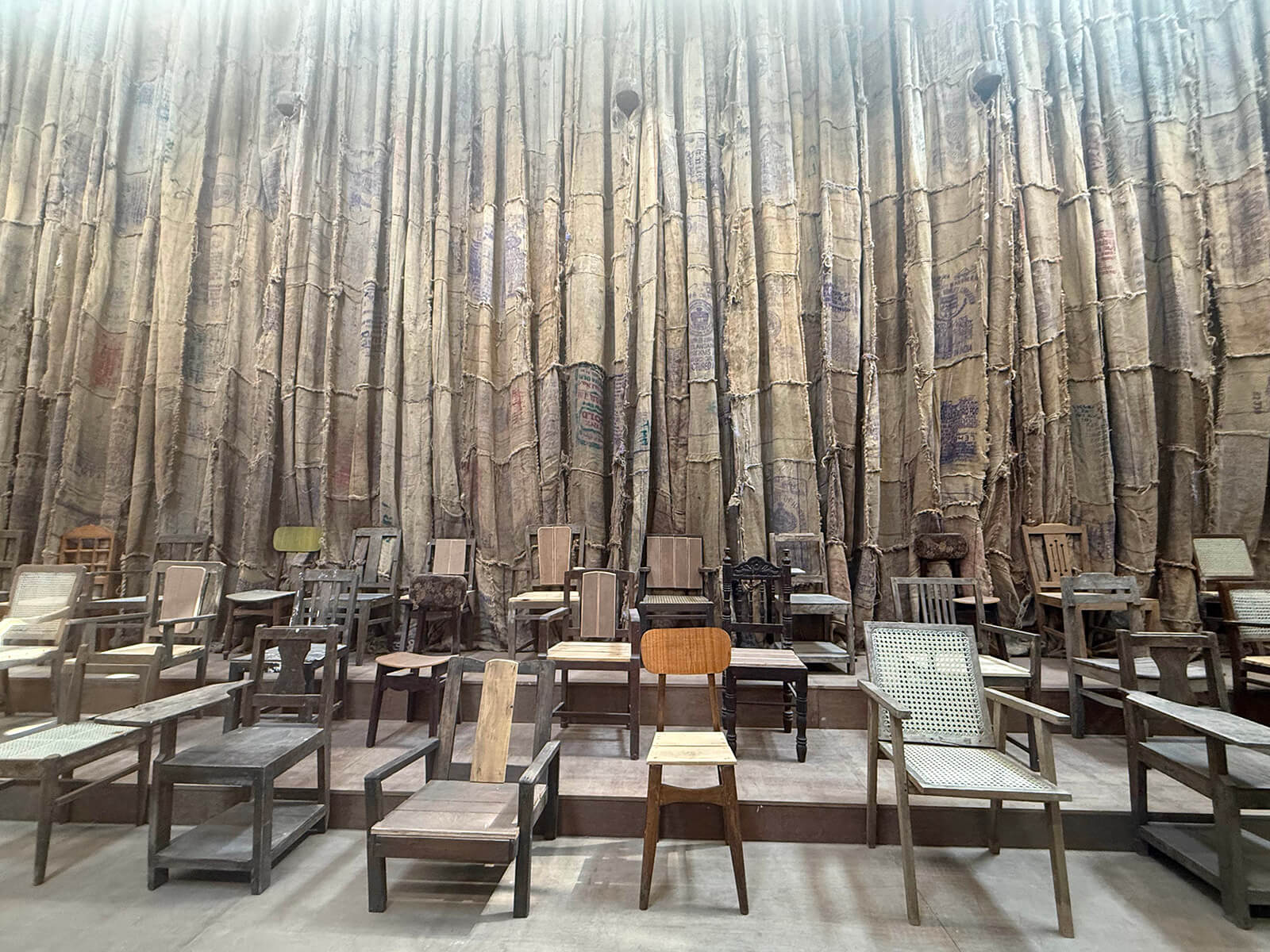
The use of second-hand materials drew attention to people on the margins, who are excluded from decision-making, and also gave viewers a chance to think about how gentrified art spaces can get when they do not converse with their surroundings. His widely discussed presence at the biennale also seems to be a recognition of the idea that going international does not have to mean aspiring to approval from power centres in North America and Europe. Exchanges between artists in the Global South ought to be seen as valuable, encouraged and backed with funds to see what emerges out of them.
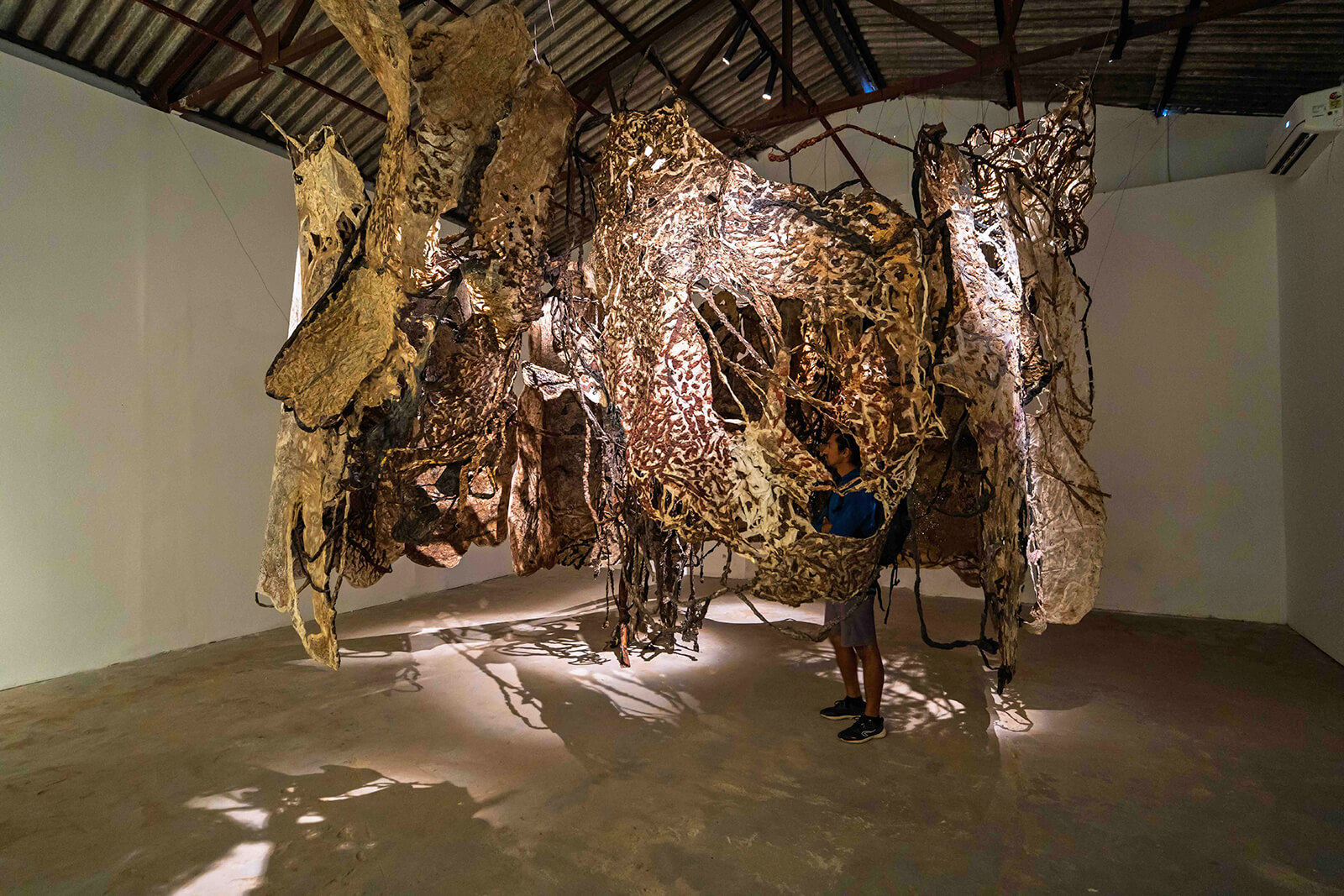
In a neighbouring room at the warehouse, Kolkata-based Jayashree Chakravarty had an art installation called Shelter: for the time being. Viewers were ushered into a cave-like dark room and instructed to use flashlights as they walked along suspended scrolls made of a wide range of materials, such as paper, grass, jute, metal and seed pods. The shadows evoked strong associations with the rock shelters of Bhimbetka in Madhya Pradesh, known for their prehistoric cave paintings, and rekindled a primal connection that humans share with other species. At a philosophical level, the installation reinforced the idea that beauty emerges from within when one is willing to face one’s shadows.
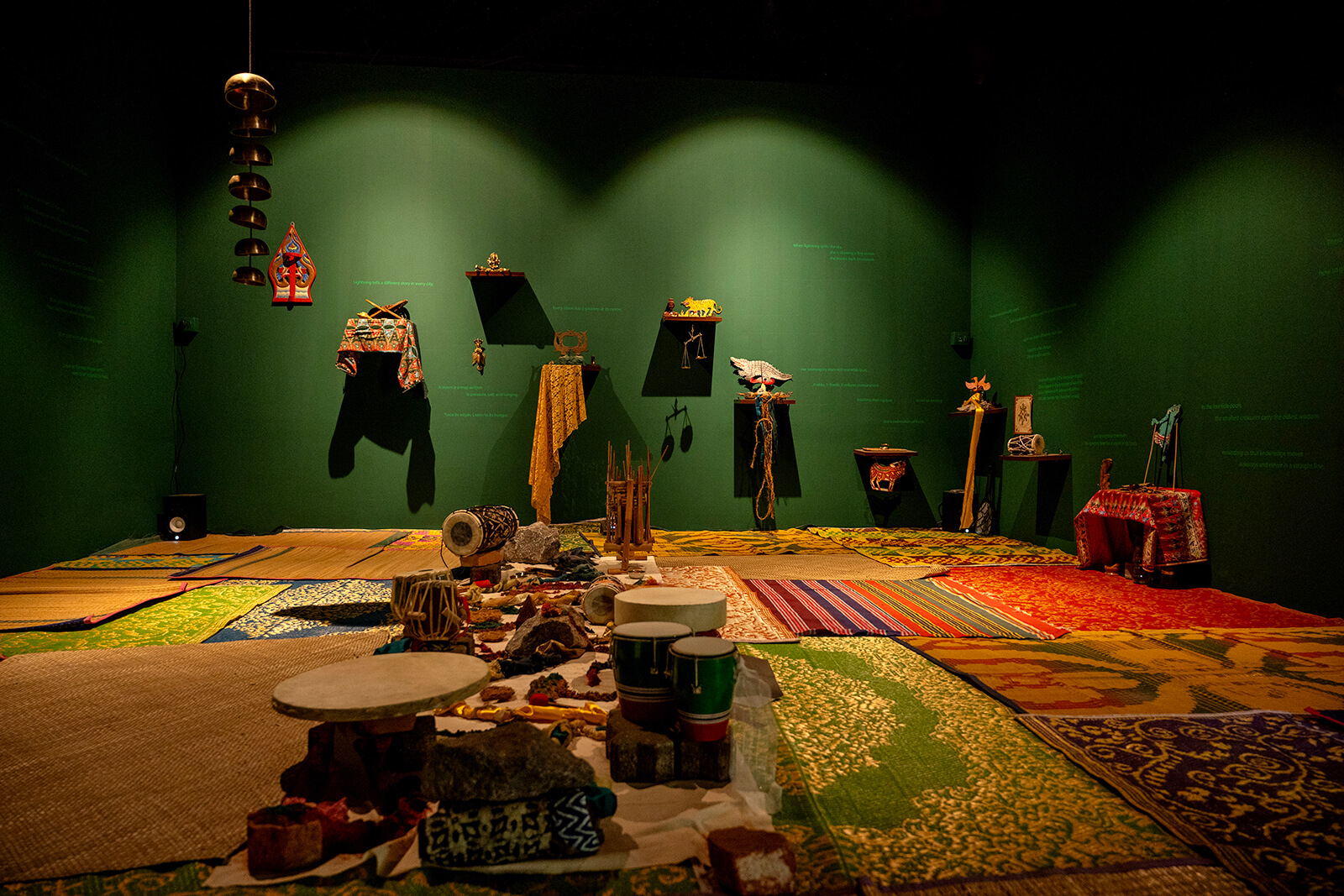
At Aspinwall House, located by the sea, Singaporean artist Zarina Muhammad presented Omens Drawn by Lightning, a work blurring the line between prayer and performance, movement and installation. With bodies moving in a sensual rhythm that seemed partly spontaneous and partly choreographed, it unfolded in a space that was at the cusp of private and public. The action took place behind curtains, but they were placed in such a way that viewers were being invited to peep, witness and make meaning. It was positioned as a tirade against scientific, rational and highly literal and extractive modes of thinking that are Eurocentric. The alternative suggested was a return to indigenous knowledge systems, occult medicine, traditional rituals and mysticism. It was spellbinding and cathartic for those who saw it as tapping into intuitive wisdom, but came across as gimmicky and alienating to others who thought that, by talking about omens and divination, it was instrumentalising Orientalist stereotypes of the West.
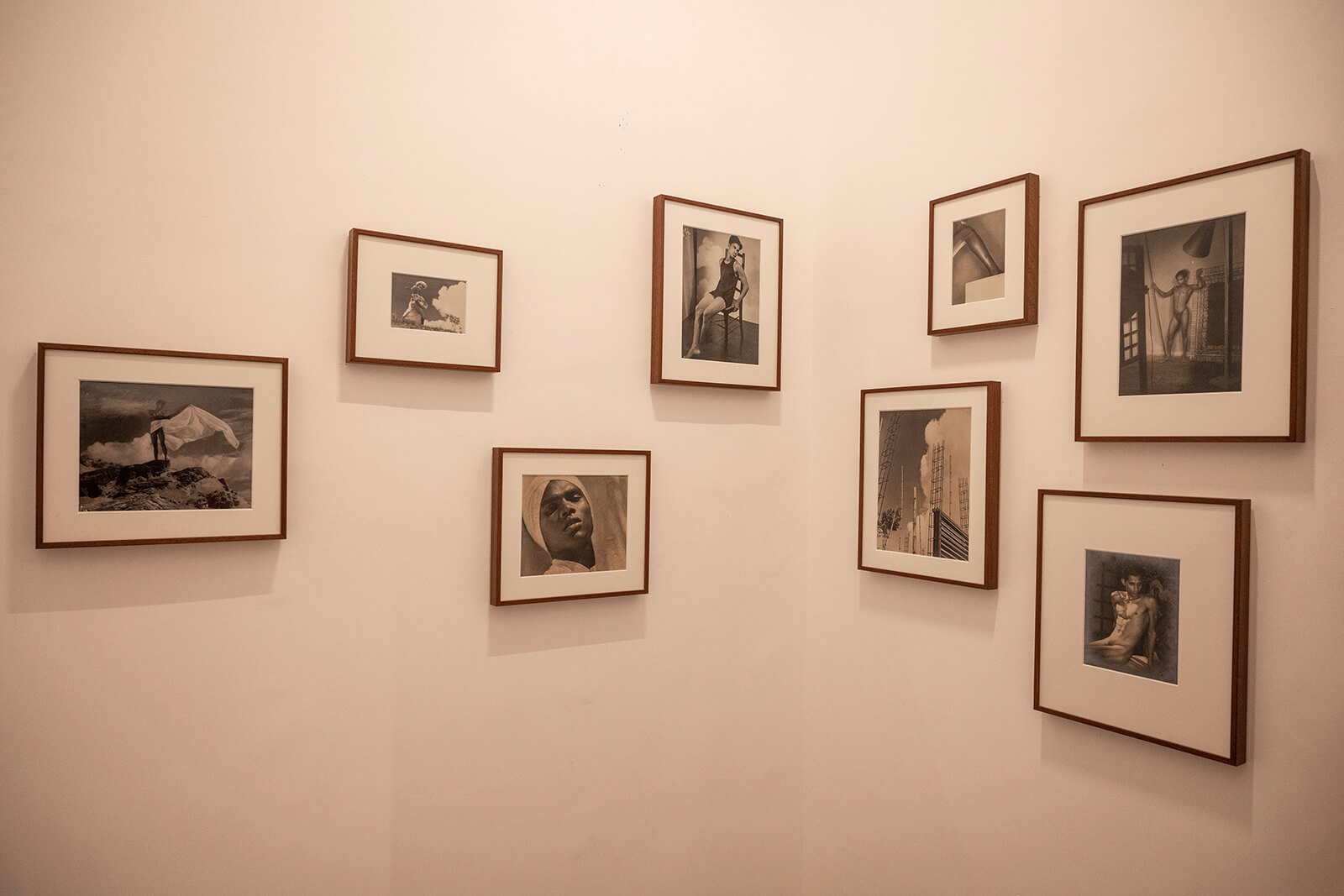
Sri Lankan artist Lionel Wendt’s photographs of fishermen and farmers, celebrating the labouring male body as sensual and desirable, were also exhibited in a room at Aspinwall House. Their placement in a corner of this colonial-era mansion seemed apt given the closeted nature of queer desire, especially under colonial masters who banned it out of fear. As D’souza writes in his curatorial note, “In portraits such as Male Bust (c. 1933), Nude Man with Column (c. 1935) and Young Man with Sickle (c. 1938), the camera observes the body as a tender sculpture, illuminated by light and sweat.” Wendt’s work is exquisite and worth stumbling upon, especially because it compels the viewer to stop intellectualising and pay attention to the pleasure produced in the mere act of looking.
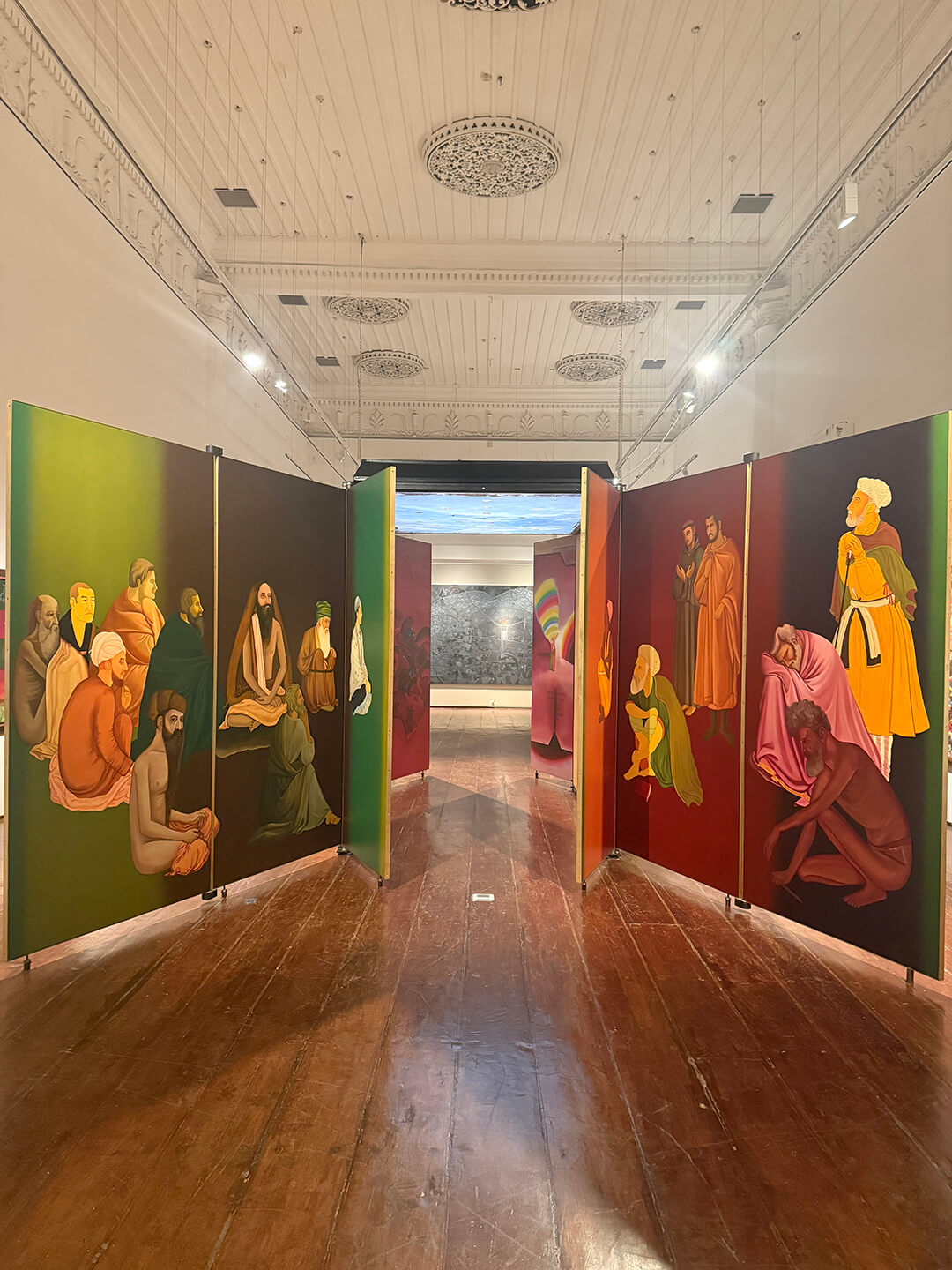
The Durbar Hall, built by the Maharaja of Cochin in the 1850s, became a home for Of Worlds within Worlds, the Gulammohamed Sheikh retrospective curated by Roobina Karode. The Vadodara-based artist’s pen and ink drawings, paintings, accordion books, sculptures and installations were on display. Six decades of his work, across mediums and formats, gave a wholesome picture of an artistic life devoted to resisting hatred and violence, with references to figures like Kabir, Saint Francis, Mirabai, Mary Magdalene and Mahatma Gandhi popping up in his art. Sheikh’s oeuvre gives one gooseflesh not only because it comes out of Gujarat, a state wrecked by communal violence, but also because he is a Muslim who engages with Hindu majoritarianism from a place of self-respect, not fear, and an unshakeable faith in his syncretic cultural inheritance.
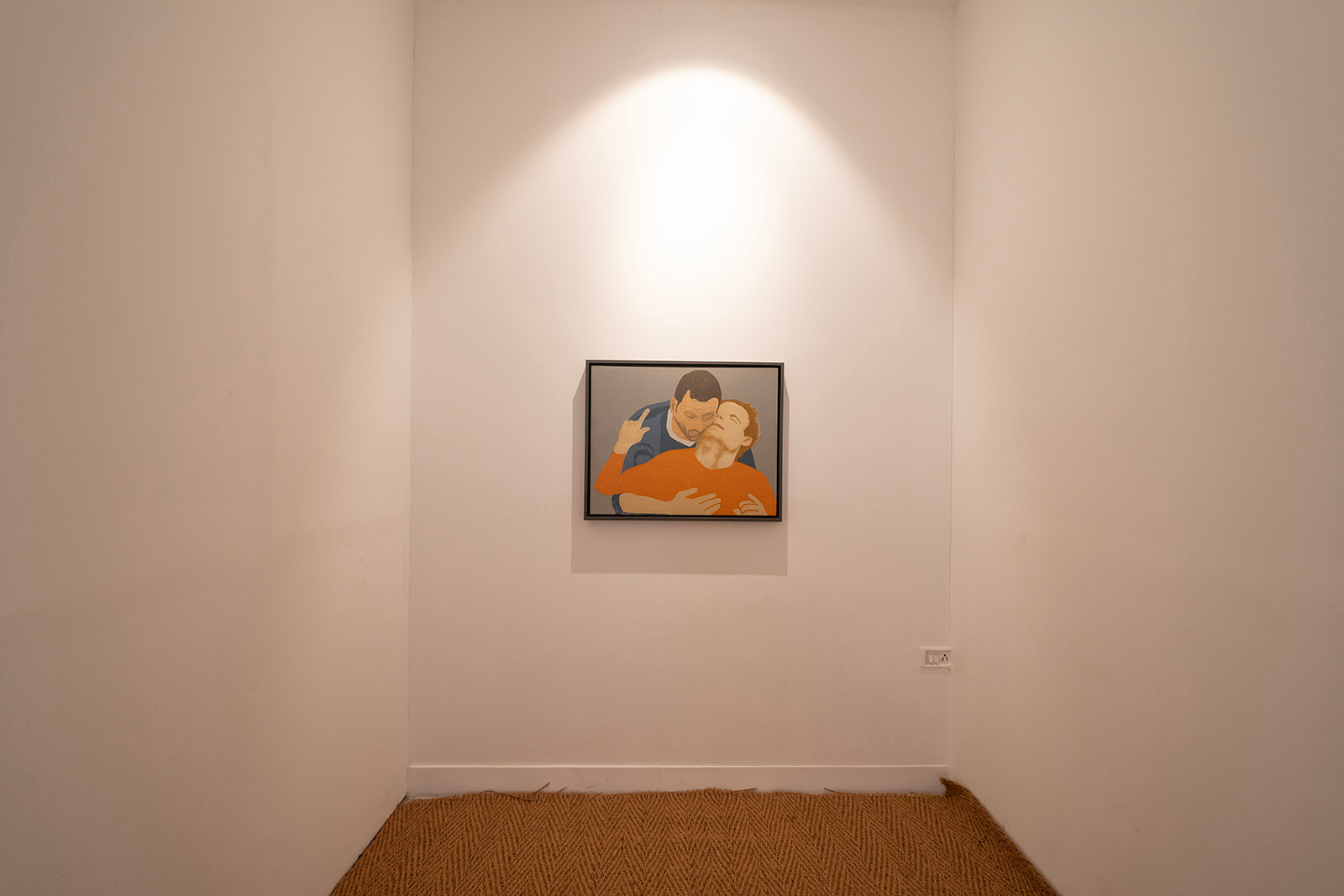
The late Gieve Patel’s paintings were exhibited at SMS Hall, another venue for the biennale. Patel’s artistic sensibilities were enriched by his vocation as a poet and practice as a physician, bringing a lyrical intelligence to his work, despite his clinical understanding of human anatomy. The most striking work in the show is a quiet piece called Embrace, with two male figures caught in a moment of profound intimacy, one holding tenderly and the other being held in a gesture of quiet surrender. Their hands meet, and their cheeks touch. They seem at home in each other’s presence. Interestingly, the artist feels no need to sexualize their companionship.
On the other hand, Mumbai-based Shakibul Islam’s work, curated by the Secular Art Collective for the Students’ Biennale, explored varying shades of what intimacy can look like between two men. Islam is a student at the Sir JJ School of Art. His painting, Fishting, was a nod to gay subcultures of cruising in public toilets as well as sex parties where bodies encounter and entangle with curiosity, often under the cover of anonymity. This was juxtaposed against a painting called Grooms are Waiting with material markers denoting a Hindu and a Muslim groom lying in bed, exhausted not from lovemaking but an interfaith wedding celebrating their union in a society that refuses to provide legal sanction for same-sex marriage and frowns on couples who love across religious divides.
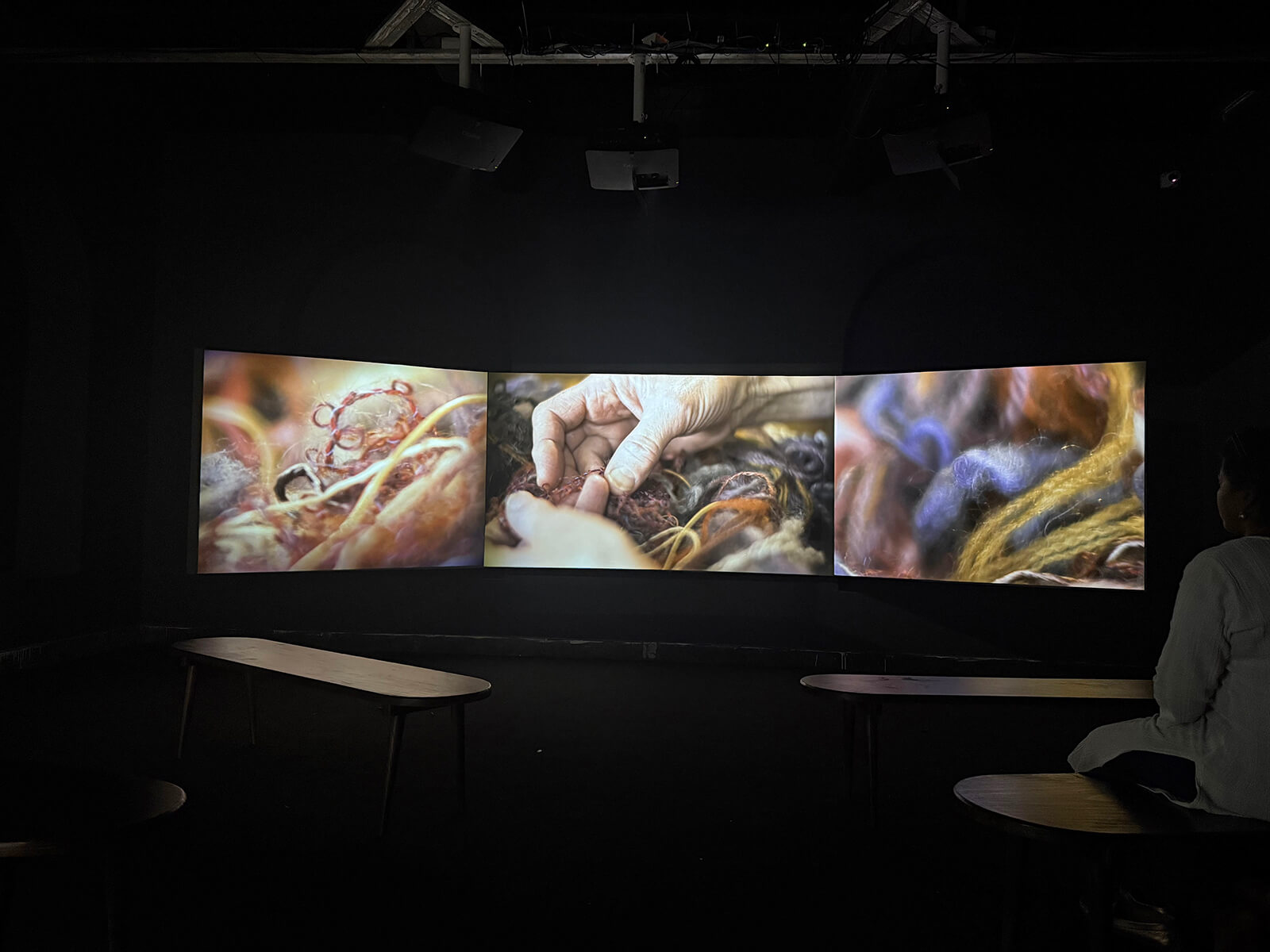
No two people will get to experience the same biennale, not only because ways of looking differ across people, but also because of the way it is designed. Art lovers showing up in Kochi over the 110 days of the biennale will not encounter the exact same artworks. D’souza said, “What you are going to see over the course of three months is artworks arriving and artworks leaving, waiting for other artworks to emerge. You are going to see things ferment, transform, mutate, decay and die.”
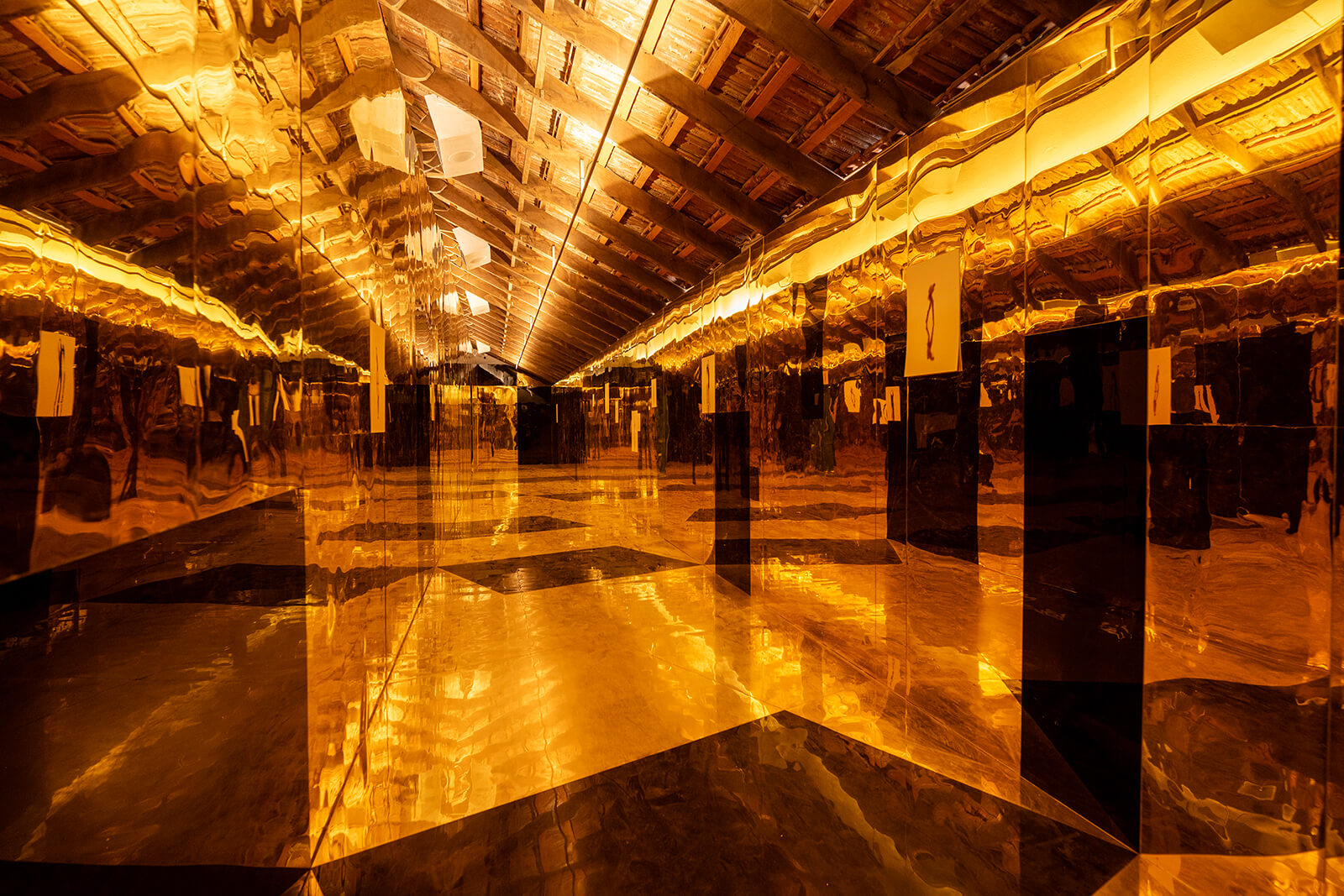
The biennale deserves kudos for exhibiting the work of artists from Pakistan, Bangladesh and Palestine in particular, given the current political situation. With the deterioration of diplomatic ties between India and Pakistan, as well as India and Bangladesh, artistic and cultural exchanges have borne the brunt. People-to-people ties have suffered due to the tightening of the visa regime that punishes artists in particular. With India’s growing proximity to Israel, there are curbs on public expression of solidarity with the Palestinian cause. The decision to host Palestinian artists is a statement of courage and conscience, and the invitation to Pakistani and Bangladeshi artists is a welcome gesture of friendship. At a time when artists are being criticised for being co-opted by either capitalism or the government, it was refreshing to see the biennale adopt this stance of care and integrity.
‘For the Time Being’, the 6th edition of Kochi-Muziris Biennale 2025 runs from December 12, 2025 – March 31, 2026, in Kochi, India.
The views and opinions expressed here are those of the author(s) and do not necessarily reflect the official position of STIR or its editors.
by Srishti Ojha Oct 21, 2026
Increasingly, artists, filmmakers and activists are turning to VR to create more personal, tangible accounts of the climate emergency and its impact on vulnerable communities.
by Mirra Lynn Oct 20, 2026
The Indian artist paints the old wadas of central Pune, capturing the traces of everyday life that cling to these structures, battered by time but unbowed.
by Anmol Ahuja Oct 15, 2026
How do heaps of souvenirs and relics with racist Aboriginal motifs and features become art? MCA Sydney’s winter showcase—the artist’s largest to date—beckons a possibility.
by Vandana Kalra Oct 14, 2026
With his latest exhibition as a point of departure, the modernist discusses his decades-long practice, the spontaneity of drawing and the social responsibility of artists.

make your fridays matter with a well-read weekend
Enter your details to sign in
Don’t have an account?
Sign upOr you can sign in with
a single account for all
STIR platforms
All your bookmarks will be available across all your devices.
Stay STIRred
Already have an account?
Sign inOr you can sign up with
Verification link sent to check your inbox or spam folder to complete sign up process
Tap on things that interests you.
Select the Conversation Category you would like to watch
Please enter your details and click submit.
Enter the 6-digit code sent at


Courage and conscience at the Kochi-Muziris Biennale 2025
by Chintan Girish Modi | Published on : Dec 26, 2025


 Sign in with Google
 Sign in with email
What do you think?