Art06 mins. read
Busan Biennale 2022 brings together Korean and international artists under one roof
by Vatsala SethiSep 08, 2022



by Srishti OjhaPublished on : Sep 23, 2026
Which came first—trees or the word ‘tree’? The answer seems foolishly obvious—trees are more than millennia old, predating humans and language by far. But look a little closer, and things—all things—begin to fall apart. Imagine a tree. You are probably picturing a tall plant with a woody trunk and leafy branches rooted in the ground. However, beyond appearances and a shared understanding, a ‘tree’ has no basis in data. Biologically, trees span all classifications within kingdom Plantae, standing shoulder to shoulder with ferns, flowers, bushes and other decidedly not-tree plants.
If we did not have separate words for ‘bush’ or ‘tree’, they would cease to exist, becoming ‘plants’ or something similar. The distinction between the two categories, which seems so solid, real and common sense to us, would collapse instantly without the words, the ‘signifiers’ which label them. Not only do ‘trees’ not exist before the word tree, but the word creates the tree. Think of your country. I’ll think of India. Without the word to describe it or the maps that enshrine the word into social and political acceptance, the ‘country’ ceases to exist, becoming indistinguishable land, Earth, belonging to no one and symbolising nothing. The proposition that language does not describe a pre-existing reality but instead creates it has deep consequences for society.
Philosopher Ludwig Wittgenstein put it more eloquently than I could, saying,
The limits of my language mean the limits of my world. – Ludwig Wittgenstein in Tractatus Logico-Philosophicus, 1921
This is part of what oft-misunderstood conceptual art explores. It interrogates the world of accepted labels, categories, signs and symbols to reveal the constructed nature of our reality. The medium of conceptual art is ideas themselves. It posits that ‘art’ is found in the intangible idea that inspires the creation of a physical art-object.
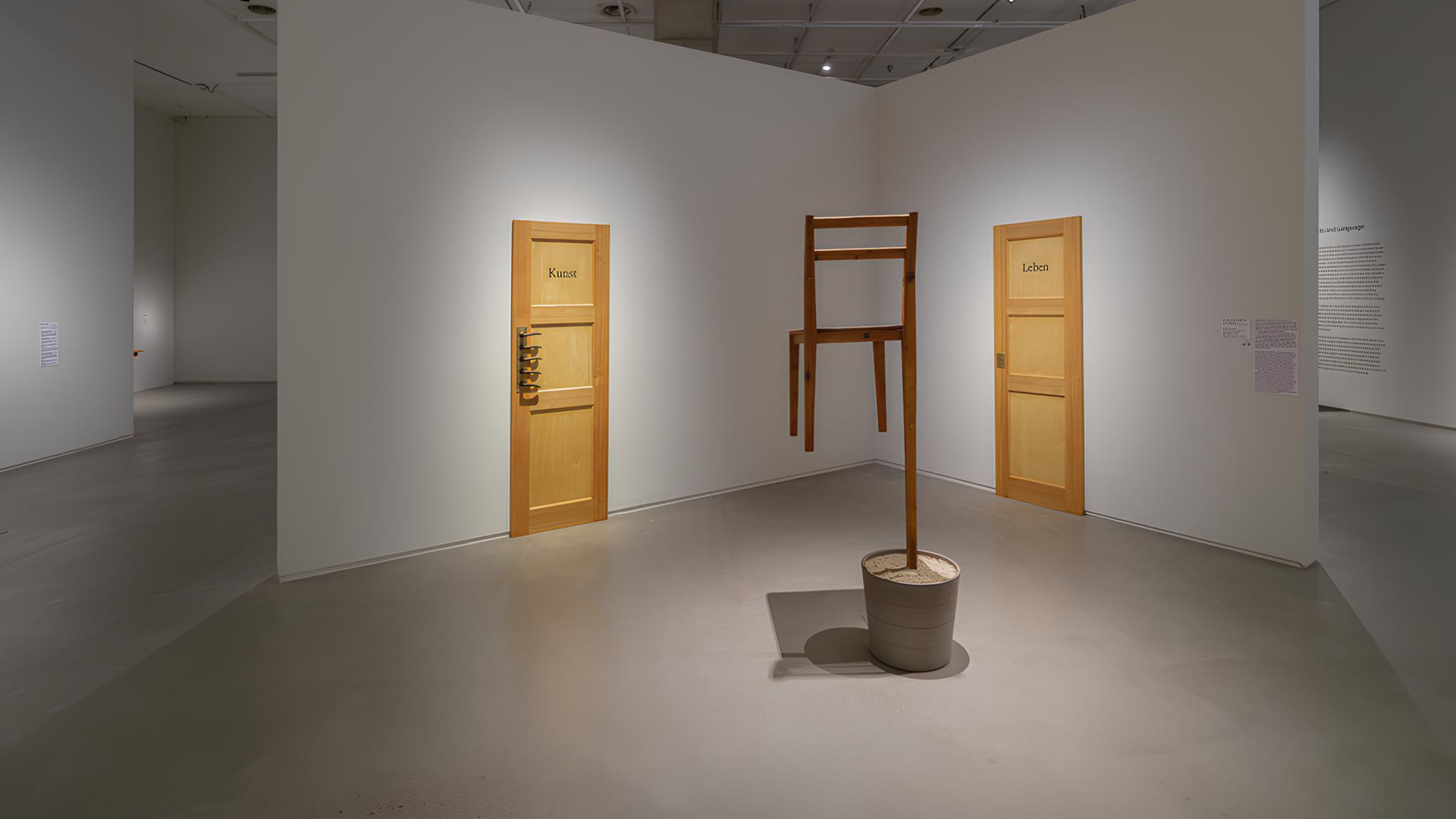
It is this tension that the National Museum of Modern and Contemporary Art in Seoul, Korea, explores in its new group exhibition, This is (Not) Conceptual Art. True to the philosophy of conceptual art, curator Bae Myungi of MMCA said in a conversation with STIR, “Conceptual art is described as an art that emphasises ideas or concepts over the visual and material outcomes of artworks. However, [Korean conceptual art] comprised diverse practices that rethought the relationships between language and action, the body and materiality, measurement and signs and institutions and reality. The parenthetical ‘(Not)’ in the exhibition title, This Is (Not) Conceptual Art, embodies the intention to leave open the multiple layers of meaning and interpretation that unfold in each work, rather than confining Korean conceptual art within a fixed definition.”
Already, the focus on ideas, questions and granular interrogations of language and categories and their impossibility to wholly coincide with the intangible reality they represent, is at the forefront. Like much postmodern art, Korean conceptual art began taking shape as the nation wrestled with existential questions about its identity, morality, and self-determination. In the 1960s, South Korea was still grappling with the Korean War, which split it from its now-neighbour, North Korea, and was undergoing the kind of exponential economic and technological growth few have lived through.
During this time, the postwar artistic landscape was largely split into the poles of Dansaekhwa and Minjung art. The former was dominated by minimalist, monochromatic paintings that favoured formal and universal aspects of art, whereas the latter rejected them, turning art towards a social, activist and often democratic purpose. From the late 1960s to the 1980s, art as an experiment with language, logic, action, time and space began to emerge through the activities of emerging artists and groups like The Korean Avant-Garde Association (AG) and the Space & Time Society for Plastic Arts (ST), who interrogated language, translation, mistranslation, identity, cultural hybridity and the imperfect system of signs which undergirds society. Following landmark historical events such as the Gwangju Democratisation Movement in 1980 and the June Democratic Struggle in 1987, conceptual art morphed into conceptualism—more than an art style, a methodology for re-theorising reality in a country in the midst of reconstruction.
The breadth of Korean conceptual art is seen in the MMCA exhibition, which features over 140 works by 30 artists across different generations, philosophies and media. Myungi explained the subsequent exhibition design, saying, “The exhibition adopts a structure in which the questions expand, rather than a chronological arrangement… [It] is organised into four sections: Language, Logic and Action; Objects and Language; Maps and Measurement; and Mediators of Signs.”
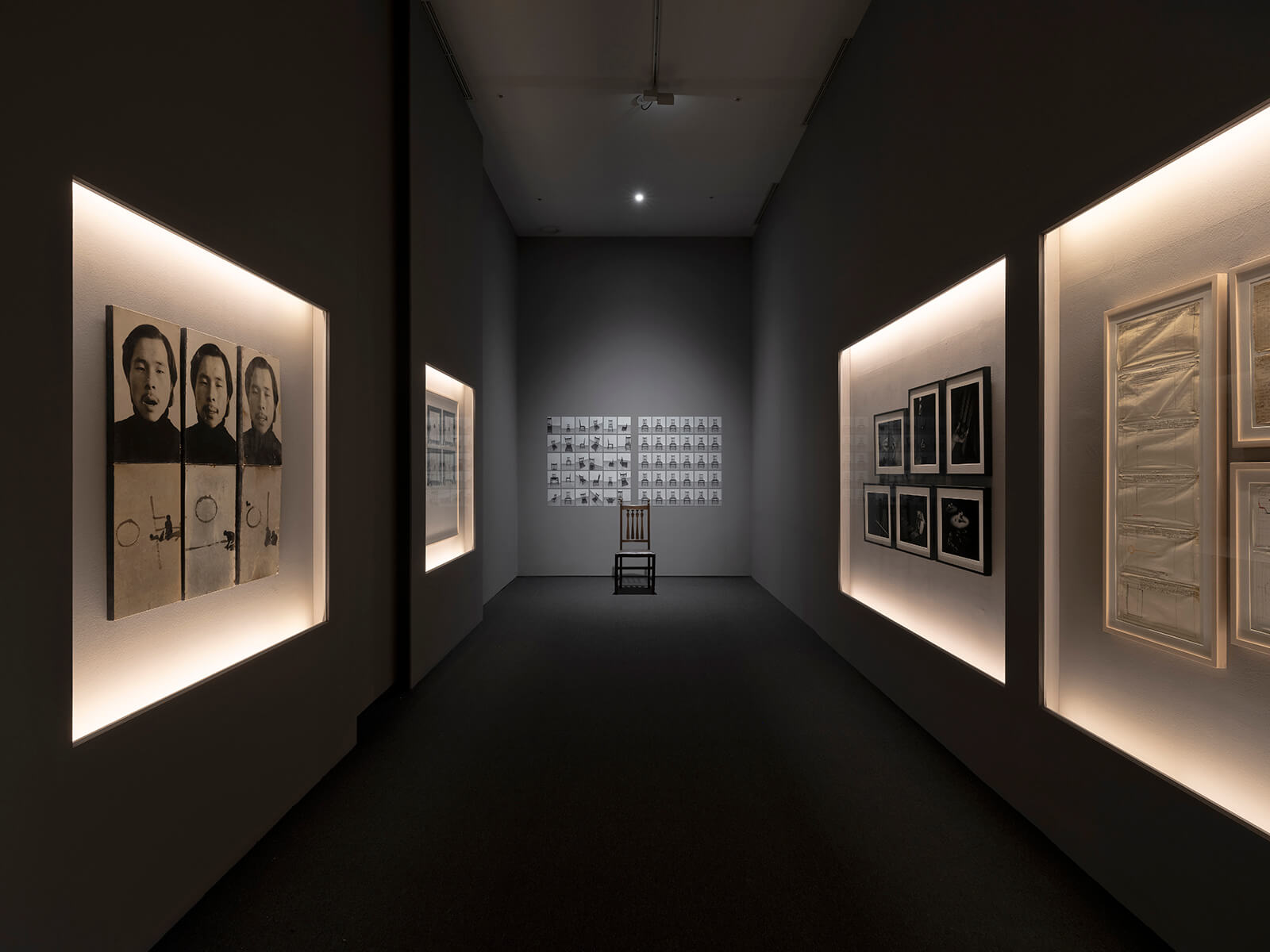
The first section includes seminal works from conceptual artist Lee Geon-yong’s Event Logical series, which transformed everyday routines into repeated actions or ‘events’ that, in their detachment, could be analysed. Photographs of the performance art The Logic of Place (1975) show the artist drawing a circle with chalk, stepping out and shouting ‘There!’, then pointing in, stepping in and shouting ‘Here!’ While pointing at the floor.
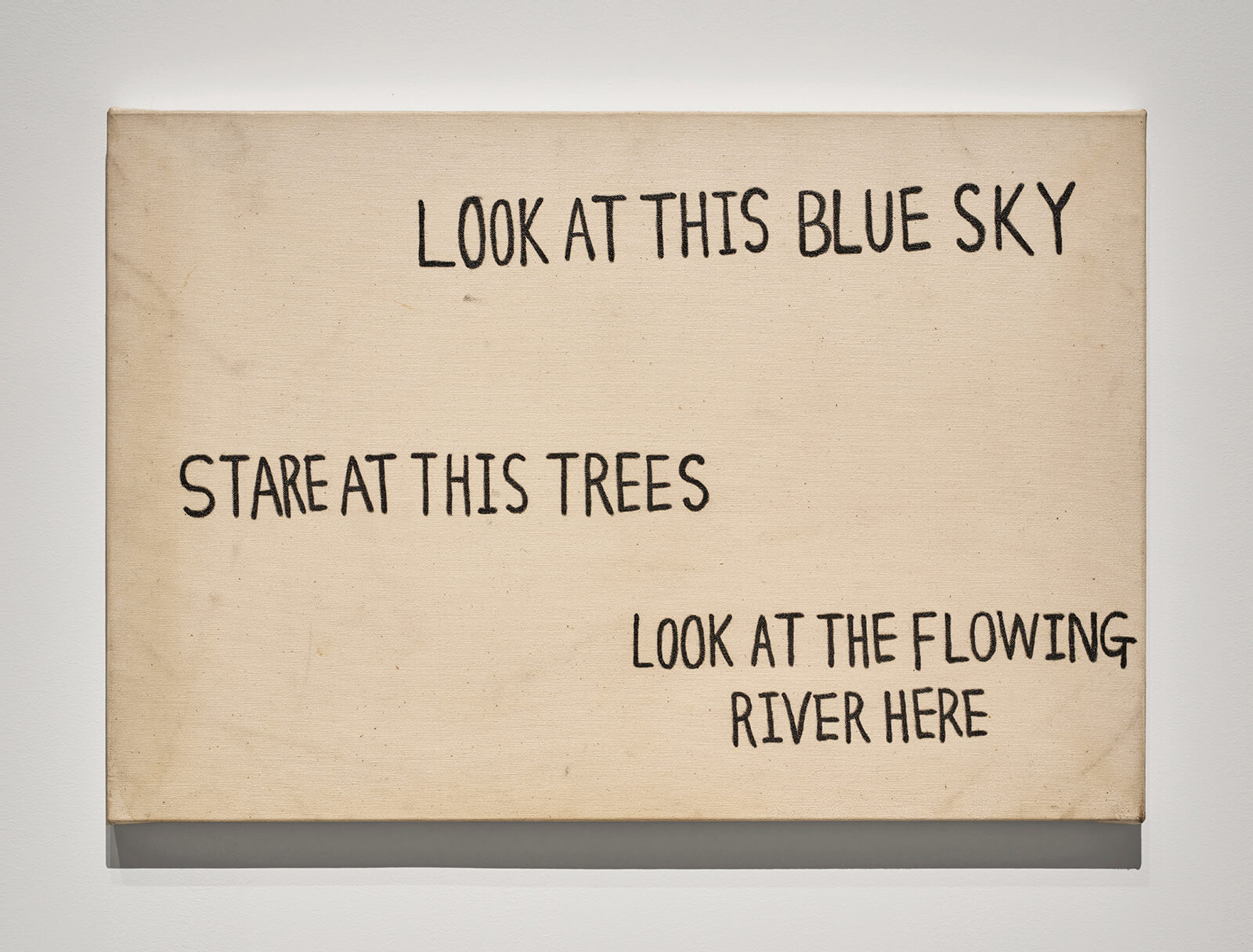
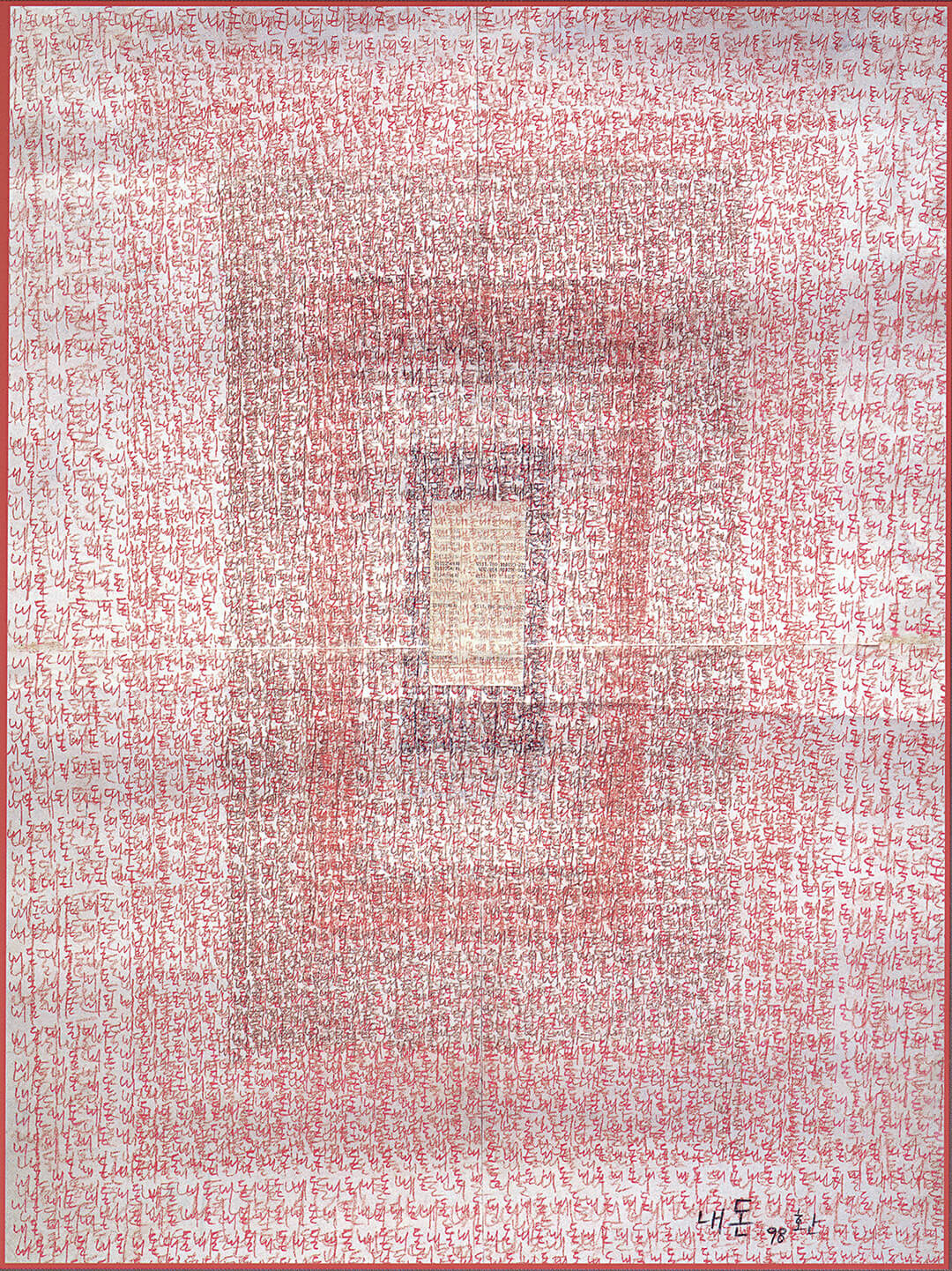
In Objects and Language, artists like Ann Kyu-chul and Kim Beom challenge the presumed 1:1 relationship between language and the objects it refers to, revealing the instability of systems of meaning. Beom’s Landscape #1 (1995) uses ideas and language as material to create an image in the viewer’s mind by painting instructions in a kind of performative speech (speech that prompts rather than describes action), for example, “Look at this blue sky.” The resulting artwork is not an object but a reflective, collaborative process. Meanwhile, works like Joo Jaehwan’s My Money (1988) use language and wordplay to transform everyday objects, like a passbook, into a record of financial desperation and the cycle of ownership and debt.
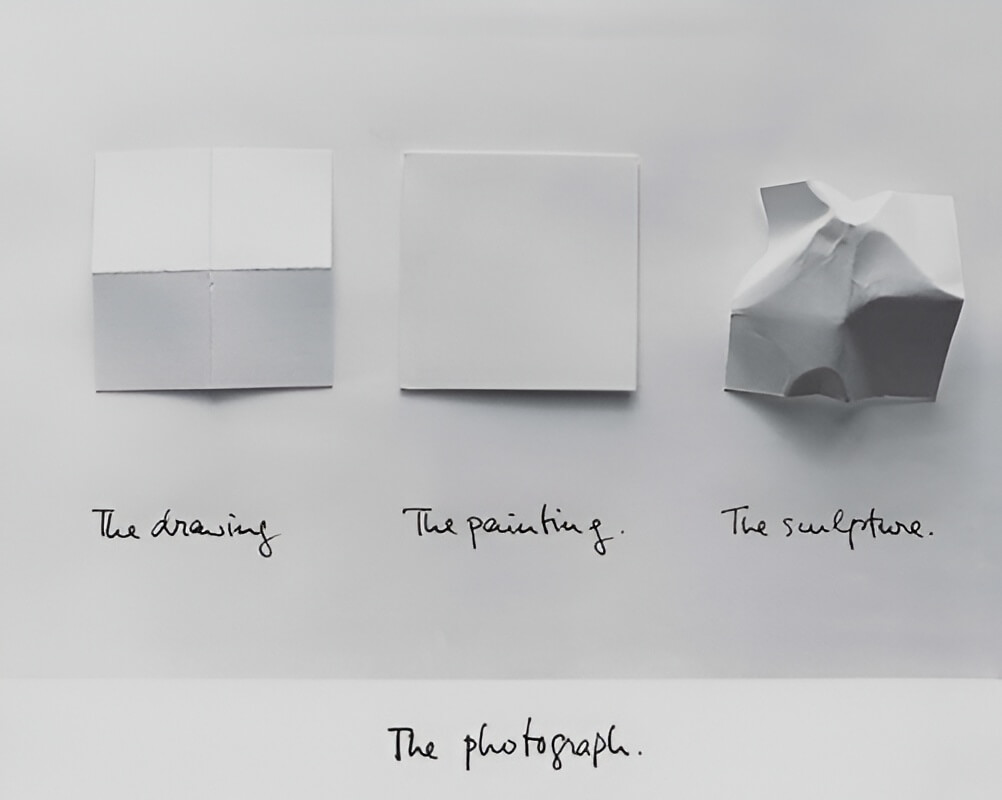
At the Museo Moderno in South America, an exhibition of renowned Uruguayan artist Luis Camnitzer,titled Luis Camnitzer: Everything to Learn. The Resurrection of Simón Rodríguez, celebrates the artist’s legacy and his work, which sought to reimagine Latin American identity, art and independence. Camnitzer’s 1981 work, The Photograph, is an elegant summation of the challenges posed to authorities of meaning and culture-making in society, like institutions of art. It also lives in and explores the liminal space where an object and its descriptor do not overlap entirely, creating instability but also possibility and subjective agency.
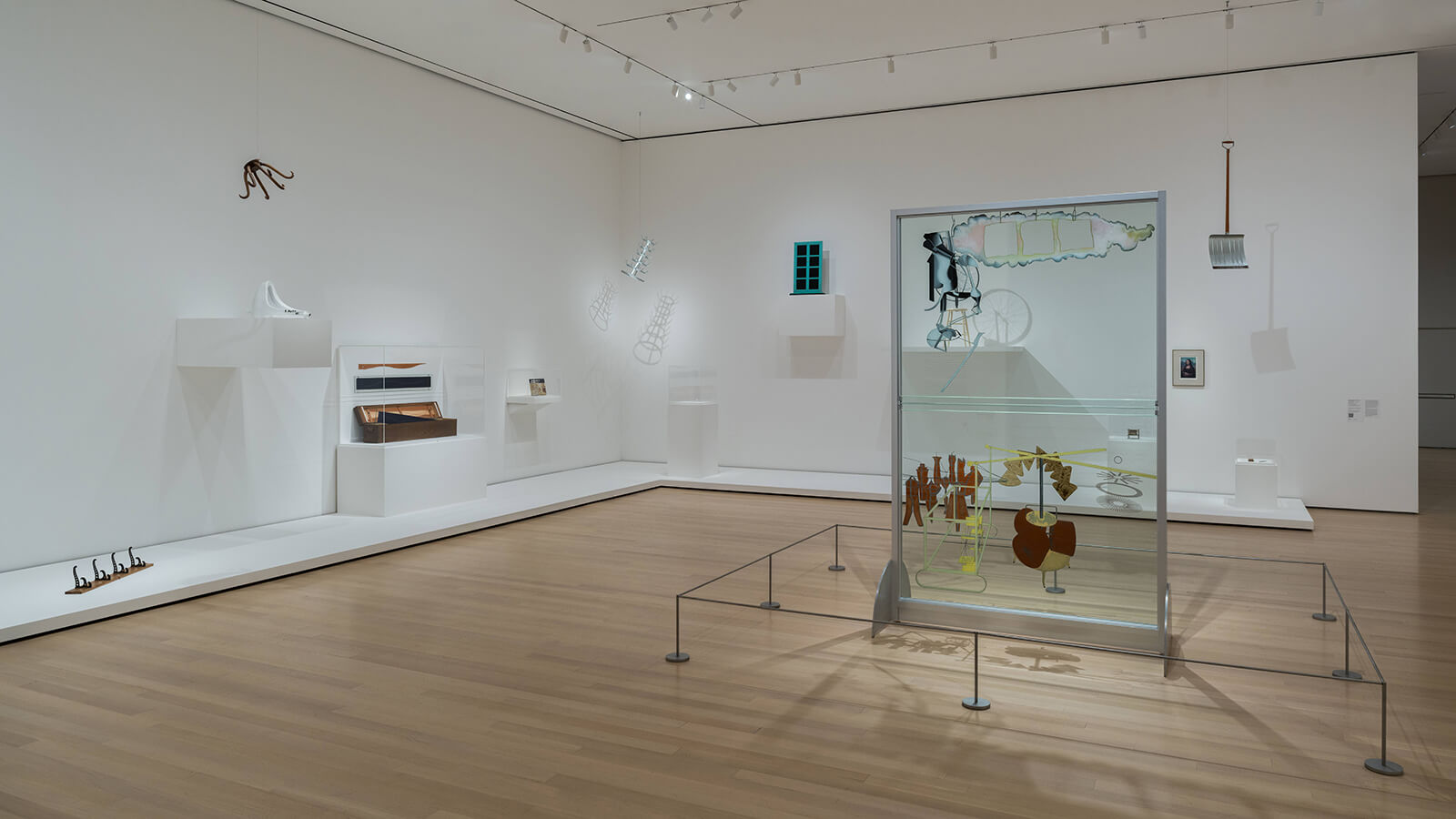
Conceptual art is enjoying a global moment in the sun, including the Marcel Duchamp retrospective at the Museum of Modern Art in New York. Duchamp questioned authorship, the nature of art and the primacy of the art object, with his readymades and print-based works becoming a kind of precursor to conceptualism. At Hamburger Bahnhof in Berlin, another exhibition, Is It Better?, features the work of conceptual artist, photographer and multimedia artist Sophie Calle. Calle echoes the questions other conceptual exhibitions grapple with in photo series like The Detachment. In 1996, she began photographing public places in modern Berlin where symbols of the GDR (East Germany) were removed following the fall of the Berlin Wall, documenting the significance of symbols and their physical effects on their surroundings.
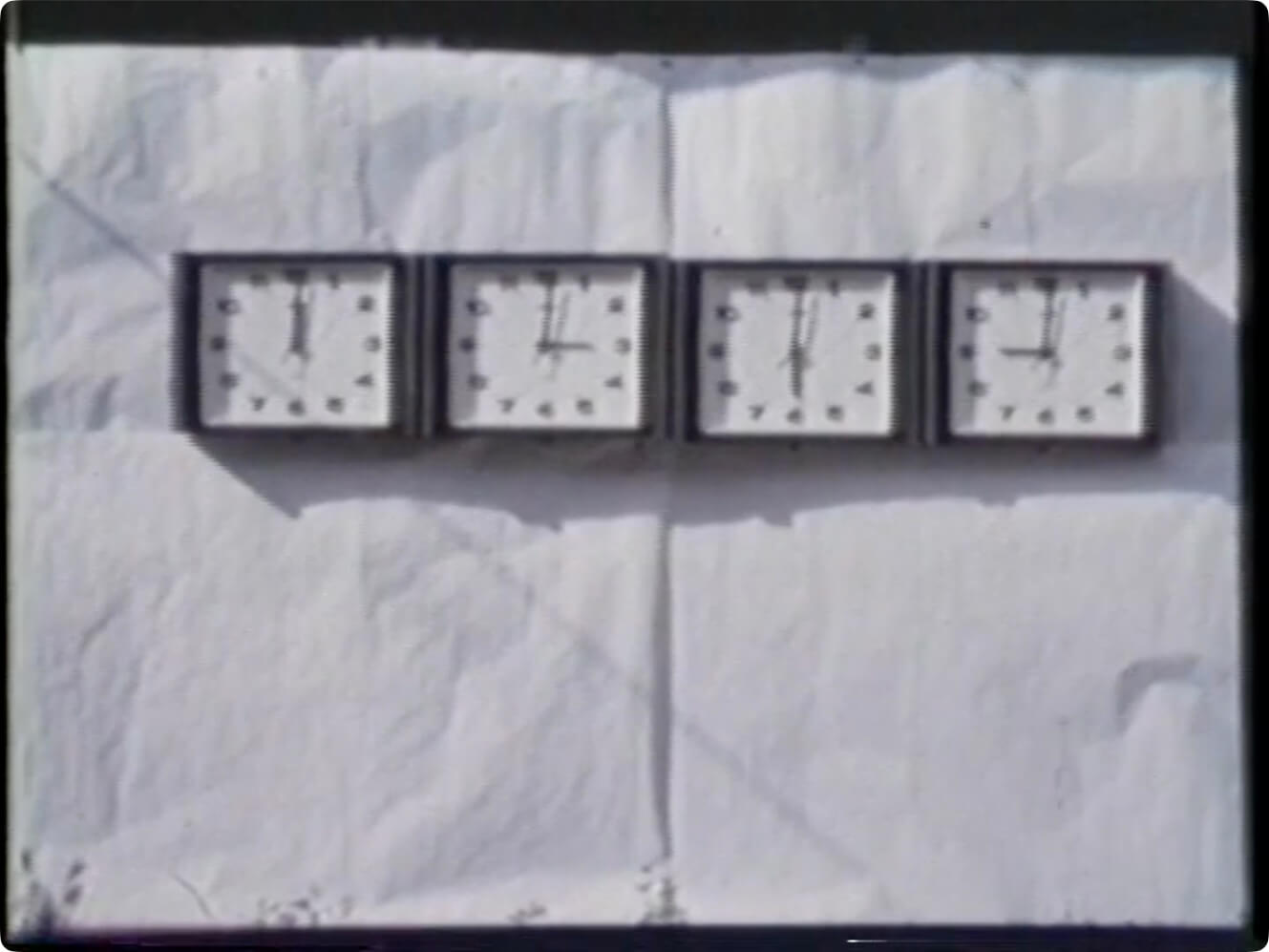
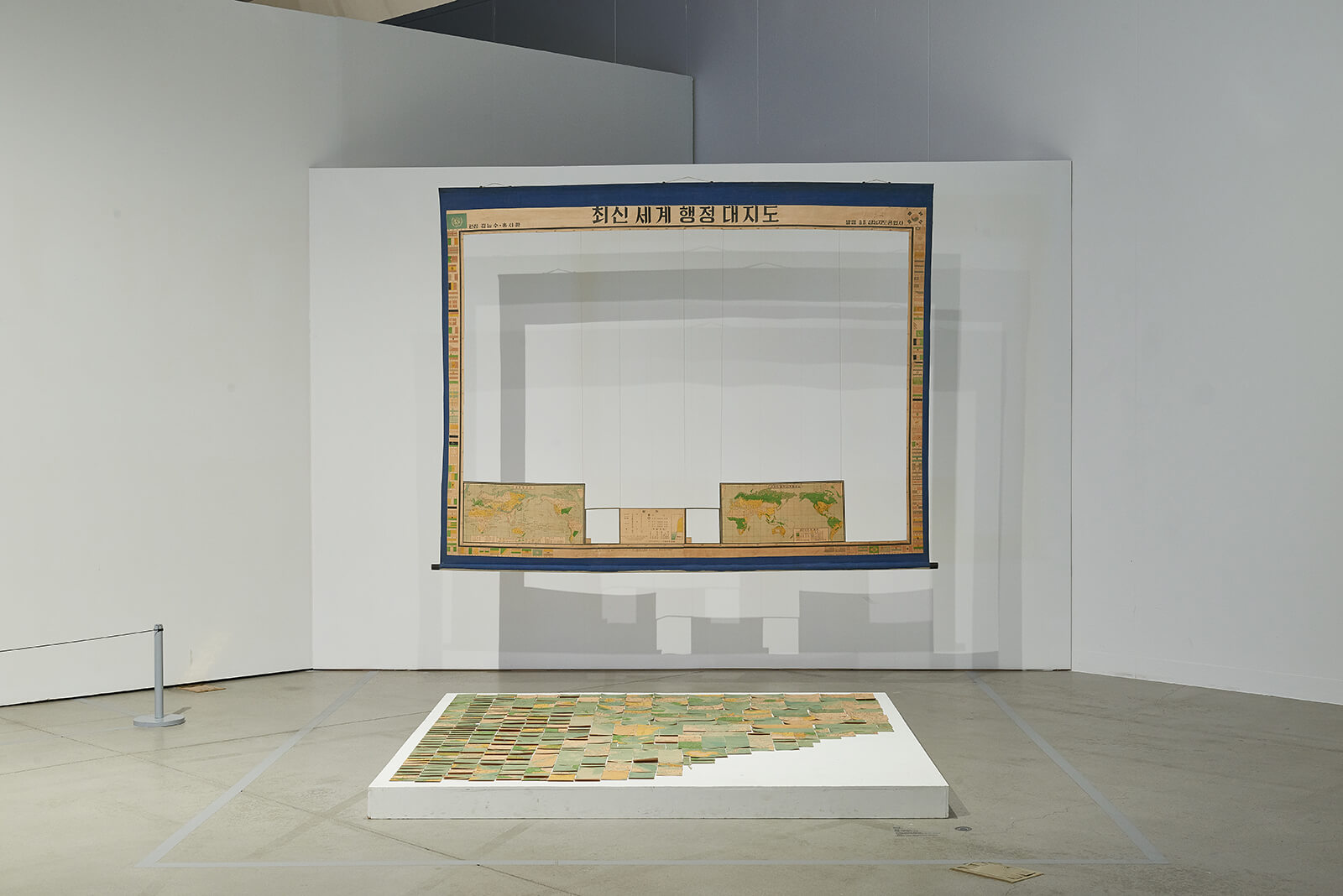
Back at MMCA, Maps and Measurement expands this challenge using more material, everyday sources. Artists like Seong Myeong-Gyeong, a Korean avant-garde artist and early ST group member, reveal the constructed (and therefore political) nature of scientific systems of definition and measurement in tandem with navigating their own identities, which were often split between regions and time zones in South Korea, Japan or the US. Myeong-Gyeong presents a deconstructed world map as a kind of collage rearranged within an outer border in his 1974 work World Map (World Upside Down), revealing the then world order to be a product of nothing more than shared consensus and inviting viewers to imagine a new reality.
These experiments with maps have been popular in conceptual and experimental art across the globe, with artists like Italian post-war master Alighiero Boetti whose Mappe series rendered world maps patterned with their national flags. He collaborated with Afghani craftswomen who used them as a base for tapestry. Over almost two decades, he created more than 150 Mappe works, tracking the changing world and its fluid borders, even switching from the Mercator projection map image to the more equitable Robinson projection in the 1980s, illustrating the enormous geopolitical impact of symbols. Currently, works from across 25 years of his practice are on view at the San Marco Art Centre in Venice, Italy, at thesurvey exhibition Alighiero Boetti.
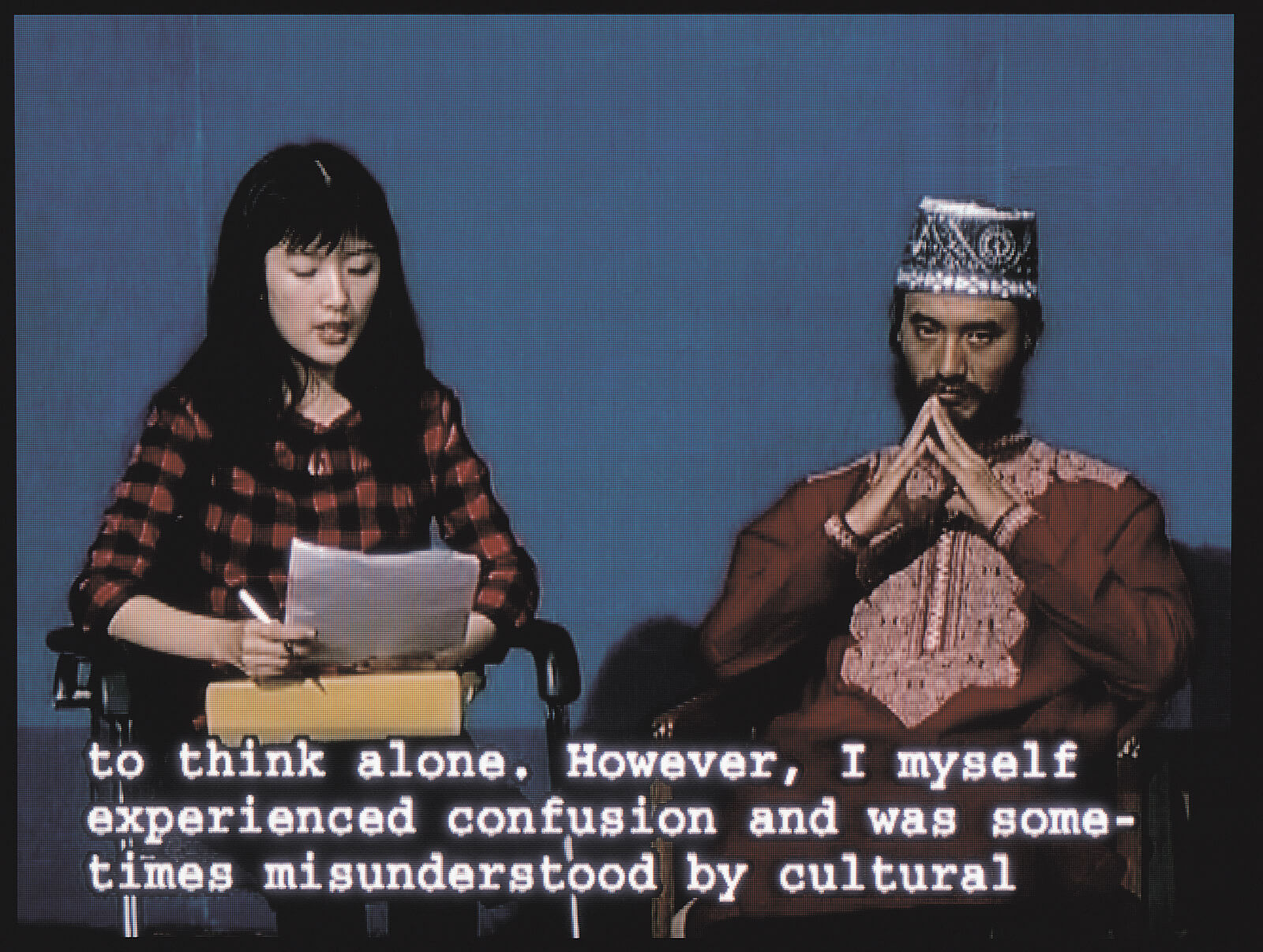
Similarly, in the fourth section of This is (Not) Conceptual Art, The Manipulators of Signs, sees artists turn their inquiring, destabilising gazes on the normalised ecosystem of signs that surround us every day in the form of newspapers, advertisements, broadcasts, political posters and more. Seong Myeong-Gyeong’s 1979 work, Site 1, for example, re-photographs images published in newspapers with editorial symbols (marks such as arrows or circles intended to guide the viewer’s gaze). He reprinted the images, adding symbols of his own, highlighting the ways in which news media, which is assumed to have a high degree of objectivity and neutrality, interprets events and shapes our perception of reality. Similarly, in The Talk (2004), Kim Hong-Seok stages an interview that presents itself as a typical interview with migrant workers about their human rights. In reality, it was scripted and performed by a Korean actor disguised as a foreigner and overlaid with arbitrary English subtitles, illustrating the ease with which fiction can pose as fact by adopting the veneer of news.
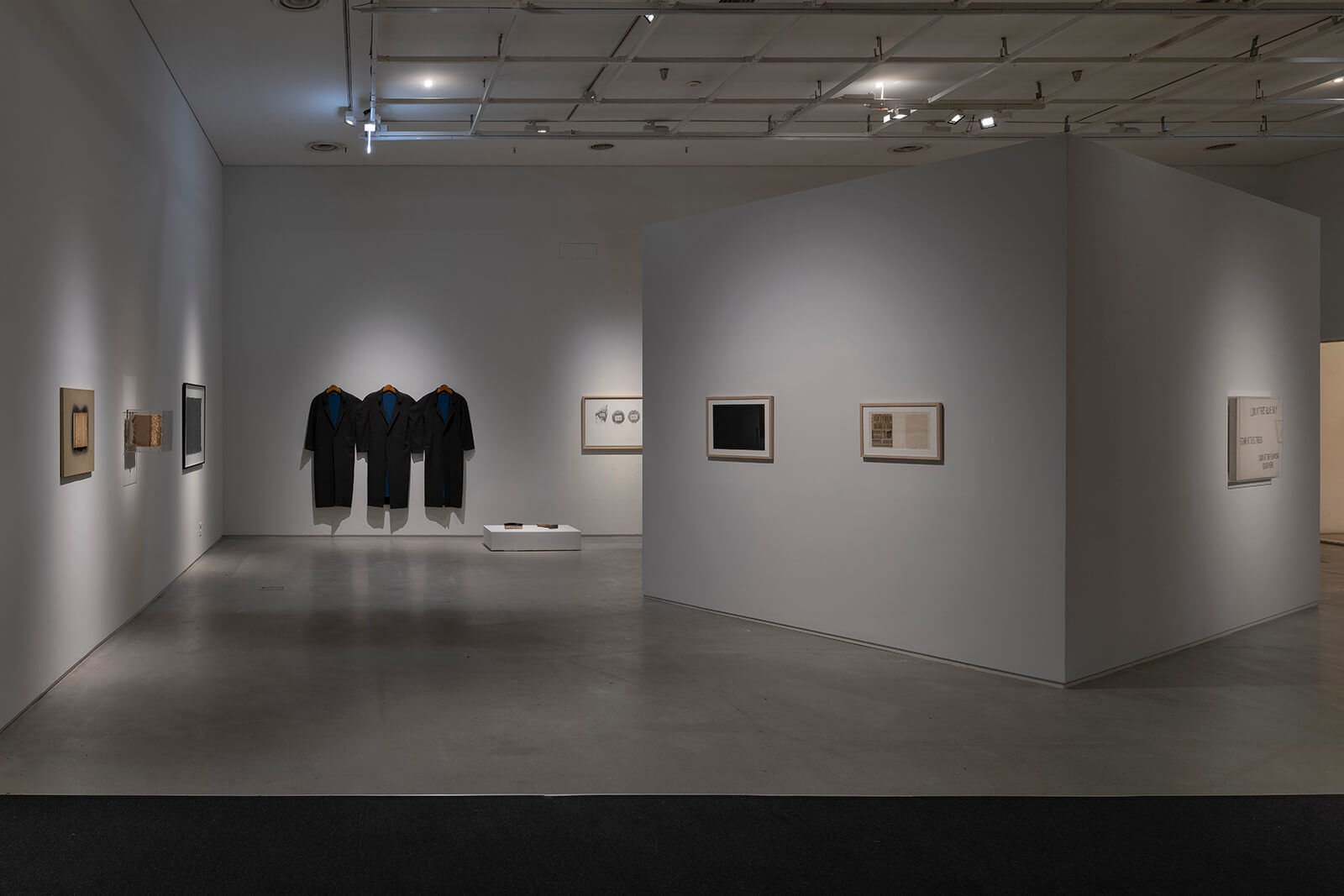
This is (Not) Conceptual Art is a nuanced, elegant exploration of the depth of the heady conceptual art movement that remains approachable and relatable. “As visitors move through the exhibition, they experience not simply the history of conceptual art as an art-historical category, but how the very ways in which we understand the world are constructed through language and objects, time and space, maps and measurement, information and media. It is at this point that the ‘concept’ explored in this exhibition extends beyond a concern internal to art and becomes a way of thinking about reality,” said Myungi.
In 2026, conceptual art is diverse but concordant. An art movement that emerged from global postwar periods of reconstruction, shifting climates and uncertainty resonates anew as curators emphasise the urgency of these artworks at a time when the political pendulum seems to hover at a violent extreme. As truth, art and authority face multi-pronged challenges from right-wing anti-intellectualism, online misinformation and artificial intelligence’s simulation of reality, conceptual art once again reimagines the ways in which we can relate to language, objects and the spaces around us without falling into unexamined, normative assumptions.
The views and opinions expressed here are those of the author(s) and do not necessarily reflect the official position of STIR or its editors.
by Srishti Ojha Oct 09, 2026
In his ongoing exhibition, the South African artist creates two post-apocalyptic futures to explore society’s relationship with textiles, patterns and technology.
by Srishti Ojha Oct 07, 2026
The Kolkata-based film festival shone a spotlight on local and international filmmakers and artists who are pushing the boundaries of what a film can encapsulate.
by Samar Jodha Oct 05, 2026
Looking at Ahmed Ali’s photographs of workers and industry within the wider history of industrial photography, from Soviet state imagery and Sunil Janah to Lewis Hine.
by Srishti Ojha Oct 02, 2026
The Indian artist’s exhibition at the Bruce Museum in the US thinks through fundamental questions of humanity by focusing on the Sun and the cosmological timescale.

make your fridays matter with a well-read weekend
Enter your details to sign in
Don’t have an account?
Sign upOr you can sign in with
a single account for all
STIR platforms
All your bookmarks will be available across all your devices.
Stay STIRred
Already have an account?
Sign inOr you can sign up with
Verification link sent to check your inbox or spam folder to complete sign up process
Tap on things that interests you.
Select the Conversation Category you would like to watch
Please enter your details and click submit.
Enter the 6-digit code sent at


How conceptual art is questioning the realities we take for granted
by Srishti Ojha | Published on : Sep 23, 2026


 Sign in with Google
 Sign in with email
What do you think?