Architecture04 mins. read
Brutalist Korea revels in the tensions between image, history and material truth
by Bansari PaghdarMay 07, 2026



by Bansari PaghdarPublished on : Apr 03, 2026
Brutalist architecture is violent architecture.
Norwegian sociologist Johan Galtung identified three core typologies of violence: a direct, most visible form of violence; the second, structural, hidden in social systems; and finally, cultural, consisting of the norms, values and beliefs that make the former two relatively more acceptable and legible1. These forms of violence feed off of one another—the tripartite system is rather designed to do so—creating a cycle of oppression and marginalisation that underlies the very order of the world. In architecture, there lie variations of structural and cultural violence through contexts, systems and architectural effects. Here, violence is enacted not through wanton destruction but imposition on the body and on perception, both personal and public. It is produced when space asserts itself with such ‘brutal’ force that it cannot simply be passively occupied.
It is precisely through these assertions that Brutalism often operates, especially considering the polarity of its reception in the wider public realm. Its massive scale, associated with institutional and even governmental architecture, bulky volumes, a ‘cold’, unfinished and singular material palette and complex navigation place the body in a condition of hyperawareness, of being enclosed within forms that far exceed its own position. Together, these assertions foster the creation of a built environment that does not respond to the presence of a body but demands that the body adjust to it.
The ‘violence’ inflicted by naked brutalism wasn’t intended as such, though; it aimed for social good; through frugality and the exposition of a material and spatial truth. Brutalism, a movement born out of the socio-political fallout following World War II, sought order amidst the chaos. Abandoning ornamentation and regional specificity, it was, in many ways, an architecture of systems, its origin lying in housing and institutional sectors, where collective organisation preceded individual experience. The same qualities that sought clarity through repetition and monumentality also resulted in conditions of control, disorientation and resistance as it strategically positioned, contained and at times, subdued the body instead of gently accommodating it.
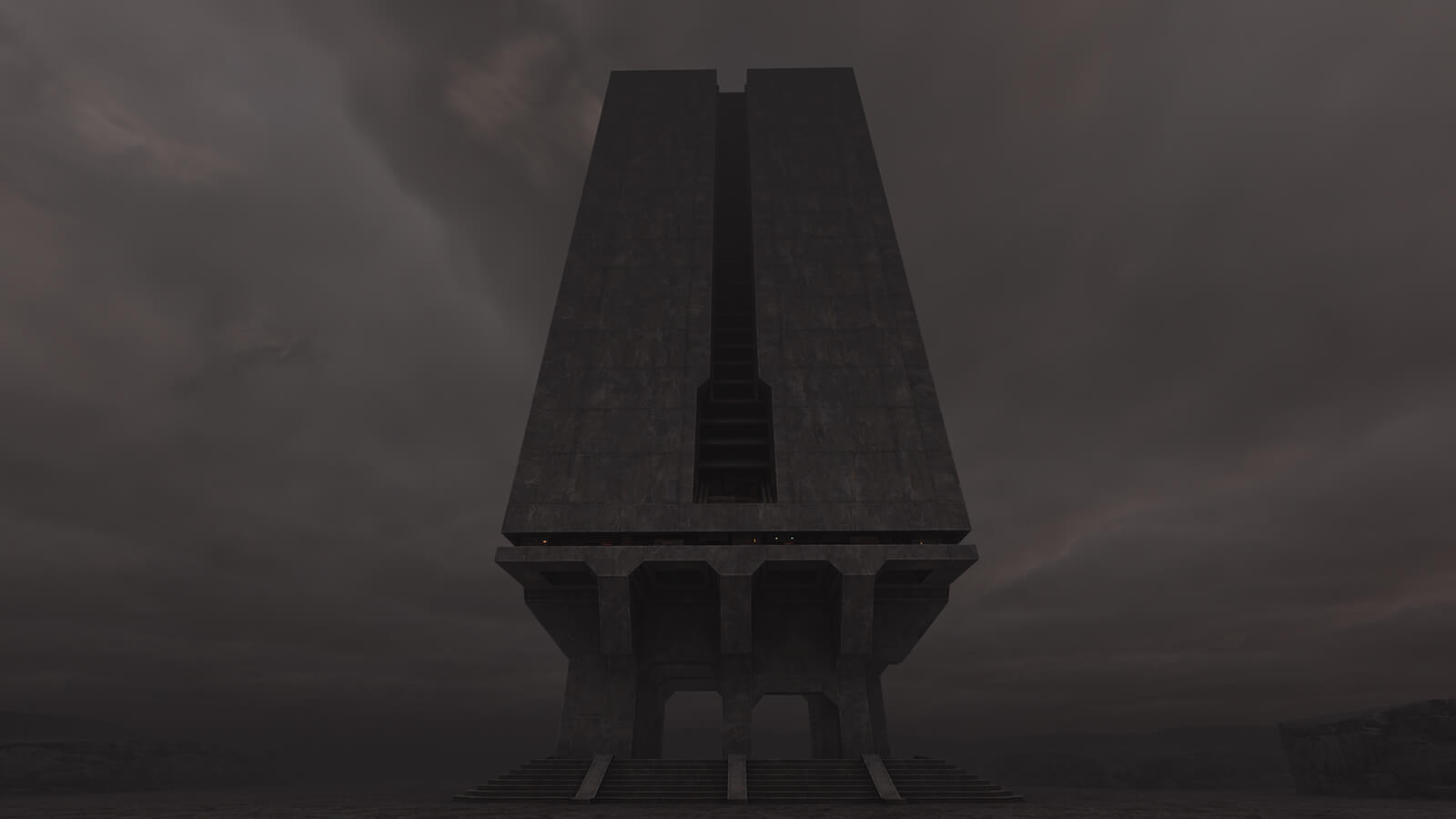
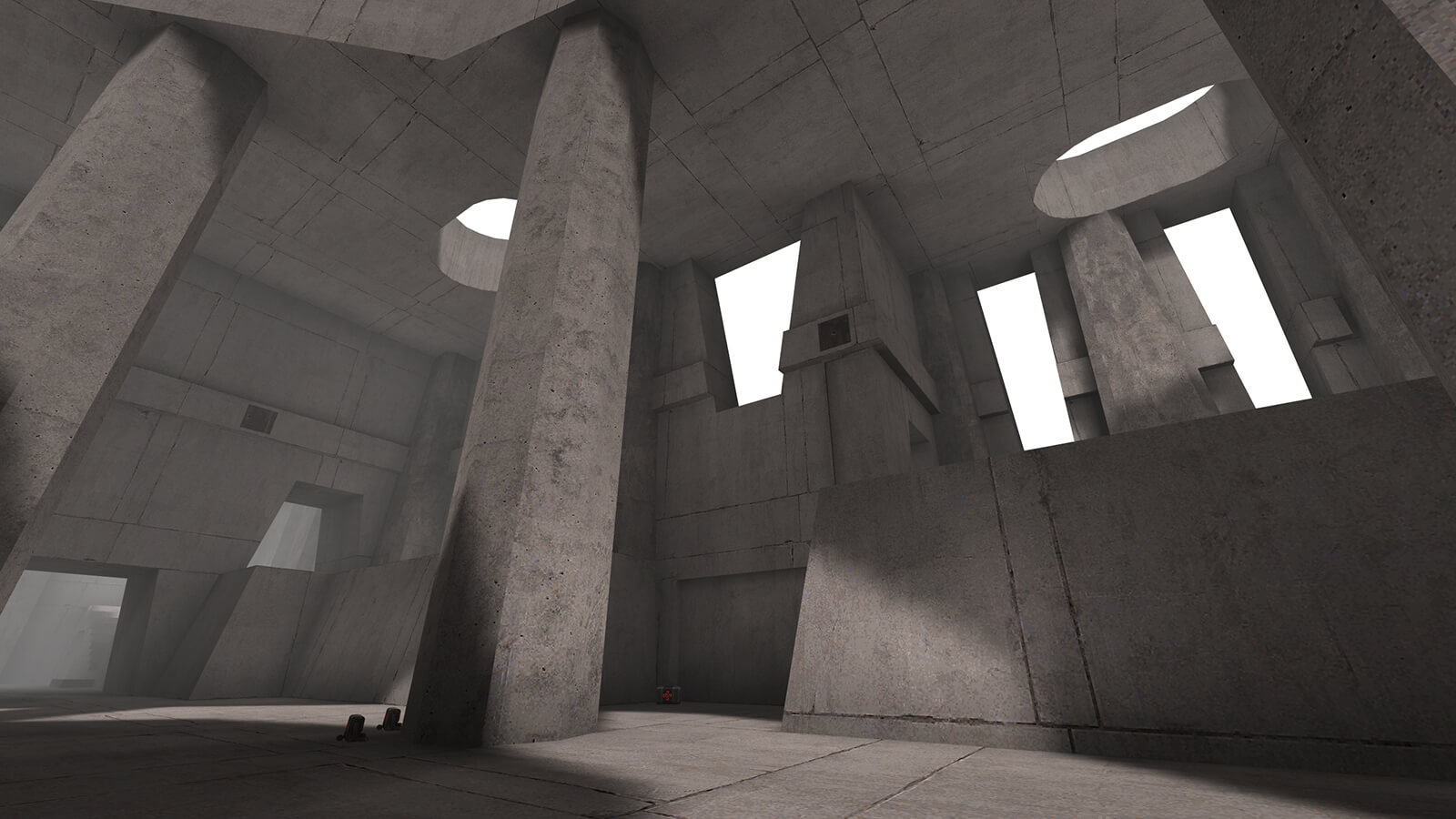
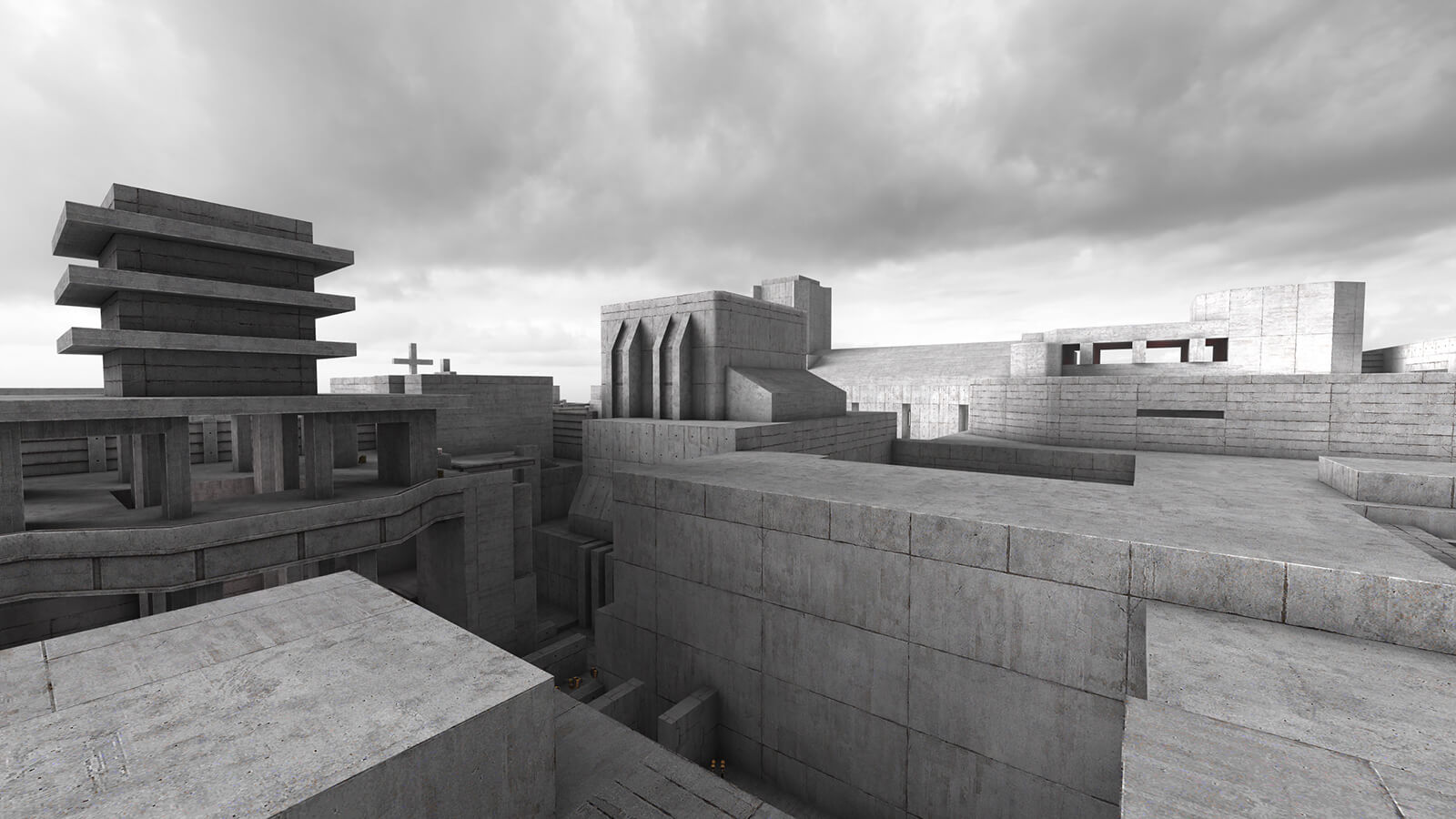
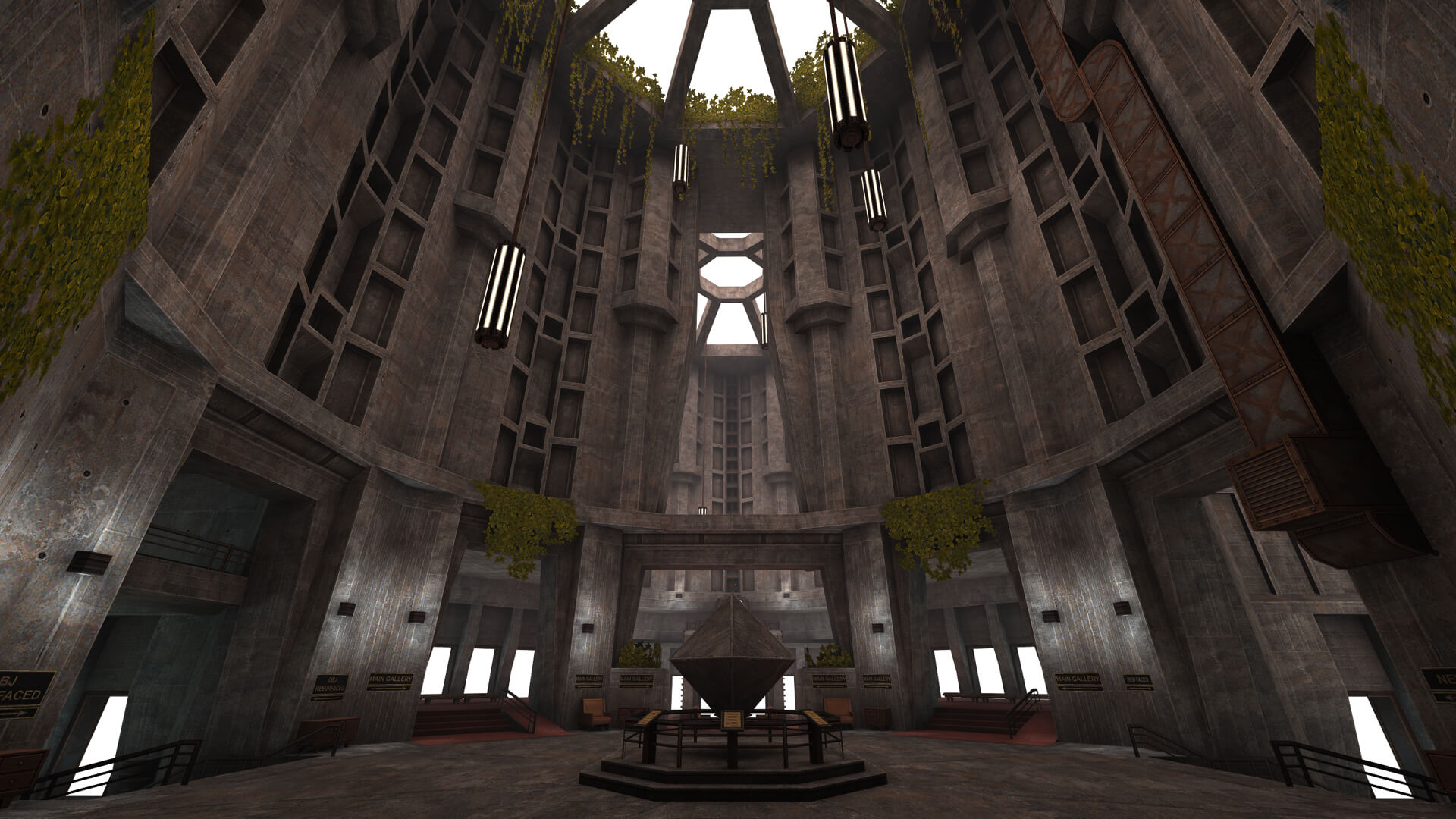
Over the decades, readings of Brutalist architecture have assumed a particular mode of engagement of the body within the space, wherein scale is equated with grandeur and the body an object, their interrelationship often being reduced to an aesthetic in the wake of digital media. Perhaps, a violent encounter is required to be staged, pushing the perceptions of Brutalism to new limits. This line of inquiry finds an unexpected testing ground in Quake Brutalist Jam III (QBJ III), an experimental, large-scale, community-built total conversion2 mod, celebrating the old-school level design of id Software’s classic first-person shooter video game, Quake (1996).
Spearheaded by US-based game developer and environment artist Ben Hale, online alias Makkon, and co-hosted by veteran modder Lain Fleming aka Fairweather, the mod introduces 77 brutalism-inspired maps apart from the 35 maps introduced in the first edition (2022) of the project. A community of game developers, game designers and modders came together to jam3, constructing everything from the maps’ environment designs and gameplay mechanics to audio and enemies. Tethered by Hale’s texture library, this community channelled the austere minimalism, stark geometries and monolithic volumes of Brutalist architecture to complement the low-polygon geometry of the game. For beginners who are unfamiliar with modding or do not own the original game, the mod also comes in a standalone version, which is ready to play. In that sense, the mod is an entirely independent game in itself.
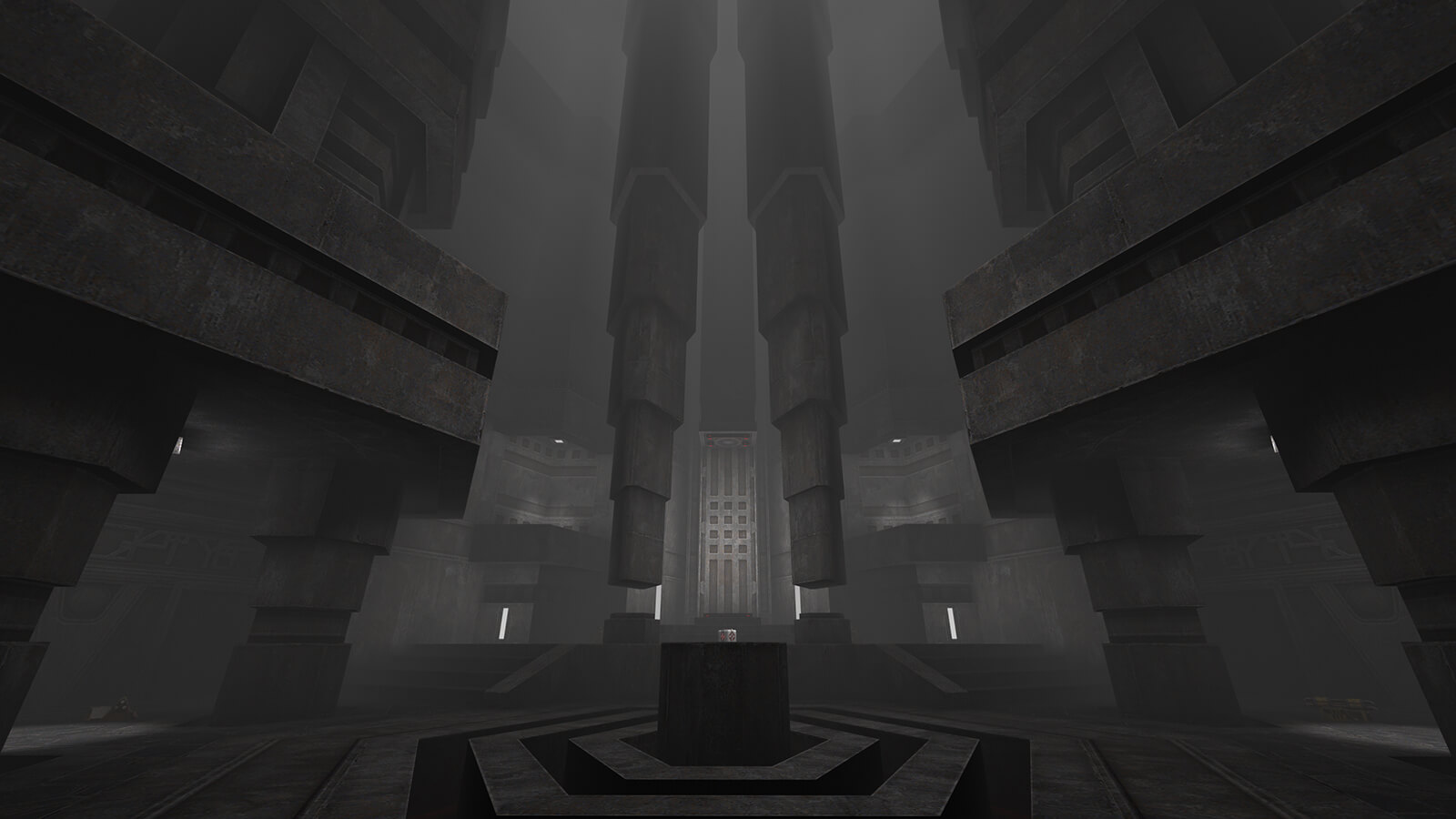
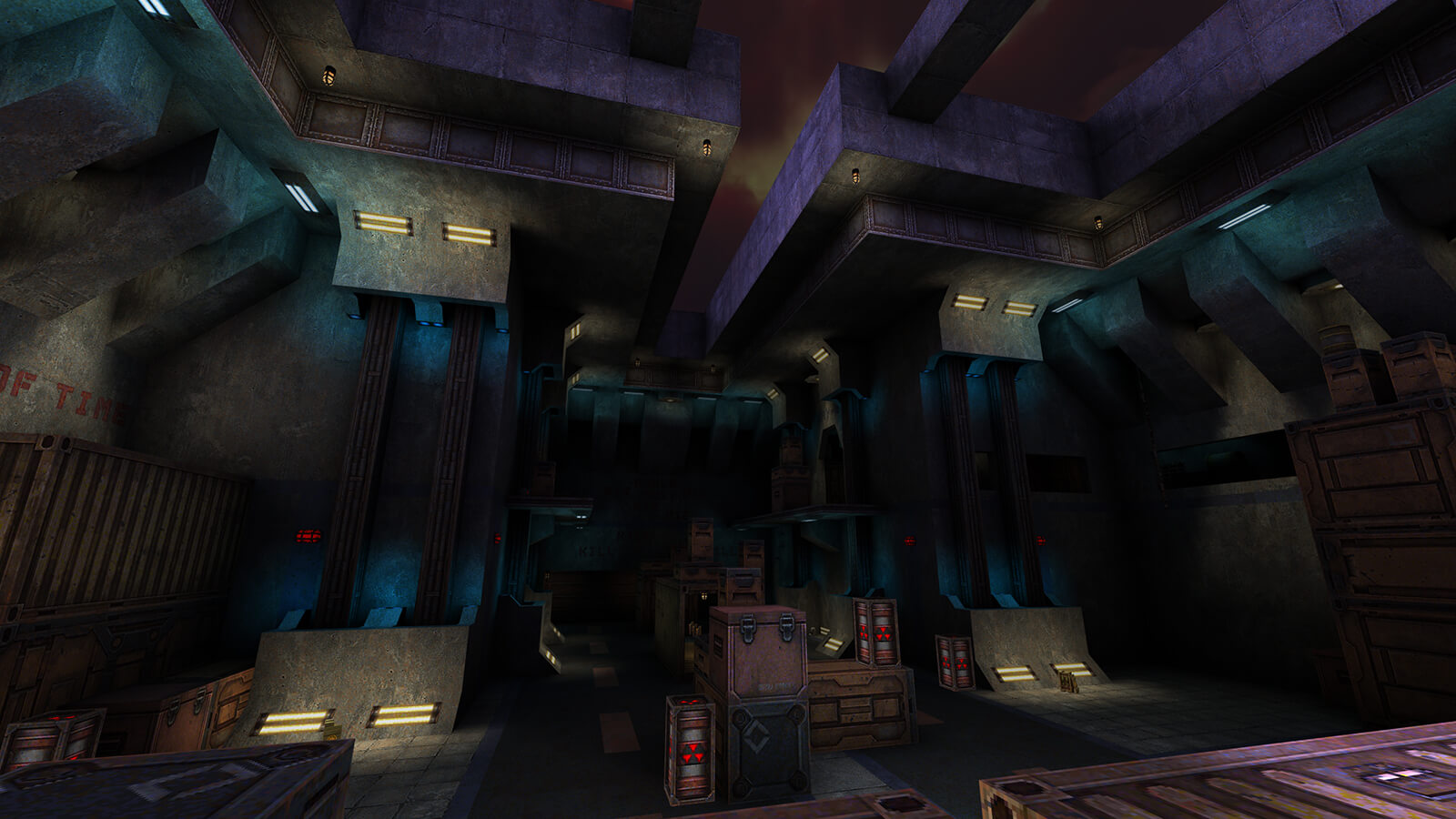
Within the constraints of a decades-old game engine, where space is encoded, and survival depends on rapid situational interpretation, Brutalist architecture is no longer passively experienced but activated through high-pressure encounters and vulnerable situations. To understand this activation within QBJ III, it is imperative to shift the focus from forms to experience, a somewhat lost aspiration for brutalism. The environment is perceived through images, videos, immersion and participation, all at once, as the player navigates these static yet temporally situated spaces that often shift in response to the player’s movements. In QBJ III, factors such as player input, framerate and sequencing come into play, feeding computational and visual data to the player in real-time to identify threats, exits and advantages and act upon them within seconds. Amidst these rapid movements and partial perception, the environments rely on simplified, legible forms that can be registered easily and strategised with. Long, narrow corridors become anticipatory grounds, atriums and courtyards render one vulnerable through exposure and vertical shifts in surfaces establish hierarchies of control. Brutalism becomes an active agent that positions the player to constantly interpret, resist and even master the very forces that oppress.
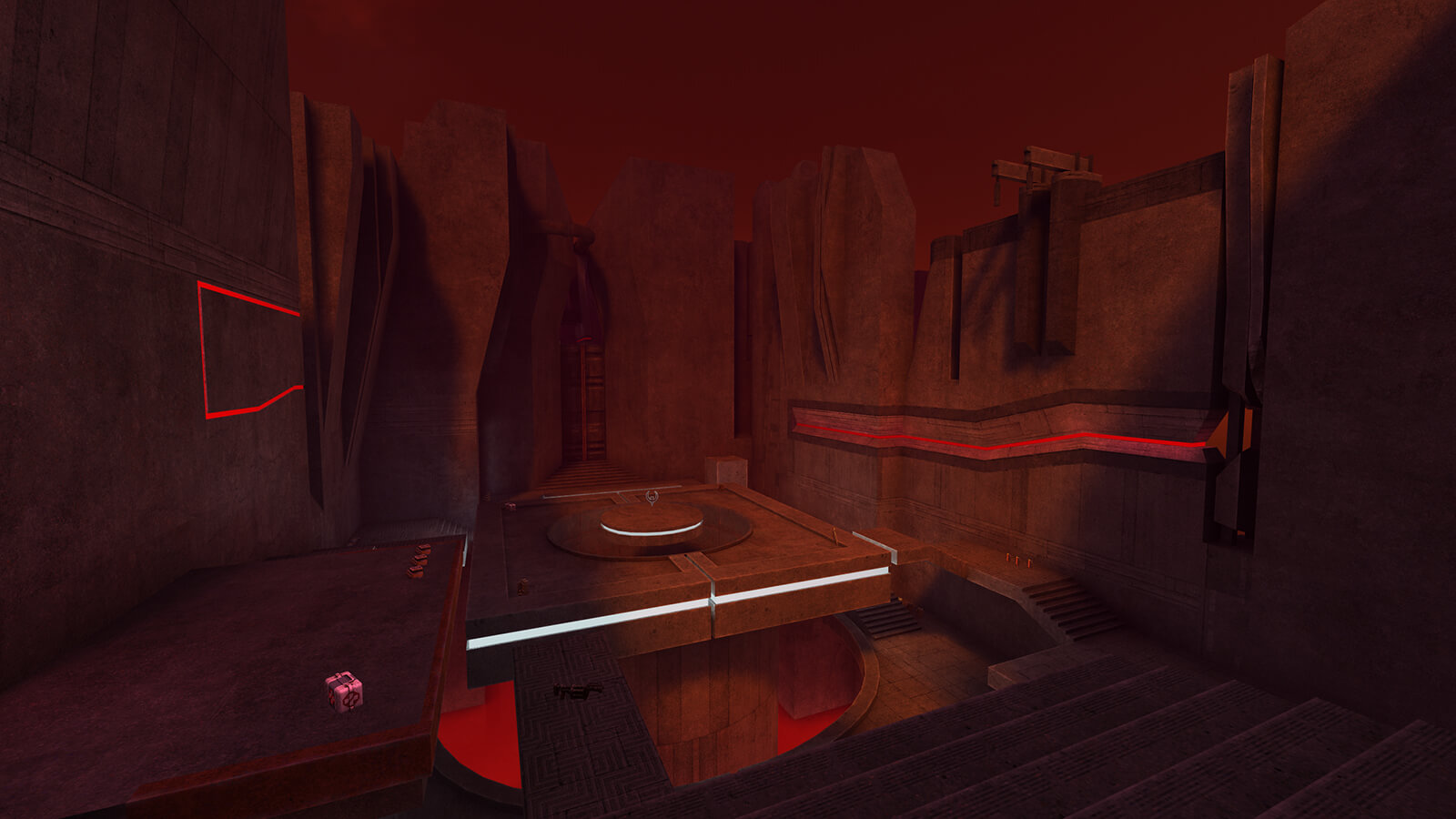
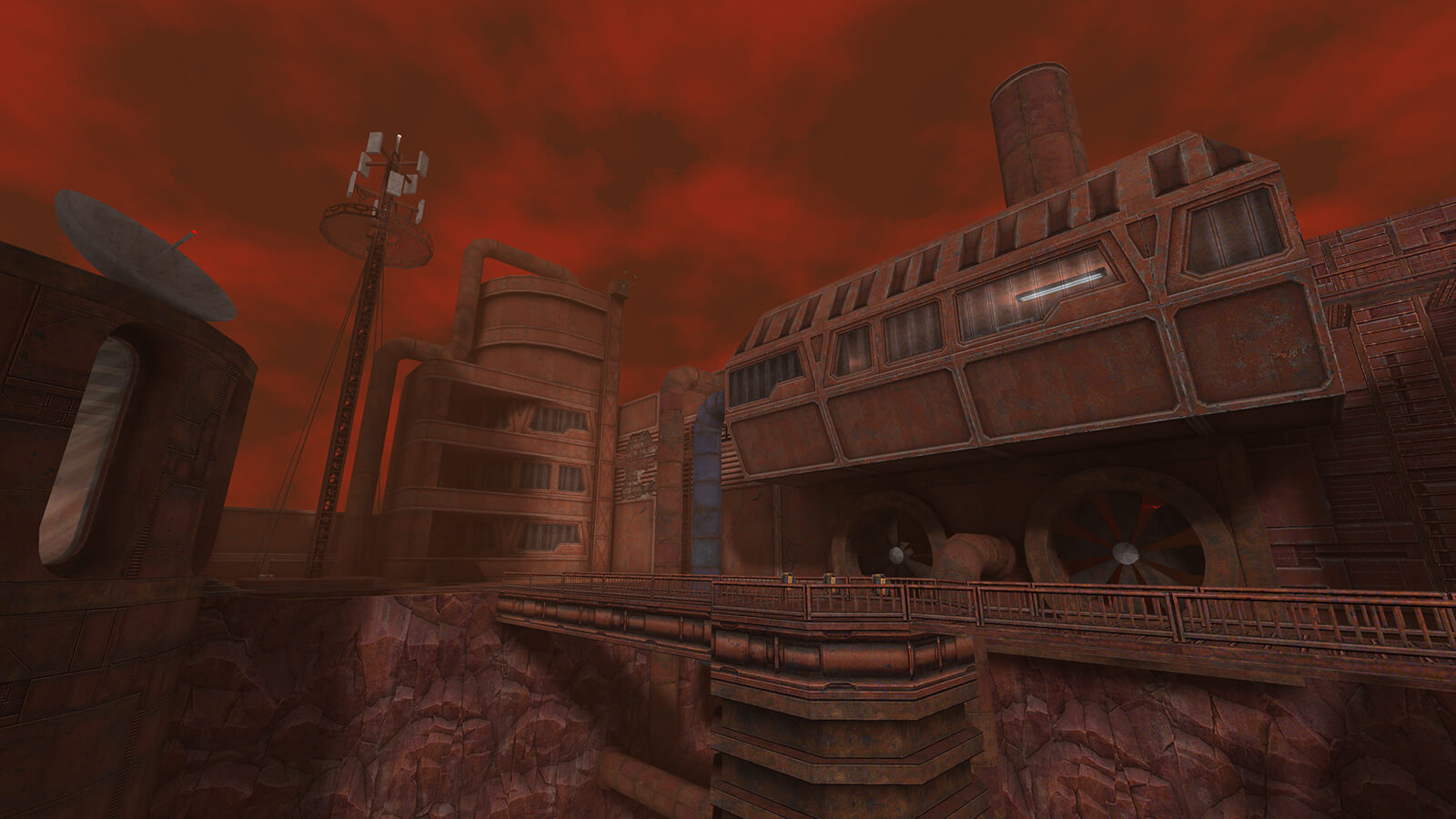
Level designers exploit the rigid, monumental qualities associated with Brutalist architecture and its authoritarian overtones, creating layers of disorientation, paranoia and oppression for the players. For instance, the hub map4, The Monument—designed by Hale, featuring a secret area designed by Fleming—shelters a deep, dark cavity of flesh within the ground, which leads to a contrasting series of well-lit spaces that serve as the entry point for all the community-designed maps. The map features a massive monolith that creates the impression of constant surveillance and imposes a lack of free will, offering only one way out of the situation. The digital architecture demands action and reaction, becoming a persistent condition across all the maps of QBJ III. Qualities of Brutalism that often put it under scrutiny—its rigidity, hostility and indifference to comfort—here begin to operate legibly under these conditions, directing the course of action.
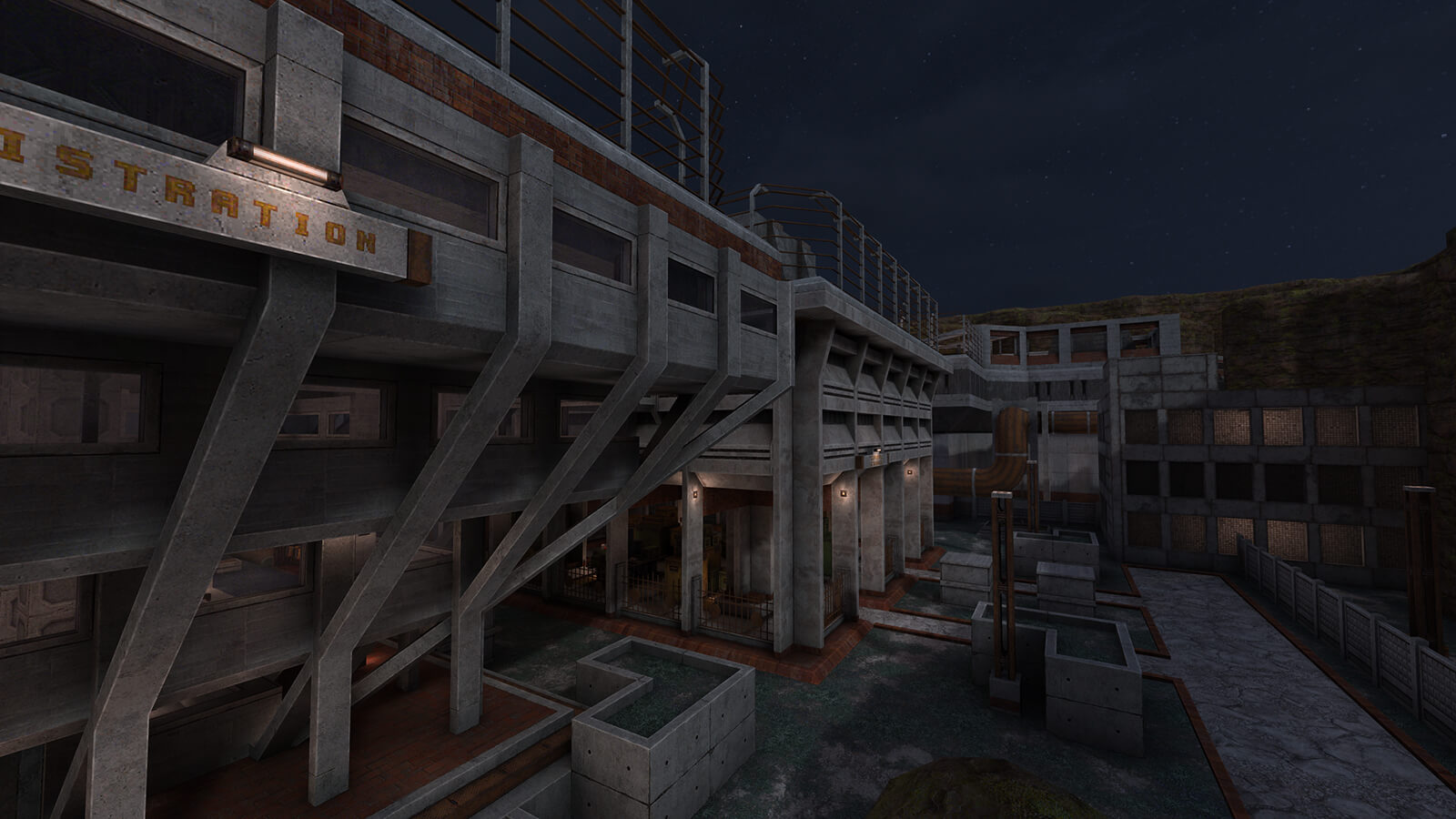
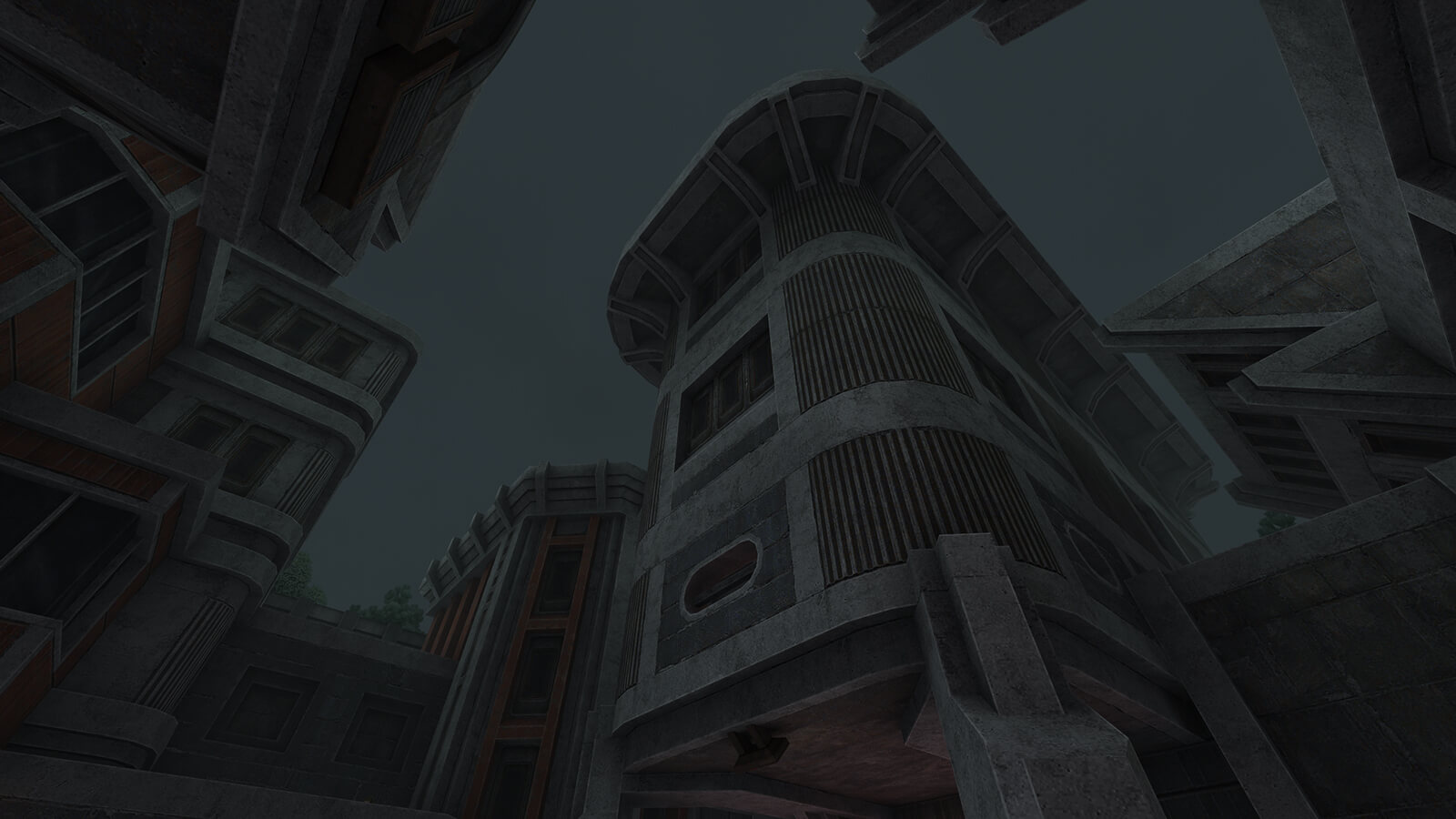
By no means does this absolve Brutalism of its real-world implications, but it does compel reconsideration of how they are perceived and addressed—and more importantly, their context, spatial and otherwise. If the same spatial qualities can result in alienation in one context and engagement in another, then it can be deduced that architecture should perhaps be examined through the conditions under which the forms are experienced rather than encountered. In QBJ III, Brutalism is stripped of any expectations similarly levied upon lived-in architecture and is given the freedom to provoke, instigate and incite. Meaning is produced as much through the response to the spaces as through the spaces themselves. This does not suggest that architecture should attempt to replicate the conditions of a game, nor that ‘violence’ should be embraced as a design objective. It simply calls attention to a narrower limitation within the discipline, a reluctance to engage with forms of experience beyond comfort. In avoiding spatial and conditional intensity that challenge these notions, architecture limits its capacity to engage beyond checklist-goals.
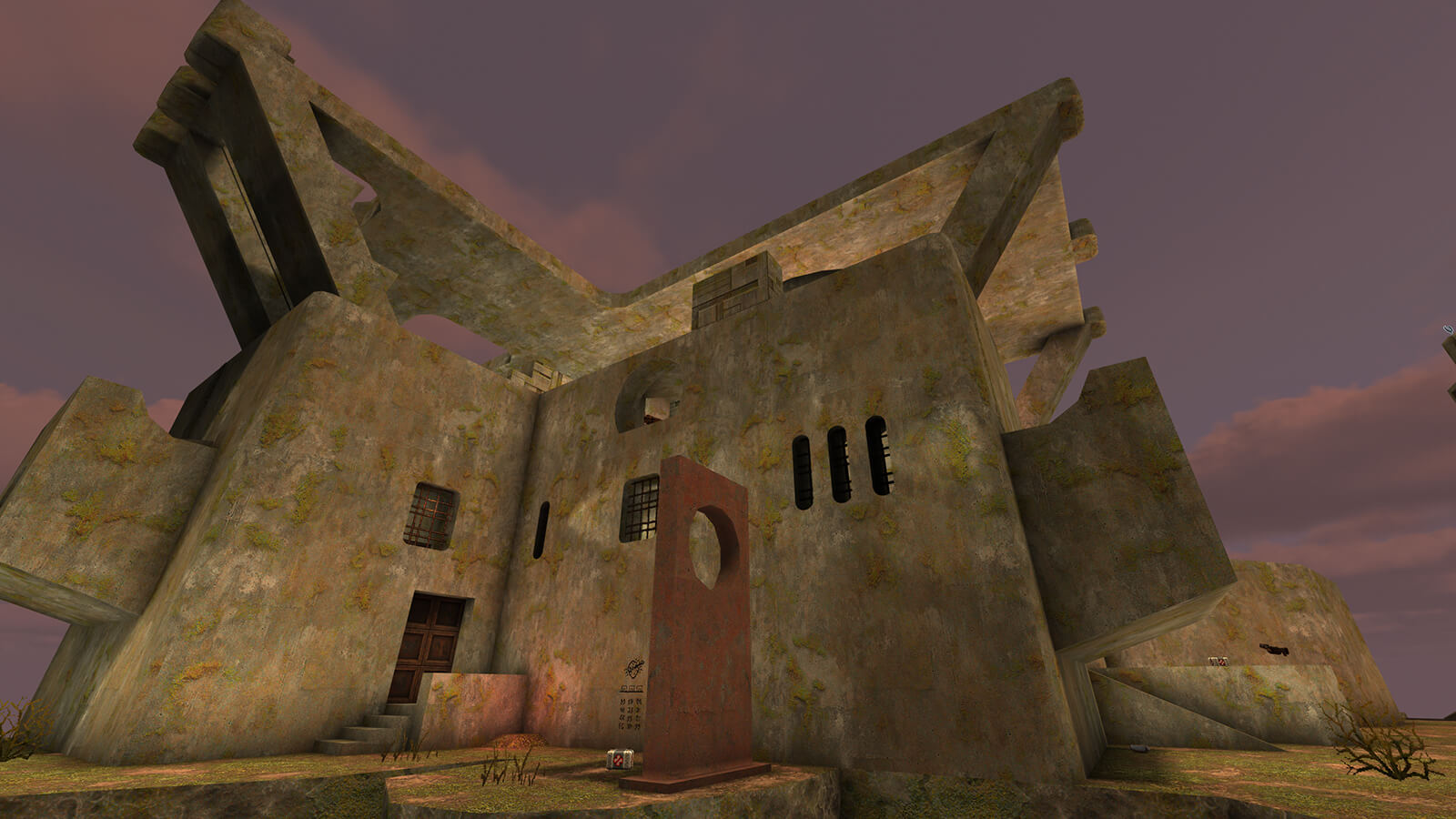
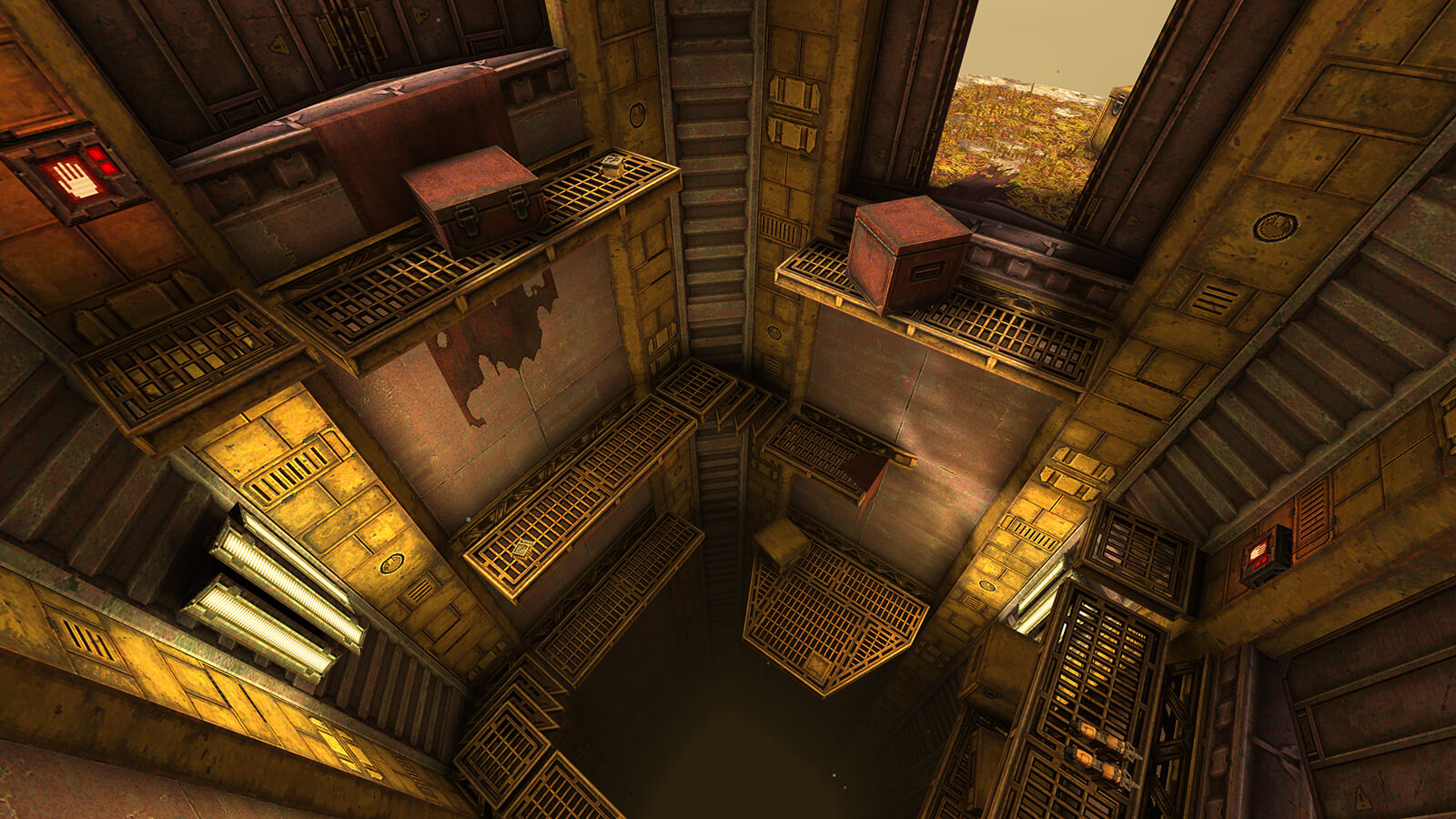
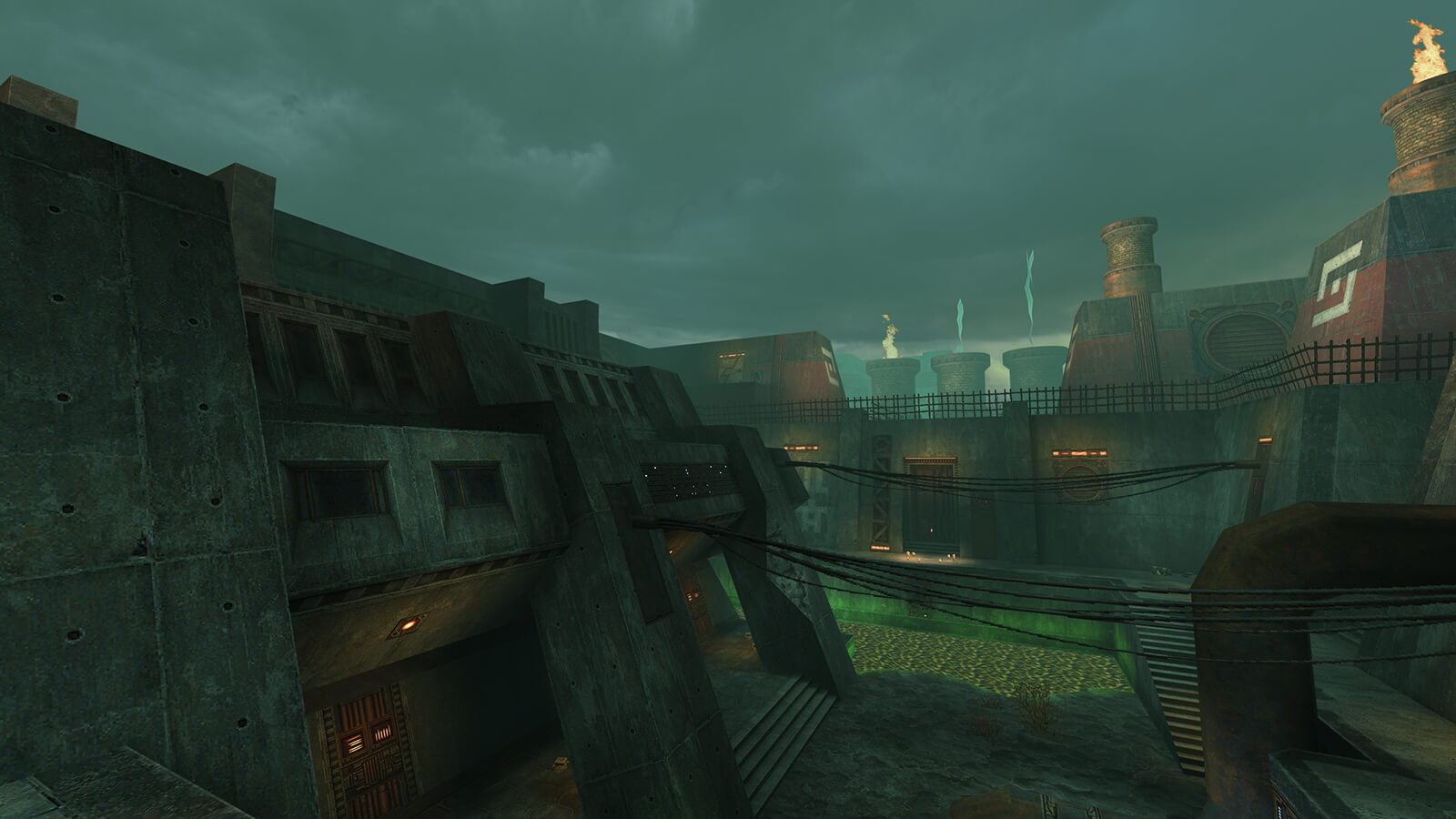
Instead of proposing alternative futures or directions for Brutalism, QBJ III exposes a limitation within the perception of architecture itself. The discipline aligns the idea of good architecture with comfort, contextuality and movement, conditions that prioritise ease of use over any engaging intensity. If the criteria of comfort remain dominant in the approach to architecture, the scope of how a space is allowed to behave is significantly reduced. There is also something to be said about the continually adaptive nature of modding video game worlds and how that agency—to rethink these worlds, often with whimsy and some times to wryly dismiss the limits of the game itself—is held and exercised by a community that has engaged with that media for years with unbridled passion. Both these conditions seem like they should be absolute precursors to any semblance of great architecture built 'in real life' too, but that is far from true.
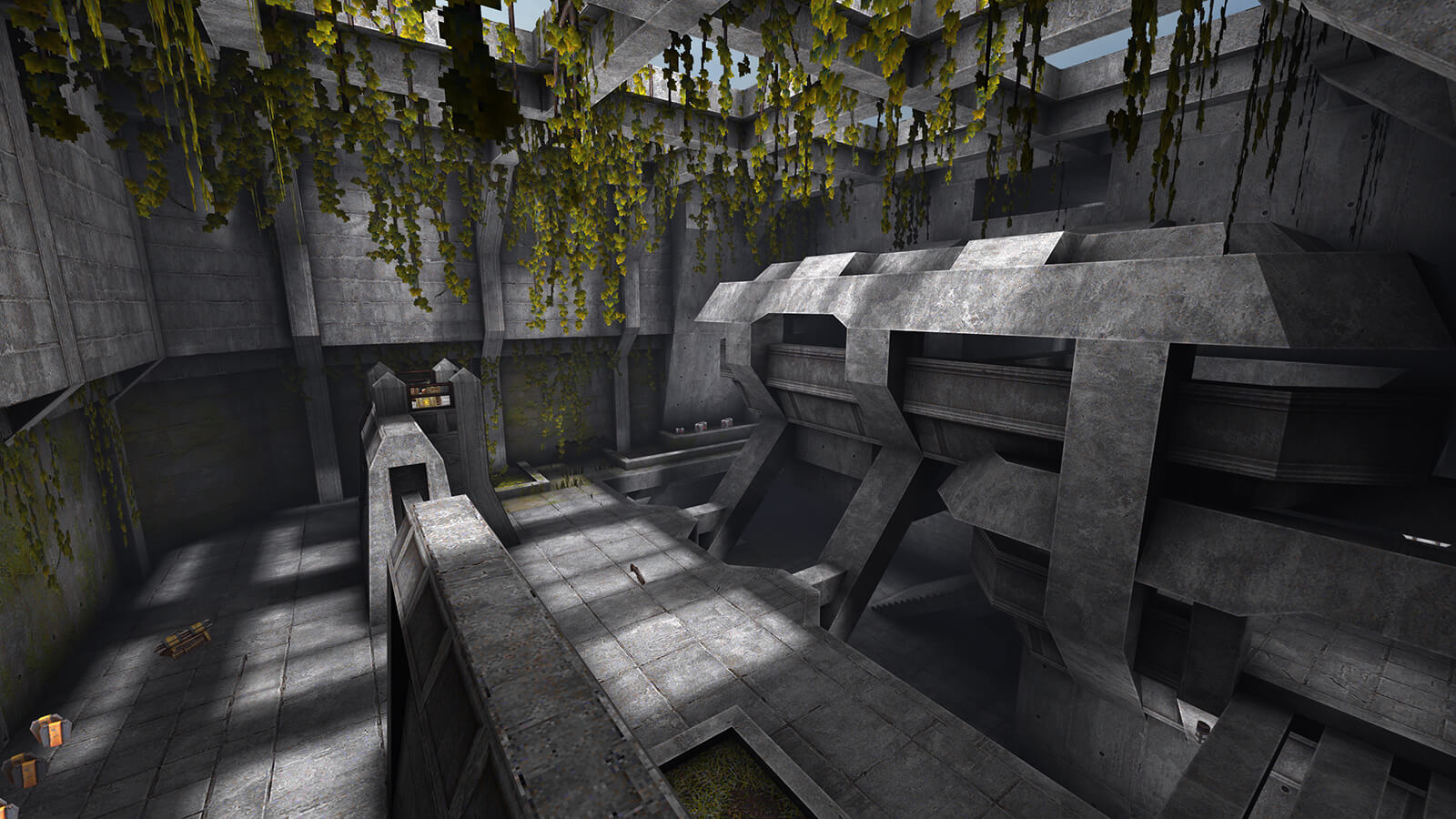
Built environments are expected to graciously accommodate, resolve any friction in lifestyle and remain effortlessly legible. Anything that does not fit under this umbrella risks being categorised as failed architecture. When architecture limits itself to simply and only being accessible and agreeable, refusing—perhaps not consciously—to engage with an emotional spectrum beyond, it bears the risk of becoming predictable and oftentimes, inert. One is then conversely compelled to ask if Brutalist architecture is too ‘violent’, or has architecture become too cautious and conservative in confronting that violence, deeming it solely an induced flaw or an unintended side effect. It is a position which architecture has largely chosen not to engage with. While QBJ III and its provocations offer no resolutions, it leaves architecture open to a discomfort that it should no longer avoid.
References
1. From the Journal of Peace Research (1969)
2. A comprehensive modification for a video game that replaces almost all original assets—including graphics, audio, environment and gameplay mechanics—to create an entirely new gaming experience.
3. A hobbyist term for an intensive and time-limited community game development session where developers, artists and designers collaborate to create a playable video game from scratch.
4. A location that acts as a home base, connecting different levels, stages or areas.

by Pranjal Maheshwari Oct 19, 2026
The Mumbai-based architects integrate courtyards, mesh screens and north light trusses to create a dining space that doubles up as a community hub at SR University, Warangal.
by Mrinmayee Bhoot Oct 17, 2026
The Rotterdam-based institute centres the Indian Ocean as a network for exploring material histories and transnational links shaping coastal cultures, positing them as future models.
by Pranjal Maheshwari Oct 16, 2026
At the 2026 Stirling Prize ceremony, Mary Duggan with RUFF Architects, MAKER Architecten and Nakshabid Architects were felicitated for proffering quality housing and social equity.
by Mrinmayee Bhoot Oct 12, 2026
The new Centre for Contemporary Arts, fostering public engagement with art in Uzbekistan, is housed in a tram depot refurbished by the French studio, emulating local craftsmanship.

make your fridays matter with a well-read weekend
Enter your details to sign in
Don’t have an account?
Sign upOr you can sign in with
a single account for all
STIR platforms
All your bookmarks will be available across all your devices.
Stay STIRred
Already have an account?
Sign inOr you can sign up with
Verification link sent to check your inbox or spam folder to complete sign up process
Tap on things that interests you.
Select the Conversation Category you would like to watch
Please enter your details and click submit.
Enter the 6-digit code sent at


Quake Brutalist Jam III prods architecture's discomfort in engaging with spatial violence
by Bansari Paghdar | Published on : Apr 03, 2026


 Sign in with Google
 Sign in with email
What do you think?