Art11 mins. read
Staging Black and Indigenous feminist history at the Brazil Pavilion
by Srishti OjhaMay 15, 2026



by Srishti OjhaPublished on : Jun 16, 2026
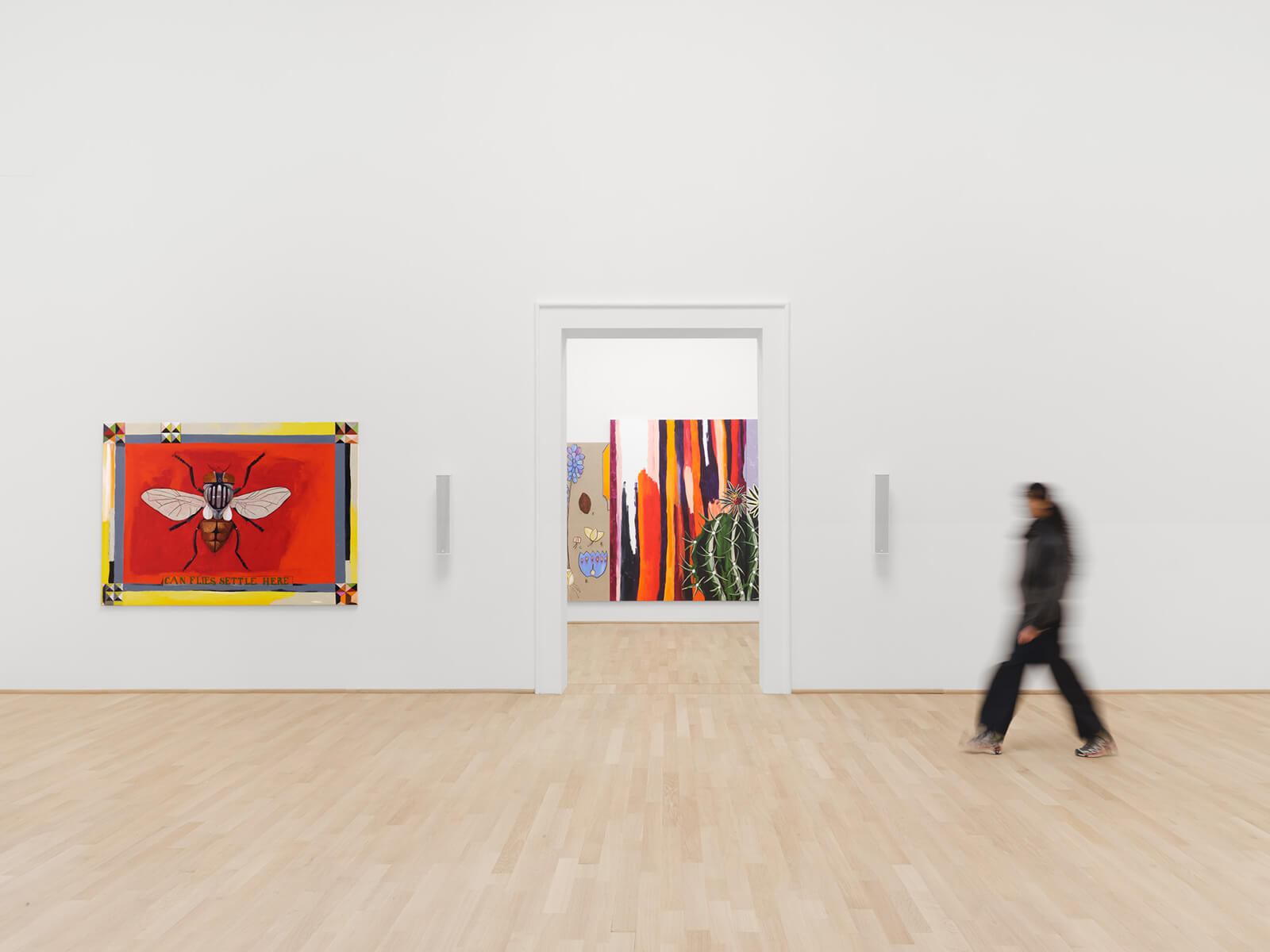
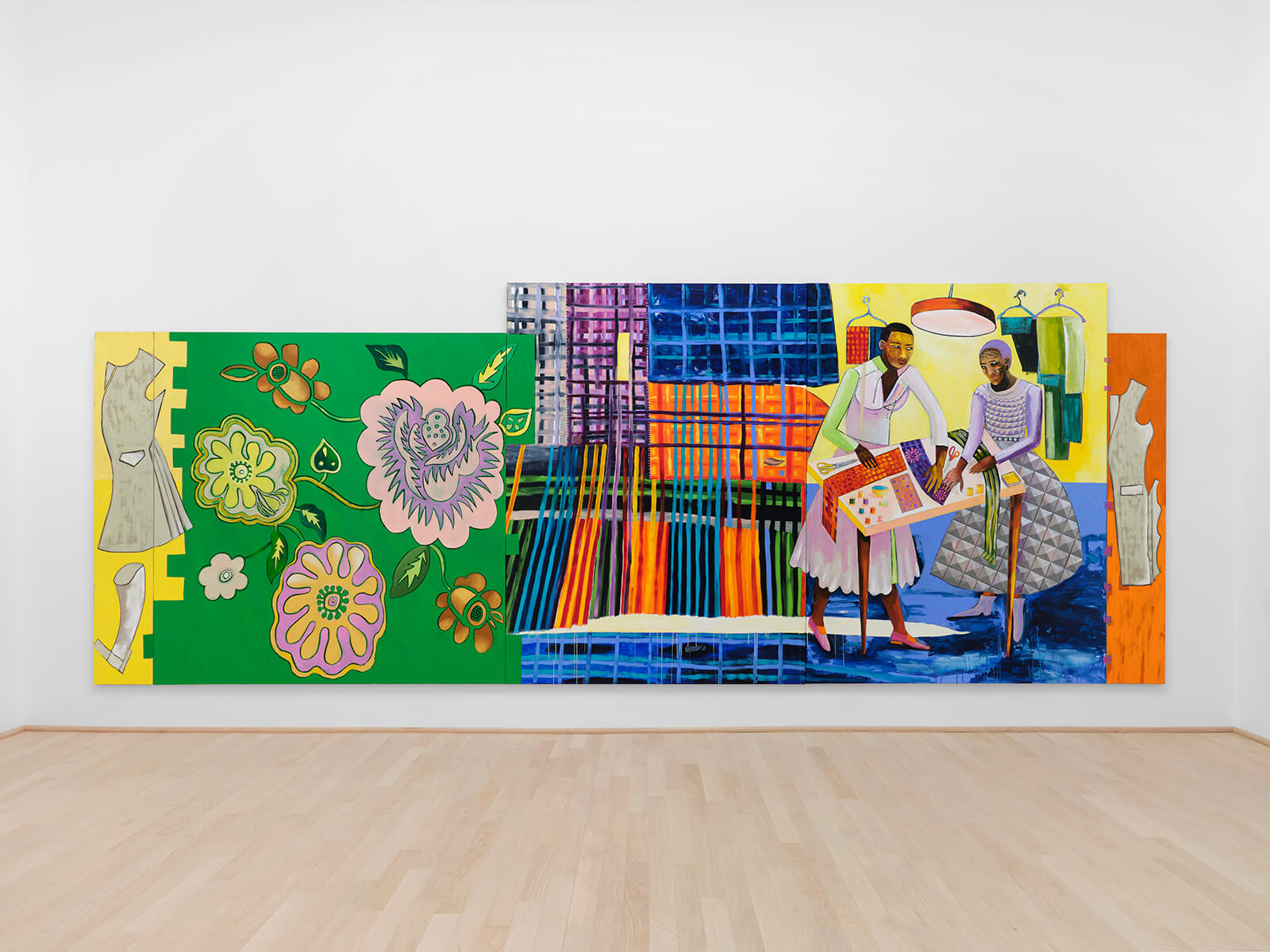
Large, multi-panelled paintings rich with primary colours bring vibrancy to the cream-and-salmon structure of the British Pavilion at the Venice Biennale. Architects, tailors, chefs, boatbuilders and gardeners are hard at work in artworks from each room of the space, surrounded by the materials of their work in saturated studios. A soundscape made up of the sounds of an idyllic British summer fills the rooms, complementing the hot, almost tropical mood created by the colour palette of the exhibition. East-African kangas—patterned textiles worn by women—accompany the paintings. Looking closely at the text on these kangas, a dark cloud appears over the storybook scenes of collaboration, trade and nature that the canvas paintings depicted. One cloth, with a detailed portrait of a housefly on a sweltering orange background, asks, “Can flies settle here?” Another, which accompanies a painting of two chefs working in tandem against a baby-pink backdrop (a scene that seems right out of the Great British Bake Off’s feel-good, multicultural world), shows teeth and the diagram of a tongue’s taste zones, reading, “Can poison taste delicious?” This is Predicting History: Testing Translation, British artist Lubaina Himid’s contribution to the Venice Art Biennale 2026.
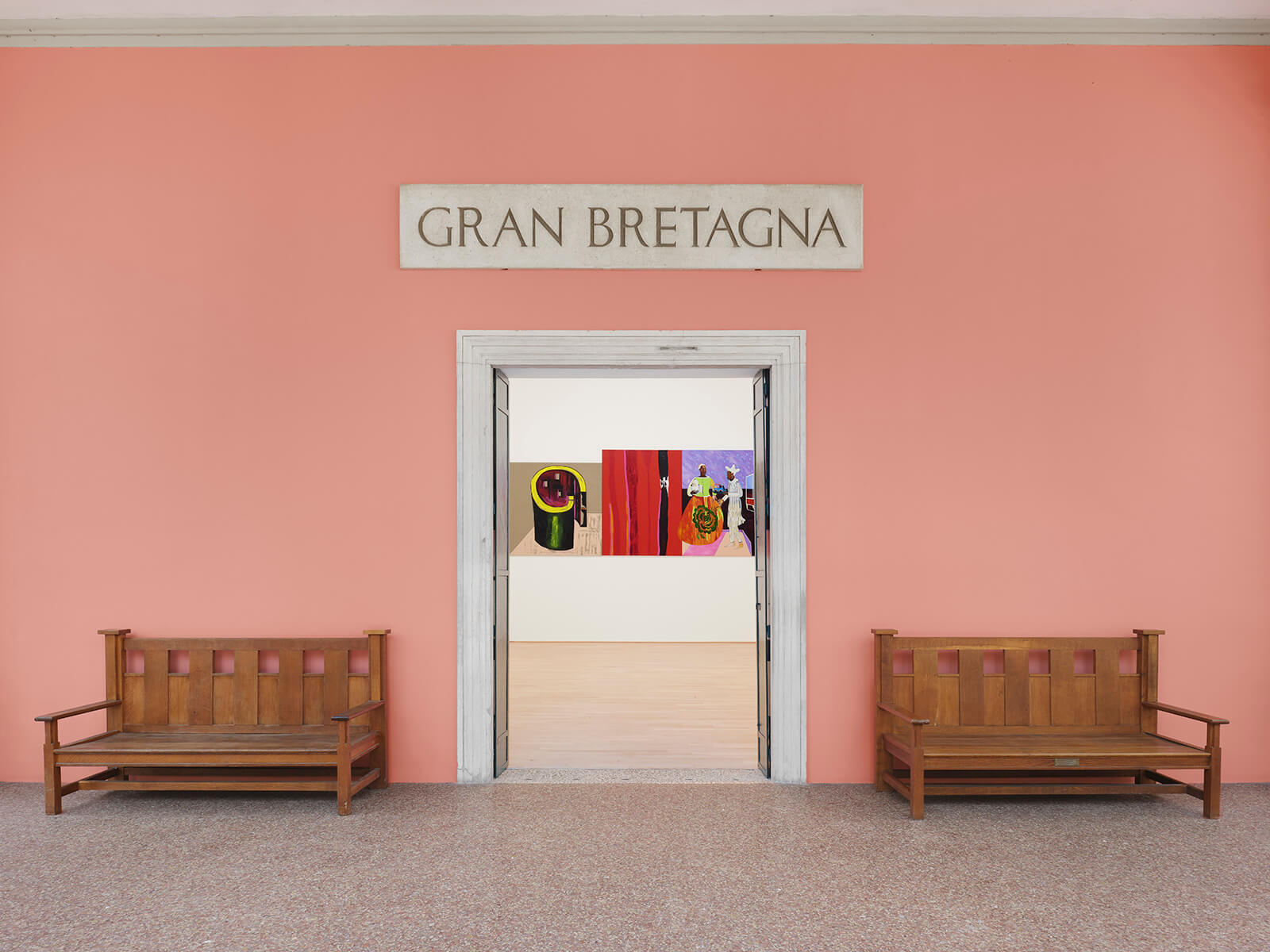
The works and the rooms perform the often disconcerting experience of trying to negotiate the environment of a new place, one that seems already settled, claimed and codified. Himid, who immigrated to Britain from Zimbabwe at a young age, has been creating multimedia art and performative works for decades, focusing on the experiences and contributions of marginalised people, particularly black people, to European society. A renowned curator with a background in theatre and set design, Himid curated the 1985 survey exhibition The Thin Black Line at the Institute of Contemporary Arts, London (revived under the same name at Tate Britain in 2011 – 12), a seminal project broaching the subjects of migration, marginalisation and assimilation that would not become buzzwords until decades later. Here, working with the British Council and London-based curator Ese Onojeruo, Himid resumes her work as a contemporary artist, creating thought-provoking, immersive experiences through her artwork, drawing on her strong sense of exhibition design.
Working in the physical space of the British Pavilion and its authoritative neoclassical architecture, which stands as an icon of the nation and its history, is a continuation of the work Himid has been doing throughout her artistic career. Predicting History: Testing Translation fills in the gaps left in the mainstream history and national identity of Britain, shifting focus from sovereign culture to the multicultural reality of a nation shaped by migrant labour, the fruits of colonial violence and cultural imports from communities that are still feared, hated and considered outsiders. The exhibition mirrors the complicated process of making a home in a place that is new, unwelcoming and not built for you or people like you. It explores the negotiations, compromises and frictions inherent in moving through a world where some are at home, and others are constantly ‘out of place’.
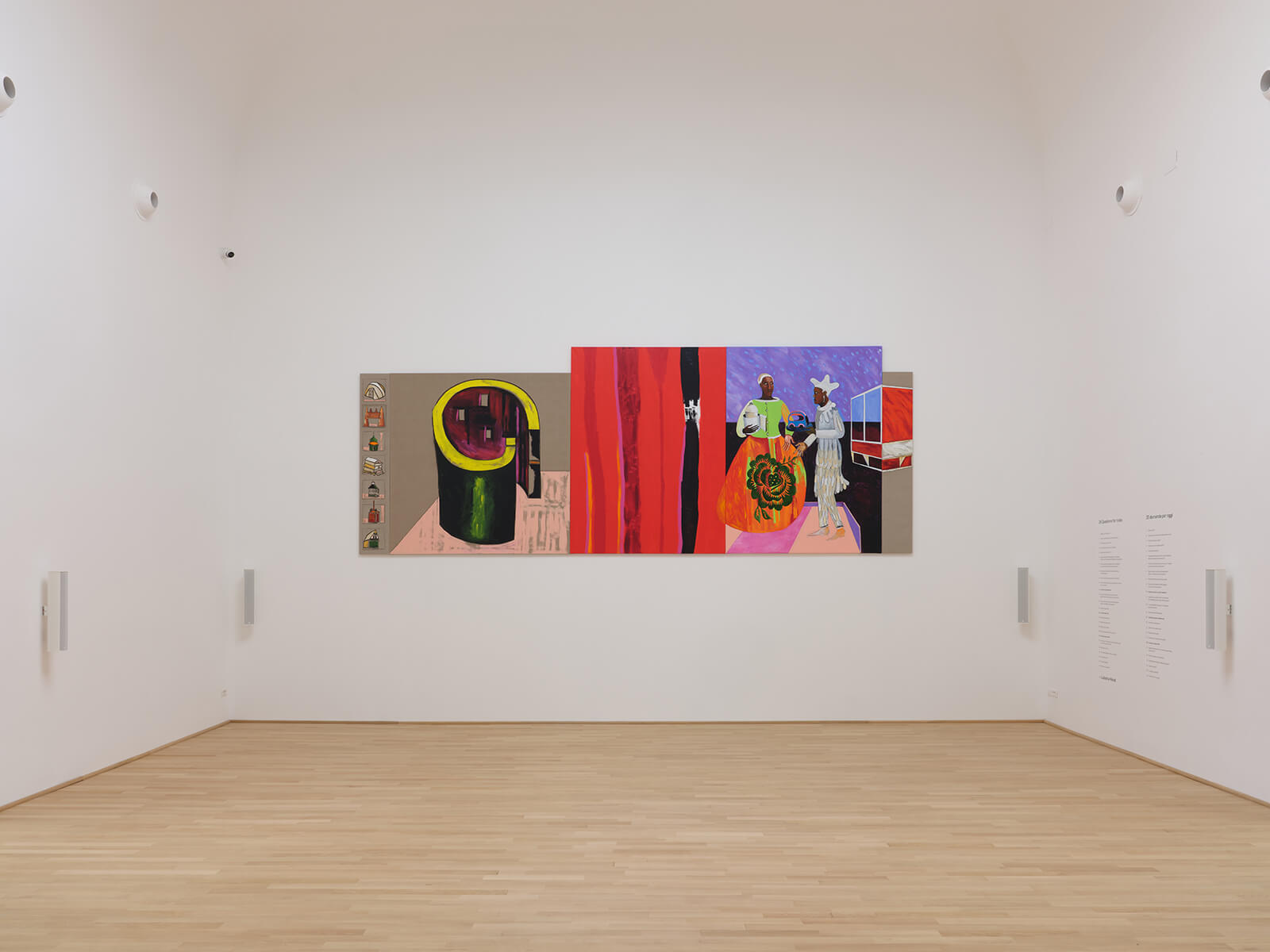
The exhibition is built around five newly commissioned large-scale paintings—Architects, Tailors, Chefs, Boatbuilders and Gardeners—where black figures work, creating, adapting and imagining home in unfamiliar, surreal surroundings. The first painting viewers see walking in is Architects, whichdepicts two peers presenting ideas for different homes to each other. One holds the model of a spiral building, curling in on itself to offer privacy and sanctuary, and the other holds a house on wheels, always ready to escape if required. The left panel shows an enlarged version of this first home with small icons to its left showing different forms of architecture—an igloo, a castle, a beehive, a church, a mosque. Echoing the atmospheric interplay between the blissful and unsettling, the painting appears to show a scene of potential, an optimistic depiction of cross-cultural collaboration. Looking closely at the homes the figures are drawn to and discussing gives away the fear, uncertainty and melancholy that underlie this pursuit.
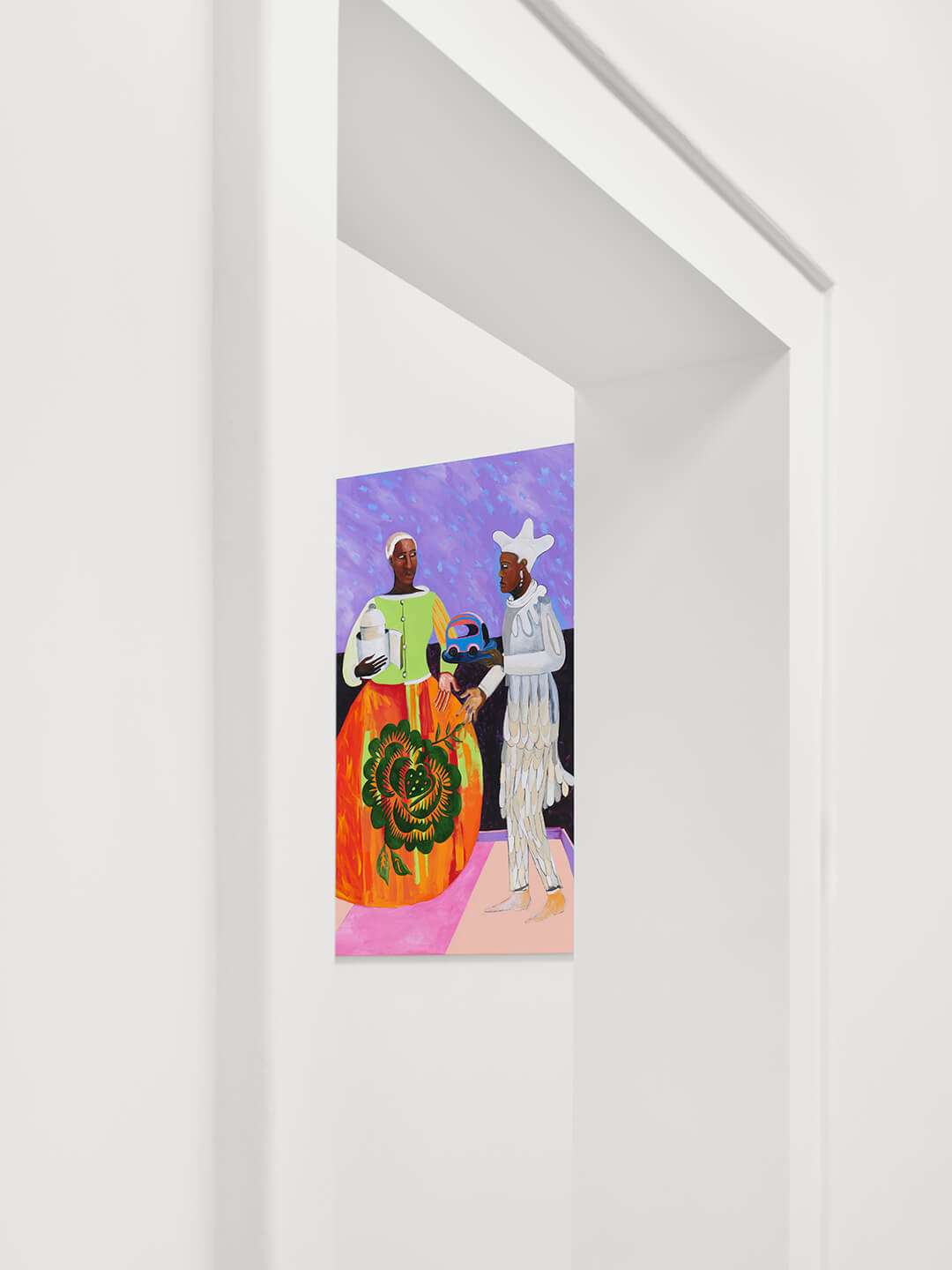
Onojeruo, who until recently served as the assistant curator of the Young People’s Programme at Tate, spoke about this first room with STIR, saying, “One of the paintings which I really love and think is important to the exhibition is this kanga saying, ‘Can flies settle here?’. It drives you to think about who the flies are. They are regarded as something perilous, disgusting, dirty, but are so integral to the ecosystem. You have this play on what we disregard but actually need, and I see relations in that to conversations we are having on migrants, nationhood and what it means to be British.”
The soundtrack, created in collaboration with multimedia and sound artist Magda Stawarska, interpolates a performance by Greek singer Nana Mouskouri singing the solemn folk song Early One Morning, adding to the atmosphere of loss and precarity. It creates an embodied, sensory experience. “It speaks to her training as a set designer. It's not just watching or looking, you have to physically experience the space through the decisions you make about how you move through the exhibition space and how you feel. The building itself is very set in a way that speaks to British society, where we are very regimented and there are a series of unconscious rules you need to adapt to, or you get isolated. In choosing to turn left or to turn right to experience the work, you encounter very different sensations,” Onojeruo tells STIR.
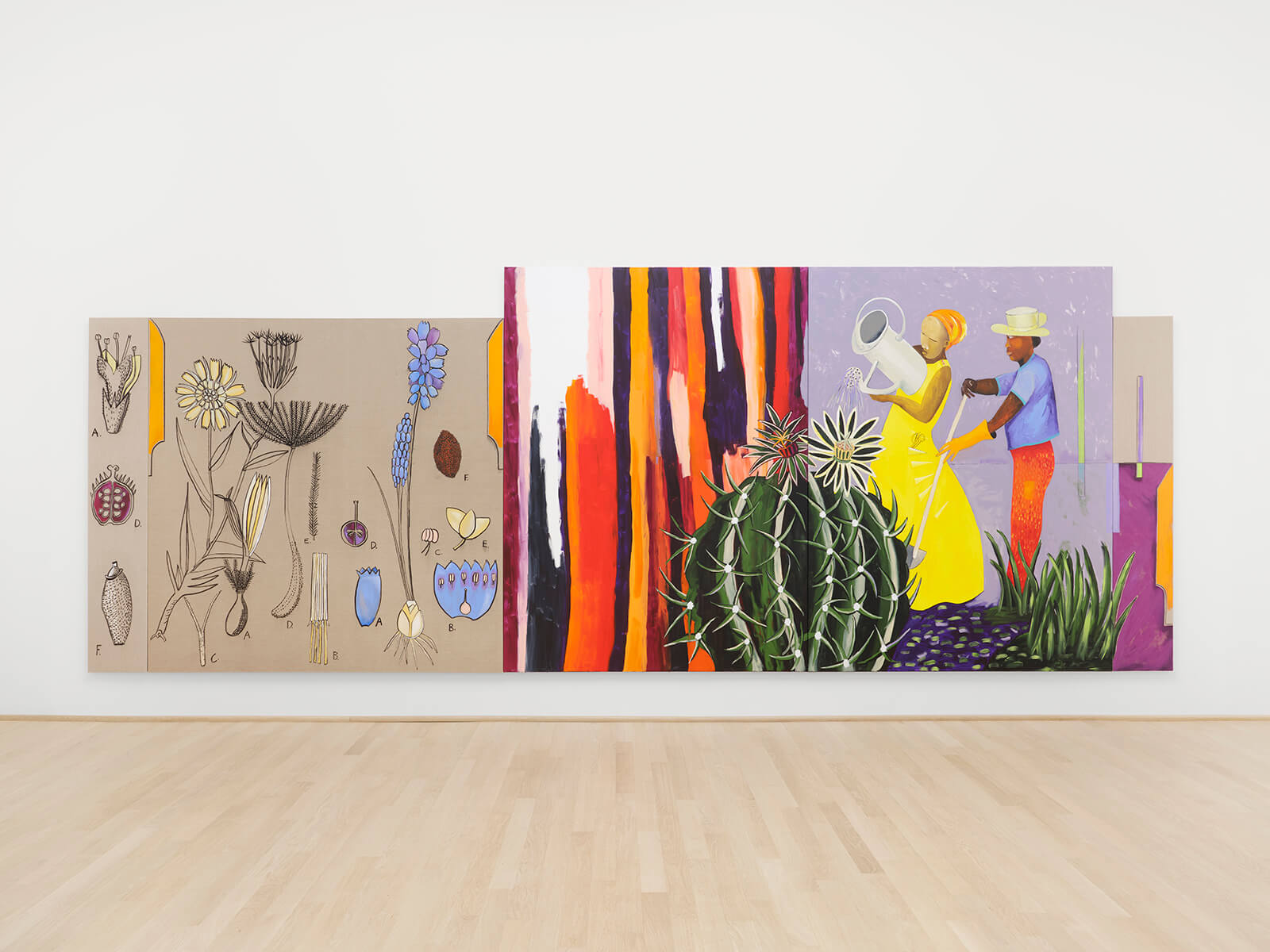
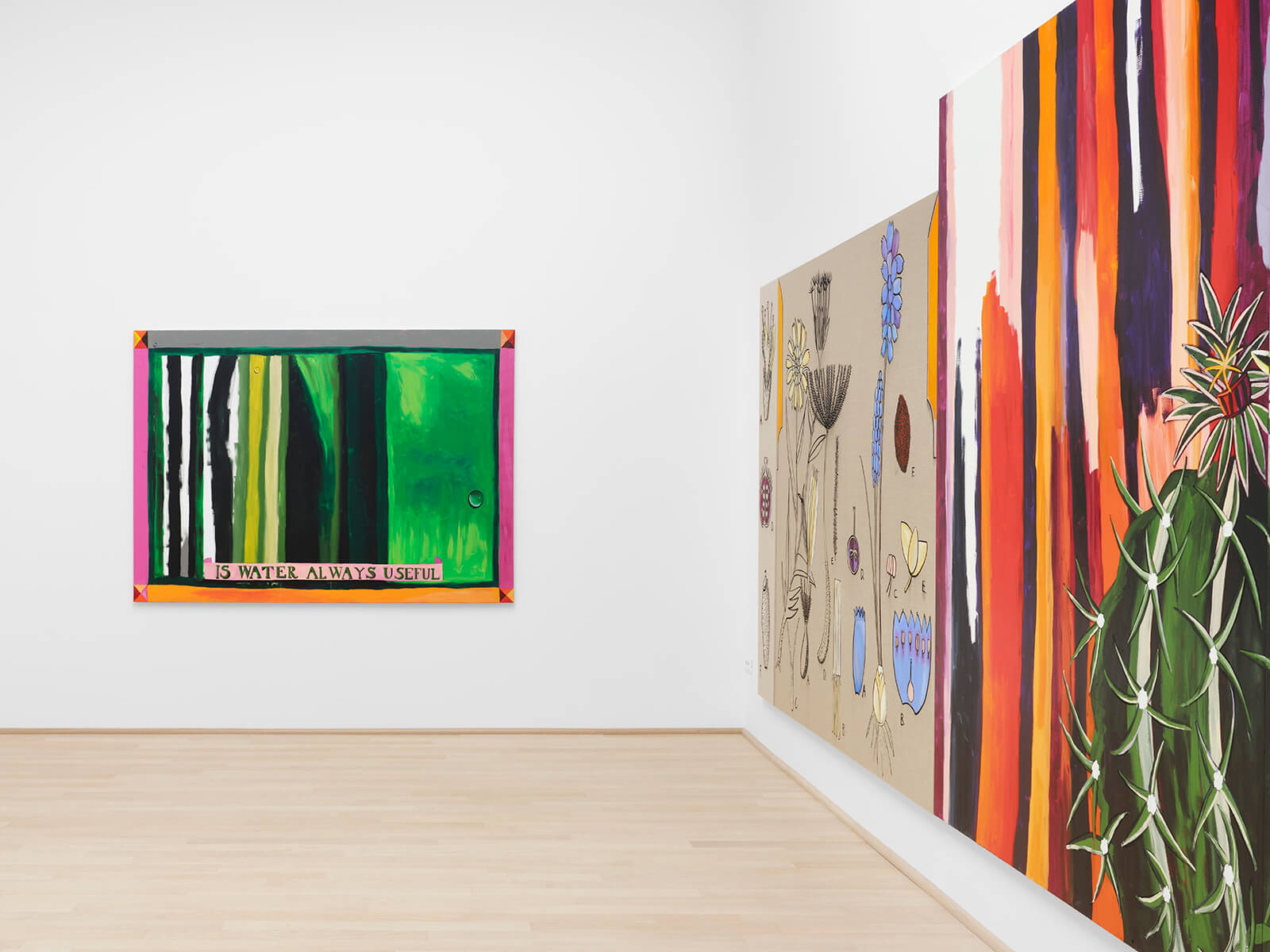
This same negotiation between tension and play animates the other rooms of the exhibition, such as Gardeners. Here, two simply dressed figures are seen tending to a cactus-like plant, with a woman in a yellow dress watering it. The left panel, echoing its counterparts in other rooms, depicts almost scientific illustrations of other flora. The kanga cloth in this room asks in its ominous voice over a lush green background, “Is water always useful?” The desert plant at the centre of the room seems to hint at the answer. How does one flourish and thrive in an environment that is not created for them, that does not adapt to them? How does one grow and put down roots using methods that work for some people, but are harmful to others?
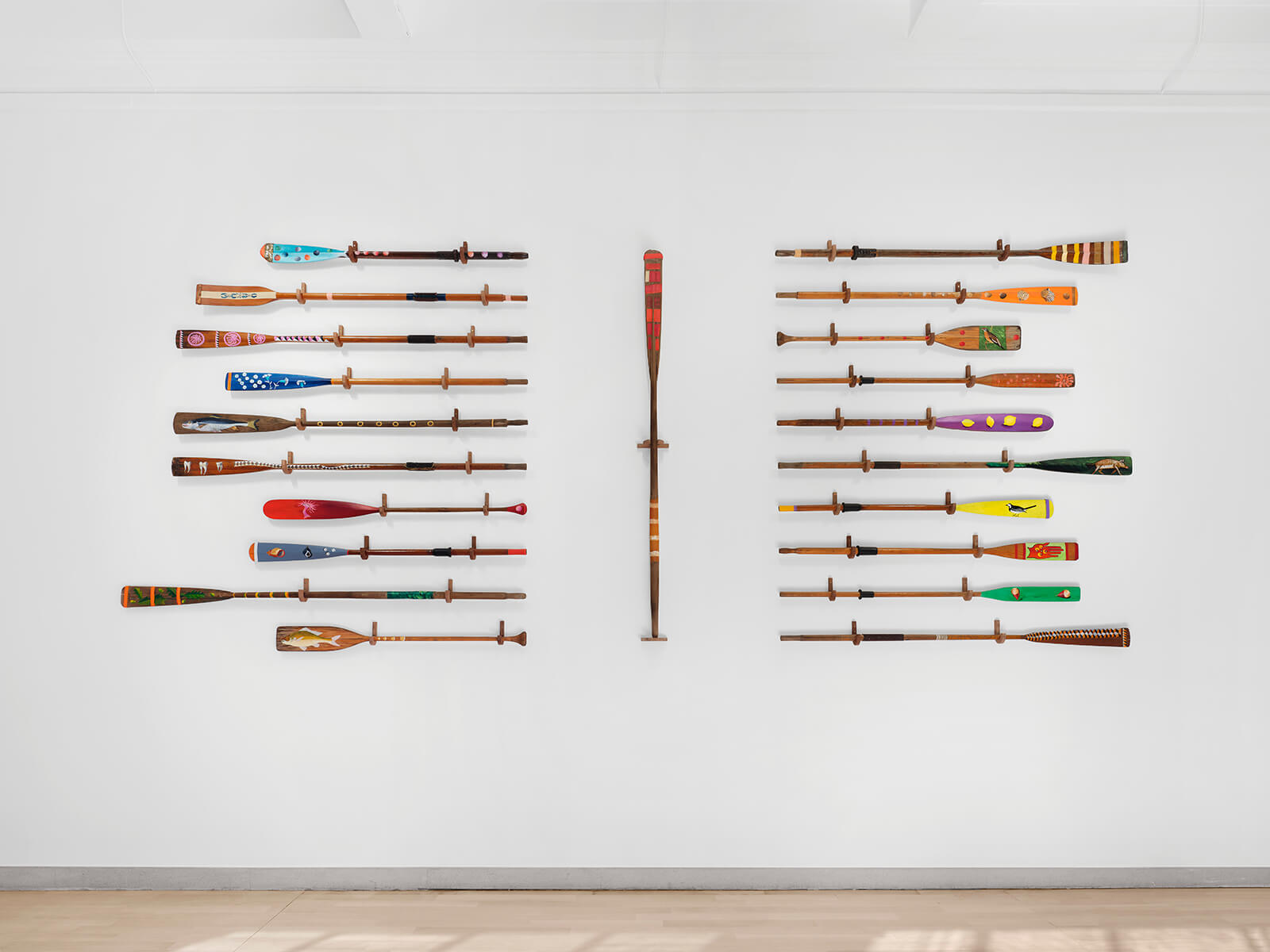
The subject of water is urgent and potent in this space—the pavilion of an empire built on crossing oceans and employing them to facilitate the transatlantic slave trade, situated in Venice, a city that is half settlement and half water body, the ageing seat of an even older empire built on international trade. This is not a historical subject, but one of the most live and controversial issues currently taking centre stage in every European parliament and government—immigration, small boats, lifejackets, refugee crisis, trespassers. Water and the ocean have always symbolised exchange of ideas and objects, but also of people, underlining how colonialism and nationalism conflate human beings with commodities.
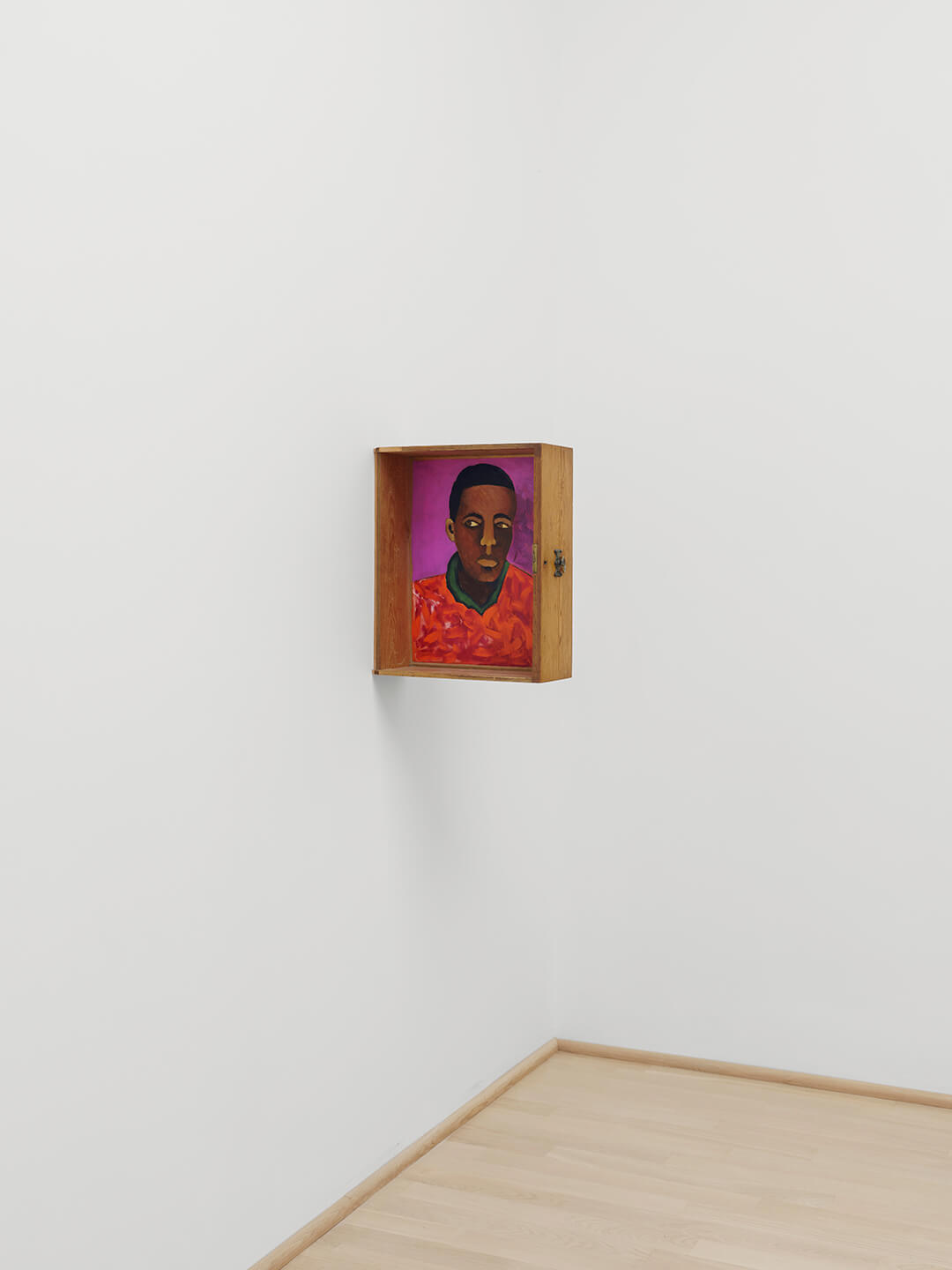
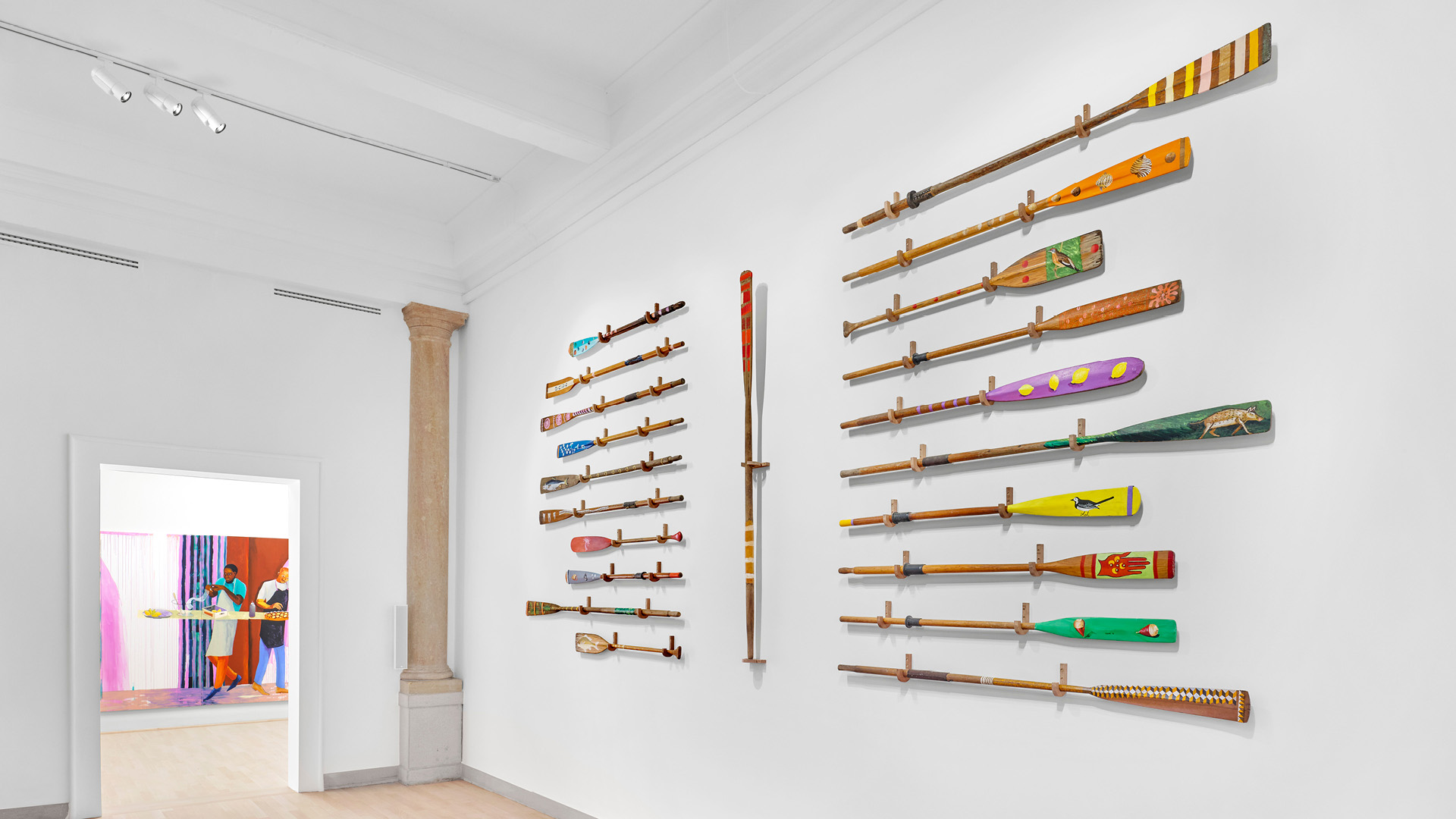
Himid underlines this contemporary political dimension in a room stocked with oars. The mismatched found objects are hung on the walls, depicting the flora, fauna, patterns and culture of the countries from where money, people and resources have flown away for centuries, towards the heart of the empire. The idea of escape is central, but the mismatched, decorative oars also hint at its impossibility. Other smaller works, such as Man in a Rope Drawer on a nearby wall, create a feeling of hypervigilance, adding to the intermittently foreboding atmosphere—their eyes appear to dart around the pavilion’s rooms and eye the lagoons outside.
This multivalent exhibition, vacillating between comfort and alienation, idealism and harsh reality, diversity and assimilation, moves the viewer to consider their own place in the continuum of ‘at home’ and ‘out of place’, in the spectrum of rights and privileges that start at citizen and shrink as they move toward foreigner and immigrant. It is not about emotion or memory as much as it is about strategy and the never-ending work of cultivating belonging and constructing home. Onojeruo concludes, “There’s something so mundane but beautiful in asking yourself questions. I hope people are able to ask themselves questions about what does it mean to actually belong. Are you flourishing or just surviving? Are you in the place where you fit? Are you able to express yourself? Does the structure you find yourself in work for you and if not, what are your strategies? Who are you working with?”
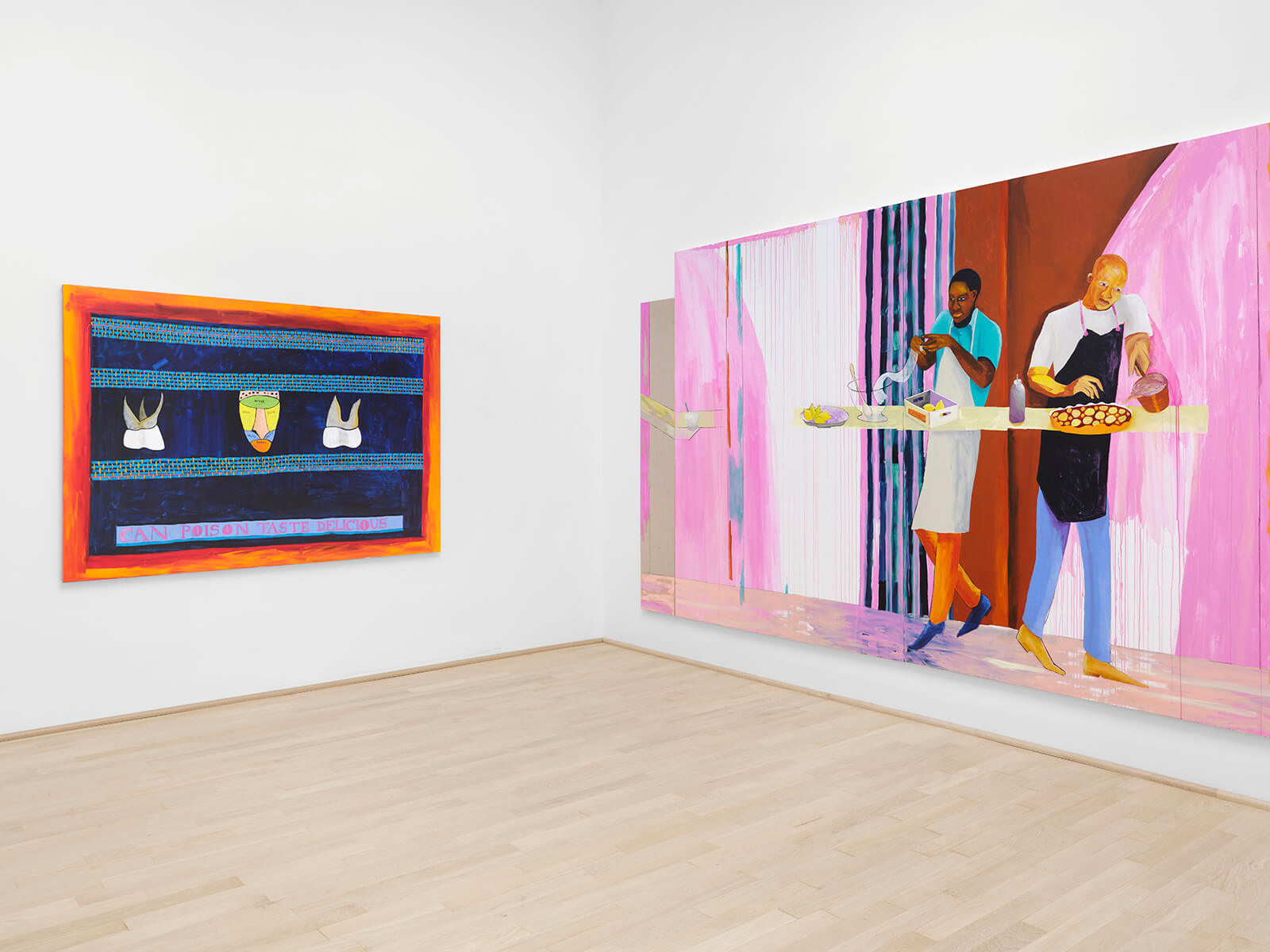
Predicting History: Testing Translation is evidently the work of an artist with decades of experience collaborating with marginalised communities and delving into their political and personal struggles. Someone who has extensive experience working at the frontlines of early artistic movements that have made terms like immigrant experience, colonisation, activism and social justice acceptable and even highly desirable in fine art circles. Himid is not merely describing the experiences of these communities, but speaking directly to them in a dialogue that acknowledges both pain and potential and asks everyone to intentionally and strategically carve a path that moves ever forward.
The 61st International Art Exhibition of La Biennale di Venezia, 'In Minor Keys’, curated by Koyo Kouoh, runs from May 09 – November 22, 2026, at the Giardini and the Arsenale venues, as well as various other locations around Venice. To read STIR’s exclusive coverage, conversations and highlights from the biennale, click here.

by Anmol Ahuja Oct 15, 2026
How do heaps of souvenirs and relics with racist Aboriginal motifs and features become art? MCA Sydney’s winter showcase—the artist’s largest to date—beckons a possibility.
by Srishti Ojha Oct 14, 2026
The first Dutch publication on the Turkish artist, the eponymous book centres on Refik Anadol: Latent City, his living data sculpture of Bruges, exhibited at BRUSK gallery.
by Vandana Kalra Oct 14, 2026
With his latest exhibition as a point of departure, the modernist discusses his decades-long practice, the spontaneity of drawing and the social responsibility of artists.
by Srishti Ojha Oct 09, 2026
In his ongoing exhibition, the South African artist creates two post-apocalyptic futures to explore society’s relationship with textiles, patterns and technology.

make your fridays matter with a well-read weekend
Enter your details to sign in
Don’t have an account?
Sign upOr you can sign in with
a single account for all
STIR platforms
All your bookmarks will be available across all your devices.
Stay STIRred
Already have an account?
Sign inOr you can sign up with
Verification link sent to check your inbox or spam folder to complete sign up process
Tap on things that interests you.
Select the Conversation Category you would like to watch
Please enter your details and click submit.
Enter the 6-digit code sent at


Lubaina Himid’s British Pavilion on creating home against the odds
by Srishti Ojha | Published on : Jun 16, 2026


 Sign in with Google
 Sign in with email
What do you think?