Architecture10 mins. read
ADFF:STIR Mumbai’s ~log(ue) returns, sparking plural discourse
by Bansari PaghdarJan 08, 2026



by Aarthi MohanPublished on : Dec 31, 2025
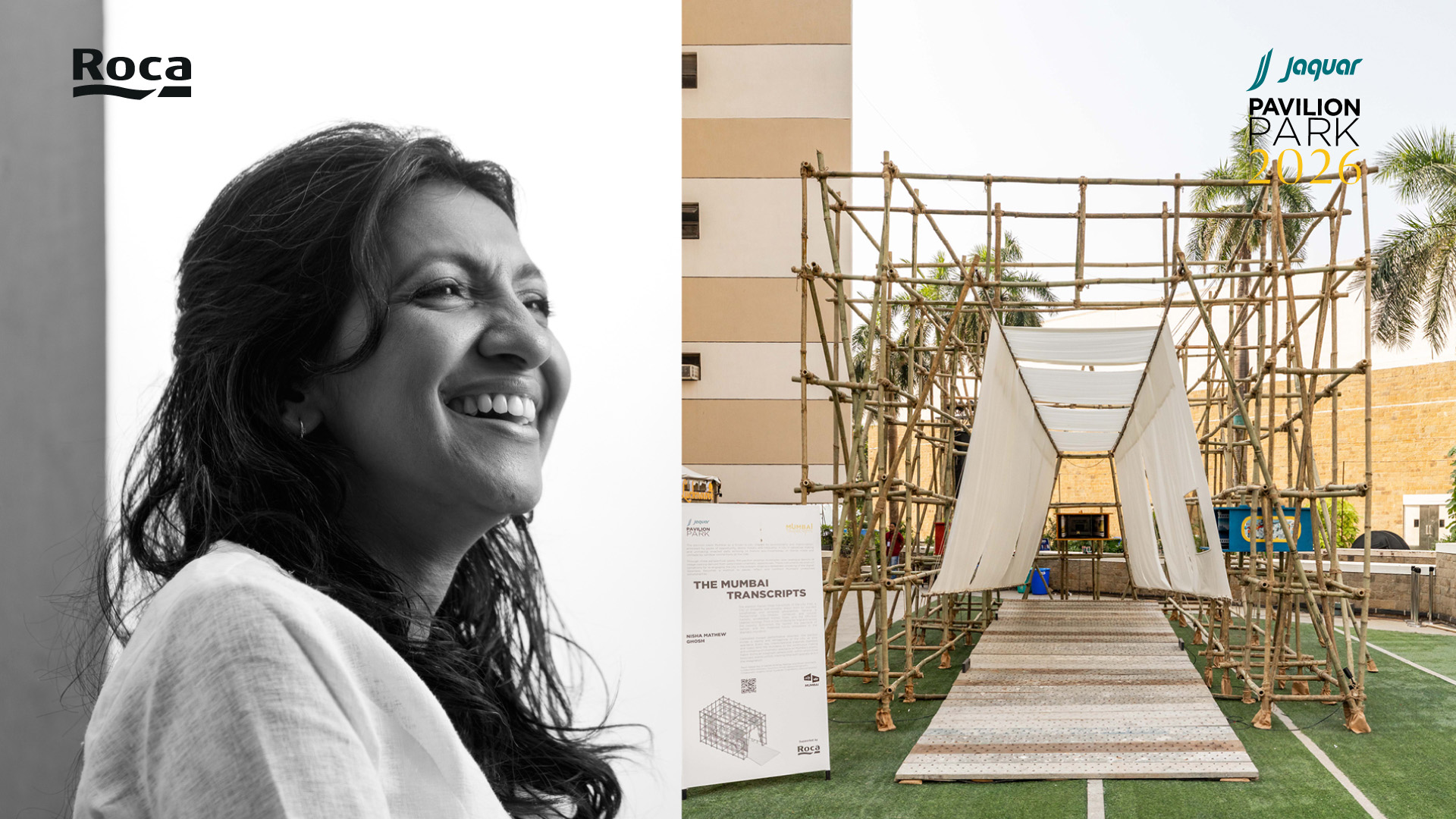
In a city where motion is constant, and attention is always borrowed, The Mumbai Transcripts invites viewers to slow the act of seeing down to something deliberate and intimate. Before it asks you to look, the pavilion asks you to pause, observe and see with intent. Designed by Nisha Mathew Ghosh, partner at Mathew and Ghosh Architects, for ADFF:STIR Mumbai 2026, the pavilion does not offer a singular image of Mumbai. Instead, through handcrafted bioscopes, it frame this novel perspective requiring the body to lean in, adjust, wait and discover.
Set within the Jaquar Pavilion Park, curated by Aric Chen, at the National Centre for the Performing Arts (NCPA), the pavilion will be on view from January 9 – 11, 2026, at the second South Asian edition of the Architecture and Design Film Festival. Supported by ROCA, the pavilion hopes to become a quiet but insistent presence within the festival, framing architecture as a way of holding not just space, but memory, labour, belief and aspiration in one of the world’s most relentlessly negotiated cities.

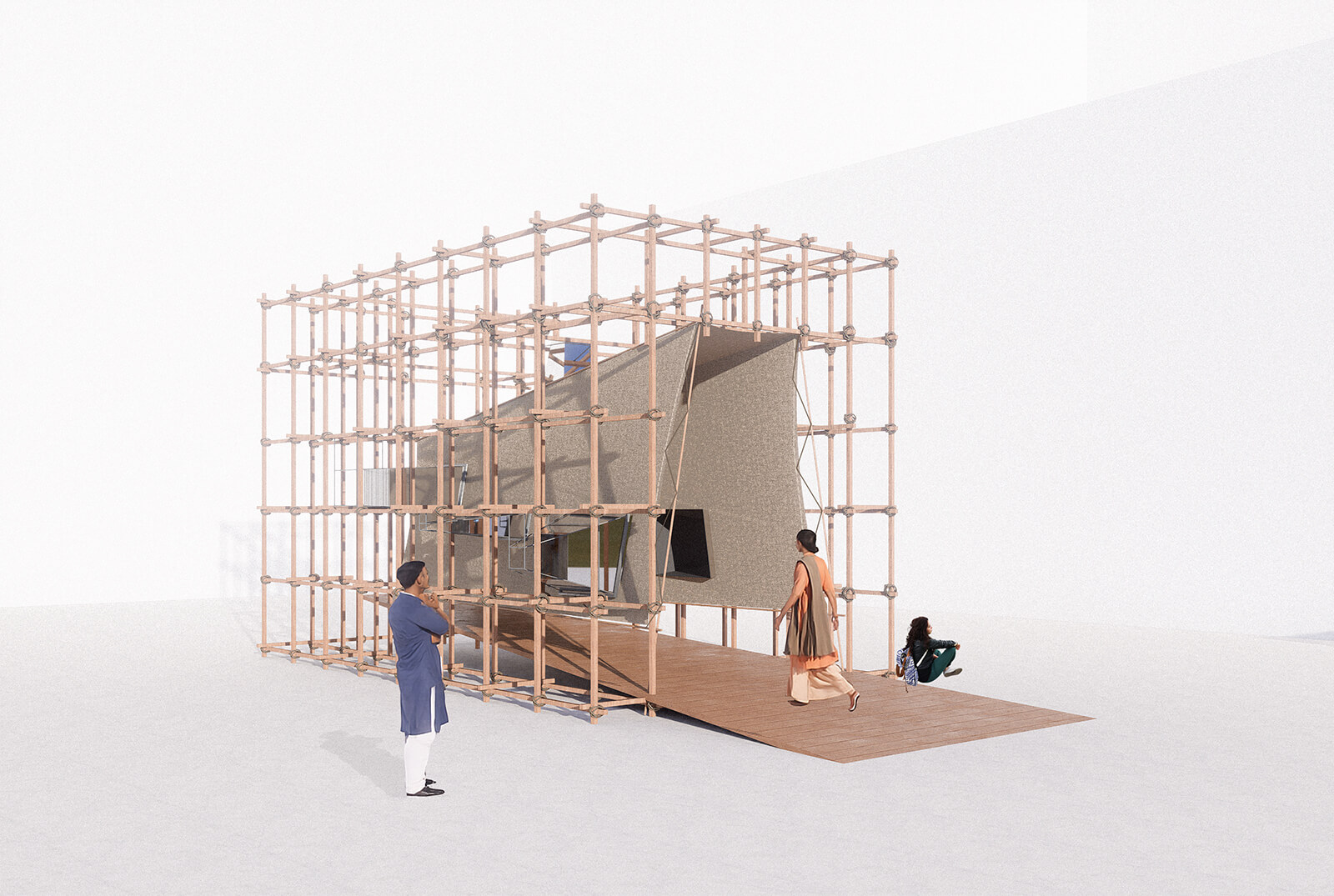
The Mumbai Transcripts stages the city as a kinetic palimpsest; layered, erased, rewritten and continuously rehearsed. Drawing from Mumbai’s cinematic lineage and its everyday improvisations, the pavilion architecture is built around a series of bioscopes, each refracting a different condition of the city—its shifting geographies, economies of work and exchange, architectures of belief, and landscapes of aspiration—making the visitor both viewer and participant in the city’s ongoing script.
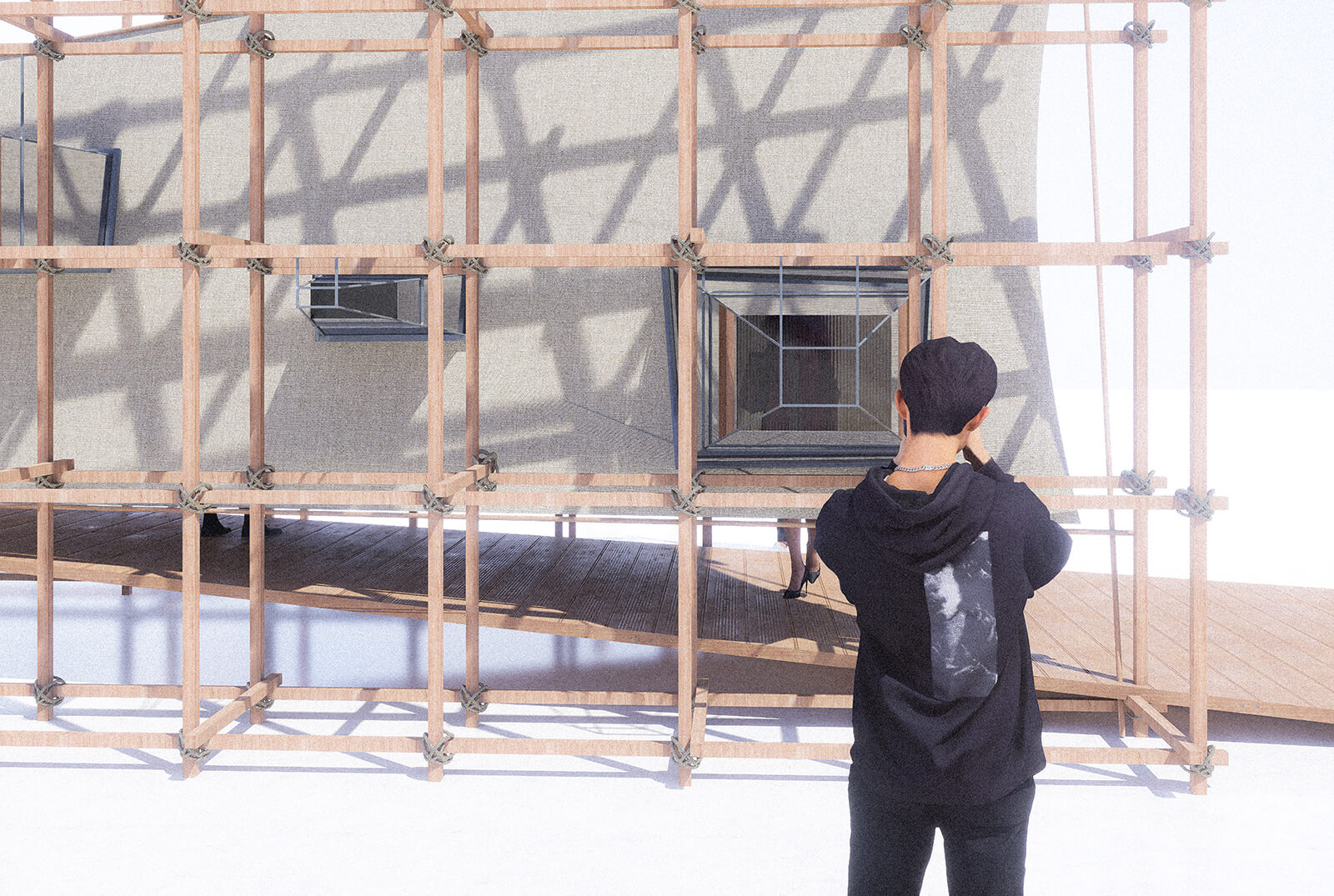
The first of these, Archipelagic Memory, returns Mumbai to its precolonial condition as seven unconsolidated islands, fragmented yet connected by tidal rhythms. Through this lens, mangroves, tidal flats and unstable coastlines become not remnants to be controlled, but living systems that resist fixity. The bioscope here reminds us that land and sea continue to cohabit, and that Mumbai’s condition of plurality has always been aqueous, layered and unresolved.
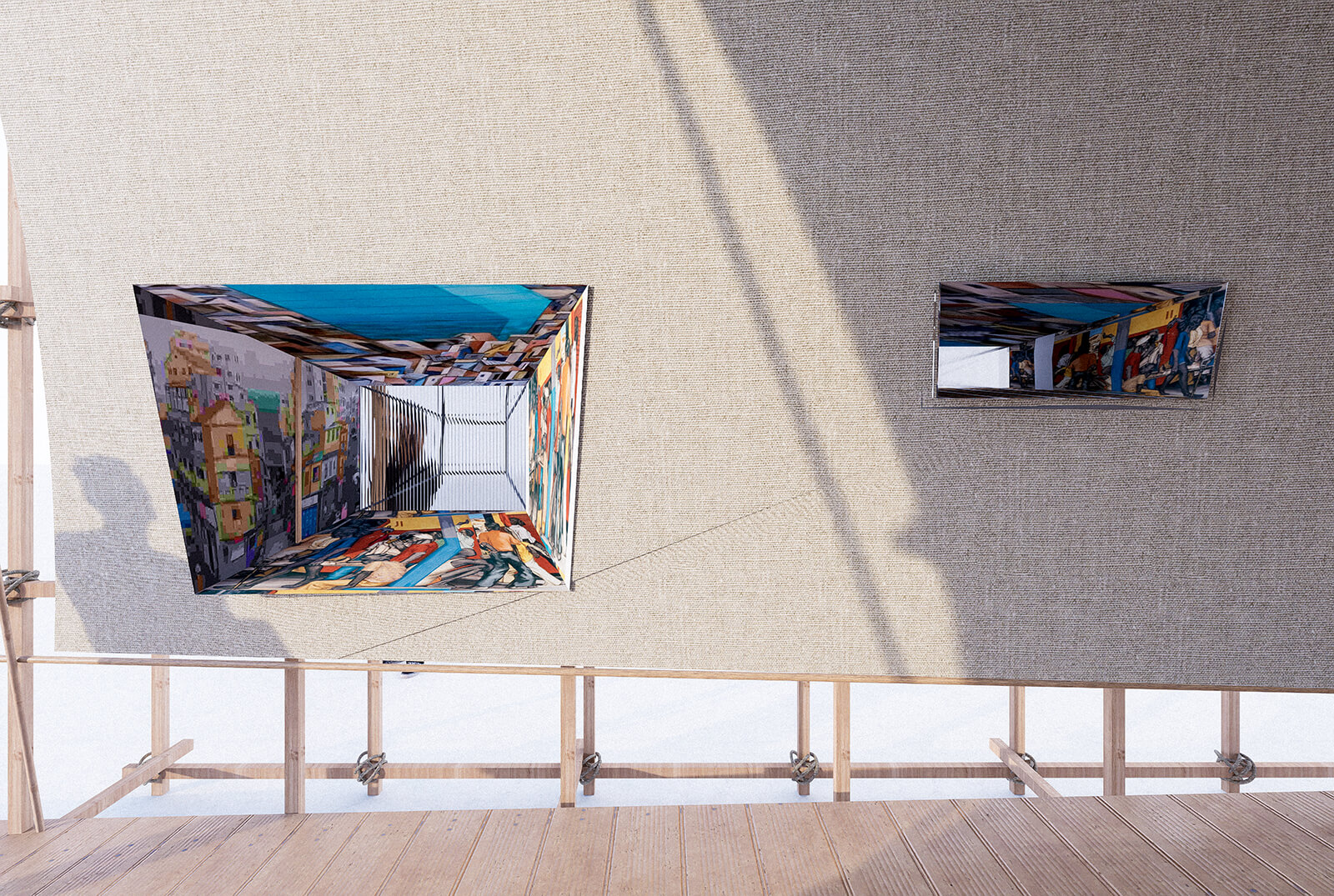
The second bioscope, The Gothic Bazaar, turns its attention to the collision between imperial formality and vernacular life by foregrounding the bazaar as a spatial logic rather than a singular place. In Mumbai, the bazaar operates as an adaptive urban system of informal trade, circulation, negotiation and occupation that inhabits streets, thresholds and monumental architectures alike. Gothic revival landmarks such as Chhatrapati Shivaji Terminus and Crawford Market are read not as frozen colonial artefacts, but as structures absorbed, reworked and animated by this everyday economy. What emerges is a space of multiplicity where discipline and disorder coexist. Yet the pavilion also draws a line forward, suggesting that late-capitalist corporate enclaves and speculative infrastructures repeat similar logics of extraction and control.
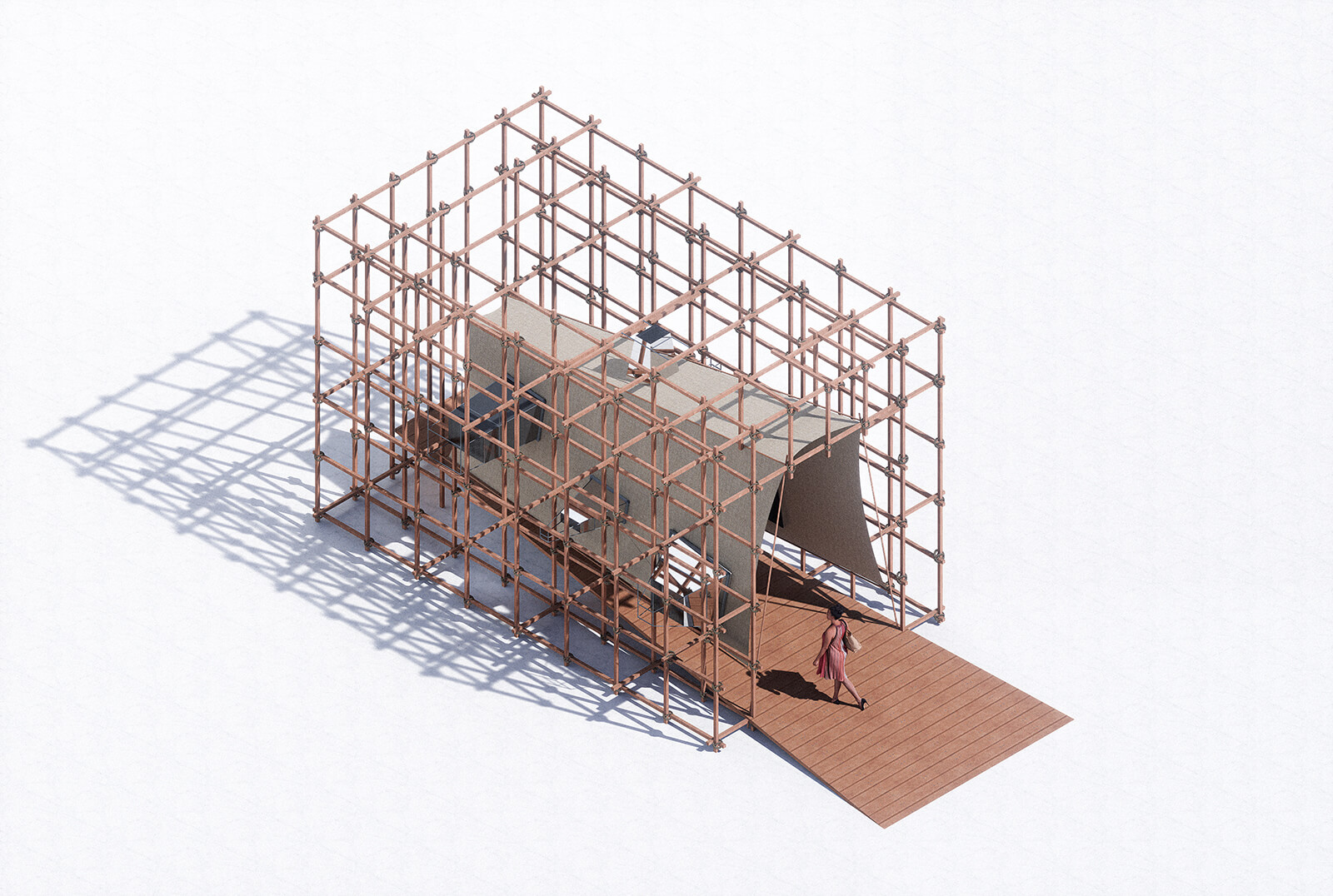
Mill Lands as Phantom Infrastructures shifts the gaze to the industrial ruins that still punctuate the city. Once the backbone of Mumbai’s labour geographies, textile mills structured everyday life and collective solidarity. Today, these sites are re-scripted by speculative capital, their histories partially erased even as chimneys, chawls and derelict compounds linger as haunted infrastructures. The bioscope frames these spaces as contested monuments, where working-class memory confronts development driven by displacement.
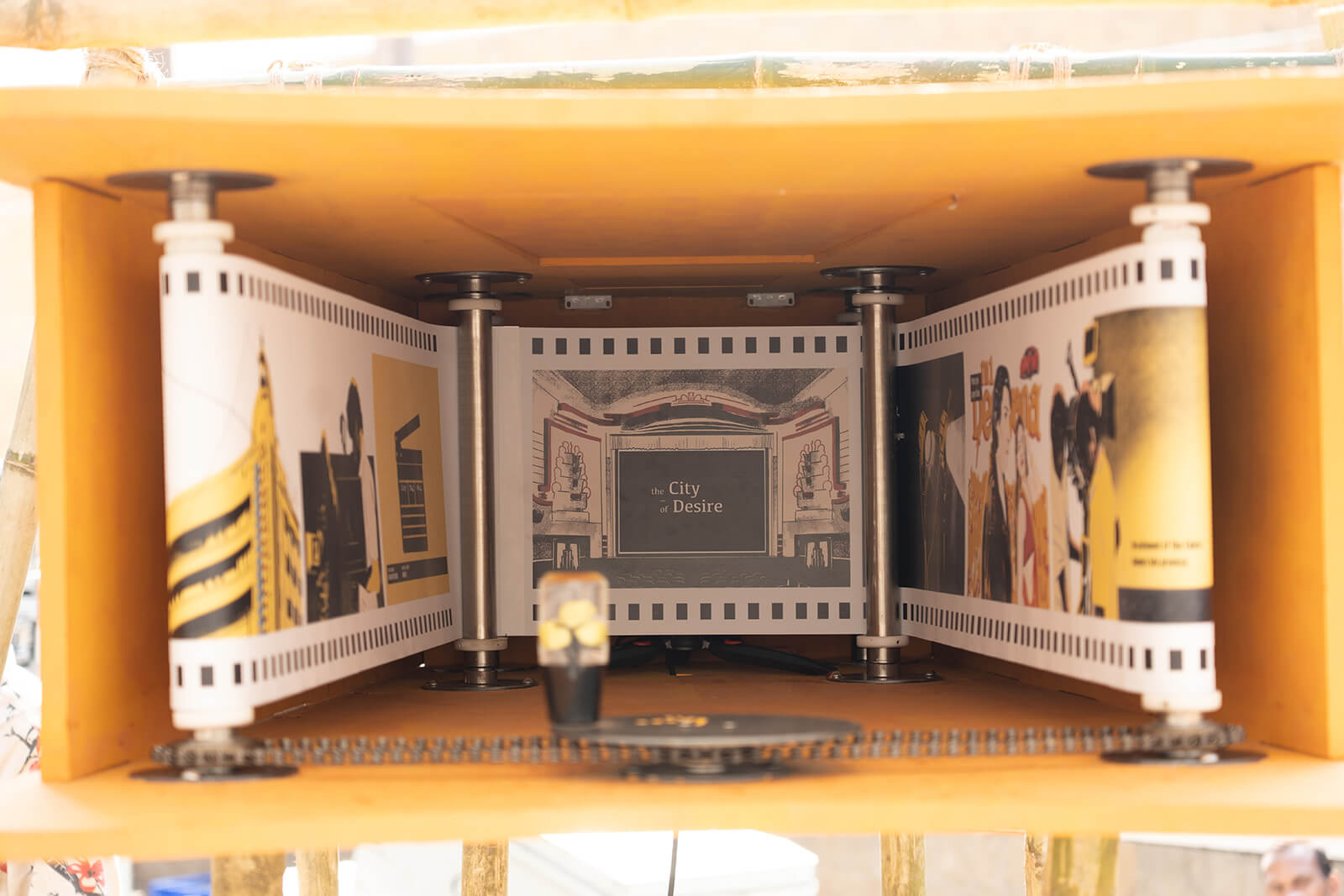
Cinema Urbanism positions Bollywood as a spatial practice beyond its typical representation. The city is rehearsed and reproduced through film: Dharavi becomes a recurring mise-en-scène, Marine Drive a proscenium, the skyline a projection of future promise. These images circulate globally, fabricating desires while masking precarity.
Sacred Desire introduces another register, in which religious architecture exists within the flux of traffic, commerce and everyday life. Sites such as Haji Ali, Siddhivinayak and Mount Mary are not isolated sanctuaries but liminal zones where ritual and routine collide. The bioscope extends this reading toward the cosmos, suggesting the sky and stars as another screen against which these narratives unfold.
Vertical Informalities completes the sequence by interrogating the city’s obsession with height. From improvised high-rises to the excess of Antilia, verticality becomes a measure of inequality, survival and dominance. Architecture, as property here divides and elevation signifies power, even as informal constructions reveal ingenuity under pressure.
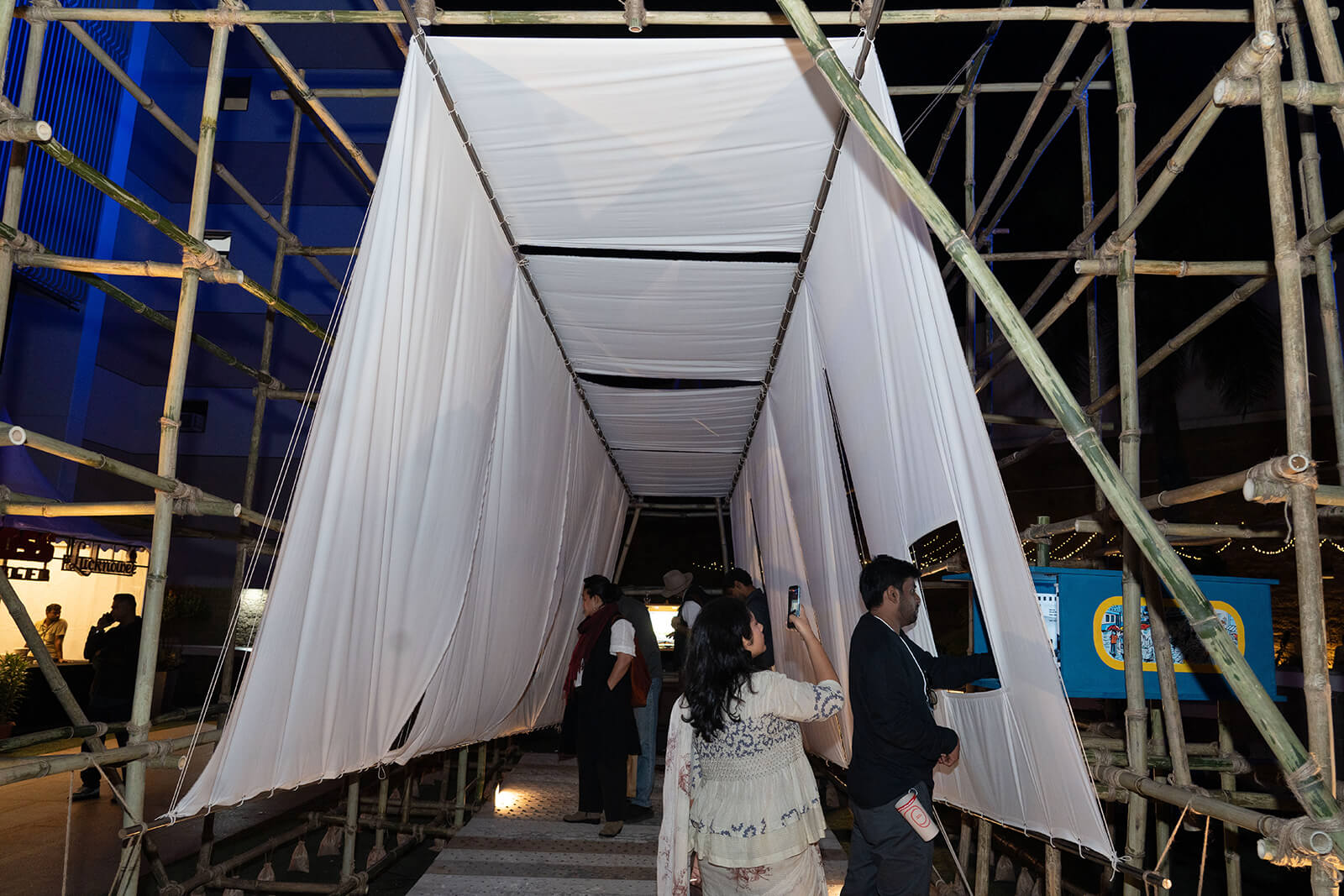
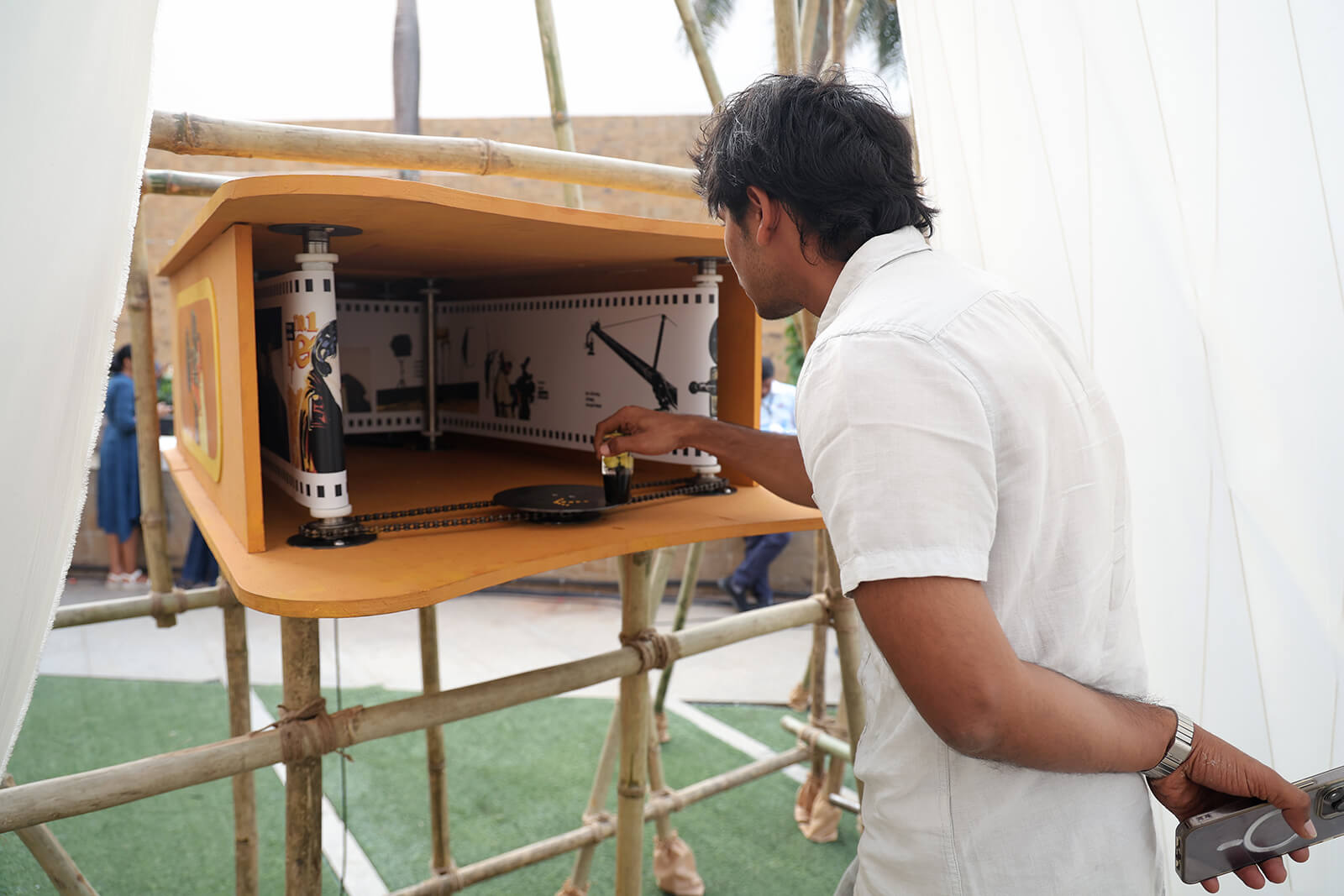
Materially, the pavilion embodies the very impermanence it describes. Constructed largely from rented and reclaimed components, its framework uses wooden battens, bamboo scaffolding, coconut coir rope and jute twine. Jute and cotton packaging sacks are opened, stitched and reassembled into suspended enclosures, while reclaimed plywood forms the bioscopes themselves. No joints are rigid. Everything is tied, assembled for purpose and designed to be undone.
Most materials are salvaged for their lived character and will return to circulation after the design festival. The bioscope boxes will find an afterlife as individual artworks, supported by mild steel frames that allow them to gently rock. These works will be gifted to the project’s supporters, extending the pavilion’s life beyond its public moment.
As Mathew Ghosh notes to STIR, the pavilion “stages ideas of the improvisational, juxtaposing it with the specificities of individual imaginations of the city. It engages with the permanence of impermanence, the daily making and unmaking of the city, which is so typical of Mumbai as a metropolis”. In this sense, The Mumbai Transcripts is less an object than a method, allowing the city to be encountered through its cycles of making, erasure and repair—much like a film.
The 2026 edition of the Pavilion Park at ADFF:STIR Mumbai 2026 is presented by Jaquar.
The Mumbai Transcripts, by Mathew and Ghosh Architects, is supported by ROCA.
You can now book your passes for the festival here. Full schedule for the festival is available here.

by Pranjal Maheshwari Oct 19, 2026
The Mumbai-based architects integrate courtyards, mesh screens and north light trusses to create a dining space that doubles up as a community hub at SR University, Warangal.
by Mrinmayee Bhoot Oct 17, 2026
The Rotterdam-based institute centres the Indian Ocean as a network for exploring material histories and transnational links shaping coastal cultures, positing them as future models.
by Pranjal Maheshwari Oct 16, 2026
At the 2026 Stirling Prize ceremony, Mary Duggan with RUFF Architects, MAKER Architecten and Nakshabid Architects were felicitated for proffering quality housing and social equity.
by Mrinmayee Bhoot Oct 12, 2026
The new Centre for Contemporary Arts, fostering public engagement with art in Uzbekistan, is housed in a tram depot refurbished by the French studio, emulating local craftsmanship.

make your fridays matter with a well-read weekend
Enter your details to sign in
Don’t have an account?
Sign upOr you can sign in with
a single account for all
STIR platforms
All your bookmarks will be available across all your devices.
Stay STIRred
Already have an account?
Sign inOr you can sign up with
Verification link sent to check your inbox or spam folder to complete sign up process
Tap on things that interests you.
Select the Conversation Category you would like to watch
Please enter your details and click submit.
Enter the 6-digit code sent at


The Mumbai Transcripts at ADFF:STIR Mumbai 2026: cinema as the city’s lens
by Aarthi Mohan | Published on : Dec 31, 2025


 Sign in with Google
 Sign in with email
What do you think?