Architecture05 mins. read
LIVinSET at ADFF:STIR Mumbai 2026 turns daily rituals into a cinematic experience
by Aarthi MohanJan 08, 2026



by Aarthi MohanPublished on : Jan 03, 2026
In the lawns of the National Centre for Performing Arts (NCPA) in Mumbai, India, gathering has always taken multiple forms, with audiences waiting between performances, conversations unfolding beneath trees and informal exchanges spilling out from rehearsal rooms and theatres. From January 9 – 11, 2026, a similar gathering—magnified in scale and scope from its debut edition at the same venue in 2025—will briefly take refined architectural form. Installed as part of the Jaquar Pavilion Park for ADFF:STIR Mumbai 2026, the Pentad Pavilion, designed by London-based architecture and design studio UHA, proposes a space not for observation alone, but for participation, assembly and exchange.
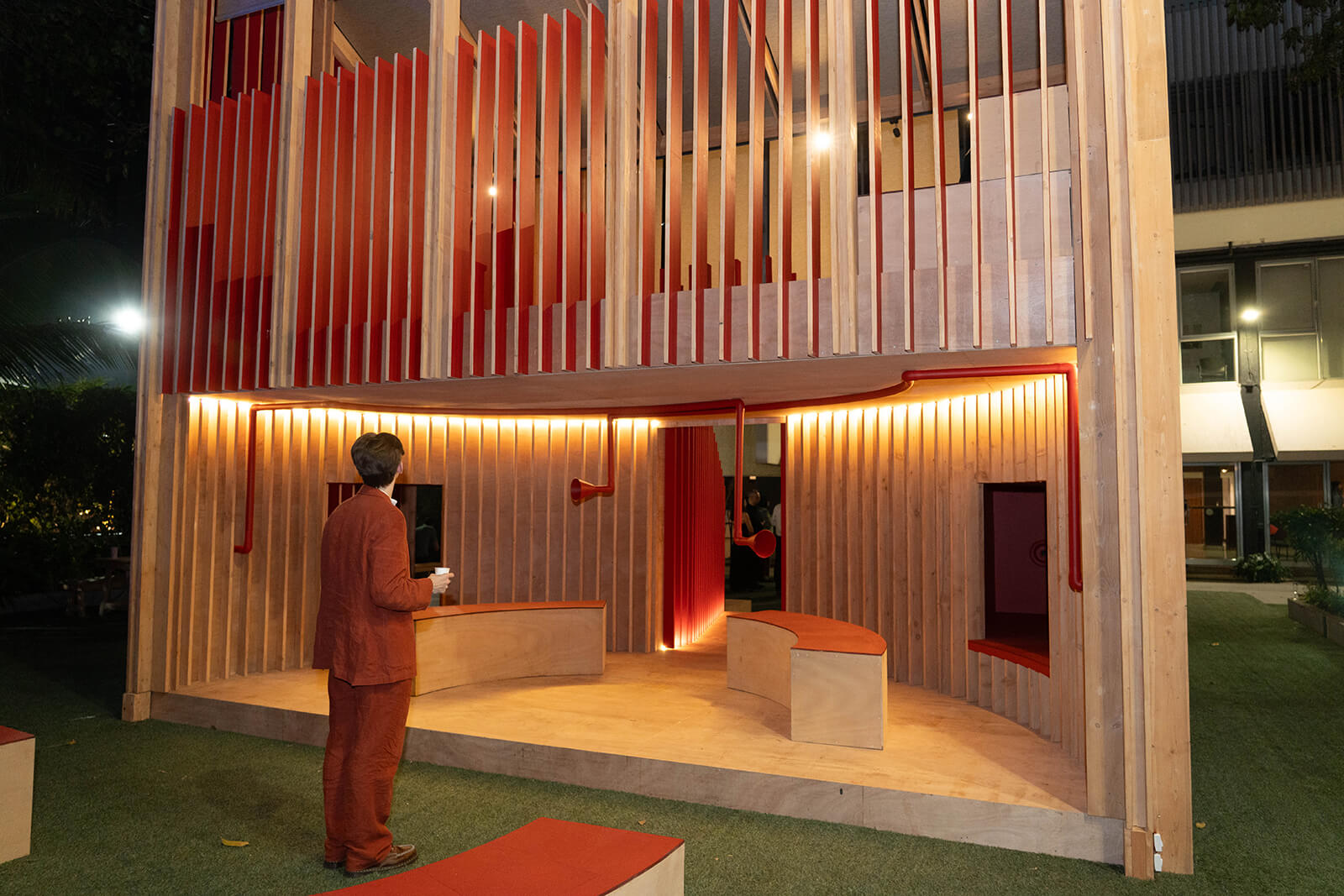
Conceived as part of the second edition of the Architecture and Design Film Festival in South Asia and curated by Aric Chen, the pavilion responds to a long history of spaces shaped for discussion and to Bernard Tschumi’s provocation of cities being defined by event and movement. From ancient agoras, sabhas and samitis, where political, social and everyday life often overlapped, places of assembly once belonged as much to the public as to governance. In contrast, many contemporary plenary spaces have become fortified, monofunctional environments that are often controlled in visibility, detached from community ownership, and are experienced largely through screens. Pentad Pavilion positions itself as a temporary counter-condition, inviting visitors to reflect on how spatial arrangements influence who speaks, who listens and how decisions are made.
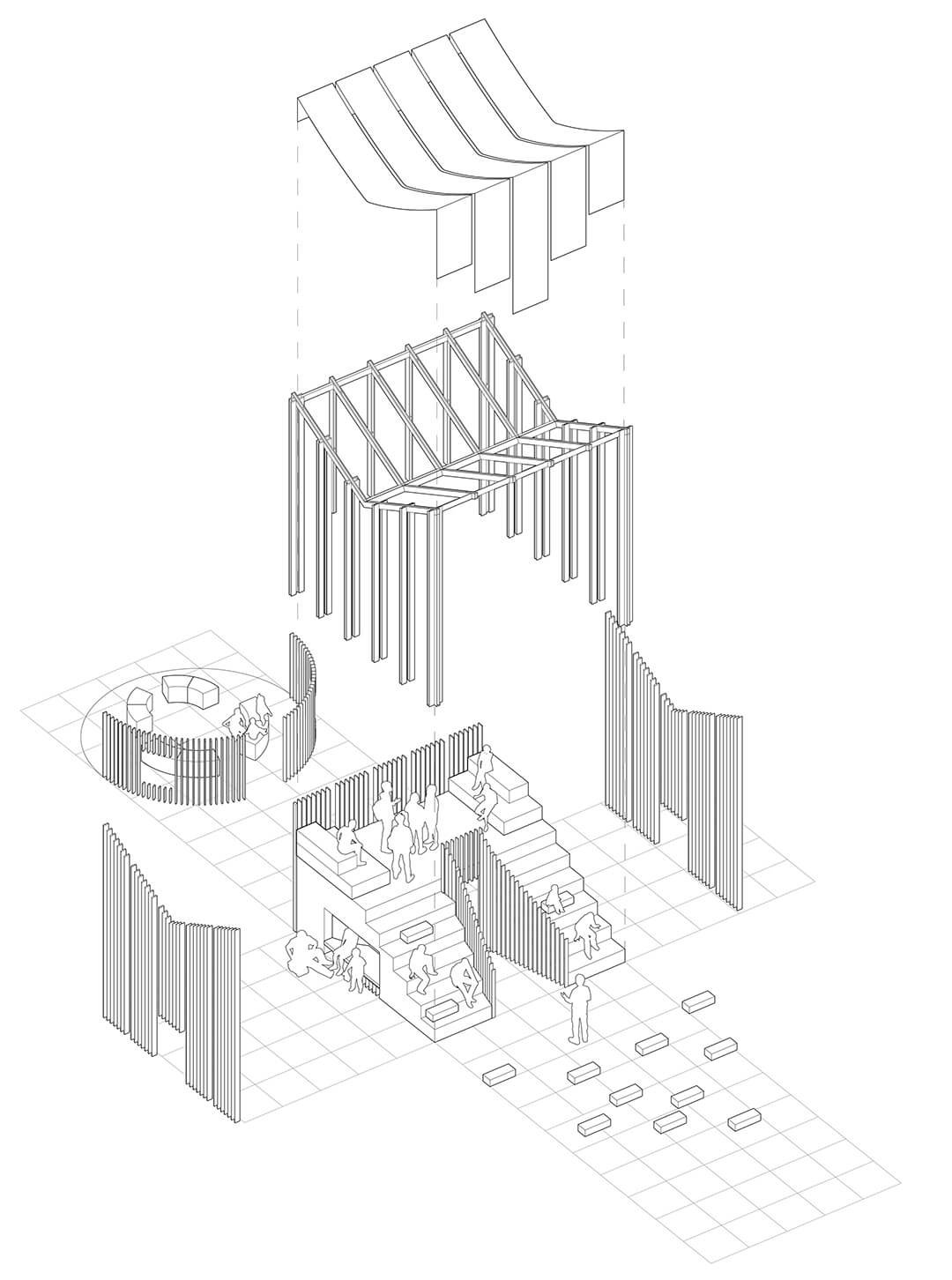
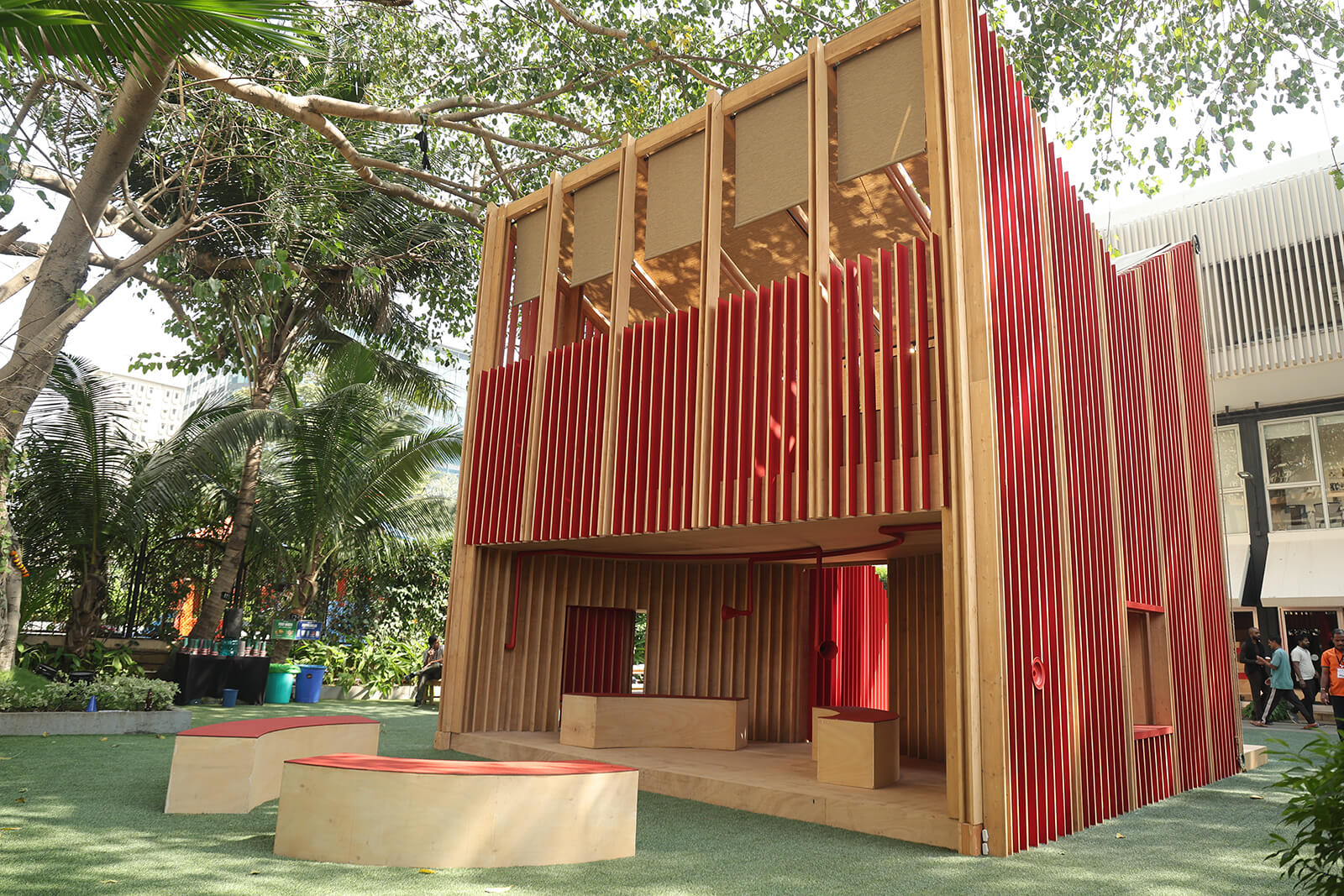
The pavilion is organised as a structure, with each side measuring six metres, that brings together five of the most common parliamentary seating formats used across the world’s legislatures, including semi-circular, opposing benches, horseshoe, circular and classroom layouts. Rather than selecting a single model, the pavilion architecture creates a reconfigurable space, combining all five arrangements within one evolving form. Two chambers, loosely referencing India’s bicameral system where legislative debate is split between two houses, are designed to be reconfigurable through movable seating and adjustable shading panels. A space set up for face-to-face debate may, within moments, transform into a public gallery overlooking a forum below. Deliberately unsettled, the architecture allows the same volume to support a range of activities—from workshops and debates to performances, talks and quiet observation—at multiple scales.
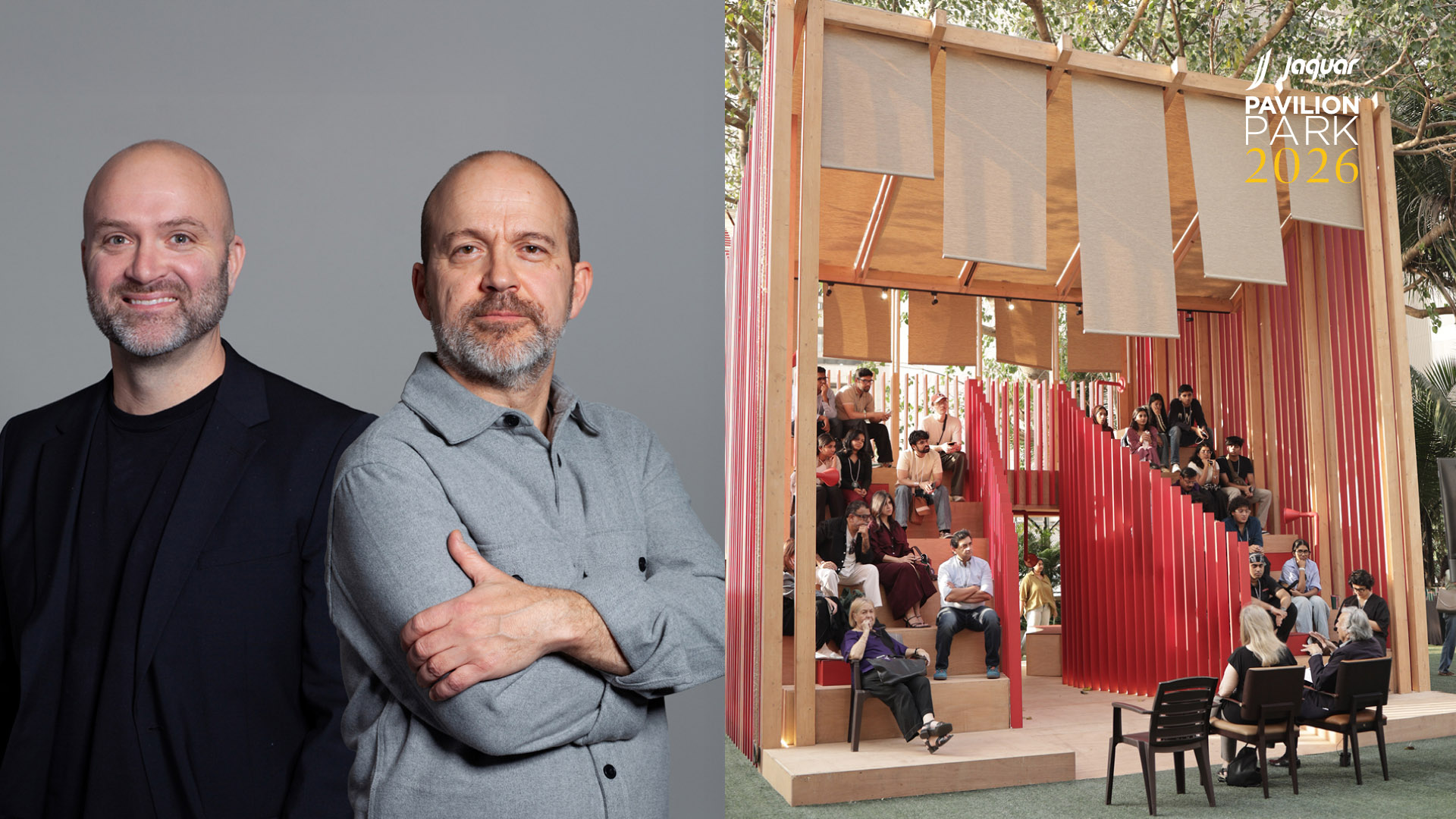
“Coming back for the second edition of ADFF feels incredibly exciting,” Jonas Upton-Hansen, founding director of UHA, tells STIR. “The first edition was one of the most incredible architectural film festivals we’ve attended. This year, we’re presenting our second pavilion, and it’s more ambitious. Pentad is about creating multiple plenary spaces within a very compact structure, allowing different kinds of discussion and debate to happen at once. It’s designed to test how changing the way we sit together can completely change the way we communicate.”
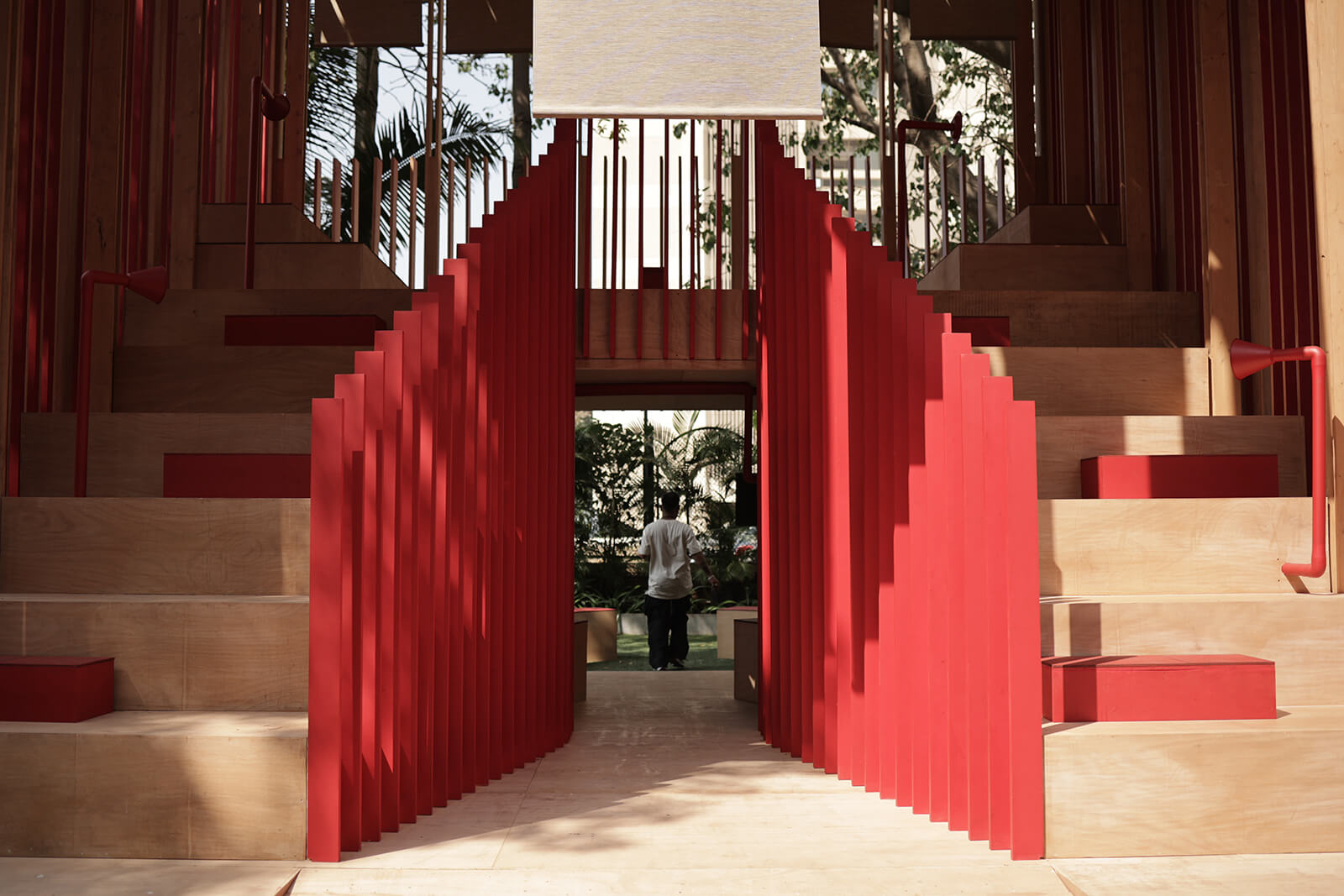
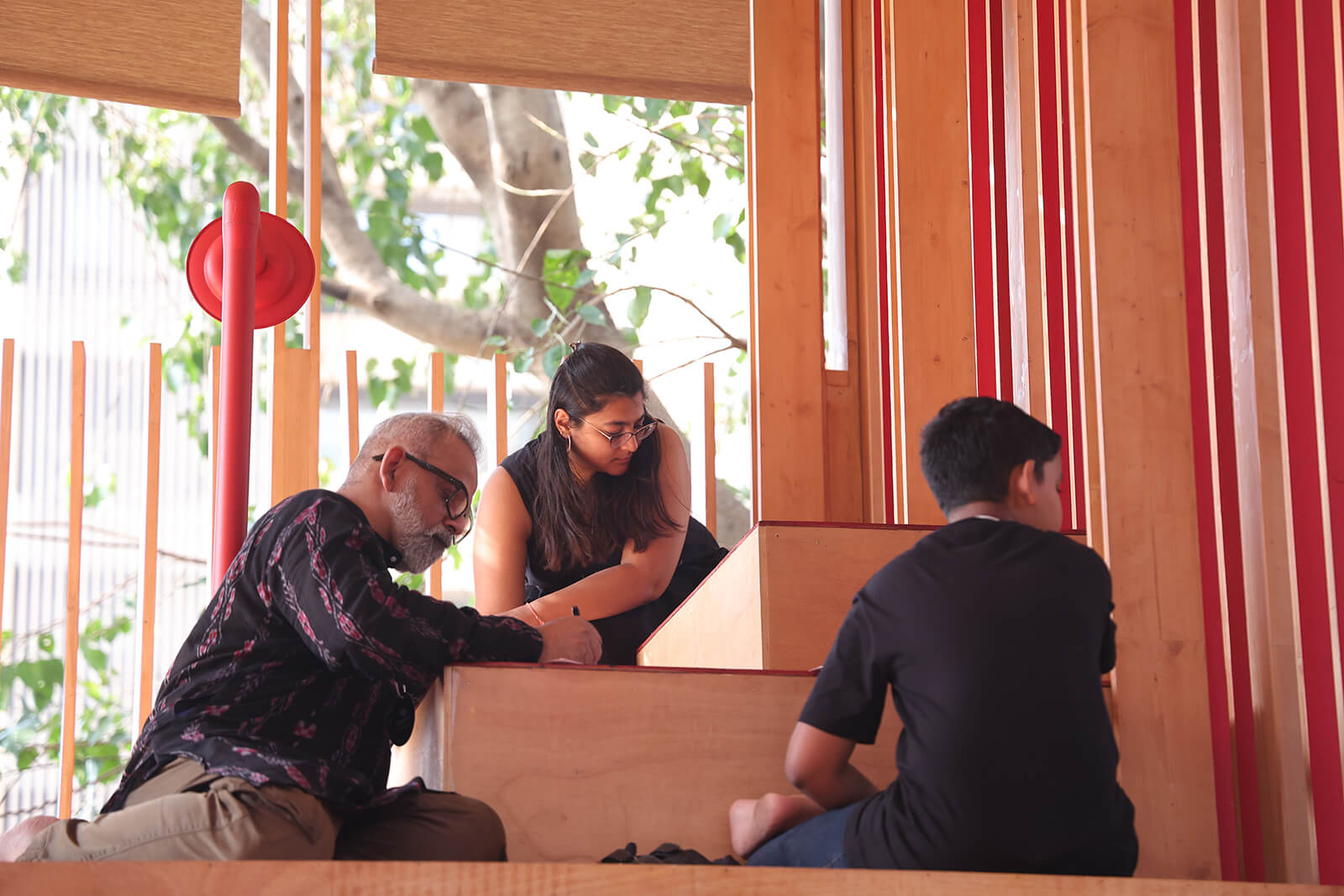
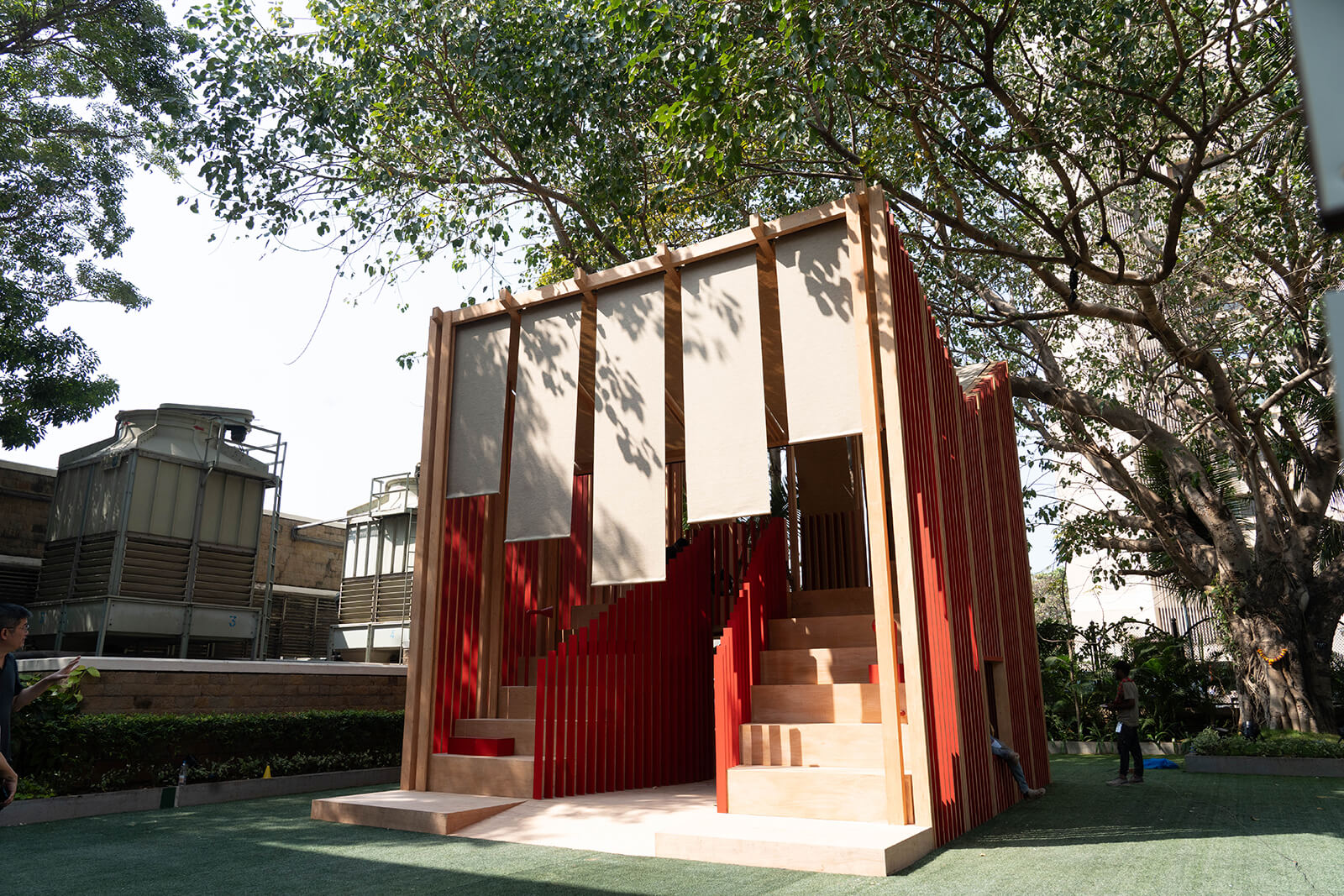
The pavilion’s relationship to its surroundings is central to this ambition. Located adjacent to the NCPA’s Experimental Theatre and positioned in dialogue with a prominent Bodhi tree, it extends the notion of performance beyond enclosed interiors, functioning alternately as audience stalls, a stage or a shared forum beneath the tree’s canopy. Visitors will tread the space with shifting roles—moving from speaker to listener and from performer to audience—reinforcing the idea that civic space is not something to be watched from a distance, but something inhabited collectively.
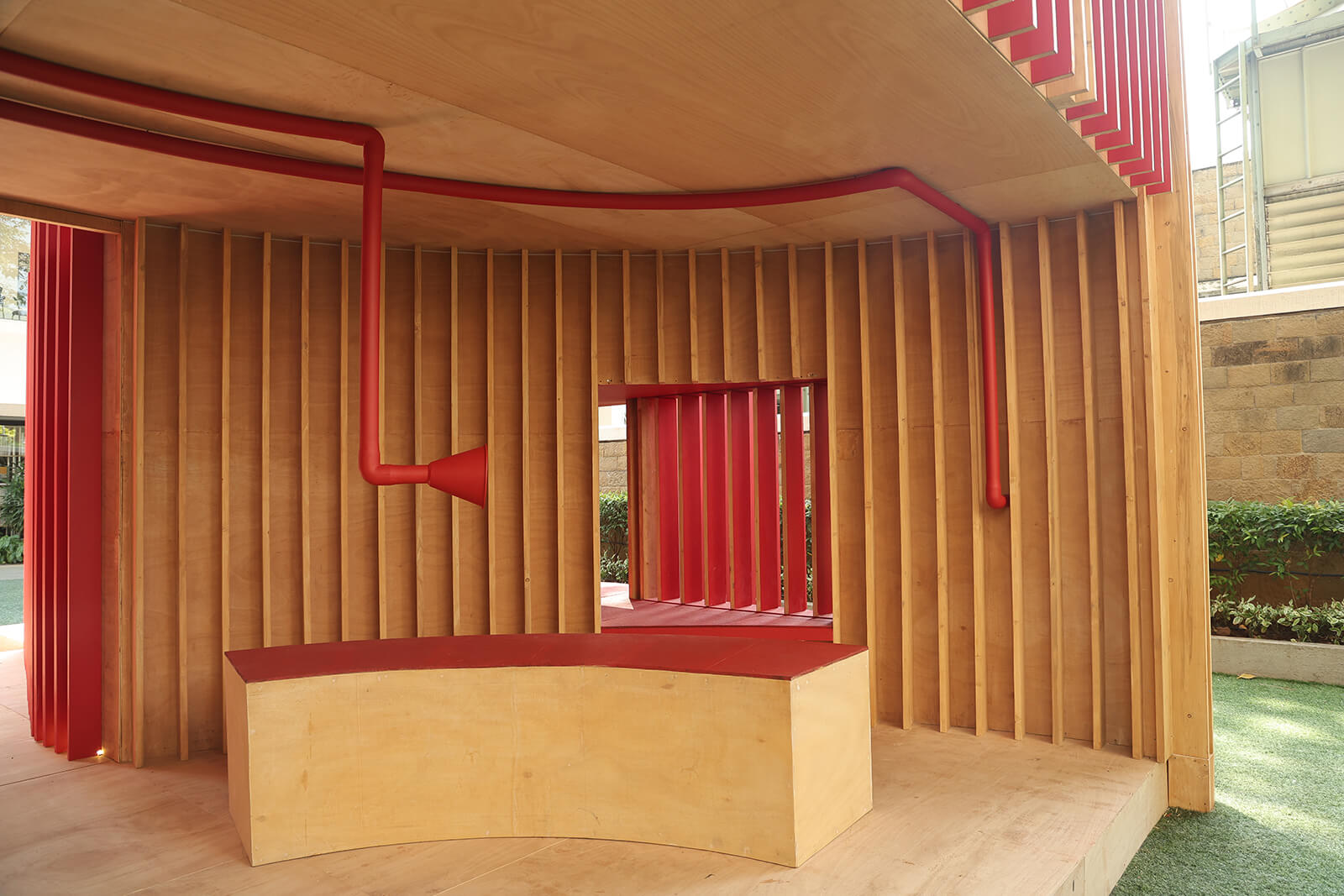
Unexpected interactions are further encouraged through a concealed network of talk tubes threaded within the pavilion’s structure. These allow sound and conversation to travel across chambers, creating moments of overlap and interruption where visitors may listen in, respond or choose to move between discussions. Transparency is layered rather than absolute, with slatted facades, jute shading panels and framed openings that allow partial views and shifting perspectives. There is no single centre of attention; activity is distributed across the structure.
Materially, the Pentad Pavilion is designed with both immediacy and longevity in mind. A sustainably sourced timber frame—chosen for its low embodied carbon and scope of future adaptability—forms the primary structure. Locally sourced jute is used for movable solar shading, providing natural ventilation, filtered light and thermal comfort without reliance on active energy systems. The pavilion operates entirely on daylight and passive cooling, with non-toxic finishes and child-safe treatments applied throughout.
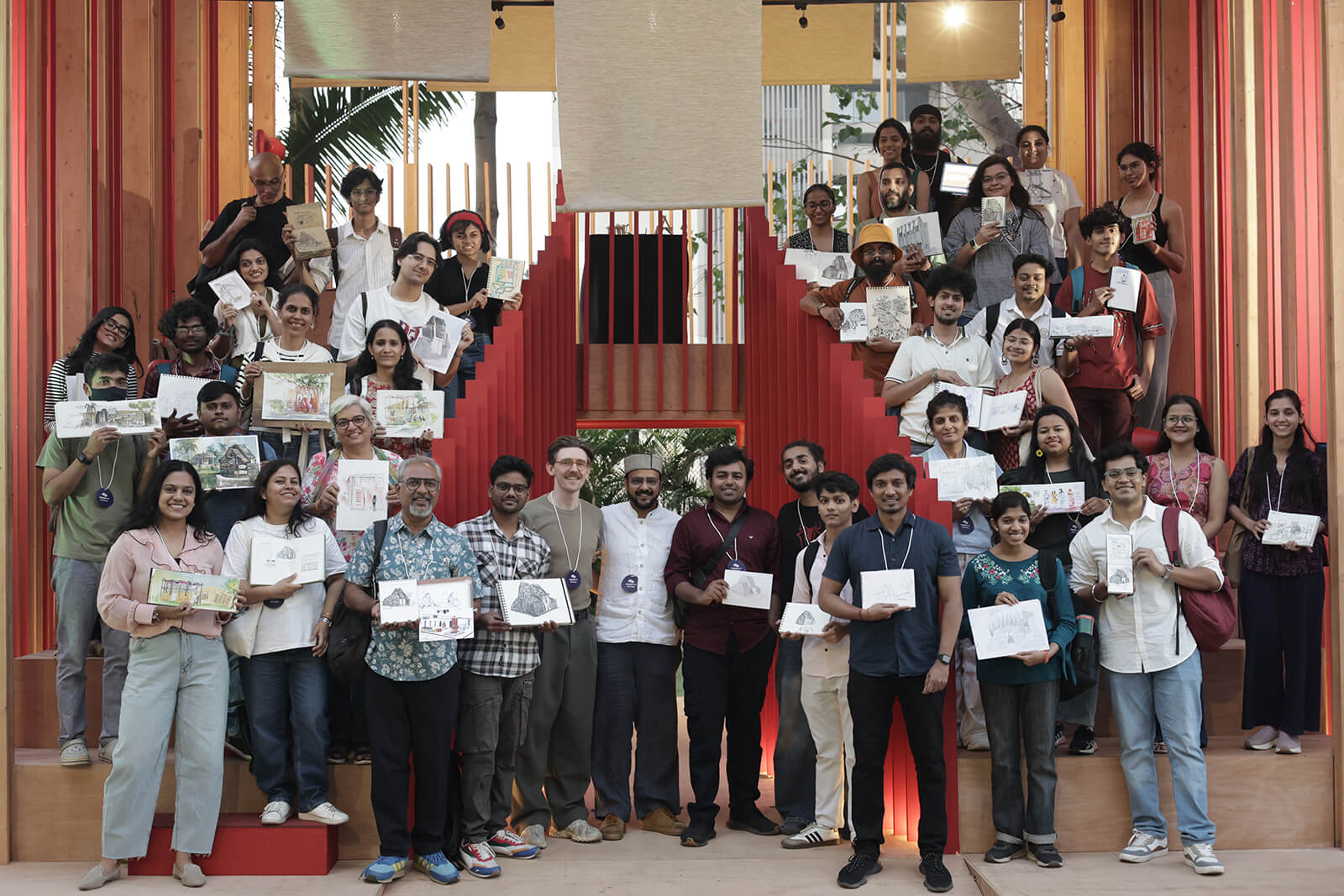
Crucially, the pavilion’s life does not end with the design festival. Designed from the outset for circularity, it is set to be dismantled and reassembled elsewhere, with its modular components repurposed for play, learning and community use. Antechambers become crawl spaces, forum seating supports slides, and talk tubes transform into playful conduits of movement and sound. Even swing hooks are already integrated into the structure, raising a quietly disarming question: what if spaces of serious discussion were also spaces of play?
Ahead of its full-scale realisation, Pentad Pavilion has already been tested in miniature. A gingerbread model of the pavilion was constructed and exhibited at Gingerbread City, hosted by the Museum of Architecture at King’s Cross in London.
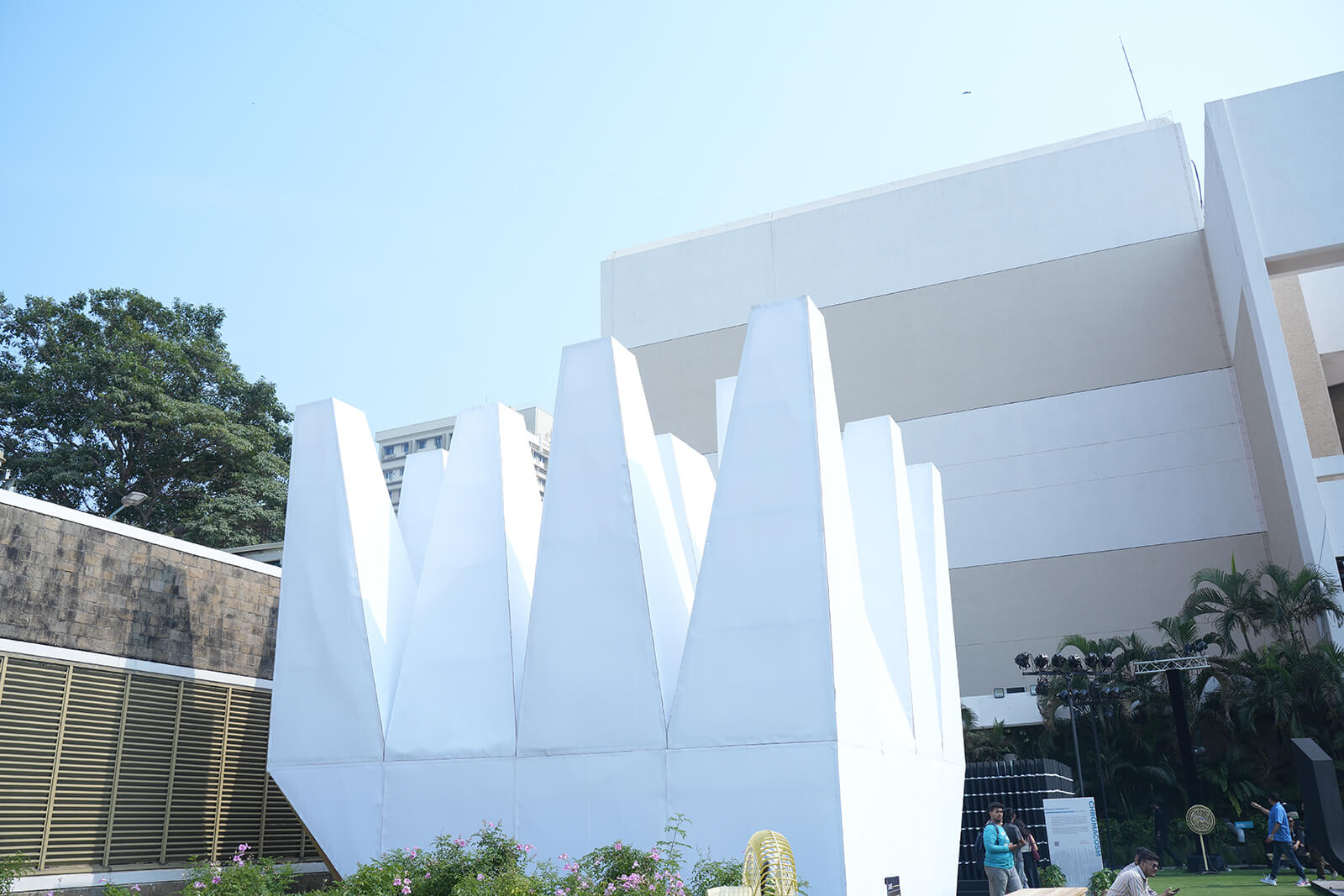
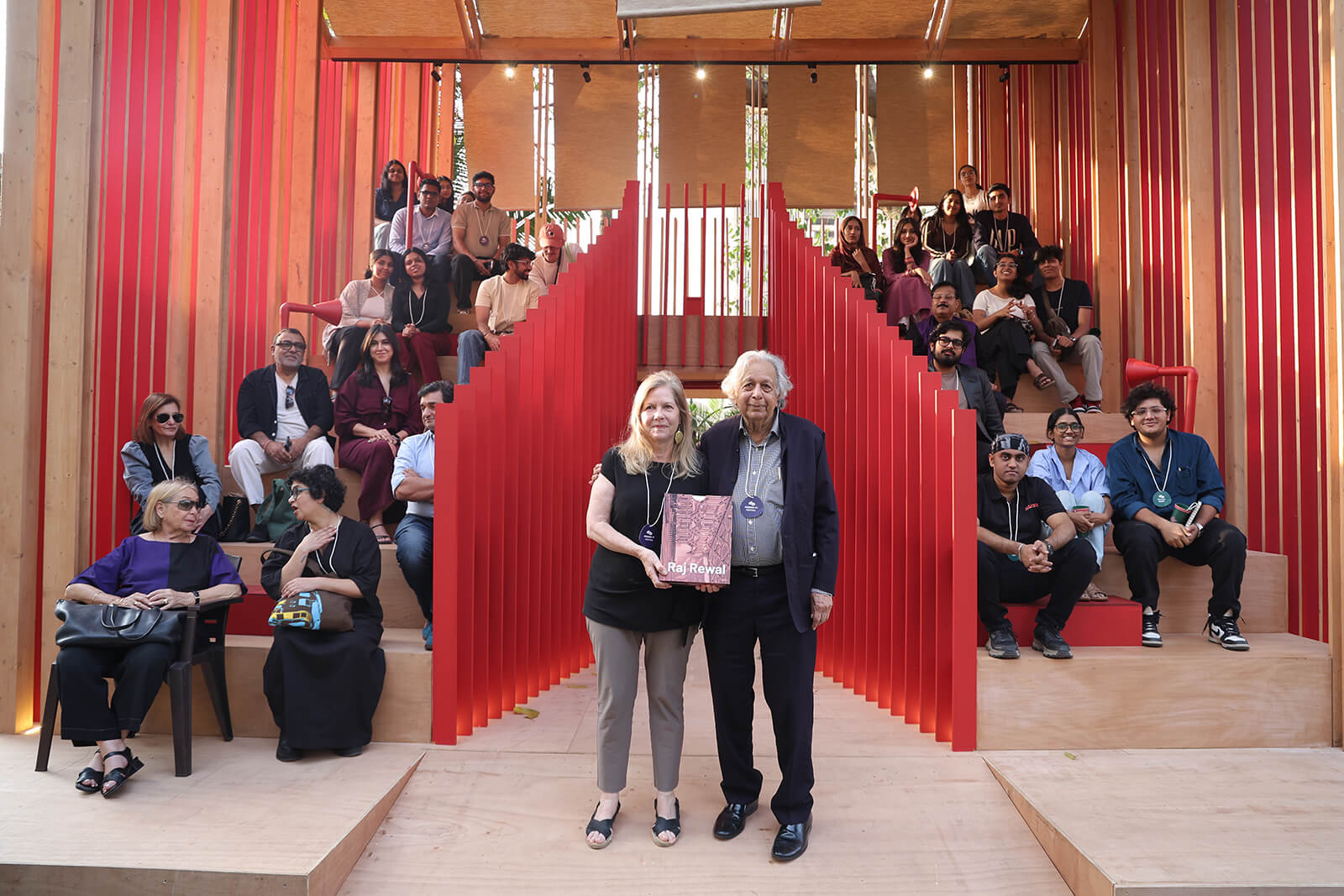
Pentad follows UHA’s participation in the first edition of ADFF:STIR Mumbai Pavilion Park, supported by JSW, with the pavilion titled Stack. Conceived as a luminescent ‘theatre within a theatre’, Stack—developed in collaboration with the Saraf Foundation—screened short documentaries about Mumbai and Maharashtra. Rather than functioning as a black box, the pavilion unfolded as a promenade of spaces, with artefacts chosen by filmmakers displayed around the screening volume.
At ADFF:STIR Mumbai 2026, Pentad continues this trajectory not by offering answers, but by creating a setting where questions can be asked collectively. For three days in January, the pavilion will stand as a temporary civic room at the NCPA lawns, shaped by the conversations it hosts and the people who choose to step inside.
The 2026 edition of the Pavilion Park at ADFF:STIR Mumbai 2026 is presented by Jaquar.
The Pentad Paviliion by UHA finds an afterlife at the India Art Fair 2026 and will be on display at the Fair Grounds at NSIC Okhla, New Delhi, for the duration of the festival.

by Pranjal Maheshwari Oct 19, 2026
The Mumbai-based architects integrate courtyards, mesh screens and north light trusses to create a dining space that doubles up as a community hub at SR University, Warangal.
by Mrinmayee Bhoot Oct 17, 2026
The Rotterdam-based institute centres the Indian Ocean as a network for exploring material histories and transnational links shaping coastal cultures, positing them as future models.
by Pranjal Maheshwari Oct 16, 2026
At the 2026 Stirling Prize ceremony, Mary Duggan with RUFF Architects, MAKER Architecten and Nakshabid Architects were felicitated for proffering quality housing and social equity.
by Mrinmayee Bhoot Oct 12, 2026
The new Centre for Contemporary Arts, fostering public engagement with art in Uzbekistan, is housed in a tram depot refurbished by the French studio, emulating local craftsmanship.

make your fridays matter with a well-read weekend
Enter your details to sign in
Don’t have an account?
Sign upOr you can sign in with
a single account for all
STIR platforms
All your bookmarks will be available across all your devices.
Stay STIRred
Already have an account?
Sign inOr you can sign up with
Verification link sent to check your inbox or spam folder to complete sign up process
Tap on things that interests you.
Select the Conversation Category you would like to watch
Please enter your details and click submit.
Enter the 6-digit code sent at


UHA’s Pentad Pavilion at ADFF:STIR Mumbai 2026 unpacks an architecture of debate
by Aarthi Mohan | Published on : Jan 03, 2026


 Sign in with Google
 Sign in with email
What do you think?