Art09 mins. read
Heshoram Hoshiyaar is a chaotic, goofy take on a childhood Bengali classic
by Srishti OjhaOct 01, 2026



by Srishti OjhaPublished on : Oct 31, 2025
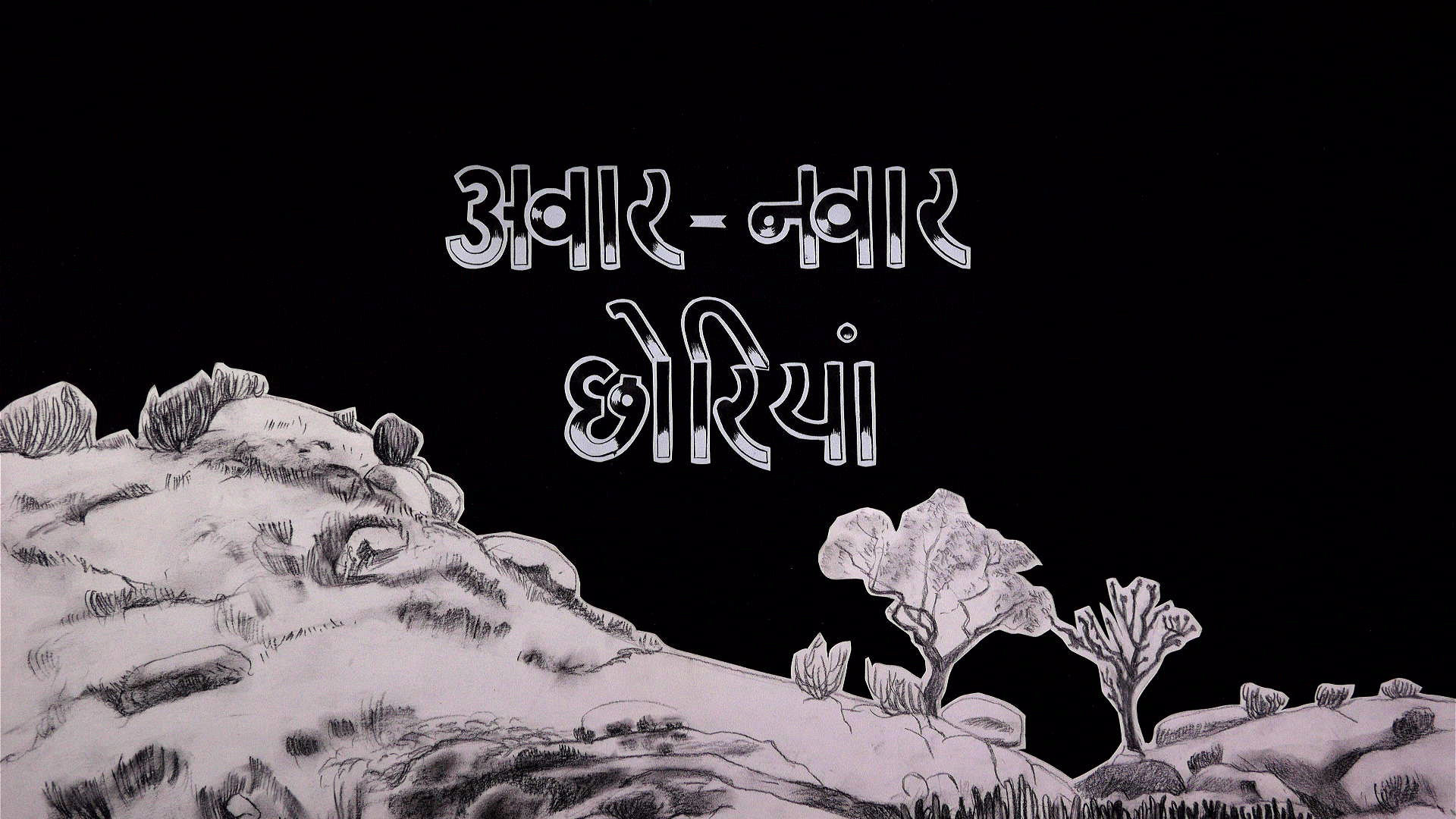
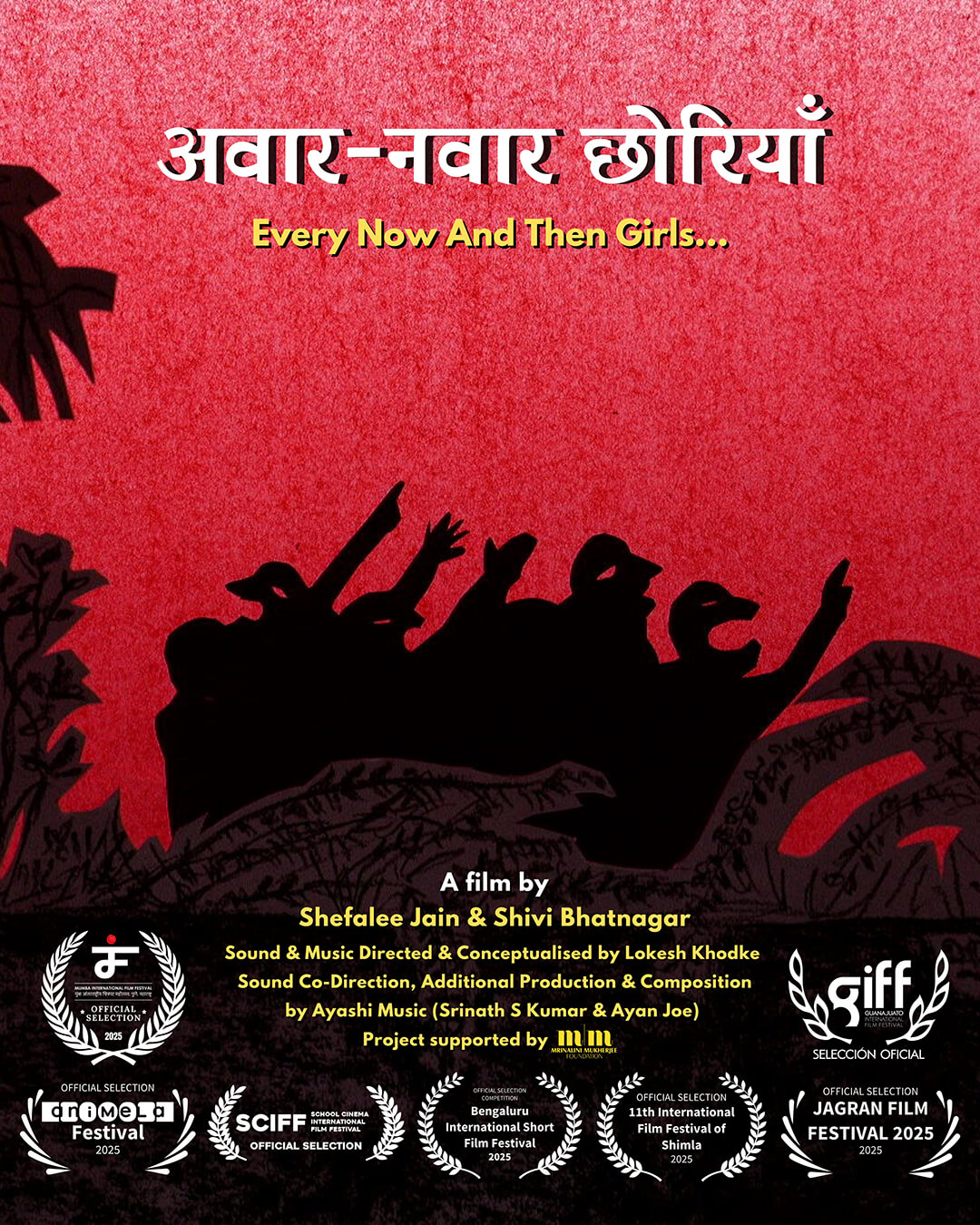
A swarm of locusts surrounds girls being menaced by a mob of angry men; two young girls escape arranged marriage in the boughs of a thorny plant; a crane lifts women away from a village where they are persecuted. These are some snippets from अवार-नवार छोरियां (Every Now and Then Girls…), a film which brings a Rajasthani folktale to life through painstaking stop-motion animation and paper puppetry. Created by Indian artist Shefalee Jain and cinematographer Shivi Bhatnagar, it is an adaptation of the folktale, Dohri Joon, from a book of folktales captured and retold by Rajasthani researcher, folklorist and author Vijaydan Detha. The film features lively female protagonists resisting and escaping the restrictive, patriarchal societies they find themselves in, with the aid of non-human allies. The three tales in the film are narrated by its titular character, the Tiddi (locust), the Danda Thhor (a thorny succulent plant) and the Sarus crane, each native to the Sheoganj region of Rajasthan, India.
Jain, who has experience as a children’s book illustrator and a visual artist, spoke to STIR about her decision to turn to this new medium, saying, “My last installation had mechanical and moving elements, using small motors, GIFs, etc. This began a fascination with movement.” When it came to adapting the folktales tied to her hometown of Sheoganj, she turned to traditional stop-motion cinema, a medium that created a moving image without digital intervention, each frame and movement manipulated by hand between shots. “Some of my favourite animators come from the older tradition of animation, which is hand-cut and drawn, from early Japanese animators, to Russian animator Yuri Norstein or Polish animator Piotr Dumała. This long-drawn process (the film took three years to make) is something important to me as an artist; it allows for slowing down, for accidents, for limited control, resulting in something tentative and tender, rather than quick, clean and perfect,” elaborated Jain.
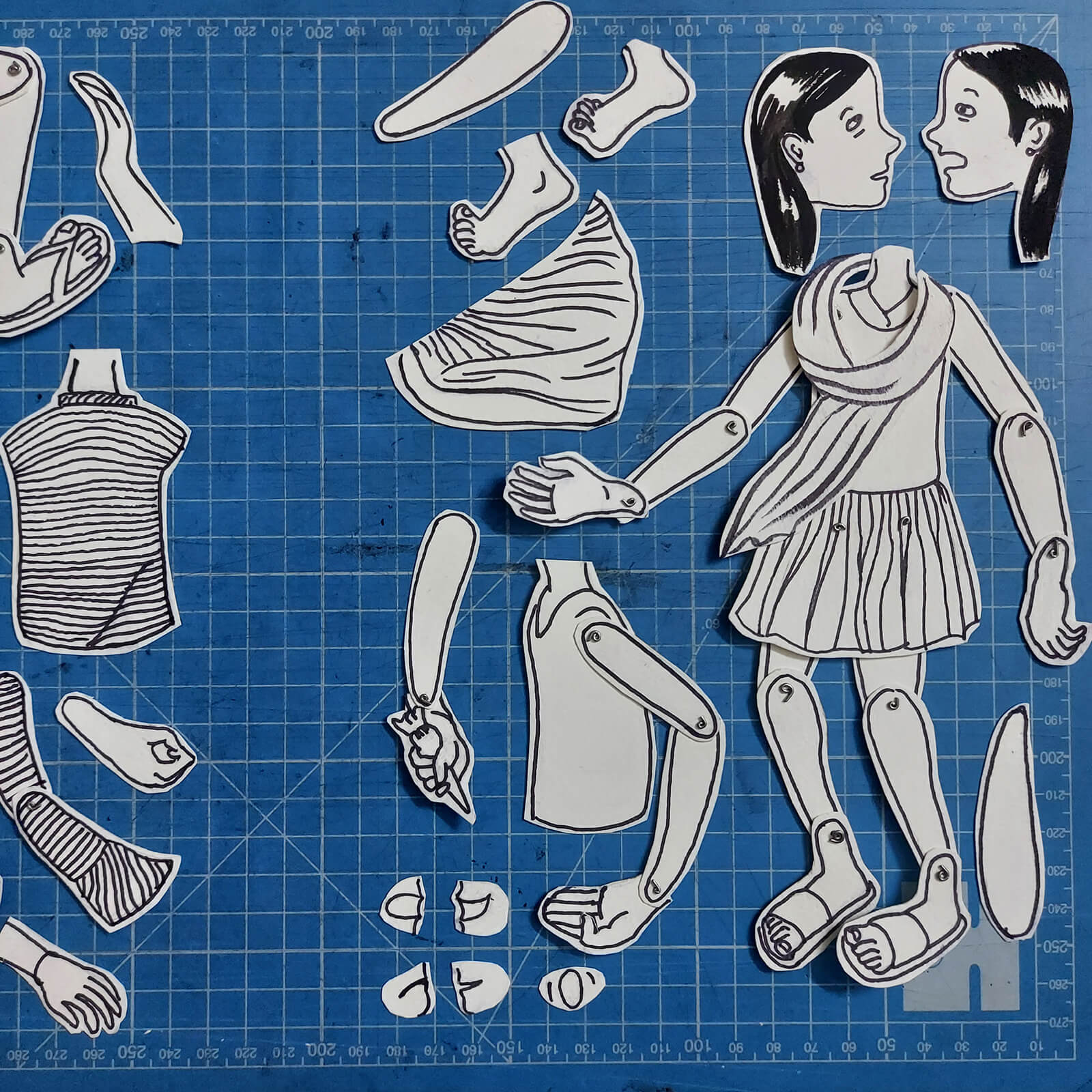
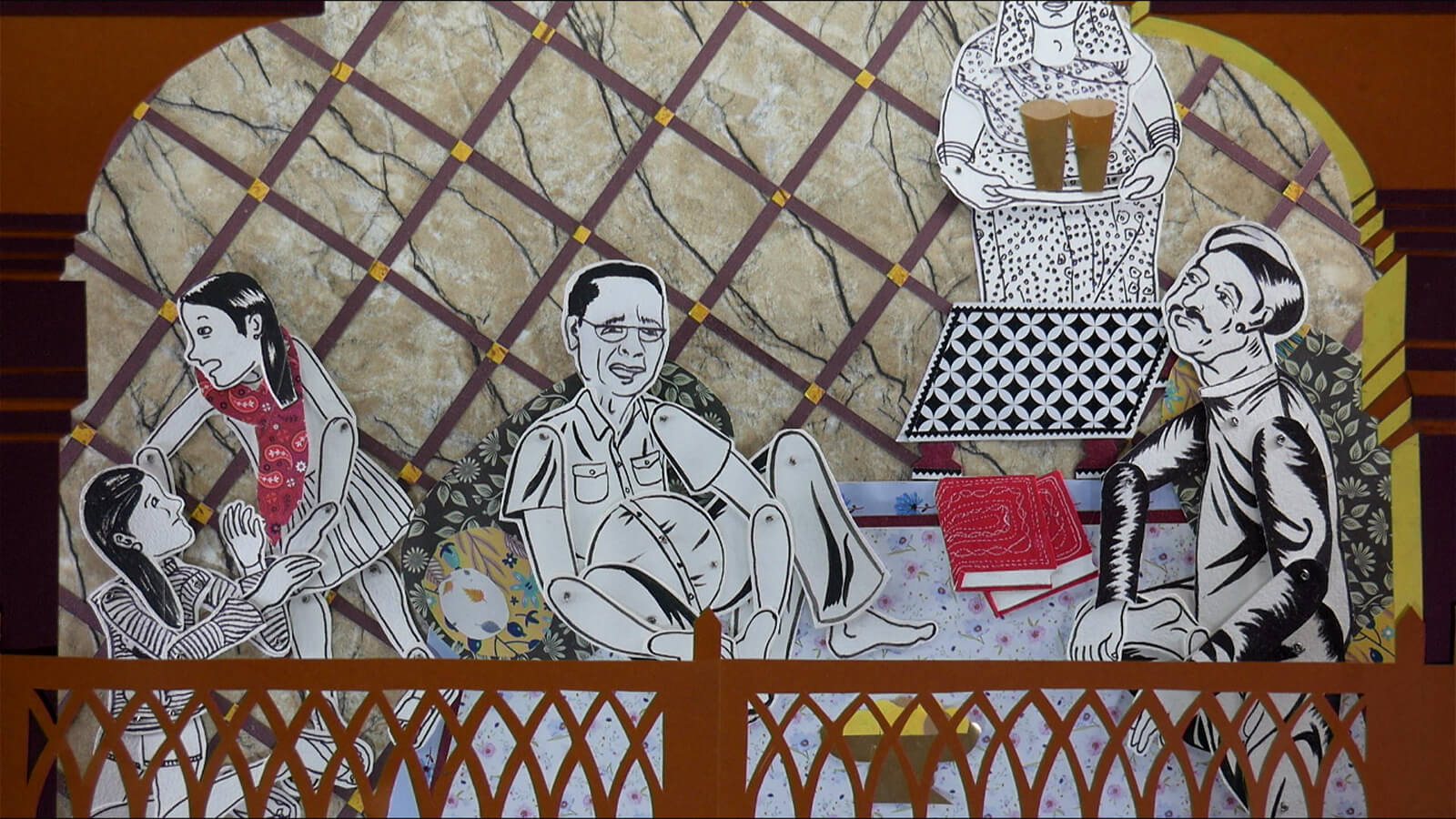
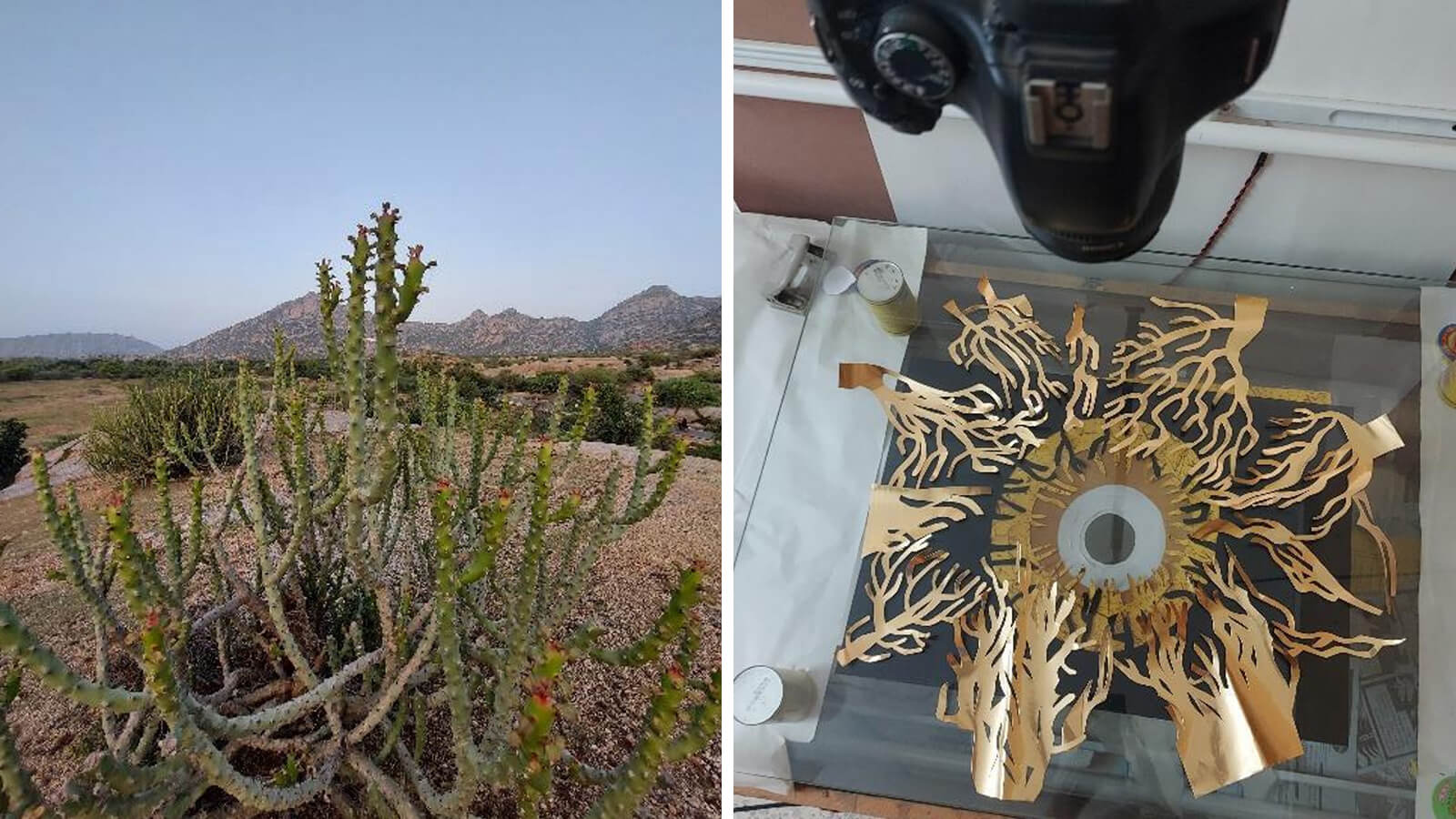
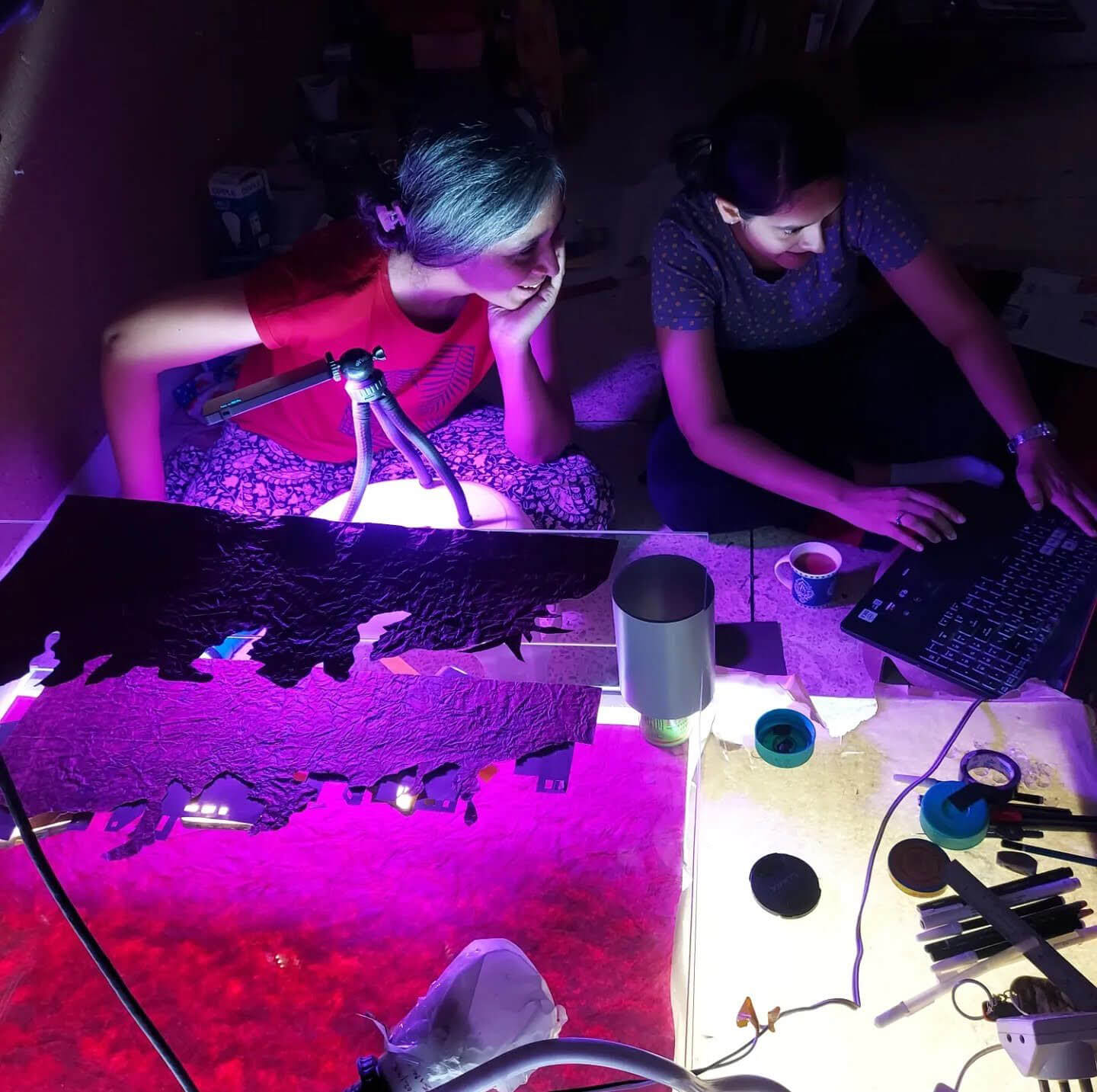
This influence is visible in the film’s visual language—the characters are paper puppets with hinge joints, moving over hand-drawn backdrops, both rendered in a familiar Indian storybook style. The gaps between each movement are embraced rather than smoothed out, giving the film a unique mechanical rhythm. Jain received the Mrinalini Mukherjee Creative Arts Grant 2022 – 23 to support the project. Jain and Bhatnagar, both based in New Delhi, produced the film independently, developing improvised techniques and equipment to achieve their intended effect. For example, the film uses a DIY version of the multiplane table traditionally used by analogue stop-motion animators, which generally features glass panes suspended at different heights in a wooden frame, allowing artists to create depth and take advantage of the parallax effect. Bhatnagar described their setup, saying, “We used PVC pipes we cut to different lengths to achieve the different heights, building over a repurposed lightbox to provide underlighting.”
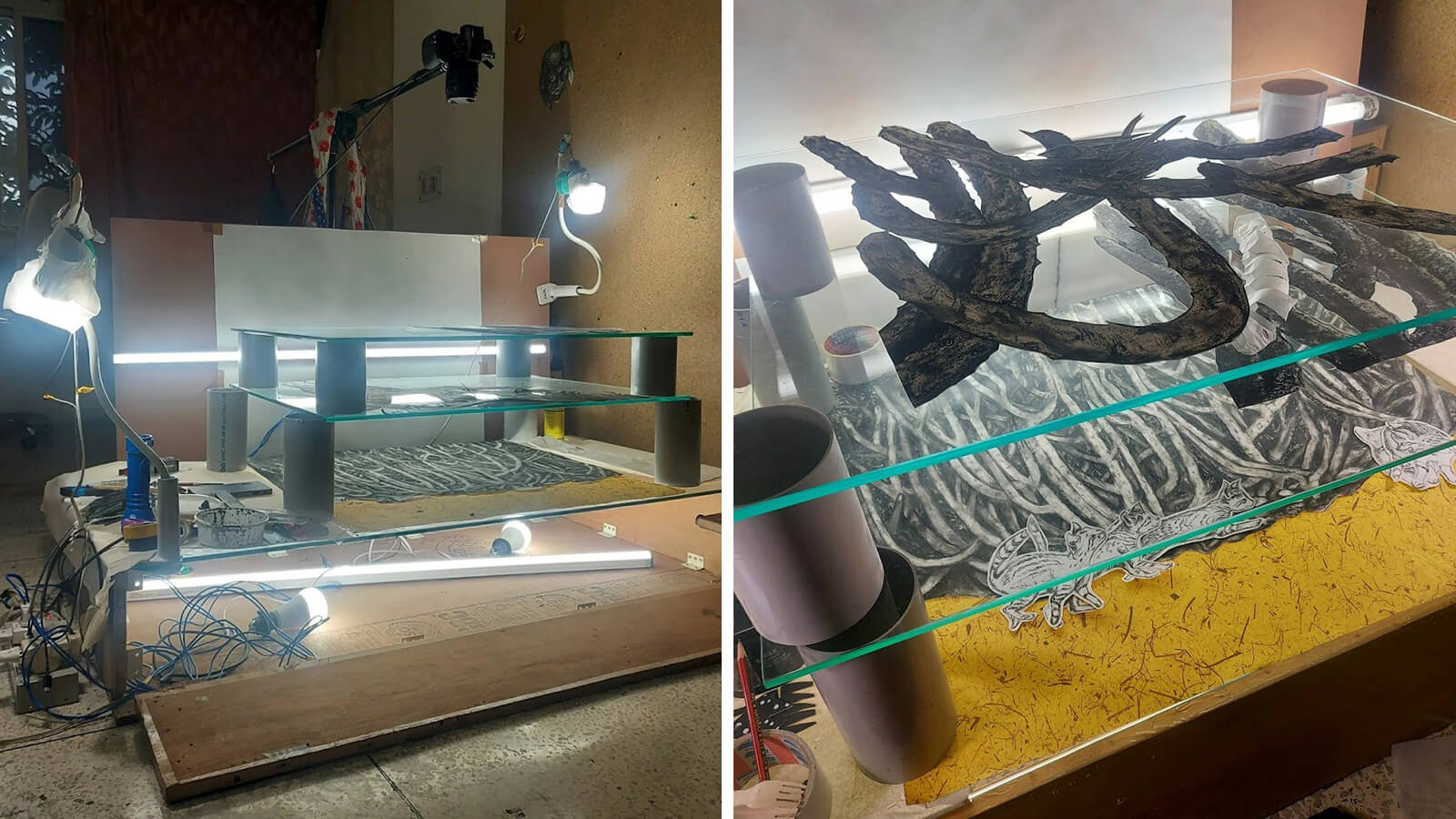
Lighting is integral to the film’s cinematography but also to highlighting the narrative tropes of the folktale form—with each interjection of the fantastical and non-human, the film’s style changes, becoming more experimental and dark. Deep blue bulbs shroud the characters in a night, while flashlights arc through, golden bulbs illuminate spaces of sanctuary and dark paper overlays with strategic cutouts create the more abstract tableaus. “Lighting was a very challenging thing because we were working with a DIY setup and very reflective surfaces. We had the lightbox and space underneath for tubelights and bulbs, more of these used for background lighting and RGB lights to create the right mood. We found flicker-free bulbs so they would read correctly on camera, and stuck them to bendable selfie sticks so we could attach them at the best angles. This was especially important when lighting reflective elements, like the beads in the second story, and in not overexposing darker scenes,” Bhatnagar said.
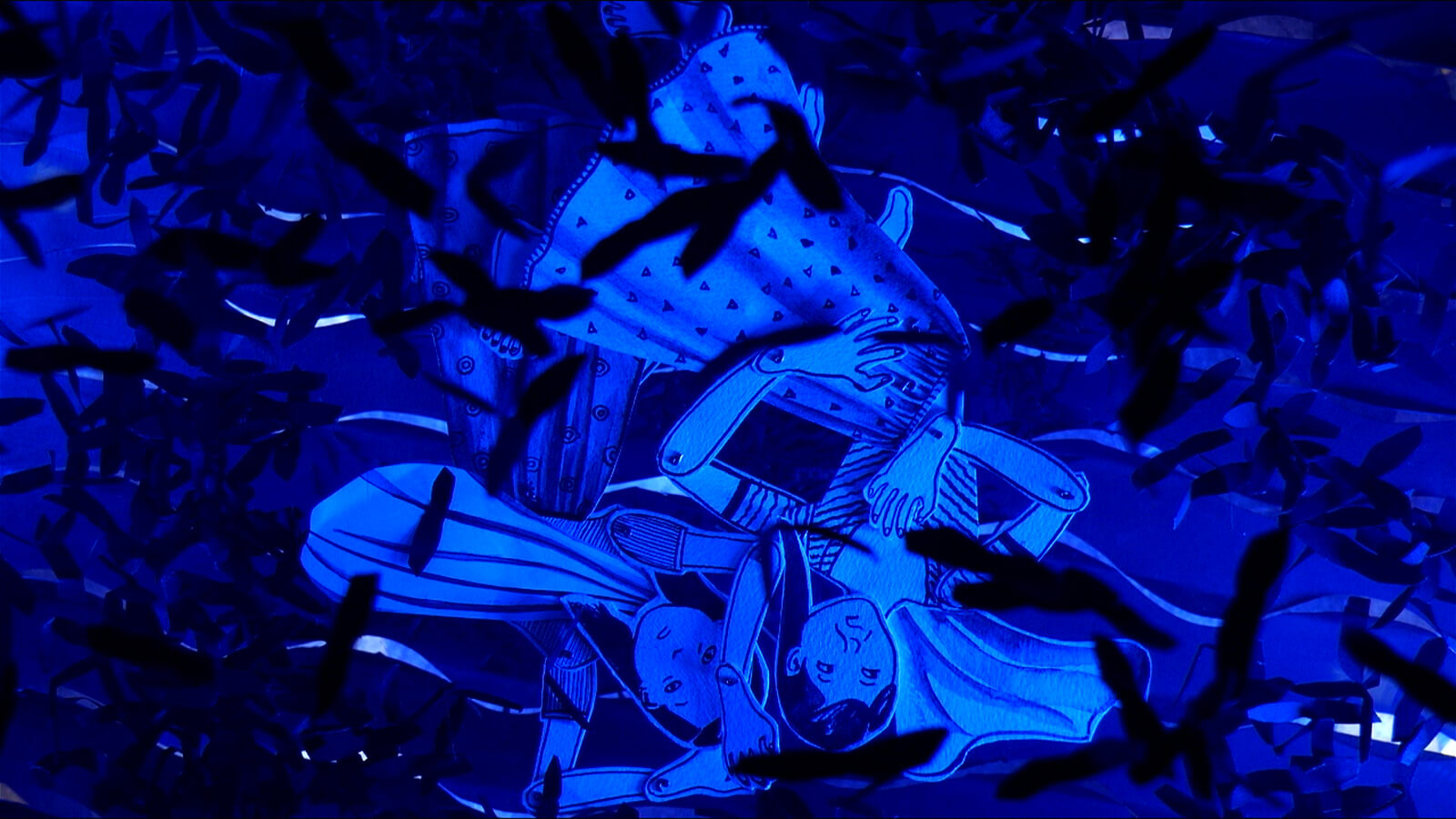
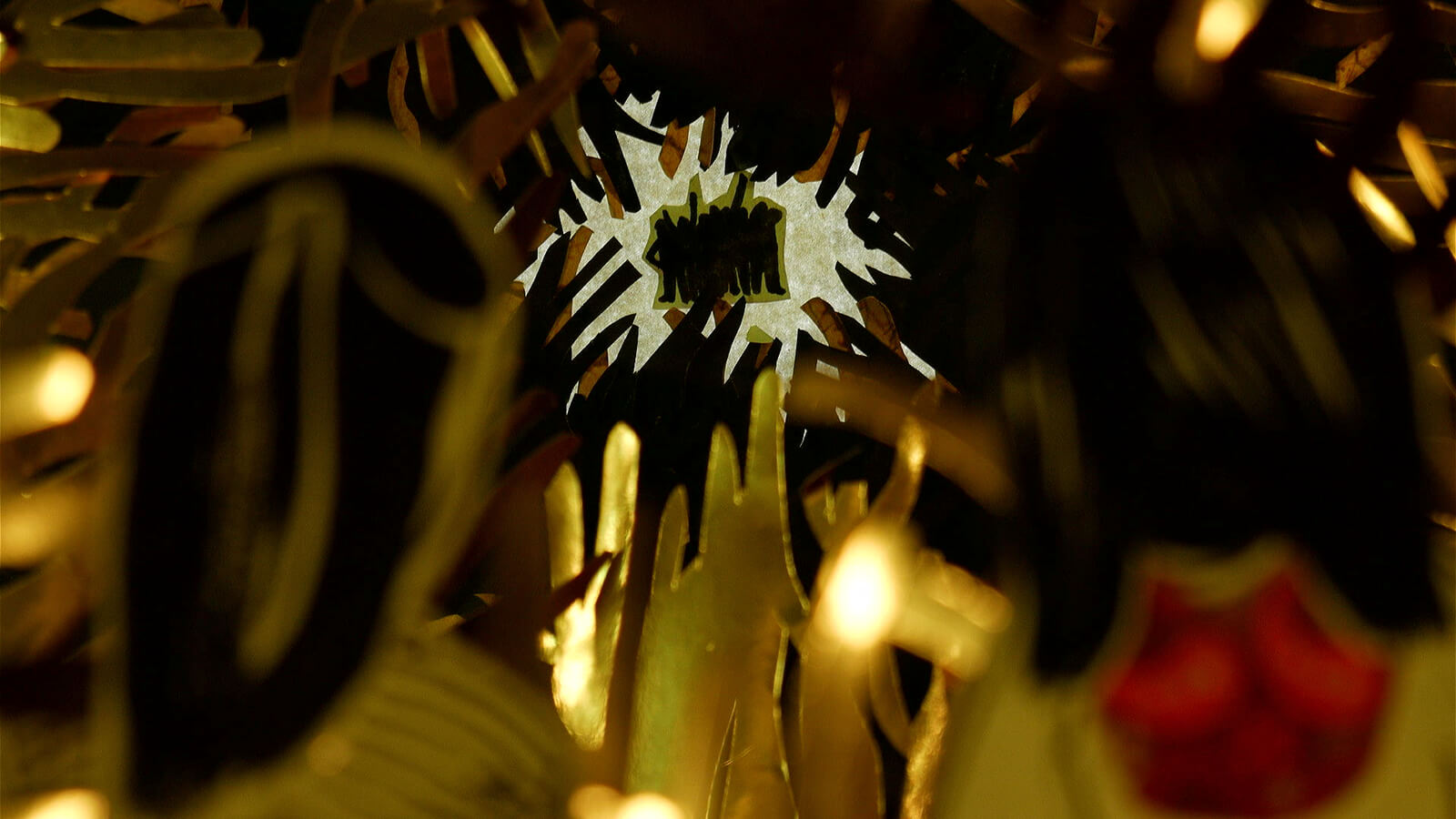
This fantastical mood echoes the moments in the story where nonhuman characters come to the aid of the young, female protagonists. Speaking about the second story, Danda Thhor’s Tale (a thorny succulent native to Rajasthan, whose branches often become a refuge for small animals hiding from predators), Jain said, “In the folktale, there is a guardian spirit which protects the girls but is not described in words. When I was trying to visualise what figure would represent this spirit, I thought of the ‘Danda Thhor’. With non-human characters becoming allies of these girls, you begin to think about the world beyond human relationships, whether they are relationships with the non-human or even the object world, which becomes part of your strategy of survival or escape from a structure.”
Survival and escape are important themes in all three tales, each of which is distinctly feminist, featuring two girls, usually the best of friends, up against larger forces. Jain said, “Almost all these folktales in Detha’s collection have female protagonists who come up with clever schemes to escape and challenge the patriarchal structures around them. This is quite interesting, coming from an often patriarchal and casteist state like Rajasthan.” These schemes are made in response to great dangers, such as in the third story, Sarus Crane’s Tale. The tale within a tale speaks of a highly intelligent courtesan who goes missing, alternately thought to have committed suicide or been sentenced to death by the king. Jain spoke about the considerations that come with telling darker tales to an audience of all ages, saying, “There is [an inclination] to make everything very rosy in children’s books and films. Only a very small percentage of children in this world have such safe and protected childhoods; many children from tribal, underprivileged and oppressed communities are exposed to violence and complex realities early on. It is up to the artists to represent these subjects and realities responsibly without shutting off certain questions.”
These tales are set in a moody and often even foreboding world, with many scenes scored with an eerie chorus of whispers, while lighter scenes feature peals of laughter from offscreen. Lokesh Khodke, who conceptualised and directed the sound, focused on creating a soundscape that ran parallel to the visuals, rather than merely illustrating them. Sound co-direction, additional production and composition were done by Ayashi Music duo Ayana Joe and Srinath S. Kumar. Most of its elements were recorded in Sheoganj itself, on trips with the team and Jain’s father, Narendra Jain, who speaks the language and grew up in the town. Bhatnagar said, “We recorded around 500 – 600 sounds there, recording for almost the whole day. We would go to the markets, record birds early in the morning and show children cartoons so we could record their laughter. Even the three narrators are voiced by locals from Sheoganj, bringing a realness and texture of Marwadi to the narration.”
Jain spoke about the team’s efforts to leave meanings open to interpretation—across the narrative, visuals and sound design—saying, “When you have multiple ways to think about a story, you’re already breaking the stereotype of a single narrative in conventional storytelling, which confirms your worldview, whether it’s about gender, caste or a place like Rajasthan. A folktale often doesn’t have a definitive ending or moral, instead having a riddle at its centre. This form and idiom allow us to represent many kinds of lives, realities and perspectives.”
अवार-नवार छोरियां (Every Now and Then Girls…) is a take on Rajasthani folklore that captures the fantasy, violence, complexity, feminism and resistance of the region and its adolescents in a unique style. Reviving a lesser-known art form—analogue stop-motion animation—and the oral folktale tradition of Rajasthan, each of the film’s carefully chosen elements coalesce to form a picture of Jain’s hometown that is both deeply personal and universal, with relevance to a contemporary audience. The collaborative project has been screened at AniMela, Mumbai; Guanajuato International Film Festival, Mexico; Bengaluru International Short Film Festival; the International Film Festival of Shimla; the Jagran Film Festival; and the School Cinema International Film Festival.

by Srishti Ojha Oct 21, 2026
Increasingly, artists, filmmakers and activists are turning to VR to create more personal, tangible accounts of the climate emergency and its impact on vulnerable communities.
by Mirra Lynn Oct 20, 2026
The Indian artist paints the old wadas of central Pune, capturing the traces of everyday life that cling to these structures, battered by time but unbowed.
by Anmol Ahuja Oct 15, 2026
How do heaps of souvenirs and relics with racist Aboriginal motifs and features become art? MCA Sydney’s winter showcase—the artist’s largest to date—beckons a possibility.
by Vandana Kalra Oct 14, 2026
With his latest exhibition as a point of departure, the modernist discusses his decades-long practice, the spontaneity of drawing and the social responsibility of artists.

make your fridays matter with a well-read weekend
Enter your details to sign in
Don’t have an account?
Sign upOr you can sign in with
a single account for all
STIR platforms
All your bookmarks will be available across all your devices.
Stay STIRred
Already have an account?
Sign inOr you can sign up with
Verification link sent to check your inbox or spam folder to complete sign up process
Tap on things that interests you.
Select the Conversation Category you would like to watch
Please enter your details and click submit.
Enter the 6-digit code sent at


Rajasthani folktales meet stop-motion animation in Every Now and Then Girls…
by Srishti Ojha | Published on : Oct 31, 2025


 Sign in with Google
 Sign in with email
What do you think?