


 STIRpad.com


Art07 mins. read
In Minor Keys: Venice Biennale 2026 reveals its curatorial theme
by Mrinmayee BhootMay 27, 2025

•make your fridays matter with a well-read weekend
by Srishti OjhaPublished on : May 01, 2026
Wim Wenders’ statement in response to a question about the humanitarian crisis in Gaza at the Berlinale Film Festival 2026 sparked an international furore about the art world’s approach and response to the genocide and global events in a broader sense. He said, “[Filmmakers] have to stay out of politics because if we make movies that are dedicatedly political, we enter the field of politics. We are the counterweight of politics; we are the opposite of politics. We have to do the work of people, not the work of politicians.” While Wenders’ quote has drawn outsized ire for what many claim was an awkwardly worded response to an unfair question, his statement rings true for many international art institutions as they cave and buckle under increasing calls for censorship and strategic ‘neutrality’ by right-sliding governments across the globe. Protests against these supposedly ‘apolitical’ stances have been shadowing art events around the world with increasing intensity since the Israel-Palestine conflict reached a boiling point in 2024. The Venice Art Biennale, one of the most important and historied international art events, has not remained untouched. Numerous artists and curators have threatened to back out of the event given the inclusion of the Israel, Russia and USA pavilions. On the flip side, many pavilions lie empty or are in the midst of a controversy, as artists and exhibitions are cancelled over political statements, whether real or perceived.
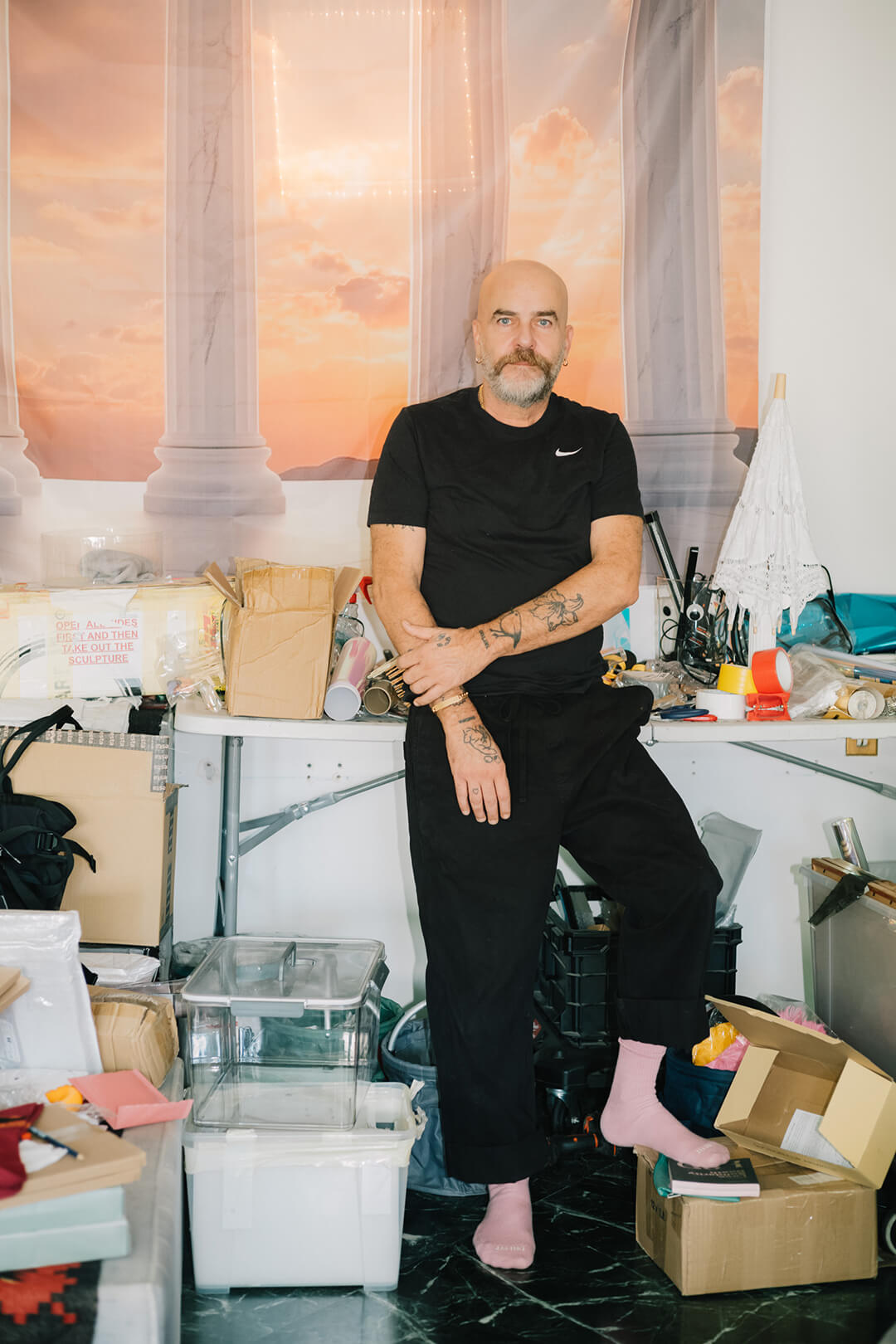
In this political environment, contemporary artist Andreas Angelidakis’ research-based exhibition, Escape Room, at the Greek Pavilion of the Venice Biennale, is a timely interrogation of the event’s structure, its chequered political history and what it means to contend with fascism in the age of the screen. The exhibition, put together by independent curator George Bekirakis, is a modern take on Plato’s allegory of the cave, which interrogates the nature of truth versus perception, an urgent project in the digital present where virtual reality, artificial intelligence, bots and edited imagery blur the lines between the real and illusory. The pavilion is split into two halves—one which delves into the history of Greece and the Greek pavilion, and one which is a souvenir shop/police station/discotheque playing with the ideas of surveillance and the commodification of identity, national history and the desire to escape. Angelidakis described his intentions for the pavilion in a conversation with STIR, saying, “Escape Room is a way to allow for a rewriting of national history, by placing ‘minor keys’ at the forefront of this history. People like Zak Kostopoulos, the AIDS activist and drag performer who was murdered on national daytime TV by the police and their protegees. That moment could have been me.”
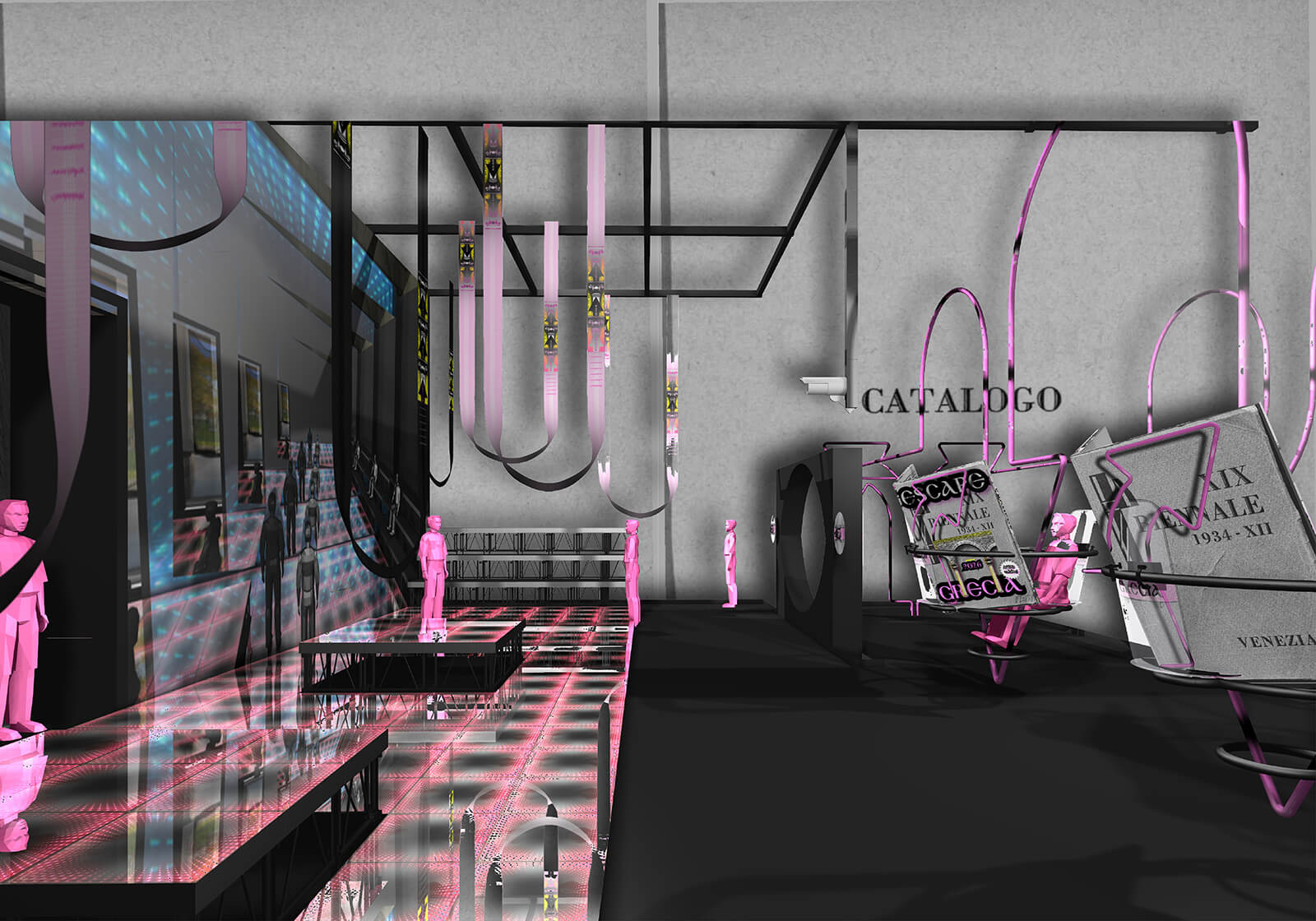
Escape Room queers the idea of the ‘national’ and the ‘pavilion’ with a levity and joy that befit its title. The latter half of the exhibition plays on the Greek word for ‘pavilion’, which also refers to kiosks for souvenirs, critiquing how the country—like many with a rich, ancient past—has become a pastiche of its former self, stating, “We basically colonised ourselves, and attempted to suppress our indigenous, even Ottoman, character.” Other pieces—including t-shirts printed with the words ‘MIGRANT’ and ‘HOMOSEXUAL’—are surrounded by riot shields bought from the discount online shop, Temu. Surveillance cameras, pointed at each other in an eternal feedback loop performing the actions of paranoid states on large screens, will be located at the pavilion’s doors. The pavilion will also host a Tea Dance, a tribute to a party on Fire Island, known for being a vacation spot for gay men from the latter half of the 1900s to the present day. Angelidakis speaks about stories he read about gay men affected by the AIDS crisis being wheeled to the Island to celebrate, even up to the last stages of their lives. Angelidakis and Bekirakis’ unconventional opening brings irreverence and collective joy and laughter to the event, shaking up the seriousness and formality of the atmosphere while dealing with grave subjects.
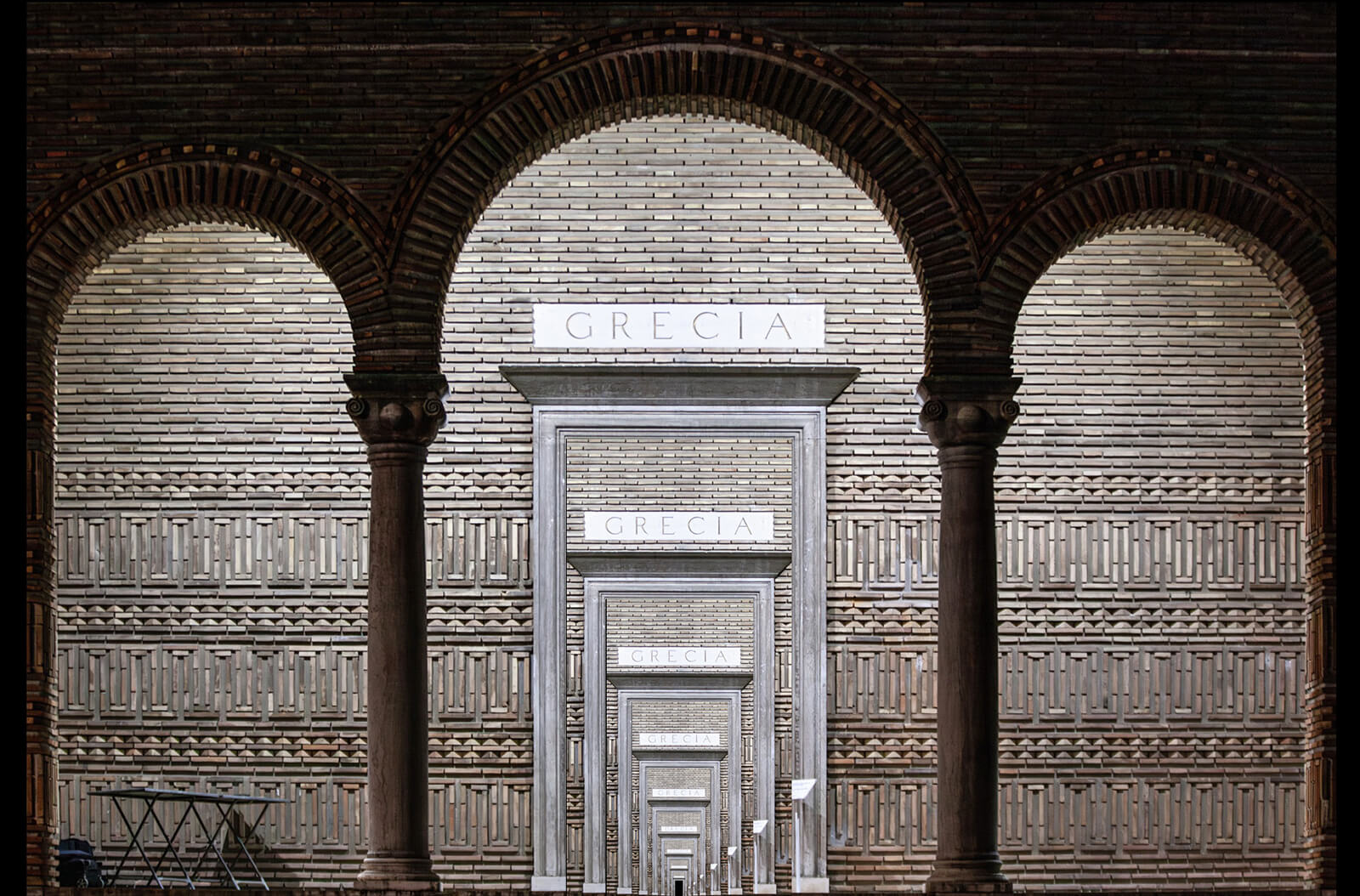
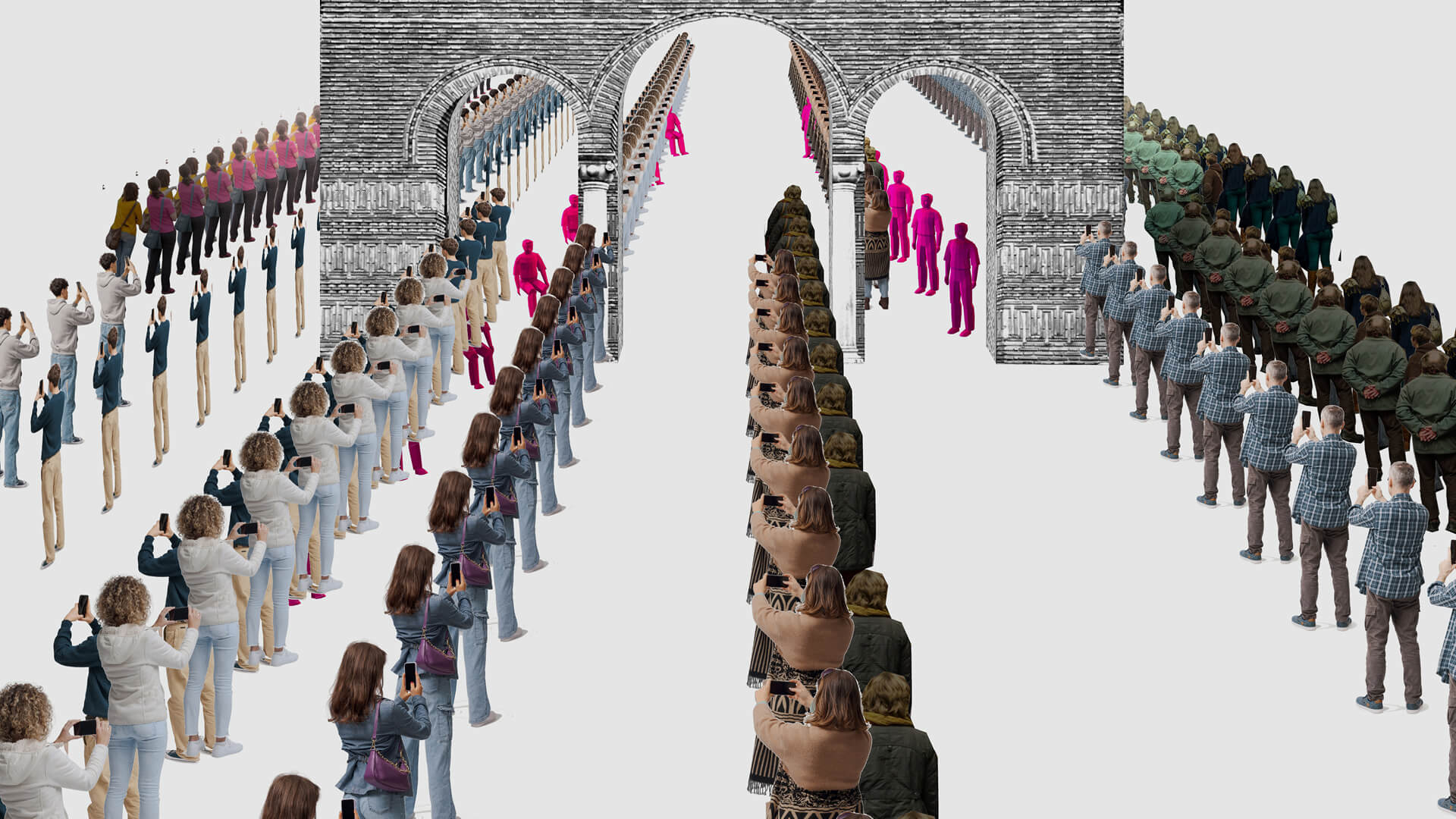
The first section of the exhibition is the story of the pavilion personified; Greece told from the point of view of the building itself. It begins with the Year Zero bathroom selfie mirror. Here, ‘Year Zero’ is 1934, the date of the inauguration of the Greek and Austrian pavilions, the year of Hitler and Mussolini’s meeting in Venice, and the year Nazis began persecuting homosexuals. The exhibition devotes time to examining the historical context behind the Greek pavilion’s Byzantine architecture, which symbolised the yearning for a time when Greece was part of the Roman Empire, a time when the Roman Empire spoke Greek and was headquartered in Constantinople. This dream of once again becoming an empire (or at least, part of a larger empire) was promised by politicians to the newly bankrupt country and culminated in the Byzantine-style building constructed in 1934, complete with simplified copies of the pillars of the famous Hagia Sophia mosque. Angelidakis explained the modern significance of this history, saying, “The pavilion was clearly built to say, ‘Make Istanbul Constantinople Again’. The exact slogan exists on orthodox merch on Temu, just like MAGA merch, following every step of [Donald Trump]...That is why MAGA is very relevant in Greece, we are part of it.”
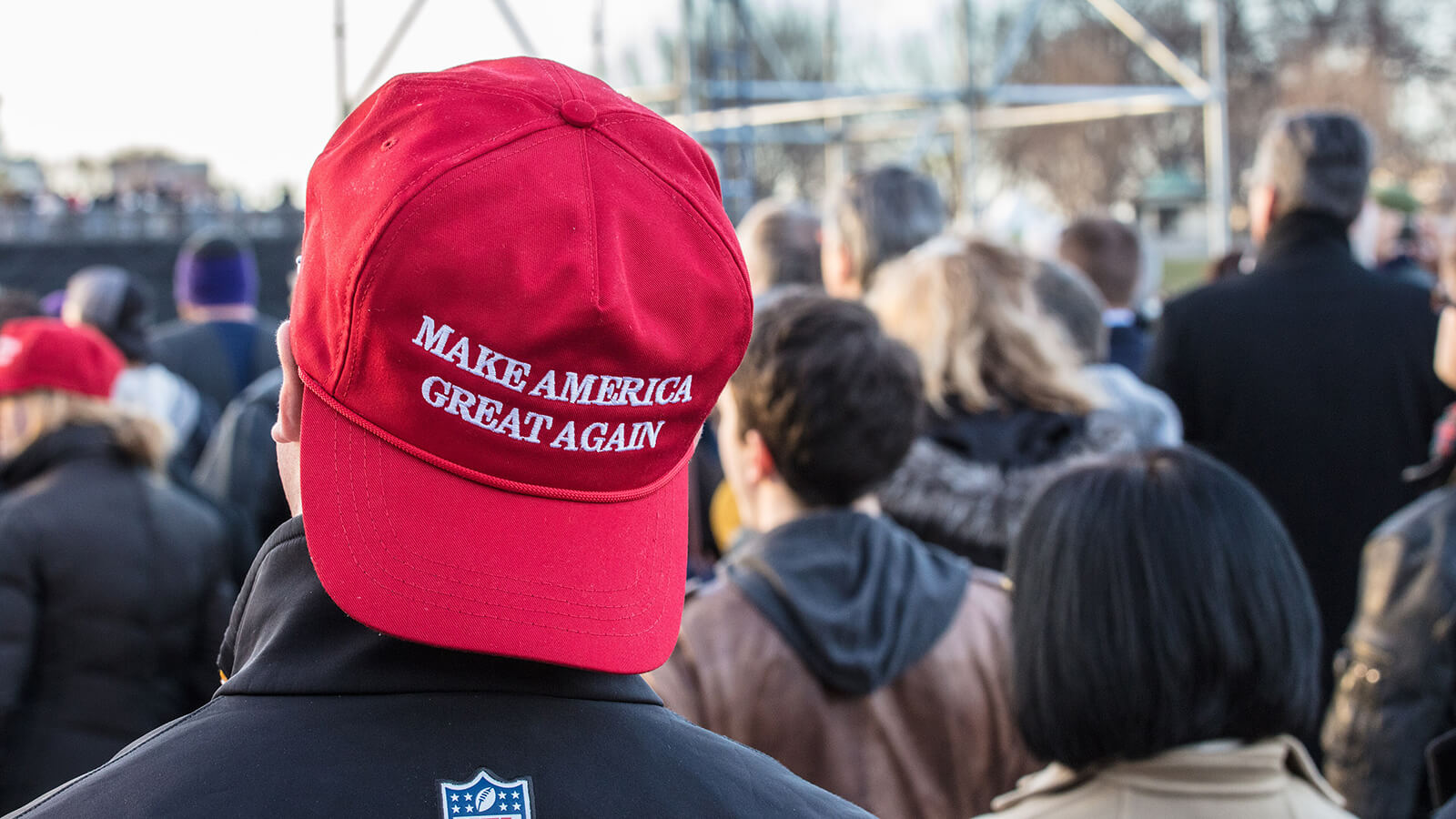
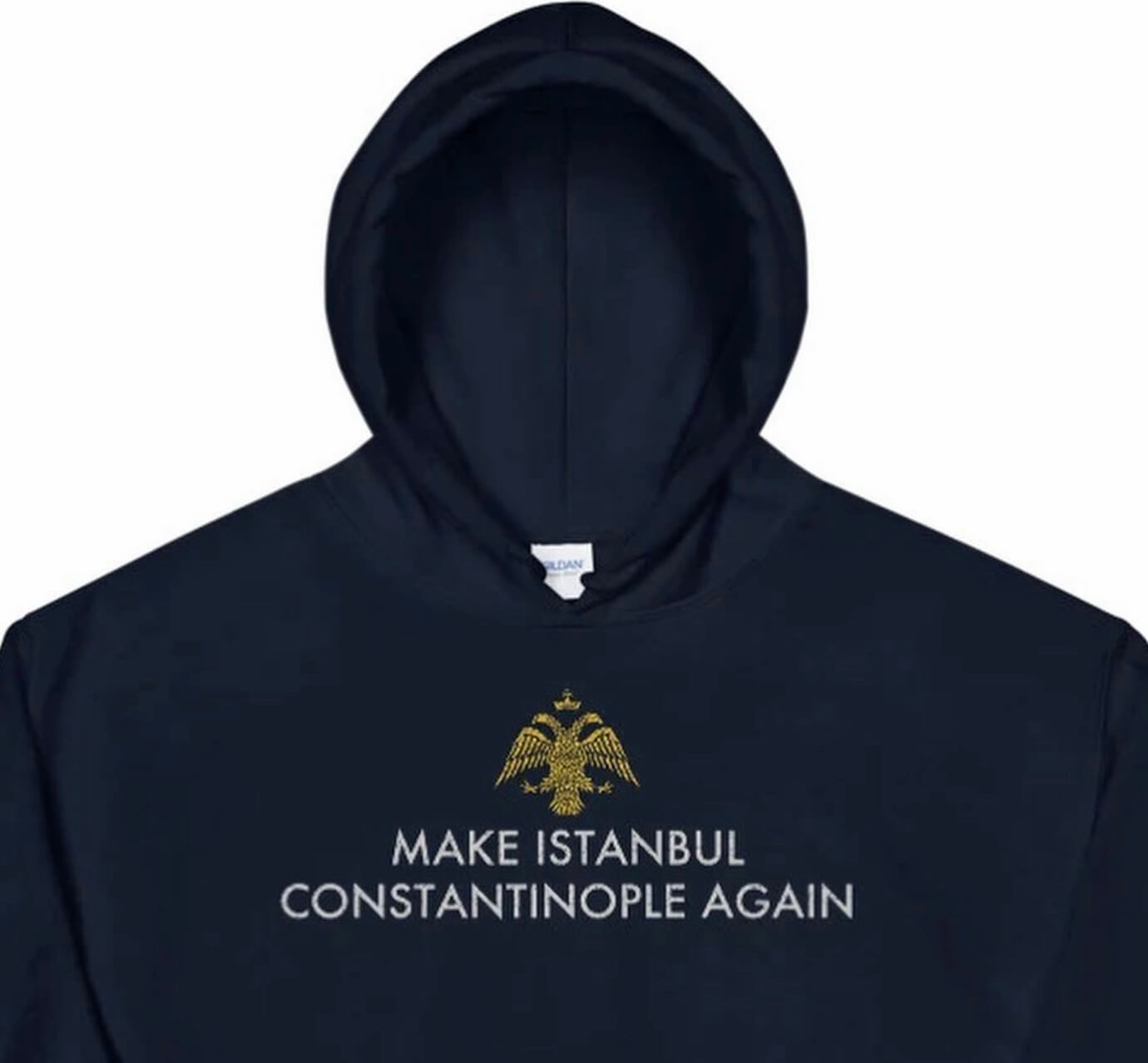
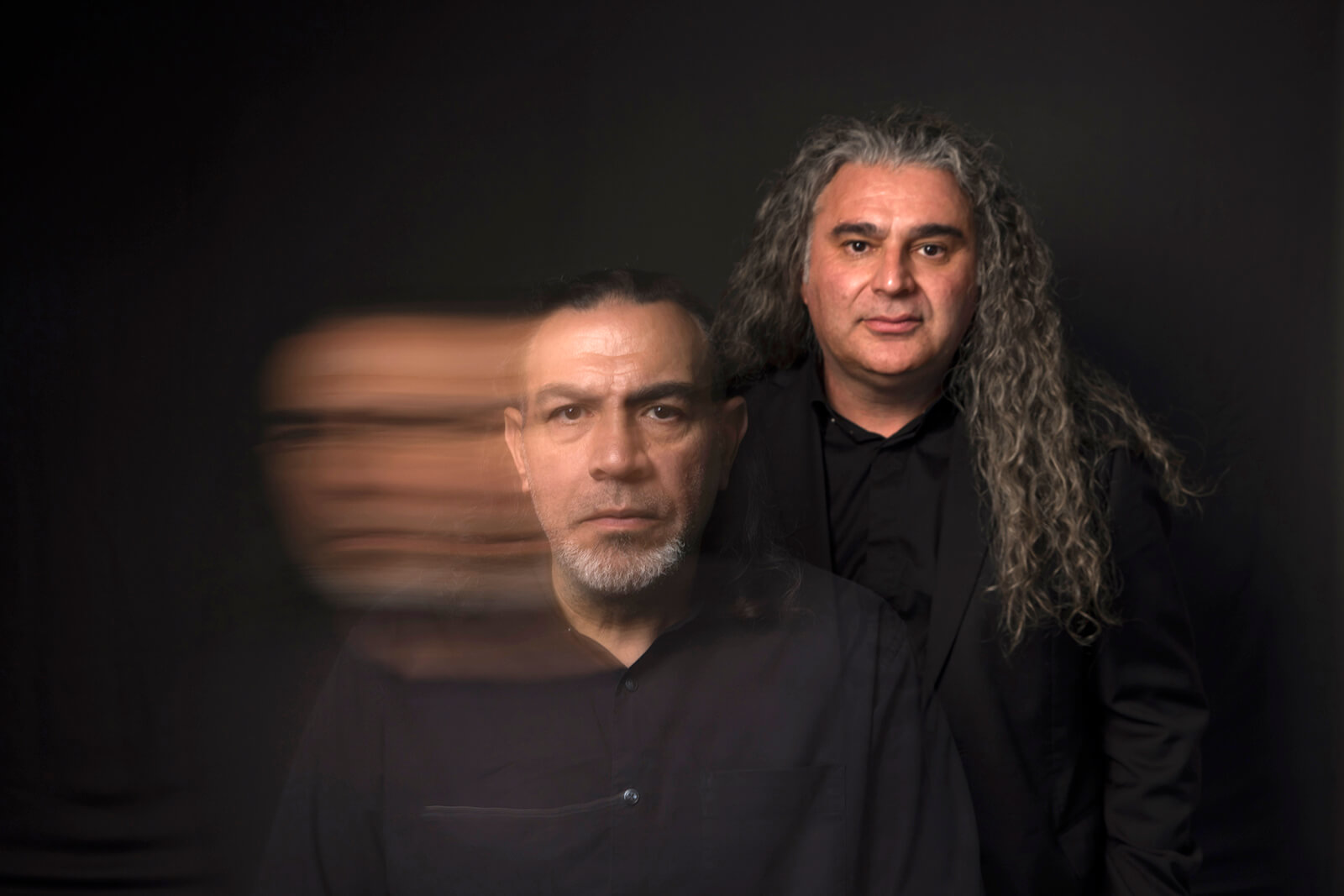
The iteration that Angelidakis describes—that created the fascist ‘Make ___ Great Again!’ earworm that has spread its aesthetic and ideology to numerous countries across the globe—is an important tool of fascism, one used to great visual effect by some of its most powerful and destructive leaders. At the Art Biennale, especially in the current politically charged moment, interrogating icons, underlying structures and connections between history and contemporary events in the way Angelidakis does is necessary, though not always welcome. An example that grabbed headlines was the appointment, cancellation and reappointment of the Levantine Australian artist Khaled Sabsabi by Creative Australia, the organisation behind the Australian Pavilion at the Venice Biennale. The work that drew the attention of Australia’s conservative politicians was You (2007), a durational work that used footage of Hassan Nasrallah (then leader of Hezbollah) giving a speech to a crowd in Beirut at a televised rally. The video is heavily edited with effects that overexpose the image and the subject’s face, multiplying the video and sound so it becomes overwhelming and incomprehensible. Rather than glorifying the figure it shows, the work focuses on media apparatus and its role in manufacturing consent, hatred and fear when disseminating images of war and violence. This is reflected in its title, which invites the viewer to interrogate their position as a consumer of mainstream news media. During the media outcry against the artist and the piece, the durational work was reduced to still images that, at best, ignored and at worst, concealed the content of the work. Following a slate of resignations from Creative Australia staff and international criticism, Sabsabi and curator Michael D’Agostino were reinstated as the Australian representatives at the Venice Biennale.
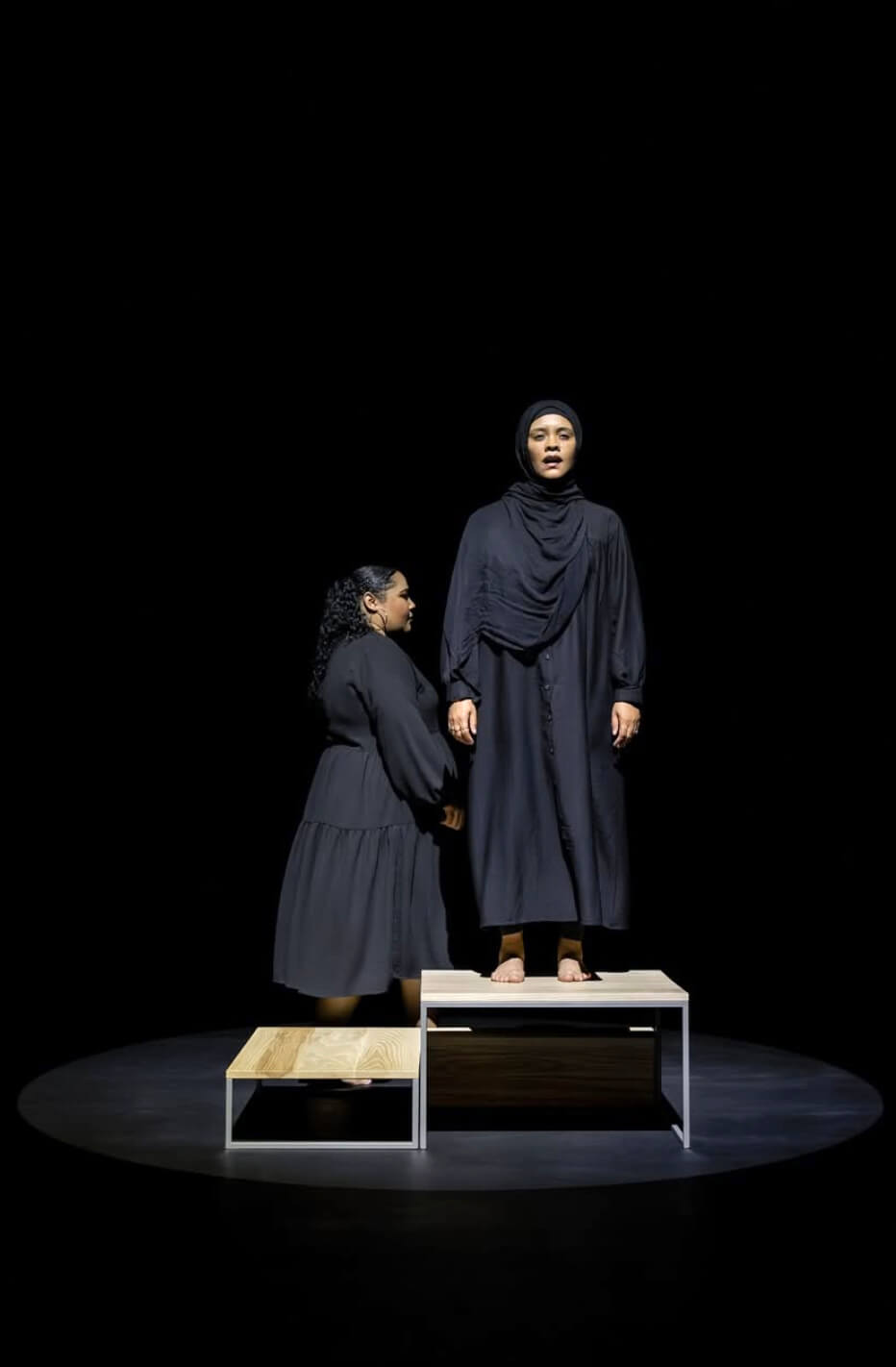
At the South African pavilion, a similar story ends differently. South African artist Gabrielle Goliath and curator Ingrid Masondo were to represent the country at the Venice Biennale with a new edition of her video work, Elegy, which centres on femicide and the murder of LGBTQ+ people in the country. The version created for the Biennale included sections on the violence faced by women in Namibia and Gaza, with the latter section focusing on the killing of Palestinian poet Hiba Abu Nada during an Israeli airstrike in 2023. Gayton McKenzie, the minister of sport, arts and culture of South Africa and the co-founder of the right-wing Patriotic Alliance party, required the references to Gaza to be changed or removed because of their ‘highly divisive nature’. When Goliath refused, the exhibition was cancelled by the minister, leaving the pavilion dark for 2026. McKenzie’s reasoning for censoring the artist sets a dangerous precedent, already becoming a go-to answer for officials and organisers looking to quash political conversation and art about Gaza. Despite attempts at appearances, censoring an issue termed ‘highly divisive’, especially consistently censoring one side of the issue, is a highly political act, with no claim to neutrality. Division is a danger to fascism, which relies on iteration—a hollow repeating sameness—to create political subjects ready to follow party lines without question.
This chain of events—an artist mentioning Gaza, being asked to alter or remove references to Gaza in their work, them refusing and then finally being censored—grows all the more common even as protests against these actions by groups like Strike Germany and the Art Not Genocide Alliance (ANGA) gain traction. Regardless of one’s stance on any political issue, the rising tide of censorship removes the power and art of curation from the hands of curators, artists and members of the artistic community and hands it to politicians and government ministers, whose primary concerns are political rather than aesthetic or critical. Contrary to being neutral, such apolitical stances pave the way for the inappropriate politicisation of art they claim to avoid. The exceptional situation of Gaza, the site of one of the most extensively documented, publicised and witnessed genocides in human history, reveals the cracks in Western society’s historical attitude towards censorship. As Ai Weiwei pointed out in a recent conversation with STIR, the West, which consistently characterised censorship as a ‘China problem’, is now faced with a test of its commitment to free speech.
In the world’s largest democracy, India, the iteration of Trump-flavoured fascism has a strong hold, with cults of personality, visual marketing of fascist symbols, censorship and conservative outcry seeking to curtail free speech becoming rampant. One of the most egregious manifestations of fascism in the country, which has plummeted down the freedom of speech and freedom of press indexes in the era of the Narendra Modi-led BJP government, is found in the film industry. Following the Union Ministry of Information and Broadcasting (I&B) refusing censor exceptions (that are the norm for film festival screenings) for 19 films being shown at the 2025 Kerala Film Festival including four films about Palestine, a Spanish film titled Beef (2025), Sergei Eisenstein’s revolutionary classic Battleship Potemkin (1925) and Santosh (2024), a police procedural film that centres on caste-based violence which, despite premiering at the 77th Cannes Film Festival and being the nation’s submission for the 97th Academy Awards, is banned from being shown in its country of origin. This led Kerala Chief Minister Pinarayi Vijayan to publicly disagree with the central government and direct screenings to continue as planned. Such instances of truly dangerous and overreaching government censorship make remarks like those made by Wenders all the more tone-deaf to the state of filmmaking and the threats that face the art form internationally.
On a more global level, similar remarks by institutions like the Biennial Foundation about not making curatorial decisions based on politics ignore the continuing weaponisation of art as a form of political soft power. The most controversial instance of this attempt at depoliticising art is undoubtedly the Israel Pavilion. The Biennial’s organising body ignores its own historic precedent in allowing the genocidal state, whose leader is wanted by the ICC for crimes against humanity, to present at the event. In past years, Russia has been excluded for inciting the war with Ukraine. For the 2026 edition, they chose to walk back these previous decisions, justifying Israel’s inclusion by permitting Russia to return while the war with Ukraine continues. This move finally sparked mainstream criticism, with the European Union withdrawing over 2 million Euros in Biennale funding and some countries in Europe threatening to pull out of the Biennale, after which, it was decided that the Russian Pavilion would be closed to the public during the Biennale.
Meanwhile, Israel’s Pavilion has been moved to the Arsenale, the location of the main exhibition. This begs the question: What makes Russia and Israel so different? It is difficult not to note the differences in the races and religions of each state’s victims and the political interests of European powers in the respective regions. The Biennale’s independent jury, including members who had been chosen by Koyo Kouoh, declared Israel and Russia ineligible for awards before resigning en masse in protest.
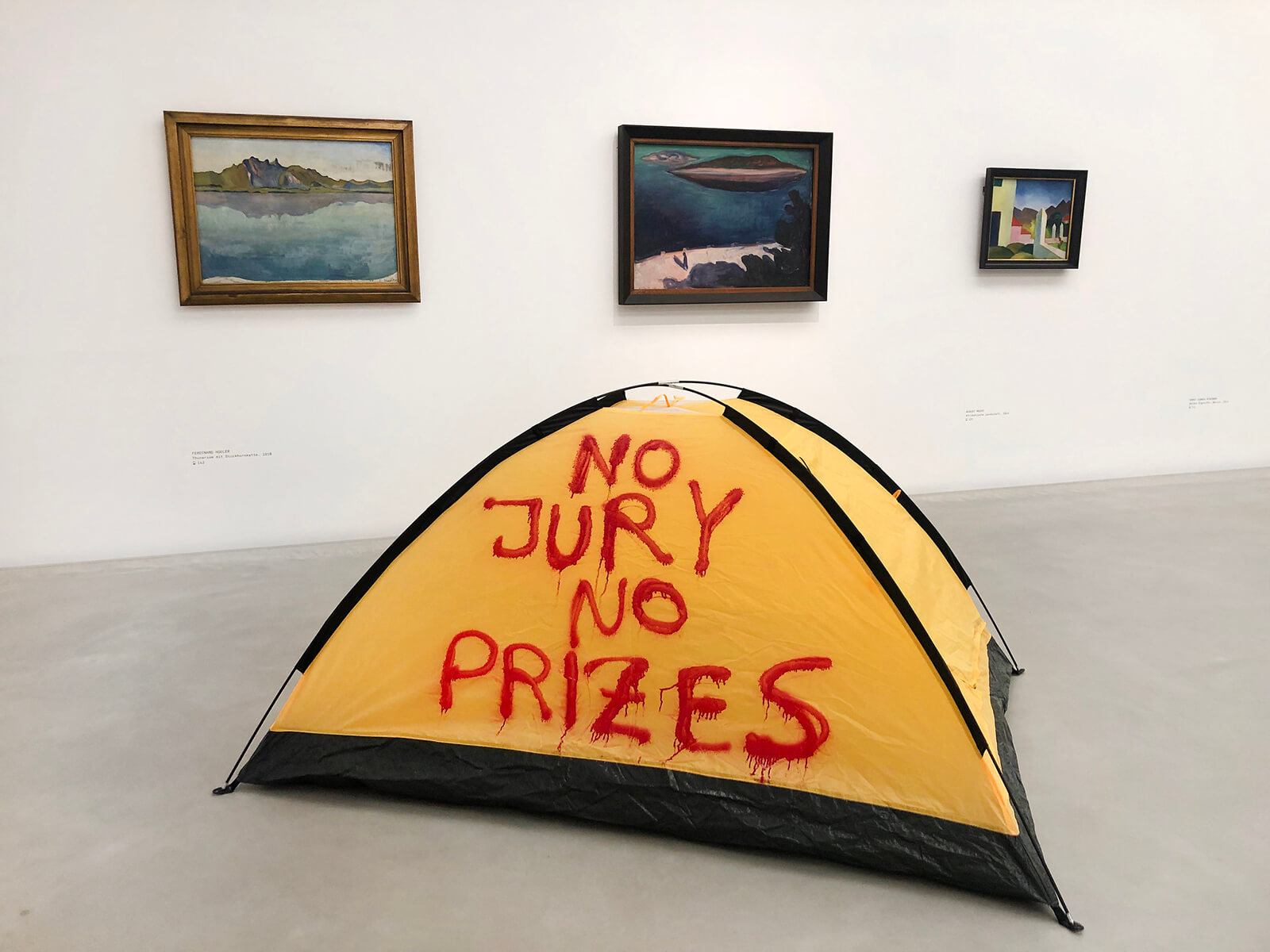
In an attempt to wave off the political nature of these decisions and the Biennale’s history as a venue for violent and prejudicial states to ‘artwash’ their actions (as seen in Angelidakis’ Year Zero), the Foundation said, “[The Biennale] continues to be a place of dialogue, openness and artistic freedom, encouraging connections between peoples and cultures, with enduring hope for the cessation of conflicts and suffering.” In response to a petition by ANGA, signed by over 200 artists and curators involved with the Biennale, which demanded the exclusion of national pavilions whose countries are currently involved in sparking and sustaining international conflict, the Biennial Foundation has asserted that any country recognised as a state by the Italian government has the right to exhibit at the event, implying that including and excluding countries goes beyond the organisers’ mandate. The political implications of this avoidance of responsibility become immediately evident when Palestine, which is not recognised as a state by Italy, cannot exhibit at the Biennale while Israel may.
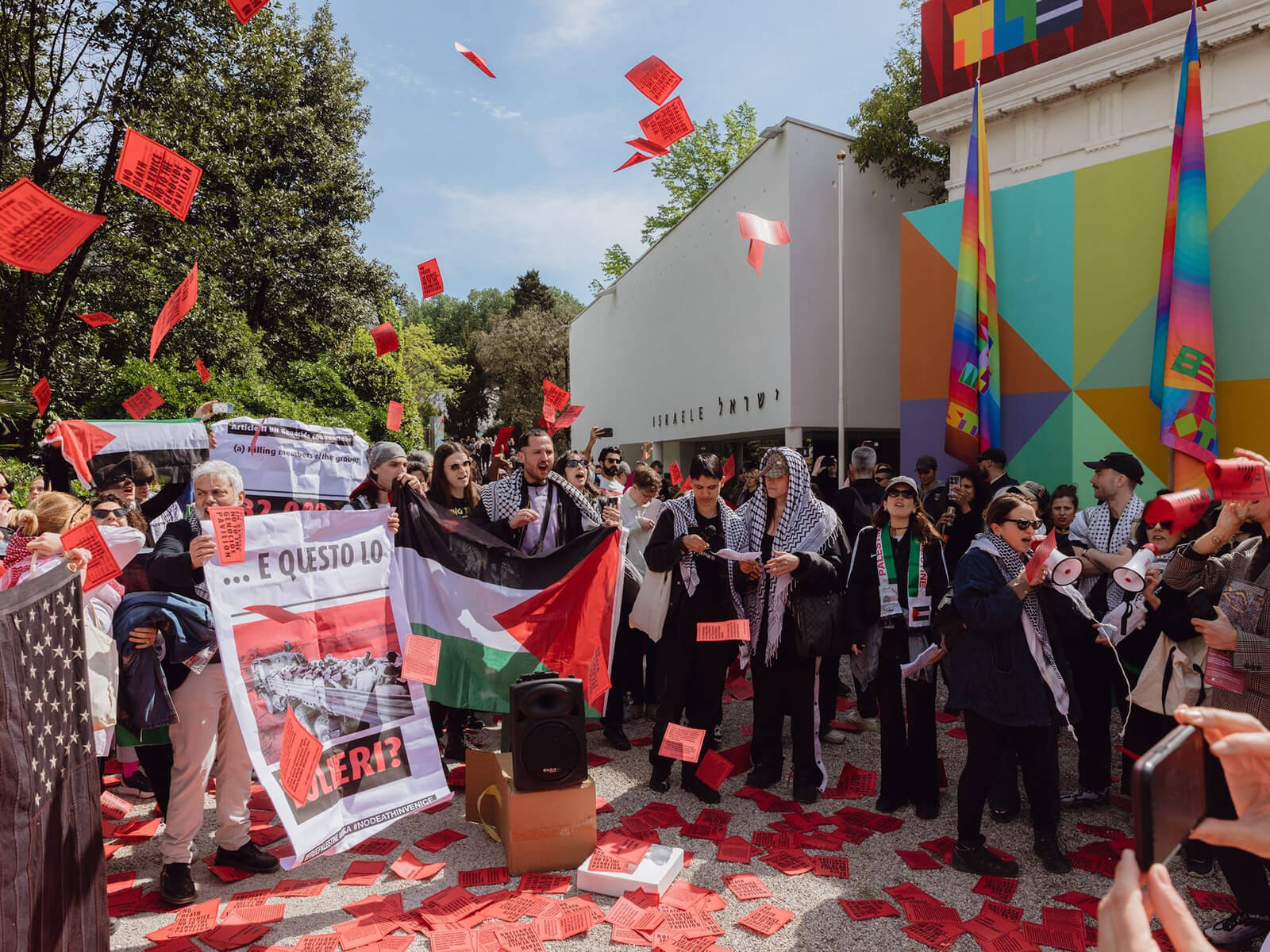
As Angelidakis’ exhibition shows, the structure of the biennale, which is organised by nation, cannot help but be political due to the ever-changing nature of national policies and international relations. Angelidakis adds nuance to this controversy, saying, “If I vote to exclude a country from the Biennale, I would also have to vote myself out, even if my work investigates how to inhabit the binary of opposing beliefs.” Excluding pavilions would risk censoring artists based on the actions of the state. Certainly, more creative and just solutions are required. If there is to be any attempt at an international community, anti-humanitarian acts and those that violate international laws must be met with consequences, particularly at international events, a position echoed by the signatories of the petition to the Biennial Foundation.
The pretence of neutrality wears thin as institutions continuously rule in favour of more powerful states with more international backing, while abdicating any moral and political responsibility or complicity. The lack of support from institutions to artists and curators facing censorship and exclusion over political themes in their art reveals the falsity of the claim that ‘neutrality’ is in service of artistic freedom. Art remains political, as it always has been, even if institutions and major art-world figures claim otherwise, leaving an unopposed, open field for governments and those in power to politicise art to their own ends. Censorship is also a form of curation, and if the international art community cannot come together to defend the politics of freedom and humanitarianism, if they cannot exercise the political power of art, they leave the power and responsibility of curation to governments and ministers with solely instrumental interests in art. Summing up the need for political art, its protection and the impossibility of neutrality is the following poem by Palestinian poet Marwan Makhoul:
“In order for me to write poetry that isn’t political
I must listen to the birds
and in order to hear the birds
the warplanes must be silent.”
The views and opinions expressed here are those of the author(s) and do not necessarily reflect the official position of STIR or its editors.
by Pranjal Maheshwari Apr 30, 2026
At the Goa Open Arts and Museo Camera’s show What Remains, 10 visual artists presents what they hold on to amid times of uncertainty, movement and perpetual change.
by Srishti Ojha Apr 22, 2026
Dr. Bhau Daji Lad Museum’s solo exhibition of the German composer’s video works reveals the challenge of translating contemporary art for general audiences.
by Srishti Ojha Apr 20, 2026
The Indian artist’s landmark exhibition at NMACC in Mumbai is a collage of dreams, memories, aspirations, histories and futures created with ordinary objects.
by STIRworld Apr 14, 2026
74 artists and curators call for the exclusion of states accused of war crimes, including Israel, Russia and the United States, from the Venice Biennale 2026, due to open in May.
 surprise me!

make your fridays matter
SUBSCRIBE
make your fridays matter with a well-read weekend
Enter your details to sign in
Don’t have an account?
Sign upOr you can sign in with
a single account for all
STIR platforms
All your bookmarks will be available across all your devices.
Stay STIRred
Already have an account?
Sign inOr you can sign up with
Tap on things that interests you.
Select the Conversation Category you would like to watch
Please enter your details and click submit.
Enter the 6-digit code sent at
Verification link sent to check your inbox or spam folder to complete sign up process


Ceding freedoms: The danger and complicity of trying to make art apolitical
by Srishti Ojha | Published on : May 01, 2026


 Sign in with Google
 Sign in with email
What do you think?