Architecture10 mins. read
ADFF:STIR Mumbai 2026 promises a radical vision connecting cinema, space and city
by Jincy IypeDec 15, 2025



by Aarthi MohanPublished on : Dec 29, 2025
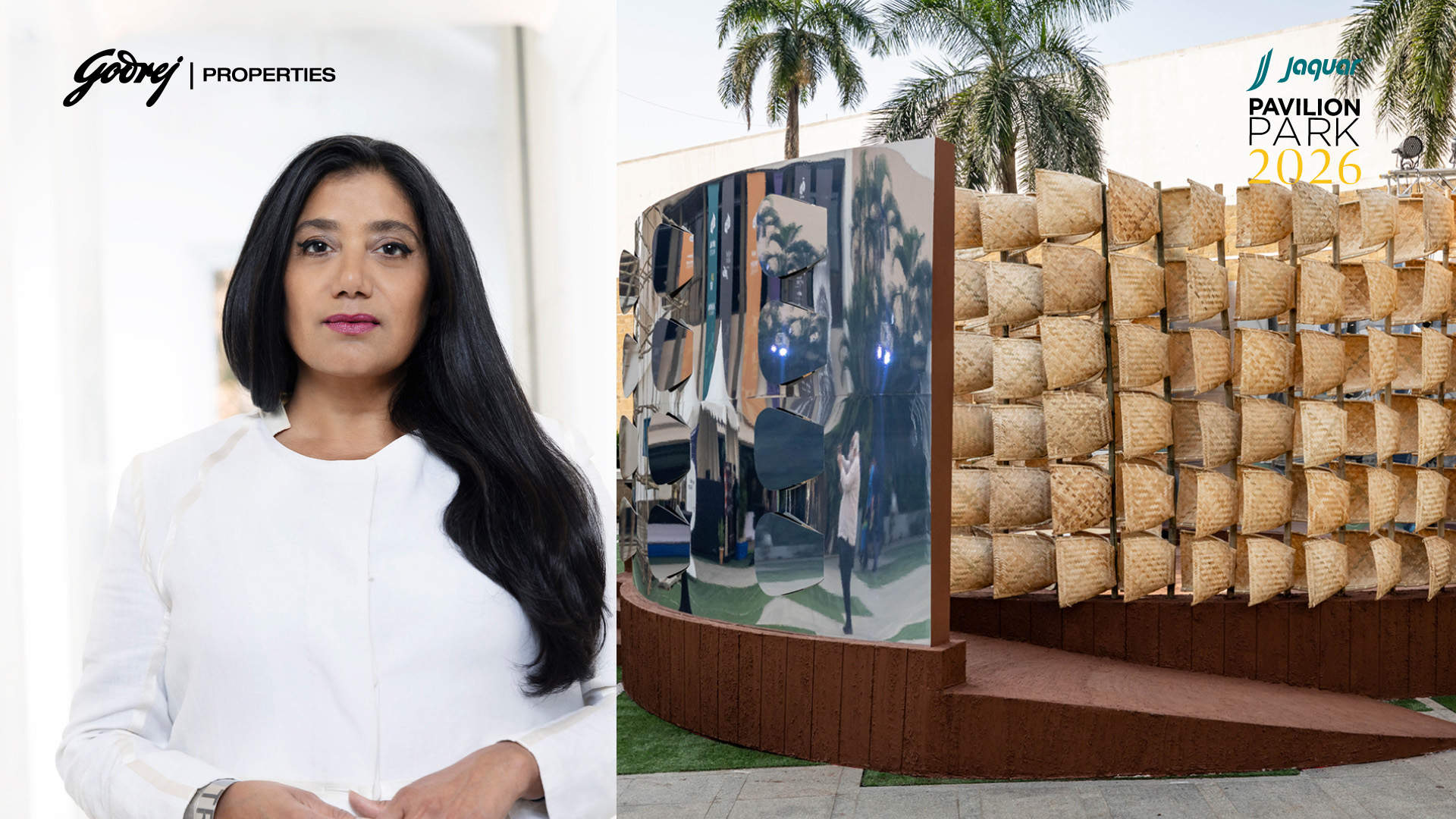
Mumbai has long learned to work with what is at hand. From the rice washed and sifted each morning to the rhythms of labour, movement and gathering that shape everyday life, the city’s culture has long been built through repetition, adaptation and shared rituals. Domestic objects, street-side charades, practices and handmade tools quietly hold memory here, often more powerfully than permanent monuments. It is from this terrain of everyday activity that SIFT emerges. Conceived by Suchi Reddy of the New York-based practice Reddymade, the pavilion takes shape at ADFF:STIR Mumbai 2026 within the Jaquar Pavilion Park curated by Aric Chen, at the National Centre for the Performing Arts (NCPA). On view from January 9 – 11, 2026, the installation draws from the familiar household practice to reflect on what it feels like to move through the Indian 'city of tomorrow'.
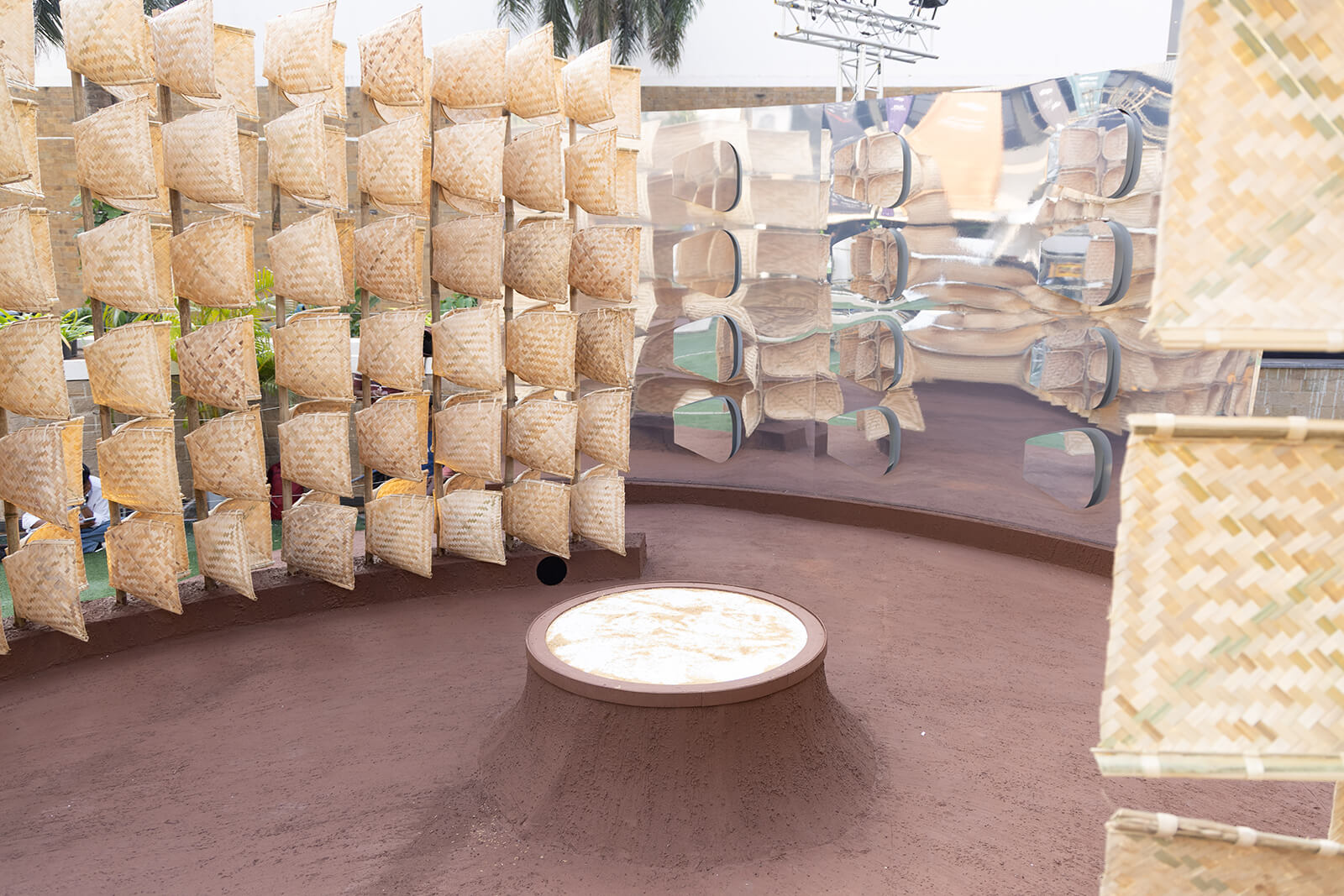
At the core of SIFT is the humble rice sieve, an object found in nearly every Indian (and even South Asian) kitchen, associated with care, nourishment, refinement, but also the mundanity of daily labour. Reddy and her team reimagine this everyday tool not purely as a symbol but as a spatial matrix. The sieve becomes both material and metaphor: a way of thinking about Mumbai as a city that constantly strains, sorts and reshapes energy. Rather than presenting architecture as a static form, it unfolds as a multisensory experience taking shape in light, shadow, sound and movement, allowing visitors to enter and physically register the idea of filtering and movement.
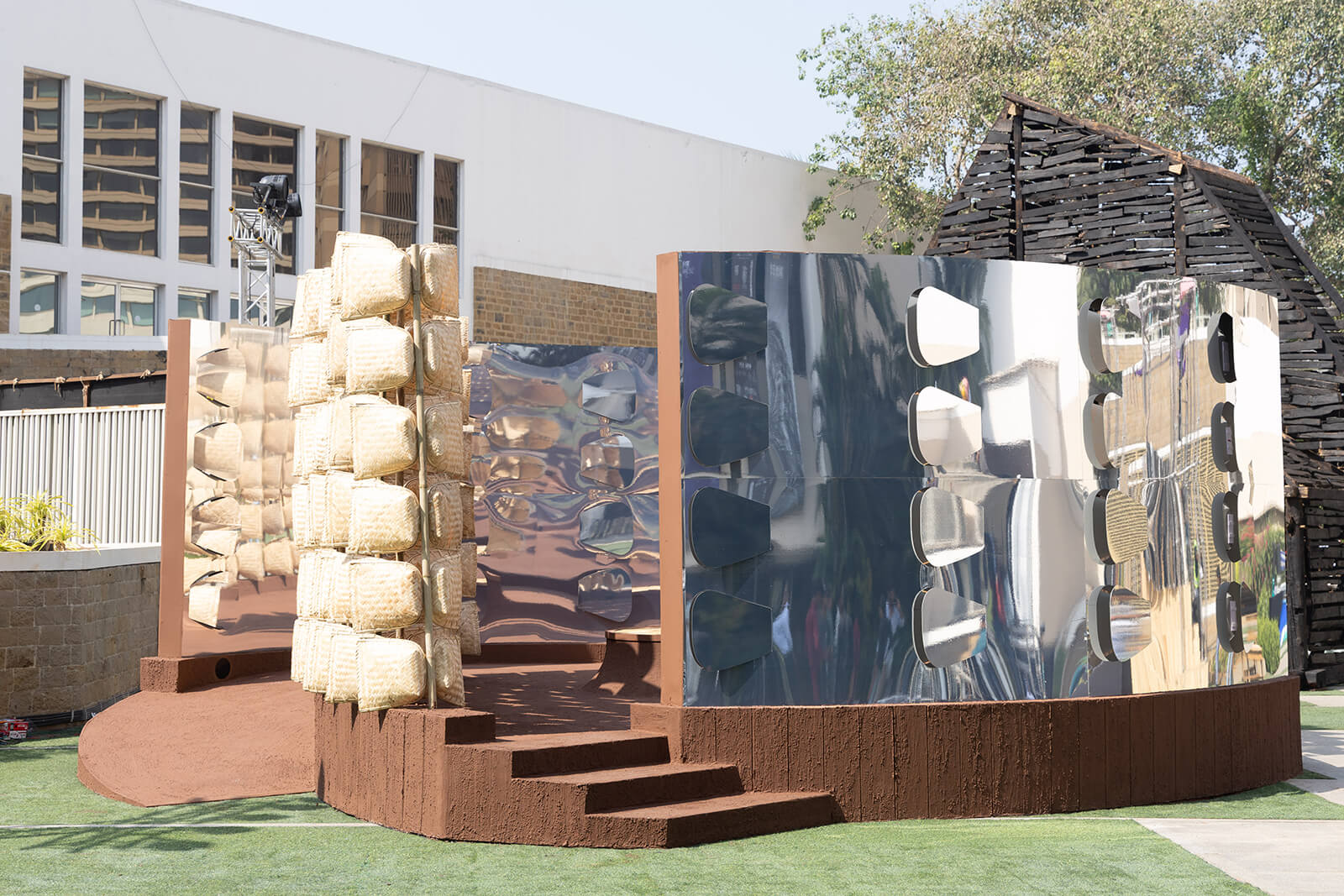
The pavilion, supported by Godrej Properties, is spatially organised as a spiral path formed by walls of rice sieves made of bamboo. As visitors move inward, the porous surfaces modulate daylight, casting shifting shadows that recall the act of sifting grain and the circular rhythms of everyday acts, along with how they sync with involuntary internal processes like breathing. The walls draw people close enough to notice one another, turning passage into encounter. Movement through the pavilion becomes an event, with visitors alternately performing and observing, aware of themselves as part of a shared narrative.
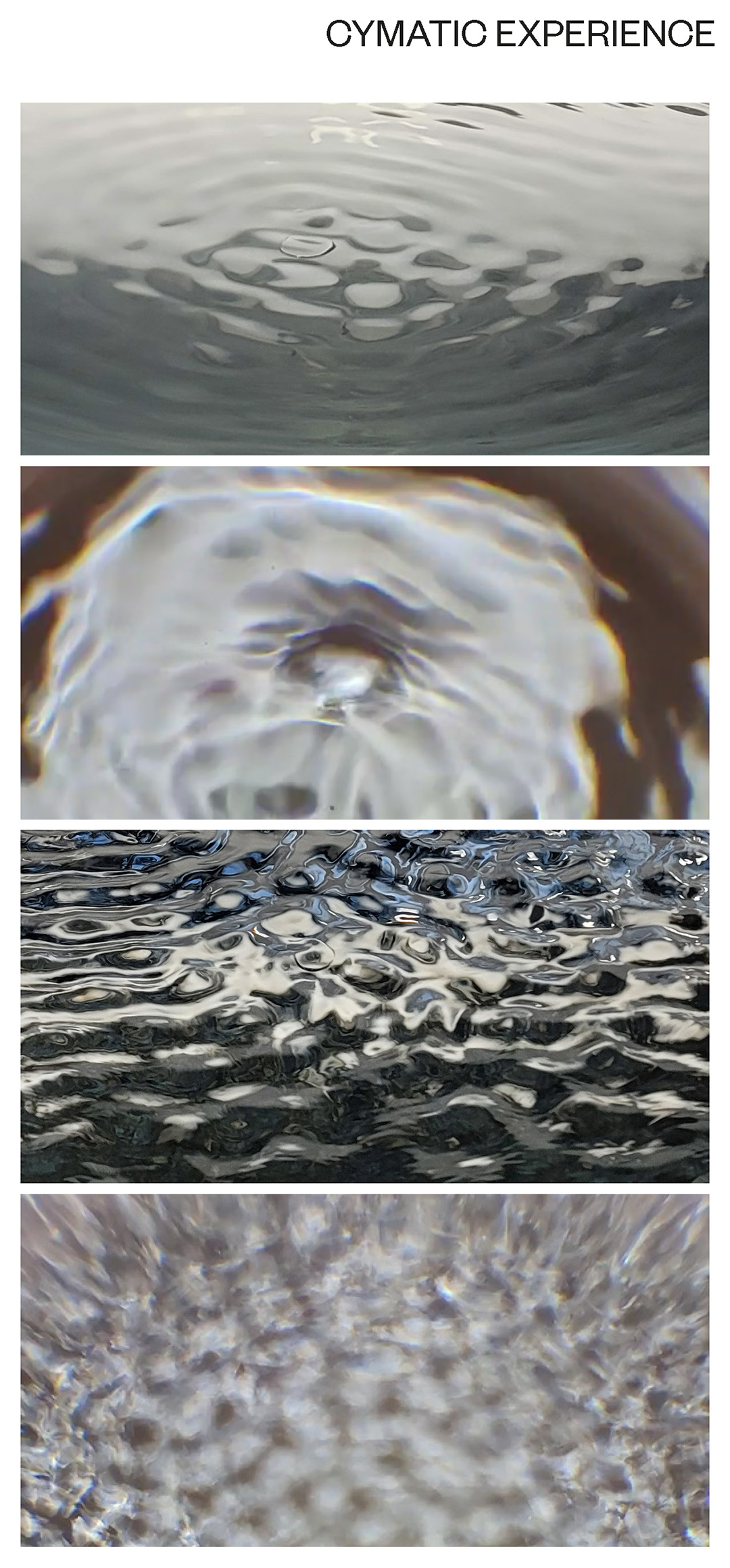
At the heart of the spiral, the ground rises gently to form an earthen centre anchored by a disc of water. This reflective pool responds to a sonic environment inspired by the soft, rhythmic ‘swish’ of a rice sieve, composed in collaboration with musician and sound artist Malloy James, whose work often explores rhythm, vibration and embodied listening. Sound becomes visible through cymatic vibration, making rhythm tangible rather than performative. During the day, the water reflects sky and sun; at night, it holds the moon and subtle site-specific lighting designs, extending the pavilion’s sense of ephemerality. The effect is measured and immersive, encouraging pause without prescribing interpretation.
Conceptually (and spiritually), SIFT also draws on writer and chronicler Suketu Mehta’s portrayal of Mumbai in his book, Maximum City: Bombay Lost and Found (2004), which describes the city as layered, restless and in constant motion. The pavilion also reflects ideas articulated by architect and theorist Bernard Tschumi in The Manhattan Transcripts—the theoretical backing for Chen’s curatorial theme, The Mumbai Transcripts, where he examines the disjunction between use, form and social values in the city. Here, those ideas are absorbed into a spatial experience that is bodily and intuitive, seeking to narrow that gap without much explanation or instruction. Rather than being representative of Mumbai, SIFT allows its pressures, rhythms and proximities to be felt through movement and presence.
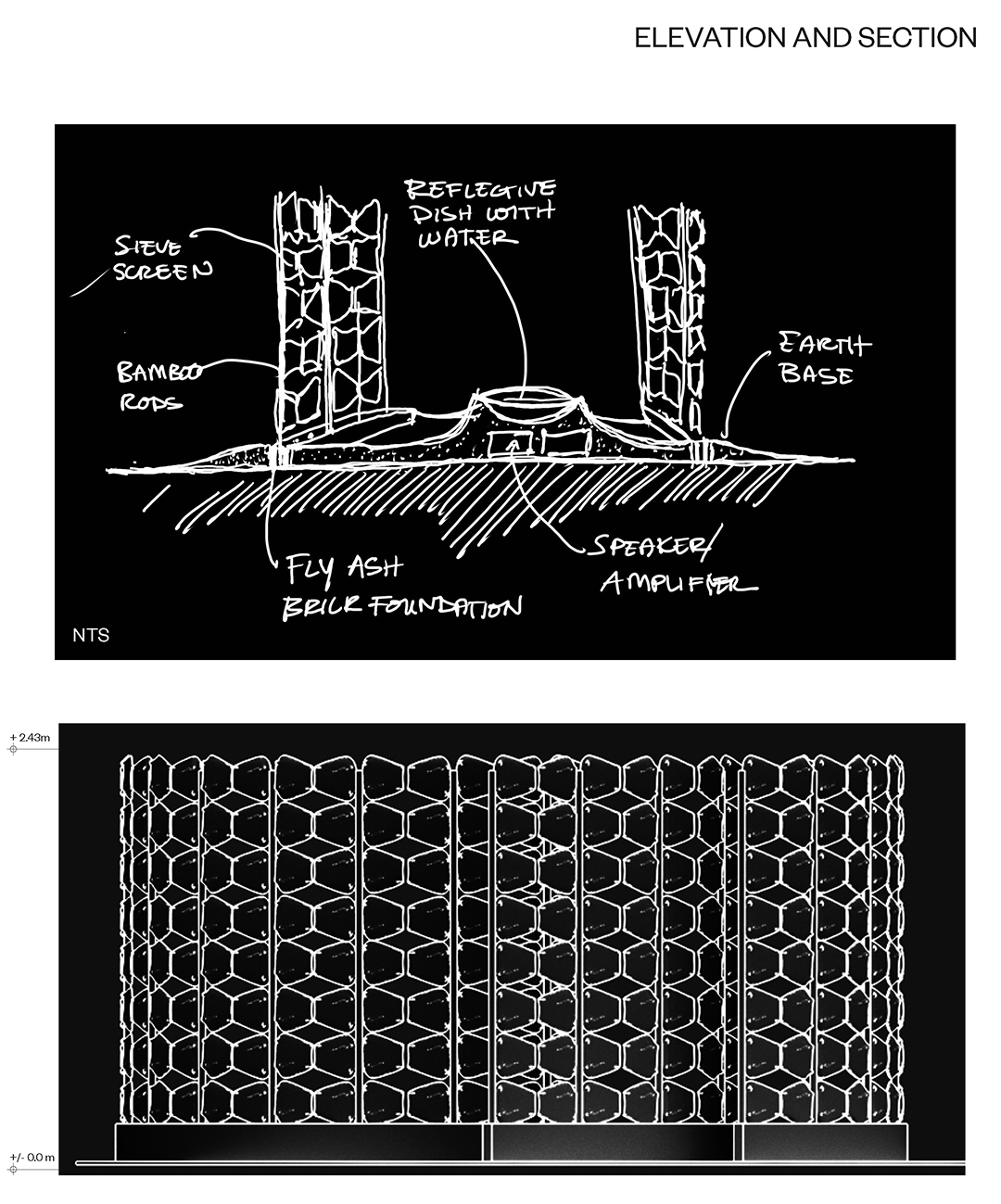
Materially, the pavilion is grounded in earth laid over a foundation of recycled fly ash bricks. The primary elements—the bamboo rice sieve—are lightweight, durable and locally sourced. Bamboo poles and natural rope lend tensile strength to the structure, while low-energy LED lighting and concealed speakers enhance the sensory atmosphere. All materials composing the pavilion’s physical form are natural, renewable and designed to be easily repurposed, reinforcing the pavilion’s emphasis on responsibility and restraint.
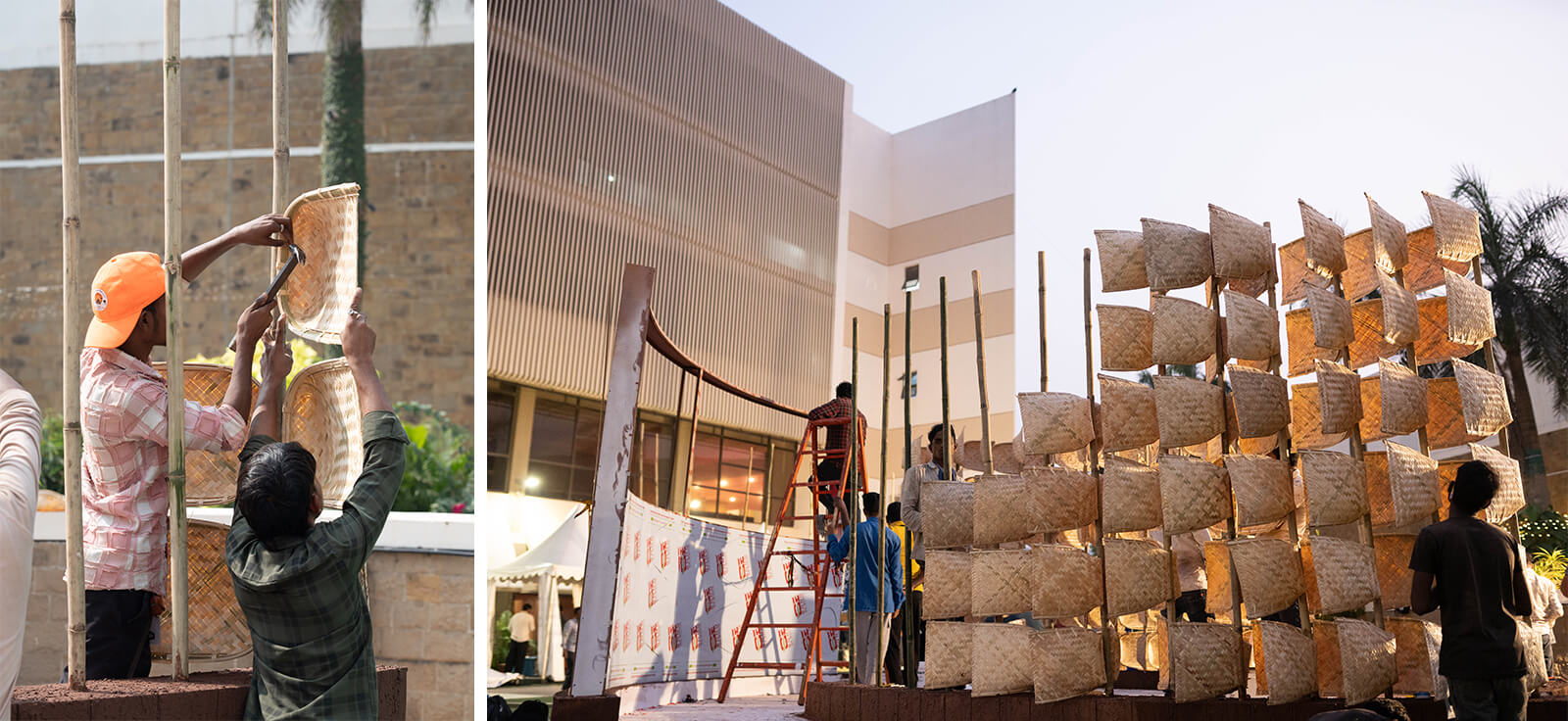
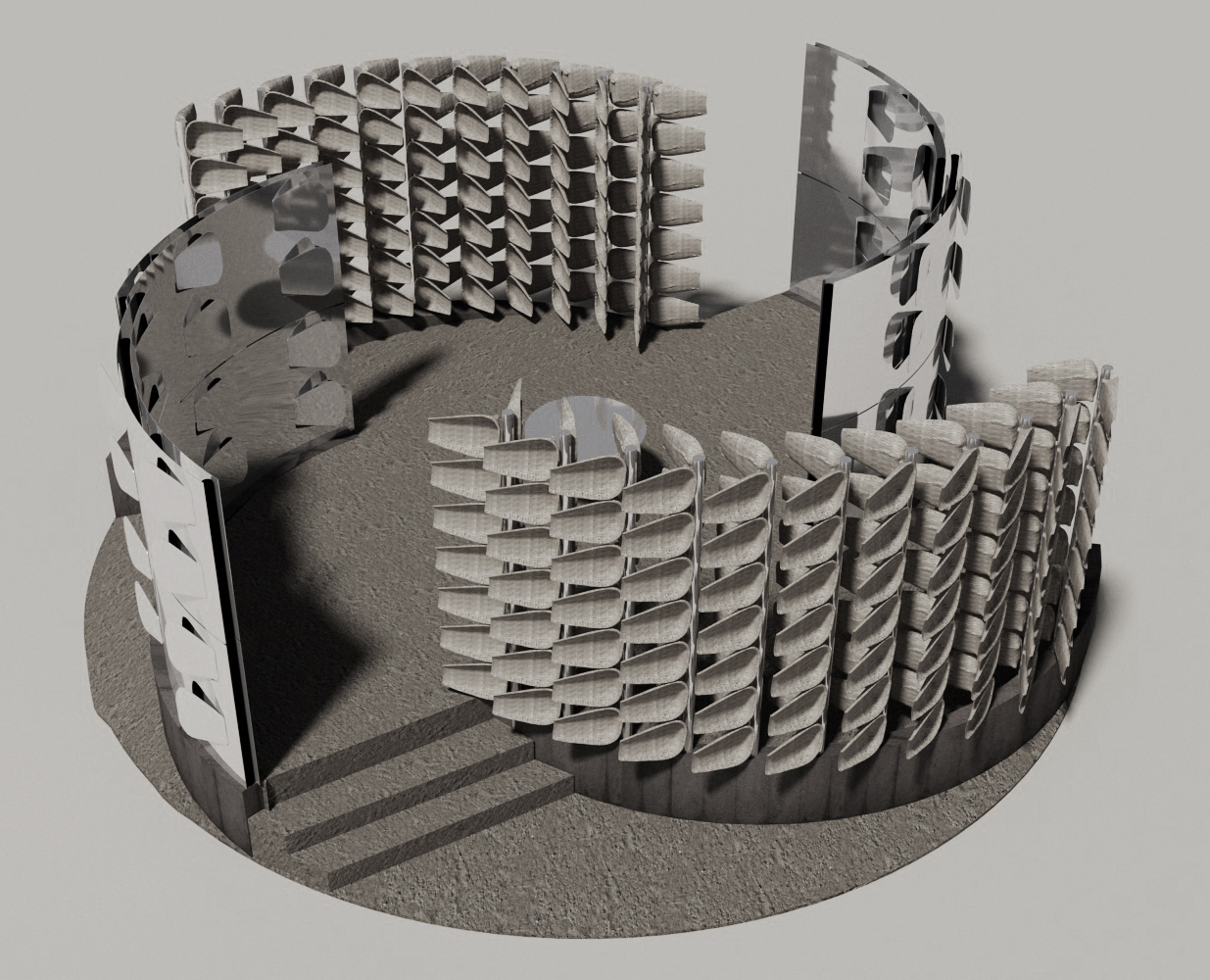
Additionally, reflecting the circular tenets of the Jaquar Pavilion Park, the sieves are handmade by local artisans, supporting cottage industries and traditional craft practices while reducing industrial carbon impact. The entire structure is modular: each sieve is woven and connected so that walls can be dismantled without damage. The bamboo poles, ropes and fasteners are reusable or biodegradable, and the reflective pool at the centre, too, remains temporary, constructed from non-toxic, reusable materials. Reddy outlines that these components may be donated, refurbished as shelters or bus stop backdrops, or reconfigured for future installations after the festival.
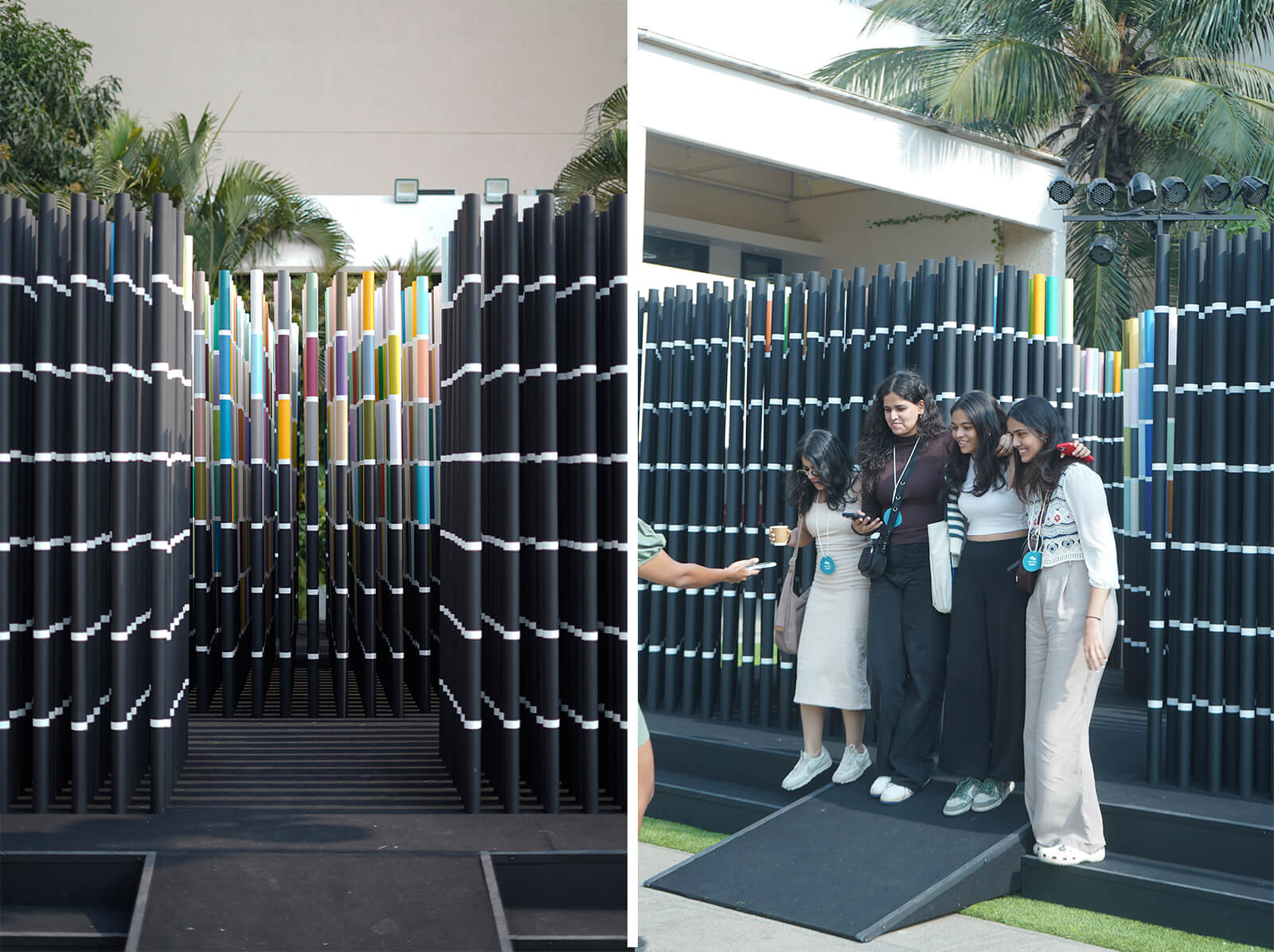
SIFT also builds on the trajectory of Suchi Reddy’s work at last year’s ADFF:STIR Mumbai, where her practice was represented through Chromacosm, a special project developed in collaboration with Asian Paints. Conceived as part of the launch of the company’s extensive architectural colour system of over 5,300 shades, the immersive installation translated years of colour research drawn from photography, oral histories, film and everyday Indian life into spatial experience. Entered through a dense forest of black reeds, the pavilion revealed a luminous interior where colour unfolded gradually through light, movement and perception.
In SIFT, this inquiry continues but shifts direction from the internal, perceptual world of colour toward shared cultural memory and collective movement that remains grounded, experiential and socially attentive.
As Reddy notes to STIR, “SIFT is an expression of the energy of Mumbai. It responds to the incredible culture, creativity and connectivity that Mumbai brings together in all of the people that it attracts and in the myriad forms of entertainment, culture and art that it generates. So SIFT is not a solid object of architecture. It is a dynamic experience of the feeling of being in Mumbai.” Upon its opening at this edition of the Architecture & Design Film Festival, the pavilion will firmly position itself amidst the city’s unceasing flow, shaped by craft, sound, movement and the quiet familiarity of an everyday object re-seen.
The 2026 edition of the Pavilion Park at ADFF:STIR Mumbai 2026 is presented by Jaquar.
SIFT, by Reddymade, is supported by Godrej Properties.
You can now book your passes for the festival here. Full schedule for the festival is available here.

by Pranjal Maheshwari Oct 19, 2026
The Mumbai-based architects integrate courtyards, mesh screens and north light trusses to create a dining space that doubles up as a community hub at SR University, Warangal.
by Mrinmayee Bhoot Oct 17, 2026
The Rotterdam-based institute centres the Indian Ocean as a network for exploring material histories and transnational links shaping coastal cultures, positing them as future models.
by Pranjal Maheshwari Oct 16, 2026
At the 2026 Stirling Prize ceremony, Mary Duggan with RUFF Architects, MAKER Architecten and Nakshabid Architects were felicitated for proffering quality housing and social equity.
by Mrinmayee Bhoot Oct 12, 2026
The new Centre for Contemporary Arts, fostering public engagement with art in Uzbekistan, is housed in a tram depot refurbished by the French studio, emulating local craftsmanship.

make your fridays matter with a well-read weekend
Enter your details to sign in
Don’t have an account?
Sign upOr you can sign in with
a single account for all
STIR platforms
All your bookmarks will be available across all your devices.
Stay STIRred
Already have an account?
Sign inOr you can sign up with
Verification link sent to check your inbox or spam folder to complete sign up process
Tap on things that interests you.
Select the Conversation Category you would like to watch
Please enter your details and click submit.
Enter the 6-digit code sent at


Reddymade's SIFT at ADFF:STIR Mumbai 2026 unfurls as a spiral of rituals and light
by Aarthi Mohan | Published on : Dec 29, 2025


 Sign in with Google
 Sign in with email
What do you think?